
Yes, are solar panels worth it in Nevada for most homeowners paying NV Energy above $120 per month. Las Vegas averages 6.3 peak sun hours per day, one of the highest figures in the country. A standard 8 kW system costs roughly $14,500–$16,500 after the 30% federal tax credit, with a typical payback of 9–11 years and over $25,000 in projected lifetime savings.
Nevada pulls in more solar energy per square foot than almost any other state. Yet NV Energy residential customers pay only around 12.5 cents per kWh in 2026. That rate is 31% below the national average of 18 cents. That single gap is what makes the Nevada solar decision different from California or Massachusetts, and what most installers quote conveniently skip.
The sun is working hard for you here. The utility rate, though, is the honest limitation.
Here is what this article resolves: whether Nevada’s sun advantage is strong enough to make solar worth your money at current utility prices, with real city numbers, real 2026 incentive details, and one clear situation where it might not be.
Nevada Gets 6.3 Peak Sun Hours: Here Is What That Means for Your Roof
Las Vegas averages 6.3 peak sun hours per day, placing it among the top five solar-producing cities in the continental United States. According to NREL‘s PV Watts tool, that figure is based on long-term irradiance data, not a best-day estimate.
For comparison:
- New York City: 4.7 peak sun hours per day
- Denver, Colorado: 5.4 peak sun hours per day
- Phoenix, Arizona: 6.5 peak sun hours per day
That high irradiance directly lowers your LCOE, your levelized cost of energy. More production per panel means each watt of installed capacity earns back its cost faster.
An 8 kW system in Las Vegas produces roughly 12,000–13,000 kWh per year. The same system in Reno produces about 10,500–11,500 kWh. Still strong, but roughly 12% less.
Southern Nevada’s desert climate also means minimal photovoltaic degradation from humidity. Panels in dry climates hold their rated output longer than those in coastal or humid states. Over a 25-year system life, that resilience compounds into meaningful additional generation value.
Nevada Solar Panel Cost in 2026: The Real Numbers Before and After Incentives
A fully installed solar system in Nevada costs $2.60–$2.90 per watt in 2026, putting a standard 8 kW system at $20,800–$23,200 before incentives. After the 30% federal Investment Tax Credit, your actual out-of-pocket cost drops to approximately $14,560–$16,240.
Here is what drives that installed price:
- Panels, inverter, and mounting hardware: 55–60% of total cost
- Labor and permitting: 25–30%
- NV Energy interconnection application fees: roughly $100–$250, depending on system size
A typical Las Vegas home uses 1,050–1,150 kWh per month. Summer air conditioning loads push that higher than the national average of around 900 kWh. That usage profile typically requires a 7–9 kW system to achieve a meaningful offset.
Money/ROI Scenario: Henderson Homeowner
A homeowner in Henderson pays NV Energy around $145 per month, roughly $1,740 per year. She installs an 8.5 kW system on a south-facing roof. Gross cost: $22,100. After the 30% ITC: $15,470.
With Las Vegas’s 6.3 peak sun hours, the system generates approximately 12,700 kWh annually. At 12.5 cents per kWh, that is about $1,587 in avoided grid electricity per year. Add net metering credits for surplus generation, and the total annual value reaches roughly $1,650–$1,750.
Payback window: approximately 9–10 years.
That payback is longer than what homeowners in Massachusetts or California experience. That is not a surprise; it is what a 12.5-cent rate produces when you run the math honestly.
For homeowners who want to understand how institutional capital views these returns, the same IRR logic that drives residential solar decisions also shapes solar tax equity partnership structures used by large project developers, a useful lens for understanding what your investment actually looks like from a financial standpoint.
Nevada Solar Incentives in 2026: What Exists and What Does Not
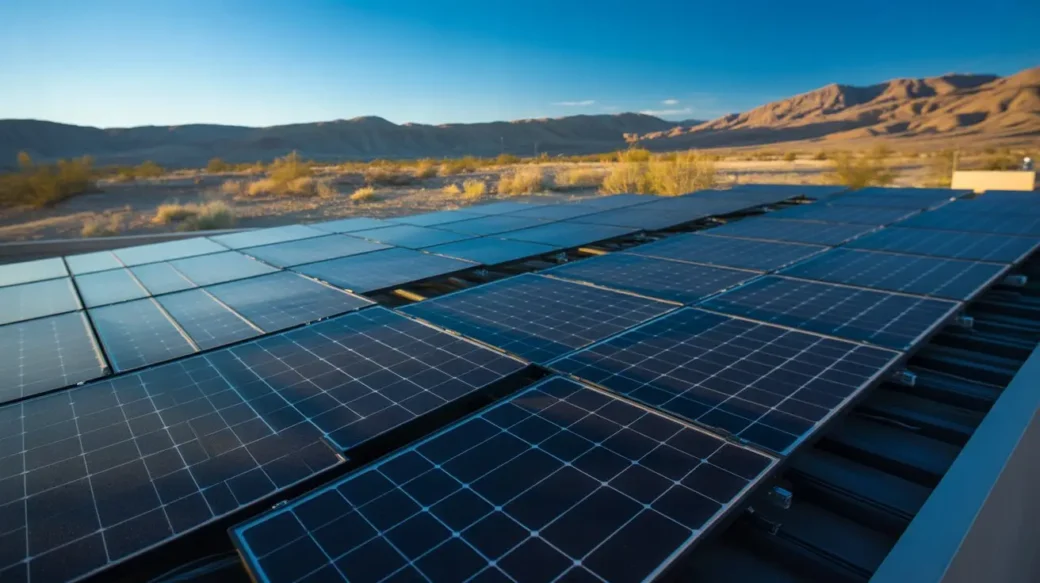
Nevada homeowners qualify for three real solar financial benefits in 2026: the 30% federal ITC, a full property tax exemption under NRS 361.079, and a sales tax exemption under NRS 372.317. There is no state income tax credit; Nevada has no state income tax, but the combination still removes $8,000–$10,000 from the effective cost of a typical system.
Federal Investment Tax Credit (ITC), 30%
- Applies to the full installed cost, including labor and equipment
- On a $22,000 system, that is $6,600 back on your federal taxes
- Locked at 30% through December 31, 2032, under the Inflation Reduction Act
- You must have sufficient federal tax liability to use it in the year of installation
Nevada Property Tax Exemption: NRS 361.079
- The added home value from solar is fully excluded from your county assessment
- A system adding $18,000 in appraised value is not taxed for that increase
- Protection applies for the life of the system, not a fixed term
If you own rental properties or commercial real estate in Nevada, the property tax picture gets more complex. How solar interacts with assessed value in commercial settings, and how disputes get resolved- follows a similar legal framework to solar property tax litigation disputes in Texas, which has set useful precedents for western states navigating the same valuation questions.
Nevada Sales Tax Exemption: NRS 372.317
- Solar panels, inverters, racking, and installation materials are fully exempt
- At Nevada’s average 8.265% combined sales tax rate, this saves roughly $1,700–$1,900 on a typical system
What does not exist: a state cash rebate program. NV Energy offered limited utility rebates until roughly 2014. Any installer in 2026 claiming you will receive a separate “Nevada rebate check” is misrepresenting the current program.
How NV Energy’s Net Metering Works in 2026
Nevada’s current net metering framework, restored under AB 405 in 2017, credits surplus solar generation at close to the retail rate, roughly 11–12.5 cents per kWh, through NV Energy’s Renewable Generations Tariff. That is meaningfully stronger than California’s post-NEM 3.0 export rate, which dropped to roughly 2–5 cents per kWh in 2023.
What this looks like in practice:
- Summer days generate 60–80 kWh on a properly sized system
- Your home uses 30–40 kWh on a typical day
- Surplus energy flows to the grid and earns a bill credit
- Credits roll forward monthly and reduce future NV Energy charges
Savings Scenario: North Las Vegas
A homeowner in North Las Vegas carries a $185 summer bill and installs a 9 kW system. The system overproduces in spring and fall by roughly 220 kWh per month. At NV Energy’s current Renewable Generations Tariff export rate of approximately 11.5 cents per kWh, those credits total around $25 per month. Over a full 12-month cycle, net metering adds roughly $190–$240 in bill credits on top of direct generation offset.
What struck me when I looked closely at Nevada’s net metering data is that the Renewable Generations Tariff has held up better than almost any comparable large utility in the Southwest. It is not guaranteed to stay that way; the Nevada Public Utilities Commission reviews rate structures periodically, but for 2026, it adds measurable value to your system’s ROI.
Las Vegas vs. Reno: Solar Does Not Perform the Same Across Nevada
Las Vegas and southern Nevada outperform Reno and northern Nevada on annual solar production by roughly 10–15%. That gap translates to a 1–2 year difference in payback and several thousand dollars less in lifetime savings for northern homeowners.
| City | Peak Sun Hours/Day | Est. Annual Output (8 kW) | Est. Annual Savings | Payback |
| Las Vegas | 6.3 | ~12,600 kWh | ~$1,650 | 9–10 yrs |
| Henderson | 6.2 | ~12,400 kWh | ~$1,620 | 9–11 yrs |
| Reno | 5.7 | ~11,400 kWh | ~$1,490 | 10–12 yrs |
| Carson City | 5.6 | ~11,200 kWh | ~$1,460 | 10–12 yrs |
The December and January production dip hits Reno harder. Reno sits at 4,400 feet. Winter cloud cover and low sun angle reduce December output by 40–50% compared to peak summer. In Las Vegas, winter dips are less severe because the latitude is lower and clear-sky days are more consistent year-round.
Reno homeowners on NV Energy’s Northern Nevada rate schedule also operate under a slightly different tariff than Las Vegas customers on the southern schedule. Both sit in the 12–13 cents per kWh range in 2026, but the gap matters when calculating credits over 25 years.
The Honest Limitation: When Solar in Nevada Does Not Make Financial Sense
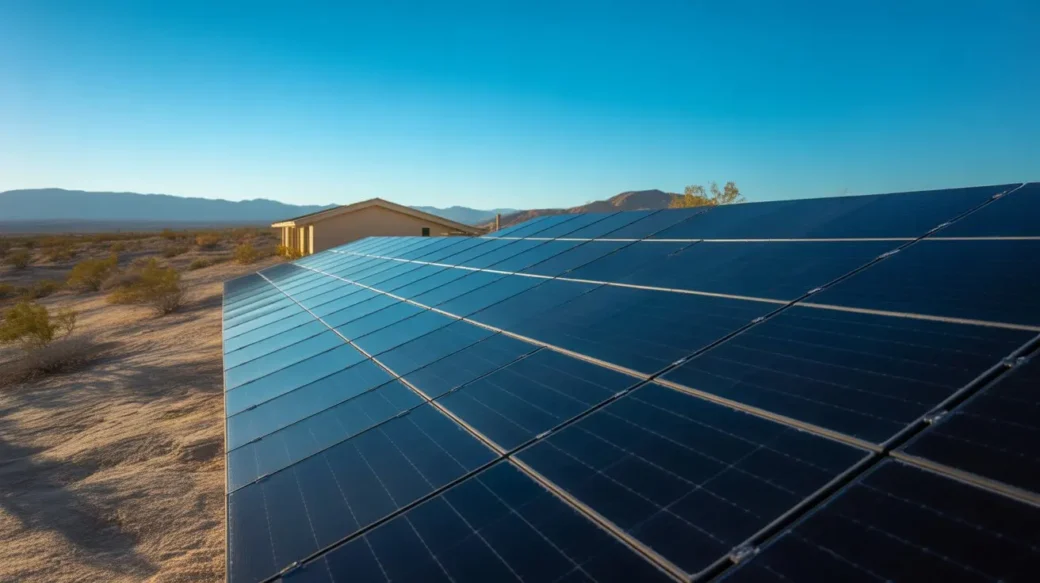
Nevada’s 12.5-cent utility rate is 31% below the national average, and that directly stretches the payback period compared to high-rate states. Every kWh your panels produce saves you less money per unit here than it would in New Jersey or California.
Problem Scenario: Sparks Homeowner
A homeowner in Sparks pays NV Energy about $90 per month, roughly $1,080 per year. His roof faces east and loses approximately 20% of potential production to partial shade from a mature tree. A 6 kW system on that roof generates approximately 9,200 kWh per year rather than the theoretical 11,400.
At 12.5 cents per kWh, gross savings are around $1,150. After interconnection fees, actual net savings run closer to $850–$950 per year. With the 30% ITC, the out-of-pocket cost comes to roughly $10,500.
Payback: 11–13 years.
That is still technically viable. But one unexpected roof repair in year 8 changes the picture. Going in with clear expectations matters here.
If your NV Energy bill stays below $100 per month, solar requires a long commitment and honest expectations. If your summer bills consistently hit $150–$200 or higher due to heavy air conditioning, the economics shift meaningfully in your favor.
Nevada Solar in the Broader Investment Context
Nevada’s solar ROI, typically 8%–11% IRR for owned systems in 2026, competes well against fixed-income alternatives when viewed over a 25-year horizon. That comparison becomes especially relevant for homeowners who are also thinking about solar as a long-term asset.
The solar industry’s investment landscape in 2026 is shifting. Utility-scale solar development in Nevada has attracted significant institutional capital, which has a direct effect on residential panel pricing and installer availability. If you want to understand how that capital flows, and what it signals about the sector’s long-term health, tracking the best solar stocks to invest in gives useful context for the broader market Nevada homeowners are operating in.
For homeowners considering larger commercial installations, warehouses, farms, or multi-unit properties, the financial structure changes considerably. Commercial solar PPA laws in Nevada operate under different NV Energy tariff rules than residential net metering, and the contract terms carry legal risks that residential purchases do not.
Nevada Solar 2026: Core Facts at a Glance
| Factor | Nevada Data |
| Primary Utility | NV Energy |
| Average Electricity Rate | ~12.5¢/kWh (2026) |
| Las Vegas Peak Sun Hours | 6.3/day |
| Reno Peak Sun Hours | 5.7/day |
| Avg. System Cost (8 kW) | $20,800–$23,200 |
| Cost After 30% ITC | $14,560–$16,240 |
| Sales Tax Exemption | Yes, NRS 372.317 |
| Property Tax Exemption | Yes, NRS 361.079 |
| State Income Tax Credit | None (no state income tax) |
| Net Metering Policy | Yes, Renewable Generations Tariff |
| Typical Payback Period | 9–12 years |
| Est. 25-Year Lifetime Savings | $24,000–$36,000 |
When to Get Legal or Professional Help Before You Sign
Most Nevada homeowners never need an attorney for a residential solar install, but the situations where legal help matters are specific and worth knowing. If you are signing a 20-year PPA, a commercial lease agreement, or a sale-leaseback structure, the contract terms deserve professional review.
Disputes over interconnection denials, HOA restrictions, or incorrect property tax assessments on solar-equipped properties are rare but do happen. In those cases, working with a solar project finance attorney who understands Nevada’s utility regulatory structure can prevent a paperwork error from turning into a multi-year dispute with NV Energy or your county assessor.
For standard residential purchases with a reputable installer, legal review is not usually necessary. But if the contract is longer than 5 pages and includes escalator clauses on payments, read it carefully before signing anything.
The Nevada Solar Verdict: A Clear Answer for 2026
Are Solar panels worth it in Nevada in 2026, with one honest condition attached.
If your NV Energy bill runs $130 or higher per month, your roof faces south or west with minimal shading, and you plan to stay in your home for at least 10 years, the numbers work. The 30% federal tax credit, the NRS 361.079 property tax exemption, the NRS 372.317 sales tax exemption, and the Renewable Generations Tariff net metering structure combine to make this a legitimate long-term return, even at a 12.5-cent utility rate.
If your bill is under $100 per month, your roof has significant shade, or you are likely to move within 7 years, the math is tighter. Not impossible, but you need honest expectations about a 12-year-plus payback window.
One thing that changes this calculation quickly: NV Energy rate increases. The Nevada PUC approved residential rate hikes multiple times between 2021 and 2025. Every rate increase shortens your payback period automatically. Homeowners who install today are locking in their energy cost while grid rates continue to climb.
Are solar panels worth it in Nevada? For most homeowners paying over $130 a month to NV Energy with a workable roof, yes. The sun does the heavy lifting here better than almost anywhere in the country.
This article is only for informational purposes. Savings estimates are projections based on 2026 NV Energy rates and federal ITC rules. Individual results vary based on roof orientation, shading, system size, and personal tax liability. Consult a licensed tax professional before claiming the ITC.
Nevada Solar FAQs for 2026
Is solar worth it in Las Vegas specifically?
Yes. Las Vegas’s 6.3 daily peak sun hours and NV Energy bills that regularly exceed $150 in summer make solar financially sound for most homeowners. Expect a 9–10 year payback after the 30% federal tax credit.
What are Nevada’s solar incentives in 2026?
Three main benefits: the 30% federal ITC, a property tax exemption under NRS 361.079, and a sales tax exemption under NRS 372.317. There is no separate state income tax credit since Nevada has no state income tax.
How much do solar panels cost in Nevada in 2026?
An 8 kW system costs $20,800–$23,200 before incentives. After the 30% federal tax credit, most homeowners pay $14,560–$16,240 out of pocket.
Does Nevada have net metering in 2026?
Yes. NV Energy’s Renewable Generations Tariff credits excess solar at approximately 11–12.5 cents per kWh, close to the retail rate and stronger than California’s post-NEM 3.0 structure.
Is Reno or Las Vegas better for solar?
Las Vegas. With 6.3 peak sun hours versus Reno’s 5.7, a Las Vegas system produces 10–15% more electricity per year, roughly $1,500–$2,500 more in lifetime value for the same installed system.
What does Nevada’s sales tax exemption cover?
Under NRS 372.317, the exemption covers solar panels, inverters, mounting hardware, and installation materials. At an average 8.265% combined sales tax rate, most homeowners save $1,700–$1,900.
What is the payback period for solar in Nevada?
Most Nevada homeowners see payback in 9–12 years, depending on bill size, roof orientation, system size, and location. Las Vegas homes with bills above $130 per month tend toward the 9–10 year range.
This article by SolarInfoPath (2026 research framework) is part of a comprehensive solar knowledge architecture covering all major high-value sectors including legal disputes (installation negligence, contracts, liability, fraud, lawsuits, liens, HOA and permitting disputes), financial structures (loans, PPA/lease agreements, DSCR financing, tax equity, investment and project finance), tax law (ITC, Section 48/25D, MACRS depreciation, bonus credits, IRS audits, recapture rules, domestic content and IRA/OBBBA compliance), insurance and risk (property damage, hail/wind/fire claims, bad faith insurance disputes, warranty coverage), policy and regulation (net metering, FERC interconnection, state utility rules, incentive programs and regulatory changes), commercial and utility-scale development (EPC contracts, construction delays, performance bonds, receivership, bankruptcy, asset sale and restructuring), real estate impacts (home value, solar leases, liens, title issues, HOA restrictions, easements), and emerging market structures such as battery storage, community solar, agrivoltaics, SRECs, yieldcos, and institutional investment funds. All content is based on publicly available regulatory, financial, and legal sources and is intended strictly for educational and informational purposes, not legal, tax, or financial advice. Readers should always verify current laws, utility policies, tax regulations, and contract terms with qualified licensed professionals before making decisions, as solar regulations, incentives, and financial structures frequently change across jurisdictions and time.

Solar Legal Analyst· Policy Researcher· Investigative Finance Writer Lead Analyst & Founder of SolarInfoPath
Morgan Lee is a solar legal analyst, policy researcher, and investigative finance writer with 12+ years of experience in U.S. renewable energy law, IRS tax credit compliance, and solar litigation. He is the founder of SolarInfoPath, a research-driven platform focused on primary-source analysis of solar contracts, tax law, regulatory policy, and industry disputes affecting homeowners and commercial developers.
His work is grounded in original legal and regulatory sources, including IRS notices, FERC and CPUC rulings, state court filings, PACER records, and UCC lien databases. He specializes in solar contract disputes, injury and workers’ compensation claims, PACE financing issues, tax equity structures, ITC recapture rules, MACRS depreciation, and federal and state solar policy frameworks.
Morgan’s analysis spans solar litigation, finance structures, and regulatory developments such as the IRA and OBBBA, interconnection reform, domestic content rules, and battery storage incentives. He also covers EPC contracts, PPAs, project financing, and utility-scale solar investment structures.