
New Jersey homeowners hear a lot of numbers tied to solar credits. Some are legacy market prices. Others are fixed incentive rates. A few are buyout offers from installers. Anyone searching SREC NJ pricing will run into all three, often mixed together. This guide sorts out what each figure actually means, where it comes from, and why one dollar amount does not automatically apply to every solar system in the state.
What Is an SREC in New Jersey?
Before comparing prices, it helps to know what a Solar Renewable Energy Certificate actually represents.
What Does SREC Mean?
A Solar Renewable Energy Certificate, or SREC, is a tradable certificate created for a specific block of solar electricity generation. One certificate typically represents one megawatt-hour of solar production that has been metered and verified.
An SREC is not the electricity itself. It is a separate environmental attribute tied to that electricity. A homeowner can use the electricity to power their home and still own the certificate created by generating it, because the two are tracked separately.
Not every solar system automatically produces a tradable SREC. Eligibility depends on registration, metering, and which incentive program the system falls under. A system installed years ago may follow different rules than one installed this year.
How Does the New Jersey SREC Market Work?
New Jersey’s original SREC market required electricity suppliers to buy a set number of certificates each year to meet renewable energy targets. That demand created a trading market where certificate prices moved with supply and compliance pressure.
Short-term price swings should not be mistaken for policy. Prices moved based on how many certificates were available versus how many suppliers needed, not because the underlying solar systems changed.
New Jersey has since layered newer incentive structures on top of that original market. A system’s registration date largely decides which structure applies to it, which is why “New Jersey SREC” can mean different things depending on when a system was interconnected.
Who Can Receive Solar Renewable Energy Credits?
Residential solar owners, commercial system owners, and other qualifying installations can all receive credits, provided they meet the registration requirements of the program covering their system.
Installation date and program enrollment matter more than system size alone. A homeowner who installed panels under an older program will not automatically move into a newer one just because rates have changed.
How the New Jersey Solar Program Works
New Jersey’s approach to solar credits has evolved through several distinct phases, and knowing which phase applies to a given system is the first step in understanding its value.
How New Jersey’s Solar Credit Programs Evolved
The state’s earlier SREC market ran until its registration caps were reached, after which New Jersey introduced newer incentive structures to keep supporting residential and commercial solar. Legacy SRECs, the newer SREC-II certificates, and any successor programs are not the same product, even though they share the SREC name.
Program eligibility depends on the date a system was installed and approved, not on when the homeowner happens to be reading about it. A system approved under the legacy market keeps that market’s rules even after newer programs launch, which is why a new jersey srec figure from five years ago may not describe today’s program at all.
How Solar Generation Becomes a Credit
Turning electricity into a certificate follows a defined path. Metering equipment records verified solar production. That production is registered against program rules. Once verified, a certificate is issued to the system owner.
From there, the certificate can be transferred or sold, depending on the program. This is the same generation-to-certificate process that any SREC New Jersey estimate ultimately depends on. A homeowner working with an installer that handles commercial and multi-site systems may see this process explained through a guide to commercial solar panel installation cost, since commercial credit registration follows a similar verification chain at a larger scale.
What Determines Whether a Solar System Qualifies?
Installation and interconnection dates decide which program rules apply. System size, technology type, and registration status round out the eligibility picture.
Documentation matters here more than most homeowners expect. Missing paperwork at registration can delay certificate issuance even when the system itself qualifies.
NJ SREC Prices: Current Market Values and Historical Trends
NJ SREC prices are not one static number. They move with supply, demand, and which program year a certificate belongs to.
What Determines NJ SREC Prices?
Four factors drive legacy market pricing: the supply of eligible certificates, demand from electricity suppliers with compliance obligations, program transition rules, and the gap between market prices and fixed incentive payments under newer programs.
As of an August 2025 market report from Flett Exchange, a New Jersey SREC trading platform, reporting-year 2025 certificates traded near $192, while reporting-year 2026 certificates traded near $175, up roughly $10 over the prior month. A separate market snapshot from the same exchange listed the 2026 reporting-year price near $180. Both figures apply only to legacy market certificates, not to SREC-II incentive payments.
How Legacy Certificate Prices Are Reported by Reporting Year
Legacy market prices are quoted by reporting year, not calendar year, which is a common source of confusion. A “2026” quote usually refers to the compliance year running from mid-2025 through mid-2026, not January through December 2026.
A dated price table is more useful than a single headline number:
| Reporting Year | Approximate Price | Source Date |
| RY 2025 | ~$192 | August 2025 (Flett Exchange) |
| RY 2026 | ~175–180 | August 2025 snapshot (Flett Exchange) |
These figures are legacy market transaction prices. They do not represent the fixed SREC-II incentive rate covered later in this article.
Why SREC Prices Can Change Over Time
Certificate supply and demand shift constantly. Regulatory changes, compliance deadlines, and the wind-down of the legacy market all push prices in different directions.
A legacy certificate and a newer incentive credit will not move together, because one is market-priced and the other is fixed by program rule. Homeowners comparing an old price screenshot to a current quote should confirm which category each number belongs to.
How Much Is One New Jersey Solar Credit Worth?
That question is often asked as if there is one answer. There is not, because certificate type changes the math.
How Much Is an SREC Worth in NJ?
There is no single universal price for every New Jersey solar credit. A legacy market SREC and a fixed SREC-II incentive payment are calculated differently, and mixing them produces a misleading estimate.
Certificate type, program eligibility, and transaction date all affect what a given credit is actually worth. A homeowner asking how much an SREC is worth in NJ needs to know which of these applies to their own system before trusting any single figure.
How Much Are SRECs Worth in NJ for Homeowners?
Total credit value depends on eligible production multiplied by the applicable rate, not on price alone. A system that produces fewer eligible certificates will earn less even at a higher per-credit price.
Gross credit revenue is not the same as net financial benefit. Transaction fees, administrative costs, or a marketplace’s cut can all reduce what actually reaches a homeowner’s account, so any estimate of how much SRECs are worth in NJ should be treated as a starting point, not a guarantee.
NJ SREC Value vs. Solar Electricity Savings
Credit revenue and avoided electricity costs are two separate financial mechanisms. Comparing solar panel cost against savings should not double-count SREC revenue as if it were the same thing as a lower electric bill. The average solar panel cost guide keeps these two benefits separated when estimating payback.
Homeowners who track both figures separately get a more accurate view of total return than those who combine SREC income and utility savings into a single line item.
NJ SREC Price 2026: Current Values and Program Changes
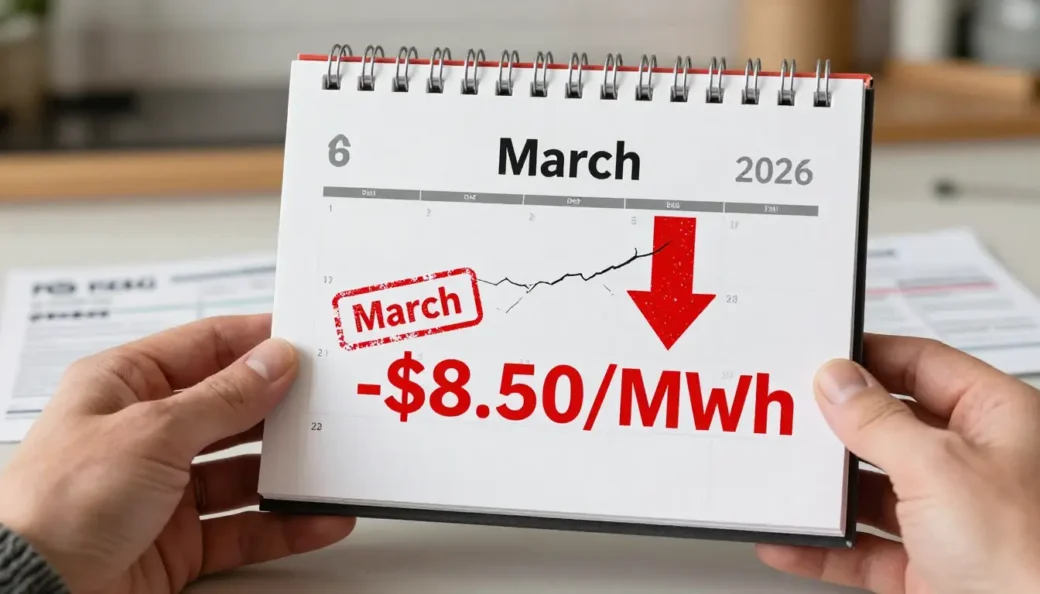
The NJ SREC price 2026 figure gets searched often, and the honest answer requires naming a certificate type before quoting a number.
What Is the NJ SREC Price 2026 Figure?
A verified NJ SREC price 2026 figure should only be reported when reliable market data backs it up, and that data should identify the exact certificate type and date it applies to. A current market quote is not the same as an incentive payment rate, and one quoted price will not apply to every solar system.
Based on the Flett Exchange data cited earlier, reporting-year 2026 legacy certificates were trading in the $175 to $180 range as of August 2025, subject to change as the market continues moving.
Current SREC Prices NJ: Where to Check Market Data
Authoritative sources for current SREC prices in NJ include exchange platforms like Flett Exchange and Xpansiv, which publish dated market reports rather than static figures. Checking the reporting period, certificate category, and transaction basis on any quote is essential before using it in a financial estimate.
A dated price table, refreshed against these sources, is always more reliable than an undated number found in an older article or forum post.
NJ SREC Price 2026 vs. Previous Years
Comparing verified historical figures shows a market that has cooled somewhat as the legacy program winds down and newer incentive structures take over new installations. The NJ SREC price 2026 range sits below the reporting-year 2025 figure, but that trend should not be assumed to continue indefinitely, since it depends on remaining certificate supply.
A year-end average and a price observed on one specific date can differ meaningfully, so homeowners should note which type of NJ SREC price 2026 figure they are looking at before repeating it elsewhere.
New Jersey SREC: Understanding SREC-II and Incentive Payments
New Jersey’s newer program, sometimes called SREC-II or SuSI, replaced ongoing market trading with a fixed payment structure for new systems.
What Is an SREC-II Credit in New Jersey?
SREC-II differs from the legacy SREC market in one key way: it pays a fixed incentive rate rather than a market-traded price. According to published details of New Jersey’s Successor Solar Incentive program, residential net-metered systems earn a flat $85 per SREC-II certificate for 15 years from their interconnection date.
Because this is a fixed incentive rather than a tradable certificate price, it does not move up or down with market demand the way legacy SRECs do. Any new jersey srec estimate that ignores this distinction risks blending two unrelated payment structures into one misleading number.
Tesla SREC-II Buyout Credit per kW in New Jersey 2026
A buyout arrangement is when an installer offers to purchase a homeowner’s future SREC-II income stream upfront, usually at a discount to its estimated total value, instead of the homeowner collecting payments over 15 years. Several installers, including Tesla, have offered versions of this structure in New Jersey.
No single verified per-kW buyout amount from Tesla was confirmed against official New Jersey Board of Public Utilities documentation at the time of writing. Any figure a homeowner sees advertised, historical or otherwise, should be verified against their own signed agreement rather than assumed to apply universally. Tesla’s own solar offering is covered in more depth in Tesla solar panels review guide, which is a useful starting point before comparing any buyout offer.
How to Calculate the Value of an SREC-II Incentive
The math starts with eligible system capacity or production multiplied by the applicable payment rate. Gross incentive value and actual payments received can differ once fees or program adjustments apply.
As a purely illustrative example, a system earning eight SREC-II certificates a year at the $85 fixed rate would generate roughly $680 in gross annual incentive value. That number is a calculation example, not a guarantee for any specific address or contract.
Tesla Buyouts, Credit Ownership, and Net Metering
Buyout offers raise a separate question from pricing: what happens to ownership and to net metering once a lump sum changes hands.
Does Tesla SREC Buyout Affect Net Metering in New Jersey?
A renewable energy credit arrangement and utility net metering are two different mechanisms, and a buyout of one does not automatically change the other. Net-metering eligibility and compensation are governed by separate utility and regulatory rules, not by whatever contract covers SREC-II ownership.
A buyout may affect ownership of future incentive payments, but it should not be assumed to touch net-metering credit or billing structure. Homeowners should review both their solar contract and their utility’s net-metering agreement separately, since a change to one document does not always mean the other changed too. Reading through the guide on getting out of a solar contract is a reasonable place to start if any of this language feels unclear in a signed agreement.
Who Owns the SRECs After a Tesla Buyout?
The solar contract itself decides this, specifically its credit assignment language. System ownership and ownership of environmental attributes like SRECs are legally distinct, and a buyout agreement typically transfers the certificate rights, not the physical system.
A homeowner unsure whether a contract clearly assigns those rights should have it reviewed before signing. SolarInfoPath’s solar panel property damage attorney resource lists related legal contacts that also handle broader solar contract disputes, including credit ownership questions.
SREC Buyout vs. Ongoing Credit Payments
| Factor | Upfront Buyout | Ongoing 15-Year Payments |
| Timing | Lump sum at installation | Annual or periodic over 15 years |
| Certainty | Fixed amount agreed upfront | Subject to program continuation |
| Risk | Installer bears future rate risk | Homeowner bears future rate risk |
| Paperwork | One-time transfer of rights | Ongoing registration required |
Neither structure is automatically better. The right choice depends on contract terms, how long a homeowner plans to stay in the home, and personal risk tolerance.
SREC Prices NJ: Market Rates vs. Fixed Incentive Payments
Confusing a legacy market rate with a fixed incentive payment is one of the most common mistakes homeowners make when researching srec prices nj.
SREC Prices NJ: Quick Comparison Table
| Category | Type | How Price Is Set |
| Legacy SREC | Market-traded certificate | Supply and demand, reported by reporting year |
| SREC-II / SuSI | Fixed incentive payment | Set by program rule, currently $85 for eligible residential systems |
| Buyout offer | Contract-based upfront payment | Negotiated between homeowner and installer |
NJ SREC Prices vs. Fixed SREC-II Rates
Nj srec prices and SREC-II rates answer two different questions. One reflects what a legacy certificate sold for on a given date. The other reflects what the program guarantees for 15 years regardless of market conditions. Neither number substitutes for the other.
Why Legacy SREC Market Prices Differ From Incentive Rates
Market-based pricing responds to supply and compliance demand. Program-defined payments do not. Treating a fixed incentive rate as if it were a tradable market price, or vice versa, produces an inaccurate estimate of what a system will actually earn.
Homeowners who received a quote referencing “srec prices nj” without specifying which category it belongs to should ask their installer to clarify before relying on it.
Legacy SREC Price vs. SREC-II Payment

Payment structure, eligibility requirements, and timing all differ between the two. A legacy certificate sale happens on a market’s schedule. An SREC-II payment follows the program’s disbursement schedule instead.
Combining the two into a single average misrepresents what either program actually pays, so they should always be reported and compared separately.
Where the Legacy Market Could Move Next
Legacy market prices could continue drifting as certificate supply from that program shrinks. Homeowners considering a solar purchase should confirm which program applies to a new system rather than assuming legacy market pricing still applies to new installations, since most new systems now fall under SREC-II instead.
How to Compare SREC Quotes and Payment Offers
Identify the credit or incentive type first. Then check the payment amount, the calculation basis, and any fees. Review contract terms and payment duration before comparing numbers across installers. Any legitimate SREC New Jersey quote should hold up under this kind of line-by-line comparison. Someone comparing multiple installer quotes might also want a solar fraud attorney legal help resource on hand in case a quote seems inconsistent with verified program rates.
NJ SREC: How to Estimate Total Solar Credit Revenue
Once the certificate type is clear, estimating total revenue becomes a straightforward multiplication problem.
How Solar Production Affects Credit Revenue
Eligible generation determines how many certificates a system can earn. Not every kilowatt-hour produced necessarily creates a tradable credit, since metering and program rules define what counts as eligible production.
Example: Estimating Annual Solar Credit Revenue
Using a purely illustrative scenario:
| Calculation Item | Example |
| Eligible credits issued | 8 credits |
| Assumed payment per credit | $80 |
| Illustrative gross revenue | $640 |
These are hypothetical figures, not verified 2026 New Jersey rates. The formula is simple: gross credit revenue equals eligible credits multiplied by the applicable payment per credit. Fees, applicable taxes, and contract-specific deductions can reduce that gross figure, and none of this should be treated as personalized financial or tax advice.
A homeowner sizing a system around expected credit revenue can start with solar panel cost calculator by zip code to estimate installed cost before layering in incentive assumptions.
How SREC Revenue Affects Solar Payback
Credit revenue shortens a simple payback calculation when it is counted correctly. Utility bill savings, incentive payments, and credit revenue should be tracked as three separate line items rather than blended together. Projected credit income should never be treated as guaranteed, since program rules and market prices can both shift.
NJ Solar Incentives 2026: How SRECs Fit Into the Incentive Landscape
SREC-II is one piece of a broader set of nj solar incentives 2026 that New Jersey homeowners can combine.
New Jersey Solar Incentives in 2026
State incentive programs, the federal tax credit, and utility-level programs are three distinct categories, and eligibility rules differ across all three. The federal residential clean energy credit is governed separately from state SREC-II payments, and guide to IRS Section 48 energy credit compliance is a useful reference for the federal side specifically. Application deadlines and program availability should always be verified directly before assuming eligibility.
New Jersey SREC vs. Net Metering Credits
Renewable energy certificates and electricity bill credits are different benefits that can coexist under the right program and utility rules. Every new jersey srec arrangement is separate from the net-metering tariff on a monthly bill. Credit ownership and compensation arrangements matter here, since a contract that assigns SREC rights to an installer does not necessarily affect net-metering credits on a monthly bill.
How Incentives Affect Solar Return on Investment
Upfront cost, annual electricity savings, credit revenue, and ongoing costs all feed into a return calculation. Simple payback and internal rate of return measure different things, and neither incentive should be presented as guaranteed income when projecting either one.
New Jersey Net Metering Grandfathering 2026
Grandfathering questions come up whenever utility compensation rules shift, and 2026 is no exception.
What Does Net Metering Grandfathering Mean in New Jersey?
Grandfathering generally means an existing system keeps the compensation rules that applied when it was approved, even if the utility later changes terms for new applicants. This is a separate question from SREC ownership, which follows the incentive program rather than the utility tariff.
How System Installation Dates Can Affect Eligibility
Installation, interconnection, and approval dates all play a role in which rules apply to a given system. Utility and program documentation should be checked directly rather than assumed, since not every existing system carries identical grandfathering protections.
A homeowner adding battery storage alongside an existing system may want to review the best solar battery storage guide first, since some utilities treat storage additions as a system modification that can affect grandfathered status.
What to Check in a Utility Net-Metering Agreement
Compensation rules for exported electricity, the applicable billing structure, contract and approval dates, and any conditions tied to system or account changes should all be reviewed before assuming a system’s status is locked in.
Solar ROI IRR New Jersey 2026: Measuring the Financial Impact of SRECs
Return on investment and internal rate of return tell homeowners two different things about the same solar purchase.
What Is Solar ROI and IRR?
Return on investment measures total gain relative to what was spent. Internal rate of return accounts for when money comes back, not just how much. Both differ from simple payback, which only measures the time until costs are recovered. Solar payback period guide for the USA explains simple payback in more detail for readers who want that baseline first.
How SREC Revenue Changes a Solar ROI Calculation
In a hypothetical cash-flow example, upfront system cost, annual bill savings, credit revenue, and operating expenses are tracked separately across each year of ownership. Changing the incentive assumption, such as swapping a legacy market price for the fixed SREC-II rate, changes the resulting IRR meaningfully.
Solar Payback With and Without SREC Revenue
An illustrative payback scenario with credit revenue included will generally show a shorter payback period than one without it, though the exact gap depends on eligibility, payment duration, and actual electricity rates.
Final Checklist for Understanding NJ Solar Credit Value
Before relying on any SREC figure from this guide or elsewhere, run through this checklist.
Confirm the Credit Type and Program
Identify whether a system falls under the legacy SREC arrangement, SREC-II, or another incentive program. Confirm registration and eligibility status directly with the program administrator.
Verify the Applicable 2026 Value
Check the date, source, and calculation basis behind any number before using it. Distinguish a market price from a fixed incentive payment every time.
Review Credit Ownership and Net-Metering Terms
Review the solar contract and utility documents together. Confirm whether any buyout affects ownership of credit rights. Keep net-metering compensation and credit revenue as separate line items, not one combined figure.
Homeowners who suspect a signed contract misrepresented any of these terms have options worth exploring. solar scam consumer protection attorney directory is a reasonable starting point for that kind of review.
Readers dealing with a broader dispute rather than a single unclear clause may also want coverage of the 2026 solar panel class action lawsuit.
For a deeper look at how solar production and credit estimates are modeled nationally, the National Renewable Energy Laboratory maintains public research and data that underlies much of the production-based math used throughout this guide (NREL, U.S. Department of Energy).
Frequently Asked Questions About SREC NJ
What is the current NJ SREC price?
There is no single current price. Legacy market certificates were trading roughly $175 to $180 for reporting year 2026 as of an August 2025 market report, while new residential systems under SREC-II earn a fixed $85 per certificate instead. Always confirm which category a quoted number refers to.
How much is an SREC worth in NJ?
It depends on certificate type. A legacy market SREC’s worth changes with supply and demand, while an SREC-II certificate is worth a fixed $85 under current program rules for eligible residential systems.
How much are SRECs worth in NJ in 2026?
For legacy certificates, reporting-year 2026 prices were near $175 to $180 based on August 2025 exchange data. For SREC-II, the fixed rate is $85 per certificate, unaffected by market movement.
What is the difference between SRECs and SREC-II credits?
Legacy SRECs are traded on a market and their price moves with supply and demand. SREC-II certificates pay a fixed incentive rate set by the program, currently $85 per certificate for eligible residential systems over 15 years.
Does a Tesla SREC buyout affect net metering in New Jersey?
Not automatically. A buyout changes ownership of future SREC-II payments under the solar contract, while net metering is governed separately by utility and regulatory rules. Review both documents independently.
How do New Jersey SRECs affect solar ROI and payback?
Credit revenue, whether from legacy SRECs or SREC-II payments, can shorten payback and improve ROI when tracked as its own line item alongside utility savings and system cost, but it should never be assumed guaranteed at a specific dollar figure.
This article by SolarInfoPath (2026 research framework) is part of a comprehensive solar knowledge architecture covering all major high-value sectors including legal disputes (installation negligence, contracts, liability, fraud, lawsuits, liens, HOA and permitting disputes), financial structures (loans, PPA/lease agreements, DSCR financing, tax equity, investment and project finance), tax law (ITC, Section 48/25D, MACRS depreciation, bonus credits, IRS audits, recapture rules, domestic content and IRA/OBBBA compliance), insurance and risk (property damage, hail/wind/fire claims, bad faith insurance disputes, warranty coverage), policy and regulation (net metering, FERC interconnection, state utility rules, incentive programs and regulatory changes), commercial and utility-scale development (EPC contracts, construction delays, performance bonds, receivership, bankruptcy, asset sale and restructuring), real estate impacts (home value, solar leases, liens, title issues, HOA restrictions, easements), and emerging market structures such as battery storage, community solar, agrivoltaics, SRECs, yieldcos, and institutional investment funds. All content is based on publicly available regulatory, financial, and legal sources and is intended strictly for educational and informational purposes, not legal, tax, or financial advice. Readers should always verify current laws, utility policies, tax regulations, and contract terms with qualified licensed professionals before making decisions, as solar regulations, incentives, and financial structures frequently change across jurisdictions and time.

Solar Legal Analyst· Policy Researcher· Investigative Finance Writer Lead Analyst & Founder of SolarInfoPath
Morgan Lee is a solar legal analyst, policy researcher, and investigative finance writer with 12+ years of experience in U.S. renewable energy law, IRS tax credit compliance, and solar litigation. He is the founder of SolarInfoPath, a research-driven platform focused on primary-source analysis of solar contracts, tax law, regulatory policy, and industry disputes affecting homeowners and commercial developers.
His work is grounded in original legal and regulatory sources, including IRS notices, FERC and CPUC rulings, state court filings, PACER records, and UCC lien databases. He specializes in solar contract disputes, injury and workers’ compensation claims, PACE financing issues, tax equity structures, ITC recapture rules, MACRS depreciation, and federal and state solar policy frameworks.
Morgan’s analysis spans solar litigation, finance structures, and regulatory developments such as the IRA and OBBBA, interconnection reform, domestic content rules, and battery storage incentives. He also covers EPC contracts, PPAs, project financing, and utility-scale solar investment structures.