How Long Solar Installation Takes in America: The Full Timeline Explained
Most U.S. homeowners assume solar installation is a quick process: schedule a contractor, mount the panels, and the job is done. The physical installation on your roof typically takes only 1 to 3 days. The full timeline from signed contract to grid connection is a different story entirely. Across the United States, the complete process from initial site assessment to Permission to Operate commonly runs 4 to 12 weeks depending on your state, your utility, and your local permitting office. Understanding how long solar installation takes in America before you start prevents frustration and helps you plan your finances around a realistic activation date.
The gap between roof work and grid connection catches most homeowners off guard. Permits must be pulled before installation begins. Inspections must pass after it finishes. Your utility must approve interconnection before your system can legally generate power for your home. Each of those steps involves parties outside your control, and their processing times vary significantly by location. A homeowner in Phoenix and a homeowner in Boston can both sign contracts on the same day and see their systems activated weeks apart.
The Full Installation Timeline at a Glance
Before getting into each phase, here is the complete process from start to finish:
| Stage | Typical Duration | Who Is Responsible |
| Site assessment and system design | 1 to 2 weeks | Installer |
| Permit application and approval | 1 to 4 weeks | Installer plus local government |
| Equipment ordering and delivery | 1 to 3 weeks | Installer |
| Physical roof installation | 1 to 3 days | Installation crew |
| Local building inspection | 3 to 14 days | Local jurisdiction |
| Utility interconnection and PTO | 1 to 4 weeks | Your utility company |
| Total typical range | 4 to 12 weeks | Multiple parties |
The physical installation is the fastest line on that table. Everything before and after it is where the timeline stretches. Keeping this picture in mind from the beginning makes the waiting periods feel like a predictable part of the process rather than a problem with your project.
What the full cost of a residential solar installation includes in the USA covers what you are paying for across each of these stages and where the cost is concentrated.
Phase One: Design, Permits, and Equipment: The Longest Wait
The permitting phase is consistently the part of the process that takes the most time and involves the least visible progress. After a licensed electrician or engineer completes your system design based on your roof layout, usage, and utility requirements, your installer submits a permit application to your local building department. Some jurisdictions have moved to digital permit systems that process applications in 3 to 7 days. Others still require in-person submissions and manual review, which can extend the wait to 3 to 4 weeks.
State and city matter more than most homeowners expect at this stage. In California, cities like Los Angeles and San Francisco require detailed plan sets and multiple departmental reviews before permits are issued, commonly adding 3 to 6 weeks to the pre-installation phase alone. In Texas, cities like Austin and Dallas have streamlined solar permit processes that frequently clear in 7 to 10 business days. Arizona’s Maricopa County, serving Phoenix and Scottsdale, has invested in digital permitting infrastructure that moves relatively quickly compared to many other large metro areas.
Equipment delivery adds time on top of permitting in most projects. Panels, inverters, and racking systems are typically ordered once permits are approved rather than before, to ensure the installed equipment matches the approved design. Delivery timelines run 1 to 3 weeks depending on supplier availability and your location. Rural homeowners in states like Kansas or Montana may experience longer delivery windows than those in major metros with nearby distribution centers.
How the solar payback period is calculated once your system activates shows why the activation date matters financially and how each week of delay affects your annual savings calculation.
Phase Two: The Physical Installation, Faster Than You Expect
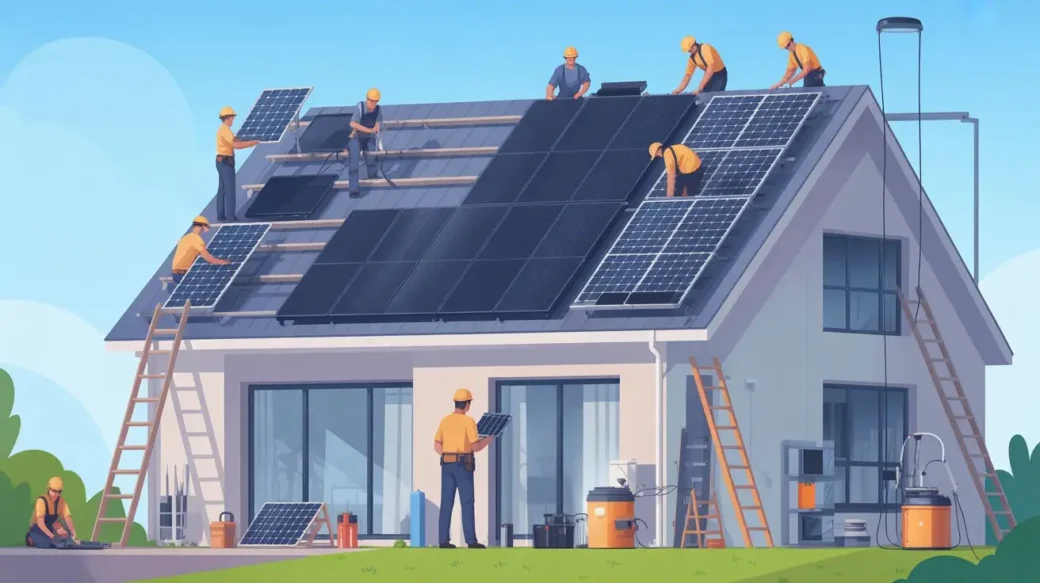
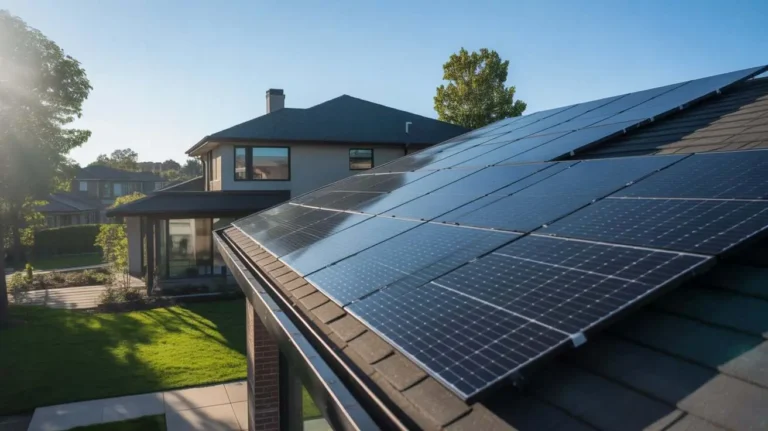
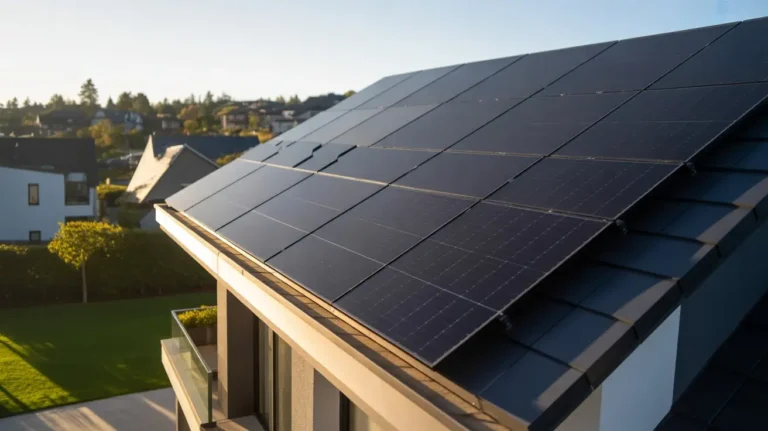
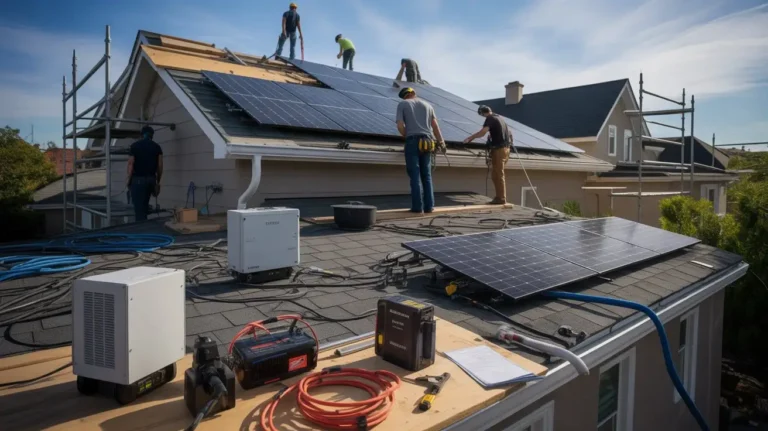
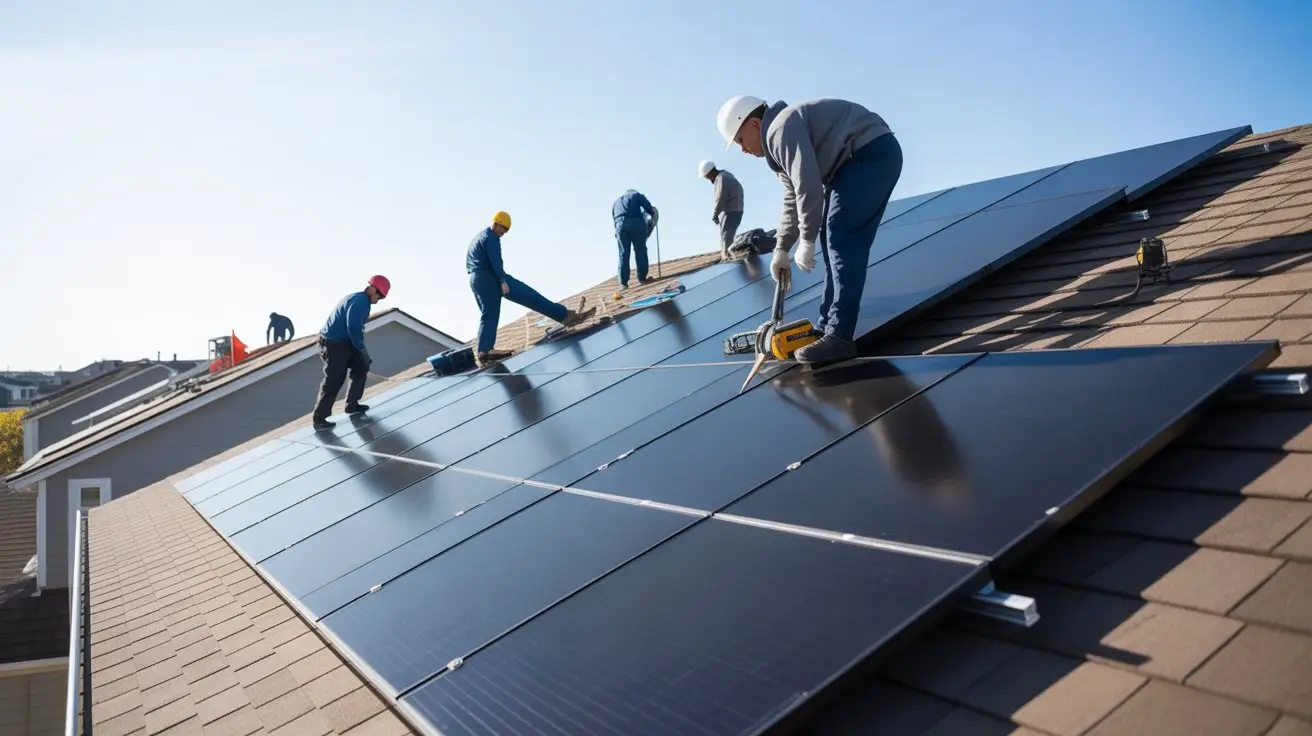
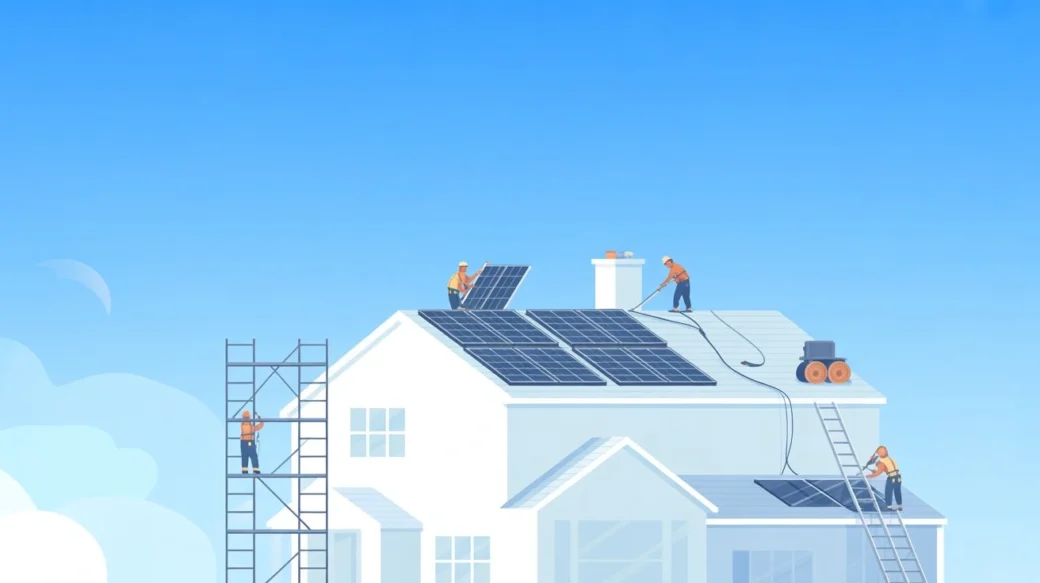
Once permits are approved and equipment arrives, the rooftop work moves quickly. A standard suburban home with a straightforward roof layout and a system between 6 and 10 kilowatts typically takes 1 to 3 days for the installation crew to complete. Mounting hardware goes onto the roof first, followed by the panels, then wiring to the inverter, and finally connection to your electrical panel and monitoring system.
I’ve tracked installation times across different U.S. markets, and the pattern is consistent, simple single-story homes with south-facing asphalt shingle roofs in high-sun states like Arizona and Florida finish in one long day. Two-story homes with multiple roof planes, tile roofs that require careful panel-by-panel removal and reinstallation, or homes that need an electrical panel upgrade before solar can connect all add time to the installation day count. Tile roofs in particular add meaningful labor time because each tile must be removed cleanly and replaced without damage after mounting hardware is secured beneath it.
Weather affects installation day timelines in northern states more than southern ones. A crew installing panels in Boston in November faces cold temperatures and shorter daylight windows that slow progress. The same crew working in Phoenix or Tampa in March faces none of those constraints. Summer installations in Arizona and Nevada tend to be weather-predictable even though temperatures are extreme, and crews adapt with early-morning start times.
Phase Three: Inspection and Utility Approval, The Final Wait
After installation is complete, two approval steps stand between your finished system and your first day of solar production. First, a local building inspector must visit your home and verify that the installation meets the requirements of your approved permit. Second, your utility must review the interconnection and issue Permission to Operate, commonly abbreviated as PTO.
Local inspections are typically scheduled within 3 to 10 business days of the installer requesting one. In high-demand markets like California and New York, where solar adoption is high and inspection departments are busy, scheduling can stretch to 2 weeks. In lower-adoption markets, inspections sometimes happen within 2 to 3 business days.
Utility interconnection is the step that most often surprises homeowners. Your panels are installed. Your system passed inspection. Everything looks ready. But your utility must formally approve the grid connection before your installer can flip the system on. Utilities in states with high solar adoption like California, Massachusetts, and New York process many interconnection applications simultaneously, which can create queues. This step alone commonly takes 1 to 4 weeks. In California, utilities including PG&E and SCE handle high application volumes and sometimes run toward the longer end of that range. In Texas, where interconnection policies vary by utility and there is no statewide net metering requirement, processing times depend entirely on which utility serves your address.
According to the U.S. Department of Energy, the residential solar installation process and interconnection requirements across American states are covered in detail on Energy.gov, including what documentation your utility typically requires before issuing Permission to Operate.
State by State: How Installation Timelines Compare
| State | Typical Total Timeline | Permit Speed | Key Factors |
| California | 8 to 12 weeks | 3 to 6 weeks | High demand; detailed utility review |
| Massachusetts | 7 to 10 weeks | 2 to 4 weeks | Winter weather adds installation days |
| New York | 7 to 10 weeks | 2 to 4 weeks | Utility review extends PTO timeline |
| Florida | 5 to 8 weeks | 1 to 3 weeks | County-based permitting varies widely |
| Arizona | 4 to 7 weeks | 1 to 2 weeks | Digital permits; high installer capacity |
| Texas | 4 to 7 weeks | 1 to 2 weeks | Varies by utility; no statewide net metering |
| Kansas | 3 to 6 weeks | 1 to 2 weeks | Lower adoption means less permit backlog |
These ranges reflect typical residential projects on standard suburban homes. A project with complications, roof repairs needed, electrical panel upgrade required, HOA approval process, or a complex roof layout — can run toward the longer end of these ranges or beyond them regardless of state.
City by City: What the Timeline Means for Your Annual Savings
| City | Avg Activation Wait | Annual Savings After Activation | Key Notes |
| Los Angeles, CA | 8 to 12 weeks | $1,900 to $2,200 | Longer wait; highest annual savings reward patience |
| Phoenix, AZ | 4 to 7 weeks | $1,350 to $1,600 | Fastest major market; digital permitting helps |
| Tampa, FL | 5 to 8 weeks | $1,200 to $1,450 | County variation matters; Hillsborough faster than some |
| Austin, TX | 4 to 7 weeks | $1,050 to $1,250 | Austin Energy interconnection generally efficient |
| Boston, MA | 7 to 10 weeks | $1,600 to $1,900 | Winter scheduling adds time; strong savings justify wait |
One thing people often miss when comparing these timelines is that the wait in California and Massachusetts feels longer but leads to the highest annual savings of any major U.S. market. A homeowner who activates in Los Angeles after a 10-week process and saves $2,000 per year is in a stronger financial position than one who activates in Kansas after 4 weeks and saves $800 per year.
What U.S. homeowners actually save per year after their system activates connects the activation date to real annual savings numbers so you can calculate your financial outlook from the moment your system turns on.
What Can Speed Up or Slow Down Your Specific Project
Certain property and project characteristics consistently affect timelines in ways that are worth knowing before you start.
Factors that typically speed up the process include a simple single-story roof with a clear south or west facing orientation, an electrical panel that is already adequate for solar interconnection, a jurisdiction with a digital permit portal, and an installation scheduled outside peak demand season. Installers in states like Arizona and Texas often have more scheduling flexibility in winter months when demand is lower.
Factors that commonly extend the timeline include a roof that needs repair or replacement before solar can be installed safely, an electrical panel upgrade required to handle the solar connection, an HOA approval process that must run parallel to permitting, a complex multi-plane roof that requires custom engineering, and scheduling during peak spring and summer periods when installer availability tightens in high-adoption markets.
Whether solar is worth the full investment process for U.S. homeowners addresses the complete picture including timeline, cost, savings, and incentives so you can evaluate the decision with accurate expectations before signing anything.
Final Thoughts
How long solar installation takes in America depends on where you live more than almost any other factor. The physical work on your roof takes 1 to 3 days regardless of state. Everything surrounding that work, permits, inspections, and utility approval, takes 4 to 12 weeks depending on your jurisdiction and utility. California and Massachusetts homeowners typically wait the longest. Arizona and Texas homeowners move through the process faster. Every market eventually reaches the same outcome: a system that produces clean electricity for 25 years or more.
The weeks spent waiting for permits and utility approval feel long when you are watching your electricity bill arrive without solar offsetting it. Keeping the full production timeline in perspective helps. A system that takes 10 weeks to activate and then runs for 25 years produces electricity for 1,290 weeks after that activation date. The pre-activation wait is a small fraction of the total value the system delivers. Getting the process done correctly, with proper permits and a thorough utility interconnection review, is what ensures those 1,290 weeks of production are safe, code-compliant, and financially rewarding.
Frequently Asked Questions
How long does solar installation take from start to finish in America?
The typical total timeline runs 4 to 12 weeks from signed contract to Permission to Operate. Physical roof installation takes 1 to 3 days; the remainder is permitting, inspection, and utility approval.
Why does the solar permitting process take so long in states like California?
High solar adoption creates permit backlogs in California jurisdictions. Cities like Los Angeles and San Francisco require detailed plan reviews across multiple departments, which commonly adds 3 to 6 weeks before installation can begin.
Can the solar installation timeline be shortened? Simple roof layouts, digital permit systems, and scheduling outside peak season all reduce timelines. Projects in Arizona and Texas regularly complete in 4 to 7 weeks due to streamlined permitting and high installer capacity.
What is Permission to Operate and why does it delay activation?
Permission to Operate is your utility’s formal approval to connect your system to the grid. Even after installation and inspection pass, your utility must process the interconnection application before your system can legally produce power, which typically takes 1 to 4 weeks.
Does time of year affect how long solar installation takes in America?
Yes. Northern states like Massachusetts and New York see weather delays in winter that can add days to rooftop installation. Southern states like Arizona and Florida are more weather-predictable year round, though installer availability tightens during spring and summer peak demand periods.
What can unexpectedly extend my solar installation timeline?
Roof repairs required before installation, electrical panel upgrades, HOA approval processes, and utility interconnection backlogs are the most common causes of timelines running longer than initial estimates.

Morgan Lee is a homeowner and solar energy researcher based in the United States. After installing a rooftop solar system in 2022 and spending months comparing quotes, incentives, and installer reviews, Morgan realized how confusing and overwhelming the process felt for most American families. That experience led to the creation of SolarInfoPath, a no-pressure, educational platform designed to help U.S. homeowners understand solar energy clearly and confidently. Morgan focuses on practical, research-backed information covering solar costs, installation timelines, federal tax credits, and long-term savings. All content on this site is written from a homeowner’s perspective with the goal of making solar energy simple and accessible for everyday Americans.