
Solar project communication bottlenecks happen when developers, utilities, engineers, contractors, equipment suppliers, and permitting agencies do not exchange project information efficiently. Delays can involve interconnection studies.
They can involve engineering revisions. They can involve utility approvals, power line construction, infrastructure upgrades, equipment procurement, and final grid connection. Understanding where communication breaks down helps explain why a schedule slips even when construction itself is moving forward.
This guide walks through where these bottlenecks form, why interconnection delays happen, and how to trace a stalled project back to its actual cause.
What Are Solar Project Communication Bottlenecks?
These are points where information stalls between the parties responsible for moving a project forward. A solar project is not a single-party effort. It requires coordination among several organizations working from different priorities and different timelines.
The major parties typically include the solar developer, the utility, the interconnection team, electrical engineers, the EPC contractor, equipment manufacturers, transmission and distribution planners, and permitting authorities. Information has to move accurately between all of them, at every stage. A missing document or an unanswered technical question at one stage can affect several downstream activities at once, even when nobody involved is working slowly.
Communication problems are distinct from technical, construction, and infrastructure delays, though they often get blamed for the same schedule slip. A study that takes longer because grid capacity is genuinely constrained is a technical delay. A study that stalls because nobody confirmed which point of interconnection applies is a communication bottleneck.
Where Communication Bottlenecks Develop
Bottlenecks can form at any of these stages: site development, interconnection application, feasibility studies, system-impact studies, facilities studies, engineering, equipment procurement, construction, testing, and final grid connection.
Why Communication Matters in Solar Development
Utility requirements affect engineering decisions. Engineering decisions affect equipment procurement. Equipment changes affect construction. Construction schedules affect utility testing. Utility testing affects when the project can actually operate. Each link in that chain depends on accurate information from the one before it.
Why Are There Delays in Solar Interconnection?
Why are there delays in solar interconnection? There is rarely one single cause. Delays usually come from some combination of application backlogs, incomplete technical information, engineering studies, grid-capacity constraints, utility review timelines, network upgrades, design changes, and documentation problems.
It helps to separate an interconnection-study delay from a physical construction delay. A study delay means the utility has not yet finished evaluating the project’s impact on the grid. A construction delay means physical work, either on the solar facility or on grid infrastructure, has not been completed. The two produce the same symptom: a project that is not yet connected, but they need different fixes.
Interconnection Queue Backlogs
An interconnection queue is the ordered list of projects waiting for utility studies. Multiple solar projects often wait for the same limited pool of utility engineering resources. Study sequencing means an earlier project’s complications can push back the timeline for projects behind it in the queue. Queue position alone does not establish a guaranteed completion date, since a project ahead of yours can still introduce delays that ripple forward.
Incomplete Interconnection Information
Utilities typically need electrical specifications, inverter information, system capacity, point of interconnection, site information, protection requirements, and updated engineering documents. Missing any of these can trigger additional utility questions and add a full review cycle to the timeline. A single outdated drawing can be enough to restart part of the process.
Solar Project Bottlenecks During Interconnection
These often surface most visibly during interconnection, when technical questions move back and forth between utility engineers and project engineers.
Delays here tend to come from unclear responsibility, slow responses, conflicting documents, outdated project information, and utility requests that were never formally tracked. Communication should be tracked by project milestone, not just by date, so a stalled request is visible before it becomes a missed deadline.
Developer-to-Utility Communication
This direction covers application submissions, technical documents, study responses, design changes, and construction schedules. The developer is generally responsible for keeping this information current and complete.
Utility-to-Developer Communication
This direction covers study results, technical requirements, network-upgrade requirements, protection requirements, testing requirements, and approval milestones. A developer waiting on any of these has limited ability to move the project forward independently.
Poor communication about timelines is a problem on the residential side of the industry too, and background on a solar scam consumer protection attorney covers what recourse homeowners look into when a promised connection date turns out to have been unrealistic from the start.
Power Line Installation Delays in Solar Projects
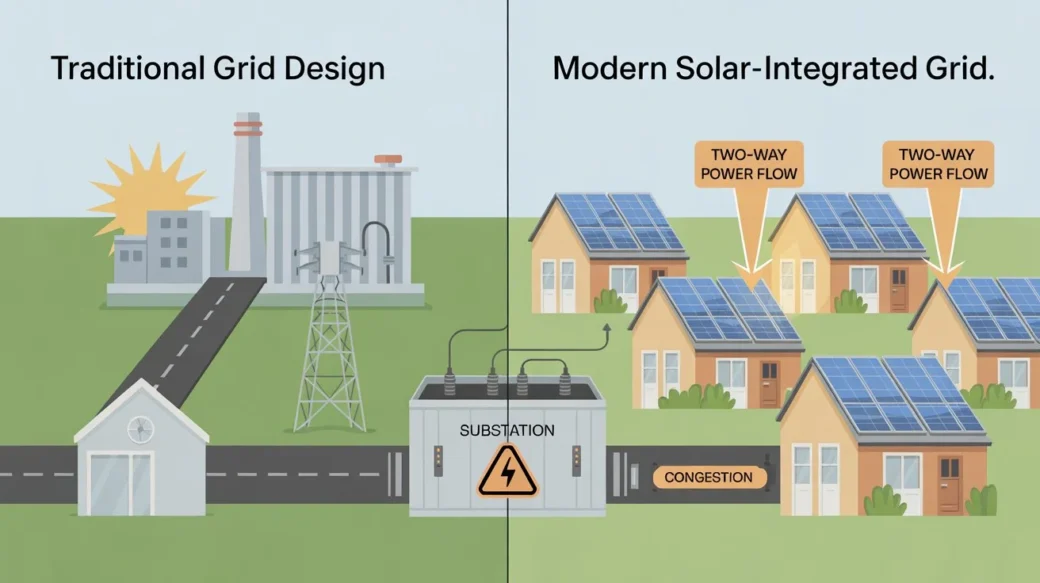
Solar generation needs appropriate transmission or distribution infrastructure to actually deliver electricity to the grid. That infrastructure includes transmission lines, distribution lines, substations, transformers, switchgear, and protection equipment. A solar facility can be mechanically complete, fully built and tested, and still unable to export electricity because the required grid infrastructure is not finished.
For a sense of how land and infrastructure requirements scale on bigger projects, this utility-scale solar cost and land guide breaks down what a large interconnected system actually requires before it can export power.
Common Causes of Power Line Installation Delays
These include right-of-way requirements, engineering, permitting, land access, equipment procurement, contractor availability, weather, utility construction scheduling, and inspection and testing. Land access disputes and construction damage claims are not unique to utility-scale line work either, and this overview of a solar panel property damage attorney covers the same category of issue as it plays out on individual residential sites.
How Line Construction Affects Solar Project Schedules
The sequence runs: solar facility construction, then grid infrastructure, then testing, then interconnection, then authorization, then electricity export.
| Infrastructure | Function | Potential delay |
| Transmission line | Moves electricity over longer distances | Engineering/construction |
| Distribution line | Connects project to distribution network | Utility construction |
| Transformer | Changes voltage | Procurement/installation |
| Substation | Connects electrical systems | Engineering/construction |
| Switchgear | Controls and protects electrical equipment | Procurement/testing |
Power Connection Delays After Solar Construction
Completing solar panel installation does not automatically mean grid connection. Final connection requires electrical inspections, metering, protection testing, communications systems, utility witness testing, and permission to operate. Any one of these can become the actual bottleneck, even after the visible construction work looks done.
Why a Completed Solar Project May Still Be Waiting
Common reasons include utility infrastructure not yet completed, final documentation still pending, protection settings awaiting approval, metering equipment unavailable, testing not yet scheduled, and utility approval still pending.
Construction Completion vs. Grid Connection
| Milestone | What it means |
| Solar construction complete | Generation equipment is installed |
| Electrical testing complete | Equipment has passed required testing |
| Grid infrastructure complete | Required utility upgrades are available |
| Interconnection testing complete | Connection has been tested |
| Authorization | Project can operate according to applicable requirements |
Delays like these carry a real cost, since a project sitting idle after construction still accrues financing charges. For a sense of how that carrying cost compares against typical installation pricing nationally, this average solar panel cost reference shows what a delayed connection is actually holding up.
Utility Infrastructure Delays Affecting Solar Projects
Utility infrastructure delays occur when grid-side work becomes the limiting factor, even though the solar facility itself is ready to operate. This category covers substation upgrades, transmission upgrades, distribution upgrades, transformer replacement, switchgear, protection systems, and communications infrastructure.
The key distinction is between developer-controlled work, which the project team can usually accelerate, and utility-controlled infrastructure, which the developer generally cannot.
Why Utility Infrastructure Upgrades Take Time
Engineering studies, equipment procurement, construction planning, land access, right-of-way, permitting, utility scheduling, and testing and commissioning all add time before an upgrade is actually usable.
How Infrastructure Constraints Create a Grid Delay
Insufficient grid capacity moves through a predictable sequence: study, then required upgrade, then engineering, then procurement, then construction, then testing, then interconnection.
Some homeowners researching similar-sounding delays for residential systems paired with storage may find it useful context to compare against this best solar battery storage guide, since battery-inclusive systems often trigger their own separate interconnection review on the utility side.
Solar Workflow Bottlenecks From Development to Operation
Solar workflow bottlenecks are points anywhere in the full project sequence where progress stalls. That sequence runs: site selection, interconnection application, studies, engineering, approvals, procurement, construction, testing, and grid connection. Each stage depends on information from the one before it, so an issue in one stage rarely stays contained to that stage.
Common Solar Workflow Bottlenecks
These include waiting for utility information, engineering revisions, permit delays, equipment availability, design changes, construction scheduling, inspection scheduling, and testing coordination.
How One Bottleneck Creates Multiple Delays
A single change can cascade. The utility identifies a required design change. The engineer revises the design. Equipment specifications change as a result. Procurement is updated to match. The contractor revises the construction schedule. The utility testing date moves. The project’s connection date changes last of all.
Delays that stretch a project’s timeline also stretch out its return on investment. This national breakdown of solar payback periods shows how a delayed connection date pushes back the point at which a project starts generating revenue.
What’s Driving Delays in Grid Interconnections?
What’s driving delays in grid interconnections? Four broad categories cover most cases.
Interconnection Queue Pressure
The number of projects awaiting studies, utility engineering workload, study sequencing, and project complexity all affect how quickly a queue moves.
Grid Capacity Constraints
Transmission limitations, distribution limitations, substation capacity, and required network upgrades all limit how much new generation a given point on the grid can accept.
Engineering and Technical Requirements
Voltage, protection, system stability, inverter-based resources, power quality, and grid-impact studies all need to be resolved before a project can interconnect safely.
For readers who want an independent look at how these technical grid constraints are studied, the U.S. Department of Energy’s National Renewable Energy Laboratory publishes research on grid integration and interconnection capacity that goes well beyond what any single utility discloses.
Construction and Equipment Constraints
Transformers, switchgear, transmission equipment, construction crews, and procurement schedules can all become the binding constraint, regardless of how quickly the paperwork moves.
ComEd Greenfield Site Interconnection Approval Timeline
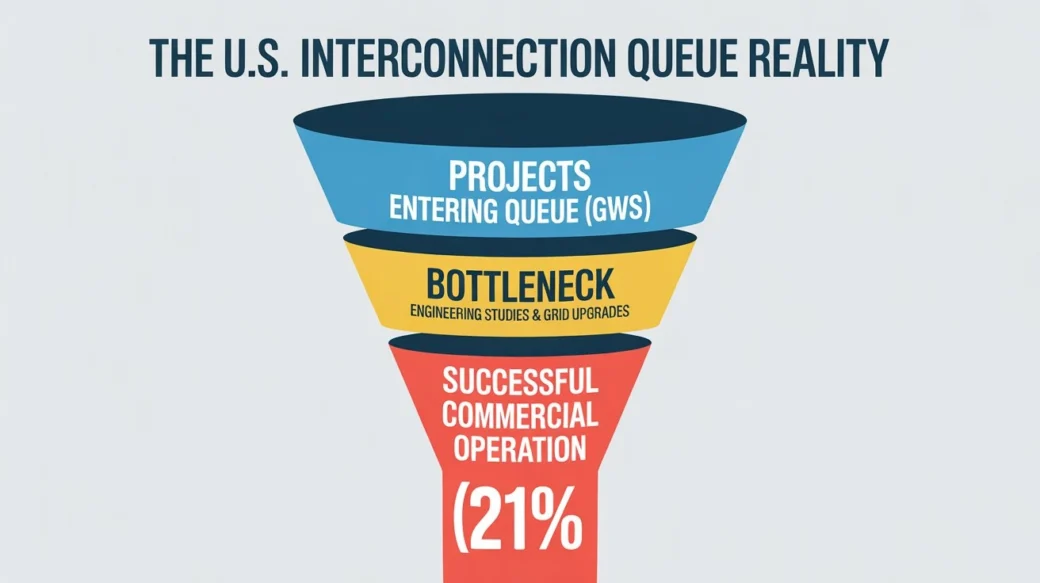
A ComEd greenfield site interconnection approval timeline follows the same broad process as other utility interconnections, applied to a site with no existing generation infrastructure.
What Is a Greenfield Interconnection?
Greenfield development means building on a site with no prior generation history. That differs from adding generation to an existing site, where some infrastructure and utility relationships already exist. New infrastructure is often required precisely because nothing was there before.
Major Stages of a ComEd Greenfield Interconnection
The stages generally run: project application, technical information, utility review, interconnection studies, required upgrades, engineering, interconnection agreement, construction, testing, and final approval.
Why the ComEd Timeline Can Vary
Project size, point of interconnection, required studies, network upgrades, utility workload, equipment availability, construction requirements, and testing all affect the specific timeline. Current ComEd requirements and published timelines should be verified directly before relying on any specific duration.
Developers weighing whether a larger interconnected project is worth pursuing at all may also want to review this look at whether solar farms are worth it, since utility-scale economics factor directly into how much interconnection delay a project can absorb.
Utility Interconnection Delays: Finding the Responsible Bottleneck
Utility interconnection delays are a broad term that can describe several different situations. It helps to distinguish utility study delays, developer documentation delays, engineering delays, infrastructure delays, construction delays, and testing delays from each other before assigning blame.
Developer-Controlled vs. Utility-Controlled Delays
| Delay | Potential responsible party |
| Missing project documents | Developer/project team |
| Engineering revision | Developer/engineer |
| Interconnection study | Utility/interconnection team |
| Network upgrade | Utility/project coordination |
| Equipment procurement | Project or utility, depending on equipment |
| Utility testing | Utility + project team |
| Final authorization | Utility |
Responsibility ultimately depends on the project’s specific interconnection agreement and the applicable process, not on a general assumption about who is usually at fault. This distinction matters just as much on smaller commercial installations, where the same category of dispute shows up against the backdrop of a different budget, closer to what’s outlined in this commercial solar installation cost breakdown.
Disputes over responsibility for a delayed project can occasionally escalate into formal complaints, and on the residential side, prolonged unresolved disputes have led some homeowners to consult resources like a solar fraud attorney when a contractor’s promised timeline turns out to have been misrepresented from the start.
Solar Project Communication Bottlenecks Between Engineering and Construction
frequently show up between engineering and construction, since revised electrical drawings, equipment specifications, protection settings, utility requirements, and construction sequencing all have to reach the field crew accurately. When construction proceeds using outdated information, the resulting rework can cost more time than the original delay would have.
Engineering-to-Procurement Communication
This covers equipment specifications, inverter requirements, transformer specifications, switchgear, and protection equipment.
Engineering-to-Construction Communication
This covers drawings, site plans, electrical designs, revised requirements, and utility instructions.
Fire risk during and after installation is a related concern that engineering and construction teams have to account for in their protection settings. This explainer on whether solar panels can cause fire covers the actual electrical failure modes involved, which is part of why protection equipment specifications get so much scrutiny during utility review.
How to Identify a Grid Delay in a Solar Project
A grid delay can usually be traced using a simple diagnostic framework.
| Symptom | Possible bottleneck |
| Application not accepted | Documentation |
| Study still pending | Utility engineering/queue |
| Upgrade required | Grid infrastructure |
| Equipment waiting | Procurement |
| Construction finished but no export | Interconnection/testing |
| Testing date unavailable | Utility scheduling |
| Approval pending | Final utility review |
Questions to Ask When a Solar Project Is Delayed
Which milestone is currently incomplete? Who owns the outstanding action? Is the delay technical, administrative, infrastructure-related, or construction-related? Is additional documentation required? Has the utility issued new requirements? Has the project design changed? Is an infrastructure upgrade unfinished?
Power Line Installation Delays and Utility Infrastructure Delays
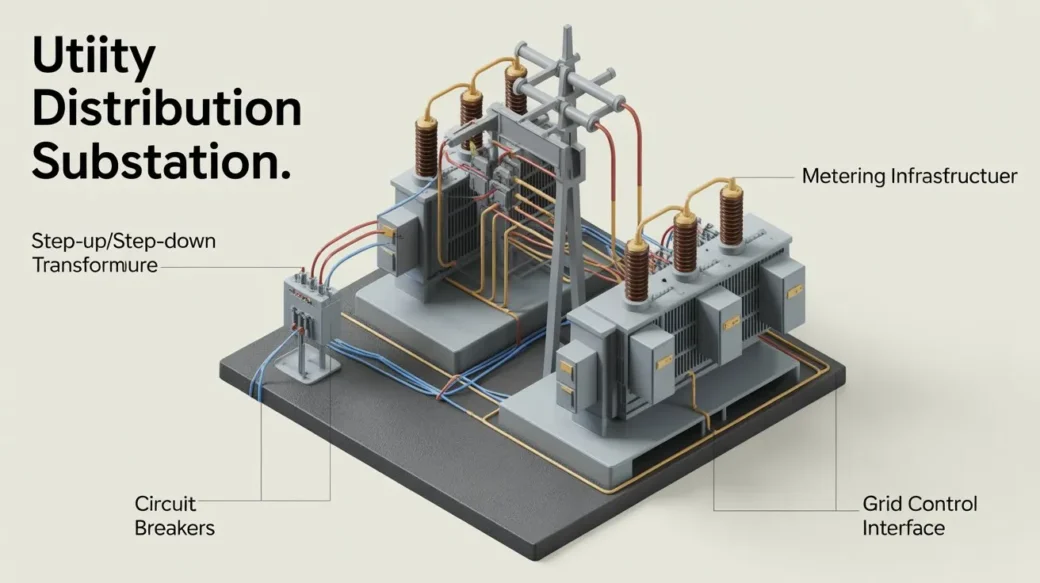
Line construction and infrastructure upgrades interact more than they run in parallel. Substation work often has to occur before line connection is possible. Transmission work depends on engineering approval that may take months to finalize.
Equipment procurement has to happen before construction can start, not alongside it. Infrastructure work can carry a longer schedule than the solar array installation itself, which is why a finished array is not the same as a finished project.
Infrastructure Dependencies
The dependency chain runs: engineering, then permits, then equipment, then construction, then inspection, then testing, then connection.
Why Solar Construction Can Finish Before Grid Infrastructure
Solar equipment can often be installed independently of grid-side work. Utility upgrades frequently require separate engineering studies. Transmission or distribution work may involve entirely different contractors than the solar installer. Utility testing cannot occur until the required infrastructure is actually ready, regardless of how complete the solar side is.
Estimating the cost of the solar-side work in isolation is more straightforward than estimating the utility-side timeline, and tools like this solar panel cost calculator by zip code can help separate the two when a client asks why “the panels are done” hasn’t translated into “the project is connected.”
How to Reduce Solar Workflow Bottlenecks
Reducing solar workflow bottlenecks starts with a single source of project information that every party references. From there: track every utility request, assign responsibility for each action, use document version control, record important project changes, maintain a milestone schedule, track dependencies rather than only completion dates, confirm technical requirements before procurement, and coordinate utility testing with construction schedules.
Solar Project Communication Checklist
Current project design. Current interconnection documents. Utility requirements. Engineering revisions. Equipment specifications. Permit status. Infrastructure status. Construction status. Testing schedule. Final approval status.
Incentive deadlines add their own pressure to this coordination problem, since a program with a fixed expiration date does not wait for a slow interconnection queue. This breakdown of New Jersey solar rebates and credits shows how a state-level program’s timing can collide with an unrelated utility delay, forcing a project team to manage both clocks at once.
A similar dynamic shows up in this look at why solar panels are worth it in Colorado, where state-specific program rules interact with the same kind of utility timeline pressure.
Why Are There Delays in Solar Interconnection? A Complete Delay Breakdown
| Delay category | Example | Potential impact |
| Application | Missing information | Review cannot proceed |
| Study | Additional analysis | Schedule extends |
| Engineering | Design revision | Procurement changes |
| Infrastructure | Substation upgrade | Connection delayed |
| Equipment | Transformer unavailable | Construction delayed |
| Construction | Line work incomplete | Export unavailable |
| Testing | Protection testing | Operation delayed |
| Approval | Final utility review | Connection pending |
This table consolidates the categories already covered rather than introducing anything new. Every delay a project experiences should map to one of these rows.
Power Connection Delays: Final Connection Problems to Watch
The final stage carries its own set of problems that can prevent operation even after everything else looks finished. These include testing, metering, protection, communications, utility inspection, documentation, and authorization.
What Happens Before Final Grid Connection?
Required infrastructure is completed. Project electrical systems are tested. Utility requirements are confirmed. Protection systems are tested. Metering is completed. Utility inspection and testing are completed. Required documents are finalized. Authorization is granted under the applicable process.
Prolonged disputes over who bears responsibility for delays at this final stage occasionally end up in litigation, including cases tracked under broader industry coverage like this solar panel class action lawsuit roundup, where unmet timeline promises became a central issue.
What’s Driving Delays in Grid Interconnections? Final Summary
Six drivers account for most of what has been covered here: interconnection queues, engineering studies, grid-capacity constraints, utility infrastructure upgrades, equipment and construction schedules, and communication and documentation problems.
A specific project delay should be traced to its specific unfinished milestone, not assumed to be caused automatically by the utility or the developer. The diagnostic framework and checklists above exist precisely so that assumption does not have to be the default.
Not every technical question raised during review turns out to be substantive. Some are closer to the kind of misconception addressed in this piece on whether solar panels emit radiation, where a legitimate-sounding concern turns out to have a straightforward technical answer once someone actually checks it.
Frequently Asked Questions
Why Are There Delays in Solar Interconnection?
Common causes include queue backlogs, engineering studies, grid-capacity constraints, infrastructure upgrades, technical requirement reviews, and documentation problems.
What Causes Power Line Installation Delays?
Engineering, permitting, right-of-way requirements, equipment procurement, contractor availability, weather, construction scheduling, and inspection and testing all contribute.
What Causes Power Connection Delays?
Testing, unfinished infrastructure, metering, protection system approval, pending documentation, and final authorization are the usual causes.
What Are Utility Infrastructure Delays?
These involve substations, transformers, transmission lines, distribution systems, and other grid upgrades that fall outside the developer’s direct control.
What’s Driving Delays in Grid Interconnections?
Queue pressure, grid capacity constraints, engineering and technical requirements, and construction and equipment constraints are the four major factors.
This article by SolarInfoPath (2026 research framework) is part of a comprehensive solar knowledge architecture covering all major high-value sectors including legal disputes (installation negligence, contracts, liability, fraud, lawsuits, liens, HOA and permitting disputes), financial structures (loans, PPA/lease agreements, DSCR financing, tax equity, investment and project finance), tax law (ITC, Section 48/25D, MACRS depreciation, bonus credits, IRS audits, recapture rules, domestic content and IRA/OBBBA compliance), insurance and risk (property damage, hail/wind/fire claims, bad faith insurance disputes, warranty coverage), policy and regulation (net metering, FERC interconnection, state utility rules, incentive programs and regulatory changes), commercial and utility-scale development (EPC contracts, construction delays, performance bonds, receivership, bankruptcy, asset sale and restructuring), real estate impacts (home value, solar leases, liens, title issues, HOA restrictions, easements), and emerging market structures such as battery storage, community solar, agrivoltaics, SRECs, yieldcos, and institutional investment funds. All content is based on publicly available regulatory, financial, and legal sources and is intended strictly for educational and informational purposes, not legal, tax, or financial advice. Readers should always verify current laws, utility policies, tax regulations, and contract terms with qualified licensed professionals before making decisions, as solar regulations, incentives, and financial structures frequently change across jurisdictions and time.

Solar Legal Analyst· Policy Researcher· Investigative Finance Writer Lead Analyst & Founder of SolarInfoPath
Morgan Lee is a solar legal analyst, policy researcher, and investigative finance writer with 12+ years of experience in U.S. renewable energy law, IRS tax credit compliance, and solar litigation. He is the founder of SolarInfoPath, a research-driven platform focused on primary-source analysis of solar contracts, tax law, regulatory policy, and industry disputes affecting homeowners and commercial developers.
His work is grounded in original legal and regulatory sources, including IRS notices, FERC and CPUC rulings, state court filings, PACER records, and UCC lien databases. He specializes in solar contract disputes, injury and workers’ compensation claims, PACE financing issues, tax equity structures, ITC recapture rules, MACRS depreciation, and federal and state solar policy frameworks.
Morgan’s analysis spans solar litigation, finance structures, and regulatory developments such as the IRA and OBBBA, interconnection reform, domestic content rules, and battery storage incentives. He also covers EPC contracts, PPAs, project financing, and utility-scale solar investment structures.