Types of Solar Panels for U.S. Homes in 2026: The Complete Comparison Guide
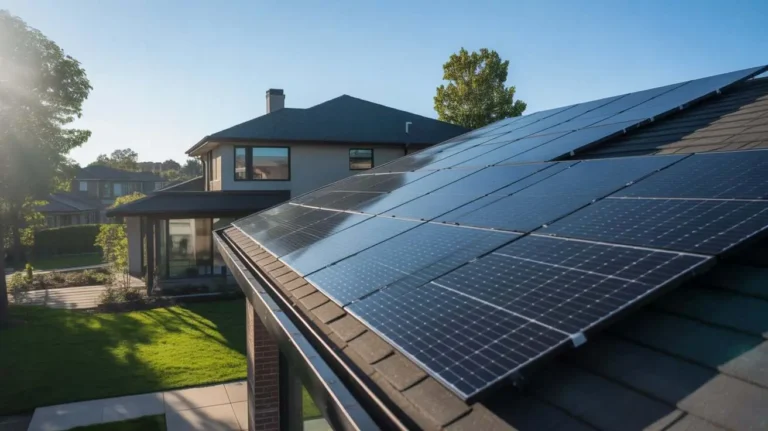
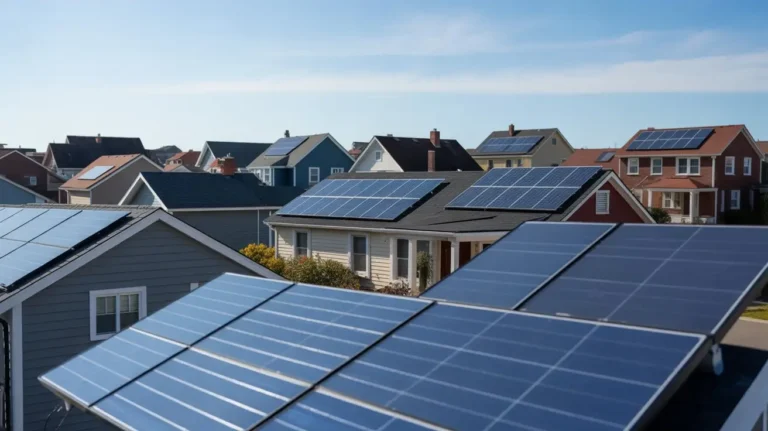
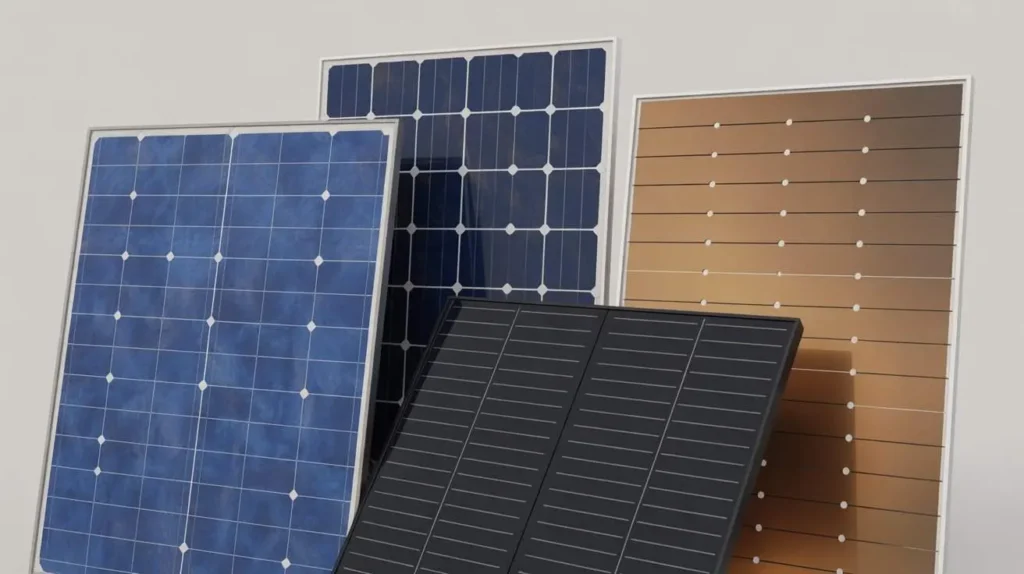
The types of solar panels available to American homeowners in 2026 have expanded well beyond the simple three-category breakdown most guides still reference. Monocrystalline, polycrystalline, and thin-film are the starting point, but PERC cells now dominate the residential market, bifacial panels are gaining ground in open-roof installations, and HJT technology is setting new efficiency records for homeowners with limited roof space. Choosing the right panel type is not just a technical question, it directly affects your system cost, your annual production, and how quickly your investment pays back against your electricity bill.
Tracking installation data across different U.S. markets shows how dramatically climate and roof orientation shift the practical performance gap between panel types. A high efficiency monocrystalline PERC panel on a south facing roof in Phoenix produces measurably more per watt than the same panel on a partially shaded roof in Boston. Panel type matters, but it works in combination with your specific site conditions rather than independently of them. Your electricity rate, roof size, and local sun hours all shape which type delivers the strongest financial return.
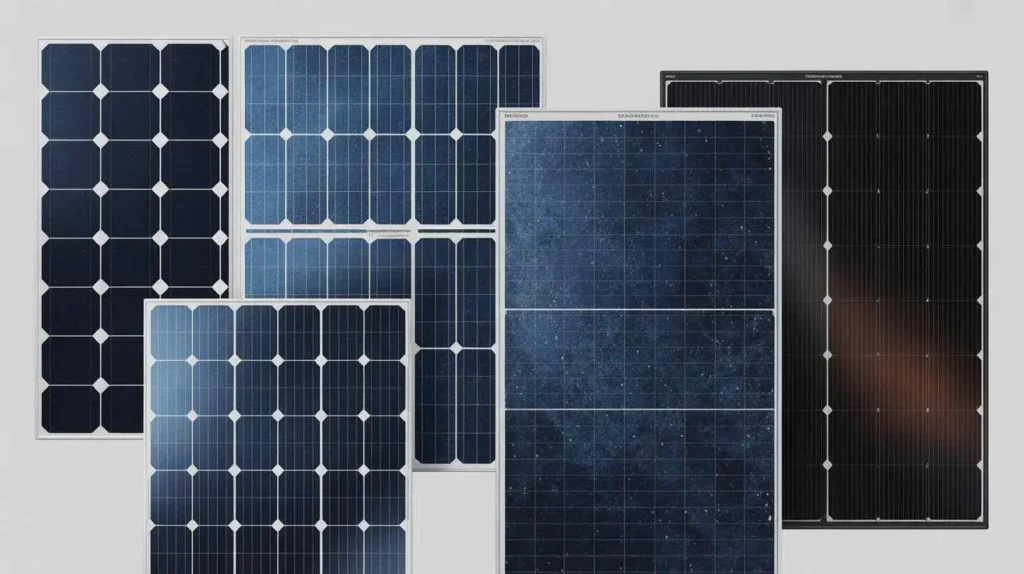
The Complete Panel Type Comparison: All Five Categories
Most articles stop at three panel types. Here is the full picture for 2026:
| Panel Type | Efficiency Range | Cost Per Watt | Lifespan | Best Climate | Ideal For |
| Standard Monocrystalline | 17% to 20% | $0.70 to $0.90 | 25 to 30 years | All climates | Average roofs with good sun exposure |
| PERC Monocrystalline | 20% to 23% | $0.80 to $1.00 | 25 to 30 years | All climates | Limited roof space; high usage homes |
| Polycrystalline | 15% to 17% | $0.60 to $0.75 | 20 to 25 years | High sun climates | Larger roofs; budget conscious buyers |
| Thin-Film (CIGS/CdTe) | 10% to 13% | $0.50 to $0.70 | 10 to 20 years | High heat, low light | Commercial roofs; non-standard surfaces |
| Bifacial | 19% to 22% | $0.90 to $1.10 | 25 to 30 years | High albedo surfaces | Ground mounts; light colored roofs |
| HJT (Heterojunction) | 22% to 24% | $1.00 to $1.30 | 30+ years | All climates | Small roofs; premium installs |
This table is what most homeowners need before comparing quotes. The efficiency range tells you how much production to expect per square foot of roof. The cost per watt tells you where each technology sits in the market. The lifespan tells you which types align with a 25 year ownership horizon.
What solar panels actually cost per watt across U.S. states in 2026 gives you the full installed cost picture that these per watt equipment figures fit into.
Monocrystalline and PERC: The Standard for American Homes
Standard monocrystalline panels have been the residential workhorse for over a decade. They use single crystal silicon cells that convert sunlight to electricity at 17 to 20 percent efficiency, meaning a 400 watt panel produces 400 watts under standard test conditions. In real world installations across California, Texas, and Florida, monocrystalline panels deliver consistent annual production that matches their rated output within 5 to 8 percent under typical conditions.
PERC panels, Passivated Emitter and Rear Cell, are the upgraded version that now accounts for the majority of new residential installations in the United States. The rear passivation layer reflects light that passes through the cell back for a second conversion pass, lifting efficiency to 20 to 23 percent. On a 1,500 square foot roof section in Phoenix with 6.5 peak sun hours per day, a PERC system produces noticeably more annual kilowatt hours than an equivalent standard monocrystalline system, and the cost difference per watt is modest enough that PERC is typically the stronger financial choice for most American homeowners in 2026.
Both monocrystalline types perform well across all U.S. climate zones. They hold up in the heat of Tampa and Phoenix, handle the freeze thaw cycles of Boston and Albany without significant degradation, and maintain output through the cloud cover that affects winter production in Illinois and the Pacific Northwest.
Whether the production from these panel types makes solar worth it for your U.S. home connects the efficiency numbers to actual annual savings and payback timelines for your specific market.
Polycrystalline: Still Viable, But Declining Market Share
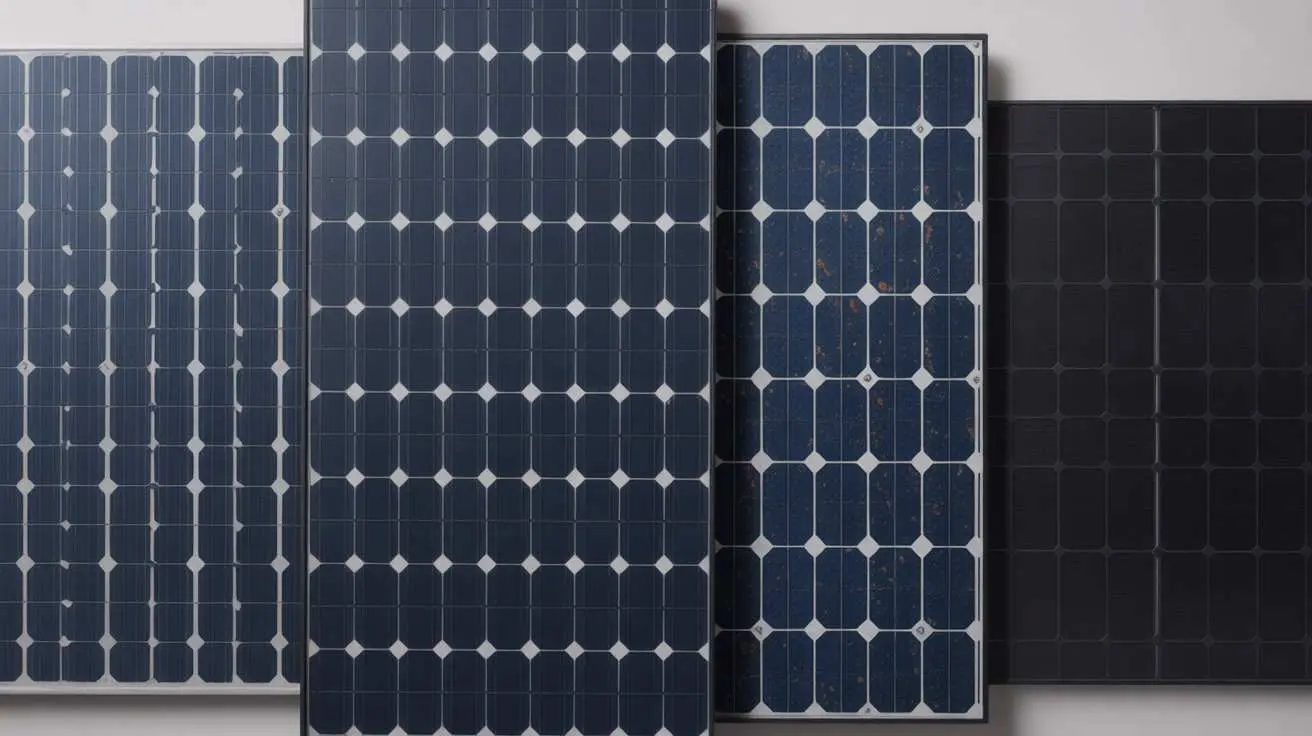
Polycrystalline panels were the dominant residential technology through the early 2010s. They use multiple silicon crystal fragments fused together during manufacturing, which costs less to produce but results in lower efficiency, typically 15 to 17 percent. The blue speckled appearance of polycrystalline cells distinguishes them visually from the uniform black surface of monocrystalline panels.
The cost advantage of polycrystalline has narrowed considerably as monocrystalline manufacturing scaled up. In 2026, the price difference between a good polycrystalline panel and a standard monocrystalline panel is often $0.10 to $0.15 per watt, meaningful on a large system but not always worth the efficiency trade-off. For a homeowner in Florida or Arizona with abundant roof space and straightforward sun exposure, a polycrystalline system can still deliver a solid financial return. For someone in Massachusetts or New York with a smaller roof section and a high electricity rate, the efficiency gap costs real production dollars annually.
The practical limitation of polycrystalline is that lower efficiency means more roof space required to hit the same system output. A 7kW system using 17 percent polycrystalline panels needs more roof area than the same output system using 21 percent PERC panels. If your roof accommodates that additional space without shading complications, the lower cost per watt may work in your favor.
Thin-Film: More Than Just Portable Panels
Thin-film technology is frequently dismissed as a niche option for portable or small installations, but the commercial thin-film market, particularly CIGS (copper indium gallium selenide) and cadmium telluride panels, is a serious technology with real advantages in specific applications.
For residential rooftops, thin-film’s lower efficiency of 10 to 13 percent is a genuine limitation. Generating meaningful kilowatt hours from thin-film on a typical suburban roof requires significantly more surface area than monocrystalline or PERC. This makes thin-film a poor fit for most residential roofs where space is the primary constraint.
Where thin-film performs genuinely well is on large commercial flat roofs, irregular surfaces, and applications where weight is a concern. Thin-film panels weigh less per square foot than crystalline panels, which matters on older commercial structures with lower load ratings. The temperature coefficient of thin-film is also better than crystalline silicon, thin-film loses less efficiency as ambient temperature rises, which gives it a real performance advantage in high heat climates like Phoenix, Las Vegas, and the Texas Gulf Coast during peak summer months.
Bifacial and HJT: The Premium Tier Worth Knowing About
Bifacial panels generate electricity from both the front and rear surfaces. The rear cell captures reflected light, called albedo, from surfaces beneath and around the panel. On a white or light colored roof, ground mounted system with reflective gravel, or a roof with high solar reflectance, a bifacial panel can produce 10 to 25 percent more annual energy than an equivalent monofacial panel. On a dark asphalt shingle roof with standard mounting, the rear side gain drops to 3 to 8 percent, which narrows the value proposition considerably.
This is where things get tricky with bifacial marketing. Installers sometimes present bifacial panels as universally superior without explaining that the rear side gain depends heavily on what the panels are mounted above. Before paying the premium for bifacial technology, confirm what albedo gain your specific roof surface and mounting height will realistically produce.
HJT panels combine crystalline silicon with thin amorphous silicon layers on both surfaces, producing efficiency ratings of 22 to 24 percent in 2026. The temperature coefficient is excellent — HJT loses less output on hot days than standard monocrystalline cells. The meaningful limitation is cost. HJT panels run $1.00 to $1.30 per watt at the equipment level, which pushes the total installed system cost higher. For a homeowner in Boston or Los Angeles with a small roof section and a high electricity rate, that cost premium may recover within the payback period. For a homeowner in Kansas with a large roof and a modest electricity rate, the premium is harder to justify financially.
City by City: Which Panel Type Makes Most Sense by Market
| City | Peak Sun Hours | Recommended Type | Why |
| Phoenix, AZ | 6.5 hrs per day | PERC or Bifacial | Maximum output; bifacial benefits from reflective surfaces |
| Los Angeles, CA | 5.7 hrs per day | PERC or HJT | High electricity rate rewards efficiency; roof space often limited |
| Tampa, FL | 5.5 hrs per day | PERC | Consistent year round production; strong net metering protects credit value |
| Boston, MA | 4.2 hrs per day | HJT or PERC | Limited sun hours mean efficiency matters most; high rate supports premium |
| Austin, TX | 5.2 hrs per day | Standard Mono or PERC | Good sun, modest rate; cost efficiency matters more than peak efficiency |
The U.S. Department of Energy publishes detailed guidance on panel selection for residential installations. The residential solar panel guide on Energy.gov covers how panel efficiency, roof orientation, and local climate interact to determine the best technology choice for a specific American home.
How your panel choice affects the solar payback period across U.S. states shows the math behind whether paying more per watt for higher efficiency panels shortens or extends your payback timeline based on your electricity rate and annual usage.
The Honest Limitation: Efficiency Ratings Are Not Real World Numbers
Every efficiency percentage in this article reflects Standard Test Condition ratings, a controlled laboratory environment at 25 degrees Celsius with 1,000 watts per square meter of irradiance. Real rooftop temperatures in Phoenix in July regularly exceed 50 degrees Celsius at the panel surface. At elevated temperatures, crystalline silicon panels lose approximately 0.4 to 0.5 percent efficiency per degree above 25 degrees. On a day when air temperature hits 40 degrees Celsius, panel surface temperature can reach 65 degrees or higher, reducing real world output by 15 to 20 percent below the rated efficiency.
This is not a reason to avoid solar in hot climates — Arizona and Florida remain among the strongest solar markets in the country. It is a reason to weigh temperature coefficient data when comparing panels, and to use real world production estimates from your installer rather than efficiency rating multiplied by sun hours. The temperature coefficient is printed on every panel’s specification sheet and is worth checking before finalizing a choice between two competing options.
Using a solar panel cost calculator by zip code for your home accounts for local temperature data and your specific roof conditions to generate production estimates that reflect real world performance rather than laboratory ratings.
Final Thoughts
The types of solar panels available to U.S. homeowners in 2026 span a meaningful efficiency and cost range — from 10 percent thin-film at $0.50 per watt to 24 percent HJT at $1.30 per watt. For most American homeowners with a standard suburban roof in a moderate to high electricity rate state, PERC monocrystalline panels represent the strongest combination of efficiency, cost, and proven long term reliability. HJT is worth considering for small roofs in high rate states where every square foot of production matters. Bifacial panels make the strongest case in ground mount situations or on roofs with high reflectivity.
The panel type is one input in a larger calculation that includes your electricity rate, your roof orientation, your shading situation, and which state incentives apply to your installation. Panel technology choices become easier to evaluate once you know what annual production and payback timeline your home needs to deliver to make solar work financially. Getting that full picture before focusing on panel specifications is the more productive starting point for any U.S. homeowner in 2026.
Frequently Asked Questions
What are the main types of solar panels available for U.S. homes in 2026?
The primary types are standard monocrystalline, PERC monocrystalline, polycrystalline, thin-film (CIGS and cadmium telluride), bifacial, and HJT panels. PERC monocrystalline is currently the most widely installed type in American residential markets.
What is the difference between PERC and standard monocrystalline solar panels?
PERC panels add a passivation layer to the rear of the cell that reflects unabsorbed light back through for a second conversion pass, raising efficiency from the 17 to 20 percent range of standard monocrystalline to 20 to 23 percent with a modest cost premium per watt.
Are bifacial solar panels worth the extra cost for American homeowners?
Bifacial panels deliver meaningful additional production on reflective surfaces such as light colored roofs or ground mounts with gravel. On standard dark asphalt shingle roofs with conventional mounting, the rear side gain is limited and the premium is harder to justify.
Which panel type performs best in hot climates like Arizona and Florida?
HJT panels have the best temperature coefficient of any mainstream residential panel type, losing the least efficiency as ambient temperature rises. Thin-film also performs well in heat. Standard and PERC monocrystalline lose 0.4 to 0.5 percent efficiency per degree above 25 degrees Celsius.
Is polycrystalline still a good choice for U.S. homes in 2026?
Polycrystalline remains viable for homeowners with large roof areas in high sun climates where the lower cost per watt outweighs the efficiency trade-off. The price gap with monocrystalline has narrowed, making it a less clear-cut value choice than it was five years ago.
What is the lifespan difference between panel types?
HJT and monocrystalline panels typically carry 25 to 30-year performance warranties. Polycrystalline panels generally carry 20 to 25-year warranties. Thin-film lifespans vary more widely, with commercial-grade products running 15 to 20 years and some consumer products rated for shorter periods.

Morgan Lee is a homeowner and solar energy researcher based in the United States. After installing a rooftop solar system in 2022 and spending months comparing quotes, incentives, and installer reviews, Morgan realized how confusing and overwhelming the process felt for most American families. That experience led to the creation of SolarInfoPath, a no-pressure, educational platform designed to help U.S. homeowners understand solar energy clearly and confidently. Morgan focuses on practical, research-backed information covering solar costs, installation timelines, federal tax credits, and long-term savings. All content on this site is written from a homeowner’s perspective with the goal of making solar energy simple and accessible for everyday Americans.