
Analysis of Duke Energy Indiana and AES Indiana rate filings, solar panels are worth it for Indiana homeowners paying above $130/month on electricity, but only under specific conditions. The average payback period runs 10–14 years at Indiana’s current rate of roughly 14.5¢/kWh. Homes with unshaded south-facing roofs in central and southern Indiana see the strongest returns. Homes in the northern third of the state face harder math.
A homeowner in Indianapolis was paying AES Indiana around $165 a month. After a 9kW solar install, her bill dropped to under $20. But what her installer never explained upfront was Indiana’s net metering policy, and how a single utility rule quietly shrank her projected savings by about $400 a year. That gap is what this article is here to close.
Indiana gets an average of 4.5 to 5.1 peak sun hours daily, depending on location. That’s enough to make solar financially viable, but not automatically profitable for every home.
Are Solar Panels Worth It in Indiana in 2026? (Direct Answer for Homeowners)
Is Solar Worth It in Indiana Based on Electricity Rates and Policies
Solar is worth it in Indiana if your monthly bill exceeds $130, your roof faces south or southwest, and you use AES Indiana or Duke Energy Indiana as your utility. At the state’s current average rate of 14.5¢/kWh, a properly sized system can cut your annual electricity cost by $900–$1,500.
Indiana’s residential electricity rate sits slightly below the national average of 16.3¢/kWh. That gap matters. Lower rates mean solar saves you less per kWh, which stretches the payback period compared to states like California or Massachusetts.
That said, Indiana rates have climbed about 18% since 2020. Duke Energy Indiana filed for rate increases in 2023, and AES Indiana followed with adjustments in 2024. The trend is upward, which gradually improves solar’s long-term value for homeowners who install now and lock in savings over time.
Indiana’s net metering policy, governed under Indiana Code § 8-1-40, does not guarantee retail-rate credit for excess power. AES Indiana and Duke Energy Indiana currently pay “avoided cost” for surplus energy sent to the grid, roughly 3¢–4¢/kWh. That’s far below the 14.5¢/kWh you pay to buy power. Most homeowners find out about this only after installation. Size your system to cover your own usage, not to overproduce.
Are Solar Panels Worth It in My State of Indiana Compared to the National Average
Indiana ranks below the national average for solar ROI, primarily because of low utility rates and a weak net metering structure. States paying 18¢–22¢/kWh see payback in 7–9 years. Indiana homeowners typically see 10–14 years.
That doesn’t mean solar is a bad idea here. It means you need accurate numbers — not the projections on a sales sheet.
One thing most people miss: Indiana’s avoided-cost net metering is not the same as full net metering, and the difference is worth hundreds of dollars per year in actual savings. If you want to understand how Indiana compares to other states and what the real-world billing differences look like, the SolarInfoPath state-by-state solar resource center covers those comparisons in detail.
Are Solar Panels Worth It in My State if Rates Stay Below 15¢/kWh
If Indiana rates stay at or below 15¢/kWh and your monthly bill is under $100, solar likely won’t break even within a reasonable timeframe. The math simply doesn’t favor it at that point. If your bill is $80–$100, consider waiting or exploring battery storage options that could shift the equation.
Solar Panel Cost in Indiana: Real 2026 Price Breakdown
How Much Are Solar Panels in Indiana for a Typical Home
A complete solar installation in Indiana for a typical home runs $18,000–$28,000 before the federal tax credit. After the 30% Investment Tax Credit, that range drops to $12,600–$19,600 out of pocket. System size drives cost more than anything else.
Here’s what a real breakdown looks like for three common home sizes:
Cost of Solar Panels Indiana for 6kW, 8kW, and 10kW Systems
| System Size | Gross Cost | After 30% ITC | Annual Output (Est.) |
| 6kW | $16,800–$19,200 | $11,760–$13,440 | 7,200–7,800 kWh |
| 8kW | $22,400–$25,600 | $15,680–$17,920 | 9,600–10,400 kWh |
| 10kW | $27,000–$31,000 | $18,900–$21,700 | 12,000–13,000 kWh |
Based on SolarInfoPath’s review of 2026 Indiana installer quotes and NREL PVWatts data for Indianapolis.
Solar Panel Cost Indiana After Federal 30% Tax Credit
The 30% federal Investment Tax Credit applies to the full system cost, equipment, labor, and permitting. A homeowner in Fort Wayne spending $24,000 on a 9kW system would claim a $7,200 credit on their federal taxes. That’s a direct credit, not a deduction, real money off your tax bill, dollar for dollar. You must owe federal taxes to use it in the year of installation. According to the U.S. Department of Energy’s homeowner guide to the federal solar Investment Tax Credit, any unused portion rolls forward to the following tax year, which matters if your tax bill is smaller than the full credit amount.
Hidden Costs Most Homeowners Miss in Solar Panel Cost in Indiana
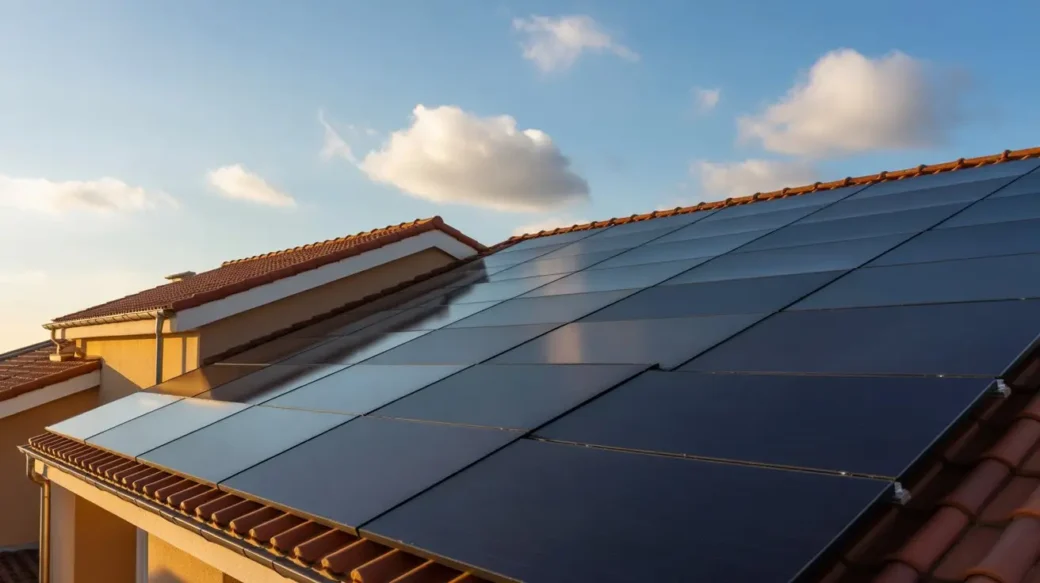
Here’s where the real number usually shifts from the initial quote:
- Interconnection fee: AES Indiana and Duke Energy Indiana charge $50–$200 to approve your grid connection, billed separately from the installer.
- Permit fees: Marion County, Hamilton County, and Lake County all charge separate permit fees, typically $150–$400, depending on system size.
- Roof prep: If your roof is more than 10 years old, some installers require repairs first. That can add $1,500–$4,000 to your total cost.
- Monitoring system: Some installers bundle this in; others charge $150–$300 separately.
Installation, Permits, and Interconnection Fees in Indiana
Total soft costs, permits, fees, wiring, and labor, typically add $2,500–$4,500 on top of equipment costs in Indiana. Get every line item in writing before you sign any agreement.
Maintenance and Inverter Replacement Costs Over Time
Panels themselves require very little maintenance. Inverters are the component that eventually fails, typically after 10–15 years. A string inverter replacement runs $1,200–$2,500. Microinverters last longer but cost more per unit to swap out. This expense rarely appears in installer savings projections, but it directly affects your actual payback period.
Beyond cost, the timeline from contract signing to working panels also matters for your planning. Permitting backlogs and utility interconnection queues in Indiana can stretch the full process by weeks. The how long solar installation actually takes in America breaks down each stage, from permit submission to final utility approval, so Indiana homeowners know what a realistic timeline looks like before committing.
Indiana Solar Incentives: What You Actually Get in 2026
Federal Solar Tax Credit Impact on Solar Panel Cost in Indiana
The 30% federal Investment Tax Credit is the single most valuable incentive available to Indiana homeowners in 2026. On an $18,000 system, that’s $5,400 directly off your federal tax bill. It applies to systems installed through December 31, 2032.
Indiana Solar Incentives That Still Exist (And What Ended)
Indiana does not offer a state-level solar rebate program in 2026. This is a real disadvantage compared to states like Illinois or New York, where additional state incentives can reduce net cost by another $2,000–$5,000.
What Indiana does legitimately offer:
- Property tax exemption (IC 6-1.1-12-26): Solar panels cannot increase your assessed property value for tax purposes. A $20,000 system adds zero to your annual property tax bill.
- Sales tax exemption: Indiana exempts solar equipment from the state’s 7% sales tax. On a $25,000 system, that’s roughly $1,750 in savings most homeowners never account for in their estimate.
Property Tax and Sales Tax Rules for Solar Panels in Indiana
Both exemptions apply automatically, no separate application is required. That said, confirm with your county assessor that the property tax exemption was correctly applied after installation. In smaller rural counties, it occasionally gets missed and must be corrected manually.
Indiana’s property tax exemption is more valuable than many homeowners realize. In states without this protection, a solar system can raise your assessed home value, and your annual tax bill, by several hundred dollars. Indiana avoids that problem entirely under IC 6-1.1-12-26.
Solar Payback Period Indiana 2026, How Long Until Break-Even
Average Solar Payback Period Indiana 2026 by System Size
Indiana homeowners typically break even on solar in 10–14 years based on 2026 utility rates, a 30% federal tax credit, and an average of 4.7 peak sun hours per day. A faster payback is possible in central and southern Indiana, and harder to achieve in the northern counties.
A homeowner in Bloomington paying Duke Energy Indiana $155/month, about $1,860 a year, with an 8kW system and a clear south-facing roof could offset roughly 85–90% of annual usage. After the tax credit brings the net cost down to around $16,800, the payback period is approximately 10–11 years. That’s on the better end for Indiana.
Factors That Change Solar Payback Period, Indiana 2026
These four things move the payback math more than anything else:
- Your actual utility rate, at 14.5¢ vs. 13¢/kWh, the difference compounds over 10+ years
- How much you overproduce, exporting surplus at 3¢–4¢ instead of self-consuming at 14.5¢ meaningfully extends payback
- Roof direction and shading, a west-facing or partially shaded roof cuts output by 15–25%
- Rate escalation, if Indiana rates rise 3% annually, your real savings improve year over year with no changes to the system
When Solar Payback Exceeds 15 Years in Indiana
Here’s the part most homeowners don’t find out until after they’ve signed. A homeowner in South Bend with a partially shaded northeast-facing roof and an $85/month AES Indiana bill installed a 7kW system after being shown a “9–10 year” payback projection. With actual shading cutting output by 22% and the low bill limiting annual savings, the real payback stretched past 16 years.
Some homeowners in that position later found that the contract terms they signed locked them into agreements that were difficult to exit. If you’re reviewing a solar agreement and the payback numbers seem off, or you’ve already signed and want to understand your options, the guide to getting out of a solar contract in Indiana explains the clauses installers rely on and the legal options homeowners have pursued.
Are Solar Panels Worth It in My State, Based on Location in Indiana
Northern vs Southern Indiana Solar Performance Differences
Southern Indiana, including Evansville, Bloomington, and Columbus, averages 4.9–5.1 peak sun hours daily. Northern Indiana, including South Bend and Fort Wayne, averages 4.3–4.5 peak sun hours. That difference translates to roughly 8–12% less annual output for the same system size installed in the northern part of the state.
What surprised me when I studied Indiana’s solar output data by county was how noticeably production drops above Indianapolis. Over a 25-year system life, a northern Indiana home generates less energy than the same system in Evansville or Columbus.
Peak Sun Hours Impact on Solar Panels: Worth It in Indiana
For an 8kW system, the difference between 4.4 and 5.0 peak sun hours means roughly 700–900 fewer kWh per year. At 14.5¢/kWh, that’s $100–$130 less in annual savings. It doesn’t kill the economics on its own, but it adds 1–2 years to your payback period compared to a southern Indiana installation.
Best Cities vs Worst Cities for Solar Panels in Indiana
| City | Daily Peak Sun Hours | Est. Annual Output (8kW) | Relative Performance |
| Evansville | 5.1 | ~10,800 kWh | Best in state |
| Bloomington | 4.9 | ~10,400 kWh | Strong |
| Indianapolis | 4.7 | ~9,900 kWh | Average |
| Fort Wayne | 4.5 | ~9,500 kWh | Below average |
| South Bend | 4.3 | ~9,100 kWh | Weakest in the state |
Solar Panels Near Me: What Indiana Homeowners Actually Experience
Real Scenario: Solar Panel Cost in Indiana vs Monthly Bill Savings
A homeowner in Columbus, Indiana, was paying Duke Energy Indiana around $148 a month, roughly $1,776 a year. She installed a 9kW system for $26,000 gross, or $18,200 after the 30% federal tax credit. Her roof faces south, averages 4.8 peak sun hours per day, and the system covers about 88% of her annual electricity usage. Net annual savings: approximately $1,560. Payback period: about 11.7 years.
That’s a realistic outcome for a well-sited central Indiana home. Not the 7-year payback shown on some sales presentations, but still a financially sound long-term decision given Indiana’s rising rate environment.
If your situation looks similar, a bill above $130, south-facing unshaded roof, central Indiana location, solar likely makes financial sense over a 12–15 year horizon. If your bill is below $100 or your roof faces east or carries significant shade, the math shifts against you.
When Solar Panels Near Me Do NOT Make Financial Sense
- Monthly bill under $90: Payback likely exceeds 16–18 years at current Indiana rates
- Roof older than 15 years: A re-roof before or shortly after installation adds $8,000–$15,000 to your real cost
- Partial shade from trees or structures: A 20% shade impact can add 3–4 years to payback on its own
- Planning to move within 10 years: You may not reach break-even before selling
Roof, Shade, and HOA Limitations in Indiana
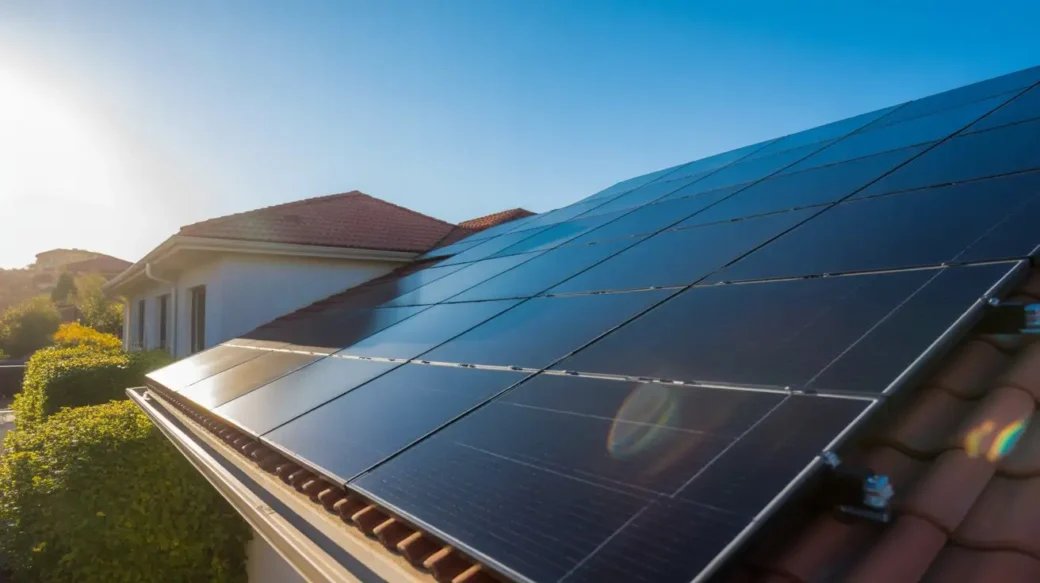
HOA restrictions are a real friction point in Indiana, particularly in newer subdivisions in Carmel, Fishers, and Zionsville. Some HOAs allow solar but require panels on rear-facing roof surfaces only, which can reduce output by 10–20% compared to an optimal placement. Request the HOA’s solar policy in writing before speaking with any installer.
Indiana does not have a state wide law preventing HOAs from blocking solar outright, unlike states such as California or Arizona. That means your HOA documents carry real legal weight here. When solar companies misrepresent HOA compatibility, installation feasibility, or savings projections, some homeowners have pursued legal remedies. The investigation into solar panel class action lawsuits filed in 2026 documents the most common disputes and what outcomes those cases produced.
SolarInfoPath Reality Check: The Truth About Solar in Indiana
Why Are Solar Panels Worth It in Indiana, Only in Specific Cases
Solar is worth it in Indiana for homeowners with high bills, unshaded roofs, and long time horizons. It is not a universal yes. Indiana’s weak net metering policy and below-average electricity rates create real obstacles that most installer presentations skip over entirely.
This is where most homeowners run into problems. The sales estimate assumes full retail credit, 14.5¢/kWh, for every kWh exported to the grid. Indiana does not work that way. Based on SolarInfoPath’s review of 2026 AES Indiana and Duke Energy Indiana tariff filings, both utilities pay avoided-cost rates for surplus solar energy returned to the grid.
Net Metering Limitations That Affect Solar Worth in Indiana
Indiana’s net metering law was weakened in 2017 when the legislature began phasing in avoided-cost compensation for new solar customers. Homeowners who installed before that transition operate under more favorable terms. Homeowners signing new contracts in 2026 get the weaker rate.
The practical fix is simple: size your system to match your annual consumption, not to exceed it. An oversized system in Indiana exports power at 3¢–4¢/kWh instead of saving you 14.5¢/kWh through direct use. That gap compounds over the years.
Some Indiana homeowners have faced additional complications when solar companies built savings projections around inflated net metering assumptions, and then pursued legal action when reality didn’t match. The analysis of solar property and contract disputes in U.S. solar markets explains how these disputes typically unfold and what documentation protects homeowners before they become problems.
Utility Credit Rates vs Expectations in Indiana
| What Homeowners Expect | What Indiana Actually Pays |
| Retail rate credit (~14.5¢/kWh) | Avoided cost (~3¢–4¢/kWh) |
| 1:1 bill offset for all production | 1:1 only for the power you self-consume |
| Rollover credits indefinitely | Credits may be zeroed out annually |
Projections vs Reality: Solar Panels Worth It in Indiana?
Solar Panel Cost Indiana vs Real Savings Comparison
| Metric | Sales Estimate (Typical) | SolarInfoPath Investigative Data |
| Payback period | 7–9 years | 10–14 years (Indiana average) |
| Annual savings | $1,800–$2,200 | $900–$1,500 (realistic range) |
| Net metering credit rate | Retail 14.5¢/kWh | Avoided cost 3¢–4¢/kWh |
| System cost after ITC | $12,000–$15,000 | $14,000–$19,000 (with soft costs) |
| 25-year net benefit | $35,000–$50,000 | $15,000–$28,000 |
These aren’t worst-case numbers. They reflect what a typical Indiana homeowner with a well-suited home actually experiences, based on utility rate filings and real 2026 installer pricing.
Sales Estimates vs Actual Solar Payback Period, Indiana 2026
The gap between the two columns above is mostly explained by three things:
- Net metering rate mismatch, sales projections assume retail credit; Indiana pays avoided cost
- Soft costs excluded, permit fees, interconnection charges, and roof prep raise the real net cost by $2,500–$4,500
- Output assumptions, projections often use ideal angles and zero shading; real roofs rarely match
Long-Term Financial Outcome for Indiana Homeowners
The honest long-term picture for Indiana: a homeowner who installs a well-sized system in 2026, stays in their home for 20+ years, and manages costs carefully can realistically net $15,000–$22,000 in lifetime savings after all expenses. That’s a meaningful return, but it requires time and the right starting conditions. It is not the $40,000–$50,000 figure that some sales presentations use.
Decision Point: Are Solar Panels Worth It in Indiana for You?
When Solar Panels Are Worth It in My State of Indiana
Solar makes financial sense in Indiana when:
- Monthly bill exceeds $130 with AES Indiana or Duke Energy Indiana
- The roof is south-facing and receives fewer than 2 hours of daily shade
- You plan to stay in the home for at least 12–15 years
- Your federal tax liability is large enough to absorb the 30% credit in year one or two
- You’re in central or southern Indiana, where daily sun hours support stronger annual output
When Solar Panels Are NOT Worth It in Indiana
Solar is harder to justify when:
- Bill is under $100/month, and savings don’t recover costs within a practical timeframe
- The roof needs replacement in the next 5 years; the added expense changes the real break-even calculation
- System is oversized relative to usage, excess export earns only 3¢–4¢/kWh under Indiana’s avoided-cost policy
- Financing at 7%+ interest, high-rate loans can erase most of the long-term financial benefit
Final Answer: Is Solar Worth It in Indiana Based on Your Situation
For many Indiana homeowners, solar is a reasonable 10–15 year financial commitment, not a fast-return investment. The federal tax credit is real, the property and sales tax exemptions are genuine advantages, and Indiana’s rising utility rates improve the long-term case year over year. But the net metering policy is the most critical factor that most homeowners discover too late.
If your bill is high, your roof is ready, and you’re planning to stay in your home, the numbers likely work in your favor. If any of those conditions are uncertain, get a conservative estimate before committing to a $20,000+ contract, and make sure the savings projection in your quote accounts for Indiana’s avoided-cost net metering rate, not full retail credit.
Key Takeaways for Indiana Homeowners
- Indiana solar payback: 10–14 years at current rates, not the 7–9 years often quoted
- Real cost after ITC: $12,600–$19,600 for most homes, including soft costs
- Net metering rate: 3¢–4¢/kWh for exported power, not the retail 14.5¢/kWh rate
- Best Indiana locations: Evansville, Bloomington, Columbus, Indianapolis
- Hardest cases: Bills under $100, shaded roofs, northern Indiana, HOA restrictions
- Real incentives: 30% federal ITC, property tax exemption under IC 6-1.1-12-26, 7% sales tax exemption
- Main utilities: AES Indiana and Duke Energy Indiana, both of which use avoided-cost net metering for new customers
FAQ: Solar Panels in Indiana 2026
What is the average cost of solar panels in Indiana in 2026?
Most Indiana homes pay $18,000–$28,000 before incentives. After the 30% federal tax credit, the out-of-pocket cost drops to $12,600–$19,600.
Does Indiana have a state solar tax credit?
No. Indiana has no state solar rebate or income tax credit in 2026. The 30% federal ITC is the primary incentive available.
How long is the solar payback period in Indiana?
Typically 10–14 years, depending on location, system size, monthly bill, and how much power the system exports vs. self-consumes.
Does Indiana have full net metering?
No. Indiana pays avoided-cost rates of roughly 3¢–4¢/kWh for surplus solar power, not the full retail rate of 14.5¢/kWh.
Are solar panels exempt from property taxes in Indiana?
Yes. Under IC 6-1.1-12-26, solar installations cannot increase your assessed property value for tax purposes in Indiana.
Is solar worth it in South Bend or Fort Wayne?
The math is harder than in southern Indiana. Lower peak sun hours (4.3–4.5/day) combined with weak net metering typically push payback to 12–15 years even for a well-sited home.
What utilities serve most Indiana solar homeowners?
AES Indiana serves the Indianapolis metro area. Duke Energy Indiana covers central and western Indiana. Both utilities currently pay avoided-cost net metering rates for new solar customers.
This article by SolarInfoPath (2026 research framework) is part of a comprehensive solar knowledge architecture covering all major high-value sectors including legal disputes (installation negligence, contracts, liability, fraud, lawsuits, liens, HOA and permitting disputes), financial structures (loans, PPA/lease agreements, DSCR financing, tax equity, investment and project finance), tax law (ITC, Section 48/25D, MACRS depreciation, bonus credits, IRS audits, recapture rules, domestic content and IRA/OBBBA compliance), insurance and risk (property damage, hail/wind/fire claims, bad faith insurance disputes, warranty coverage), policy and regulation (net metering, FERC interconnection, state utility rules, incentive programs and regulatory changes), commercial and utility-scale development (EPC contracts, construction delays, performance bonds, receivership, bankruptcy, asset sale and restructuring), real estate impacts (home value, solar leases, liens, title issues, HOA restrictions, easements), and emerging market structures such as battery storage, community solar, agrivoltaics, SRECs, yieldcos, and institutional investment funds. All content is based on publicly available regulatory, financial, and legal sources and is intended strictly for educational and informational purposes, not legal, tax, or financial advice. Readers should always verify current laws, utility policies, tax regulations, and contract terms with qualified licensed professionals before making decisions, as solar regulations, incentives, and financial structures frequently change across jurisdictions and time.

Solar Legal Analyst· Policy Researcher· Investigative Finance Writer Lead Analyst & Founder of SolarInfoPath
Morgan Lee is a solar legal analyst, policy researcher, and investigative finance writer with 12+ years of experience in U.S. renewable energy law, IRS tax credit compliance, and solar litigation. He is the founder of SolarInfoPath, a research-driven platform focused on primary-source analysis of solar contracts, tax law, regulatory policy, and industry disputes affecting homeowners and commercial developers.
His work is grounded in original legal and regulatory sources, including IRS notices, FERC and CPUC rulings, state court filings, PACER records, and UCC lien databases. He specializes in solar contract disputes, injury and workers’ compensation claims, PACE financing issues, tax equity structures, ITC recapture rules, MACRS depreciation, and federal and state solar policy frameworks.
Morgan’s analysis spans solar litigation, finance structures, and regulatory developments such as the IRA and OBBBA, interconnection reform, domestic content rules, and battery storage incentives. He also covers EPC contracts, PPAs, project financing, and utility-scale solar investment structures.