Why Solar Panels Are Worth It in New Jersey: Guide
New Jersey homeowners pay some of the highest electricity rates on the East Coast. PSE&G, Jersey Central Power and Light, and Atlantic City Electric all charge between $0.16 and $0.18 per kWh under standard residential plans. That rate is the starting point for understanding why solar panels are worth it in New Jersey, when electricity costs that much, every kilowatt-hour your panels produce instead of purchasing from the utility translates into serious monthly savings.
But what truly separates New Jersey from almost every other state is not just the high electricity rate. It is the SREC program. For every 1,000 kilowatt-hours your system produces, you earn one Solar Renewable Energy Certificate that can be sold on New Jersey’s open SREC market. That creates a second income stream on top of your electricity bill savings, something most other states simply do not offer at a comparable scale.
Combine high utility rates, full retail net metering, the SREC program, and the 30% federal ITC together, and New Jersey solar systems in Newark, Jersey City, Trenton, and Cherry Hill consistently pay themselves back in 5 to 7 years. That is among the shortest payback periods in the country.
Why New Jersey’s Electricity Rates Make Solar Hard to Ignore
New Jersey homeowners in cities like Newark, Trenton, Cherry Hill, and Edison are dealing with electricity bills that can run $180 to $250 per month for an average-sized home. That is a real number, not a worst-case scenario. When your rate sits at $0.16 to $0.18 per kWh, every kilowatt-hour your solar system produces is genuinely valuable, more so than in states with cheaper utility rates.
From my point of view, this is the single strongest argument for solar in New Jersey. You are not just generating clean electricity. You are replacing expensive electricity. That distinction matters when you are trying to understand your payback period and long-term savings honestly.
How Your Utility Provider Shapes Your Solar Savings
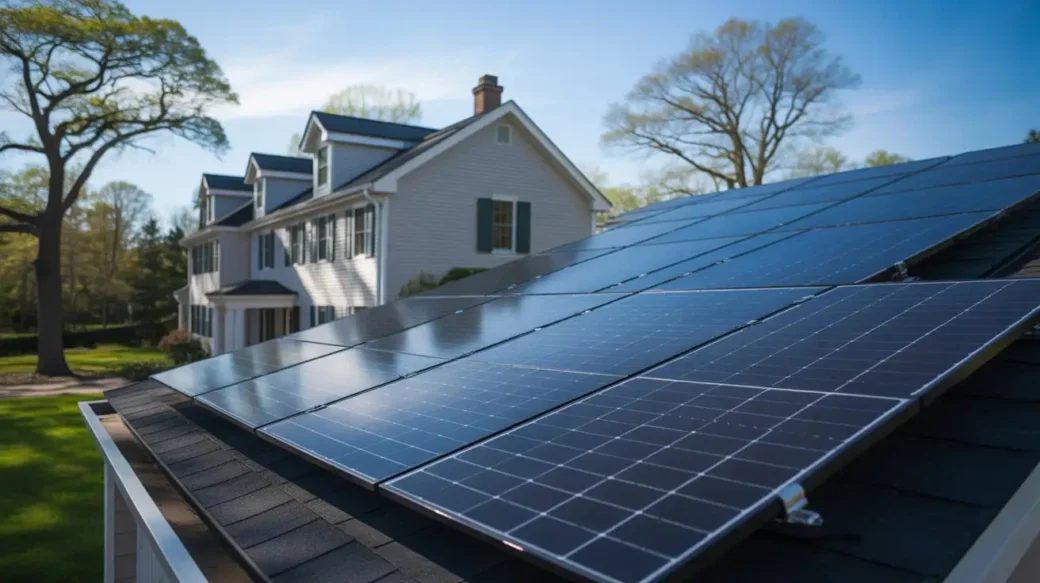
You may notice that your specific utility affects how solar performs for your household. PSE&G serves a large portion of northern and central New Jersey, including Newark and Edison, while JCP&L covers the central and western parts of the state. Both operate under New Jersey’s active net metering rules, which means excess electricity your panels send to the grid earns you a bill credit. That credit system is one of the clearest reasons why solar panels are worth it in New Jersey; beyond just reducing your daytime usage, it keeps working for you around the clock.
New Jersey’s Solar Incentives, Real Programs Worth Understanding
This is where things get tricky if you are not familiar with how state programs work alongside federal ones. New Jersey has one of the more active solar incentive environments in the country, and knowing what is available helps you see the full financial picture clearly.
- The federal Investment Tax Credit (ITC) lets you claim a percentage of your total system cost on your federal tax return directly.
- New Jersey’s SREC program allows homeowners to earn certificates for the electricity their system generates, and those certificates carry real monetary value when sold to utilities.
- The state’s sales tax exemption on solar equipment quietly reduces your upfront cost in a way many homeowners don’t think about until after the fact.
- New Jersey’s property tax exemption means your home value can increase from solar without triggering a higher property tax assessment on that increase.
One thing people often miss is how these programs layer on top of each other. None of them alone transforms the math dramatically. But combined, they shift what you actually pay and how quickly your payback period arrives.
For a clear breakdown of how the federal solar tax credit works for U.S. homeowners, that is worth reading before you build any numbers around your expected first-year cost.
How New Jersey Cities Compare for Solar Performance
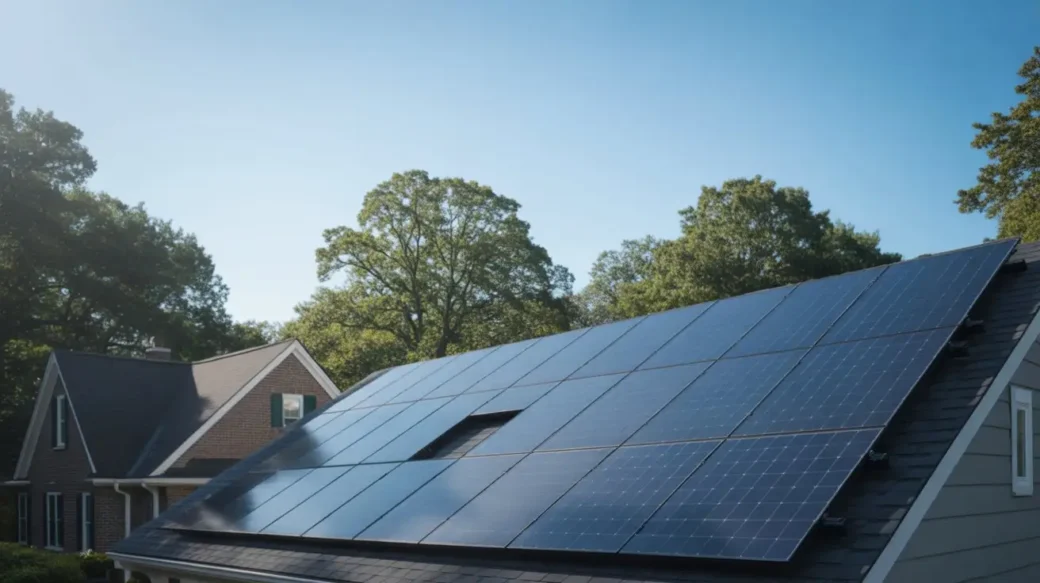
Not every part of New Jersey performs identically. Southern New Jersey, including areas around Atlantic City and Cape May- tends to receive slightly more peak sun hours than northern parts of the state closer to the New York metro area. The difference is not dramatic, but it is real enough to affect annual production estimates from one city to the next.
Here is a city-level snapshot of how solar typically performs across New Jersey:
| City | Avg Sun Hrs/Day | Avg System Cost | Est. Annual Savings | Net Metering |
| Newark | 4.2 | $13,000–$17,000 | $1,400–$1,900 | PSE&G (Active) |
| Trenton | 4.4 | $13,000–$17,000 | $1,500–$2,000 | PSE&G (Active) |
| Cherry Hill | 4.5 | $12,500–$16,500 | $1,500–$2,100 | PSE&G (Active) |
| Edison | 4.3 | $13,000–$17,000 | $1,450–$1,950 | PSE&G (Active) |
| Atlantic City | 4.6 | $12,000–$16,000 | $1,600–$2,200 | JCP&L (Active) |
If you pay attention to where your city falls on that table, your savings estimate becomes much more grounded and realistic. This is exactly why solar panels are worth it in New Jersey becomes clear at a local level that southern New Jersey homeowners near Atlantic City have a slight natural advantage in sun hours. But even in northern cities like Newark, the combination of high electricity rates and active net metering keeps the financial case for solar genuinely strong year-round.
For context on what New Jersey system costs look like nationally, how much do solar panels cost in the USA gives a useful comparison across different states and regions.
Why Install Solar Panels in New Jersey: The Environmental Benefit
My opinion is that the financial case alone is strong enough for most New Jersey homeowners. But the solar panels good for New Jersey environment argument is real and worth mentioning honestly without overstating it.
New Jersey is a densely populated state with high electricity demand year-round. When homeowners in cities like Cherry Hill, Edison, and Trenton generate their own clean electricity, they reduce demand on a grid that still relies on fossil fuel generation for a meaningful share of its power. As reported by the U.S. Department of Energy, residential solar adoption reduces carbon emissions in ways that accumulate significantly at a regional level over time.
I wouldn’t say the environmental benefit alone drives most homeowners to make this decision. But knowing your panels are doing something genuinely good for your state while also lowering your bill, that combination feels better than a purely financial calculation on its own.
What New Jersey Homeowners Actually Pay, Real Cost Context
I tend to look at it this way: a solar system in New Jersey is really prepaying your electricity bill for the next 25 to 30 years at today’s rates. For a typical New Jersey home using 800 to 1,100 kWh per month, a 7 kW to 9 kW system generally covers most of that usage depending on your roof and local sun exposure.
Before incentives, New Jersey systems typically run between $12,000 and $18,000, depending on system size, roof complexity, and location within the state. After the federal ITC and SREC income, your effective cost comes down considerably over the first few years of ownership.
For a full picture of what goes into a New Jersey solar quote beyond just panels, hidden solar panel costs U.S. homeowners often overlook, covering the line items that rarely appear in headline numbers and catch many homeowners off guard.
Payback periods in New Jersey typically run 7 to 10 years, faster than many U.S. states, because of the high utility rates and available incentives working together effectively. For a broader national cost context, the residential solar panels cost breakdown for U.S. homes is worth reading before you start comparing specific quotes for your home.
Final Thoughts
A 25-year view of New Jersey solar shows why the financial case here is genuinely exceptional. Eliminated monthly electricity bills from one of the most expensive utilities in the Northeast, ongoing SREC income as a separate income stream, and property value growth that is exempt from New Jersey’s property tax assessment all compound together over the life of the system. Understanding why solar panels are worth it in New Jersey over that timeframe means recognizing that these are three distinct financial returns from a single installation — and no other Northeastern state matches that combination simultaneously.
Two honest caveats before finalizing any decision. SREC market values fluctuate based on how many systems are registered state wide and how much demand utilities have for compliance credits, so build your financial model on conservative SREC estimates rather than peak historical values. Also, New Jersey permitting and utility interconnection timelines run longer than those in many states; some homeowners wait three to six months from contract to system activation. Neither issue changes the fundamental strength of the investment. They just mean setting realistic timeline expectations and not banking on peak SREC income as a fixed guaranteed figure.,
FAQs
Why are solar panels worth it, specifically for New Jersey homeowners?
New Jersey’s high electricity rates combined with active net metering and the SREC program create a payback period that is faster than most U.S. states.
What are the main benefits of solar panels for New Jersey homeowners?
The benefits of solar panels for New Jersey homeowners include lower electricity bills, SREC certificate income, a property tax exemption, and long-term protection against rising utility rates.
How does net metering work for New Jersey solar homeowners?
PSE&G and JCP&L credit your bill when your panels send excess electricity to the grid, offsetting what you pull from the grid at night or during low-production days.
Are solar panels actually good for the New Jersey environment?
Yes, residential solar reduces demand on a grid that still relies on fossil fuels, and that reduction in carbon emissions adds up meaningfully across a densely populated state like New Jersey.
What is the typical payback period for solar in New Jersey?
Most New Jersey homeowners see payback in 7 to 10 years, which is faster than many states because high utility rates make every kilowatt-hour your system produces more financially valuable.
Does New Jersey have a state solar incentive beyond the federal tax credit?
Yes, the SREC program, a sales tax exemption on equipment, and a property tax exemption on added home value all exist specifically for New Jersey solar homeowners.

Morgan Lee is a homeowner and solar energy researcher based in the United States. After installing a rooftop solar system in 2022 and spending months comparing quotes, incentives, and installer reviews, Morgan realized how confusing and overwhelming the process felt for most American families. That experience led to the creation of SolarInfoPath, a no-pressure, educational platform designed to help U.S. homeowners understand solar energy clearly and confidently. Morgan focuses on practical, research-backed information covering solar costs, installation timelines, federal tax credits, and long-term savings. All content on this site is written from a homeowner’s perspective with the goal of making solar energy simple and accessible for everyday Americans.