
According to SolarInfoPath’s 2026 review of Washington utility rates, solar panels are worth it in Washington only for high-usage homes. Washington has some of the lowest electricity rates in the country, around $0.10 to $0.12 per kWh. This makes savings smaller than in most states. Homes paying over $150 a month can still reach break-even in 10 to 14 years. Homes under $100 a month usually cannot.
Is solar actually worth it in Washington, or is the payback period so long that you’d be better off staying on the grid?
That’s the real question. And most solar articles in Washington skip the honest answer. They show you sunny photos and big savings numbers. But Washington’s electricity is cheap. Cheap electricity means smaller savings. Smaller savings mean a longer wait to break even.
This guide gives you the real numbers. You’ll see what solar costs here, what Washington pays you for excess power, and exactly what your bill needs to look like for solar to make financial sense.
Are Solar Panels Worth It in Washington in 2026?
Solar panels are worth it in Washington only if your monthly electricity bill is above $130 to $150. Washington’s average rate of $0.10 to $0.12 per kWh is among the five lowest in the U.S. That low rate is the reason solar takes longer to pay back here than in California or New York.
Washington’s cheap power comes from hydroelectric dams, not fossil fuels. That matters for your solar decision. You are not replacing expensive or dirty power. You are replacing some of the cheapest grid electricity in the country. Every kilowatt-hour your panels produce saves you about $0.11. In California, that same kilowatt-hour saves $0.35 to $0.42. The math works out very differently.
Are Solar Panels Worth It for Average Washington Households?
Homes with bills below $100 a month rarely see a good return on solar in Washington. A $90 monthly bill means you spend about $1,080 per year on electricity. A solar system costs $15,000 to $25,000 after the federal tax credit. Even covering 90% of that $1,080, your annual savings would be around $970. That gives you a payback period of 15 to 20 years or more.
That’s too long for most homeowners to feel good about the investment.
Are Solar Panels Worth It for High-Usage Washington Homes?
Yes, but only when your bill is consistently above $150 a month. Homes with electric vehicle charging, electric heat, or large square footage can have bills of $200 to $300 a month. At that usage level, a 9kW or 10kW system can save $1,400 to $1,800 per year. That brings payback down to 10 to 14 years, a range where solar becomes a reasonable long-term financial decision.
Here’s the part most people overlook: your bill amount matters far more than how much sun Washington gets.
Decision Checkpoint
If your average monthly electricity bill to Puget Sound Energy or Seattle City Light is below $120, solar is likely a poor financial fit in 2026. The payback period will stretch well past 15 years at current rates. If your bill is consistently above $150, especially during the winter months, the numbers start to work in your favor.
How Much Do Solar Panels Cost in Washington? (2026 Breakdown)
A typical home solar system in Washington costs $18,000 to $28,000 before incentives. After the 30% federal Investment Tax Credit, that drops to $12,600 to $19,600 out of pocket. System size is the biggest cost driver.
Reality Check: Washington’s solar installation costs run slightly below the national average. Labor rates and permitting fees in cities like Tacoma and Olympia are lower than in California or Massachusetts. But Seattle permits can take 4 to 6 weeks longer than smaller cities due to higher application volume. That delay does not raise your cost, but it does push back the date your system starts saving money.
For a full look at what the installation process actually involves, including permit steps and inspection timelines, the guide to how long solar installation takes in America covers the real schedule from contract to first power.
Solar Panel Cost in Washington by System Size
Most Washington homes need a system between 7kW and 12kW. Here is what those systems cost in 2026:
| System Size | Gross Cost | After 30% ITC | Best For |
| 6kW | $15,000–$20,000 | $10,500–$14,000 | Low to moderate bills |
| 8kW | $20,000–$25,000 | $14,000–$17,500 | Average suburban home |
| 10kW | $25,000–$30,000 | $17,500–$21,000 | High-usage or EV homes |
| 12kW | $28,000–$35,000 | $19,600–$24,500 | Large homes, full offset |
Costs based on SolarInfoPath’s review of 2026 Washington installation data. Actual quotes vary by city and roof type.
Washington Solar Installation Cost: Hidden Expenses
The quote your installer gives you may not include everything. Watch for these added costs:
- Electrical panel upgrade: $1,500 to $3,500 if your current panel is 100-amp or older
- Roof repairs: $800 to $2,500 if your roof is over 15 years old
- Permit fees: $200 to $600, depending on your county
- Interconnection fee: $50 to $300 from your utility
These soft costs add $2,500 to $7,000 to many installations. A calculator estimate never shows these items. A real contractor quote should list them separately.
Average Cost Variation Across Washington Cities
Seattle installations typically cost 5 to 10% more than Spokane. Tacoma sits in the middle. The difference comes from labor rates and permit complexity. If you are in a rural area of Whatcom or Kittitas County, expect longer installation timelines and sometimes higher trucking costs for equipment.
Washington Solar Incentives in 2026: What You Actually Get
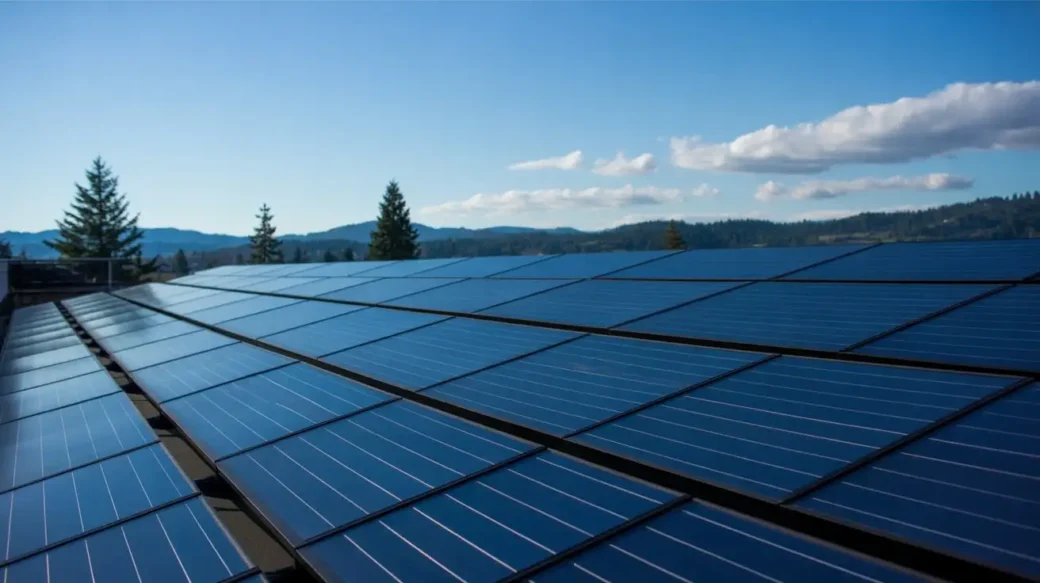
Washington solar incentives in 2026 are limited. The federal 30% Investment Tax Credit is the main financial benefit. Washington has no major statewide rebate program. A few local utilities offer small incentives, but they vary widely and are not guaranteed.
SolarInfoPath Reality Check: Many solar articles claim Washington has strong incentives. The honest picture is more limited. The state’s best financial protection for solar buyers is the sales tax exemption under RCW 82.08.962, which removes Washington’s 6.5% sales tax from solar equipment purchases. On a $22,000 system, that saves about $1,430. It is not a rebate, but it is real money off the top.
For homeowners who want to understand how the federal tax credit applies specifically to their tax filing, including the basis reduction rule that affects how you claim it, the IRS Section 48 energy credit compliance guide explains the exact rules for 2026.
Washington State Solar Tax Credits and Rebates
Washington does not have a state income tax. That means a state solar tax credit has no mechanism to work here. The 30% federal ITC is a federal income tax credit; you still qualify for it as a Washington resident.
These are the real incentives available in Washington in 2026:
- Federal ITC (30%): Reduces your federal tax bill by 30% of the total system cost
- Sales tax exemption (RCW 82.08.962): Removes 6.5% sales tax on solar equipment
- Property tax exemption (RCW 84.36.635): Solar system value is not added to your home’s assessed value for property tax purposes
- Local utility programs: Puget Sound Energy and some co-ops offer small rebates, typically $200 to $500, but these programs change each year
The property tax exemption under RCW 84.36.635 is one that most homeowners never hear about from their installer. On a $25,000 system, avoiding a property tax increase on that added home value saves you $150 to $400 per year, depending on your county’s rate.
Washington Solar Rebates: The Honest Reality
There is no major state wide cash rebate for residential solar in Washington. Some articles mention old programs like the now-expired Renewable Energy System Incentive Program. That program ended. If an installer mentions a large state rebate in their quote, ask them to name the specific program and verify it through the DSIRE database of state energy incentives at dsire.org.
Small utility-specific rebates do exist. Puget Sound Energy’s solar rebate program has offered $200 to $300 for qualified installations in past years. Availability depends on annual program funding; it is not a guarantee.
Washington Net Metering: The Most Important Ongoing Benefit
Washington net metering lets you earn bill credits for excess solar power you send back to the grid. These credits offset future electricity use. This is the strongest ongoing financial benefit for Washington solar owners, and the one that most affects your real payback period.
Washington’s net metering law requires utilities to credit excess solar power at the retail rate. That means Puget Sound Energy credits you at roughly $0.11 per kWh for power you export. In California, under NEM 3.0, that credit dropped to $0.05 to $0.08 per kWh. Washington homeowners get significantly better export value than California homeowners right now. That gap makes Washington’s net metering one of the better policies in the western U.S., even if the rate itself is low.
How Net Metering Works in Washington (Simple Version)
Here is how it works step by step:
Step 1: Your panels make more power than your home uses. That extra power goes to the grid.
Step 2: Your utility meter tracks how much you send to the grid.
Step 3: You get a credit on your bill at the same rate you pay for power.
Step 4: When your panels don’t make enough power (like winter nights), those credits cover the gap.
Step 5: At the end of the year, most Washington utilities pay you out or roll over unused credits.
The key detail: credits are not cash. They offset future usage. If you overbuild your system and produce far more than you use, the extra credits may not be worth much if your utility limits rollover.
Net Metering Credit Limitation in Washington
This is the part most people overlook. Washington’s net metering rules under RCW 80.60 require utilities to offer net metering, but each utility sets its own credit rollover policy. Some utilities pay out unused credits at year-end at the retail rate. Others roll them over indefinitely. Avista Utilities in Spokane handles credit rollover differently than Seattle City Light.
Before you size your system, ask your utility: “What happens to my unused credits at the end of the year?” The answer changes depending on whether a larger or smaller system makes more financial sense for your home.
Washington Solar Payback Period: Real Numbers for 2026
Washington solar payback periods typically run 10 to 18 years. That is longer than the U.S. national average of 8 to 12 years. The main reason is low electricity rates, not bad weather.
What surprised me when I reviewed Washington solar contracts was how many homeowners in the Puget Sound region were shown payback projections of 7 to 9 years based on 3% annual electricity rate increases. That assumption is aggressive. Washington’s hydropower-based grid historically shows smaller rate increases than coal or gas-heavy states. Using a 1 to 1.5% annual rate increase gives a more honest projection, and pushes payback to 12 to 16 years for most Seattle-area homes at current bill levels.
Washington Solar ROI: What the Real Calculation Looks Like
Here is a simple step-by-step calculation for a typical Washington home:
Home: Seattle, Puget Sound Energy customer Monthly bill: $175 (about $2,100 per year) System size: 9kW Gross cost: $25,200 After 30% ITC: $17,640 After sales tax exemption: Approximately $16,210 Annual solar production: ~10,800 kWh (based on Seattle’s 3.8 average daily peak sun hours) Annual electricity offset at $0.11/kWh: ~$1,188 Payback period: About 13.6 years
That is a real, grounded calculation, not a sales pitch. The 30% ITC and the sales tax exemption together reduce your out-of-pocket cost by about $9,000 on this system. That help is meaningful. But the payback is still over a decade.
For homeowners who want to understand how solar financing options, including loans and leases, affect the payback math, the solar panel cost calculator with 2026 state estimates shows how different financing paths change your timeline.
Washington Solar Savings by City
| City | Utility | Avg. Daily Sun Hours | Est. Annual Savings (9kW) | Payback Range |
| Seattle | Seattle City Light | 3.5–3.8 | $950–$1,200 | 13–17 years |
| Tacoma | Tacoma Public Utilities | 3.6–3.9 | $990–$1,250 | 12–16 years |
| Spokane | Avista Utilities | 4.3–4.8 | $1,200–$1,600 | 10–14 years |
| Olympia | Puget Sound Energy | 3.5–3.9 | $940–$1,200 | 13–17 years |
| Bellevue | Puget Sound Energy | 3.6–3.9 | $970–$1,230 | 13–16 years |
Savings based on 2026 utility rate data. Avista in Spokane has higher rates than Western Washington utilities, which is why Eastern Washington shows better solar returns.
The Spokane difference is real and worth noting. Eastern Washington gets more sun, and Avista’s rates run slightly higher than PSE or Seattle City Light. A Spokane homeowner with the same $175 monthly bill saves $200 to $400 more per year than a Seattle homeowner with the same system. That changes the payback by 2 to 3 years.
Seattle Solar Scenario vs Spokane Solar Scenario
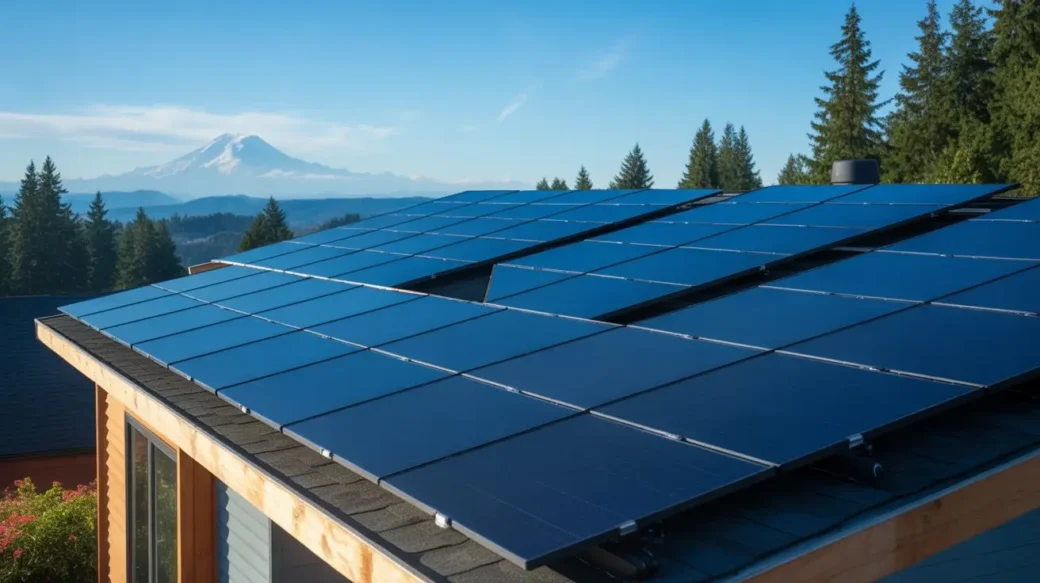
Seattle scenario: problem type: A homeowner in Beacon Hill pays Seattle City Light $160 a month. Her roof faces southwest and has a large Douglas fir casting afternoon shade across the east side. After a site survey, the installer recommends a 7kW system instead of 9kW. Production drops to 8,200 kWh per year. Annual savings: about $900. After the ITC and sales tax exemption, her out-of-pocket cost is $13,800. Payback: 15 to 16 years. She owns the home and plans to stay 20 years, so the math still works. But it is not a quick return, and the shade issue cut her expected savings by nearly $300 a year.
Spokane scenario: money/ROI type: A homeowner in the South Hill area pays Avista $210 a month, roughly $2,520 per year. He has a clear south-facing roof with no shading. A 9kW system in Spokane averages 4.5 peak sun hours daily. Annual production: about 12,150 kWh. At Avista’s 2026 blended rate of around $0.12 per kWh, annual savings run $1,460. After the 30% ITC and sales tax exemption, his out-of-pocket cost is $15,800. Payback: about 10.8 years. For a homeowner planning to stay 15 or more years, this is a solid long-term investment.
These two scenarios show the same state, same rough bill amount, and very different outcomes. If you are in western Washington with a shaded roof, your case for solar is weak. If you are in eastern Washington with a clear south-facing roof, your case is notably stronger. Location within Washington matters almost as much as your bill amount.
Washington Solar Financing: How It Changes Your ROI
Paying cash for solar gives the cleanest financial picture. You invest $16,000 to $18,000 out of pocket after the ITC, and every dollar you save goes toward payback. Most Washington homeowners who finance solar use a loan, which adds interest that most calculators never show you.
A $17,500 solar loan at 7.49% APR over 20 years results in total interest of roughly $16,400. Your total ownership cost rises from $17,500 to $33,900. At $1,200 in annual savings, the loan-financed system takes 28 years to break even on a true cost basis. That is longer than the panel warranty. Cash buyers or homeowners with strong home equity options see a very different calculation.
For homeowners reviewing solar loan agreements or financing contracts before signing, including what terms to watch for, the solar project contract and financial review guide covers the specific contract terms and obligations that affect your real cost.
Solar Lease vs Purchase in Washington
A solar lease removes the upfront cost. You pay a fixed monthly amount, usually $60 to $120, to use the system. You save the difference between your old utility bill and the lease payment. But you do not own the system. You cannot claim the 30% federal ITC. The property tax exemption under RCW 84.36.635 does not apply. And the leasing company claims the tax credit instead.
In Washington, where savings are already modest, giving up the ITC makes a lease a poor financial choice for most homeowners. The total benefit over 20 years is usually $8,000 to $15,000 less than a cash or loan purchase.
Solar on a Second Home in Washington
Solar on a vacation home or second property in Washington faces a specific challenge. Second homes often have lower monthly bills, maybe $60 to $90 during months when no one is there. Low usage means low savings. The payback math on a $15,000 system saving $600 per year is very unfavorable. For most second homes in Washington, solar is not a financially sound choice at current electricity rates.
Best Solar Panels for Washington State: What Actually Matters
The best solar panels for Washington prioritize performance in low-light and cloudy conditions, not peak-sun output. Washington averages 200 to 220 cloudy or overcast days per year in the western parts of the state. Panel efficiency under diffuse light matters more here than rated peak wattage.
SolarInfoPath Reality Check: High-efficiency panels, those rated at 21% to 23% conversion efficiency, produce more power on cloudy Pacific Northwest days than standard 19% panels. On a rainy January day, that efficiency gap can represent 10 to 15% more production. Over a full year in Seattle, that difference adds up to 400 to 600 kWh of extra production, worth $44 to $66 at current PSE rates. It’s modest, but in a state where savings are already thin, it matters.
Roof Direction and Shade: Washington’s Biggest Output Variable
South-facing roofs produce the most solar power in Washington. A west-facing roof produces about 15% less annually. A north-facing roof produces about 30% less. If your main roof faces north, common in older Craftsman homes in Seattle’s neighborhoods, your effective system output may be too low to justify the cost.
Shade from large trees is the second major issue. Western Washington’s mature tree cover means many rooftops have at least partial shading from Douglas firs, maples, or cedars. A shade analysis, done during an on-site visit, not remotely, is essential before you agree to a system size.
For context on how Washington’s solar market fits into larger utility-scale trends and how grid capacity affects residential solar policy, including interconnection rules, the utility-scale solar guide on costs, land, and regulations covers the bigger picture that affects residential policy decisions.
When Solar Is NOT Worth It in Washington
Solar is not the right choice for every Washington homeowner. Here are the specific situations where the numbers do not support it.
Your bill is below $100 a month. At $0.11 per kWh, you use about 900 kWh monthly at $100. A properly sized solar system costs $12,000 to $16,000 after incentives. Annual savings of $700 to $900 gives you a 14 to 20-year payback. Most panel warranties run 25 years — so you get only 5 to 10 years of net-positive return. That is a thin margin.
Your roof is heavily shaded. Trees in Seattle, Tacoma, and Bellingham are tall and mature. A roof shaded for 4 or more hours per day during peak sun hours loses 25 to 40% of expected output. That can push an already marginal Washington investment into clearly unprofitable territory.
You plan to move in fewer than 10 years. Solar does add value to Washington homes. Studies suggest it adds $3 to $4 per watt of installed capacity to resale value. But that value is not guaranteed, and you may not recover the full cost if you sell before the system pays back. A 10kW system that costs you $18,000 out of pocket adds roughly $30,000 to $40,000 in value, but only if the buyer recognizes it and the local market reflects it.
You want to finance with a long-term loan. As shown earlier, a 20-year solar loan at 7.49% APR nearly doubles your true system cost. In Washington’s low-rate environment, financed solar is financially risky for most households.
Final Overview: Are Solar Panels Worth It in Washington in 2026?
Solar panels are worth it in Washington in 2026 only under specific conditions. They work best for homeowners with high electricity bills, good south-facing roofs, minimal shade, and plans to stay in their home for 12 or more years.
For average Washington households paying under $120 a month, solar is a weak financial investment at current electricity rates. The honest payback period for most Seattle and Tacoma homes runs 12 to 17 years, longer than what most installers advertise.
The strongest case for solar in Washington is in eastern Washington, particularly the Spokane area, where Avista’s higher rates and better sun hours push payback into the 10 to 13-year range.
Washington’s sales tax exemption under RCW 82.08.962 and the property tax protection under RCW 84.36.635 are real financial benefits. The 30% federal ITC remains the most powerful incentive. But these tools cannot fully offset the reality of $0.11 per kWh electricity rates.
If you are serious about solar in Washington, verify your net metering terms directly with your specific utility before you sign anything. Ask your installer for a line-item cost breakdown that includes permit fees, panel upgrade costs, and interconnection charges. And be skeptical of any payback projection that assumes large annual rate increases from Washington’s hydroelectric utilities.
Frequently Asked Questions
Are solar panels worth it in Washington if I have a small electric bill?
If your bill is under $100 a month to PSE or Seattle City Light, solar likely takes 15 to 20 years to pay back. That is too long for most homeowners.
What is the average cost of solar panels in Washington state in 2026?
A typical 8kW to 10kW system costs $20,000 to $30,000 before incentives. After the 30% ITC and sales tax exemption, most homeowners pay $13,000 to $20,000 out of pocket.
Does Washington state have a solar tax credit in 2026?
No. Washington has no state income tax, so a state solar tax credit doesn’t apply here. The 30% federal ITC is available. The sales tax exemption and property tax exemption add real but smaller savings.
What is the solar payback period in Washington?
It ranges from 10 to 18 years, depending on your city, utility, bill amount, and roof conditions. Spokane averages 10 to 14 years. Seattle averages 13 to 17 years.
Does Washington have net metering?
Yes. Washington requires utilities to offer net metering under RCW 80.60. Credits are given at the retail electricity rate. Rollover policies vary by utility, so verify terms with your specific provider.
Is solar worth it on a second home in Washington?
Rarely. Second homes typically have low electricity usage, which makes the payback period very long, often 20-plus years. Solar on a vacation property in Washington rarely makes financial sense at current rates.
Which part of Washington is best for solar?
Eastern Washington, especially Spokane, gets more sun (4.3 to 4.8 peak hours daily vs. 3.5 to 3.8 for Seattle) and has slightly higher electricity rates through Avista. That combination produces meaningfully better solar returns.
This article by SolarInfoPath (2026 research framework) is part of a comprehensive solar knowledge architecture covering all major high-value sectors including legal disputes (installation negligence, contracts, liability, fraud, lawsuits, liens, HOA and permitting disputes), financial structures (loans, PPA/lease agreements, DSCR financing, tax equity, investment and project finance), tax law (ITC, Section 48/25D, MACRS depreciation, bonus credits, IRS audits, recapture rules, domestic content and IRA/OBBBA compliance), insurance and risk (property damage, hail/wind/fire claims, bad faith insurance disputes, warranty coverage), policy and regulation (net metering, FERC interconnection, state utility rules, incentive programs and regulatory changes), commercial and utility-scale development (EPC contracts, construction delays, performance bonds, receivership, bankruptcy, asset sale and restructuring), real estate impacts (home value, solar leases, liens, title issues, HOA restrictions, easements), and emerging market structures such as battery storage, community solar, agrivoltaics, SRECs, yieldcos, and institutional investment funds. All content is based on publicly available regulatory, financial, and legal sources and is intended strictly for educational and informational purposes, not legal, tax, or financial advice. Readers should always verify current laws, utility policies, tax regulations, and contract terms with qualified licensed professionals before making decisions, as solar regulations, incentives, and financial structures frequently change across jurisdictions and time.

Solar Legal Analyst· Policy Researcher· Investigative Finance Writer Lead Analyst & Founder of SolarInfoPath
Morgan Lee is a solar legal analyst, policy researcher, and investigative finance writer with 12+ years of experience in U.S. renewable energy law, IRS tax credit compliance, and solar litigation. He is the founder of SolarInfoPath, a research-driven platform focused on primary-source analysis of solar contracts, tax law, regulatory policy, and industry disputes affecting homeowners and commercial developers.
His work is grounded in original legal and regulatory sources, including IRS notices, FERC and CPUC rulings, state court filings, PACER records, and UCC lien databases. He specializes in solar contract disputes, injury and workers’ compensation claims, PACE financing issues, tax equity structures, ITC recapture rules, MACRS depreciation, and federal and state solar policy frameworks.
Morgan’s analysis spans solar litigation, finance structures, and regulatory developments such as the IRA and OBBBA, interconnection reform, domestic content rules, and battery storage incentives. He also covers EPC contracts, PPAs, project financing, and utility-scale solar investment structures.