Federal Solar Tax Credit 2026 Status: Active or Expired?
This article is published by SolarInfoPath, an independent research and education platform. SolarInfoPath has no financial relationship with any solar installer, manufacturer, lender, lead generation service, or utility company. We do not sell solar products, earn referral fees, or accept sponsored content. All articles are based on publicly available data from sources including the U.S. Department of Energy, IRS.gov, U.S. Treasury, the National Renewable Energy Laboratory (NREL), the Solar Energy Industries Association (SEIA), and public court and regulatory records.
Financial Information Notice: Content discussing solar loans, interest rates, dealer fees, debt service coverage ratios (DSCR), or financing structures is provided for general educational purposes only. SolarInfoPath is not a licensed financial advisor, mortgage broker, or lending institution. Loan terms, lender requirements, and financing products change frequently and vary by state and creditworthiness. Always review the full terms of any loan agreement and consult a certified financial planner or licensed lender before entering any financing arrangement.
Tax Credit and Incentive Notice: Articles covering the federal Investment Tax Credit (ITC), Section 48, Section 25D, Inflation Reduction Act bonus credits, MACRS depreciation, REAP grants, or state incentive programs are provided for general informational purposes only. SolarInfoPath is not a certified public accountant, tax attorney, or IRS enrolled agent. Tax credit eligibility, bonus amounts, and compliance requirements are determined by IRS guidance and Treasury regulations that are subject to change. Always consult a qualified tax professional before claiming any energy-related tax credit or incentive.
Information Currency: Solar policy, tax law, utility programs, and financing products change frequently. While SolarInfoPath updates content regularly, some details may not reflect the most recent developments in your state. Always confirm current rules with the appropriate government agency, utility company, or licensed professional before taking any action.
Disclaimer: This article is for educational purposes only. It is not tax or financial advice. Please consult a licensed tax professional before making any decisions.
Most solar company websites still describe the Federal Solar Tax Credit 2026 Status as if it might disappear any day. Some installers have been implying urgency around “expiration” for years. It has kept homeowners anxious and, frankly, it has helped close a lot of sales.
Here is what is actually true in 2026: the federal solar Investment Tax Credit, the ITC, is fully active. It is still set at 30%. It did not expire. It is not scheduled to drop in 2026. And the urgency that has been attached to it for years is, in most cases, not rooted in current policy.
That said, the credit comes with real limitations that most homeowners do not hear about during the sales process. Those limitations affect whether the 30% figure actually translates into meaningful savings for your specific situation. The credit is real, but it is not a simple cash rebate, and that distinction matters more than most people realize before they sign.
What Is the Federal Solar Tax Credit 2026 Status?
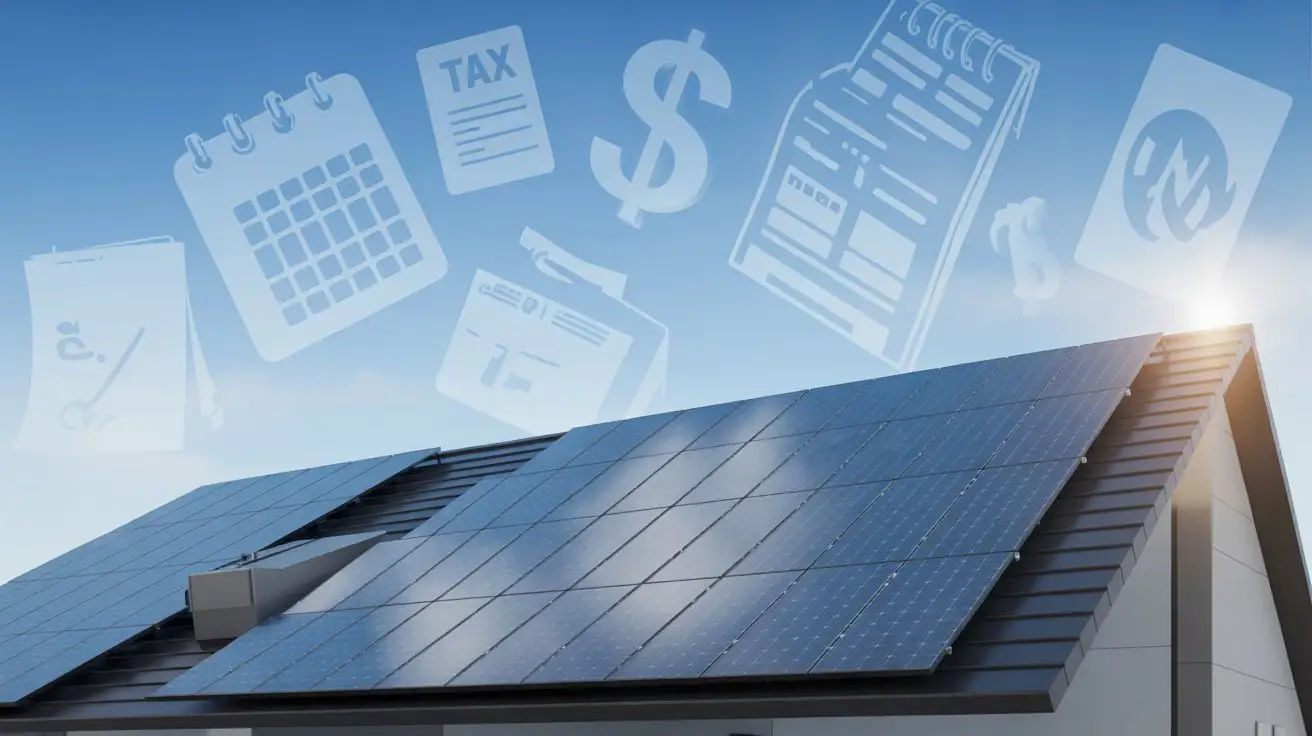
The federal solar Investment Tax Credit, called the ITC, gives you a credit worth 30% of your total solar system cost. That credit comes directly off your federal tax bill. It is not a rebate. It is not a check in the mail. It reduces what you owe the IRS when you file your taxes after installation.
How the Credit Actually Works
If your system costs $28,000, your 30% credit equals $8,400. That $8,400 is subtracted from your federal taxes owed. You pay $8,400 less to the IRS that year. This is different from a tax deduction. A deduction only lowers your taxable income. A credit lowers the actual tax bill itself, dollar for dollar.
That makes the ITC one of the most powerful financial incentives available to homeowners right now.
What the IRA Has to Do With It
The current 30% rate exists because of the Inflation Reduction Act, signed into law in August 2022. That law locked in the 30% rate for residential solar through 2032. Before the IRA passed, the credit was shrinking every year. The IRA reset everything and gave homeowners a full decade of a strong, stable credit.
Why 2026 Is a Stable Year for the Credit
The IRA schedule places 2026 right in the middle of the 30% window. There is no step-down this year. There is no expiration this year. You are not racing a deadline by installing in 2026. The credit will still be 30% in 2027, 2028, and all the way through 2032 under current law.
Is the federal solar tax credit ITC status 2026 expired or extended?
The credit is still active. It has not expired. The 30% rate is fully intact for homeowners installing solar this year. This needs to be said clearly because a lot of online content, and a lot of sales pitches, still imply otherwise.
Where the Expiration Myth Comes From
Before the Inflation Reduction Act, the ITC was on a step-down schedule. The residential credit was set to drop to 22% in 2023 and disappear completely after that. Hundreds of articles were written during that period warning homeowners to act fast. Many of those articles were never updated after the IRA changed everything.
Those old warnings are still circulating online in 2026. They no longer reflect reality.
What the IRS Actually Says
Based on current federal tax guidelines, the 30% residential solar credit is valid for systems placed in service through 2032. The IRS administers this through Form 5695 on your annual tax return.
There is no IRS announcement of any expiration or reduction for 2026. The credit is fully claimable this year for qualifying homeowners.
The One Risk Worth Knowing About
Congress can change any law at any time. The IRA could be modified before 2032. That risk is real, but it is speculative, not current. Installers who use that uncertainty to push urgency today are using a theoretical future risk as a present-day sales tool. That is worth recognizing before you sign anything.
The Inflation Reduction Act and the Real ITC Timeline

The Inflation Reduction Act is the law that governs the solar ITC right now. Understanding its schedule helps you see exactly where 2026 fits and what comes after.
The IRA did not just extend the credit. It strengthened it. The pre-IRA version was getting weaker every year. The IRA brought it back to full strength and held it there.
The Full Step-Down Schedule Explained
Here is how the residential ITC is scheduled under the IRA:
| Year | ITC Rate | Status |
| 2022 | 30% | IRA enacted |
| 2023–2032 | 30% | Fully active |
| 2026 | 30% | Active, no change |
| 2033 | 26% | Scheduled drop |
| 2034 | 22% | Scheduled drop |
| 2035+ | 0% | Phase-out for residential |
Nothing on this table changes in 2026. The 30% rate is stable.
Why the Step-Down Table Confuses People
Some articles reference the step-down to 26% and 22% as if those dates are approaching fast. They are not. Those drops are 7 and 8 years away under current law. A homeowner installing in 2026 claims 30%. A homeowner installing in 2031 also claims 30%. The urgency around 2026 specifically has no basis in this schedule.
What Could Actually Change the Timeline
Only an act of Congress could change this. If the IRA were partially or fully repealed, the credit schedule could shift earlier. That is a possibility worth monitoring, especially for homeowners planning to install in 2028 or later. For now, whether solar makes financial sense for your household depends on much more than just the credit timeline.
What the 30% Credit Actually Covers in 2026
The 30% applies to your total qualifying system cost, not just the panels. Most homeowners underestimate how much the credit covers. The dollar figure is usually larger than people expect once they see what qualifies.
Costs That Qualify for the ITC
These items all count toward your credit calculation:
- Solar panels and equipment
- Inverters and mounting hardware
- Installation labor
- Electrical work tied directly to the solar system
- Permitting fees for the solar installation
- Battery storage installed alongside the solar system
All of these are part of your qualifying total. The 30% applies to the sum of everything on that list.
Costs That Do Not Qualify
This is where many homeowners get surprised at tax time.
Roof replacement does not qualify, even if you had to replace your roof to support the panels. If your installer gave you a combined solar-plus-roof quote, only the solar portion qualifies for the credit. You will need a separate itemized invoice showing the solar costs specifically. If your installer does not provide that automatically, ask for it before filing.
A Sample Calculation for an 8kW System
Here is what the math looks like for a typical 2026 installation:
| Item | Cost |
| Solar panels | $16,800 |
| Inverter and hardware | $3,200 |
| Labor | $4,500 |
| Electrical and permits | $1,500 |
| Total qualifying cost | $26,000 |
| 30% ITC credit | $7,800 |
| Your net cost after credit | $18,200 |
That $7,800 comes off your federal taxes in the year you file after installation.
Battery Storage and the ITC, A Detail Most People Miss
Battery storage qualifies for the 30% credit, but only if the battery is charged exclusively from your solar array, not from the grid. If you add a battery to an existing solar system later, separate rules apply. The credit still may be available, but the conditions are specific. Check current IRS guidance or ask a tax professional before assuming the credit applies to a standalone battery addition.
Who Benefits Most From the Federal Solar Tax Credit in 2026
The homeowners who get the most out of the status of federal solar ITC in 2026 are those with meaningful federal tax liability, high electricity bills, and a home they plan to stay in for at least 8 to 10 years. The credit is not equally valuable for every household. Your tax situation matters as much as your roof.
The Tax Liability Requirement
The ITC can only reduce the federal taxes you actually owe. If you owe $10,000 in federal taxes and your credit is $8,000, you pay $2,000 instead. But if you owe $2,000 in federal taxes and your credit is $8,000, you reduce your bill to zero, and the remaining $6,000 carries forward to next year.
The credit does not disappear. It rolls over. But it never becomes a cash payment.
Who Gets the Full Benefit Quickly
Homeowners with federal tax liability above $8,000 per year typically use the full credit in one tax filing. They see the largest immediate impact on their net system cost. Households with income above $80,000 combined, significant energy bills above $150 per month, and south-facing roofs with good sun exposure are the strongest candidates for a fast, clean credit benefit.
Who Gets the Benefit More Slowly
Retirees on fixed income, individuals with large deductions, and households with tax liability below $4,000 per year will spread the benefit over two to three years. The credit is still valuable in those situations. But the timing matters for calculating a realistic solar payback period, especially if you are financing the system with a loan.
Decision Checkpoint, Does the Credit Help Your Situation?
If your federal income tax liability is below $5,000 per year, the 30% ITC will take two to three years to fully use. That does not make solar a bad decision. But it changes your cash flow math significantly, especially with loan financing.
Three Myths About the federal solar ITC expiration date 2026
These three beliefs are wrong. All three are still circulating online and in sales conversations. All three affect how homeowners make decisions. It is worth correcting them directly.
Myth One: The Credit Expires in 2026
This is false. The 30% credit runs through 2032 under the Inflation Reduction Act. There is no expiration in 2026. There is no reduction in 2026. The source of this myth is outdated content from before the IRA passed. That content described a real deadline that no longer exists.
Myth Two: You Must Install Before End of 2026
There is no 2026 installation deadline. Homeowners have until the end of 2032 under current law to install and claim the 30% credit.
Any installer telling you to act before December 2026 specifically, without a concrete policy reason, is using urgency as a closing tool, not giving you accurate information.
Myth Three, The ITC Is a Cash Refund
This is the most financially damaging myth of the three. The ITC is not a refund. The government does not send you a check. The credit reduces the taxes you owe. If you owe nothing in federal taxes, you receive no benefit that year. Your unused credit carries forward, but no cash is returned to you at any point.
Why This Myth Gets People Into Trouble
Homeowners who believe the ITC is a refund sometimes factor a $7,000 or $8,000 cash payment into their installation budget. When that payment never arrives, their financing situation changes. This misunderstanding is one of the most common reasons homeowners feel misled after going solar, not because the credit was dishonest, but because it was never properly explained.
Real Scenarios: How the Credit Plays Out for Different Homeowners
Abstract explanations only go so far. Here is how the current federal solar tax credit 2026 status actually plays out in three different situations that reflect real homeowner profiles in 2026.
These scenarios use real state data, real utility names, and realistic system costs.
Scenario A: Full Credit in Year One (Phoenix, Arizona)
A household in suburban Phoenix pays roughly $220 per month to their local utility, about $2,640 per year. A 9kW system is quoted at $29,700 fully installed.
Their 30% ITC equals $8,910. They owe about $11,000 in federal taxes annually. They claim the full credit in the year they install, reducing their federal tax bill to just over $2,000. Net system cost after credit: approximately $20,790.
How the Payback Looks
Arizona averages 5.5 to 6 peak sun hours daily. At current utility rates, this household estimates a payback period of 7 to 9 years. The ITC works exactly as advertised here. Full credit in year one. Clean math. Meaningful reduction in net cost.
Scenario B, Credit Spreads Over Two Years (Albuquerque, New Mexico)
A retired couple in Albuquerque pays about $130 per month to PNM Power. Their 7kW system costs $23,100. Their ITC is worth $6,930.
Their combined federal tax liability is roughly $3,200 per year. In year one, they eliminate their entire federal tax bill using $3,200 of the credit. The remaining $3,730 carries to year two.
What This Means for Loan Financing
The full credit takes two full tax years to use. If they financed with a solar loan that assumes the full $6,930 ITC in year one, they would face a payment gap. This is the most common friction point for moderate-income homeowners using solar loans. Understanding average solar panel costs upfront helps set realistic expectations before signing.
Scenario C, Shaded Roof, Low Tax Liability (Portland, Oregon)
A homeowner in Portland pays around $95 per month to PGE. Their roof has significant shading on the south-facing slope. A 5kW system is recommended at $17,500. The ITC equals $5,250. Their federal tax liability is only $2,100 per year. The credit takes three years to fully use. Shading reduces system output to 55% to 65% of its potential.
The Honest Outcome Here
Oregon averages 3.5 to 4.5 peak sun hours daily. With shading and low production, the payback period stretches to 14 to 17 years. The ITC still applies and still helps. But it does not make this a strong financial case. This is a situation where stepping back to review whether solar is worth it more carefully is the right move before committing.
The Hidden Problem With Solar Loan Financing and the ITC
Most homeowners who finance solar with a loan do not realize their loan was built around an assumption about their tax situation. This is one of the most important things to understand before signing any solar financing agreement.
How Solar Loans Are Structured
Many solar loans include a balloon payment clause. That payment typically comes due around 18 months after installation. The timing is not random. It lines up with when the borrower is expected to receive their ITC benefit after filing taxes. The loan company assumes you will use that credit to pay down the balance.
What Happens When the Credit Is Smaller Than Expected
If your tax liability is lower than your credit amount, you will not fully realize the ITC in year one. The carry-forward helps over time, but the balloon payment arrives on schedule regardless.
Homeowners who expected to use a $7,500 credit to cover a $7,000 balloon payment, but only received $3,000 in credit that first year, can find themselves short in ways they never anticipated.
What You Should Ask Before Signing
Before you sign any solar loan, ask these three questions directly:
- Does this loan include a balloon payment or reamortization clause?
- When is that payment due?
- Does the loan structure assume I will claim the full ITC in year one?
These questions are almost never asked during a solar sales appointment. The answers can change your entire evaluation of the financing offer. Understanding how net metering affects your overall financial picture matters just as much here.
A Note on What This Means for Your Decision
This is not an indictment of solar loans. Many work well for many homeowners. But a loan built around an ITC assumption that does not match your tax situation creates a mismatch that only surfaces 18 months later, after the sale is long closed.
What Could Change the Solar Tax Credit After 2026?
The IRA framework is law today. But the law can change. Here is what homeowners planning further ahead need to understand. No confirmed legislative change to the residential ITC has been enacted as of 2026. The 30% rate is valid and claimable under current rules.
The Congressional Risk Factor
Any Congress can modify the IRA. Future legislation could accelerate the step-down schedule or eliminate the residential credit before 2035. This risk is real. It is not immediate. But homeowners planning to install in 2028 or 2029 should stay aware of legislative developments through the IRS residential clean energy credit page and official DOE updates.
The Practical Takeaway for Timing
If you are ready to install in 2026 or 2027, the credit is available now and should be claimed. Waiting carries legislative risk that does not exist today. If you are planning years ahead, track the IRA’s status. Do not rely on an 8-year legislative forecast as the foundation of your financial plan.
One More Timing Detail, Permitting Delays and Your Tax Year
The ITC is claimed in the tax year your system is placed in service, not the year you sign the contract. Placed in service means fully installed, permitted, and operational.
In some metro areas, utility interconnection approvals can take 3 to 6 months. If you sign a contract in October 2026 but your system does not receive final approval until February 2027, you claim the credit on your 2027 return, not your 2026 return.
For most homeowners this is a minor timing issue. But if you were counting on the credit against a specific year’s tax bill, confirm your installation timeline with your installer before the year ends.
A Clear Conclusion for 2026 Homeowners
The federal solar tax credit 2026 status is straightforward: it is active, it is 30%, and it is not changing this year.
What is less straightforward is how that credit actually lands in your specific financial situation. Tax liability, loan structure, roof quality, and local sun hours all affect whether the 30% credit turns into a strong benefit or a slower one.
Homeowners who understand those details make better decisions. They know what to ask their installer. They know what to check with their tax professional. They know what questions to put to their lender before signing.
The credit is real. For the right household, it meaningfully changes the economics of going solar. Understanding the full solar installed cost and what a realistic payback period looks like are the next steps worth taking before you commit.
Sources: IRS residential clean energy credit guidance, Inflation Reduction Act (Public Law 117-169), U.S. Department of Energy solar data. All policy details subject to change. Verify current rules with a licensed tax professional before filing.
FAQ, Federal Solar Tax Credit 2026 Status
Is the solar tax credit still 30% in 2026?
Yes. The federal solar ITC is 30% for residential systems installed in 2026. The Inflation Reduction Act holds this rate through 2032. Nothing has changed this year.
Will the federal solar ITC expiration 2026?
No. The 30% rate does not expire in 2026. The myth traces back to old pre-IRA deadlines that no longer apply. The credit runs through 2032 under current law.
Can renters claim the federal solar ITC rate 2026?
Generally no. The ITC applies to homeowners who own the solar system installed on their primary or secondary residence. Renters do not qualify under standard rules.
Is the federal solar tax credit a cash refund?
No. It is a non-refundable credit. It reduces your federal tax liability to zero but does not produce a refund check. Unused amounts carry forward to the following tax year.
What if I install solar in late 2026?
You claim the credit in the tax year your system is fully operational and approved. If permitting delays push that into 2027, the credit applies to your 2027 return instead.
What is the inflation reduction act solar tax credit status 2026?
The IRA’s residential solar ITC is active at 30% in 2026. It is the governing legislation behind the current credit. The IRS processes it through Form 5695.
What happens to the ITC after 2032?
Under current law, the residential credit drops to 26% in 2033, 22% in 2034, and phases out entirely for homeowners in 2035. Those dates are not relevant to a 2026 installation.

Morgan Lee | Lead Solar Policy & Consumer Research Analyst
Morgan Lee is the founder of SolarInfoPath and an independent solar research analyst with over 10 years of experience studying the U.S. residential and commercial solar market. Morgan’s research focuses on how real homeowner outcomes compare to the savings projections presented during solar sales, a gap that has led to thousands of consumer complaints and active class action lawsuits across New York, California, Texas, and Florida.
All research published on SolarInfoPath is drawn from primary sources, including the National Renewable Energy Laboratory (NREL), the U.S. Department of Energy (DOE), the U.S. Energy Information Administration (EIA), IRS and Treasury guidance under the Inflation Reduction Act, state public utility commission documents, and publicly filed court records related to solar consumer protection cases.
With a background in legal studies, Morgan interprets complex topics, federal tax credits under Section 25D and Section 48, Power Purchase Agreement contract terms, net metering policy changes, and solar litigation, in plain language that homeowners can actually use, without providing legal or financial advice.
SolarInfoPath was built after observing that most homeowners commit $25,000 to $40,000 to a solar system based on incomplete or misleading information, while almost every available source of solar education online has a financial relationship with the industry it covers. SolarInfoPath has no installer affiliations, no lead generation, and no affiliate income. Every article is independent, research-based, and written for informational purposes only.