Solar Panels North Carolina 2026: Guide to Duke’s New Rates
This article is published by SolarInfoPath, an independent research and education platform. SolarInfoPath has no financial relationship with any solar installer, manufacturer, lender, lead generation service, or utility company. We do not sell solar products, earn referral fees, or accept sponsored content. All articles are based on publicly available data from sources including the U.S. Department of Energy, IRS.gov, U.S. Treasury, the National Renewable Energy Laboratory (NREL), the Solar Energy Industries Association (SEIA), and public court and regulatory records.
Information Currency: Solar policy, tax law, utility programs, and financing products change frequently. While SolarInfoPath updates content regularly, some details may not reflect the most recent developments in your state. Always confirm current rules with the appropriate government agency, utility company, or licensed professional before taking any action.
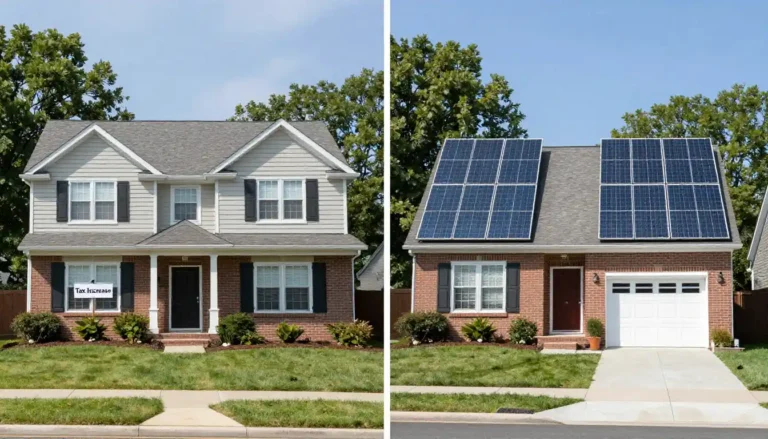
The average North Carolina homeowner pays Duke Energy around $130–$150 per month. A properly sized solar system for solar explanation in North Carolina can cut that bill by 70–90%. The 30% federal tax credit still applies in 2026, and NC adds a full property tax exemption on solar equipment value, meaning your home assessment won’t rise because of panels.
What You Actually Pay for Solar in North Carolina Right Now
When we talk about Solar explanation in North Carolina, its installation costs are $2.70–$3.20 per watt in 2026.
For a typical 8kW system, which fits most 1,800–2,400 sq ft homes, that puts your gross cost at $21,600–$25,600 before incentives.
After the 30% federal Investment Tax Credit:
- Gross cost: $25,000 (example)
- Federal ITC (30%): −$7,500
- Your out-of-pocket cost: ~$17,500
That’s the number most installers bury in footnotes. The $17,500 is what you’re actually financing or paying upfront, not the original quote.
In Apex, NC specifically, a mid-size 8kW system runs closer to $22,000–$24,000 installed. After the ITC, you’re looking at $15,400–$16,800 net cost.
Three factors push your cost up or down:
- Roof age and pitch (steep roofs cost more to work on)
- Panel brand tier, budget vs. premium modules can vary by $2,000–$4,000 on the same system size
- Interconnection queue with Duke Energy, longer waits in dense suburbs like Apex and Cary
Solar Payback Period in North Carolina 2026, With and Without the Tax Credit
The average solar payback period in North Carolina is 8–11 years in 2026.
That range shifts significantly based on your location and whether you claim the federal credit.
In Apex, NC:
| Scenario | System Cost (8kW) | After ITC | Payback Period |
| With 30% federal tax credit | $23,000 | ~$16,100 | 8–9 years |
| Without a federal tax credit | $23,000 | $23,000 | 12–14 years |
| High-shade roof, reduced output | $23,000 | ~$16,100 | 11–13 years |
Without the federal tax credit, payback stretches by 4–5 years. That matters if you’re financing, because you’re paying interest on $23,000 instead of $16,100.
What this means for your decision: If you can’t claim the ITC because your federal tax liability is too low, your payback math looks very different. Retired homeowners on Social Security income often fall into this trap. The credit only offsets taxes you actually owe.
Duke Energy Net Metering Policy in North Carolina 2026
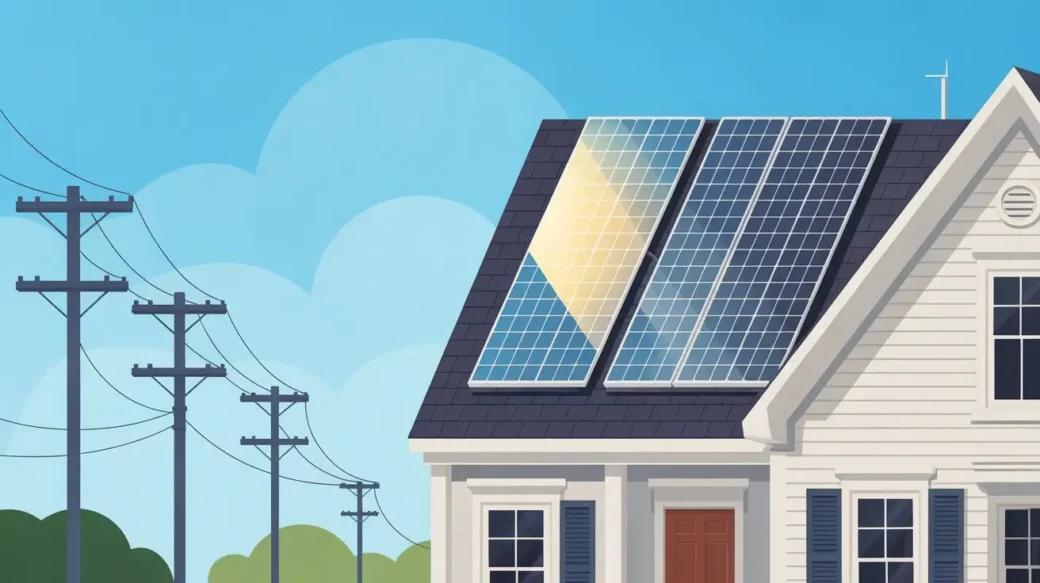
Duke Energy Carolinas and Duke Energy Progress both offer net metering in North Carolina, but the credit rate is not retail; it’s avoided cost.
Here’s what that means in plain terms:
- You sell excess power back to the grid
- Duke pays you the wholesale rate, roughly 4–6 cents per kWh
- But you buy power from Duke at 12–14 cents per kWh
You’re buying high and selling low. That gap is why system sizing matters so much in NC. Oversizing your system doesn’t help you earn more; it just means more power is exported at a low credit rate.
Duke Energy’s current net metering program is governed under the NC Utilities Commission’s Docket E-100, Sub 113 proceeding, which has been under review since 2023. The commission has not moved to net metering 3.0 elimination as California did, but avoided-cost compensation remains the standard.
Practical takeaway for Apex homeowners: Size your system to cover roughly 90–100% of your usage, not more. Exporting large amounts at 4–5 cents when you pay 13 cents is a poor return.
North Carolina Solar Incentives 2026: What’s Real, What’s Gone
North Carolina does not have a state solar tax credit in 2026. The NC Renewable Energy Tax Credit expired in 2015 and has not been renewed.
What you do have:
1. Federal Investment Tax Credit (30%). Still active in 2026. Applies to equipment and installation costs. Phases down to 26% in 2033. Claim it on IRS Form 5695.
2. North Carolina Property Tax Exemption Under NC General Statute § 105-275(45), solar energy systems are 100% exempt from property tax assessment. If panels add $20,000 to your home’s market value, your property tax bill doesn’t move. That’s real money, roughly $200–$400/year in avoided taxes depending on your county rate.
3. North Carolina Sales Tax Exemption Solar equipment purchased for residential use is exempt from NC’s 4.75% state sales tax under G.S. 105-164.13(5a). On a $23,000 system, that’s roughly $1,090 back in your pocket. Most homeowners don’t even realize this applies.
4. Duke Energy Rebates Duke Energy does not currently offer a residential solar rebate program in North Carolina in 2026. Some past programs have ended. Verify directly with Duke before any installer claims a utility rebate exists.
What this means in total savings from incentives alone:
- Federal ITC: ~$6,900–$7,500 (on a $23,000 system)
- Sales tax exemption: ~$1,090
- Property tax exemption: ~$250/year ongoing
- Total first-year incentive value: ~$8,000–$8,600
Are Solar Panels Worth It in North Carolina? The Honest Answer
For most homeowners in the Raleigh-Durham-Apex area paying $130+ per month to Duke Energy, solar is financially worth it, but the timeline is longer than most installers admit.
Here’s where I’ll be direct with you.
North Carolina is not the strongest solar market in the Southeast. Georgia and South Carolina have higher average sun hours in some regions. NC’s avoided-cost net metering structure limits your return on excess generation. And the state offers no tax credit of its own.
What makes NC work anyway:
- Duke Energy’s residential rates have climbed steadily, up roughly 15–18% since 2021
- The property and sales tax exemptions add real value
- The federal ITC remains at 30% through 2032
- Home values in the Triangle area are high, and solar does increase home resale value in NC. Studies from Lawrence Berkeley National Laboratory show roughly a $3–$4 per watt premium at resale
What surprised me when I looked at solar explanation in North Carolina data specifically was how much the payback period varies by just 30–40 miles of distance. A home in Asheville gets noticeably fewer peak sun hours than a home in Fayetteville. The western mountain region averages around 4.5 peak sun hours daily, while the southern coastal plain hits closer to 5.1–5.3.
How Solar Economics Differ Across North Carolina
North Carolina is not one solar market. The state splits into three distinct zones:
Triangle / Piedmont (Apex, Raleigh, Durham, Chapel Hill)
- Average peak sun hours: 4.8–5.0 daily
- Duke Energy territory throughout
- Strong home values improve ROI at resale
- Highest installer competition = better pricing
Western Mountains (Asheville, Boone, Brevard)
- Average peak sun hours: 4.3–4.6 daily
- More shade, steeper roofs, and higher installation costs
- Payback periods stretch to 11–14 years for many homes
- Solar is viable, but the margin is thinner
Eastern / Coastal Plain (Wilmington, Fayetteville, Greenville)
- Average peak sun hours: 5.0–5.3 daily
- Best solar production in the state
- Duke Energy Progress territory
- Lower home prices reduce the resale value benefit
- Best raw production numbers in NC
A homeowner in Fayetteville paying Duke Energy Progress $155/month with a south-facing roof and an 8kW system could see 95–100% offset, with a payback of 8–9 years after the ITC. That same system in Boone, with shade and a north-facing slope, might deliver 65% offset and a 13-year payback. Same state. Very different decision.
Solar Home Value in North Carolina: What the Data Actually Shows
Solar panels increase home value in North Carolina by roughly $3–$4 per installed watt, according to research published by Lawrence Berkeley National Laboratory through the U.S. Department of Energy.
For an 8kW system, that’s a $24,000–$32,000 increase in appraised market value.
Combined with the property tax exemption, which means that added value generates zero additional tax, this is one of the strongest financial arguments for solar in NC that most installers underpromote.
Three things affect how much value solar adds at resale:
- Local buyer demand for solar (higher in the Triangle than in rural eastern NC)
- System age, panels closer to the end of their 25-year production warranty add less
- Whether you own the system outright vs. lease (leased systems often complicate sales)
Average Annual and Lifetime Savings: Apex, NC 2026
A homeowner in Apex paying Duke Energy around $145/month ($1,740/year) with an 8kW south-facing system can expect:
- Annual electricity offset: $1,400–$1,600
- Net metering credits on excess: $80–$150/year
- Total average annual savings: $1,480–$1,750
Over 25 years (standard panel warranty period), at a conservative 3% annual utility rate increase:
- 25-year lifetime savings estimate: $52,000–$68,000
- Net cost after ITC: ~$16,100
- Net 25-year gain: $35,000–$51,000
These numbers assume Duke Energy rates continue rising, which they have consistently. If rates flatten, savings compress. If rates rise faster, savings expand.
The honest version: Not every home hits these numbers. A partially shaded roof in a northwest-facing orientation might generate 70% of what a perfect south-facing roof produces. That cuts annual savings to $1,000–$1,200 and extends payback accordingly.
If your situation involves complications, a past solar contract dispute or misleading savings estimates from an installer, the team at Solar Fraud Attorney Legal Help covers what options actually exist.
One Scenario Where Solar in North Carolina Doesn’t Work Well
A homeowner in Boone, NC, in the western mountains, with a heavily wooded lot, a $110/month Duke Energy bill, asked for a solar quote and received an estimate for a 7kW system at $21,000.
After the ITC: ~$14,700.
The problem: their roof was 60% shaded by mature trees, east-facing, and 18 years old. Effective solar output would have been around 55–60% of ideal. Annual savings: roughly $700–$800. Payback period: 18–20 years. The roof would need replacing, at $12,000+, before the panels could go on.
In this situation, solar was not the right financial move. The installer’s estimate didn’t mention the shading factor, the roof condition, or the east-facing production penalty.
This is why a shading analysis from a certified solar assessor, not just an installer’s sales visit, matters before you sign anything. If you’ve already signed and feel the terms weren’t disclosed honestly, understanding how to get out of a solar contract is worth reading before your cancellation window closes.
What to Do Before You Get Any Quote in North Carolina
Before you talk to a single installer, know these four things about your own home:
- Your last 12 months of Duke Energy bills, total kWh used, not just dollar amounts. Installers need kWh to size a system accurately.
- Your roof age and orientation, a roof under 10 years old, south or southwest-facing, with minimal shade, is ideal. Anything else changes the math.
- Your federal tax liability, if you owe less than $6,000–$7,500 in federal taxes annually, you may not be able to claim the full ITC in one year. It does carry forward, but that extends your payback period.
- Whether your HOA has solar restrictions, Wake County municipalities, including parts of Apex, have HOA communities with specific placement rules. NC’s Solar Easement statute protects your right to install, but HOA rules on aesthetics and placement still apply.
For context on how solar cost structures compare nationally before accepting a local quote, average solar panel costs across the USA give a useful benchmark.
And if you’ve come across concerns about a specific installer’s practices or a class action situation, the 2026 solar panel class action lawsuit tracker is worth checking for NC-related cases.
The Honest Bottom Line for North Carolina Homeowners
Solar in North Carolina works best for homeowners who:
- Pay Duke Energy $120/month or more
- Have a south or southwest-facing roof with minimal shade
- Plan to stay in the home for at least 10–12 years
- Can claim the full 30% federal ITC against their tax liability
- Live in the Piedmont or eastern regions (better sun hours)
Solar in NC is a harder call if you:
- Pay under $100/month in electricity
- Have significant roof shading or an older roof needing replacement
- Can’t fully utilize the federal tax credit
- Live in the western mountains with lower sun hours
- Plan to sell within 5–7 years (though resale value may still justify it in the Triangle)
The average cost of going solar explanation in North Carolina after incentives lands around $15,000–$17,500 for a typical 8kW residential system in 2026. The payback in Apex and the broader Triangle area is realistically 8–10 years with the ITC claimed. Over 25 years, the financial case is clear for the right home.
The question isn’t whether solar works in North Carolina. It works. The question is whether your specific roof, bill, and financial situation make it the right move right now, and that answer depends on the details your electricity bill and a shading analysis can tell you faster than any salesperson.
Frequently Asked Questions
Solar panels explained simply for North Carolina: where does a homeowner start?
Start with your Duke Energy bill. Your monthly kilowatt-hour usage and your current rate determine how large a system you need and how much you can realistically save before any incentive is factored in.
What solar incentives are currently available for North Carolina homeowners?
North Carolina homeowners can access the federal 30% Investment Tax Credit, a sales tax exemption on solar equipment under G.S. 105-164.13, and an 80% property tax exclusion on the added home value from their installation. There is no current state income tax credit.
What is the solar easy explanation for how net metering works in North Carolina?
Duke Energy Progress and Duke Energy Carolinas are required to credit your account at the retail electricity rate for surplus solar power sent to the grid, currently around 13 cents per kilowatt hour. Those credits offset your bill during lower production periods.
What is the solar energy simple terms explanation for North Carolina’s 80% property tax exclusion?
When solar adds value to your home, 80% of that added value is excluded from local property tax assessment. Only 20% of the solar-related home value increase is taxed, which keeps your annual property tax bill close to what it was before installation.
Does North Carolina have a state income tax credit for residential solar?
No. The North Carolina 35% residential solar tax credit expired in 2015 and has not been renewed. The federal 30% Investment Tax Credit is the primary tax-based incentive available to North Carolina homeowners today.
Is Solar for dummies North Carolina a reasonable investment for homes near Asheville?
Yes, but with realistic expectations. Asheville averages 4.7 peak sun hours per day, slightly below the state average, and mountain terrain can create shading on certain roof orientations. Well-sited homes in the Asheville area typically see payback periods in the 10 to 13-year range after the federal credit.

Morgan Lee | Lead Solar Policy & Consumer Research Analyst
Morgan Lee is the founder of SolarInfoPath and an independent solar research analyst with over 10 years of experience studying the U.S. residential and commercial solar market. Morgan’s research focuses on how real homeowner outcomes compare to the savings projections presented during solar sales, a gap that has led to thousands of consumer complaints and active class action lawsuits across New York, California, Texas, and Florida.
All research published on SolarInfoPath is drawn from primary sources, including the National Renewable Energy Laboratory (NREL), the U.S. Department of Energy (DOE), the U.S. Energy Information Administration (EIA), IRS and Treasury guidance under the Inflation Reduction Act, state public utility commission documents, and publicly filed court records related to solar consumer protection cases.
With a background in legal studies, Morgan interprets complex topics, federal tax credits under Section 25D and Section 48, Power Purchase Agreement contract terms, net metering policy changes, and solar litigation, in plain language that homeowners can actually use, without providing legal or financial advice.
SolarInfoPath was built after observing that most homeowners commit $25,000 to $40,000 to a solar system based on incomplete or misleading information, while almost every available source of solar education online has a financial relationship with the industry it covers. SolarInfoPath has no installer affiliations, no lead generation, and no affiliate income. Every article is independent, research-based, and written for informational purposes only.