Why Solar Panels Are Worth It in Washington
Washington State is two completely different solar markets divided by one mountain range. Western Washington, Seattle, Tacoma, Olympia, Bellevue, averages 3.5 to 4.0 peak sun hours per day. Eastern Washington, Spokane, Yakima, Tri-Cities, Walla Walla, averages 5.5 to 6.0. That geographic split is so significant that giving a single statewide answer to the question of why solar panels are worth it in Washington is inherently misleading.
A homeowner in Spokane and a homeowner in Seattle are evaluating two different investments, and they deserve two different honest answers. Adding to the complexity, Washington has some of the cheapest electricity rates in the entire country, Puget Sound Energy charges around $0.11 per kWh, Seattle City Light as low as $0.10, driven by the state’s extensive hydropower infrastructure. Cheap electricity reduces monthly solar savings, which extends payback periods across the board.
For Seattle-area homeowners, the honest payback period runs 14 to 18 years. For Spokane homeowners, it improves to 10 to 13 years. Both can still be financially sound, but for different reasons.
Washington’s Electricity Rates and Why They Matter
From my point of view, your electricity rate is more important than sun hours when deciding if solar makes sense. Puget Sound Energy customers in the Seattle and Tacoma area typically pay around $0.11 to $0.13 per kWh. Pacific Power customers in eastern Washington, including Yakima and Walla Walla, see similar rates. Both have been trending upward, and that is exactly why more Washington homeowners are looking at solar seriously right now.
Before calculating your real costs, it helps to understand the full picture. There are hidden solar panel costs in the USA that catch many homeowners off guard, including permit fees, interconnection charges, and possible roof prep work.
City by City Solar Snapshot for Washington
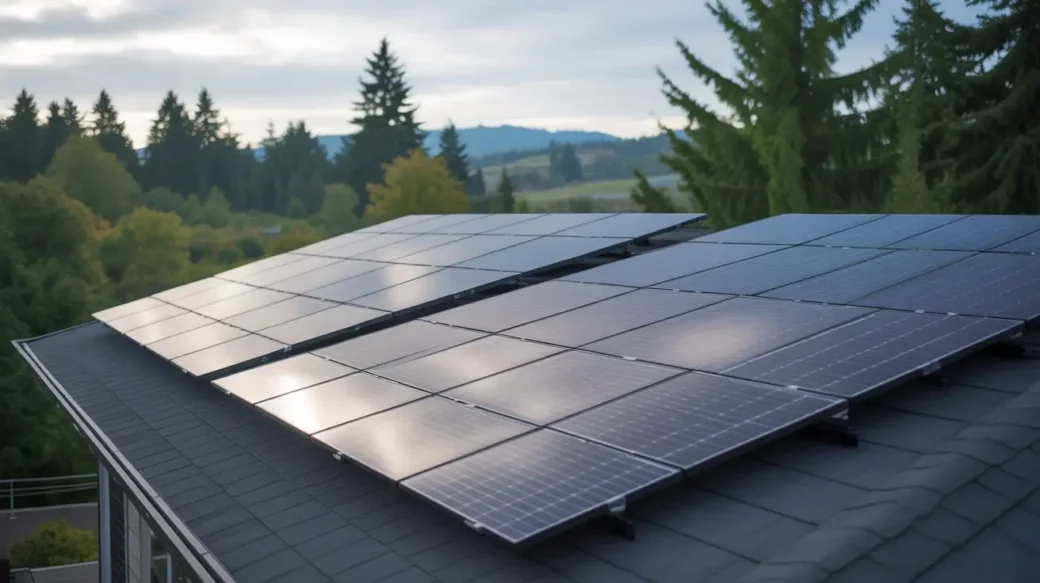
Washington is not one uniform solar environment. The eastern side of the state, including Spokane, Yakima, and the Tri-Cities, gets considerably more sunshine than the western side, where Seattle, Tacoma, and Olympia sit. This is where things get tricky if you are reading generic content that treats the whole state the same way.
| City | Avg Sun Hours Per Day | Est. Annual Savings | Avg System Cost | Key Notes |
| Seattle | 3.5 hrs | $700 to $950 | $14,000 to $18,000 | Cloudy winters, net metering balances output |
| Spokane | 4.2 hrs | $950 to $1,200 | $13,500 to $17,000 | Sunnier east side, strong summer production |
| Tacoma | 3.4 hrs | $680 to $920 | $14,000 to $18,500 | Mild coastal climate, similar to Seattle |
| Yakima | 4.5 hrs | $1,050 to $1,350 | $13,000 to $16,500 | Best sun hours in WA, shortest payback period |
| Olympia | 3.3 hrs | $650 to $880 | $13,800 to $17,500 | Most overcast, but net metering helps a lot |
The Real Benefits Solar Panels Offer Washington Homeowners
I tend to look at it this way. The best reasons to install solar in Washington are not just about sunshine. They are about what the incentive structure looks like when you put everything together. Washington has a sales tax exemption on solar energy systems, and since the state has no income tax, the federal 30% Investment Tax Credit lands with full value.
Understanding how the federal solar tax credit works is important before you calculate your real out of pocket cost. For a typical Washington home with a $15,000 to $17,000 system, that 30% credit could mean $4,500 to $5,100 back at tax time.
How Net Metering Works for Your Bill
Under Washington’s net metering rules, your utility must credit you at the full retail rate for excess solar energy sent to the grid. If your system produces more than you use in a given month, that credit carries forward. For most Seattle area homeowners, spring and summer overproduction covers the slower winter months when sun hours drop below 3 per day.
The Payback Picture and Why Solar Panels Are Worth It in Washington
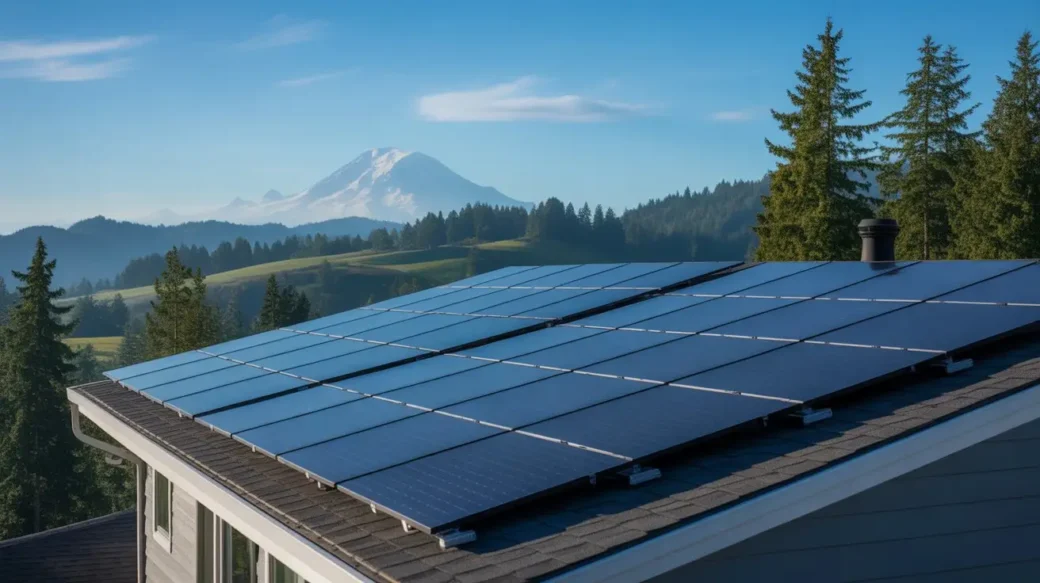
For a south or west-facing roof with decent sun exposure, the payback period in Washington typically runs 10 to 14 years, depending on your city and utility rate. With the 30% federal credit applied, a $16,000 system drops to a net cost closer to $11,200, and that makes the math a lot more comfortable for most homeowners.
For a solid reference on what homeowners are paying, you can check how much solar panels cost in the USA, with system size and pricing breakdowns relevant to Washington. What surprised me when I first looked at the data is how much the eastern part of the state changes things. A homeowner in Yakima with 4.5 peak sun hours has noticeably faster payback than someone in Olympia with 3.3 hours.
What Washington Homeowners Should Check Before Going Solar
One thing people often miss is the roof condition question. Solar panels are warrantied for 25 years, so if your roof needs replacing in 5 years, you will end up removing and reinstalling your panels at extra cost. In my experience, a roof inspection before committing to solar is worth doing, especially in older neighborhoods around South Seattle, Tacoma, or Olympia.
A few things worth checking before you move forward:
- Check your roof orientation. South and west facing roofs produce the most in Washington.
- Verify your utility’s net metering policy. Most Washington utilities follow state rules, but rural cooperatives can vary.
- Understand the sales tax exemption. Washington exempts solar equipment from state sales tax.
- Account for tree shading. This matters a lot in wooded neighborhoods across western Washington.
- Get your system size right. A typical Washington home uses around 10,000 to 11,000 kWh per year.
You can look at the average solar panel cost in the USA for a helpful baseline before getting into Washington-specific pricing. It is also worth knowing how incentives are handled at tax time, so reading about whether solar incentives are taxable in the USA before tax season is a smart move.
Solar Panels Are Good for Washington’s Environment
As reported by the U.S. Department of Energy, residential solar reduces dependence on fossil fuel-based electricity and supports cleaner energy goals at the state and national levels. Washington already generates much of its electricity from hydropower, but the grid still uses natural gas generation that produces emissions. Every kilowatt hour your panels produce at home is one less that needs to come from somewhere else.
A typical 6 kW system on a Washington home can offset roughly 6,000 to 7,500 kWh per year in Seattle area conditions. In Spokane or Yakima, that same system can produce closer to 8,000 to 9,500 kWh annually. Over 25 years, that adds up to a real environmental contribution on top of the financial one.
Final Thoughts
Eastern Washington homeowners in Spokane, Yakima, or the Tri-Cities have a relatively straightforward solar case: strong sun hours, moderate electricity rates, and a payback timeline that competes with most Midwest states. Why solar panels are worth it in Washington for Eastern Washington residents is a fairly clear financial argument even by today’s numbers.
Western Washington is a different conversation. Seattle and Tacoma homeowners are making a bet on rate trajectory more than on today’s snapshot. Washington’s hydropower system is under increasing strain from climate-related water variability and rising demand driven by the state’s clean energy electrification goals. PSE’s rate history over the past decade shows consistent increases.
A homeowner in Bellevue who installs at $0.11 per kWh today and sees that rate climb to $0.15 or higher over the next decade looks back at a payback calculation that improved significantly. That is the honest Western Washington argument — not today’s rate, but where the rate is going. Washington’s sales tax exemption on solar equipment reduces upfront cost meaningfully, and the 30% federal ITC applies cleanly here since the state has no income tax. Know your location. Know your utility. Build from those real numbers.
FAQs
Is solar worth it in Washington, given all the clouds?
Yes, for most homeowners. Panels still produce energy on cloudy days, and net metering banks’ summer surplus to cover winter shortfalls.
What is Washington’s net metering policy?
Washington has an active net metering policy requiring utilities to credit solar customers at the full retail rate for excess energy sent to the grid.
Does Washington have a state solar rebate program?
Washington does not have a large statewide rebate, but it does have a sales tax exemption on solar energy systems that saves homeowners real money upfront.
How does the federal tax credit work for Washington homeowners?
Washington homeowners can claim the federal 30% Investment Tax Credit on their total system cost. Since Washington has no state income tax, the credit applies cleanly with full value.
What are the main benefits of solar panels for Washington homeowners?
The main benefits include reduced electricity bills through net metering, protection from future rate increases, the 30% federal tax credit, and the state sales tax exemption on solar equipment.
How many solar panels does a typical Washington home need?
Most Washington homes use between 10,000 and 11,000 kWh per year. A system between 6 kW and 9 kW is typically the right size, depending on your city and roof conditions.

Morgan Lee is a homeowner and solar energy researcher based in the United States. After installing a rooftop solar system in 2022 and spending months comparing quotes, incentives, and installer reviews, Morgan realized how confusing and overwhelming the process felt for most American families. That experience led to the creation of SolarInfoPath, a no-pressure, educational platform designed to help U.S. homeowners understand solar energy clearly and confidently. Morgan focuses on practical, research-backed information covering solar costs, installation timelines, federal tax credits, and long-term savings. All content on this site is written from a homeowner’s perspective with the goal of making solar energy simple and accessible for everyday Americans.