Solar Panels Explained Simply for New Jersey Homeowners (Real Numbers, No Confusion)
New Jersey homeowners carry one of the highest electricity costs in the entire Northeast, with PSE&G and Atlantic City Electric residential rates averaging around 16.9 cents per kWh in 2024. If you have been putting off learning about solar because it feels complicated, this breaks it down clearly. Solar panels explained simply for New Jersey comes down to three things: how your roof turns sunlight into electricity, how your utility credits you for the power you send back, and how New Jersey’s layered incentives cut what you actually pay upfront. The solar energy simple terms version of this state’s program is one of the more rewarding in the country once you understand what is available.
What surprised me about New Jersey specifically is how well the numbers hold up without the blazing sun hours that southern states enjoy. The state averages 4.5 to 4.7 peak sun hours per day, which is enough to make rooftop solar financially worthwhile for a large share of homeowners across Newark, Trenton, Cherry Hill, and Atlantic City. New Jersey’s combination of high electricity rates and stacked incentives makes the math work in ways that simply would not be possible in lower rate states.
How Solar Panels Work in Simple Terms for New Jersey Homes
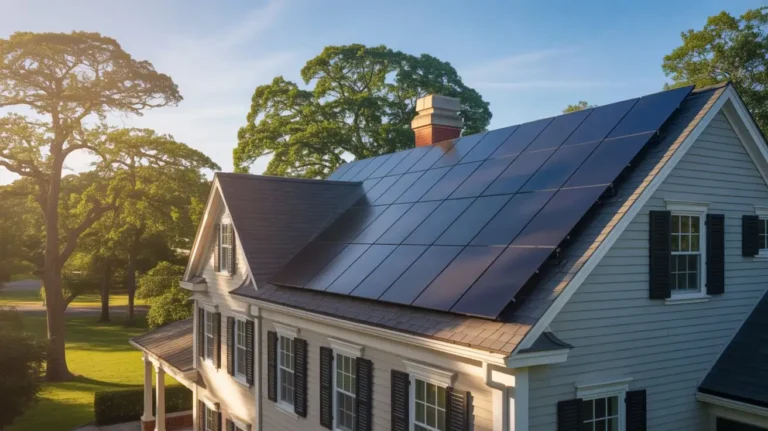
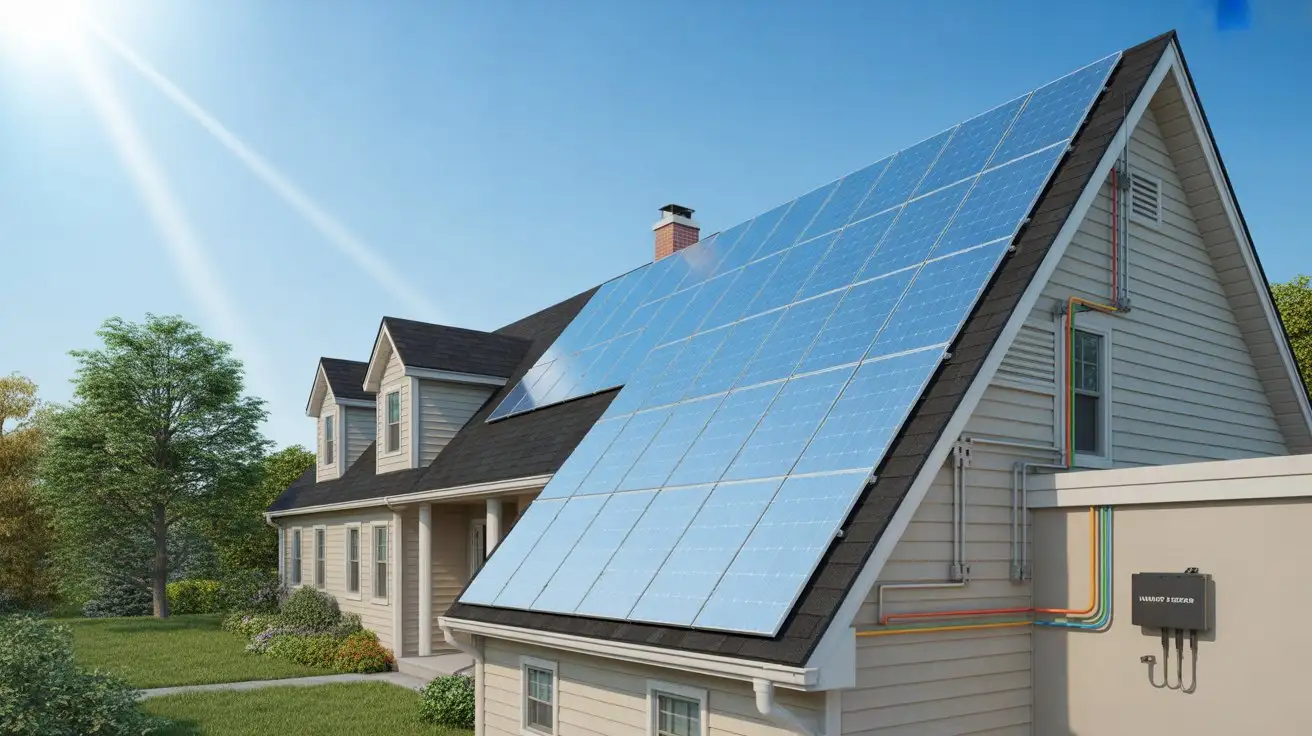
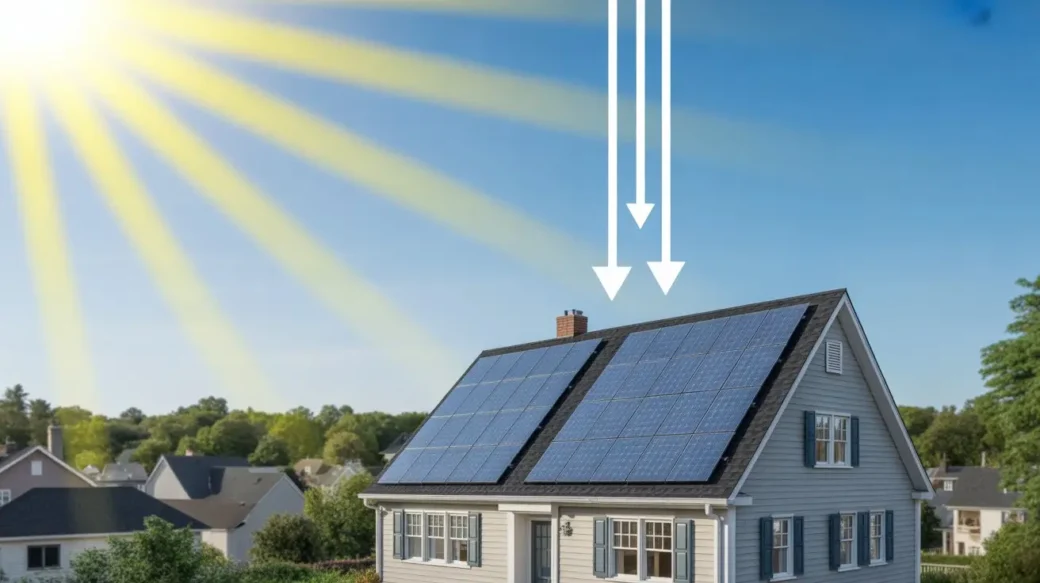
Solar panels are built from photovoltaic cells, which are silicon layers that release electrons when sunlight hits them. That electron movement creates direct current electricity. Since your home runs on alternating current, an inverter converts it before it reaches your electrical panel. From that point, your home uses solar electricity first and pulls from the PSE&G or JCP&L grid only when panels are not producing enough.
When your panels generate more than your home needs, that surplus flows back to the grid. Under New Jersey’s active net metering policy, your utility credits your account at the retail rate for every kilowatt hour sent back, around 16.9 cents rather than a discounted wholesale rate. That credit relationship is the core of why solar works financially in this state. Why solar panels are worth it in New Jersey covers the full long term picture if you want to go deeper beyond the basics here.
What Solar Could Save a New Jersey Homeowner, Real Numbers
A homeowner in Trenton paying around $169 per month to their utility, roughly 1,000 kWh at 16.9 cents, spends about $2,028 per year on electricity. A 7 kilowatt solar system in Trenton receiving approximately 4.5 peak sun hours daily would generate around 9,800 to 10,800 kWh per year, covering most or all of that annual consumption depending on roof orientation and shading.
Before incentives, a 7 kilowatt system in New Jersey typically costs $17,500 to $21,000 installed. After applying the federal solar tax credit that covers 30% of your system cost, out of pocket cost drops to $12,250 to $14,700. New Jersey’s sales tax exemption then removes the state’s 6.625% tax from equipment purchases, saving an additional $1,160 to $1,390 on a typical system. Using a solar panel cost calculator built for New Jersey sharpens these estimates based on your specific zip code, roof angle, and monthly usage.
How Solar Production Varies Across New Jersey: City by City
Northern New Jersey near Newark and Jersey City sits slightly below the state average for daily sun hours, while southern communities around Cherry Hill and Atlantic City have a modest but real production advantage. Here is how five New Jersey cities compare:
| City | Avg Sun Hours/Day | Est. Annual Savings (7kW) | Key Solar Notes |
| Newark | 4.4 hrs | $1,450 to $1,650 | PSE&G territory; urban shading limits viable roof space |
| Trenton | 4.5 hrs | $1,500 to $1,700 | PSE&G and JCP&L boundary; suburban rooftops generally well suited |
| Cherry Hill | 4.6 hrs | $1,550 to $1,800 | Atlantic City Electric; strong suburban roof access and southern exposure |
| Atlantic City | 4.7 hrs | $1,600 to $1,850 | Best sun hours in state; coastal salt air requires panel maintenance awareness |
| Jersey City | 4.4 hrs | $1,400 to $1,600 | Dense urban environment; rooftop space and shading are primary constraints |
Estimates based on New Jersey’s average residential rate of 16.9 cents per kWh. Actual savings vary by roof pitch, shading, and utility rate.
Rural areas in Salem County and Cumberland County in the southern part of the state have excellent unobstructed solar potential with fewer HOA restrictions than dense suburban communities in Bergen or Essex counties in the north.
New Jersey Solar Incentives: Solar for Dummies New Jersey
New Jersey has one of the more layered incentive stacks in the Northeast. Understanding each piece separately makes the full picture much clearer. Here is what is currently available:
- Federal Investment Tax Credit (30%): A dollar for dollar reduction in your federal tax liability in the year your system is placed in service. For a $19,000 system, that is $5,700 directly off your federal taxes. Current federal solar credit guidance on Energy.gov is worth reviewing before you file.
- New Jersey SuSI Program: The Successor Solar Incentive program pays residential owners a fixed rate per kilowatt hour generated for 15 years. Systems under 25 kilowatts qualify for the Administratively Determined Incentive track, currently paying roughly $0.07 to $0.09 per kWh. On a 7 kilowatt system producing 10,000 kWh annually, that is $700 to $900 per year in additional income on top of electricity savings.
- Sales Tax Exemption: New Jersey fully exempts solar equipment from the state’s 6.625% sales tax, saving approximately $1,260 on a $19,000 system.
- Property Tax Exemption: The added home value from your solar installation is fully exempt from New Jersey local property taxes, so your annual tax bill does not increase.
New Jersey solar rebates and credits explained by program covers current SuSI rates and how to apply. If you are unsure whether your household qualifies for these programs, who is eligible for solar incentives in the USA walks through the federal and state requirements clearly.
Honest Limitations New Jersey Homeowners Should Know
I would not say solar is a straightforward decision for every home in this state. Dense urban neighborhoods in Newark, Jersey City, and Hoboken present real roof access challenges. Row homes, multi-family buildings, and heavily shaded urban lots eliminate solar as a practical option for a significant share of northern New Jersey residents. HOA restrictions in Bergen County and Morris County suburban communities can also shift panel placement toward less productive roof orientations.
New Jersey’s installation timelines also tend to run longer than in many states due to utility interconnection queues, particularly in PSE&G’s service area. How long solar installation takes in America explains what causes permitting and interconnection delays so you can plan realistically. Coastal homeowners in the Atlantic City and Cape May area should factor in salt air exposure, which requires more frequent panel cleaning than inland installations.
Payback periods for well suited New Jersey homes typically run 8 to 11 years. Homes with partial shading or suboptimal roof angles can push that to 12 years or longer. What the solar payback period means for U.S. homeowners explains how to calculate this for your specific situation. And if you are moving from research into planning, the full solar installation process explained step by step is a useful practical next read.
How Net Metering Works in New Jersey Without the Jargon
New Jersey has a mandatory active net metering policy. PSE&G, JCP&L, Atlantic City Electric, and Rockland Electric are all legally required to offer net metering to residential solar customers. Surplus production credits your account at the full retail rate and rolls forward month to month. Strong spring and fall production builds a credit balance you draw down during summer air conditioning peaks and lower winter production months.
Whether net metering is genuinely worth it in the USA puts New Jersey’s retail rate policy in national context. It is one of the more favorable structures among northeastern states and a key reason payback timelines here compare reasonably well despite the higher upfront system costs in this market.
Final Thoughts
For New Jersey homeowners in well suited suburban areas across central and southern parts of the state, solar panels explained simply for New Jersey comes down to this: your roof generates electricity at no ongoing fuel cost, New Jersey’s net metering policy credits you at the full retail rate for surplus power, and the SuSI program adds a second income stream running for 15 years on top of your electricity savings. The 16.9 cent electricity rate, the 30% federal credit, and both state tax exemptions make New Jersey one of the strongest solar markets in the Northeast for homeowners with the right roof and realistic expectations.
From my point of view, the SuSI production incentive is the piece most New Jersey homeowners overlook entirely when they first research solar. It is separate from your utility savings, which means two distinct financial benefits running simultaneously for over a decade. If you want to keep building your understanding, SolarInfoPath covers New Jersey solar costs, incentives, and policy in one place without the sales pitch that tends to follow most solar education content online.
Frequently Asked Questions
What does solar panels explained simply mean for a New Jersey homeowner?
It means your roof generates electricity during daylight, your home uses it first, and your New Jersey utility credits your account at the full retail rate for any surplus sent back to the grid.
What is New Jersey’s electricity rate and how does it affect solar savings?
New Jersey’s average residential rate runs around 16.9 cents per kWh, which is among the highest in the Northeast. Each kilowatt hour your panels produce is worth more in avoided cost, which shortens your payback period compared to lower rate states.
What is the NJ SuSI program in solar energy simple terms for New Jersey homeowners?
The Successor Solar Incentive program pays you a fixed rate per kilowatt hour your system generates for 15 years. A typical 7 kilowatt system earns $700 to $900 per year from this program on top of your electricity bill savings.
Does New Jersey have a sales tax exemption on solar equipment?
Yes. New Jersey fully exempts solar energy equipment from the state’s 6.625% sales tax. On a $19,000 system, that saves approximately $1,260 at the point of purchase.
Is solar a simple decision for New Jersey homeowners with HOA restrictions?
Not always. State law limits HOA solar bans but allows aesthetic placement conditions. In Bergen County and Morris County suburbs, HOA requirements can affect panel orientation and reduce annual output compared to an unrestricted installation.
How does net metering work in New Jersey in simple terms for solar panels?
Every major New Jersey utility is legally required to credit your account at the retail electricity rate for surplus solar power sent to the grid. Those credits roll forward monthly and offset your bill during lower production periods.

Morgan Lee is a homeowner and solar energy researcher based in the United States. After installing a rooftop solar system in 2022 and spending months comparing quotes, incentives, and installer reviews, Morgan realized how confusing and overwhelming the process felt for most American families. That experience led to the creation of SolarInfoPath, a no-pressure, educational platform designed to help U.S. homeowners understand solar energy clearly and confidently. Morgan focuses on practical, research-backed information covering solar costs, installation timelines, federal tax credits, and long-term savings. All content on this site is written from a homeowner’s perspective with the goal of making solar energy simple and accessible for everyday Americans.