Why Solar Panels Are Worth It in North Carolina: Homeowner Guide
North Carolina is the second-largest solar state in the entire country, behind only California, ahead of Texas, Arizona, and Florida. Most homeowners in the state have no idea. That ranking is driven partly by large utility-scale solar farms, but it also reflects real production conditions, real policy support, and real economics that apply directly at the residential level. Charlotte, Raleigh, Durham, Greensboro, and Asheville all sit between 4.5 and 5.2 peak sun hours daily, producing reliable electricity output through all four seasons. Duke Energy Progress and Duke Energy Carolinas charge $0.12 to $0.13 per kWh, rates that are moderate but rising through consecutive utility commission proceedings. That combination is why solar panels are worth it in North Carolina right now, and the regulatory environment adds a timing element that makes acting under current terms more financially favourable than waiting.
Duke Energy has been filing proposals to reduce net metering compensation for new solar customers, and homeowners who install before any approved changes take effect may be grandfathered into more favorable current terms.
How North Carolina’s Sun Hours and Electricity Rates Shape the Solar Case
North Carolina sits in a climate zone that delivers genuine solar value across most of its geography. The state’s mild winters mean panels keep producing meaningful electricity year-round rather than dropping significantly during cold months, the way northern states experience.
What Peak Sun Hours Actually Mean for Your Roof
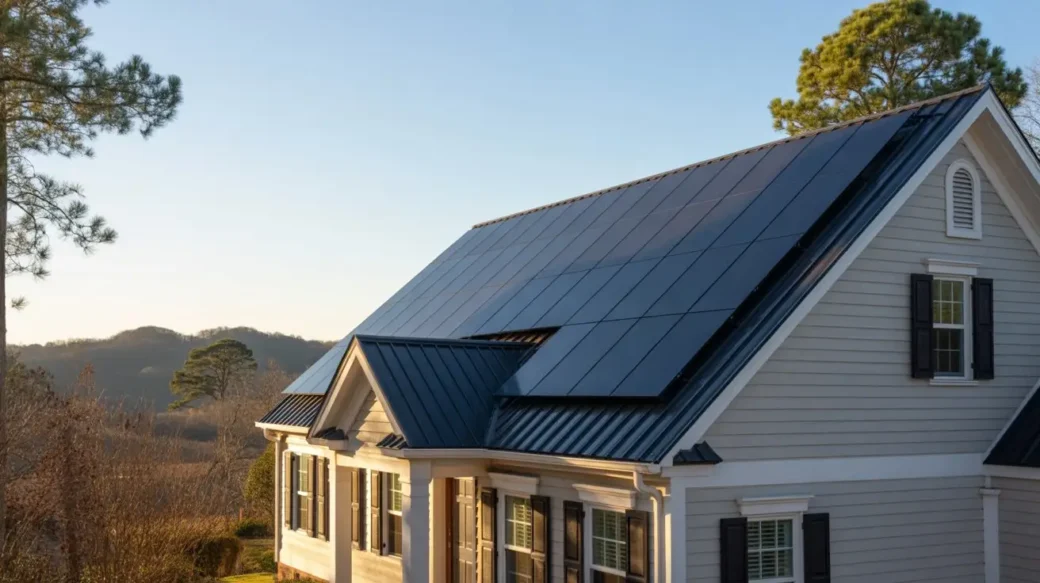
Coastal areas around Wilmington and the Outer Banks receive closer to 5.0 peak sun hours daily because of their southern latitude and proximity to open water. The Piedmont region, covering Charlotte, Raleigh, and Greensboro, averages around 4.7 to 4.9 peak sun hours. Western North Carolin, including Asheville and the mountain communities, receives slightly fewer sun hours, around 4.4 to 4.6 daily, because of elevation and more frequent cloud cover rolling in from the Appalachians.
That geographic variation within the state is real and worth understanding for your specific location. A homeowner in Wilmington and a homeowner in Asheville are working with meaningfully different production baselines, even though they both live in North Carolina.
For a clear picture of how solar production and savings vary across different U.S. locations based on sun hours and electricity rates, how much do solar panels save per year for U.S. homeowners breaks down the real numbers honestly.
Duke Energy and Net Metering — What North Carolina Homeowners Actually Get
This is where things get tricky for North Carolina solar research because the net metering picture here has some nuance worth understanding carefully.
North Carolina has an active net metering policy that requires Duke Energy Progress and Duke Energy Carolinas to credit residential solar customers for surplus electricity sent to the grid. The credit rate under the current policy is based on the avoided cost rate rather than the full retail rate for some customer classes, which is an important distinction that affects how you should size your system.
How the Credit Structure Affects Your Sizing Decision
You may notice that most solar advisors and educational resources emphasize right-sizing your system to your actual consumption in North Carolina rather than oversizing to maximize grid exports. That advice directly reflects the avoided cost credit structure. Your panels offset your direct daytime consumption at full retail value. Surplus production exported beyond your home’s real-time needs earns a lower credit rate.
A homeowner in Charlotte consuming around 1,100 kilowatt hours monthly gets the most financial value from a system sized to cover that consumption rather than a larger system producing significantly more than the home uses. This nuance matters more in North Carolina than in full retail net metering states.
To understand how North Carolina’s net metering policy compares to other U.S. states and what the credit structure means for your annual savings calculation, is net metering worth it in the USA for homeowners today covers the current state-by-state picture clearly.
Benefits of Solar Panels for North Carolina Homeowners: Incentives Available Now
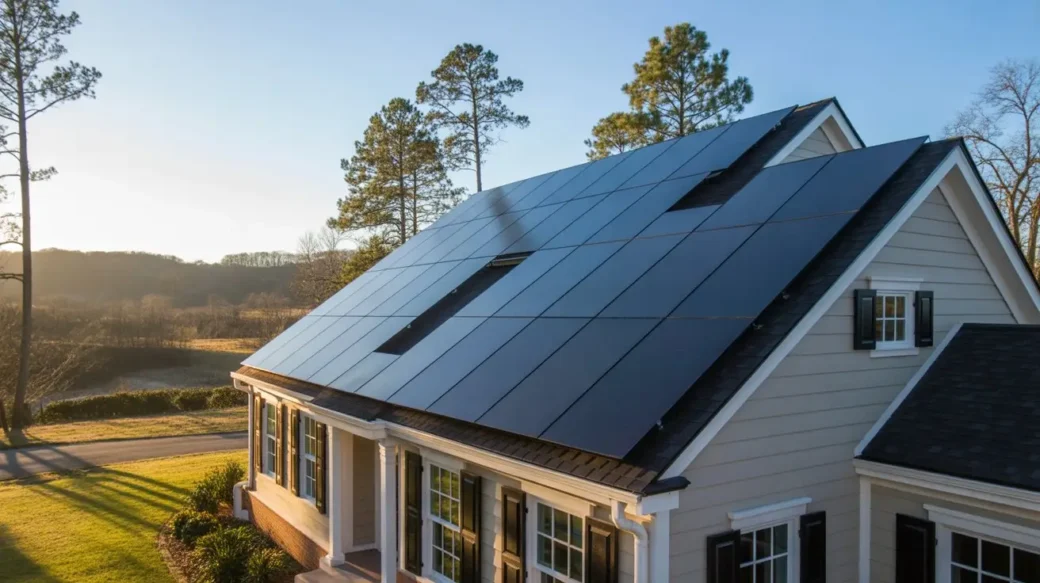
North Carolina homeowners have access to a meaningful set of incentives that change the financial picture significantly from the gross system cost.
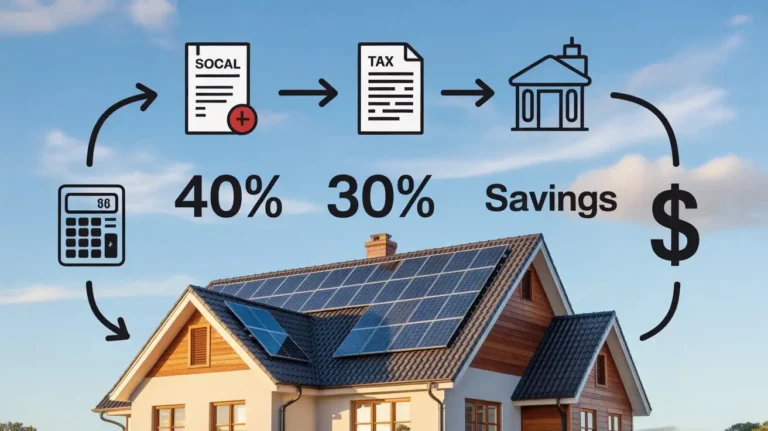
The federal Investment Tax Credit allows you to claim a percentage of your total installed system cost on your federal tax return in the year of installation. For a typical North Carolina system costing between $12,000 and $17,000 before incentives, this credit represents a substantial reduction in effective first-year cost.
Here is what North Carolina homeowners can currently access:
- The federal ITC applies to the full installed system cost, including panels, inverter, racking, wiring, and labor costs
- North Carolina’s property tax exclusion means your home’s increased assessed value from solar does not trigger higher property tax payments
- North Carolina’s sales tax exemption on solar energy equipment reduces your upfront purchase cost at the point of sale
- Duke Energy’s interconnection process, while requiring some paperwork, is generally manageable for residential systems, and your installer handles most of it
One Thing People Often Miss About North Carolina’s Property Tax Exclusion
One thing people often miss when evaluating reasons to get solar in North Carolina is how the property tax exclusion quietly improves the long-term economics. Solar installations add measurable value to homes in most U.S. markets. In North Carolina, that added value does not increase your annual property tax bill. That is a benefit that compounds quietly across every year of system ownership without requiring any action on your part after installation.
For a complete breakdown of what the federal tax credit covers and how to claim it correctly on your return, how does the federal solar tax credit work in the USA explains the full process without oversimplifying.
To understand how solar installation affects your home’s market value in North Carolina and similar south eastern states, do solar panels increase home value is covered by research across different U.S. markets honestly.
North Carolina City-Level Solar Comparison
Solar performance varies meaningfully across North Carolina’s diverse geography. Here is a realistic city-level look at how solar typically performs across the state:
| City | Avg Sun Hours Per Day | Avg System Cost | Est. Annual Savings | Net Metering |
| Charlotte | 4.8 | $13,000 to $17,000 | $950 to $1,300 | Duke Energy Carolinas (Active) |
| Raleigh | 4.7 | $12,500 to $16,500 | $900 to $1,250 | Duke Energy Progress (Active) |
| Greensboro | 4.7 | $12,500 to $16,500 | $900 to $1,250 | Duke Energy Carolinas (Active) |
| Wilmington | 5.0 | $12,000 to $16,000 | $1,000 to $1,400 | Duke Energy Progress (Active) |
| Asheville | 4.5 | $12,500 to $16,500 | $850 to $1,200 | Duke Energy Carolinas (Active) |
If you pay attention to where your city sits on this table, your savings estimate becomes significantly more grounded than any national average figure. Wilmington homeowners benefit from both the highest peak sun hours in the state and Duke Energy Progress’s active net metering program. Asheville homeowners work with slightly fewer peak sun hours but still have a solid financial case, particularly when the federal ITC and property tax exclusion are applied.
Why Install Solar Panels in North Carolina: The Financial Case in Real Terms
A typical home in Raleigh, consuming around 1,050 kilowatt hours monthly, pays roughly $130 to $140 per month on its electricity bill through Duke Energy Progress at current rates. That is lower than what homeowners in New Jersey or Massachusetts pay, which is why the North Carolina solar payback period runs a bit longer than in higher-rate states.
From my point of view, the honest payback range for a well-sized North Carolina residential system runs approximately nine to twelve years, depending on system size, location within the state, and actual household consumption. That is for a system designed to operate for 25 to 30 years. The arithmetic of paying back a nine-to-twelve-year investment and then collecting free electricity for the remaining fifteen to twenty years of system life is worth working through honestly before forming an opinion.
What makes the case stronger than the payback period alone is the trajectory of electricity rates. Duke Energy Progress and Duke Energy Carolinas have both sought and received rate increases in recent years. Every rate increase your utility announces after your system is installed increases the value of the electricity your panels produce because you are offsetting a more expensive input. Solar locks in a portion of your electricity production at zero marginal fuel cost, and that protection compounds in value as utility rates rise.
For an honest national cost context that helps you evaluate North Carolina system quotes accurately, how much do solar panels cost in the USA gives realistic pricing across different states and system sizes.
To understand what the full financial timeline looks like, including payback and post-payback returns for systems in states like North Carolina, what is the solar payback period in the USA, covers the honest math without overpromising.
Solar Panels Good for North Carolina Environment — What the Data Actually Shows
North Carolina’s electricity grid still relies on a mix of natural gas, nuclear, coal, and renewable sources for its generation. Duke Energy has made public commitments toward cleaner generation over the coming decades, but the current mix still includes meaningful fossil fuel generation.
When homeowners across Charlotte, Greensboro, Wilmington, and Raleigh generate clean electricity from rooftop solar, they directly reduce demand on the portion of Duke Energy’s generation that comes from combustion sources. That reduction is real and measurable at a household level and cumulative at a regional level as solar adoption grows across the state.
As reported by the U.S. Energy Information Administration, North Carolina has become one of the leading solar energy states in the south eastern United States in terms of total installed capacity, reflecting the combination of strong solar resources and supportive policy that makes the state genuinely well-positioned for continued residential solar growth.
North Carolina’s Seasonal Solar Production Pattern
North Carolina’s four-season climate means production does follow a seasonal pattern worth understanding. Summer months from May through August deliver the highest production because days are long and sun angles are strong. Spring and fall deliver solid production. Winter months bring reduced output but rarely drop to levels that eliminate the financial benefit of the system because North Carolina winters are mild compared to northern states.
Humidity during summer months in the Piedmont and coastal regions can cause panels to run slightly warmer than in drier climates, which has a modest effect on efficiency during peak heat periods. This is a minor consideration in the overall annual production picture but worth noting for homeowners in Charlotte, Raleigh, and Wilmington who want accurate seasonal expectations.
For context on how solar panels perform in different seasonal and climate conditions across the United States, solar panels’ pros and cons for U.S. homeowners cover the full picture, including performance limitations, honestly.
To understand what hidden costs sometimes catch North Carolina homeowners off guard during the installation process, hidden solar panel costs U.S. homeowners often overlook, covers every line item worth knowing before you review any quotes.
Final Thoughts
North Carolina’s solar investment is built on both present conditions and forward-looking dynamics, and both matter for an honest evaluation. Duke Energy’s rate increases through the North Carolina Utilities Commission, driven by grid infrastructure investment requirements, create a documented upward cost trajectory. Every rate increase after your system is installed improves your effective return without any change to your panels. Why solar panels are worth it in North Carolina over 25 years becomes clearer with each Duke Energy rate case that follows your installation date.
The most important homework before signing any contract is checking the current status of Duke Energy’s net metering policy in your specific service territory and understanding whether new-customer grandfathering protections apply to systems interconnected now. Beyond that, size your system to your actual 12-month Duke Energy kilowatt-hour consumption, confirm your federal tax liability position for full use of the 30% ITC, and get at least three quotes from licensed North Carolina installers.
The state’s solar market is mature, the competition among installers is real, and the production environment across the Piedmont and coastal regions is genuinely strong. Navigate the Duke Energy regulatory detail carefully and North Carolina solar is a well-supported long-term investment by almost any honest measure.
Frequently Asked Questions
Why are solar panels worth it, specifically for North Carolina homeowners?
North Carolina’s strong sun hours, active net metering through Duke Energy, federal ITC, and property tax exclusion create a solid financial case for homeowners with good roof exposure and moderate to high electricity consumption.
What are the main benefits of solar panels for North Carolina homeowners?
Lower electricity bills, federal tax credit savings in year one, property tax exclusion on added home value, and long-term protection against Duke Energy rate increases that have trended upward in recent years.
How does net metering work for North Carolina solar homeowners?
Duke Energy Progress and Duke Energy Carolinas credit surplus electricity at the avoided cost rate, making right-sized systems that match your actual consumption more financially efficient than oversized systems exporting large surpluses.
Are solar panels good for the North Carolina environment?
Yes. North Carolina’s grid still includes significant natural gas and coal generation, so residential solar directly reduces demand on combustion-based power sources across the Duke Energy service territory.
What is the typical payback period for solar in North Carolina?
Most North Carolina homeowners see payback in nine to twelve years, depending on system size, city location, and actual household consumption, for systems designed to operate 25 to 30 years.
Does North Carolina have state solar incentives beyond the federal tax credit?
North Carolina offers a property tax exclusion on solar-added home value and a sales tax exemption on solar equipment, both of which improve the financial picture meaningfully alongside the federal ITC.

Morgan Lee is a homeowner and solar energy researcher based in the United States. After installing a rooftop solar system in 2022 and spending months comparing quotes, incentives, and installer reviews, Morgan realized how confusing and overwhelming the process felt for most American families. That experience led to the creation of SolarInfoPath, a no-pressure, educational platform designed to help U.S. homeowners understand solar energy clearly and confidently. Morgan focuses on practical, research-backed information covering solar costs, installation timelines, federal tax credits, and long-term savings. All content on this site is written from a homeowner’s perspective with the goal of making solar energy simple and accessible for everyday Americans.