Do Solar Panels Emit Radiation — An Honest Answer for U.S. Homeowners
Do solar panels emit radiation? That question comes up more often than most solar resources acknowledge, and it deserves a direct, honest answer rather than vague reassurance or technical language that leaves you more confused than when you started. When panels sit directly above the rooms where your family lives and sleeps, asking about radiation is not an overreaction. It is a reasonable question from a homeowner who wants to understand what they are putting on their roof.
What I want to do here is answer that question clearly using plain language and actual science rather than either dismissing the concern or amplifying it beyond what the evidence supports. The honest answer has some nuance worth understanding properly.
What People Actually Mean When They Ask About Solar Panel Radiation
Why the Word Radiation Creates So Much Confusion
The word radiation means something much broader in everyday conversation than it does in a scientific context, and that gap is where most of the confusion about solar panels originates.
In scientific terms, radiation simply means energy traveling from one place to another. Sunlight is radiation. The warmth you feel from a fireplace is radiation. The light from your lamp is radiation. Radio signals are radiation. Medical X-rays are radiation. These are all technically forms of radiation, but they are vastly different from each other in terms of energy level, penetrating power, and health implications.
The Distinction That Actually Matters for Your Health
The distinction that matters for health purposes is between ionizing radiation and non-ionizing radiation. Ionizing radiation carries enough energy to remove electrons from atoms, which is what makes it potentially harmful to biological tissue. Medical X-rays, gamma rays, and radiation from nuclear materials are ionizing. These are the types genuinely associated with health risk from exposure.
Non-ionizing radiation does not carry enough energy to ionize atoms. Visible light, radio waves, microwaves, and the electromagnetic fields produced by household electrical equipment, including solar panels, fall into this category. Understanding which category solar panels belong to is the foundation of answering the radiation question honestly.
Solar panels produce and interact exclusively with non-ionizing forms of energy. They do not emit ionizing radiation under any normal operating conditions.
Do Solar Panels Emit EMF Radiation — What the Science Actually Shows
What EMF Is and Where It Comes From in a Solar System
Electromagnetic fields, universally abbreviated as EMF, are produced wherever electricity flows. This is a basic physical property of electrical current, not something unique to solar equipment. Your home’s wiring produces EMF. Your refrigerator produces EMF. Your television, your microwave, your phone charger, and your ceiling fan all produce EMF during normal operation.
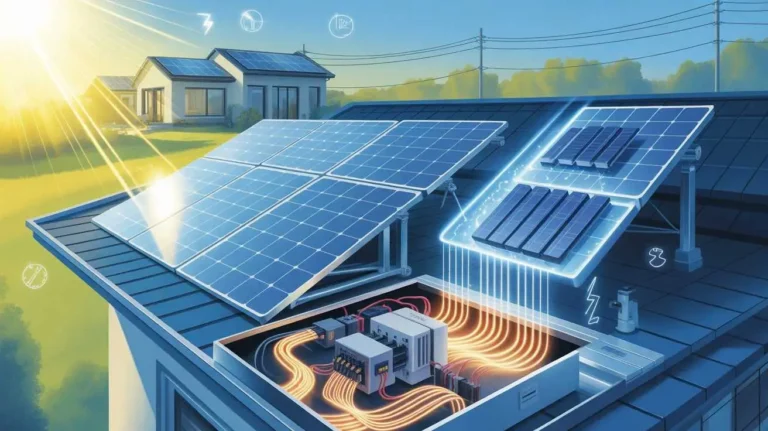
Solar panel systems are electrical systems, and they do produce EMF. The specific sources within a solar system are the DC wiring running from your panels to your inverter, the inverter itself during its conversion process, and the AC wiring running from your inverter to your electrical panel. Each of these components produces electromagnetic fields while the system operates.
What the Actual Field Strength Looks Like
The critical question is not whether solar systems produce EMF but whether the EMF they produce is at a level associated with any health concern. Field strength decreases rapidly with distance from its source, a physical property that applies to all EMF sources regardless of origin.
At distances typical of daily living from solar system components, the EMF levels produced fall well within the same range as other standard household electrical equipment. The inverter, which is the highest EMF-producing component in a typical residential solar system, is generally installed in utility rooms, garages, or exterior walls where daily living distance from the device is naturally greater than it would be from, say, a phone held in your hand.
As confirmed by the World Health Organization, extremely low frequency electromagnetic fields from standard residential electrical equipment have not been established as a health risk at the field strengths produced in typical household settings.
What Solar Panels Actually Do — and Do Not — Send Into Your Home Environment
The Passive Nature of Solar Panel Operation
One of the most persistent misconceptions about solar panels is the idea that they actively broadcast or transmit something into the surrounding environment. This misunderstanding is worth addressing directly because it underlies a lot of the radiation anxiety homeowners experience.
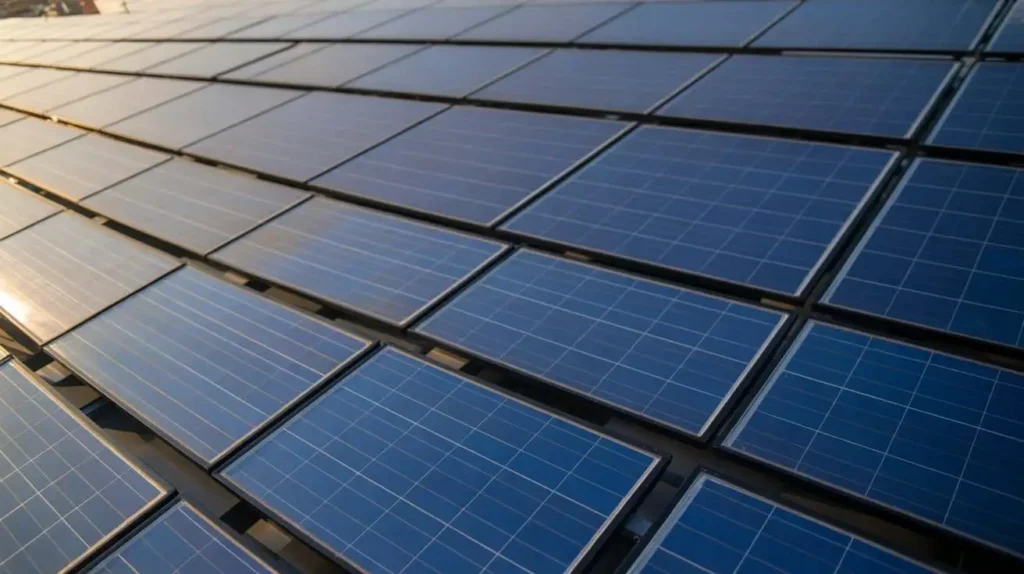
Solar panels are passive devices. They do not transmit signals. They do not broadcast energy into the air around them. They sit on your roof and react when sunlight strikes them, converting that light energy into DC electrical current that travels through enclosed wiring to your inverter. The process is entirely contained within the equipment. Nothing is emitted into your home environment from the panel surface itself during normal operation.
The Difference Between Absorbing Sunlight and Emitting Radiation
When sunlight hits your solar panels, the panels absorb that light energy and convert it into electrical current through the photovoltaic effect. This is fundamentally different from the panels emitting radiation. Absorption and emission are opposite processes. Your roof tiles absorb sunlight too. Your dark colored car absorbs sunlight. Neither is considered to emit radiation as a result of that absorption.
The panels do become warm during operation because not all absorbed sunlight converts to electricity. That warmth is infrared radiation, the same type of heat radiation emitted by any warm surface, including your roof without solar panels. It is non-ionizing, non-penetrating, and presents no health risk.
For a clear explanation of how solar panels convert sunlight into electricity and what physically happens during that process, how solar power works step by step for U.S. homeowners covers the full conversion process in plain language.
Are Solar Panels Harmful to Humans — Looking at What Research Actually Shows
Why Health Concerns Persist Despite the Science
If the scientific picture is relatively clear, why do health concerns about solar panels persist so widely? The answer has more to do with how information spreads than with what the evidence shows.
Dramatic claims travel faster than measured explanations. A story suggesting solar panels might cause harm gets shared widely because it triggers alarm. A study confirming that residential solar systems operate within safe EMF parameters generates no shareworthy headlines. This information asymmetry creates a distorted impression of risk that bears no relationship to what actual residential exposure involves.
I think one thing people often miss is that the context of solar panel EMF is never compared fairly to the EMF levels from devices that the same person uses every day without a second thought. Your mobile phone pressed against your head produces stronger electromagnetic fields at the point of contact than your inverter mounted on a garage wall produces at a distance of any occupied room in your home.
What Years of Residential Solar Operation Actually Show
Residential solar adoption in the United States has been widespread enough and long enough that health effects from solar panel operation would be observable in population data if they existed at meaningful levels. The absence of documented health impacts from residential solar exposure in communities with high adoption rates across states like California, Nevada, New Jersey, and Arizona is itself a meaningful data point.
This is not an argument from silence. It reflects the fact that EMF at the levels produced by residential solar systems has been studied extensively, precisely because of public concern, and the research consistently finds no established health risk at residential exposure levels.
Solar Panel Radiation Facts — Breaking Down What Each Component Does
The Panel Surface Itself
Photovoltaic panels sitting on your roof absorb light and generate DC current. The panel surface does not emit radio frequency radiation. It does not emit microwave radiation. It emits no ionizing radiation. The only energy leaving the panel surface is heat from the warming effect of sunlight, identical in nature to the heat any dark surface on your roof would produce.
The Wiring Between Panels and Inverter
DC wiring carries current from your panels to your inverter. DC current produces a static magnetic field rather than the alternating electromagnetic fields associated with AC power. Static magnetic fields are considered less biologically active than alternating fields and are present at very low levels at any distance beyond a few centimeters from the wire.
The Inverter
The inverter is the highest EMF-producing component in a standard residential solar system because it handles the conversion between DC and AC power and operates at higher switching frequencies than other system components. This is why inverter placement away from primary living spaces, bedrooms in particular, represents good installation practice.
At typical room distances from a properly installed inverter, the EMF levels are comparable to or lower thanthose of other household appliances operating in similar locations.
The AC Wiring and Electrical Panel
Once electricity leaves the inverter, it enters your home’s standard AC wiring and electrical panel. At this point,t it is functionally identical to grid electricity. The EMF from this portion of the system is the same as the EMF produced by any other AC circuit in your home and has been part of residential living for over a century.
For context on how solar systems interact with your home’s existing electrical infrastructure and what proper installation involves, are solar panels safe for U.S. homes covers the full safety picture, including installation standards and code requirements.
Comparing Solar Panel EMF to What You Already Live With Daily
Putting the Numbers in Context
Context matters enormously when evaluating any EMF concern, and the context for solar panels is consistently overlooked in conversations that focus on the panels in isolation.
| EMF Source | Typical Field Strength at Normal Use Distance | Category |
| Solar panel surface | Near zero at 1 meter | Non-ionizing |
| Solar inverter | Low at 1 meter, negligible at 2 meters | Non-ionizing |
| Home AC wiring | Low throughout the home | Non-ionizing |
| Mobile phone in use | Moderate at the point of contact | Non-ionizing |
| Microwave oven | Moderate at 30cm, low at 1 meter | Non-ionizing |
| Wi-Fi router | Low to moderate at close range | Non-ionizing |
| Medical X-ray | High-energy ionizing | Ionizing |
The pattern here is consistent. Solar panel components produce EMF at levels comparable to standard household equipment and significantly lower than devices most people use in direct contact with their bodies daily. The category distinction between non-ionizing and ionizing radiation is the line that separates everyday electrical equipment from genuinely hazardous radiation sources.
What Honest Solar Panel Radiation Facts Look Like for Real U.S. Homes
Why Real Homes Feel No Different With Solar
Homeowners who have lived with residential solar systems for several years across communities in Nevada, Arizona, New Jersey, North Carolina, and Georgia consistently report no perceptible change in how their homes feel or how their family’s health presents compared to before installation.
This subjective observation aligns with the objective data. Nothing about solar panel operation introduces a new type of radiation exposure into a residential environment. The system adds components that produce EMF at levels within the range already present from standard household electrical use.
What changes with solar installation are where some of your electricity comes from, how your monthly bill is calculated, and how your roof looks from the street. What does not change is your home’s radiation environment in any meaningful way.
For a broader look at what actually changes and what does not when solar panels go on a U.S. home, solar panels pros and cons for U.S. homeowners covers the real picture across different states and home situations.
Common Misunderstandings That Keep This Worry Alive
Why the Confusion Does Not Clear Up on Its Own
Several specific misunderstandings feed the solar radiation concern, and they are worth naming directly because understanding where the confusion comes from helps it dissolve more reliably than just asserting that panels are safe.
Sunlight itself gets confused with harmful radiation. Sunlight is electromagnetic radiation, but it is the non-ionizing type. The ultraviolet component of sunlight that causes sunburn is a higher-energy form of non-ionizing radiation. Solar panels do not produce or concentrate ultraviolet radiation. They absorb light and convert it to electricity. The UV you encounter on a sunny day comes from the sun directly, not from your panels.
The word radiation in different contexts carries wildly different implications. Nuclear radiation, medical X-ray radiation, and the electromagnetic field from your inverter are all technically radiation, but they are as different from each other as a candle flame is from a welding torch. Using the same word for all three creates false equivalence that feeds unnecessary anxiety.
EMF concerns from industrial power lines get inappropriately applied to residential solar. Concerns about high-voltage transmission lines involve field strengths many orders of magnitude higher than anything produced by residential solar equipment. Research on transmission line exposure does not apply to residential solar system exposure.
Online sources often mix legitimate scientific questions with sensationalized conclusions. A legitimate research question about EMF sensitivity does not translate to confirmation that residential solar systems cause harm. These distinctions get lost when information is shared without context.
To understand what actually affects whether solar makes sense for your specific home, beyond the safety questions, are solar panels worth it for homes in the USA covers the complete financial and practical picture honestly.
Final Thoughts
Do solar panels emit radiation? The completely honest answer is that they interact with non-ionizing electromagnetic energy in ways that are fundamentally no different from other standard residential electrical equipment. They do not emit ionizing radiation. They do not broadcast radio frequency signals. The EMF produced by system components falls within ranges already present in homes from existing wiring and appliances.
The health concern that surrounds this question is understandable because the word radiation carries serious associations and because panels sit in a visible and personal location directly above your living space. That psychological proximity makes the concern feel more significant than the physics supports. What the actual science of residential solar operation shows consistently is that the radiation picture for a home with solar panels is not meaningfully different from the radiation picture for a home without them. That is an honest answer worth having before you make any decisions about solar for your home.
FAQs
Do solar panels emit radiation?
Solar panels work by capturing sunlight and converting it into electricity. They do not actively release radiation like broadcasting devices. Any energy involved is part of normal electrical operation.
Do solar panels emit EMF radiation?
Solar panels can be associated with very low electromagnetic fields because electricity flows through wires. This is similar to many household electrical systems. The panels themselves do not create EMF from sunlight.
Are solar panels harmful to humans?
This is a common question for beginners. Solar panels operate passively and do not interact directly with people. Every day exposure to them is similar to that of other electrical equipment used at home.
What are the basic solar panel radiation facts people should know?
Solar panels use visible sunlight, which is a natural form of energy. They do not produce nuclear or ionizing radiation. Most confusion comes from mixing different types of radiation together.
How does solar panel EMF safety compare to other home electronics?
Solar panel EMF levels are generally similar to those from common household wiring. Electrical flow happens within controlled systems. This is part of normal electricity use in daily life.
Why do people worry about radiation from solar panels?
Concerns often come from unfamiliar technical terms or online misinformation. Words like radiation and EMF can sound alarming without context. Learning basic science helps clear up these misunderstandings.

Morgan Lee is a homeowner and solar energy researcher based in the United States. After installing a rooftop solar system in 2022 and spending months comparing quotes, incentives, and installer reviews, Morgan realized how confusing and overwhelming the process felt for most American families. That experience led to the creation of SolarInfoPath, a no-pressure, educational platform designed to help U.S. homeowners understand solar energy clearly and confidently. Morgan focuses on practical, research-backed information covering solar costs, installation timelines, federal tax credits, and long-term savings. All content on this site is written from a homeowner’s perspective with the goal of making solar energy simple and accessible for everyday Americans.