Solar Panels Yes or No in Ohio: $22K Cost → $13K Savings
AEP Ohio raised rates three times between 2021 and 2024. Your bill now runs about 13 cents per kWh, and it keeps going up. Power costs keep rising in Ohio. That rising cost is exactly what makes the solar panels yes or no in Ohio question so important. Homeowners need a clear answer right now. This article gives you real numbers for Columbus, Cleveland, Cincinnati, and Dayton. You will also see the one honest limit about Ohio that most solar sites never say out loud.
Ohio is not the sunniest state. But that does not mean solar does not work here. What matters most is your city, your roof angle, and which utility you pay. AEP Ohio and FirstEnergy serve different parts of the state. Your net metering credit and your yearly output can both change based on where you live. Should I get solar panels in Ohio? It is not a one-size-fits-all question. It starts with knowing your specific home. State averages do not apply to everyone.
★ Key Takeaways
- AEP Ohio and FirstEnergy both charge about 13¢/kWh, rates that have risen three years in a row.
- An 8kW system in Columbus can save around $1,275 per year after the 30% federal credit brings your cost to $15,400.
- Cincinnati gets 4.5 peak sun hours per day. Cleveland gets only 3.8; that gap adds nearly 2 years to your payback time.
- Ohio removes sales tax from solar equipment. It also freezes your property tax after installation. These are two savings most homeowners do not know about until after they sign.
What Does Solar Really Cost in Ohio, and What Do You Get Back?
Most 8kW systems in Ohio cost between $20,000 and $24,000 before any credits. The federal solar tax credit takes 30% off right away. On a $22,000 system, that gives you $6,600 back on your federal tax return through IRS Form 5695.
Here is a real example from Columbus. Your system costs $22,000 before credits. After the 30% credit, that drops to $15,400. Columbus gets about 4.2 peak sun hours per day. An 8kW system there makes roughly 9,800 kWh each year. At 13 cents per kWh with AEP Ohio, that saves you about $1,275 on your bill every year.
Divide $15,400 by $1,275, and your payback period lands near 12 years. That is longer than Nevada or Arizona. But Ohio panels last 25 years. After payback, you could earn $13,000 or more in net savings before the system ends its life.
Ohio stacks two more savings on top of that federal credit. First, your state removes sales tax from all solar gear. On a $22,000 system, that saves roughly $1,265 right at purchase. Second, Ohio does not raise your property tax after you add solar. Your home value can go up by $15,000 or more, but your tax bill stays the same.
What System Size Does Your Ohio Home Need?
Most Ohio homes use 900 to 1,100 kWh per month. A 7kW to 9kW system covers most of that usage. Use the solar panel cost calculator by zip code to pull a real price for your Ohio address before you talk to anyone.
Does Your Ohio City Change the Solar Yes or No Answer?
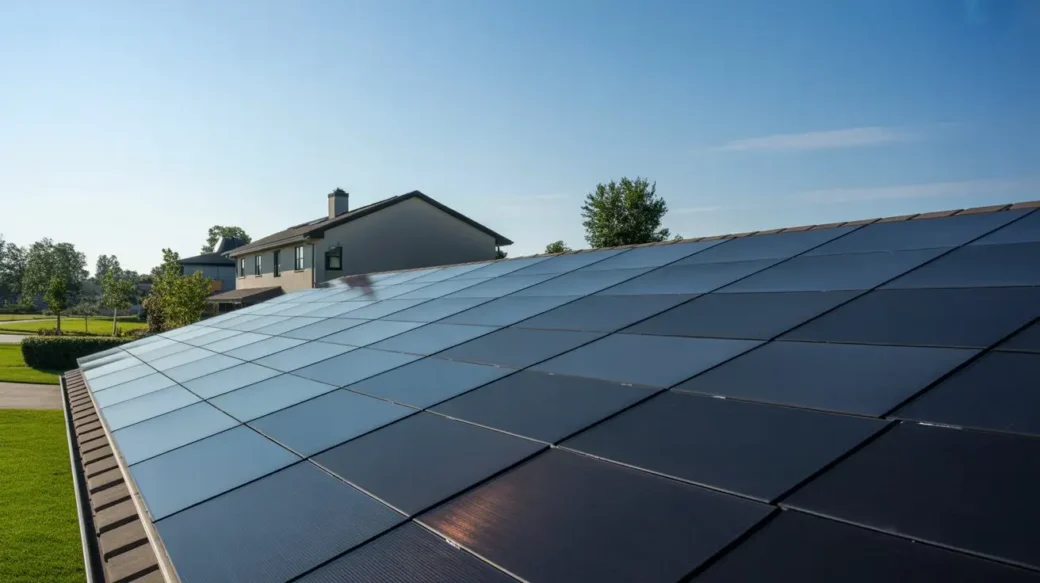
Yes, and the gap is bigger than most people think. This is the part of the solar panels decision guide in Ohio that most websites skip over entirely.
Cleveland sits in northern Ohio near Lake Erie. It is one of the cloudiest cities in the whole country. Cleveland gets only about 3.8 peak sun hours per day. That is less than Seattle gets. Cincinnati sits in southern Ohio and gets about 4.5 hours each day. Columbus falls right in the middle at about 4.2 hours.
That difference adds nearly 2 full years to your payback time. Here is how each major Ohio city compares for an 8kW system:
| City | Daily Sun Hours | Yearly Output (8kW) | Yearly Savings | Est. Payback |
| Cincinnati | 4.5 hrs | ~10,500 kWh | ~$1,365 | ~11.3 yrs |
| Dayton | 4.3 hrs | ~10,050 kWh | ~$1,307 | ~11.8 yrs |
| Columbus | 4.2 hrs | ~9,800 kWh | ~$1,275 | ~12.1 yrs |
| Toledo | 4.0 hrs | ~9,350 kWh | ~$1,216 | ~12.7 yrs |
| Akron | 3.9 hrs | ~9,100 kWh | ~$1,183 | ~13.0 yrs |
| Cleveland | 3.8 hrs | ~8,875 kWh | ~$1,154 | ~13.3 yrs |
Based on 13¢/kWh AEP rate and $15,400 net cost after 30% ITC.
Cincinnati and Dayton homeowners get the best payback in the state. Cleveland and Akron homes still earn a real return, but plan for a longer timeline. What Ohio homeowners need to know about solar panels goes deeper into one key topic. It explains how these numbers affect your monthly AEP bill.
Should I Get Solar Panels in Ohio? A 5-Question Checklist
Run through each of these five questions for your own home. This is the solar panels worth it checklist in Ohio that cuts through all the noise.
1. Does your roof face south or southwest?
A south-facing roof captures the most sun each day in Ohio. A north-facing roof with trees nearby can cut your yearly output by 25 to 35%. That changes your payback by 2 to 4 years.
2. Do you get shade on your roof between 9 am and 3 pm?
Even one hour of shade per day cuts your yearly output by 10 to 15%. Chimneys, tall trees, and nearby buildings all create shade. Check your roof at midday before you size any system.
3. Do you plan to stay in your home for at least 10 to 12 years?
Ohio payback times run 11 to 13 years through savings alone. Planning to move sooner is not a problem. Solar panels still add real value to your home’s sale price. Your investment is not lost if you sell early.
4. Do you owe enough federal tax to use the 30% credit?
The credit works against your federal tax bill. If you owe less than $6,600 in a year, the unused part rolls to the next year. Check who qualifies for solar incentives in the USA before you count on getting the full credit in year one.
5. Is your monthly bill at least $120 to $150?
At $100 or less per month, the savings are smaller, and your payback gets very tight in Ohio. At $130 or more, the math gets much clearer. Most Ohio homes that benefit from solar pay AEP or FirstEnergy $130 to $200 or more each month.
If you said yes to four or five of these questions, solar is very likely to make sense for your home.
What Ohio Programs Cut Your Solar Cost in 2026?
Ohio does not have a state solar tax credit right now. That is the truth. But three other paths still reduce your cost in a real way.
The 30% Federal Investment Tax Credit is still the biggest help by far. It comes straight off your federal taxes, not just as a deduction. The IRS and DSIRE both confirm it applies to your full installed system cost. How the federal solar tax credit works walks through every step of claiming it on Form 5695.
Ohio’s Sales Tax Exemption removes the state’s 5.75% sales tax from all solar gear. On a $22,000 system, that saves you about $1,265 right at purchase, before a single panel goes on your roof.
Ohio’s Property Tax Exemption gives you a full 100% exemption on the extra value solar adds to your home. Your home value goes up. Your tax bill stays flat. Ohio law makes that automatic after your install is complete.
Net Metering with AEP Ohio and FirstEnergy lets you send extra power to the grid and earn a credit on your bill. Both utilities offer it. Ohio’s net metering setup is more fair than many other states. Your credit rate stays close to the full retail price. That makes a real difference. Is net metering worth it in the USA shows exactly where Ohio ranks compared to other states on this point.
Is Solar Right for My Home in Ohio? The Honest Answer
Here is what I think every Ohio homeowner deserves to hear before they decide.
Ohio is one of the cloudier states in the whole country. Cleveland, Akron, and Toledo sit near Lake Erie. That lake effect brings heavy cloud cover from October through April every year. In those months, your panels make much less power than they do in summer. Your winter output can drop to 40 or 50% of what your panels make in July. Plan for that gap before you size your system.
The solar panels yes or no in Ohio answer is not the same for a home in Cincinnati as it is for one in Cleveland. In my experience, homeowners in the southern half of the state get a faster payback and a cleaner return. Northern Ohio homes can still earn a solid long-term return. But the winter production gap is real. Your payback simply takes longer.
This tells me why is solar right for my home in Ohio, which is not a state average. You can just apply it to your own roof. Your city, your shade, and your monthly bill all shape the answer differently. Run your own numbers at the NREL PV Watts Calculator using your zip code and roof angle. It gives you a real output estimate for your exact address, not a guess.
One thing people often miss is how quietly the Ohio tax breaks add up. The sales tax exemption is one part. The property tax freeze is another. The 30% federal credit completes the stack. All three work together even without a state tax credit. That combination still makes the math work for many Ohio homes. Why solar panels are worth it in Ohio shows you the full side-by-side breakdown. It also discusses AEP and FirstEnergy customers across the state.
Also, the solar panels decision guide in Ohio needs one more note. Most Ohio homeowners do not know that Cleveland gets fewer sunny days than Seattle. That one fact alone changes your payback time by 2 years. It all depends on whether you live in the north or the south of the state.
Final Thoughts
Your solar panels yes or no in Ohio answer comes down to four things. Your city’s sun hours, your roof direction, your monthly bill, and how much federal tax you owe each year. Get those four numbers right, and the choice becomes clear.
Ohio is not the easiest solar state. Three incentives work together in Ohio. The federal credit is one. The sales tax break is another. The property tax freeze completes it. Together, they make the return real for many homes. Especially in the south. SolarInfoPath covers all of Ohio’s real solar numbers in one place with no hype. Start there, plug in your own numbers, and you will have your answer.
Frequently Asked Questions About Solar in Ohio
What is the payback period for solar panels in Ohio?
Most Ohio homes reach payback in 11 to 13 years. Cincinnati homes get there about 2 years faster than Cleveland homes do.
Should I get solar panels in Ohio if I live near Cleveland?
Cleveland gets less sun than any other major Ohio city, so payback takes longer. But a south-facing roof with no shade can still make solar worth it over a 25-year panel life.
Does Ohio have a state solar tax credit in 2026?
No. Ohio does not have a state solar tax credit right now. Two exemptions save Ohio homeowners real money at installation. The sales tax exemption is one. The 100% property tax exemption is the other. Both still deliver real savings.
Is solar right for my home in Ohio if my bill is only $100 per month?
At $100 per month, savings are smaller, and payback is tight in Ohio. Solar works best for Ohio homes paying $130 or more each month to AEP or FirstEnergy.
What is on the solar panels worth it checklist in Ohio?
Five conditions point to a strong solar case. A south-facing roof is the first. No heavy shade between 9 am and 3 pm is the second. Ten or more years in the home is the third. A monthly bill above $130 is the fourth. Enough federal tax owed to use the full 30% credit is the fifth. Four or more yes answers mean solar is likely to work for your home.
Do Ohio solar panels still work in winter?
Yes, but at lower output. Ohio winters bring heavy cloud cover near Lake Erie. Winter production drops in northern Ohio. Cleveland and Toledo are most affected. Expect only 40 to 50% of your summer output from November through February.

Morgan Lee is a homeowner and solar energy researcher based in the United States. After installing a rooftop solar system in 2022 and spending months comparing quotes, incentives, and installer reviews, Morgan realized how confusing and overwhelming the process felt for most American families. That experience led to the creation of SolarInfoPath, a no-pressure, educational platform designed to help U.S. homeowners understand solar energy clearly and confidently. Morgan focuses on practical, research-backed information covering solar costs, installation timelines, federal tax credits, and long-term savings. All content on this site is written from a homeowner’s perspective with the goal of making solar energy simple and accessible for everyday Americans.