Solar Panels Georgia 2026 Costs & Savings Guide
Most of Georgia gets about 4.5 to 5.5 peak sun hours per day. That ranks it among the better solar locations in the Southeast. Yet most Georgia homeowners are unsure. They do not know if solar makes financial sense for their specific home.
Solar panels Georgia 2026 begins with one honest fact. Georgia has strong sun but weak state-level solar support. Georgia Power charges about 13 cents per kWh in 2026. That sits below the national average. Net metering in Georgia is limited compared to other Southeast states. This guide gives you the plain picture. Know exactly where your home stands before making any decisions.
Key Takeaways
- Georgia Power residential customers pay about 13¢/kWh in 2026, below the U.S. average of 16¢/kWh.
- An 8kW system in Atlanta can offset about $1,100 to $1,500 per year in Georgia Power costs.
- Georgia has no state solar tax credit and no state sales tax exemption for solar equipment in 2026.
- Most Georgia homes pay off a solar system in 9 to 13 years, longer than high-rate states, but still within system life.
How Solar Power Works for Georgia Homes: The Plain Version
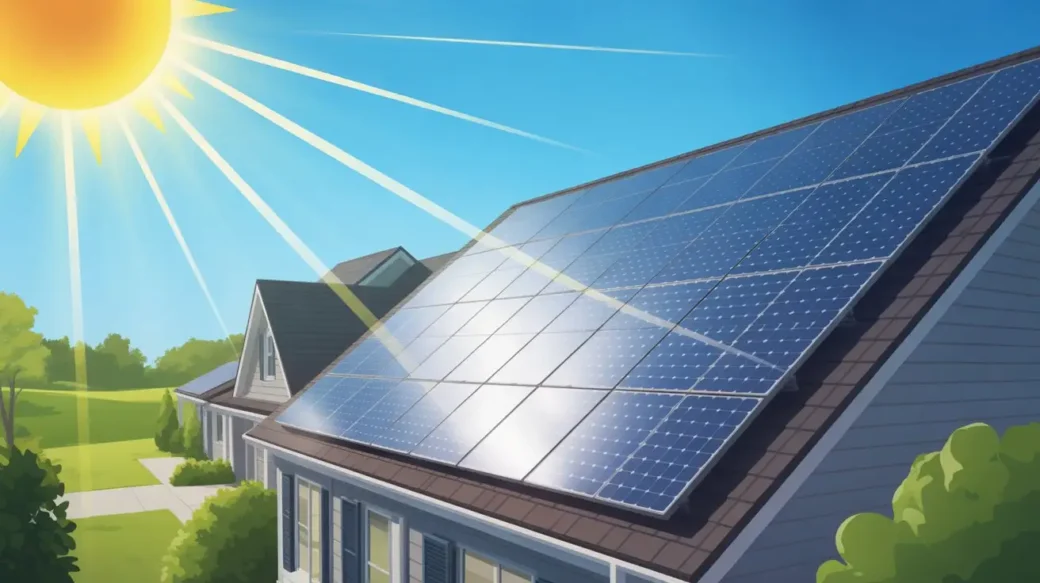
Solar power for homes in Georgia works the same way as everywhere else in the country. Panels on your roof catch sunlight. Each panel holds dozens of small solar cells that release electric charge when light hits them. That charge flows through wires as direct current power. An inverter near your electrical panel turns it into the type of power your outlets use.
Your home uses that power first. If your panels make more than your home needs at any moment, the extra flows to the Georgia Power grid. At night or on cloudy days, your home pulls power from the grid as usual. Your monthly bill shows only the net difference between what you used and what you made.
In Atlanta, Savannah, Macon, and Augusta, your panels produce the most power from March through October. Georgia summers are long and hot, which means your panels run strong for six to eight months of the year. Winter output drops, not because of cold, but because days are shorter. Your panels keep working in winter. They just produce less per day.
For the full step-by-step explanation of how solar converts sunlight into power for your home, read how solar power works step by step in the USA.
Solar Panels Explained Simply for Georgia: The Cost Breakdown
A standard 8kW solar system in Georgia costs about $19,000 to $23,000 before any credits in 2026. The 30% federal Investment Tax Credit applies to your full installed cost. On a $21,000 system, that credit is $6,300. Your real net cost drops to about $14,700.
Georgia does not have a state solar tax credit. It does not remove state sales tax from solar equipment. And it does not have a property tax exemption for solar statewide — though some counties handle this differently. That means Georgia homeowners rely almost entirely on the federal credit to reduce upfront costs. In states like Massachusetts or New York, five programs stack together. In Georgia, you mostly have one, the federal 30%.
Here is a real money example for a Georgia home. A home in Atlanta pays $130 per month to Georgia Power. That is $1,560 per year. An 8kW system covers roughly 70% to 80% of that. Your bill drops to about $25 to $45 per month, depending on your roof and usage. That saves about $1,100 to $1,200 per year. At that rate, a $14,700 net cost pays off in about 12 to 13 years.
To see what your full system cost looks like before and after every credit, read how much solar costs after all credits apply in the USA.
Georgia Power Net Metering Policy 2026: What You Need to Know
The Georgia Power net metering policy 2026 is one of the most important things to understand before you install solar in Georgia. And it is the part most solar guides skip over.
Georgia Power does offer net metering to residential customers. But the credit you earn for extra power you send to the grid is not at the full retail rate. Georgia Power pays you its avoided cost rate, which runs about 3 to 5 cents per kWh. Your retail rate is about 13 cents. So when your panels send extra power to the grid during the day, you get back only a fraction of what you pay to buy power at night.
This Georgia net metering policy difference matters a lot for your payback math. In states with full retail net metering, like Colorado, Massachusetts, or New Jersey, you earn about 13 to 29 cents back for every extra kWh you export. In Georgia, you earn about 3 to 5 cents for that same kWh. That gap means your system needs to be sized more carefully. Oversizing your system in Georgia wastes money because the extra power earns very little credit.
The best strategy for most Georgia homes is to size your system to cover about 80% to 90% of your monthly use, not 100% or more. Covering most of your own power needs directly is the goal. Your panels can do that with the right sizing. Overproducing sends cheap credits back to Georgia Power. That is worth avoiding.
For a full comparison of how net metering rules vary by state and what that means for your savings, read whether net metering is worth it in the USA.
Solar Incentives Georgia 2026: What Exists and What Does Not
Solar incentives in Georgia in 2026 are limited compared to most states in the Northeast and West. Knowing exactly what is and is not available helps you set realistic expectations before you sign anything.
What Georgia does have: The 30% federal tax credit applies to every Georgia homeowner who owns their system and owes federal taxes. On a $21,000 system, that is $6,300 back against your federal tax bill. You claim it in the year your system goes live. It does not expire until 2032 under current law. That is the biggest and most reliable incentive available to you in Georgia right now.
What Georgia does not have: Georgia has no state income tax credit for solar. It does not remove the 4% state sales tax from solar equipment purchases. Most counties do not offer a property tax exemption for the added home value from solar. And Georgia Power’s net metering pays only avoided cost, not full retail, for surplus power you send to the grid.
Most Georgia homeowners are surprised to learn how much the lack of state credits changes the payback timeline. In New Jersey or Massachusetts, stacked credits bring payback down to 5 to 7 years. In Georgia, you are mostly working with one federal credit, which means payback runs 10 to 13 years for most homes. Solar still makes sense in Georgia for many homeowners. The sun is strong, and the federal credit is real. But going in with honest expectations matters.
To see exactly how the federal credit works and what steps you take to claim it, read how the 30% federal solar tax credit works.
Are Solar Panels Worth It in Georgia in 2026?
Are solar panels worth it in Georgia? The honest answer is: yes for many homes, but with a longer timeline than most articles admit. Georgia’s 13-cent power rate is lower than the national average. That means each kWh your panels make saves you less per year than it would in California or Massachusetts. Payback takes longer.
But Georgia’s sun is real and strong. Most of the state gets 4.5 to 5.5 peak sun hours per day, better than New England and most of the Midwest. And the federal credit cuts your upfront cost by nearly a third. For a home that plans to stay put for 15 or more years, solar in Georgia delivers solid long-term savings even without state-level support.
Are Solar Panels Worth It in Georgia: City-by-City Numbers
Are solar panels worth it in Georgia varies by city because sun hours and local rates differ across the state. Here is how a standard 8kW system performs across five major Georgia cities in 2026.
| City | Avg Sun Hours/Day | Est. Annual Savings | Key Solar Notes |
| Atlanta | 4.7 hrs | $1,100–$1,400 | Georgia Power territory; limited net metering credit |
| Savannah | 5.2 hrs | $1,200–$1,600 | Strong coastal sun; Georgia Power area |
| Macon | 5.0 hrs | $1,150–$1,500 | Central GA; solid sun year-round |
| Augusta | 4.9 hrs | $1,100–$1,450 | Georgia Power and some Dominion Energy areas |
| Columbus | 4.8 hrs | $1,100–$1,400 | Georgia Power territory; similar to Atlanta profile |
Savannah gets the most sun of any major Georgia city. Its coastal location keeps winters mild and summers long, which adds 200 to 400 more kWh of annual output compared to Atlanta. For a home in Savannah, that extra output closes the payback gap by 6 to 12 months compared to an identical system in Atlanta.
Sun hours vary across Georgia. North Georgia gets slightly fewer per year. Areas like Gainesville, Blue Ridge, and Dahlonega are affected. Central and southern Georgia get more sun hours. Mountain terrain creates more cloud cover in winter and spring. That does not make solar unworkable there. It does add 1 to 2 years to the typical payback compared to Savannah or Macon.
Georgia’s average residential power rate has been rising. The U.S. Energy Information Administration confirmed this. The increase has been steady over the past five years. You can check the current GA rate data at the EIA electricity data browser. Every rate increase makes your system more valuable because your panels offset a higher-cost kWh each year.
Solar Power in Georgia: One Honest Limitation to Know Before You Decide

Georgia is not Massachusetts or California. In my experience, homeowners who expect those payback timelines feel let down. They do not apply here. Georgia’s lower power rate is one reason. A limited net metering structure is another. Both genuinely slow the payback compared to high-rate states.
The other real limitation is roof age. Georgia’s high humidity and summer heat wear on roofs faster than in drier climates. A roof that is 15 years old in Atlanta may look fine, but need replacing in 5 to 8 years. If you put solar on that roof now and need to remove the panels for a roof repair in year 6, that removal and reinstall adds $1,500 to $3,500 to your total cost. Always get a clear roof assessment before you commit to any solar system.
Georgia’s summer heat also affects panel output subtly. Panels run more efficiently in cool, clear air than in extreme heat. On a 95-degree Atlanta day with full sun, your panels may produce 10% to 15% less than on a 65-degree clear day with the same sunlight. This does not change the overall financial case. But it means your summer output is not quite as high as your sun hours alone would suggest.
For a clear list of costs that often do not appear in the first quote you receive, read hidden costs most solar quotes leave out. And for the full honest financial case for Georgia solar, read why solar panels are worth it in Georgia.
For the full comparison of how GA stacks up against other Southeast states on payback time, read the solar payback period by state in the USA.
Final Thoughts
solar panels Georgia 2026 come down to four things. Strong sun is one. Moderate power rates are another. Limited state support is the third. One solid federal credit is the fourth. A Georgia home with a good south-facing roof can still save. A planned stay of 12 to 15 years helps. Savings are real, but the timeline is longer than high-rate states.
Your next step is a simple one. Pull out your last 12 months of Georgia Power bills. Add them up. If your yearly power cost is above $1,200 and your roof faces south or west with no heavy shade, the federal credit math likely works in your favor. Check your roof age carefully. Go in knowing one key fact. Georgia’s net metering credit is low. Selling cheap power back to the grid is not smart. Sizing your system to cover 80% to 90% of your own use is smarter. Overproducing does not pay off here.
Frequently Asked Questions
Solar panels explained simply for Georgia, what is the most important thing to understand first?
Georgia Power credits surplus solar production at the avoided cost rate, roughly 3 to 5 cents per kilowatt hour, rather than 13 cents retail. Sizing your system to match annual consumption rather than exceed it is the single most important planning decision.
What are the current solar incentives available for Georgia homeowners?
Georgia homeowners can access the federal 30% Investment Tax Credit, a property tax exemption on added home value, and a sales tax exemption on qualifying solar equipment. There is no current state income tax credit or Georgia Power rebate program.
What is the solar easy explanation for how net metering works in Georgia?
When your panels overproduce, Georgia Power credits your account at the avoided cost rate, which is significantly lower than the 13.0-cent retail rate you pay. This is why matching system size to your actual consumption matters more in Georgia than in retail rate net metering states.
What is Georgia’s average electricity rate, and how does it affect solar savings?
Georgia Power’s residential rate averages around 13.0 cents per kWh. Each kilowatt hour your panels produce, and your home uses directly, is worth 13 cents in avoided cost. Surplus kilowatt hours exported earn a much lower credit, which is why self-consumption is the financial priority.
Is solar energy worth it in Georgia in simple terms for a typical homeowner?
For homeowners in Atlanta, Savannah, Augusta, or Macon with good roof access and a system sized to their actual consumption, the case is positive. Realistic payback periods run 10 to 13 years for most well-suited Georgia homes after the 30% federal tax credit.
Does Georgia have a property tax exemption for residential solar installations?
Yes. Georgia law exempts the increased assessed home value from a residential solar installation from local property tax assessment, so your annual tax bill does not rise because your home has become more valuable.

Morgan Lee is a homeowner and solar energy researcher based in the United States. After installing a rooftop solar system in 2022 and spending months comparing quotes, incentives, and installer reviews, Morgan realized how confusing and overwhelming the process felt for most American families. That experience led to the creation of SolarInfoPath, a no-pressure, educational platform designed to help U.S. homeowners understand solar energy clearly and confidently. Morgan focuses on practical, research-backed information covering solar costs, installation timelines, federal tax credits, and long-term savings. All content on this site is written from a homeowner’s perspective with the goal of making solar energy simple and accessible for everyday Americans.