Why Solar Energy Is Important for American Homes and the Future
There is a question that keeps coming up in conversations about energy, and it deserves a real answer rather than a rehearsed one. Why solar energy is important right now, not in some distant future scenario, but for actual American households dealing with actual electricity bills today?
I think the honest answer has several layers. Some of them are financial. Some are environmental. Some are about long-term security that most people do not think about until something forces them to. This article works through all of them without pretending the picture is simpler than it actually is.
The Need for Solar Energy Did Not Appear Out of Nowhere
To understand the importance of solar energy, it helps to understand what created the demand for it in the first place.
Electricity costs across the United States have been climbing steadily for decades. The U.S. Energy Information Administration tracks this consistently, and the trend is not ambiguous. Households in states like California, New Jersey, Massachusetts, and New York are paying rates that felt extraordinary ten years ago and now feel routine. Meanwhile, the fossil fuels that power traditional electricity generation are finite, geopolitically complicated, and increasingly expensive to extract and process.
The need for solar energy grew out of that reality. Not from idealism. From practical pressure. When your electricity bill crosses $200 or $250 a month and shows no sign of reversing, alternatives start looking less like environmentalism and more like basic household financial planning.
What surprised me when I first looked closely at this topic was how much the economic argument had overtaken the environmental one in driving real adoption. Homeowners in Houston, Phoenix, Newark, and Sacramento are not primarily putting solar on their roofs because of carbon footprints. They are doing it because the math eventually started making sense for their budgets.
Why Solar Energy Is Important — The Financial Reality First
Let me put the environmental benefits aside for a moment and focus on what drives most real decisions.
Every kilowatt hour your solar system produces is one your utility company does not sell you. At $0.14 to $0.18 per kilowatt hour in many U.S. states, a system producing 10,000 kilowatt hours annually saves somewhere between $1,400 and $1,800 per year before any incentives are applied. Over a 25-year system lifespan, that adds up to a number that changes how most people think about the upfront investment.
Beyond direct savings, net metering programs in states like New Jersey, Nevada, Massachusetts, and New York allow homeowners to send excess electricity back to the grid and receive credits on their bill. That mechanism fundamentally changes the financial equation for homes that produce more than they consume during peak daylight hours.
To understand what solar actually costs before those savings start accumulating, how much do solar panels cost in the USA breaks down current pricing honestly across different states and system sizes.
The federal Investment Tax Credit further reduces the effective cost in year one. For most American households, the combination of production savings, net metering credits, and tax incentives creates a payback period that, while real, fits within a reasonable planning horizon for anyone staying in their home long term.
Importance of Solar Energy for the Environment — What Is Actually True
The environmental case for solar energy is real. I want to be careful here, though, because this area attracts a lot of exaggeration in both directions.
Solar panels generate electricity without burning fuel. No combustion means no carbon dioxide released during operation, no sulfur dioxide, no nitrogen oxides. For a country that still generates a significant share of its electricity from coal and natural gas, widespread residential solar adoption does meaningfully reduce emissions at a regional level over time.
Manufacturing panels requires energy and materials, and that production has its own environmental footprint. This is worth acknowledging honestly rather than glossing over. But across a panel lifetime of 25 to 30 years, the electricity generated far outweighs the energy consumed in production by a substantial margin, according to life cycle analyses.
As reported by the U.S. Department of Energy, residential solar systems can offset significant carbon emissions over their operational lifetime, contributing meaningfully to cleaner regional air quality, particularly in densely populated areas where electricity demand is highest.
For a deeper look at the full environmental picture, including what solar panels actually do and do not affect, the environmental impact of solar panels for U.S. homes covers it with the nuance this topic deserves.
Why Solar Energy Is Important for the Future — Three Reasons That Actually Hold Up
People make a lot of predictions about energy that do not age well. Here are three reasons the importance of solar energy for the future is built on solid ground rather than optimism.
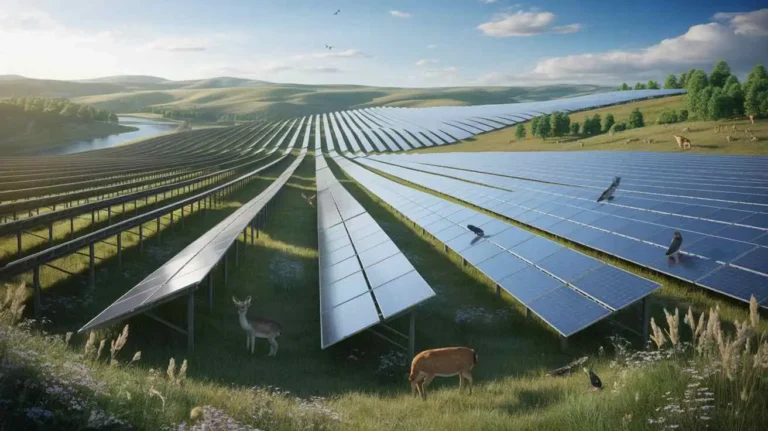
The fuel source is genuinely inexhaustible. The sun has been producing energy for approximately 4.6 billion years and will continue doing so for billions more. Unlike coal reserves that deplete, oil fields that exhaust, or natural gas supplies subject to geopolitical disruption, sunlight arrives consistently. No country controls it. No company can corner the supply. That energy independence argument matters more the longer you think about it.
The technology keeps improving without requiring the replacement of what already exists. Panel efficiency has improved substantially over the past two decades and continues to do so. Inverter technology, battery storage, and grid integration systems are all advancing. Importantly, homeowners who installed systems years ago continue benefiting from their existing equipment while new installations get better performance at a lower cost. The trajectory is clear and consistent in a way that many energy technologies have not managed.
The economics shift further in solar’s favor as electricity rates rise. This is the point most people overlook. The importance of solar energy grows with every rate increase your utility announces. A system installed today locks in a portion of your electricity production at zero marginal cost for decades. Every time your utility raises rates, the value of that locked-in production increases. Solar gets more valuable as grid electricity gets more expensive, which historically it always has.
Importance of Solar Energy in Daily Life — What It Actually Looks Like
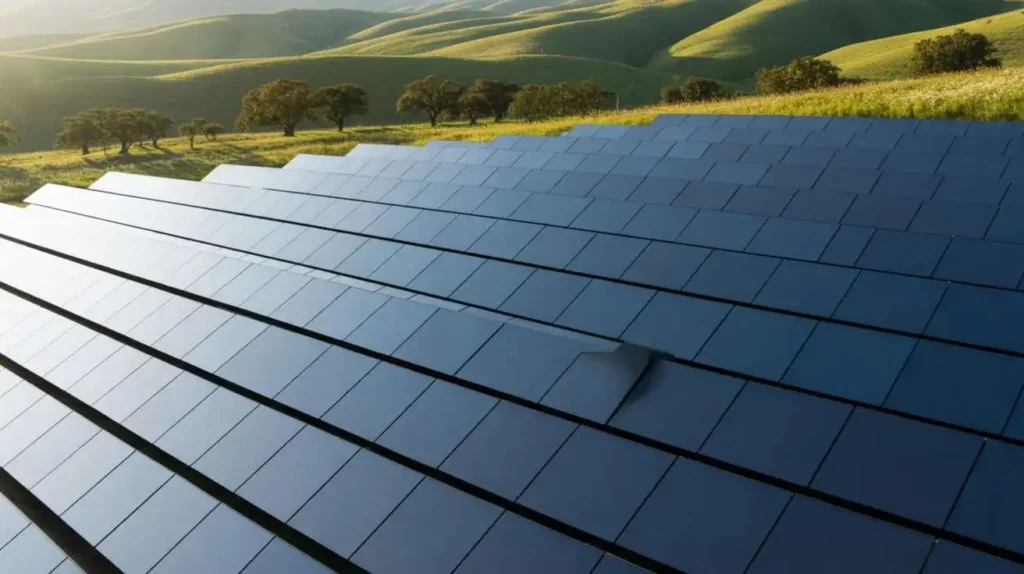
The importance of solar system technology becomes clearest when you see how it integrates into ordinary household routines rather than imagining it as something dramatic or complicated.
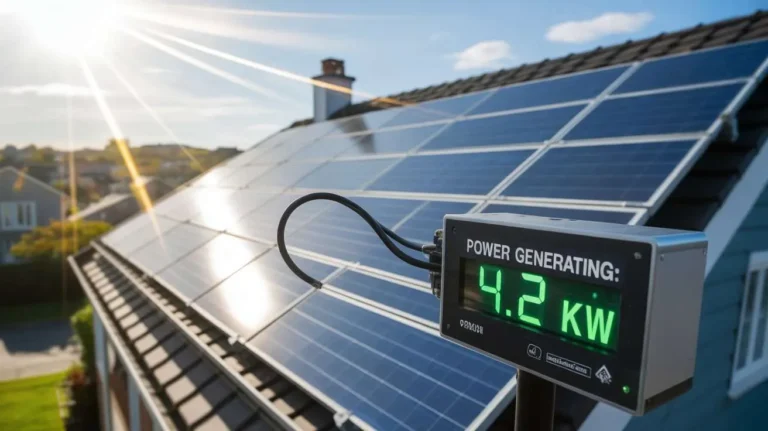
On a clear day in Las Vegas, Henderson, or Phoenix, a properly sized residential system produces enough electricity to run air conditioning, kitchen appliances, lighting, and electronics simultaneously while still generating surplus that flows back to the grid. The homeowner notices this primarily as a dramatically lower or near-zero electricity bill.
On a cloudy day in Reno or northern Nevada, the same system produces less but still contributes meaningfully to household electricity needs. The grid makes up the difference seamlessly. The homeowner notices nothing different about how their home functions.
In winter, production drops across most U.S. states but rarely to zero except at the highest latitudes. Net metering credits accumulated during high production summer months help offset higher winter grid usage in states with active programs.
The day-to-day reality of living with solar is genuinely unremarkable once the system is running, and that unremarkability is precisely the point. Your homework. Your bill is lower. Nothing else changes.
For a clear picture of what those monthly savings actually look like in dollar terms across different U.S. states, how much can you save with solar panels per month in the USA breaks it down by real household scenarios.
Where the Importance of Solar System Technology Has Real Limits
Honesty matters here because overselling solar does as much damage as underselling it.
Production depends entirely on available sunlight. Night produces nothing. Heavy cloud cover produces significantly less. Seasonal variation is real and meaningful in northern states. Homeowners who go into solar, understanding this reality,y manage their expectations well and generally feel satisfied. Those who expect constant maximum output regardless of conditions sometimes feel misled.
Space requirements are genuine. A system sized for average American household consumption needs a meaningful roof area oriented reasonably well toward the south. Shading from trees, chimneys, or neighboring structures reduces production in ways that are sometimes difficult to predict precisely from the ground.
Upfront cost remains a real barrier even after incentives for some households. The federal tax credit helps considerably, but it requires having a tax liability to claim against, which not every household does equally.
Understanding all of this before committing is what separates a satisfying solar experience from a disappointing one. If you want to understand exactly what the federal incentives cover and how they apply to your specific situation, how does the federal solar tax credit work in the USA explains it clearly without oversimplifying.
A Practical Example Worth Walking Through
Consider a family in Cherry Hill, New Jersey, paying $210 per month on electricity. Their utility is PSE&G. Their rate sits around $0.17 per kilowatt hour. They use roughly 1,050 kilowatt hours monthly across all seasons.
A properly sized 8-kilowatt system on their south-facing roof would produce enough electricity to cover most of that usage across the year. Net metering through PSE&G would credit them for surplus summer production. The federal tax credit would reduce their first-year effective cost substantially. New Jersey’s SREC program would generate additional certificate income over the following years.
The importance of solar energy for that specific family is not abstract. It is a lower monthly bill, a hedge against future rate increases, increased home value, and a system that keeps working quietly for 25 plus years. That is what the importance of solar system adoption looks like at a household level when the conditions line up.
Final Thoughts
Why solar is energy important? The simplest honest answer is that it gives ordinary American households meaningful control over one of their largest and most unpredictable recurring expenses while simultaneously reducing environmental impact in a way that scales across millions of homes.
The importance of solar energy for the future is not speculative. It is grounded in the mathematics of fuel depletion, the trajectory of electricity rates, and the improving economics of solar technology itself. None of that requires blind optimism. It just requires paying attention to trends that are already well established and continuing.
From my point of view, the homeowners who benefit most from solar are the ones who understand it clearly before they commit to anything. If you want to keep building that understanding without anyone trying to sell you something while you learn, Solarinfopath covers solar energy education for U.S. homeowners across all 50 states in plain, honest language designed to inform rather than persuade.
Frequently Asked Questions
Why is solar energy considered renewable?
Solar energy comes from the sun, which naturally produces energy every day. Because the sun is not used up, this energy source can be used again and again.
What is the importance of solar energy for the environment?
Solar energy generally produces electricity without releasing harmful gases. This helps reduce air pollution and lowers stress on natural ecosystems.
How does solar energy work in simple terms?
Solar panels absorb sunlight and convert it into electricity. That electricity can then be used to power homes and everyday devices.
What is the role of solar energy in renewable energy systems?
Solar energy supports clean power generation alongside wind and water energy. It helps create a balanced and more sustainable energy system.
Why is solar energy good for the future?
The sun is expected to provide energy for billions of years. This makes solar power a reliable option for long-term energy needs.
Can solar energy be used in everyday life?
Yes, solar energy can support lighting, electronics, and household electricity. It fits naturally into daily routines without changing how energy is used.

Morgan Lee is a homeowner and solar energy researcher based in the United States. After installing a rooftop solar system in 2022 and spending months comparing quotes, incentives, and installer reviews, Morgan realized how confusing and overwhelming the process felt for most American families. That experience led to the creation of SolarInfoPath, a no-pressure, educational platform designed to help U.S. homeowners understand solar energy clearly and confidently. Morgan focuses on practical, research-backed information covering solar costs, installation timelines, federal tax credits, and long-term savings. All content on this site is written from a homeowner’s perspective with the goal of making solar energy simple and accessible for everyday Americans.