A forged signature on a solar contract can be challenged, and the loan can be disputed. A solar panel forged signature lawyer can review your proof. Start by requesting the original contract and signature records. Then check your credit reports and save every message. Your result depends on the evidence and your state law.
Most forgery cases involve three separate problems. The signature may be fake. The credit check may be unauthorized. The loan may be one you never agreed to. Each problem has its own rules and its own proof.
This guide covers all three in plain language. You will see how electronic signatures are checked, how credit disputes work, and what identity theft steps to take. You will also see what evidence to collect and when a lawyer helps. This is general information, not legal advice.
What Is Solar Contract Signature Forgery?
Solar contract forgery means someone signed or approved a solar deal in your name without your permission. The format does not matter. It can be ink, an electronic click, or a copied image of your signature. The key question is whether you authorized it.
What Counts as a Forged Solar Contract Signature?
A forged signature is any signature made without the named person’s authority. A handwritten copy counts. So does an e-signature sent from an email you never used. A claim that you approved a deal you never saw also fits.
Difference Between Forgery, Unauthorized Signing, and Misrepresentation
These problems sound alike, but they are different claims. Mixing them up weakens a dispute. The table keeps them apart.
| Situation | Main issue |
| Forged signature | The signature was made without the named person’s approval |
| Unauthorized electronic signing | The digital signing action was not approved |
| Misrepresentation | Key facts or promises were allegedly false |
| Identity theft | Your personal information was used without permission |
| Contract disagreement | Both sides dispute what the agreement means |
Can a Solar Salesperson Sign a Contract for a Homeowner?
No, not unless you gave clear written authority. A salesperson works for the company, not for you. Only you, or someone with a valid power of attorney, can sign for you. State contract law fills in the details.
Can a Solar Company Enforce an Agreement That Was Never Authorized?
Often not, but it depends on the evidence. A contract needs real consent from the person it binds. If you never agreed, you may argue that no valid contract formed.
Here is a catch. Making payments or using the system can later look like approval. Courts call this ratification. Ask a lawyer how your state sees it before you pay or stop paying.
Rescission and unenforceability are not the same. Rescission cancels a valid contract for a legal reason. Unenforceability says the contract never bound you.
Common Signs of Forged Signatures in Solar Loan Agreements
A mismatch is a reason to investigate. It is not proof of forgery. Warning signs show up in three places: your paperwork, your credit report, and your electronic records. Check all three.
Unexpected Solar Loan Documents
Watch for a loan statement from a lender you never met. A payment notice for a system you never ordered is another red flag. Unknown lender calls and unfamiliar applications fit here too.
Incorrect Personal Information
Check the email, phone number, and address on the file. In some reported cases, a salesperson made a new email account for the homeowner. An unknown co-borrower is another warning sign.
Suspicious Electronic Signature Records
Compare the signing time with where you were that day. Look for verification codes you never got. Gaps in the log deserve a written question to the company.
This is the part most people miss. A local news investigation described an audit log showing a 24-page contract signed in seven places in 29 seconds. Speed like that proves nothing alone. It is a fact worth asking about.
Loan Terms That Do Not Match the Original Agreement
Compare the loan with what you were told. Check the amount, APR, dealer fees, and term. Extra financing papers you never saw are also a flag.
Forged Electronic Signature Solar Loan Lawyer: How Digital Authorization Is Investigated
Investigators start with the electronic record, not the signature image. A forged electronic signature solar loan lawyer will usually ask for the audit trail first. That log shows when, how, and from where the signing happened.
How Electronic Signatures Work in Solar Financing
A signing platform sends a link by email or text. The signer may enter a code, click “agree,” and type a name. The platform logs each step and seals the file. Anyone with access to that email or phone can finish these steps.
What the E-SIGN Act Says About Electronic Solar Loan Agreements
Under 15 U.S.C. §7001, a signature cannot be denied legal effect only because it is electronic. The law also sets consent rules for some electronic disclosures. It does not say who actually clicked the button.
Can an Electronic Signature Be Valid Without a Homeowner’s Knowledge?
Yes, it can look valid and still be unauthorized. Format, identity, and consent are four different questions.
| Concept | What it answers |
| Electronic signature validity | Can a signature be legal in electronic form? |
| Identity verification | Was the signer who they claimed to be? |
| Actual authorization | Did the named person approve the deal? |
| Consent to electronic records | Did you agree to get documents online? |
Agreeing to get documents online is not agreeing to borrow money. Keep those two ideas apart.
What Is an Electronic Signature Audit Trail?
An audit trail is the platform’s event log. It usually lists dates, times, email or phone checks, signing order, and file access. The detail varies by platform. Ask for the full record, not a summary.
How to Request Solar Loan Electronic Disclosure Records
Send a written request to both the lender and the installer. Ask for the original e-agreement, your consent record, the disclosures, the signature certificate, and the audit trail. Ask for the application too. Keep a copy of each request and note the date.
Can I Sue a Solar Company for Pulling My Credit Without Permission?
Sometimes. Many homeowners ask, “Can I sue a solar company for pulling my credit without permission?”
The Fair Credit Reporting Act (FCRA) lets a company get your report only for a permissible purpose. Without one, you may have a claim. Suits generally must be filed within 2 years of discovery. The outer limit is 5 years after the violation.
What Is an Unauthorized Credit Inquiry?
It is a credit report check you did not start and that had no legal purpose. A hard inquiry comes with a credit application and usually stays on your report for about two years. A soft inquiry rarely affects your score. Solar company unauthorized credit applications often use details typed in by a salesperson.
What Does the Fair Credit Reporting Act Say About Credit Access?
The FCRA limits report access to listed purposes. One is a credit deal involving you. Section 1681b sets the list. Getting a report under false pretenses can create liability. The law does not require a separate signed consent in every case.
When Might a Solar Company’s Credit Inquiry Be Unlawful?
It may be unlawful when no real credit deal began with you. It may also be unlawful when someone else submitted your details, or the application contained false facts. Courts have not treated every case the same way. Some focus on who started the transaction.
How to Investigate Solar Company Unauthorized Credit Applications
Follow these steps in order:
- Find the inquiry on your credit report.
- Contact the bureau that lists it.
- Learn which company or lender pulled the report.
- Request the application records.
- Write down dates, names, and what you were told.
- Consider a complaint to the CFPB or FTC.
Can an Unauthorized Credit Inquiry Lead to a Solar Panel Unauthorized Credit Pull Lawsuit?
It can. A solar panel unauthorized credit pull lawsuit usually rests on FCRA sections 1681n and 1681o. Remedies may include actual damages. For willful violations, statutory damages of $100 to $1,000 may apply. Some homeowners with similar claims have joined a solar panel class action lawsuit.
Rulings in this area often turn on disputed consent. When a consent form is called forged, a judge may send the question to trial. That is an observation from public rulings. It is not a prediction for your case.
Solar Loan Identity Theft Disputes: What Homeowners Should Do
Treat an unknown solar loan as possible identity theft until records show otherwise. Report it, review your credit, and dispute it in writing. Quick, organized action protects your credit while you gather proof.
How Identity Theft Can Affect Solar Financing
It can show up as a loan, a lease, or a credit check you never started. Someone may have used your Social Security number or added a co-borrower. Solar loan identity theft disputes often start when a payment notice arrives.
How to Report a Suspected Fraudulent Solar Loan
Use this order:
- Write to the lender’s fraud department.
- Save the application and account details.
- Report the theft at IdentityTheft.gov.
- Review your credit reports.
- Consider a security freeze, which is free.
- File written disputes with each bureau and lender.
How to Dispute a Solar Loan With Credit Reporting Agencies
Send each bureau a written dispute. Name the account and say why it is not yours. Attach your identity theft report and any proof. Also write to the company that reported the account, called the furnisher. Read each result closely.
What Happens When a Lender Rejects an Identity Theft Dispute?
You can ask for the investigation results and send more proof. Regulation V, 12 CFR §1022.43, covers certain direct disputes. Furnishers generally must finish an investigation within 30 days. A CFPB complaint or legal review may come next.
Can a Fraudulent Solar Loan Be Removed From a Credit Report?
Often yes, with proof. Under 15 U.S.C. §1681c-2, a bureau must block identity theft information after it gets the required documents. It generally has 4 business days. That includes an identity theft report. Exceptions exist, so keep copies of everything.
Solar Panel Identity Theft Attorney: When Should You Seek Legal Help?
Get legal advice when a lender will not investigate, collections start, or credit damage continues. A solar panel identity theft attorney can read your papers, find the strongest claims, and track deadlines. Many offer a first review at low or no cost.
What Does a Solar Panel Forged Signature Lawyer Do?
This type of lawyer reviews the contract, loan, and signature records. Related fields include consumer protection, identity theft, credit reporting, and contract law. Some lawyers cover several.
Many people type “sue a solar company lawyer” when they need this mix of skills. A solar fraud attorney with credit and contract experience may fit best. Ask about past e-signature cases.
When Should You Contact a Solar Fraud Lawyer?
Call when a documented dispute gets no real answer. Other triggers include collections, an enforced contract you say is forged, and large losses. Cases with several companies are hard to handle alone.
What Documents Should You Bring to a Lawyer?
Bring the solar agreement, loan papers, and credit reports. Add emails, texts, signature records, and installation papers. Include your identity theft report and every dispute letter. A tidy folder saves time and may cut costs.
What Questions Should You Ask an Attorney?
Ask whether the lawyer knows consumer protection laws in the USA and your state’s rules. Ask which claims may apply and who may be responsible. Ask what proof is missing, which deadlines matter, and whether arbitration applies. Ask how fees work, since some cases allow fee-shifting.
Power of Attorney Solar Contract Invalid? When Authority Falls Short
A power of attorney lets one person act for another, but only within its written limits. A power of attorney solar contract invalid claim says the agent lacked authority. Expired, revoked, or narrow powers are the common causes.
What Is a Power of Attorney?
It is a legal document. The principal gives an agent power to act. The power can be broad or limited. It can start or end on set events. The principal can usually revoke it.
Can Someone Sign a Solar Contract Under a Power of Attorney?
Yes, if the document covers it. The agent’s powers must reach contracts and borrowing. State law adds rules. A power limited to health decisions would not cover a solar loan.
When Might a Solar Contract Signed Under a Power of Attorney Be Challenged?
Common issues are expired or revoked authority and forged documents. Acts outside the granted powers also matter. A relative signing “just to help” has no authority on that basis alone.
What Documents Can Help Verify Authority?
Collect the original power of attorney and any notary record. Add the signature page and the signing date. Compare those dates with the contract and check your state’s rules.
IP Address Audit Solar Contract Forgery: Can Technical Records Prove Who Signed?
Technical records help, but they rarely prove identity alone. An IP address audit solar contract forgery request asks the platform for network and device details. Those details are clues, not answers.
What Is an IP Address in an Electronic Solar Contract?
An IP address is a number tied to an internet connection. It shows where web traffic came from. A signing log may list it with device and browser data.
Can an IP Address Identify the Person Who Signed a Contract?
Usually not by itself. Shared Wi-Fi, home devices, VPNs, and public networks blur the picture. Addresses can also change. An address may point to a place or provider, not a person.
An address far from your home is still a useful clue. It is stronger when other records match.
What Other Electronic Evidence May Be Available?
Look for timestamps, device details, and email or text checks. Authentication events, file versions, signing order, and access logs also help. No single item settles it. The full set tells the story.
How to Request an Electronic Signature Investigation
Take these steps:
- Identify the signing platform.
- Request the original document.
- Ask for the authentication records.
- Save your own emails and texts.
- Compare the records with where you really were.
- Consider a technical or legal expert if needed.
Solar Loan Electronic Disclosure E-SIGN Violation: What Should Homeowners Know?
A disclosure problem is not a forgery problem. A solar loan electronic disclosure E-SIGN violation means required consumer disclosures were not properly delivered online. It does not cancel the loan on its own.
What Electronic Disclosures Are Used in Solar Financing?
Lenders often deliver loan disclosures online. They may show the APR, finance charges, fees, and payment terms. You should be able to view and keep these records.
What Does E-SIGN Require for Certain Consumer Disclosures?
For certain legally required written disclosures, E-SIGN requires your clear consent first. You must be told what hardware and software you need. You must be able to open and keep the records. You can withdraw consent.
Does an E-SIGN Violation Automatically Cancel a Solar Loan?
No. A disclosure violation, a lack of authorization, and a contract formation problem are different issues. Other consumer credit laws may add remedies. Which one applies depends on the facts and your state.
How to Identify Potential Electronic Disclosure Problems
Ask five questions:
- Did the lender get your consent before sending disclosures?
- Did you receive the required disclosures?
- Could you open and save the records?
- Did the lender keep them?
- Were you told you could withdraw consent?
Solar Design Defect Litigation vs. Solar Contract Signature Fraud
Signature fraud asks whether you agreed. A design defect claim asks whether the system was planned and built properly. You can face both, but each needs its own proof.
What Is a Solar Design Defect Claim?
Solar design defect litigation focuses on faulty engineering. Examples include wrong system size, bad roof math, unsuitable equipment, and weak electrical planning. Inspections and experts drive these cases.
How Is a Design Defect Claim Different From Signature Forgery?
The two claims use different evidence, as the table shows.
| Signature fraud dispute | Design defect dispute |
| Focuses on authorization | Focuses on system design |
| Involves contracts and identity | Involves engineering and installation |
| May involve electronic evidence | May involve technical inspections |
| May involve financing disputes | May involve equipment and performance losses |
Can a Homeowner Have Both Types of Claims?
Yes. One solar sale can create separate problems. An unauthorized install may leave a leaking roof. A solar panel property damage attorney can assess that damage on its own. Work done without a permit may also break solar panel permit requirements. Keep each problem’s records apart.
What Evidence Should You Collect Before Challenging a Solar Contract?
Collect five groups of records and keep them together. Together they should show who signed, how the loan began, and what it cost you. Copy everything before you hand over originals.
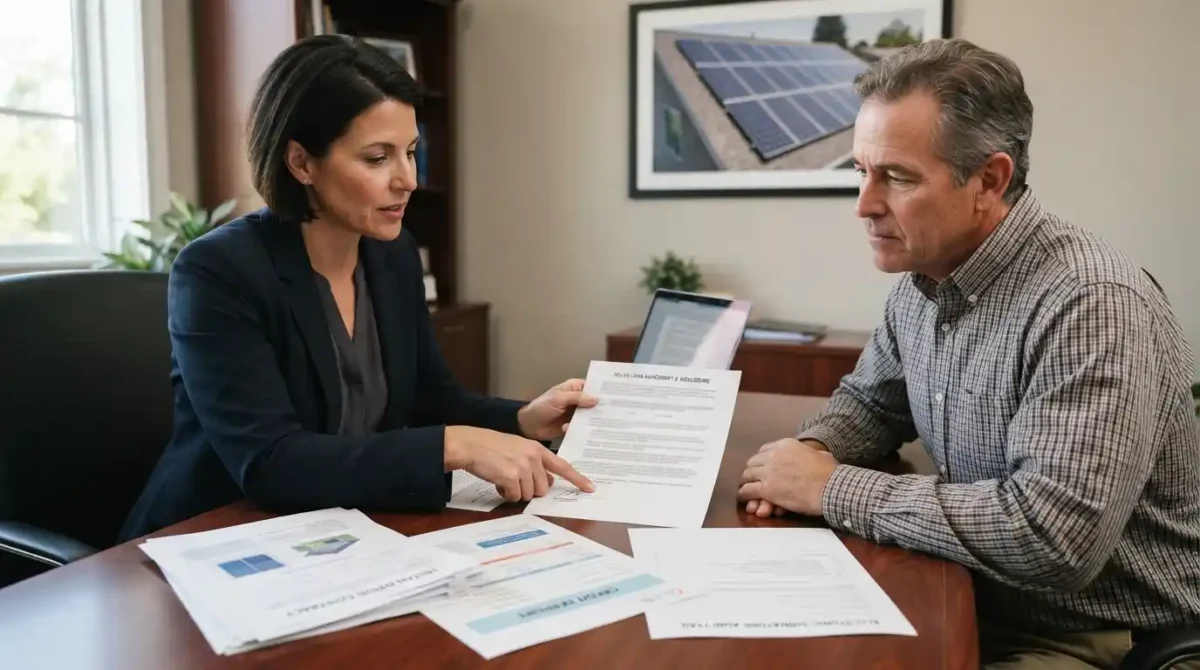
Original Solar Contract and Financing Documents
Gather the installation agreement, loan agreement, and credit application. Add the disclosures and any change orders.
Electronic Signature and Authentication Records
Collect the signature certificate and audit trail. Save timestamps, verification messages, and file details.
Credit and Identity Theft Records
Pull your credit reports and mark each unknown inquiry. Keep the loan account details, your identity theft report, and each dispute letter. Businesses generally must hand over fraud-account records within 30 days of a valid victim request.
Solar Installation Records
Keep the site survey, system design, and installation photos. Save completion papers and utility connection records. Ask the city for the permit file, since permit forms sometimes carry a homeowner signature. Check HOA solar panel restrictions as well. An unapproved system can draw a notice.
Communication and Payment Records
Save emails, texts, and sales notes. Keep payment statements and any collection letters.
What Legal Remedies May Be Available for a Forged Solar Contract?
Possible remedies include challenging the contract, disputing the loan, and filing consumer claims. None is guaranteed. Results depend on proof, deadlines, and state law.
Challenging the Contract
You may argue lack of authorization, forgery, or no valid contract. Misrepresentation may apply too. If the signature is real, how to get out of a solar contract becomes a separate question about cancellation rights.
Disputing the Solar Loan
Start with a written dispute to the lender. Add your proof and ask for the investigation results. Pair it with credit bureau disputes and your identity theft report.
Possible Consumer Protection Claims
Consumer protection laws in the USA come from federal and state sources. Tools can include the FCRA, state consumer fraud laws, and state identity theft statutes. State e-transaction laws may apply too.
A forged lease can raise tax questions. A company that claims the IRS Section 48 energy credit on a system you never approved may face added scrutiny. That is a question for a tax or legal professional.
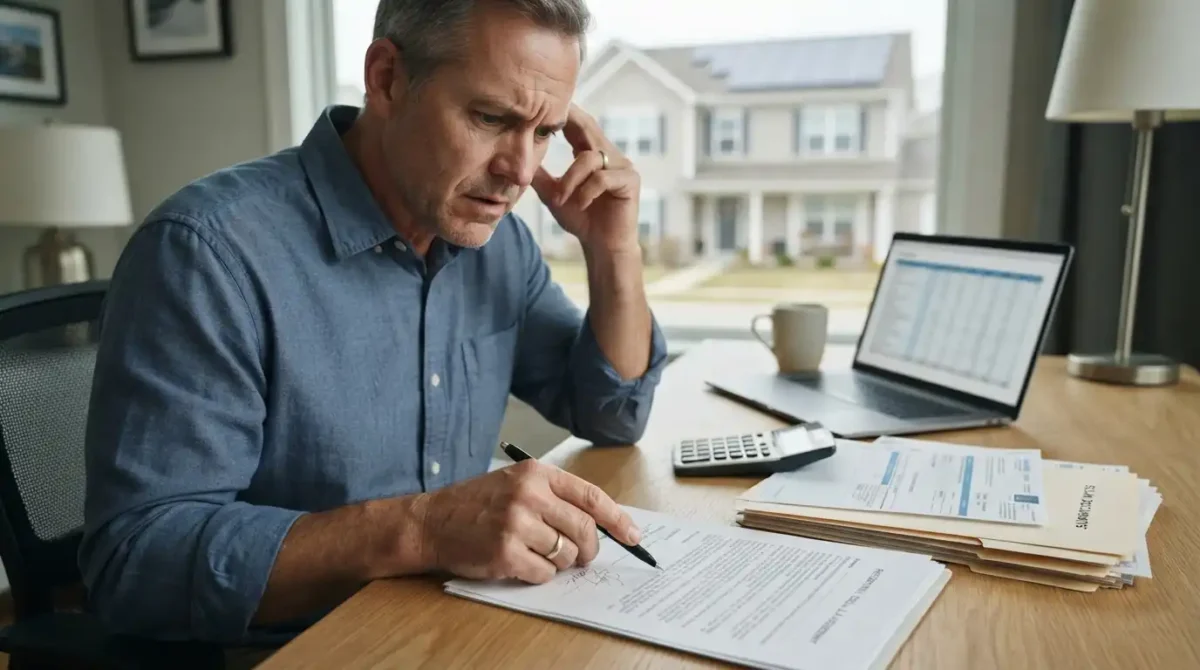
Possible Financial Remedies
Remedies may include actual damages, statutory damages under some laws, and court orders to stop or fix conduct. Contract remedies and attorney fees may apply when a law or contract allows them. Never assume any of these.
A solar panel class action lawsuit follows different rules and timelines than a single claim. Ask a lawyer whether joining one makes sense.
What Can Affect the Outcome?
Key factors include evidence quality, proper authorization, and applicable law. Proof of cause, documented losses, and filing deadlines matter too. An arbitration clause may change where your claim is heard.
Step-by-Step: What to Do If Someone Forged Your Solar Signature
Follow these nine steps in order. Written, dated action gives you the strongest footing. The first three days matter most for locking down records.
Step 1 — Obtain the Solar Agreement
Ask the company and lender in writing for the full original documents.
Step 2 — Identify the Disputed Signature
Note the document, date, and exact section you dispute.
Step 3 — Request Available Electronic Records
Ask for the signature audit trail and login details.
Step 4 — Review Your Credit Reports
Check all three bureaus for unknown inquiries and accounts.
Step 5 — Report Suspected Identity Theft
Use IdentityTheft.gov if someone misused your personal information. An initial fraud alert lasts one year. An extended alert with an identity theft report lasts seven years.
Step 6 — Submit Written Disputes
Dispute the account with the bureaus and the furnisher in writing.
Step 7 — Preserve All Evidence
Keep originals, messages, and every reply. Save permit records too, since they show whether the installer met solar panel permit requirements.
Step 8 — Consider Legal Advice
Talk to a qualified lawyer if the loss is large, collections continue, or a violation may exist.
Step 9 — Track Deadlines and Responses
Keep a dated log. Limitation periods and contract notice rules can be short.
A Hypothetical Illustration
This example is hypothetical. It is not a real case or an average loan. A homeowner finds a $35,000 loan on a credit report. At a 6.99% APR over 20 years, the payment would be about $271 a month. That adds up to roughly $65,000 over the full term.
If the homeowner never agreed, each step above protects a lot of money. First, identify the lender. Next, request the application and signature records. Then file credit disputes. Seek legal advice if the lender refuses to investigate.
Protect Your Rights When Challenging an Unauthorized Solar Agreement
A signature dispute needs evidence, not guesses. Electronic signatures are not automatically invalid. Credit access needs a permissible purpose. Keep original records, follow the official identity theft and credit dispute steps, and watch your deadlines. State law can change your remedies, so a solar panel forged signature lawyer can help you weigh them. Verify every detail through the official sources below.
Frequently Asked Questions About Solar Signature Forgery
Can a Solar Company Forge a Homeowner’s Signature?
It should not, and forgery is illegal. Public cases have alleged that individual salespeople forged e-signatures. An allegation is not a finding, so evidence matters.
Can I Sue a Solar Company for a Forged Signature?
Possibly. People often search “sue a solar company lawyer” here, but the real question is whether a claim exists. It may rest on contract, fraud, identity theft, or consumer law. A lawyer can check deadlines and arbitration terms.
Can a Solar Company Pull My Credit Without Permission?
Only with a permissible purpose under the FCRA. A real credit deal you started is one example. If you never started one, you may dispute the inquiry and ask for records.
Does the E-SIGN Act Make Every Electronic Signature Valid?
No. It says a signature cannot be denied effect only for being electronic. It does not prove who signed or that the person agreed. Authorization is a separate question.
Can I Request an IP Address Audit for My Solar Contract?
You can ask in writing for the audit trail and IP data. A company may not release it without a legal request. Even then, an address alone rarely proves who signed.
Can I Cancel a Solar Loan I Never Authorized?
Dispute it and argue you never agreed. Cancellation is not automatic. The result depends on the proof, the lender’s review, and the law. If you did sign, how to get out of a solar contract depends on cancellation rights. One example is the FTC three-day rule for door-to-door sales.
What Happens if Someone Opens a Solar Loan in My Name?
Report it to the lender and at IdentityTheft.gov. Dispute it with the credit bureaus. Consider a fraud alert or freeze, and keep copies of everything.
Can I Dispute a Solar Loan With a Credit Bureau?
Yes. Send a written dispute naming the account and the reason. Attach your identity theft report if you have one. The bureau must generally investigate.
Can a Power of Attorney Sign a Solar Contract?
If the document grants that authority and is valid, yes. Scope, dates, and state rules all matter. Expired or limited powers can make the signing open to challenge.
What Happens if Solar Panels Are Already Installed?
Financing and equipment become separate problems. Panels on the roof do not prove you agreed. If they damaged the roof, a solar panel property damage attorney can review that claim. An unapproved system may also conflict with HOA solar panel restrictions. Ask a tax professional how the IRS Section 48 energy credit treats a disputed lease.
Can a Disputed Solar Loan Be Sent to Collections?
Yes, a lender can still refer a disputed account. Keep disputing in writing. Collectors have their own rules, so ask for written proof of the debt.
When Should I Contact a Lawyer About Solar Fraud?
Contact one when a lender ignores your dispute or damage continues. It also helps when a lawsuit or collection letter arrives. A solar fraud attorney can explain deadlines and options for your state.
This article by SolarInfoPath (2026 research framework) is part of a comprehensive solar knowledge architecture covering all major high-value sectors including legal disputes (installation negligence, contracts, liability, fraud, lawsuits, liens, HOA and permitting disputes), financial structures (loans, PPA/lease agreements, DSCR financing, tax equity, investment and project finance), tax law (ITC, Section 48/25D, MACRS depreciation, bonus credits, IRS audits, recapture rules, domestic content and IRA/OBBBA compliance), insurance and risk (property damage, hail/wind/fire claims, bad faith insurance disputes, warranty coverage), policy and regulation (net metering, FERC interconnection, state utility rules, incentive programs and regulatory changes), commercial and utility-scale development (EPC contracts, construction delays, performance bonds, receivership, bankruptcy, asset sale and restructuring), real estate impacts (home value, solar leases, liens, title issues, HOA restrictions, easements), and emerging market structures such as battery storage, community solar, agrivoltaics, SRECs, yieldcos, and institutional investment funds. All content is based on publicly available regulatory, financial, and legal sources and is intended strictly for educational and informational purposes, not legal, tax, or financial advice. Readers should always verify current laws, utility policies, tax regulations, and contract terms with qualified licensed professionals before making decisions, as solar regulations, incentives, and financial structures frequently change across jurisdictions and time.

Solar Legal Analyst· Policy Researcher· Investigative Finance Writer Lead Analyst & Founder of SolarInfoPath
Morgan Lee is a solar legal analyst, policy researcher, and investigative finance writer with 12+ years of experience in U.S. renewable energy law, IRS tax credit compliance, and solar litigation. He is the founder of SolarInfoPath, a research-driven platform focused on primary-source analysis of solar contracts, tax law, regulatory policy, and industry disputes affecting homeowners and commercial developers.
His work is grounded in original legal and regulatory sources, including IRS notices, FERC and CPUC rulings, state court filings, PACER records, and UCC lien databases. He specializes in solar contract disputes, injury and workers’ compensation claims, PACE financing issues, tax equity structures, ITC recapture rules, MACRS depreciation, and federal and state solar policy frameworks.
Morgan’s analysis spans solar litigation, finance structures, and regulatory developments such as the IRA and OBBBA, interconnection reform, domestic content rules, and battery storage incentives. He also covers EPC contracts, PPAs, project financing, and utility-scale solar investment structures.