
The solar company that installed your panels is legally responsible for any roof damage they caused. You do not have to pay for it. But getting that money takes the right steps, and most homeowners skip the ones that matter most.
A Houston homeowner paid $38,000 for a solar system. Three weeks later, water stains appeared on her bedroom ceiling.
The installer sent one person to look. Then went silent.
Her homeowners’ insurance denied the claim. The installer offered $1,800 for “cosmetic repair.”
She hired a solar panel property damage attorney. She got $26,500, enough to fix the mold, replace the attic insulation, and cover her temporary housing.
The $1,800 offer would have covered none of that.
Who Is Liable for Solar Panel Property Damage?
The company that signed your installation contract is liable, not the subcontractor, not the panel brand, and not you.
Most solar companies hire outside crews to do the actual roof work. But if that crew damages your roof, the blame still goes to the company you hired. That is how contractor law works in every U.S. state.
One policy detail many homeowners overlook: your contract may include a clause that tries to shift that blame to the subcontractor. Courts in Texas, Florida, and California have rejected those clauses in residential cases again and again. Consumer protection laws often override them.
What Do I Do If a Solar Company Damages My Roof During Installation?
Take photos first. Notify the installer in writing. Do not sign anything the installer sends you until you have read every word.
These three steps decide how strong your claim will be.
Immediate Steps After Discovering Roof Damage
Step 1: Document everything before anyone touches it.
Use your phone. Take timestamped photos and video of every damaged area. Capture ceiling stains, cracked tiles, gaps around penetration points, and any moisture in the attic. Do this before you call the installer.
Once their crew arrives for an “inspection,” the condition of the damage can change.
Step 2: Send a written notice to the installer.
Email or certified mail only, not a phone call. A phone call leaves no record.
Your written notice should:
- Describe the damage clearly and specifically
- Reference the date of your installation
- State that you are holding them responsible for all repair costs
Step 3: Request their general liability certificate.
You are entitled to this. It names their insurer and shows their coverage limits. You will need this information if you file a claim directly with their insurance company.
Step 4: Read your contract before you sign anything new.
Look for these sections: “Limitation of Liability,” “Dispute Resolution,” and “Arbitration.” These clauses can quietly limit what you are allowed to claim, and most homeowners never see them until it is too late.
Why Claims Stall Early
Here is what the sales process never mentions.
When an installer gets a damage claim, their legal team reviews it before anyone calls you back. A low “goodwill” offer typically arrives around week six or eight. That offer is almost always far below your real repair cost.
Meanwhile, if water is still getting in, the damage keeps growing.
If you have no written repair commitment within 30 days of your written notice, start the next steps. Contact their insurer directly, file a contractor bond claim, and consult a solar panel property damage attorney, ideally all three at the same time.
Solar Company Damaged My Roof: Who Pays Legally in 2026?
The installer’s general liability insurance is supposed to pay. But the policy’s fine print creates gaps that catch most homeowners off guard.
There are three ways to get paid: through the installer’s liability insurance, through their contractor bond, or through a court order. Most successful claims use more than one.
Solar Installer Property Damage: Small Business Liability Claim Explained
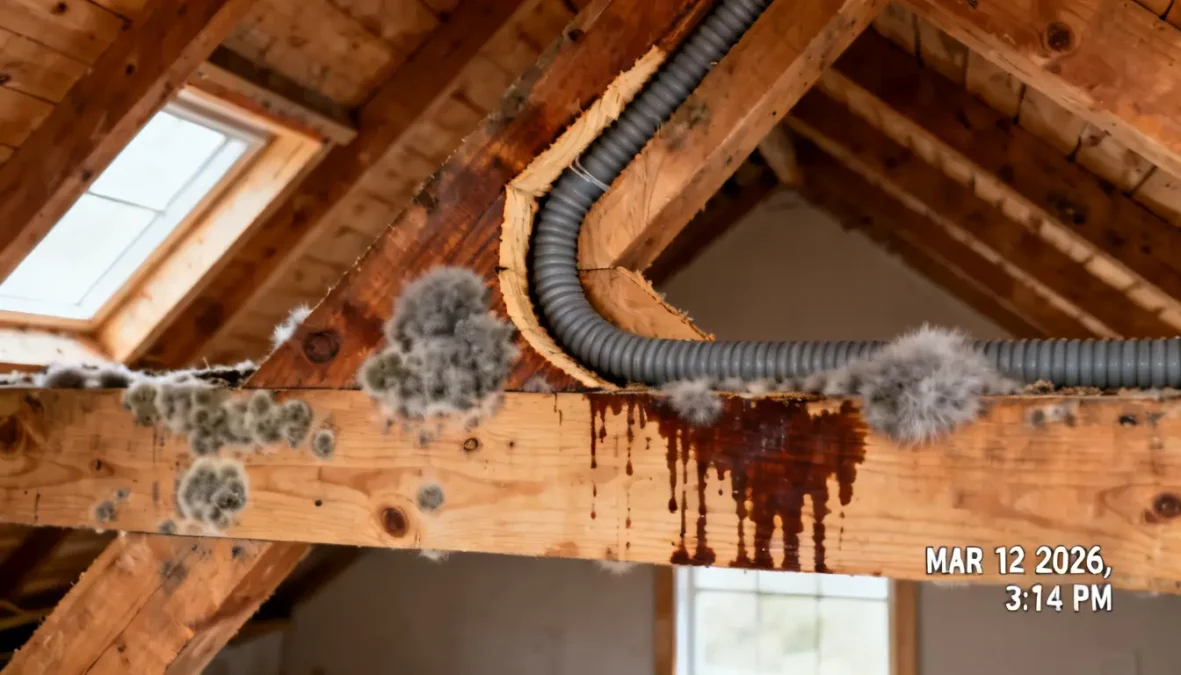
Most residential solar installers carry general liability insurance between $500,000 and $2 million per incident. That is more than enough to cover standard roof damage.
The problem is what their policy excludes.
Standard commercial general liability policies exclude “faulty workmanship” as a covered cause of loss. The insurer’s argument: insurance covers accidents, not poor craftsmanship.
So when a poorly sealed lag bolt causes a leak, the insurer calls it a workmanship issue and denies it.
But here is the part they do not lead with: the water damage that results from that faulty seal is often still covered. Damaged insulation, ruined drywall, warped flooring, all of that can be claimed even when the original seal failure is not.
That split, between the faulty act and what it destroys, is the key to many successful claims.
Solar Company Contractor Bond Claim: How It Works
A contractor bond is a separate financial guarantee that your state requires licensed installers to carry. It exists specifically to pay consumers when a contractor causes damage.
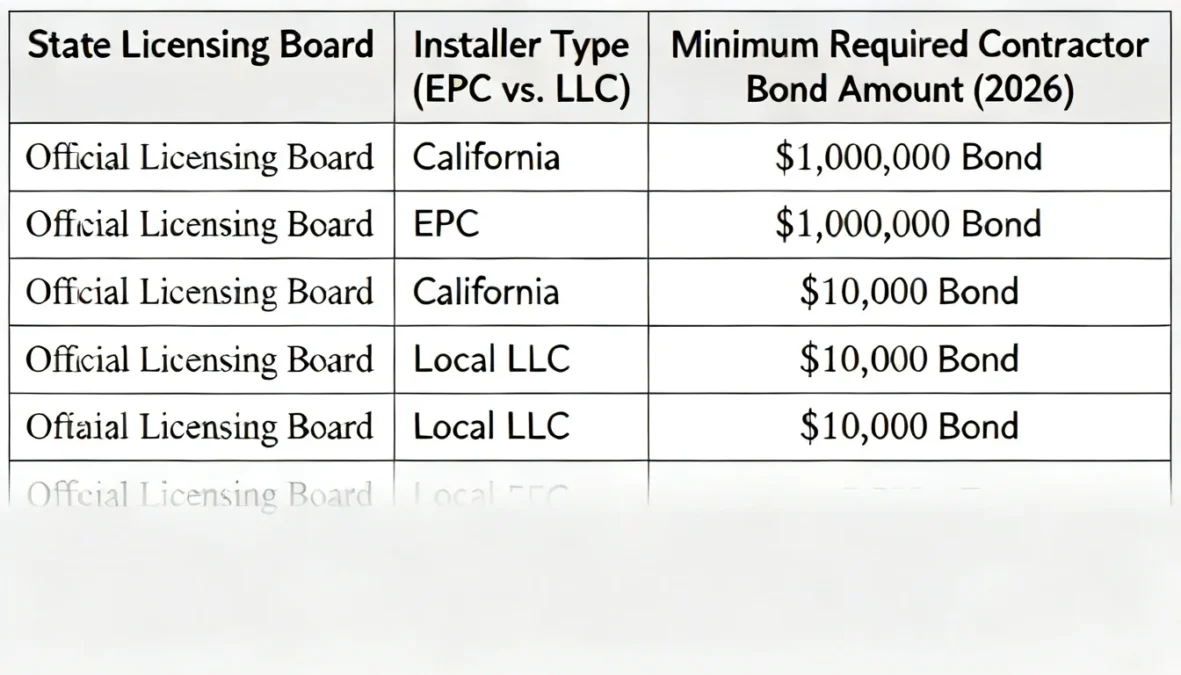
Bond amounts vary by state: Texas requires $10,000, Florida requires $20,000, and California requires $15,000 for C-46 roofing contractors.
To file a bond claim:
- Find the installer’s license number on your contract or your state’s contractor licensing board website
- Look up their bond through the state licensing database, it is public record
- Contact the surety company directly with your damage records and written proof that the installer has not responded
Bond payouts are capped. But filing one puts formal pressure on the installer’s license. That pressure often speeds up direct settlement talks.
The Insurance Gap Most Homeowners Miss
Filing a homeowners insurance claim for installation damage can raise your premium, even if that claim is denied.
An inquiry appears on your claims history the moment you submit. If the insurer rejects the claim, which they usually do for installation-caused damage, you still carry that mark.
The right order is:
- Pursue the installer’s liability coverage first
- File a contractor bond claim second
- Use your homeowners’ insurance last, and only for damage the installer clearly will not cover, such as a post-installation electrical fire
Does Homeowners Insurance Cover Solar Panel Installation Damage?
Standard homeowners insurance does not cover damage caused by the installer’s mistakes. The “faulty workmanship” exclusion blocks almost all installation-related claims.
There are situations where your policy does pay. But they are not the ones most people think of first.
When Your Insurance Does Cover Solar Panel Damage
Your policy is likely to pay when the cause of damage is external and happens after installation is complete:
- Wind or hail damages your panels, covered as a weather event
- A panel causes a fire due to an electrical fault; fire damage is covered
- A panel falls and damages a neighbor’s car, your liability coverage may apply
What these have in common: the cause is not the installer’s mistake during installation.
The U.S. Department of Energy provides guidance on how solar systems interact with standard property protections. Reading that before you file any claim can save you from making the wrong move first.
Solar Panel Damage Claim Denied, Why It Keeps Happening
Two specific exclusion clauses cause almost every installation-related claim denial.
The “faulty workmanship” exclusion is in nearly every HO-3 policy in the country. It blocks coverage for damage caused by improper installation work.
The “gradual damage” exclusion hits leak cases especially hard. If a poorly sealed penetration drips slowly for six weeks before you spot staining, the insurer classifies it as gradual damage, not a sudden accident. Gradual damage is not covered.
Solar Installation That Voided a Homeowner’s Claim, Real Scenarios
Two situations reliably result in a full claim denial.
Unpermitted installation. If the installer skipped the required building permit, some insurers treat the roof modification as a policy violation. Coverage for that area of the roof may be voided entirely.
Unapproved structural changes. If the installation involved cutting rafters or modifying the roof deck and the insurer was not told, the policy’s structural alteration clause may exclude all resulting damage.
A homeowner’s insurance denial letter is not the end. It is actually useful evidence in a legal claim against the installer. It proves that no other coverage is available, and that strengthens your position in court or mediation.
Solar Installation Caused Roof Leak: When You Need an Attorney
You need a solar panel property damage attorney when the installer denies responsibility in writing, when mold is found, or when your repair estimate exceeds $8,000.
Below that threshold, small claims court or a direct bond claim may be enough. Above it, the process becomes complex fast.
Signs You Need a Property Damage Attorney Right Now
- The installer has gone silent or sent a written denial
- A roofing inspector found mold or structural damage
- The installer’s insurer sent a coverage denial letter
- The installer was not licensed or bonded at the time of your job
- Your homeowners’ insurer denied the claim and is now managing it themselves
Understanding how legal escalation works in solar disputes is explained in more detail in this guide on interconnection delays and contractor obligations.
Solar Panel Water Intrusion: What Your Lawsuit Can Claim
An attic water intrusion lawsuit can recover repair costs, mold cleanup, damaged personal property, temporary housing, and reduced property value.
Here is what each category typically looks like in dollar terms:
- Roof repair, $3,000–$12,000 depending on scope
- Attic insulation replacement, $2,500–$6,000
- Mold cleanup, $8,000–$30,000 for moderate-to-severe cases
- Drywall and interior repair, $4,000–$15,000
- Temporary housing, $1,500–$5,000 per month if the home is unsafe
- Property value reduction, documented by a licensed appraiser
Why Leak Cases Cost More Than the Panels Did
A leak that goes unnoticed for two months can cost more to fix than the entire solar system.
One poorly flashed lag bolt can let 10 to 15 gallons of water into your attic during a single rainstorm. Over six weeks in Texas or Florida, that creates mold across 200 to 400 square feet of framing and insulation.
Mold cleanup in a humid climate frequently runs $15,000 to $30,000 — before any roof or drywall work begins.
Every week of delay adds more damage. And all of it stays on the installer’s tab.
This secondary damage pattern also appears in environmental damage cases. A related breakdown of how property damage escalates over time is covered in this solar farm runoff attorney case study.
Can I Sue a Solar Company for Roof Damage in Small Claims Court?
Yes. If your damage is clearly documented and falls under your state’s dollar limit, small claims court is a real option, and you do not need an attorney to use it.
Small claims works best for straightforward cases: a single bad penetration, limited water damage, and a clear repair estimate. You represent yourself, file in your county, and get a decision in 60 to 120 days.
Small Claims vs. Civil Lawsuit
| Factor | Small Claims | Civil Lawsuit |
| Dollar limit | $5,000–$25,000 by state | No limit |
| Attorney needed | No | Yes, strongly |
| Timeline | 60–120 days | 6–24 months |
| Best for | Clear, limited damage | Complex, large, or disputed claims |
State-specific limits that matter most:
- Texas: up to $20,000
- Florida: up to $8,000 in the county small claims division
- California: up to $12,500 for individuals
- Arizona: up to $3,500
- North Carolina: up to $10,000
To win in small claims, bring:
- Your written damage notice to the installer with proof of delivery
- Timestamped photos of the damage
- Two repair estimates from licensed roofing contractors
- A copy of your installation contract
Solar Panel Fell Through Roof, What Settlements Look Like
When a panel detaches and breaks through your roof deck, civil court is the right path. These cases almost always settle before trial.
Settlement ranges from 2026 case patterns:
- Single penetration, minor leak: $4,000–$12,000
- Attic water intrusion with mold: $18,000–$40,000
- Structural damage to rafters or deck: $30,000–$55,000
- Panel detachment with full breach: $45,000–$120,000+
- Fire caused by faulty wiring: $60,000–$150,000+
Most contested claims settle within 3 to 12 months of a formal demand letter. Cases that go to trial, which is rare, run 18 to 24 months.
Decision Checkpoint: Small claims is right when the damage is clear and under your state’s cap. If mold is involved, the installer disputes liability, or the damage tops your state’s limit, you need civil court and an attorney.
How Much Can I Get If Solar Panels Caused Roof Damage?
The amount you recover depends on your documented repair costs, proof that the installer was negligent, and whether their insurance company fights the claim.
There is no fixed settlement number. But these ranges reflect what 2026 residential solar property damage claims are producing.
Average Settlement Ranges by Damage Type
| Damage Type | Typical Settlement | What Drives It Higher |
| Minor leak, one penetration | $2,000–$8,000 | Quick discovery, clear photos |
| Attic water intrusion, mold | $12,000–$35,000 | Extent of mold, structural damage |
| Rafter or deck damage | $20,000–$55,000 | Engineering report, code violations |
| The panel falls through the roof | $40,000–$120,000+ | Structural breach, injury, fire |
| Insurance bad faith added | Up to 2× base amount | The insurer denied a clearly valid claim |
Solar Panel Fire: Roof Damage Insurance Claim and Attorney
A solar panel fire claim is handled differently from a water damage claim, and the payout is typically much larger.
Fire damage is a covered peril in almost every HO-3 policy. If a solar panel or its wiring causes a fire that damages your roof, your homeowners’ insurer should pay first, then subrogate (sue on your behalf) against the installer.
If your insurer refuses to cover a panel-caused fire, that is a potential bad-faith claim. Bad faith cases in Texas and Florida can result in the insurer paying twice the original claim amount, plus your attorney fees.
A solar panel property damage attorney handles this type of claim on contingency. You pay nothing unless they recover money for you.
What Makes a Settlement Go Higher
Three things drive compensation up in solar property damage cases:
Code violations. An installation that skipped permits, failed inspection, or used non-approved materials is strong evidence of negligence. Courts and insurers respond to this.
Documented negligence. If your roofing inspector can show the installer deviated from the manufacturer’s installation specs or local building codes, proving fault becomes much easier.
Insurance bad faith. When an insurer denies a valid claim without a reasonable basis, most states allow a separate bad faith lawsuit. That can double what you recover and add your legal fees on top.
Projections vs. Reality: What You’re Told vs. What Happens
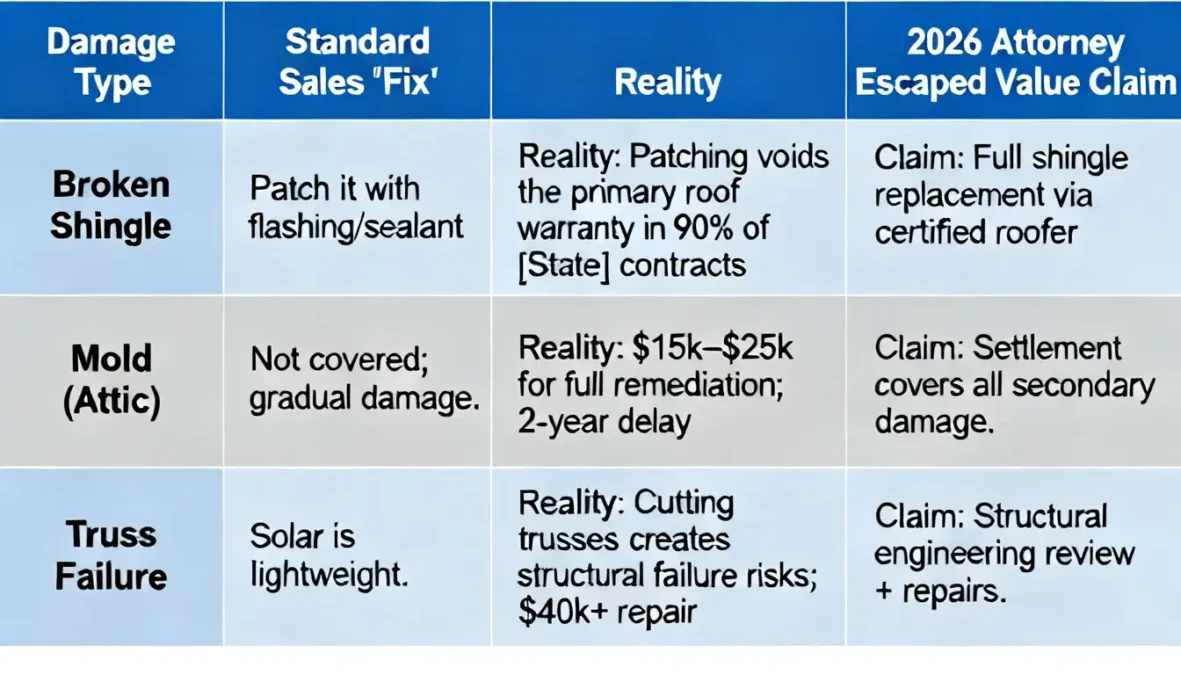
| Situation | What Installers Say | What Actually Happens |
| Minor roof damage | “Fixed within a week.” | Average response-to-repair: 6–14 weeks |
| Leak damage claim | “Our insurance covers this.” | Workmanship exclusion blocks 40–60% of claims initially |
| Structural failure | “This rarely happens.” | More frequent in fast-install markets; common in storm states |
| Settlement timeline | “We’ll make this right fast.” | Contested claims average 4–9 months |
| Small claims success | “You won’t win in court.” | Documented homeowners win most small claims cases |
Solar Company Won’t Pay for Roof Damage: Your Legal Options
If the installer ignores you or denies your claim, you have four clear steps to take — and you can run them at the same time.
The Escalation Pathway
Step 1: Send a formal demand letter.
This is not a casual email. It names the specific damage, lists your documented repair costs, sets a response deadline (15 to 30 days), and states clearly that legal action follows if there is no response. Every step after this uses this letter as its foundation.
Step 2: File directly with their liability insurer.
Use the certificate of insurance you requested earlier. Call the insurer and open a third-party claim against the installer’s policy. You do not need the installer’s permission or cooperation to do this.
Step 3: File a contractor bond claim.
File at the same time as Step 2. Contact the surety company holding the installer’s bond. Submit your damage records and your written proof that the installer has not responded. Even a small bond payout puts formal pressure on their license.
Step 4: File in court.
Small claims if the damage is under your state’s cap. Civil court with a solar panel property damage attorney if it is above.
Why the Delay Is Strategic
Installers delay not because they think they are innocent, but because every week of delay keeps money in their account.
Settling a damage claim hits their general liability deductible, usually $2,500 to $10,000, out of their own pocket. That is cash they would rather hold onto as long as possible.
Dispute fatigue is real. Many homeowners accept a low offer simply because the back-and-forth is exhausting.
Knowing that strategy helps you hold the line. The installer’s position typically weakens after a formal demand letter. It weakens further when a bond claim is filed. It often resolves fastest when an attorney’s name appears on the paperwork.
The Arbitration Clause: What Most Homeowners Never See Coming
Many solar contracts send all disputes to binding arbitration, which means you cannot sue in regular court.
This clause is buried in the fine print and rarely mentioned during the signing process.
Arbitration is not always bad. It can be faster. But it removes your right to a jury, limits how much evidence you can gather, and sometimes caps what you can recover.
Find the “Dispute Resolution” section of your contract before you take any legal step. If it says “binding arbitration,” get a solar panel property damage attorney involved before you file anything.
For more on how contractor agreements structure liability, this IRS Section 48 compliance guide explains how solar ownership documents affect financial responsibility at multiple levels.
Real-World Scenarios
Scenario 1: Houston, Texas: Leak Damage and a $26,500 Settlement
A homeowner in Houston’s Heights neighborhood was paying about $210 a month to Reliant Energy. She installed an 8kW system for $38,000. The installer was a local crew working under a national brand’s contract.
Eight weeks after installation, moisture appeared around a ceiling light fixture. Her attic inspection found water at two lag bolt penetrations, both improperly flashed. Mold was already growing on the roof sheathing.
Her homeowners’ insurer denied the claim. The installer offered $1,800.
She sent a formal demand letter. She filed with the installer’s liability carrier. She also filed a bond claim with the Texas Department of Licensing and Regulation.
The liability carrier settled 11 weeks later for $26,500. That covered mold cleanup, insulation replacement, drywall repair, and temporary housing.
The installer’s original offer would not have covered a single one of those line items.
Scenario 2: Orlando, Florida: Denied Insurance Claim and a Court Settlement
A homeowner in Orlando’s Metrowest area installed a 10kW system while paying Duke Energy Florida about $230 a month. Three penetration points were left without code-required self-sealing flashing collars.
Her Citizens Property Insurance claim was denied due to a faulty workmanship exclusion. The installer said the damage was pre-existing.
She had installation-day photos showing no prior staining. A forensic roofing inspector confirmed all moisture came from the three penetration points.
She filed in Orange County civil court. The installer settled before the hearing for $34,000 — covering roof repairs, attic cleanup, and a portion of her legal fees.
One honest limitation from this case: Her HOA required its own approval process before any repairs could begin. That review took six weeks. During those six weeks, the moisture damage kept growing. Her final repair bill was about $9,000 higher than it would have been if repairs had started immediately.
HOA approval timelines are a real friction point. They are rarely mentioned during the solar sales process, but they can significantly increase the cost of installation damage.
Understanding how large solar projects handle disputes involving multiple parties is covered in the utility-scale solar cost and rules guide, which explains how liability flows through complex contractor arrangements.
The Biggest Mistake Homeowners Make Before Calling a Solar Panel Property Damage Attorney
Most homeowners call and call, but never send a single written notice. By the time they decide to escalate, they have no paper trail and no proof that the installer was ever formally told about the damage.
That kills claims. An insurer or arbitrator needs to see when you reported the damage and what the installer did in response.
The second most common mistake is signing the installer’s repair authorization without reading it. Some of these documents include language that ends your right to claim further damages once a basic fix is made.
Two Contract Clauses That Quietly Hurt You
An arbitration clause removes your right to sue in civil court and may cap your total recovery.
Waiver of consequential damages states the installer is not responsible for “indirect” or “consequential” damages. If a court reads mold cleanup as a “consequential” cost, that clause could block a significant part of your recovery.
What the Warranty Does Not Cover
A manufacturer’s 25-year panel performance warranty does not cover roof damage. These are completely different documents from different companies.
What you need is a workmanship warranty from the installer, covering the quality of the installation itself. Many residential installers offer 1 to 5 years of workmanship coverage.
But the specific language decides what it covers. Most homeowners never read it before signing. Read it before your installation begins, not after water appears on your ceiling.
The National Renewable Energy Laboratory publishes installation standards that are frequently used as reference points in legal disputes. If you believe your installer deviated from recognized industry practice, their published standards can support your case.
Should You Hire a Solar Panel Property Damage Attorney?
Hire one when your documented damage is above $8,000, when mold or structural damage is involved, or when the installer’s insurer has denied your claim in writing.
Below that threshold, small claims court or a direct demand letter may resolve the situation without legal fees.
When Legal Action Makes Clear Financial Sense
- Damage is documented at $8,000 or more
- Mold, attic damage, or structural repair is involved
- The homeowner’s insurance claim was denied
- The installer has denied responsibility in writing
- The installer was not licensed at the time of the job
- The contract has a binding arbitration clause, and you need guidance before proceeding
Most solar property damage attorneys work on contingency, typically 25% to 33% of what they recover. You pay nothing unless they win.
When It May Not Be Worth It
For small, clear damage, a single cracked tile, no water intrusion, a clean repair estimate under $3,000, small claims court, or a well-written demand letter is often enough.
What I’ve seen in studying these cases: the homeowners who come out worst are the ones who wait too long, document too little, and say yes to the first low offer because they are tired of fighting.
The process is not easy. But it is manageable if you move in the right order, put everything in writing, and understand that the installer’s first offer is seldom their best one.
FAQs — Solar Property Damage Legal Questions (2026)
What do I do if a solar company damages my roof during installation?
Take timestamped photos before anyone touches anything. Send written notice to the installer within 72 hours. Request their liability insurance certificate. Get two repair estimates from licensed roofers. Do not sign anything the installer sends you until you have read every word.
Does homeowners’ insurance cover solar panel installation damage?
No, in most cases. The “faulty workmanship” exclusion blocks most installation-related claims. Your best coverage comes from the installer’s general liability insurance, not your own policy.
Can I sue a solar company for roof damage in small claims court?
Yes. Texas allows up to $20,000. California allows up to $12,500. Florida allows up to $8,000 in small claims. Bring written notice records, timestamped photos, and two contractor estimates.
How much can I get if solar panels cause roof damage?
Minor damage typically settles between $2,000 and $8,000. Attic water intrusion with mold often reaches $12,000 to $35,000. Structural or fire damage can go well above $50,000. The amount depends on your documented costs and proof of negligence.
What happens if a solar panel falls through my roof?
Document the damage before emergency repairs if it is safe to do so. Notify the installer in writing immediately. This type of damage almost always justifies civil court rather than small claims. Contact a solar panel property damage attorney as soon as possible.
What if the solar company won’t respond to my calls?
Stop calling. Send a certified demand letter with a 15-day response deadline. File directly with their liability insurer. File a contractor bond claim with your state licensing board. If there is still no response, file in small claims or hire an attorney for a civil claim.
This article by SolarInfoPath (2026 research framework) is part of a comprehensive solar knowledge architecture covering all major high-value sectors including legal disputes (installation negligence, contracts, liability, fraud, lawsuits, liens, HOA and permitting disputes), financial structures (loans, PPA/lease agreements, DSCR financing, tax equity, investment and project finance), tax law (ITC, Section 48/25D, MACRS depreciation, bonus credits, IRS audits, recapture rules, domestic content and IRA/OBBBA compliance), insurance and risk (property damage, hail/wind/fire claims, bad faith insurance disputes, warranty coverage), policy and regulation (net metering, FERC interconnection, state utility rules, incentive programs and regulatory changes), commercial and utility-scale development (EPC contracts, construction delays, performance bonds, receivership, bankruptcy, asset sale and restructuring), real estate impacts (home value, solar leases, liens, title issues, HOA restrictions, easements), and emerging market structures such as battery storage, community solar, agrivoltaics, SRECs, yieldcos, and institutional investment funds. All content is based on publicly available regulatory, financial, and legal sources and is intended strictly for educational and informational purposes, not legal, tax, or financial advice. Readers should always verify current laws, utility policies, tax regulations, and contract terms with qualified licensed professionals before making decisions, as solar regulations, incentives, and financial structures frequently change across jurisdictions and time.

Solar Legal Analyst· Policy Researcher· Investigative Finance Writer Lead Analyst & Founder of SolarInfoPath
Morgan Lee is a solar legal analyst, policy researcher, and investigative finance writer with 12+ years of experience in U.S. renewable energy law, IRS tax credit compliance, and solar litigation. He is the founder of SolarInfoPath, a research-driven platform focused on primary-source analysis of solar contracts, tax law, regulatory policy, and industry disputes affecting homeowners and commercial developers.
His work is grounded in original legal and regulatory sources, including IRS notices, FERC and CPUC rulings, state court filings, PACER records, and UCC lien databases. He specializes in solar contract disputes, injury and workers’ compensation claims, PACE financing issues, tax equity structures, ITC recapture rules, MACRS depreciation, and federal and state solar policy frameworks.
Morgan’s analysis spans solar litigation, finance structures, and regulatory developments such as the IRA and OBBBA, interconnection reform, domestic content rules, and battery storage incentives. He also covers EPC contracts, PPAs, project financing, and utility-scale solar investment structures.