
HOA solar panel restrictions are real, but they have limits. In many states, an HOA cannot ban rooftop solar outright. It can still ask for approval and set reasonable rules. If your application is rejected, you can usually appeal and, if needed, challenge the decision under state law.
This guide covers the whole process. You will learn what an HOA can and cannot control, how architectural review works, and what to submit. You will also see why applications get denied, how to appeal, and how five states handle the issue. We also cover contract exits, tax credits, payback, and when to call a lawyer. Each section starts with a direct answer.
Most disputes come down to three things. Your community documents. Your state’s solar access law. And the facts of your installation. Read all three before you apply.
Can an HOA Restrict Solar Panel Installation?
Yes, an HOA can regulate solar panel installation. In many states, it cannot prohibit it. The difference between “regulate” and “prohibit” decides most solar disputes.
Why HOAs Regulate Solar Panel Installations
HOAs exist to keep a community’s look and standards consistent. Their rules often cover paint colors, fences, and roofs. Solar panels change the exterior of a home, so most HOAs ask owners to get approval first.
Boards usually raise four concerns. Roof appearance. Panel visibility from the street. Quality of the installation. And long-term property standards.
Some of these concerns are fair. A badly mounted system can leak or fall. Others can go too far. A rule that blocks solar in practice may conflict with state law. That is why you need to separate reasonable architectural rules from restrictions that state solar access laws limit.
Can an HOA Legally Prohibit Rooftop Solar Panels?
In many states, no. Over 25 states have solar access or solar rights laws that limit HOA control over solar installations. The strength of each law varies.
Most of these laws allow “reasonable restrictions.” They do not allow a total ban. A rule about where panels go is different from a rule that says no panels at all.
Your HOA’s governing documents do not automatically override state law. If a CC&R conflicts with a solar access statute, the statute may win. Check your state’s rule before you accept a “no.”
When HOA Solar Restrictions May Be Enforceable
Some restrictions can be valid. Examples include reasonable placement rules and structural or roof safety requirements. Compliance with building and electrical codes is also fair. So are rules the state statute expressly allows.
An HOA can also ask that the system not look worse than needed. The key test is practical effect. If the rule does not unreasonably hurt performance or raise cost, it is more likely to stand.
Whether a rule is enforceable depends on your state statute, your governing documents, and the facts of your installation.
HOA Solar Panel Restrictions and Legal Authority
An HOA’s power over solar comes from its recorded documents, but state law can cut that power back. Start with the documents. Then compare them with the statute.
Understanding HOA Governing Documents
CC&Rs are the Covenants, Conditions, and Restrictions. They are recorded against your property. They bind current and future owners.
Bylaws set how the association runs. Architectural guidelines explain what the review committee looks for. Community rules cover everyday matters.
Solar rules can appear in any of them. A recorded restriction usually carries more weight than an ordinary board policy. A policy that adds new limits after you buy may be easier to challenge. Find where the solar language sits before you respond.
State Laws That Limit HOA Solar Restrictions
State legislatures have passed solar access laws to protect residential solar. Some bar outright bans. Others also limit restrictions that raise cost or cut efficiency.
Many statutes also deal with approval procedures. Some set review deadlines. A few say what happens if the HOA stays silent.
Newer state protections can conflict with older HOA rules. When they do, the older rule may be void or unenforceable. Always compare your CC&Rs with the current statute.
Federal Law and HOA Solar Rules
There is no federal law that works like a state solar rights act. No single federal statute overrides every HOA restriction. The federal role is mostly about energy policy and incentives, which an HOA does not control.
The federal Fair Housing Act is different. It may matter if a homeowner needs a disability-related accommodation tied to the request. That is a narrow situation. It does not create a general right to install solar.
So your main protection is usually state law, not federal law.
What Happens When HOA Rules Conflict With State Law?
Preemption means a higher law overrides a lower one. When a state solar access statute conflicts with an HOA provision, the state law can limit or void the provision.
That does not mean you can ignore the HOA. You should still apply, document everything, and cite the statute. Start with a written request. Escalate only if the HOA refuses.
Remedies depend on the statute. They can include a court declaration that the rule is void. Some states also award attorney fees to the winner.
HOA Solar Panel Architectural Review Laws
Architectural review is the HOA’s approval step before you install. Several states regulate how that review works. HOA solar panel architectural review laws can set deadlines, limit conditions, and protect system performance.
What Is an HOA Architectural Review Committee?
An Architectural Review Committee, or ARC, reviews changes to the outside of homes. It checks plans against the community’s design rules.
For solar, the ARC looks at panel appearance and placement. It usually answers to the HOA board. The board may hear appeals of ARC decisions.
The ARC’s power is not unlimited. In states with solar access laws, the committee must follow the statute as well as the community documents.
Architectural Approval Requirements for Solar Panels
Expect the ARC to ask about several things. The panel layout and roof placement. Panel size and system design. How visible the equipment will be from the street or from neighbors. How the system mounts and where it penetrates the roof. Where the inverter and electrical equipment will go.
The ARC may also ask for installation plans and contractor documents. That is reasonable when the request is not excessive.
A complete package helps. Missing items give the HOA a simple reason to deny or delay.
Can an HOA Require Changes to Solar Panel Placement?
Sometimes. An HOA may ask you to move panels to a less visible roof section. That can be fine if the change does not meaningfully cut output or raise cost.
It becomes a problem when relocation hurts performance. A shaded, low-output roof section is a common example. Ask your installer to model both layouts.
If the new layout loses production, document the difference. Get a written estimate of annual output and added cost. Then ask the HOA for a middle path that protects appearance and function.
HOA Architectural Review Timelines and Decisions
Check your governing documents for a review deadline. Check your state statute too. Some states set a specific period for approval or denial.
Get the HOA to acknowledge your application in writing. Keep dates for every step. A written decision matters more than a hallway comment.
If the HOA is slow, send written follow-ups. Record each one. A paper trail can prove delay later.
HOA Solar Installation Approval Requirements
Most HOAs require written approval before installation. HOA solar installation approval requirements usually include forms, drawings, and equipment details. Prepare them early.
Documents Homeowners May Need to Submit
Many HOAs ask for the solar application form and a roof diagram showing panel layout. They may also want system specifications and equipment data sheets. Mounting and structural details are common requests.
You may need permit information, too. Some HOAs ask for the contractor’s license and insurance.
Ask for the checklist in writing. Then match it item by item. That avoids “incomplete application” denials. Your city’s solar panel permit requirements may also set the order of events.
How to Submit an HOA Solar Installation Application
Follow these steps in order. First, read your governing documents. Second, check your state’s solar access law. Third, get a system design from your installer.
Fourth, prepare the architectural package. Fifth, submit a written application. Sixth, ask for written proof that the HOA received it. Seventh, keep copies of everything. Eighth, follow up before the review period ends.
Send the package by a method that creates a record. Email with a read receipt works. So does certified mail.
Does an HOA Approval Replace a Building Permit?
No. HOA approval is private. A building permit is government approval. You may need both.
Local building and electrical permits cover code compliance. Inspections confirm the work meets safety rules. An HOA cannot replace that process.
Solar panel permit requirements vary by city and county. Apply for the permit and HOA approval at the same time when you can. Many installers handle both.
What Happens If an HOA Does Not Respond?
Silence may or may not mean approval. Some states have deemed-approval rules. If the HOA misses the deadline, the application may count as approved.
Do not assume that is true in your state. Check the statute first. If you install on a wrong guess, you could face fines or a removal demand.
Send a dated written follow-up. State the date you applied. Cite the statute if one applies. Ask for a written decision.
What Solar Panel Restrictions Can an HOA Enforce?
An HOA can usually enforce reasonable rules on placement, appearance, and safety. It generally cannot enforce rules that block solar or sharply reduce its performance. Not every aesthetic or visibility rule is illegal. The answer turns on state law and the rule’s practical effect.
Solar Panel Placement and Visibility Restrictions
Common rules cover which roof slopes can hold panels. Some HOAs bar panels on front-facing roofs or ask for placement out of public view. Others suggest alternative locations.
State law matters here. Some statutes limit visibility rules. Others allow placement rules if they do not impair function. Check what your state says about front roofs and street visibility.
Solar Panel Appearance and Design Requirements
HOAs may set rules about panel color and frame appearance. They may ask you to hide wiring and conduit. They may want the system to fit the home’s design.
These rules can be fine if they stay modest. They become a problem when they force a costly or weaker system. A requirement to conceal equipment in a way that hurts function is a red flag.
Safety and Structural Installation Requirements
Safety rules are the easiest for an HOA to defend. They include roof load and structural strength, and fire access and emergency pathways. They also cover electrical safety, proper mounting, and waterproofing.
Local building codes often set these standards. If the HOA’s rule matches the code, expect it to hold up. If a bad mounting job later causes damage, a solar panel property damage attorney may ask for those records.
Restrictions That May Unreasonably Impair Solar Performance
Watch for rules that cut energy production or demand extreme relocation. Others add unnecessary costs or drag out the process. Some make solar impractical.
Together, these effects can amount to an effective ban. Many state laws treat that as unlawful. Keep numbers. Production estimates and cost quotes are your best evidence.
Can an HOA Deny a Solar Panel Installation?
An HOA can deny an application that fails its valid rules. In many states, it cannot deny solar for a reason state law prohibits. Look at the stated reason before you decide what to do.
Common Reasons HOAs Give for Denying Solar Applications
Denials often cite incomplete paperwork or a claimed violation of architectural guidelines. Others cite roof appearance, structural or safety concerns, or the panel location. Some say you skipped the approval process.
Many of these are fixable. A missing document is the easiest to cure. Resubmit a complete package fast.
When an HOA Solar Panel Denial May Be Unlawful
A denial may be unlawful in several cases. It may conflict with a state solar access protection. It may rest on a rule that unreasonably impairs performance, or one that state law forbids.
Inconsistent enforcement is another sign. So is reliance on a provision that cannot be enforced under current law.
Do not guess. Match the denial reason to the statute. Then decide your next step.
Can an HOA Deny Solar Panels for Aesthetic Reasons?
Sometimes. HOAs have a legitimate interest in community appearance. State laws treat aesthetics differently, though.
Here is a simple example. An HOA tells you to move all panels to a shaded back roof. That roof produces far less power. The change looks like a reasonable aesthetic tweak, but it may sharply cut output. In a state that protects performance, that rule may be unreasonable.
A small design adjustment is usually fine. A demand that guts the system’s value is not.
What Should Homeowners Do After Receiving a Denial?
Start by asking for a written explanation. Find the exact rule the HOA cited. Read your state’s solar access statute.
Then compare alternative installation layouts. Save the application and all letters. Finally, decide whether to appeal or speak with a lawyer.
Do not install while the dispute is open. That can create a violation and weaken your position.
HOA Solar Panel Denial Rights
HOA solar panel denial rights come mostly from state law and your community’s own procedures. You are entitled to a fair process. In many states, you also have a legal limit on what the HOA can reject.
What Rights Do Homeowners Have After an HOA Denial?
You may have the right to a decision under the HOA’s established procedures. In states with solar access laws, you may have the right to challenge restrictions that violate the statute.
Some states also protect owners from unreasonable delay and from extra requirements that raise cost. Read the statute for the exact wording.
Can an HOA Deny Solar Panels Without Giving a Reason?
A written denial with a reason is the safer practice. Some states require it. Others rely on the HOA’s own documents.
If the notice is vague, ask for clarification in writing. A missing explanation makes an appeal harder, because you cannot answer a reason you have not seen.
Can an HOA Apply Different Rules to Different Homeowners?
HOAs should enforce standards consistently. Selective enforcement is a common complaint. If the HOA approved a similar system for a neighbor, that fact matters.
Photos and approval records of nearby solar homes can help. Document each difference in treatment. Stay factual and avoid accusations.
What Evidence Can Help Challenge an HOA Denial?
Gather your original application and the written rejection. Add the CC&Rs and architectural guidelines. Include your solar design and production estimates.
Contractor statements and technical assessments strengthen the file. So do records of earlier HOA approvals, the relevant statutes, and all correspondence. Keep them in one folder.
HOA Solar Installation Appeal Rights
HOA solar installation appeal rights usually start inside the HOA. Your documents may give you a path to the board. State law may add more protection.
Does a Homeowner Have the Right to Appeal an HOA Solar Denial?
Most HOAs have an internal appeal process. It is often in the CC&Rs or architectural guidelines. Some states add protections on top.
An internal appeal is not the same as a lawsuit. The first asks the HOA to reconsider. The second asks a court to decide. Appeal rights and deadlines vary, so read your notice carefully.
Many denial letters give a short window. Examples range from 10 to 30 days. Miss it, and you may lose the internal appeal.
Understanding the HOA Solar Appeal Process
Start with the written rejection. Identify the rule the HOA cited. Check the appeal deadline.
Prepare your evidence. Submit a formal appeal. Attend a hearing if one is offered or required. Then ask for a written final decision.
Treat every step as part of a record. A clear record helps if the dispute moves forward.
What Should an HOA Solar Appeal Letter Include?
Keep the letter short and factual. Include your name and property address, the application date, and the denial date and reason. Cite the HOA provisions and your state’s solar access law.
Add technical evidence that answers the HOA’s concerns. Then state what you want. Ask for reconsideration and offer a workable fix.
What Happens If the HOA Rejects the Appeal?
You still have options. Mediation or another dispute process may help. Some HOAs and states offer them.
A lawyer may be worth hiring at this stage. If your state law supports your claim, court remedies may be available. Not every case needs a lawsuit.
HOA Solar Installation Denial Appeal: Step-by-Step Guide
An HOA solar installation denial appeal works best when it is organized and specific. Follow these seven steps. Each one builds on the last.
Step 1: Obtain the HOA’s Written Denial
Ask for a formal written explanation. Identify the exact restriction the HOA used. Save every email, letter, and application record.
Step 2: Review Your HOA Governing Documents
Read the CC&Rs and architectural approval rules. Look for solar provisions. Check the internal appeal steps and deadlines.
Step 3: Research Your State’s Solar Access Laws
Find the state statute. Learn whether it limits HOA restrictions. Check for rules on placement, cost, efficiency, or approval deadlines.
Look for exceptions too. Some situations, such as certain condo roofs or historic districts, may not be covered.
Step 4: Gather Technical and Legal Evidence
Get production estimates for your design. Compare alternative placements. Collect contractor explanations.
Document any added cost from the HOA’s changes. Save proof of restrictions that look unreasonable.
Step 5: Submit a Formal Appeal
Write a clear appeal. Answer each denial reason separately. Cite HOA provisions and state law.
Request reconsideration before the deadline. Keep proof that you submitted it.
Step 6: Consider Mediation or Legal Assistance
Informal talks can solve many disputes. Mediation can help when both sides want a deal.
Consider a lawyer who knows HOA or solar access disputes if talks stall. Ask about fees early.
Step 7: Consider Legal Remedies
Courts may grant declaratory or injunctive relief where the law allows it. That can mean an order declaring a rule void or requiring the HOA to allow the system.
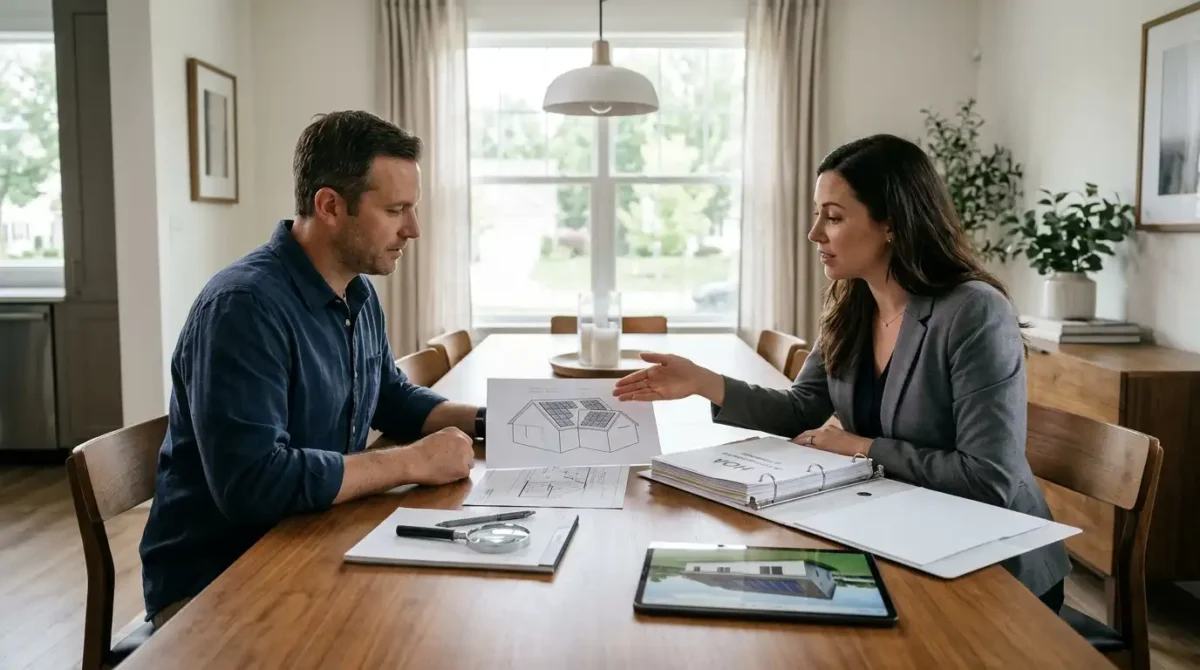
Fees and damages depend on the statute and the facts. Litigation is not automatic after a denial. Many cases end earlier.
State Laws Protecting Homeowners From HOA Solar Restrictions
Solar access laws differ by state. Use this section as a starting map, then read the current statute. These state HOA solar panel laws and solar access rules show how much the details can change.
California
California’s Solar Rights Act is in Civil Code Section 714. It makes void and unenforceable any HOA provision that effectively prohibits or restricts solar use.
An HOA may impose reasonable restrictions. For photovoltaic systems, a restriction generally stops being reasonable at two marks. One is adding more than $1,000 to the system cost. The other is cutting efficiency by more than 10 percent from the original design.
A 2014 amendment shortened the HOA review period for solar applications from 60 to 45 days. Confirm the current deadline before you rely on it. The prevailing party in an action to enforce Section 714 is entitled to attorney fees.
Florida
Florida Statutes Section 163.04 covers deed restrictions and similar agreements. They cannot prohibit solar collectors or other renewable energy devices. They also cannot have the effect of prohibiting them.
An association may still address where collectors go on the roof, if the choice does not impair effective operation. It also cannot require concealment that impairs function. In a lawsuit under the section, the prevailing party can recover costs and attorney fees. That can cut both ways.
Texas
Texas Property Code Section 202.010 bars property owners’ associations from prohibiting solar energy devices, with listed exceptions. Those exceptions include a device a court has found threatens health or safety or violates a law.
The law also lets an association bar devices in certain places. Examples include property the association owns, devices that extend above the roofline, and ones that void material warranties. It lets an association bar devices installed without prior approval.
It also protects performance. An alternate location is generally allowed if it raises estimated annual output by more than 10 percent. The comparison is with the area the HOA designated. A developer may restrict solar during the development period only in smaller developments of 50 or fewer units.
Arizona
Arizona Revised Statutes Section 33-1816 covers planned communities. An association cannot prohibit installation or use of a solar energy device, whatever the community documents say.
It may adopt reasonable rules on placement. Those rules cannot prevent installation, impair function, restrict use, or adversely affect cost or efficiency. A court must award reasonable fees and costs. The award goes to a party that substantially prevails in an action against the board. Condominiums fall under a separate section.
Colorado
Colorado Revised Statutes Section 38-30-168 voids certain covenants. These are restrictions that effectively prohibit or restrict a renewable energy generation device. Solar is included.
Associations may still set reasonable aesthetic rules on dimensions, placement, and appearance. The statute also limits how long an association may take to decide an application, with a 60-day period. Condo owners generally cannot install on common elements. Read current provisions closely.
Why HOA Solar Rights Differ Between States
Statutes use different words. Some bar bans only. Others also limit cost and efficiency impacts. Some set deadlines. Others do not.
Do not assume a protection in one state applies in another. Compare your state’s text on installation, placement, performance, and review time.
What to Do If Your HOA Violates Solar Access Laws
If you think the HOA broke the law, move step by step. Compare, document, write, then get help. Keep your tone calm. Evidence is more persuasive than anger.
Identify the Potential Legal Violation
Compare the HOA’s decision with the state statute. Ask whether the rule is prohibited or just unreasonable. Decide whether the problem is a denial, a delay, a cost, or a placement demand.
Document the HOA’s Conduct
Keep every written message. Record application and appeal dates. Preserve technical reports. Note extra costs and design changes the HOA demanded.
Send a Formal Written Complaint
Explain the disputed restriction. Cite the relevant state law. State the resolution you want. Attach support and ask for a written reply.
Contact the Appropriate Legal or Dispute Resolution Resource
Consider an HOA or real estate attorney. Check state and local dispute options. Review any statutory complaint steps. Understand likely legal costs before you commit.
When Should You Consider Hiring an Attorney?
Think about a lawyer when the HOA repeatedly refuses a protected installation. Do the same when the denial has big financial effects or the HOA threatens fines.
It also makes sense after internal appeals fail. Complicated state law or property restrictions are another trigger.
Costs, Tax Credits, and Payback Before You Push for Solar
A fight with the HOA only makes sense if the numbers work. Check the money first. Start with the solar tax credit and your solar payback period USA estimate. The rules changed a lot in 2025 and 2026.
Is the Federal Credit Still Available?
For homeowners who buy a system, mostly no. The 30 percent homeowner credit under Section 25D ended for expenditures made after December 31, 2025. That ended the solar tax credit for new cash and loan purchases.
If your system was finished in 2025, you may still claim it on that year’s return. Unused amounts can carry forward. Ask a tax professional about your own case.
Credits for Leased and PPA Systems
Leases and power purchase agreements work differently. The company that owns the system claims a business credit, not you. That credit began as the IRS Section 48 energy credit.
For new projects, it now falls under Section 48E. It is available only through 2027, with tight deadlines. Ask the provider whether the IRS Section 48 energy credit, or its 48E successor, applies to your system. Also remember that a leased system still needs HOA approval.
How Long Until Solar Pays Off?
Many sources put payback at roughly 8 to 14 years. One widely used estimate is about 10 years without incentives. State matters a lot. High-rate states pay back faster. Low-rate states take longer.
The math is simple. Divide the net system cost by your yearly savings. Any solar payback period USA estimate is only an average, so use your own quote and your own bills.
This matters in an appeal. If the HOA forces a weaker roof layout, your payback gets longer. If you cite your own payback numbers, the board sees the real cost of its demand. Put them in your letter.
Cancelling a Solar Contract
If you signed at home, federal law may give you three business days to cancel. The FTC Cooling-Off Rule covers many sales of $25 or more made away from the seller’s place of business. The seller must give you a cancellation notice.
Send your cancellation in writing and keep proof. Knowing how to get out of a solar contract starts with that written notice. After that window, your options depend on the contract. Loans, leases, and PPAs each exit differently. Look for early termination clauses, buyout terms, and any false promises.
Here is how to get out of a solar contract when the HOA blocks you. Read the contract for an approval clause. Many let you cancel if required approvals fail. Ask in writing, and do not stop payments before you get advice.
When a Solar Problem Goes Beyond the HOA
Some disputes are not about the HOA at all. They involve the seller, the installer, or the lender. These sections show when to get legal help, starting with when to call a solar fraud attorney.
When to Call a Lawyer About Fraud
Call one if the seller lied about savings, hid fees, or posed as a utility or government program. Also call if the contract does not match what you were promised.
A solar fraud attorney can review your papers and your state’s consumer laws. Many offer a first review. Ask about fees before you sign anything.
Help With Deceptive Sales and Loans
Look for a lawyer who handles deceptive sales, unfair loan terms, and cancellation rights. A solar scam consumer protection attorney knows how state consumer laws apply to these deals.
Some state laws let you recover damages. A few also allow attorney fees. Report the scam to the FTC and your state attorney general as well. A solar scam consumer protection attorney can also help you file those reports.
Damage to Your Roof or Home
Roof leaks, bad mounting, and electrical faults can cause real damage. Photograph everything. Keep repair bills. Do not let anyone “fix” the evidence away.
A solar panel property damage attorney can help find who is liable. That may be the installer, the manufacturer, or both. The roof plans you gave the HOA can serve as evidence.
Group Claims Against One Company
Sometimes many homeowners share the same complaint about one company. Examples include misleading sales pitches and billing errors. A solar panel class action lawsuit lets them sue together.
If you get a notice, read it closely. Check your contract for an arbitration clause. It may limit your options. Opting out keeps your own right to sue. Ask a lawyer before you join or leave a solar panel class action lawsuit.
Final Thoughts
HOA solar panel restrictions are limited by state and local law. Review your CC&Rs before you submit an application. Approval authority does not let an HOA impose every requested condition.
If you get a denial, test it against your state’s solar access law. Save every record. Follow the appeal process on time. Ask for help if the dispute grows.
Your rights depend on your state, your documents, and your facts. A careful application and a clear record give you the best chance of getting a yes.
Common Questions About HOA Solar Panels
Can an HOA completely ban solar panels?
In many states, no. State solar access laws often bar outright bans but allow reasonable restrictions. Check your state’s statute.
Can an HOA require approval before solar installation?
Yes, in most cases. Most HOAs require architectural approval first. State law can limit conditions and set deadlines.
Can an HOA force homeowners to remove solar panels?
It may try if you installed without approval or broke a valid rule. If the rule is void under state law, you may have a defense. Get advice before you act.
Can an HOA reject solar panels because they are visible?
Possibly. Some states allow visibility-based placement rules if they do not hurt performance. Others limit them. It depends on your statute.
How long can an HOA take to approve solar panels?
It depends on your documents and state law. Some states set a deadline, such as 45 or 60 days. Check yours.
Can an HOA charge additional fees for solar approval?
Maybe. Reasonable review fees may be allowed. Fees that raise costs unreasonably can conflict with state law.
Can homeowners sue an HOA over solar panel restrictions?
Yes, if state law gives you a claim. Some statutes award attorney fees to the winner. Try the appeal process first.
Does state law override HOA solar restrictions?
Often it does, to the extent they conflict. Many solar access laws void provisions that effectively ban solar. Compare your CC&Rs with the statute.
Can an HOA require solar panels on the back of the roof?
Sometimes. A rear-roof rule may be valid if it does not impair performance or add major cost. If it cuts output sharply, it may be challengeable.
What happens if homeowners install solar panels without HOA approval?
The HOA may demand removal or impose fines. Even a protected installation usually still needs approval. Apply first and keep records.
This article by SolarInfoPath (2026 research framework) is part of a comprehensive solar knowledge architecture covering all major high-value sectors including legal disputes (installation negligence, contracts, liability, fraud, lawsuits, liens, HOA and permitting disputes), financial structures (loans, PPA/lease agreements, DSCR financing, tax equity, investment and project finance), tax law (ITC, Section 48/25D, MACRS depreciation, bonus credits, IRS audits, recapture rules, domestic content and IRA/OBBBA compliance), insurance and risk (property damage, hail/wind/fire claims, bad faith insurance disputes, warranty coverage), policy and regulation (net metering, FERC interconnection, state utility rules, incentive programs and regulatory changes), commercial and utility-scale development (EPC contracts, construction delays, performance bonds, receivership, bankruptcy, asset sale and restructuring), real estate impacts (home value, solar leases, liens, title issues, HOA restrictions, easements), and emerging market structures such as battery storage, community solar, agrivoltaics, SRECs, yieldcos, and institutional investment funds. All content is based on publicly available regulatory, financial, and legal sources and is intended strictly for educational and informational purposes, not legal, tax, or financial advice. Readers should always verify current laws, utility policies, tax regulations, and contract terms with qualified licensed professionals before making decisions, as solar regulations, incentives, and financial structures frequently change across jurisdictions and time.

Solar Legal Analyst· Policy Researcher· Investigative Finance Writer Lead Analyst & Founder of SolarInfoPath
Morgan Lee is a solar legal analyst, policy researcher, and investigative finance writer with 12+ years of experience in U.S. renewable energy law, IRS tax credit compliance, and solar litigation. He is the founder of SolarInfoPath, a research-driven platform focused on primary-source analysis of solar contracts, tax law, regulatory policy, and industry disputes affecting homeowners and commercial developers.
His work is grounded in original legal and regulatory sources, including IRS notices, FERC and CPUC rulings, state court filings, PACER records, and UCC lien databases. He specializes in solar contract disputes, injury and workers’ compensation claims, PACE financing issues, tax equity structures, ITC recapture rules, MACRS depreciation, and federal and state solar policy frameworks.
Morgan’s analysis spans solar litigation, finance structures, and regulatory developments such as the IRA and OBBBA, interconnection reform, domestic content rules, and battery storage incentives. He also covers EPC contracts, PPAs, project financing, and utility-scale solar investment structures.