Hidden Costs of Solar Panels in the USA: What Your Quote Probably Did Not Include
Most homeowners spend weeks researching solar panel prices and federal tax credits before they ever sit down with an installer. What they rarely research with the same intensity are the hidden costs of solar panels that quietly appear between the headline quote and the final project invoice. I learned this gap exists not from a single conversation but from watching the same pattern repeat across dozens of homeowner experiences. The base system price looks manageable, then a series of line items nobody warned them about starts changing the math.
These are not rare exceptions that happen to unlucky homeowners in complicated situations. Permit fees, roof preparation costs, electrical upgrades, and post-installation expenses are a normal part of residential solar ownership across the United States. The gap between what a standard quote shows and what a project actually costs can range from a few hundred dollars in straightforward situations to several thousand dollars in homes with older infrastructure. Understanding that gap before you compare quotes puts you in a genuinely better position than most people who discover it mid-project.
The Permit and Inspection Costs That Appear Before Installation Begins
Every residential solar installation in the United States requires permits and inspections regardless of system size, location, or installer. This is not optional, and the costs involved vary considerably depending on your municipality and state.
What Permit Fees Actually Look Like Across U.S. States
In streamlined suburban jurisdictions with modern solar permitting processes, permit fees for a standard residential system typically run $100 to $300. In jurisdictions with older permitting infrastructure or more complex review requirements, fees can reach $500 or more before inspections are added to the calculation.
Inspections themselves carry separate fees in many jurisdictions,s and multiple inspection stages are common. A structural review, an electrical inspection, and a final interconnection approval can each carry fees ranging from $50 to $200 per visit. Homes built before the 1990s sometimes trigger additional review requirements because their electrical infrastructure or roof structure may not meet current installation standards. Homeowners with houses more than 25 to 30 years old should ask specifically about permit risk and additional review costs before finalizing any project budget.
For a complete picture of what residential solar systems cost across different U.S. states before these additional fees are layered in, residential solar system pricing across the USA covers honest current pricing worth understanding early.
Roof Preparation: The Hidden Solar Panel Cost That Surprises the Most Homeowners
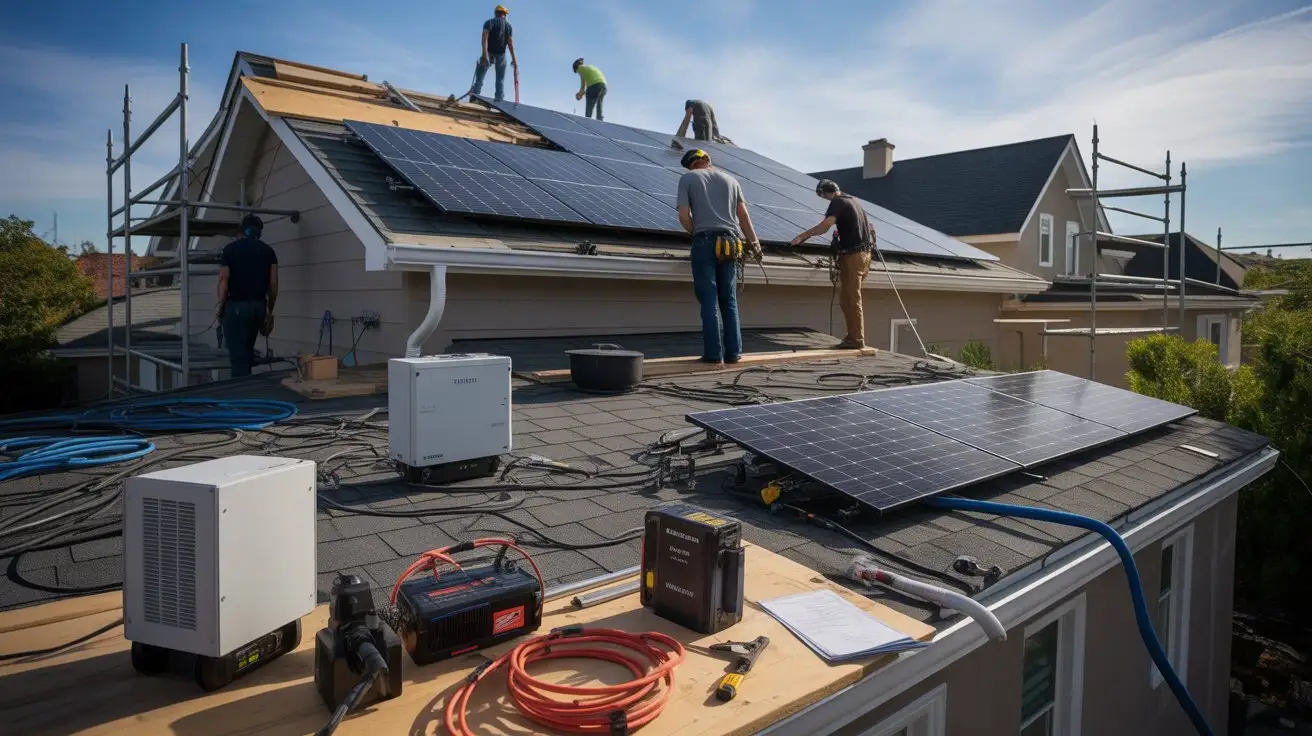
This is the area where hidden solar panel costs catch the most homeowners off guard, and it deserves the most direct treatment of any category in this discussion.
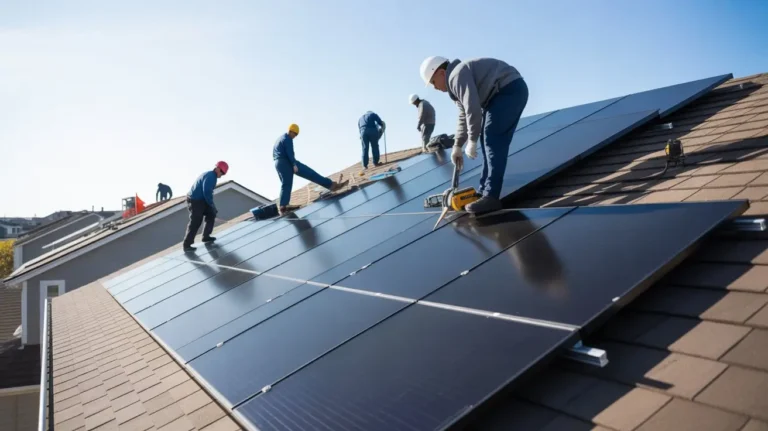
Solar panels are built to last 25 to 30 years. Roofing materials carry their own lifespan that may not align with that timeline. Mounting panels on a roof with five remaining years of life creates a real and expensive problem because removing and reinstalling an entire solar array to replace the roofing underneath it costs money that nobody accounts for when they are focused on the upfront quote.
What a Pre-Installation Roof Inspection Typically Reveals
A pre-installation roof inspection from a qualified roofing contractor typically costs $150 to $300 and is genuinely worth the expense before any solar project begins. Roofs in good condition with ten or more years of remaining life are generally ready for installation. Roofs with minor surface issues like damaged shingles or flashing problems can often be addressed with repairs in the $500 to $1,500 range. Roofs that need full replacement represent a more significant decision because the cost, which can run $8,000 to $15,000 or more depending on home size and material, needs to be evaluated alongside the solar project rather than separately from it.
Some older homes also require structural reinforcement before solar racking can be properly secured to the roof framing. This is less common than surface issues but more expensive when it occurs, ranging from $500 to $3,000 depending on the scope of work and regional labor rates.
After reviewing project cost breakdowns from homes across multiple U.S. states, what stood out to me is how consistently roof-related costs are the single largest surprise in the hidden cost category, larger than permits, larger than electrical work, and almost never discussed during initial solar conversations.
To understand how roof condition and home age affect the total cost of solar ownership, what solar panels really cost for U.S. homes covers the complete post-incentive cost breakdown, including structural considerations.
Electrical System Upgrades, Hidden Costs Inside Your Home’s Walls
Your solar system connects directly to your home’s electrical panel. If that panel does not have sufficient capacity to accommodate the solar connection safely, it needs to be upgraded before installation can proceed. Panel upgrades in the United States currently run between $1,500 and $3,500, depending on scope, location, and local labor rates.
This cost is real; it is not included in most standard solar quotes, and it comes as a genuine shock to homeowners who encounter it mid-project. This is where things get tricky because the need for a panel upgrade typically surfaces only after a site assessment, which often happens after initial pricing conversations have already shaped the homeowner’s budget expectations.
Beyond panel capacity, many states and local jurisdictions require specific wiring configurations, dedicated disconnect switches, and arc fault protection equipment that may not exist in older electrical systems. Each requirement adds material and labor cost to the project total.
When your system is ready to connect to the grid, your utility processes an interconnection application and installs a new bidirectional meter. Utilities charge for this process, and fees vary by state and company. Interconnection fees typically run $100 to $50,0 but can be higher in some utility territories.
- Electrical panel upgrades run $1,500 to $3,500 and are not included in standard solar quotes
- Dedicated disconnect switches and arc fault protection may be required by local code
- Utility interconnection fees of $100 to $500 apply at the grid connection in most states
- Wiring upgrades required by the local jurisdiction add material and labor cost beyond the base system
For a clear explanation of how the federal Investment Tax Credit applies to electrical upgrade costs and whether they qualify for the credit calculation, how the federal solar tax credit applies to your project, explains exactly what installation costs qualify.
Hidden Solar Panel Costs That Appear After Installation Is Complete
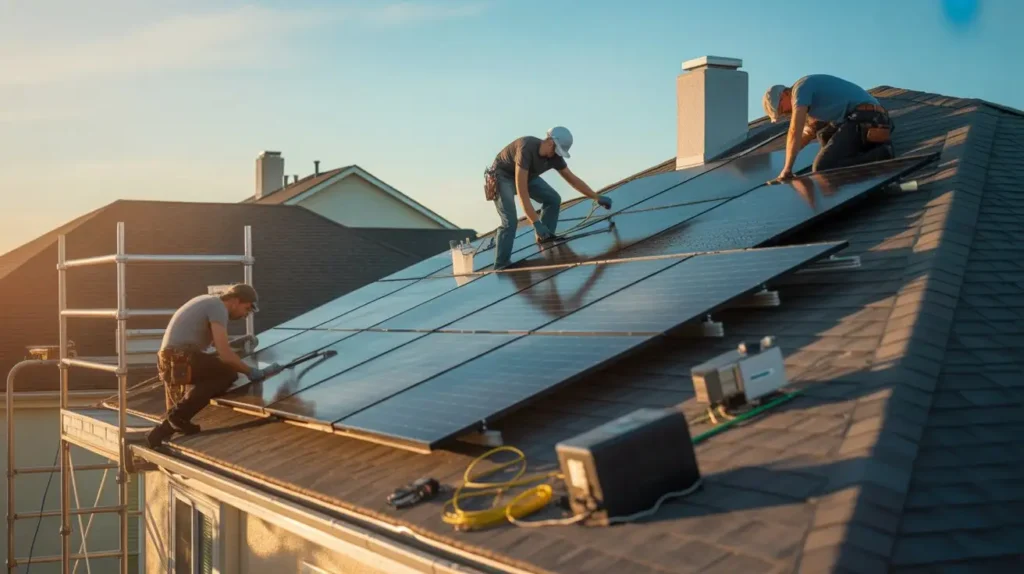
The hidden costs of solar panels do not all surface during the installation process. Several categories appear over the years of ownership and catch homeowners off guard because they were never part of any upfront conversation.
Inverter Replacement — The Most Predictable Long-Term Cost
Solar panels carry 25 year performance warranties. Inverters are typically warranted for 10 to 12 years with an expected operational life of 12 to 15 years. This means most homeowners will replace their inverter at least once during their system’s operating life. Inverter replacement currently runs between $1,000 and $2,500 for standard string inverters in residential systems. This is a known and predictable future cost that belongs in any honest long-term financial analysis.
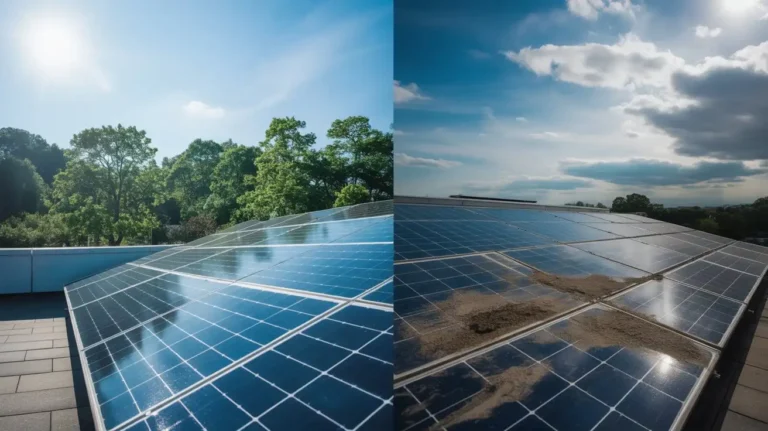
Routine panel cleaning is a smaller but real ongoing cost. Professional cleaning services run $100 to $200 per visit, and most homeowners in dusty Southwest states or high pollen Southeast and Midwest regions benefit from one to two cleanings annually. Over a 25-year system life that accumulates into a real number.
| Hidden Cost Category | Typical Cost Range | When It Occurs |
| Permits and inspections | $150 to $700 | Before and during installation |
| Roof inspection | $150 to $300 | Before installation |
| Roof repairs or replacement | $500 to $15,000 | Before installation, if needed |
| Electrical panel upgrade | $1,500 to $3,500 | During installation, if needed |
| Utility interconnection fee | $100 to $500 | Atthe grid connection |
| Inverter replacement | $1,000 to $2,500 | Years 12 to 15 typically |
| Annual cleaning | $100 to $200 per visit | Ongoing annually |
| Homeowners insurance increase | $50 to $200 annually | Ongoing after installation |
To understand how the solar payback period calculation changes when these post-installation costs are factored in, honestly, how long solar panels take to pay for themselves works through the math without optimistic assumptions.
Battery Storage, Insurance, and Utility Fees: Three Categories Worth Knowing
Battery storage is increasingly common in residential solar conversations but it is rarely included in a standard base system quote. Residential battery storage systems currently run between $8,000 and $15,000 installed, depending on storage capacity and local installation costs. The federal ITC does apply to battery storage when installed alongside solar and charged primarily by solar production, which reduces the effective cost but does not eliminate it from the budget.
Homeowners’ insurance deserves a direct mention because solar panels increase your home’s replacement value. According to the National Renewable Energy Laboratory, solar installations add measurable value to U.S. homes, which is positive for resale but does affect insurance replacement cost calculations. Annual premium increases typically run $50 to $200, depending on your insurer and coverage level. Over 25 years of system ownership that accumulates into a real cost belonging in any honest total ownership calculation.
Most U.S. utilities also charge a fixed monthly connection fee regardless of how much electricity you draw from the grid. Solar production can reduce your variable electricity charges dramatically, but the fixed connection fee, typically $10 to $25 per month, remains as a floor cost that grid-tied solar does not eliminate.
To understand how net metering credits interact with these fixed monthly charges and what your realistic minimum bill looks like after solar, whether net metering is worth it for U.S. homeowners covers the full bill picture honestly.
For a realistic picture of what monthly electricity savings look like after all costs, including these ongoing expenses, are factored in, how much U.S. homeowners save monthly on electricity covers the documented savings figures across different states.
What the Total Hidden Cost Picture Actually Looks Like
A homeowner in a straightforward situation with a structurally sound newer home, a recently replaced roof, and an adequate electrical panel might encounter hidden costs totaling $500 to $1,500 beyond the base system price. Permits, inspection fees, and interconnection charges cover most of that range.
A homeowner in a more complex situation with an older home requiring an electrical panel upgrade, roof preparation work, and a utility in a higher fee territory might encounter $4,000 to $6,000 in costs above the base quote. That is a meaningful number that changes the payback period calculation significantly and represents the difference between a budget built on accurate information and one built on the headline price alone.
- Straightforward newer homes typically encounter $500 to $1,500 in total hidden costs
- Older homes with electrical and roof needs can see $4,000 to $6,000 above base quote
- Battery storage adds $8,000 to $15,000 as a completely separate budget item
- Insurance and utility fixed fees represent ongoing annual costs across the full system life
To understand whether solar panels represent a sound financial decision for your specific home situation, once all these costs are honestly included, when solar panels are genuinely worth it in the USA covers the complete financial picture across different homeowner situations.
Final Thoughts
Accurate budgeting separates homeowners who feel good about their solar decision years later from those who feel caught off guard by costs they never saw coming. Hidden costs of solar panels do not make solar a poor financial decision for U.S. homeowners who are strong candidates for the technology, but they do make complete cost awareness more important than most initial sales conversations suggest. Permits, roof preparation, electrical upgrades, inverter replacement, cleaning, insurance adjustments, and utility connection fees all belong in any honest total cost analysis, and leaving any of them out produces a financial picture that will eventually need correcting.
I think the homeowners who build their budget around the full picture from the beginning consistently end up in a better position than those who discover these costs mid-project or after signing. Realistic expectations grounded in complete information produce better long-term outcomes than optimistic ones built on headline numbers alone. The decision to go solar is worth making carefully, with every cost category on the table rather than just the ones that appear in a standard quote.
FAQs
What are the most common hidden costs in solar installation?
You may notice fees for permits, inspections, roof repairs, and electrical upgrades often aren’t included in the initial quote. These small extras can quietly increase your overall budget.
How often should solar panels be maintained?
In my experience, cleaning panels once or twice a year and checking the inverter occasionally is usually sufficient for most U.S. homes.
Do battery systems increase hidden costs?
Yes. Batteries and inverter upgrades are typical solar maintenance hidden cost examples that many homeowners don’t anticipate at first.
Will insurance premiums change after installing solar panels?
Generally, yes. Premiums can increase by $50–$200 depending on your coverage and the size of your system.
Are there extra charges from utilities?
Occasionally. Some cities require grid connection fees or extra inspections, which may be small but noticeable over time.
How do seasonal changes affect solar system costs?
Summer cooling spikes and winter shorter daylight hours may reduce efficiency, sometimes increasing maintenance or battery needs depending on your daily usage.

Morgan Lee is a homeowner and solar energy researcher based in the United States. After installing a rooftop solar system in 2022 and spending months comparing quotes, incentives, and installer reviews, Morgan realized how confusing and overwhelming the process felt for most American families. That experience led to the creation of SolarInfoPath, a no-pressure, educational platform designed to help U.S. homeowners understand solar energy clearly and confidently. Morgan focuses on practical, research-backed information covering solar costs, installation timelines, federal tax credits, and long-term savings. All content on this site is written from a homeowner’s perspective with the goal of making solar energy simple and accessible for everyday Americans.