Who Is Eligible for Solar Incentives in the USA: The Honest Eligibility Guide Homeowners Need
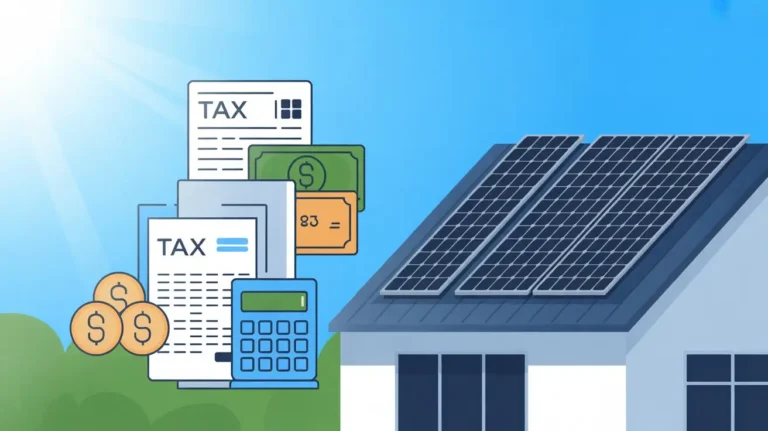
Who is eligible for solar incentives in the USA is a question that deserves a precise answer rather than vague reassurance, and most articles on this topic do not get specific enough to actually help you figure out where you stand. The federal Residential Clean Energy Credit sits at 30 percent of your total qualified system cost through 2032 under the Inflation Reduction Act, and it represents the most significant solar financial program available to American homeowners right now. But qualifying for it requires meeting specific IRS criteria that many homeowners assume they automatically meet without actually verifying.
I think the confusion happens because solar incentives get discussed as a single category when they are actually several distinct programs with different eligibility rules operating at the federal, state, and utility level simultaneously. Your ownership status, your federal tax liability, your state’s active programs, and your utility’s interconnection policies all feed into what you actually qualify for. Understanding each layer separately before building your financial plan around any specific incentive is the approach that prevents unpleasant surprises mid-project.
The IRS Federal Solar Tax Credit: What You Must Actually Meet
The federal Residential Clean Energy Credit is administered by the IRS and claimed on Form 5695 when you file your federal tax return for the year your system is placed in service. Meeting these requirements is not automatic, and each condition deserves honest attention before you count on this credit in your budget.
The Complete IRS Eligibility Checklist
According to the IRS Residential Clean Energy Credit guidelines, you must meet ALL of the following conditions to qualify:
- You must own the home where the solar system is installed — renters do not qualify under any circumstances, regardless of who pays the electricity bill
- The system must be installed on your primary residence or a secondary U.S. residence you personally own — investment properties and rental properties you own but do not occupy are excluded from the residential credit
- The system must be brand new — used equipment or previously installed systems transferred to your property do not qualify
- The installation must meet applicable fire and electrical code standards and be performed by a licensed contractor
- The system must be operational and placed in service in the same tax year you intend to claim the credit
- You must have sufficient federal income tax liability to absorb the credit in the installation year or through carry-forward to subsequent years
What the Tax Liability Condition Actually Means in Practice
This is the eligibility condition that catches the most homeowners off guard, and it deserves more explanation than most articles give it. The federal solar credit is nonrefundable, meaning it reduces your tax bill to zero but cannot generate a refund beyond what you already owed. If your qualifying credit is $7,500 but your total federal tax liability for the year is only $4,000, you apply $4,000 of the credit in year one and carry the remaining $3,500 forward to your next tax return.
The carry-forward provision means the credit is not lost if you cannot use it all immediately. Homeowners with consistently lower annual tax liability, including retirees on fixed income and part-time workers, should calculate their typical federal tax liability before installation to understand realistically how many years it will take to fully absorb the credit. That timeline affects your effective payback period in ways worth knowing upfront.
To understand exactly how the federal tax credit works and what documentation you need to file correctly, read how does the federal solar tax credit work in the USA before planning your installation timeline.
What Installation Costs the IRS Actually Allows in Your Credit Calculation
Many homeowners underestimate their qualifying credit amount because they only count the purchase price of the panel. The IRS allows a considerably broader set of installation expenses than most people realize, and getting the documentation right at filing time protects your full credit amount.
The following costs are included in your qualifying system cost for credit calculation purposes. Panels and racking hardware, inverters including microinverters, wiring and electrical components directly tied to the solar installation, installation labor from your licensed contractor, permitting and inspection fees paid as part of the project, battery storage systems installed alongside solar and designed to charge primarily from solar production, and sales tax paid on qualifying equipment all count toward your total qualifying cost.
General roof repairs and replacement work that are not structurally required specifically for the solar mounting system do not qualify. Landscaping, tree removal, and any upgrades not directly required by the installation also fall outside the qualifying cost calculation. I’ve seen homeowners in Columbus and Raleigh leave real credit dollars on the table simply because their installer did not clearly separate qualifying line items on the invoice. Asking for itemized documentation before filing is the practical step that protects your full credit amount.
To understand exactly what solar panels cost after incentives are applied across different states, how much do solar panels cost after incentives in the USA gives honest net cost figures worth reviewing before you finalize your budget.
State Level Eligibility: The One Comparison That Actually Matters for Your Planning
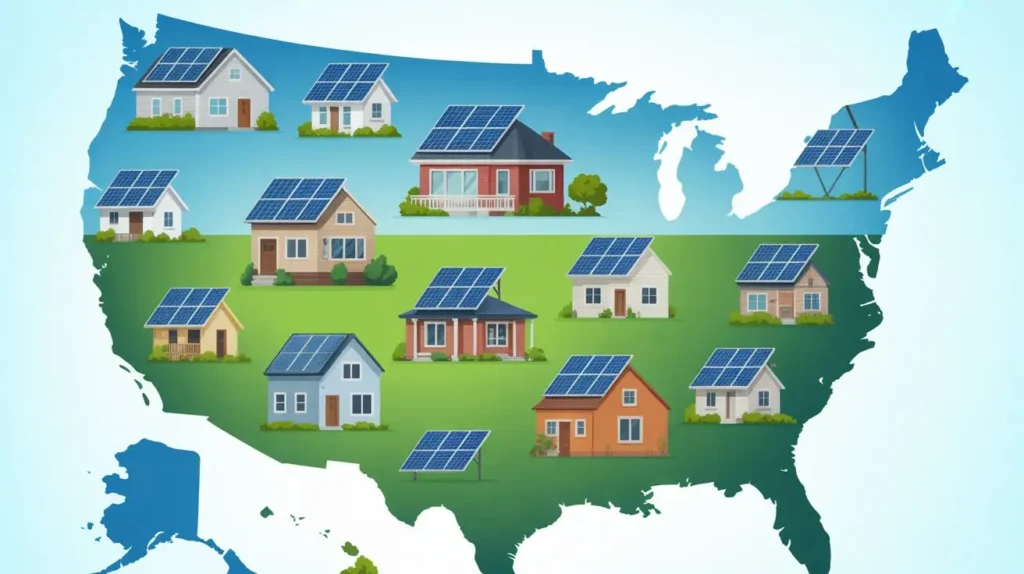
Federal eligibility is consistent nationwide, but state programs operate with their own separate rules and funding limits. This comparison shows where meaningful additional incentives exist beyond the federal baseline and what conditions apply to each.
| State | Main State Incentive | Key Eligibility Condition | Sales Tax Exempt | Property Tax Exempt | Est. Annual Savings |
| Massachusetts | SMART program 10-year payments | Utility enrollment, capacity limits apply | Yes | Yes | $1,400 to $1,900 |
| New York | NY-Sun upfront incentive | Program specs, funding availability | Yes | Yes | $1,300 to $1,800 |
| California | NEM 3.0 net metering | Post April 2023, reduced credit rates | Yes | Yes | $1,200 to $1,700 |
| New Jersey | SREC program payments | Active SREC market enrollment | Yes | Yes | $1,100 to $1,600 |
| Nevada | NV Energy net metering | Avoided cost credit rate applies | Yes | Yes | $1,150 to $1,550 |
| North Carolina | Duke Energy net metering | Avoided cost credit rate applies | Yes | Yes | $950 to $1,300 |
| Georgia | Georgia Power net metering | Avoided cost credit rate applies | Yes | Yes | $900 to $1,250 |
| Ohio | AEP and Duke net metering | Active net metering is required | Yes | Yes | $850 to $1,200 |
| Arizona | APS net metering | Active net metering is required | Yes | Yes | $1,200 to $1,600 |
| Texas | No statewide program | Utility dependent, varies by provider | Yes | Yes | $900 to $1,300 |
| Tennessee | TVA programs vary | Program availability varies by year | No specific exemption | Yes | $800 to $1,150 |
| Indiana | Net metering available | Utility-specific policy applies | Yes | Yes | $800 to $1,100 |
What surprised me when I studied this comparison carefully is how much the eligibility condition column changes the financial picture compared to the incentive name alone. Massachusetts SMART sounds excellent on paper, and it genuinely is, but capacity enrollment limits mean timing your installation around program availability matters as much as system design. California’s NEM 3.0 shift significantly changed the net metering credit rate for new systems after April 2023 in ways that older articles and calculator tools still have not caught up to.
To understand how net metering works across different U.S. states and what credit structures mean for your annual savings, is net metering worth it in the USA for homeowners covers the current policy landscape honestly.
Income-Based Solar Programs: Who They Target and What the Real Limitations Are
Income-based solar assistance programs exist at the state and utility level, but they reach a much smaller share of homeowners than general incentive programs, and their availability changes more frequently than most homeowners expect.
Low to moderate-income households, generally defined as earning at or below 80 percent of the area median income, represent the primary target for dedicated income-based programs. Massachusetts, California, New York, and Nevada have the most structured programs for this income tier. Fixed-income seniors with high electricity cost burdens relative to household income represent another group these programs frequently serve through utility-administered assistance programs.
The honest limitation worth stating clearly before you plan around any income-based program is that funding is capped annually and enrollment closes when funds are exhausted, regardless of how many eligible households remain. Programs that existed last year may have reduced capacity, changed eligibility thresholds, or closed entirely this year. Checking your state’s current program status through DSIRE, the Database of State Incentives for Renewables and Efficiency, gives you the most accurate current picture of what is actually available in your specific state.
To understand whether solar panels are worth it for your specific home situation and financial position, are solar panels worth it for homes in the USA covers the honest financial assessment across different homeowner situations.
Property Conditions That Affect Your Real World Eligibility Outcome
Your roof and property characteristics do not disqualify you from incentive programs on paper, but they affect practical installation feasibility in ways that matter for your actual financial outcome. This is an area that most eligibility discussions skip entirely, and it leads to homeowners qualifying cleanly on paper while getting a very different result in practice.
What to Verify Before Counting on Specific Incentive Savings
Roof age is the most commonly overlooked property factor. Solar panels are designed to last 25 to 30 years. If your roof has five to seven years of remaining life, mounting panels on it creates a future cost of removing and reinstalling the entire array to replace the roofing underneath. That cost does not affect your incentive eligibility, but it significantly affects your actual total ownership cost over the system’s life.
Shading is the factor that most changes production relative to incentive-based savings projections. After looking at production data from homes in Columbus, Raleigh, and Phoenix, what stood out to me is how consistently unaddressed shading reduces actual annual output below what incentive program savings estimates assumed. A system that qualifies fully for the federal ITC and state exemptions but produces 25 percent less than projected because of afternoon shade still qualifies for all incentives. It just delivers considerably less financial value than the eligibility paperwork suggested.
HOA-managed communities add a separate eligibility layer. Most U.S. states have solar access laws limiting HOA authority to prohibit installations outright, but HOAs can impose aesthetic requirements affecting system placement and design. Confirming your HOA’s current solar policy before finalizing plans prevents timeline complications that could push your installation past program enrollment deadlines, particularly relevant for Massachusetts SMART and New York NY-Sun, where capacity limits create real timing pressure.
To understand whether solar panels increase home value and how appraisers treat solar installations at resale, do solar panels increase home value covers what the research shows across different U.S. markets.
To understand what hidden costs affect your total project budget beyond the incentive-eligible line items, the hidden costs of solar panels in the USA cover every expense category that affects your real out-of-pocket number.
How Your Electricity Rate Shapes the Financial Value of Every Incentive
Your monthly electricity consumption does not determine whether you qualify for most solar incentives, but it determines significantly how much financial value those incentives actually deliver once your system is operating.
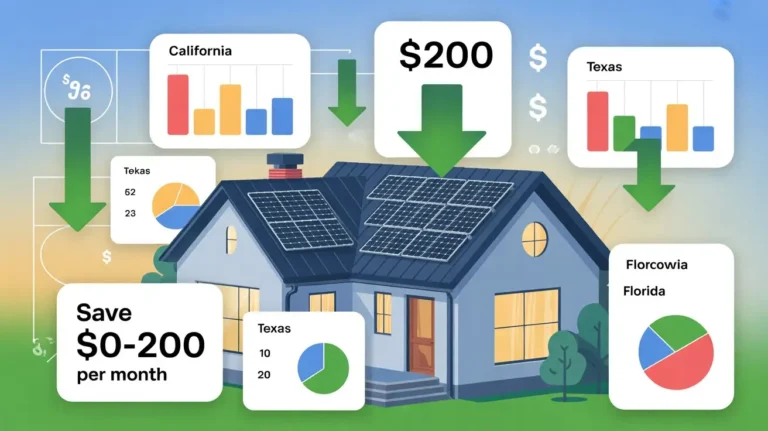
A homeowner in Boston paying $220 per month through Eversource at $0.25 per kWh gets substantially more financial value from the same federal ITC and SMART program than a homeowner in Nashville paying $95 per month at $0.11 per kWh. The incentive amounts may be similar. The electricity savings those incentives enable differ dramatically because the electricity being displaced costs very different amounts in different utility territories.
This is why comparing your neighbor’s solar outcome to your own situation only makes sense if you share the same utility, similar consumption patterns, and similar roof orientation. The incentive structure creates the financial opportunity. Your electricity rate and annual consumption determine how much of that opportunity translates into real bill reduction for your specific household over time.
For a realistic picture of what monthly electricity bill savings look like after solar across different U.S. states, how much can you save with solar panels per month in the USA covers the documented savings numbers without overpromising.
To understand how your total system cost and annual savings combine into a realistic payback timeline, what is the solar payback period in the USA covers the honest math across different states and system sizes.
Final Thoughts
Who is eligible for solar incentives in the USA comes down to a layered answer that starts with the IRS eligibility checklist for the federal credit and extends through your state’s active programs, your utility’s net metering policy, and your property’s practical installation conditions. The federal credit is the most universally accessible and financially significant piece of the picture for most qualifying homeowners. State programs add meaningful value in high incentive states but require understanding enrollment conditions, capacity limits, and program timelines that general research does not always surface.
I wouldn’t say the eligibility landscape is clear or consistent across the country because it genuinely is not uniform. Programs change, funding caps shift, and utility policies evolve in ways that make verifying your state’s current program status a practical necessity rather than an optional step. The homeowners who take the time to understand each eligibility layer clearly before committing to a timeline and budget consistently report fewer surprises and more realistic expectations than those who discover the details only after a project is already underway.
FAQs
Who is eligible for solar incentives in the USA?
In most cases, homeowners who own their property and owe federal income taxes qualify. State and utility programs may add extra requirements.
Do renters qualify for solar incentives?
Generally no. Solar incentive qualifications usually require ownership of the home, roof access, and control over the electric meter.
Are solar incentives the same in every state?
No, they vary widely. In my experience, states like California or New York offer more programs than states like Kansas or Alabama.
How does income-based solar work?
Income-based solar help targets households with limited income. You may notice funding caps or waiting lists depending on your state.
Does my roof affect homeowner eligibility rules?
Yes. Roof age, shading, and direction often affect solar program requirements, even if you meet income or ownership rules.
Can low electricity usage reduce eligibility?
It can. Lower usage sometimes makes incentives feel not worth it to utilities, especially in lower-cost electricity states.

Morgan Lee is a homeowner and solar energy researcher based in the United States. After installing a rooftop solar system in 2022 and spending months comparing quotes, incentives, and installer reviews, Morgan realized how confusing and overwhelming the process felt for most American families. That experience led to the creation of SolarInfoPath, a no-pressure, educational platform designed to help U.S. homeowners understand solar energy clearly and confidently. Morgan focuses on practical, research-backed information covering solar costs, installation timelines, federal tax credits, and long-term savings. All content on this site is written from a homeowner’s perspective with the goal of making solar energy simple and accessible for everyday Americans.