
The best solar battery backup system for home use is the one that matches your household’s actual electricity habits, backup needs, and budget, not the one with the biggest advertised number. A home battery stores electricity your solar panels generate.
It supplies that electricity later. It can provide backup during grid outages. Whether a specific battery is right for your home depends on its capacity, power output, efficiency, warranty, lifespan, and total installed cost, taken together rather than any single spec.
Homeowners use batteries with solar for two related but different reasons. One is daily energy management, shifting free daytime solar into evening use. The other is emergency backup, keeping the lights on when the grid goes down. This guide walks through both, along with the specifications and comparisons that actually matter.
What Is the Best Solar Battery Backup System for Home?
This kind of system stores solar-generated electricity and makes it available when you need it most, whether that’s after sunset or during a power outage. It sits between your solar panels and your household electrical system, managed by an inverter that decides where power flows at any given moment.
What Does a Solar Battery Backup System Do?
A solar battery backup system stores electricity generated by your panels for later use. It supplies stored electricity to your home during the evening, at night, or whenever solar production can’t meet demand. It can also provide backup during grid outages, supporting essential loads or, in some configurations, your entire household.
Solar Battery Storage vs. Battery Backup
These two functions overlap but aren’t identical. Solar battery storage refers to everyday energy management, storing excess solar during the day and using it later, even when the grid is working perfectly fine.
Battery backup specifically refers to what happens during an outage, when the grid itself goes down. A battery can do both jobs, but a system optimized purely for one doesn’t always excel equally at the other.
What Makes a Battery Suitable for Home Use?
A suitable home battery balances usable capacity, continuous power, peak power, round-trip efficiency, warranty terms, expected lifespan, scalability, solar compatibility, and backup capability.
Here’s the part most people overlook. Two batteries with identical capacity ratings can behave very differently once you factor in real-world efficiency and power output.
Best Solar Battery vs. Best Backup Battery
The battery with the largest storage capacity isn’t automatically the right choice for every backup application. A household that mainly wants to shift solar into evening use has different priorities than one preparing for multi-day outages, and the “best” battery genuinely differs between those two goals.
Best Solar Battery Storage Systems 2026: What to Compare
Comparing the best solar battery storage systems 2026 has to offer starts with a handful of core specifications rather than brand reputation alone.
Battery Capacity
Capacity gets described in a few different ways: nominal capacity, usable capacity, reserve capacity, and total available storage. Nominal capacity is the manufacturer’s rated total. Usable capacity is what you can actually draw on day-to-day, since most batteries hold back some reserve to protect their lifespan.
Power Output
Power output differs from capacity, and confusing the two can lead to real buying mistakes. kWh measures energy storage, essentially how much total electricity the battery can hold. kW measures power delivered at a given moment, essentially how much can flow out at once.
Round Trip Efficiency
Round trip efficiency accounts for charging losses, inverter conversion losses, and discharging losses. It’s calculated as energy recovered from storage divided by energy sent into storage. A battery that loses more energy at each stage delivers less real-world value per kWh of solar you generate.
Battery Lifespan
Lifespan depends on cycle life, how the battery handles daily cycling, calendar life, operating conditions, and depth of discharge. A battery cycled hard every day ages differently than one used only occasionally for backup.
Warranty and Capacity Retention
Warranty terms cover warranty years, capacity guarantees, cycle limits, and throughput limits, along with what capacity remains guaranteed at the end of that period. This is exactly where the 10-year and 15-year capacity retention questions homeowners ask come into play.
A 10-year warranty that guarantees 70 percent retained capacity tells you something concrete, while a 15-year warranty is only as good as the specific conditions and exclusions written into it.
Best Solar Battery: How to Compare Battery Performance
Best solar battery comparisons work better when they’re structured around performance categories rather than a single ranking.
Compare Usable Battery Capacity
Usable capacity matters more than the advertised total, since manufacturers often reserve a portion of total capacity to protect battery health over time.
Compare Power Output
Compare continuous output against peak output, and think specifically about whether the battery can run several demanding appliances simultaneously, not just one at a time.
Compare Round Trip Efficiency
Energy losses during charging and discharging directly affect how much of your solar generation actually becomes usable stored electricity later.
Compare Warranty Terms
Look at the actual warranty conditions, not just the number of years printed on the box. Cycle limits and throughput caps can matter more than the calendar length of coverage.
Compare Battery Chemistry
Different residential battery chemistries have different performance characteristics around safety, longevity, and thermal behavior, though this comparison should keep factual rather than turning into a ranking of specific brands.
Best Solar Battery for Home: Residential Storage Requirements
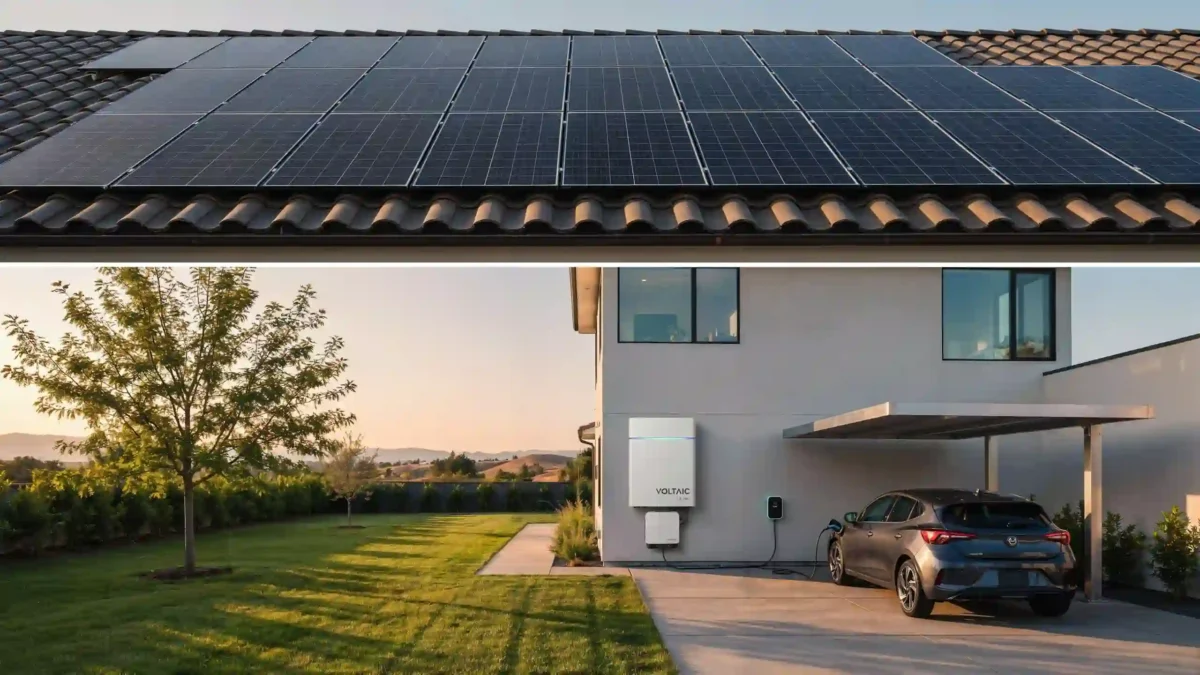
Best solar battery for home sizing starts with your household’s actual electricity consumption, not a generic industry average.
How Much Battery Capacity Does a Home Need?
Sizing depends on daily electricity consumption, critical load demand, desired backup duration, solar generation at your location, local weather patterns, and how reliable your grid has historically been.
Small Home Battery Requirements
Homes with lower daily electricity consumption generally need less usable capacity, and oversizing here mostly means paying for storage that rarely gets used.
Larger Home Battery Requirements
Larger homes with higher daily consumption, HVAC systems, and multiple major appliances typically need more usable capacity and higher power output to cover a meaningful backup window.
Essential Load vs. Whole Home Backup
Essential load backup covers a defined set of critical circuits, like refrigeration and lighting. Whole home backup covers everything, which requires substantially more capacity and power output to sustain.
Best Solar Battery Backup System for Home: Key Features to Compare
A useful comparison here comes down to a defined set of features, laid out side by side rather than judged one at a time.
| Feature | What to Examine |
| Usable capacity | Available stored energy |
| Power output | Maximum household load supported |
| Efficiency | Energy lost during storage |
| Warranty | Coverage period and conditions |
| Capacity retention | Remaining capacity over time |
| Cycle life | Expected cycling capability |
| Scalability | Ability to add units later |
| Backup capability | Outage functionality |
| Solar compatibility | Ability to integrate with existing PV |
| Cost | Total installed expense |
Usable Capacity
Advertised capacity and usable capacity can differ meaningfully, since manufacturers reserve some capacity to protect the battery’s long-term health.
Continuous and Peak Power
Power output determines which appliances can run at the same time. A battery with strong capacity but weak power output can still struggle when your AC and refrigerator both start up together.
Scalability
Many systems can be stacked into modular configurations reaching 40 kWh or more of total capacity. Expansion is generally limited by inverter capacity and local electrical installation requirements, and adding capacity beyond what your solar array can actually recharge each day has diminishing real-world value.
Best Solar Battery Storage: Daily Solar Energy vs. Backup
Best solar battery storage decisions often come down to which of these two jobs matters more to your household.
Battery Storage for Daily Solar Use
Daily solar storage captures excess daytime generation for use later the same day, reducing how much grid electricity you buy in the evening.
Battery Storage for Outages
Outage backup works differently from daily cycling, since the battery needs to hold a reserve specifically for the moment the grid goes down, rather than fully depleting every night.
Battery Storage for Nighttime Electricity
The basic flow is straightforward: daytime solar charges the battery, and that stored energy covers evening and overnight consumption once the sun goes down.
Battery Reserve Settings
Many systems let you set a reserve threshold specifically for outages, so the battery never fully drains during normal daily use and always keeps some backup capacity available.
Best Solar Battery Backup System for Home Cost
A full cost estimate includes far more than the battery’s sticker price alone.
What Is Included in Solar Battery Cost?
Total cost typically includes the battery itself, the inverter, installation labor, electrical equipment, backup panel equipment, permits, any additional battery units, and system integration work.
Battery Hardware Cost vs. Installed Cost
The advertised battery price is not necessarily the final project cost. Our average solar panel cost in the USA guide covers this same distinction on the solar side, which is a useful background if you’re pricing a combined solar and battery project.
How to Calculate Cost Per Usable kWh
Total battery system cost divided by usable battery capacity gives you cost per usable kWh, a useful comparison metric between systems, though it shouldn’t be the only factor in your decision.
What Can Increase Battery Installation Cost?
Electrical panel upgrades, a difficult or complex installation site, additional battery units, inverter replacement, and specific backup panel configurations can all add to the base cost.
If you’re weighing loan, lease, or cash options for a combined solar and battery project, our solar financing overview covers how those structures typically work.
Best Solar Panels With Battery Storage for Home
Best solar panels with battery storage for home searches usually reflect someone evaluating the entire combined system rather than either piece alone.
How Solar Panels Charge a Home Battery
The energy flow runs from solar panels, through the inverter, to household loads first, with any excess going to the battery, and finally to the grid if the battery is already full.
Solar Panels and Battery Storage Together
Excess solar that would otherwise be exported to the grid, or simply unused, gets stored instead, which is the core mechanism behind most of the everyday savings from pairing solar with storage.
Solar Battery Storage With Existing Solar Panels
Adding storage to an already installed solar system is often possible, but actual compatibility depends on your inverter. Some setups use an AC-coupled configuration with a separate battery inverter, while others use a DC-coupled configuration sharing the existing solar inverter.
Can Solar Panels Charge Batteries During a Grid Outage?
This depends entirely on the system’s architecture and backup configuration. Not every grid-tied solar system is designed to keep charging a battery once the grid goes down, so this is worth confirming for any particular system you’re considering.
Best Battery Storage for Solar: Capacity, Efficiency and Backup
Best battery storage for solar comparisons tend to focus on the same three pillars: how much it holds, how efficiently it holds it, and how well it performs during an outage.
Best Batteries for Solar Power Storage
The strongest options for solar power storage balance high round-trip efficiency with strong cycle life, since these batteries are typically charged and discharged every single day.
Battery Storage for Solar Panels
Battery storage paired specifically with solar panels needs to be sized around your actual daily solar production, not just your total roof capacity.
Matching Solar Generation With Battery Capacity
A battery shouldn’t automatically be sized to match your solar array one for one. Your consumption pattern, not your panel wattage, should really drive that sizing decision.
Daily Cycling and Solar Storage
Daily charging and discharging is normal for solar-paired storage, and it’s exactly why cycle life and throughput limits matter more here than for a battery used only occasionally.
Solar Battery Storage: How Much Capacity Does a Home Need?
Solar battery storage sizing starts with your actual consumption numbers, not an industry rule of thumb.
Calculate Average Daily Electricity Use
Pull your recent utility bills and convert monthly kWh usage into an average daily figure as your starting point.
Calculate Required Backup Hours
Required battery capacity is roughly average load multiplied by desired backup hours, though this is a simplified estimate that a real system needs to build an extra buffer around.
Critical Load Calculation
List out your refrigerator, lighting, internet equipment, HVAC, and other essential appliances to understand what actually needs to stay powered during an outage.
Why Usable Capacity Matters
Reserve settings and usable energy determine what’s actually available day-to-day, which is why usable capacity, not nominal capacity, should drive your sizing decision.
Best Solar Battery Backup: Backup Duration and Power
Best solar battery backup performance comes down to a fairly simple relationship between capacity and load.
How Long Can a Solar Battery Power a Home?
Backup duration is roughly usable battery capacity divided by average household load. A 10 kWh usable battery powering a 1 kW average load could run for roughly 10 hours, though real conditions vary.
What Uses the Most Battery Power?
Heating, cooling, water heating, electric cooking, and other large appliances draw the most power and drain a battery’s reserve fastest during an outage.
Can a Battery Provide More Than 7 Days of Backup?
Extended off-grid operation for more than seven days depends heavily on battery capacity, daily consumption, ongoing solar generation, weather conditions, and how aggressively you manage loads during that stretch. A run of cloudy days changes this calculation significantly, even with a large battery installed.
Solar Panel Battery Storage: System Compatibility
Solar panel battery storage compatibility comes down to how the battery connects into your existing or planned solar system.
AC Coupled Battery Systems
An AC-coupled battery uses its own separate inverter, connecting to your home’s AC electrical system alongside your existing solar inverter.
DC Coupled Battery Systems
A DC-coupled battery shares the solar system’s existing inverter, connecting on the DC side before that conversion happens.
Existing Solar System Compatibility
Compatibility depends on your inverter brand and specifications, your battery’s voltage and configuration requirements, and general system controls. This is genuinely equipment-specific, so a blanket compatibility claim would be misleading.
Best Battery Storage: What Specifications Matter Most?
Best battery storage decisions come down to seven specifications worth checking every time: capacity, power, efficiency, lifespan, warranty, scalability, and backup capability. Reviewing solar battery ratings against these seven categories, rather than a single headline number, is the fastest way to compare systems fairly.
Best Solar Batteries: Warranty, Lifespan and Capacity Retention
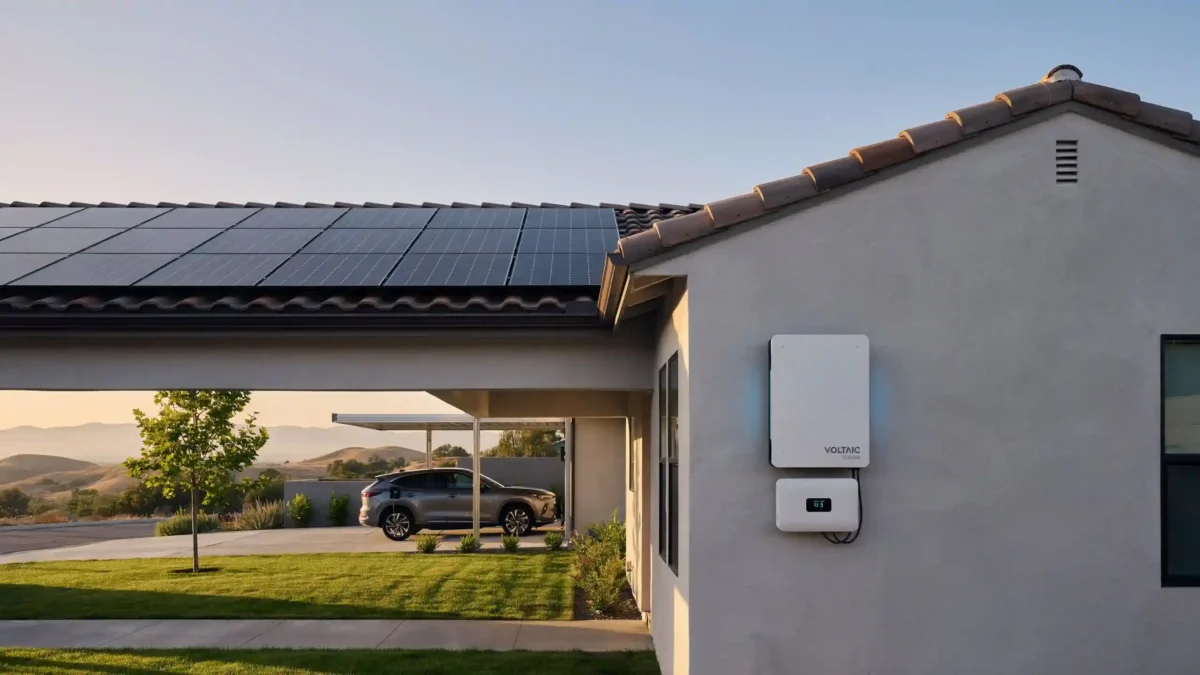
Best solar batteries hold up differently over time, and warranty documentation is usually the most reliable source for understanding how.
How Long Do Home Solar Batteries Last?
Lifespan depends on both cycle life and calendar life, meaning a battery can reach the end of its useful service either through heavy daily use or simply through age.
How Battery Capacity Declines Over Time
Capacity retention describes how a battery’s original storage capacity gradually decreases, moving from something like 100 percent down toward 90, then 80 percent over years of use. The exact curve varies by model, so check the specific manufacturer documentation rather than assuming a fixed rate.
What Does a 10 Year Capacity Warranty Mean?
A 10-year capacity warranty typically guarantees a minimum retained capacity percentage at that milestone, giving you a concrete number to compare across different manufacturers.
What Does a 15 Year Warranty Mean?
A longer, 15-year warranty should be evaluated alongside its actual conditions, not just its length. Check the stated capacity guarantee, cycle limits, throughput limits, and any exclusions tied to specific operating conditions.
Unlimited Cycles vs. Throughput Limits
Some batteries offer unlimited cycles rather than a fixed total energy throughput limit. This distinction matters most for households cycling their battery every day, since a throughput cap can effectively end useful warranty coverage earlier than the calendar term suggests.
Best Solar Battery System for Home: How to Evaluate a Complete System
A best solar battery system for home evaluation has to look at the battery alongside the rest of the system, not in isolation.
Battery Plus Inverter
The battery can’t really be judged independently from its inverter in many systems, since the inverter governs power flow, conversion efficiency, and backup switching behavior.
Battery Plus Solar Panels
The complete energy system depends on how well the battery’s capacity and charging behavior line up with your actual solar production.
Battery Plus Backup Loads
Whole home versus critical load backup changes what capacity and power output you actually need from the complete system.
Battery Plus Grid
Under normal grid-connected operation, the battery, solar panels, and grid work together continuously, with the battery only taking over fully once the grid goes down.
Best Solar Battery Backup System for Home: How to Choose One
Choosing the right one works best as a defined nine-step process.
Step 1: Determine household electricity consumption. Use recent utility bills to establish your average daily usage.
Step 2: Identify critical loads. List the specific circuits or appliances you actually need powered during an outage.
Step 3: Determine desired backup duration. Decide between several hours, an overnight period, or multiple days of coverage.
Step 4: Calculate usable battery capacity. Multiply your average load by your desired backup hours as a starting estimate.
Step 5: Check power requirements. Confirm the battery’s continuous and peak output can actually handle your critical appliances running together.
Step 6: Compare efficiency. Review round-trip efficiency across the systems you’re considering.
Step 7: Review warranty and capacity retention. Check the actual warranty document, not just marketing claims.
Step 8: Calculate total cost. Include installation and electrical work alongside the battery’s own price.
Step 9: Check expansion and solar compatibility. Confirm whether additional battery units can be added later and how the system integrates with your solar setup.
Decision checkpoint: if your desired backup covers only a handful of essential circuits for a few hours, a smaller and less expensive battery may fully meet your needs. Multi-day or whole home coverage is a substantially different, more expensive calculation.
Best Solar Battery Backup System for Home: Common Mistakes to Avoid
Avoiding a few predictable mistakes does more for this decision than chasing the single highest capacity number available.
Choosing Based Only on Battery Capacity
A larger kWh figure isn’t automatically the right choice if the battery’s power output, warranty, or efficiency don’t hold up alongside it.
Ignoring Power Output
A battery can have substantial capacity but still lack the instantaneous power needed to run several demanding appliances at once.
Comparing Nominal Instead of Usable Capacity
Nominal capacity numbers look better on paper, but usable capacity is what actually matters for day-to-day and backup performance.
Ignoring Warranty Conditions
Check cycle limits, throughput limits, capacity retention guarantees, and exclusions, not just the number of years printed on the warranty.
Ignoring Installation Costs
Hardware price is not the complete system cost. Installation, electrical work, and any needed upgrades can add substantially to the final number.
Installing More Storage Than the Solar System Can Recharge
A large battery that your solar array can’t fully recharge each day never delivers its full potential value, especially during extended cloudy stretches.
Best Solar Battery Backup System for Home: Final Buying Checklist
Before finalizing your purchase, confirm each of these:
- Usable capacity identified
- Continuous power checked
- Peak power checked
- Round-trip efficiency checked
- Warranty reviewed in full, not just the summary
- Capacity retention reviewed
- Cycle and throughput limits checked
- Solar compatibility verified
- Backup configuration understood
- Expansion capability checked
- Total installed cost calculated
- Required backup duration estimated
For households evaluating storage at a scale beyond a typical home, our commercial solar panel installation cost guide covers how these same considerations apply once a project moves past residential scale.
If a project is closer to utility scale entirely, our utility-scale solar guide to cost and land rules explains how land and construction economics work at that size.
Adding a battery also changes your overall project economics. Our solar payback period guide is worth reviewing to see how storage shifts the timeline for recovering your investment.
Bringing the Comparison Back to Your Home
There is never a single named product sitting at the top of a ranked list. The right pick is whichever system’s capacity, power, efficiency, warranty, and cost actually match how your household uses electricity and what kind of backup coverage you actually need.
Start with your own consumption numbers and your specific backup priorities before comparing any individual battery model. That order keeps the comparison honest, and it keeps you from paying for capacity or features your home will never actually use.
Frequently Asked Questions
What’s the best backup battery setup for a home?
It’s whichever system’s usable capacity, power output, efficiency, warranty, and cost line up with your household’s actual electricity habits and backup goals, rather than any single standout specification.
What is the best solar battery for home?
The right choice depends on whether you’re prioritizing daily solar energy shifting, backup power, or both, since each priority favors slightly different specifications.
How much does a solar battery backup system cost?
Total cost includes the battery hardware, inverter, installation, electrical work, and permits, and it varies significantly based on capacity and backup configuration.
What is the best battery storage for solar?
The strongest options balance high round-trip efficiency with solid cycle life, since a solar-paired battery typically charges and discharges every single day.
How much solar battery storage does a home need?
Sizing depends on your average daily electricity consumption, your critical loads, and your desired backup duration, which varies from household to household.
How long does a home solar battery last?
Most home batteries are built for many years of daily cycling, with actual lifespan depending on cycle life, calendar life, and how the battery is used and maintained over time.
This article by SolarInfoPath (2026 research framework) is part of a comprehensive solar knowledge architecture covering all major high-value sectors including legal disputes (installation negligence, contracts, liability, fraud, lawsuits, liens, HOA and permitting disputes), financial structures (loans, PPA/lease agreements, DSCR financing, tax equity, investment and project finance), tax law (ITC, Section 48/25D, MACRS depreciation, bonus credits, IRS audits, recapture rules, domestic content and IRA/OBBBA compliance), insurance and risk (property damage, hail/wind/fire claims, bad faith insurance disputes, warranty coverage), policy and regulation (net metering, FERC interconnection, state utility rules, incentive programs and regulatory changes), commercial and utility-scale development (EPC contracts, construction delays, performance bonds, receivership, bankruptcy, asset sale and restructuring), real estate impacts (home value, solar leases, liens, title issues, HOA restrictions, easements), and emerging market structures such as battery storage, community solar, agrivoltaics, SRECs, yieldcos, and institutional investment funds. All content is based on publicly available regulatory, financial, and legal sources and is intended strictly for educational and informational purposes, not legal, tax, or financial advice. Readers should always verify current laws, utility policies, tax regulations, and contract terms with qualified licensed professionals before making decisions, as solar regulations, incentives, and financial structures frequently change across jurisdictions and time.

Solar Legal Analyst· Policy Researcher· Investigative Finance Writer Lead Analyst & Founder of SolarInfoPath
Morgan Lee is a solar legal analyst, policy researcher, and investigative finance writer with 12+ years of experience in U.S. renewable energy law, IRS tax credit compliance, and solar litigation. He is the founder of SolarInfoPath, a research-driven platform focused on primary-source analysis of solar contracts, tax law, regulatory policy, and industry disputes affecting homeowners and commercial developers.
His work is grounded in original legal and regulatory sources, including IRS notices, FERC and CPUC rulings, state court filings, PACER records, and UCC lien databases. He specializes in solar contract disputes, injury and workers’ compensation claims, PACE financing issues, tax equity structures, ITC recapture rules, MACRS depreciation, and federal and state solar policy frameworks.
Morgan’s analysis spans solar litigation, finance structures, and regulatory developments such as the IRA and OBBBA, interconnection reform, domestic content rules, and battery storage incentives. He also covers EPC contracts, PPAs, project financing, and utility-scale solar investment structures.