
Utility-scale solar refers to large photovoltaic or concentrating solar power installations, typically 1 megawatt (MW) or larger, that feed electricity directly into the transmission grid under wholesale power contracts.
These projects serve entire communities, not individual homes, and operate under fundamentally different economics, permitting frameworks, and financing structures than residential or community solar.
Most people who search “what is utility-scale solar” are trying to understand something they’ve heard about in the news, a large solar farm approved in their county, a corporate renewable energy announcement, or a utility bill insert mentioning a new clean energy source.
The concept itself isn’t complicated, but the details that matter- how these projects actually get financed, what they cost, and why interconnection backlogs are stalling hundreds of them right now- rarely appear in the basic explainer articles that rank for this topic.
Utility-scale solar now represents the dominant form of new electricity generation capacity added to the U.S. grid. In 2025, utility-scale solar accounted for more new generating capacity than any other source, including natural gas, according to U.S. Energy Information Administration annual data.
That shift has happened faster than most analysts projected even five years ago, driven by declining component costs, corporate clean energy purchasing commitments, and state renewable portfolio standards that create guaranteed demand.
Understanding how these projects work also helps homeowners and ratepayers understand what’s changing on the grid, and how those changes affect electricity prices, reliability, and the value of their own potential rooftop solar investment.
What Is Utility-Scale Solar? (Definition for Beginners)
Utility-scale solar is solar power generation at a scale large enough to supply electricity to the grid for distribution to multiple customers, rather than powering a single home or business.
The minimum threshold most commonly used in U.S. energy markets is 1 MW of AC capacity, though some market definitions set the bar at 5 MW or higher depending on the Regional Transmission Organization (RTO) or state regulatory context.
Ground truth on size definitions: The 1 MW threshold is not a universal legal standard. FERC, the EIA, and individual state utility commissions each use slightly different capacity thresholds when classifying solar projects for regulatory and reporting purposes.
A 900 kW project might qualify as utility-scale under one state’s renewable portfolio standard but fall into a “large commercial” category under a different regulatory framework. This definitional variation matters when you’re reading project announcements or market reports; the numbers aren’t always comparable across sources.
Utility-Scale Solar for Dummies: The Simple Explanation
Think of utility-scale solar the way you think of a coal or natural gas power plant: it’s a large electricity-generating facility that connects to the high-voltage transmission grid and sells power wholesale to utilities, grid operators, or large corporate buyers. The primary technical difference is the fuel source: sunlight instead of combustion.
A single utility-scale solar project might cover 1,000 to 3,000 acres and contain 200,000 to 600,000 individual solar panels. The electricity those panels produce flows through inverters that convert DC to AC, then through transformers that step up the voltage for transmission, then through substations that connect the project to the regional grid. From there, it’s indistinguishable from any other electricity source on your utility’s system.
What you, as a homeowner or ratepayer, experience on the other end is power that may be cleaner, potentially cheaper over time, and less exposed to fuel price volatility than generation from fossil fuels.
How Utility-Scale Solar Differs from Residential and Community Solar
Three characteristics separate utility-scale solar from rooftop or community solar in ways that matter practically:
- Scale: Utility-scale projects range from 1 MW to 5,000+ MW (the largest in the U.S. is the Blythe Solar Power Project in California, a multi-gigawatt facility). A typical residential system is 7 to 12 kW, roughly 100 to 700 times smaller than even a small utility-scale project.
- Who buys the power: Utility-scale solar sells electricity at wholesale prices into the grid. Residential solar offsets retail electricity. That distinction drives completely different economics.
- Permitting and oversight: Utility-scale projects face federal FERC jurisdiction for interconnection, state utility commission approval for larger projects, environmental review under NEPA or state equivalents, and county-level land use and zoning approvals. A residential system needs a local building permit and a utility interconnection agreement.
If you’re evaluating whether a solar farm investment makes financial sense compared to rooftop solar, those structural differences are the core of the analysis.
Minimum Size Thresholds Explained (1 MW, 5 MW, 20 MW+ Standards)
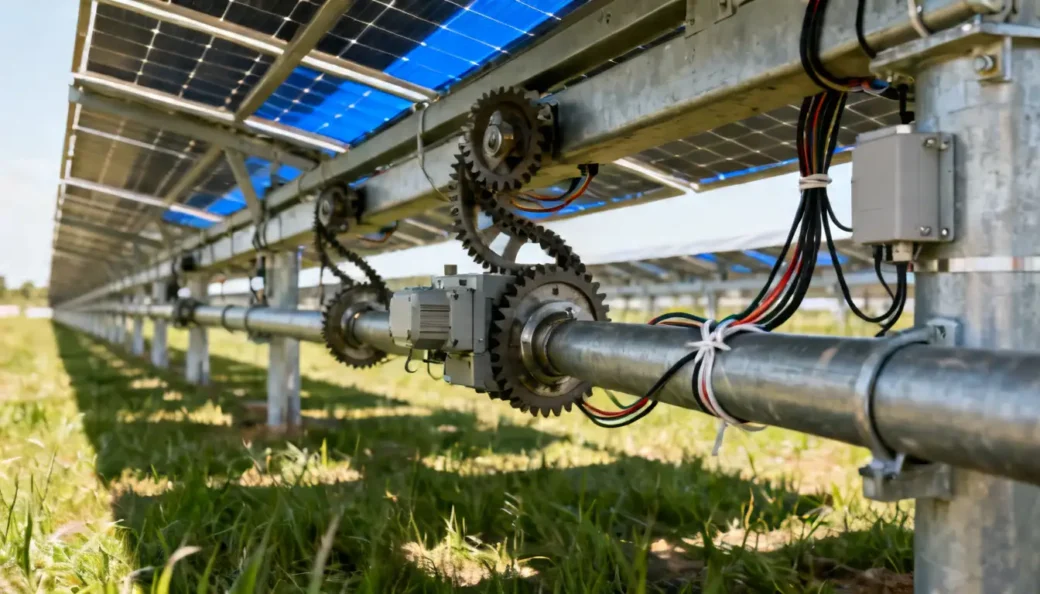
The 1 MW threshold is the most common baseline for “utility-scale” in EIA reporting and most state RPS definitions. Projects above 5 MW typically require a more involved FERC interconnection study process. Projects above 20 MW generally trigger full environmental impact assessments and often require transmission system upgrades at the developer’s expense.
For context: 1 MW of solar capacity produces approximately 1,400 to 2,000 MWh of electricity annually, depending on location, enough to power roughly 130 to 185 average U.S. homes. A 100 MW project, which is a mid-sized utility-scale installation by current standards, powers the equivalent of 13,000 to 18,500 homes.
How Utility-Scale Solar Works
Utility-scale solar converts sunlight to grid-ready electricity through a multi-stage process involving solar panels, inverters, transformers, and transmission infrastructure — then delivers that power wholesale to grid operators who distribute it across the regional network.
What most explanations skip: the role of SCADA systems in making utility-scale solar “dispatchable” in modern grid management. Supervisory Control and Data Acquisition (SCADA) platforms monitor and control every inverter, tracker, and substation component in real time. Grid operators can remotely curtail or adjust a solar farm’s output within seconds, a capability that makes utility-scale solar far more grid-manageable than its intermittency reputation suggests.
From Sunlight to Grid: The Basic Energy Conversion Process
The conversion sequence works in four steps:
- Photovoltaic cells in each panel absorb photons from sunlight, releasing electrons and generating direct current (DC) electricity at low voltage
- String or central inverters convert that DC output to alternating current (AC) at the voltage required for on-site distribution
- Transformers step up the AC voltage from the inverter output (typically 480V to 34.5 kV at the collector level) to transmission-level voltage (69 kV to 500+ kV depending on the grid connection point)
- Substations connect the project to the regional transmission network managed by the RTO or ISO serving that area
The entire process from photon to grid takes milliseconds. The challenge is that sunlight isn’t constant; production varies by time of day, season, and cloud cover, which is why Battery Energy Storage Systems (BESS) are increasingly paired with utility-scale solar projects to store excess midday production for dispatch during evening peak demand periods.
Key Components (Panels, Inverters, Substations, Trackers)
A utility-scale solar project involves several major component categories, each with distinct cost and performance profiles:
- Solar PV modules: Monocrystalline silicon panels dominate new utility-scale installations, typically at 20 to 23% efficiency. Module costs have declined from over $1.00/W in 2012 to under $0.25/W for utility procurement in 2025.
- Single-axis solar trackers: The large majority of new U.S. utility-scale projects use single-axis tracking systems that rotate panels to follow the sun’s east-to-west path, improving energy yield by 15 to 25% compared to fixed-tilt installations.
- Central and string inverters: Central inverters (500 kW to 5 MW units) are common in older utility-scale projects. Newer projects increasingly use string inverters with module-level monitoring for improved reliability and performance data.
- Battery Energy Storage Systems (BESS): Lithium iron phosphate (LFP) battery systems co-located with solar farms allow projects to shift midday excess production to evening hours, improving capacity value and revenue under time-of-use wholesale pricing.
- Substations: The high-voltage interconnection substation is often the most expensive single component the developer builds, and the one most likely to require negotiation with the utility over cost-sharing.
Types of Utility-Scale Solar Technology
Three primary technology categories serve the utility-scale market in 2026, each with distinct applications, costs, and performance profiles.
An underappreciated distinction: Most media coverage of utility-scale solar treats all large solar installations as equivalent. They’re not. A solar PV farm, a concentrating solar power plant, and a floating agrivoltaic installation have different capital costs, different capacity factors, different land requirements, and different grid services capabilities. Understanding those differences helps you evaluate what’s actually being built, and why.
Solar Photovoltaic (PV) Power Plants
Solar PV technology dominates new utility-scale construction globally and in the U.S., representing over 95% of new utility-scale solar capacity additions in 2024 and 2025. PV plants use silicon-based photovoltaic cells, the same fundamental technology as residential panels, scaled up by orders of magnitude.
The Levelized Cost of Energy (LCOE) for new utility-scale solar PV reached $29 to $42 per MWh in the U.S. in 2025, according to Lazard’s annual LCOE analysis, below the operating cost of most existing coal plants and competitive with natural gas combined cycle plants in most regions. That cost parity with conventional generation is what’s driving the rapid adoption.
What the LCOE comparison doesn’t fully capture is the capacity value question. A solar PV plant produces power only when the sun shines, which doesn’t always align with peak grid demand. That intermittency is the legitimate operational challenge that grid operators manage through transmission planning, demand response programs, and increasingly, paired battery storage.
Concentrated Solar Power (CSP) Plants
Concentrating solar power (CSP) uses large arrays of mirrors, either parabolic troughs or heliostats focused on a central tower, to concentrate sunlight and generate heat, which drives a conventional steam turbine. The critical difference from PV: CSP can incorporate thermal energy storage using molten salt, allowing electricity generation to continue for 4 to 12 hours after sunset.
That built-in storage capability gives CSP plants a capacity factor and dispatchability profile that PV without batteries can’t match. The Crescent Dunes project in Nevada and the Ivanpah Solar Electric Generating System in California are the two largest operational CSP installations in the U.S., though both have faced performance challenges relative to initial projections.
CSP is significantly more expensive per MWh than PV, current LCOE estimates run $90 to $175/MWh for new CSP with storage, compared to $29 to $42/MWh for PV. That cost gap has prevented CSP from competing on price against PV-plus-battery configurations in recent procurement cycles. New CSP development in the U.S. has slowed considerably as a result.
Emerging Formats: Floating Solar and Agrivoltaics
Two emerging utility-scale formats are gaining commercial traction, and both deserve more attention than they typically receive in mainstream solar coverage.
Floating solar (floatovoltaics) installs solar panels on pontoon systems over reservoirs, lakes, or water treatment ponds. Benefits include reduced water evaporation (particularly valuable in drought-prone western states), cooler operating temperatures that improve panel efficiency by 5 to 8%, and use of otherwise unproductive water surface area.
The Healdsburg floating solar project in Sonoma County, California, is among the largest U.S. installations and has demonstrated meaningful performance advantages over adjacent land-based systems.
Agrivoltaics co-locates solar panels and agricultural production on the same land parcel, either by raising panels high enough to graze sheep or grow shade-tolerant crops underneath, or by spacing rows wider to allow row crop cultivation between tracker banks.
Research from Oregon State University and the University of Arizona has documented yield improvements for certain crops (lettuce, spinach, jalapeño peppers) under partial solar shading in hot, arid climates. For landowners and counties concerned about agricultural land conversion, agrivoltaic development offers a middle path worth understanding.
The Role of Power Purchase Agreements
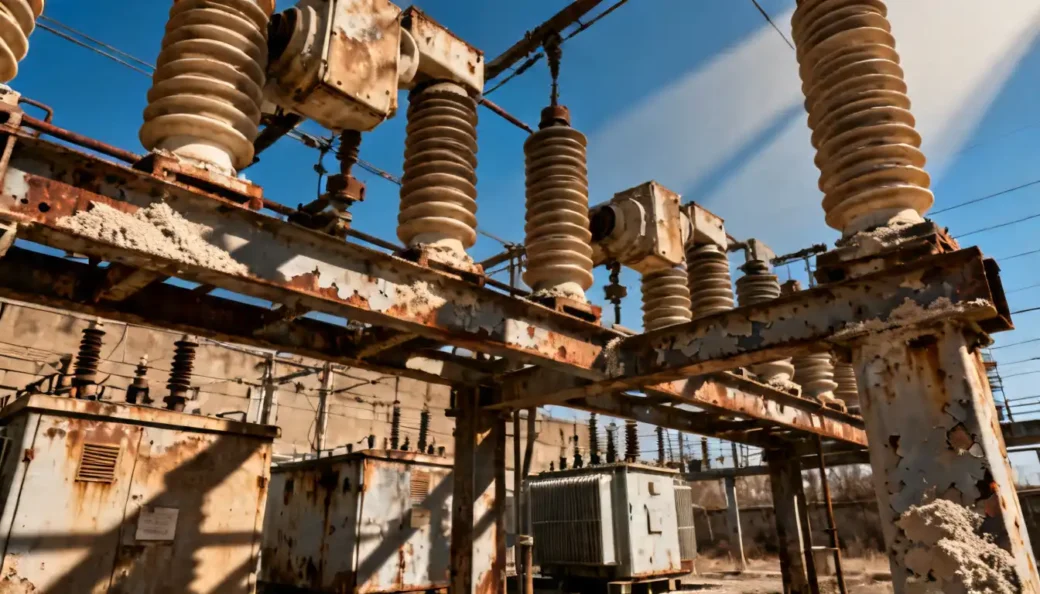
Power Purchase Agreements (PPAs) are the primary financing and revenue mechanism for utility-scale solar in the U.S., and understanding how they work explains why these projects get built at all. A PPA is a long-term contract (typically 10 to 25 years) under which the solar developer agrees to sell electricity to a buyer (the “off-taker”) at a fixed or escalating price per MWh.
The part of PPA discussions most analysts skip: the distinction between a PPA and a contract for differences (CfD), which matters in deregulated markets. In a traditional PPA, the off-taker buys actual electrons from the generator.
In a Virtual PPA (VPPA), no electrons change hands; the off-taker pays or receives the difference between the agreed strike price and the actual wholesale market price. VPPAs allow corporate buyers in deregulated markets to support renewable development anywhere in the grid, not just where they operate facilities.
Traditional vs. Virtual PPAs
Traditional PPAs require the off-taker to be a utility or large load customer in the same electrical region as the solar project. The contract commits the off-taker to purchasing actual power output at the agreed rate, typically with a small annual escalator of 1 to 2%.
Virtual PPAs, increasingly common in corporate renewable procurement, they work as financial contracts that settle against the project’s wholesale market node price. A corporation in New York can sign a VPPA with a solar farm in Texas under ERCOT.
If wholesale power prices at that node exceed the PPA strike price, the developer pays the corporation the difference. If prices fall below the strike price, the corporation pays the developer. The net effect is that the corporation receives a fixed effective electricity price for its renewable energy claim, regardless of where it physically operates.
This structure has enabled a massive surge in corporate renewable procurement, Microsoft, Google, Amazon, and Meta have collectively contracted for tens of gigawatts of utility-scale solar through VPPAs since 2020.
Regulated vs. Deregulated Market Structures
Whether a utility-scale solar project sells power through a traditional utility PPA or a competitive market VPPA depends heavily on whether the project is located in a regulated or deregulated electricity market.
In regulated states, where a single vertically integrated utility owns generation, transmission, and distribution, utility-scale solar typically sells power through long-term bilateral PPAs with the state-regulated utility, approved by the state Public Utilities Commission. Florida, Georgia, and the Carolinas operate primarily in regulated market structures.
In deregulated states, where generation is separated from transmission and distribution and power trades competitively, utility-scale solar sells into wholesale markets operated by RTOs like PJM, MISO, ERCOT, or ISO-NE. Projects in these markets can sell to multiple off-takers through competitive auction processes, VPPAs with corporate buyers, and capacity market contracts.
The regulatory structure affects project economics, financing terms, and risk allocation in ways that aren’t visible to most observers, but that directly determine which projects get built and where.
Utility-Scale Solar Costs and Economics
Projections vs. Reality: Utility-Scale Solar Economics (2026)
| Cost Factor | Common Industry Claim | SolarInfoPath Investigative Data |
| Utility-scale LCOE | “$25–$35/MWh” | $29–$42/MWh for PV; $90–$175/MWh for CSP with storage |
| Total CAPEX per MW | “$800,000–$1.0M/MW” | $900,000–$1.3M/MW including interconnection costs |
| Interconnection cost share | “Modest grid upgrade costs” | Grid upgrade costs of $50,000–$500,000+/MW common in congested regions |
| Construction timeline | “12–18 months” | 18–36 months typical when including permitting and interconnection queue |
| Land requirement | “5–10 acres/MW” | 7–12 acres/MW for fixed tilt; 10–15 acres/MW with trackers and setbacks |
| Capacity factor | “25–30%” | 22–32% depending on location and tracking; CSP with storage 40–50% |
| OPEX per year | “$10–$15/MWkW” | $12–$20/MW depending on vegetation management and tracker maintenance |
Capital Costs (CAPEX) Breakdown
Total capital expenditure for a utility-scale solar PV project in the U.S. in 2026 typically falls between $900,000 and $1.3 million per MW of DC capacity, depending on location, system design, and interconnection requirements.
That range reflects significant variation in soft costs, permitting, legal, environmental review, and interconnection studies, which can add $50,000 to $300,000 per MW above the hardware and construction costs.
Module and tracker costs have declined dramatically over the past decade and now represent roughly 35 to 45% of total project CAPEX. Inverters, electrical balance-of-system, and structural components account for another 20 to 25%. The remainder is development costs, interconnection infrastructure, and owner’s costs including financing.
Interconnection costs are the most variable and often the most underestimated component. A project in a congested transmission region, like the mid-Atlantic under PJM jurisdiction or parts of CAISO in California, may face required transmission upgrades costing $100,000 to $500,000 per MW or more, allocated to the developer’s account under FERC’s cost allocation rules.
Operational Costs (OPEX) Considerations
Annual operating costs for utility-scale solar PV run approximately $12 to $20 per kilowatt per year for well-managed projects, covering O&M services, inverter maintenance, vegetation management, security, insurance, and land lease payments.
Vegetation management is often underestimated in project pro formas. A 500-acre solar site requires consistent ground cover management to prevent shading and maintain stormwater compliance, costs that vary significantly by region, soil type, and local precipitation patterns. Projects in the Southeast, where warm wet conditions drive rapid plant growth, consistently spend more on vegetation management than projects in the arid Southwest.
Land lease payments represent a fixed OPEX commitment that doesn’t scale with electricity prices, typically $500 to $1,500 per acre per year depending on local agricultural land values, project size, and negotiating leverage.
Levelized Cost of Energy (LCOE) Trends
LCOE represents the average per-MWh cost of building and operating a power plant over its lifetime, expressed in today’s dollars. It’s the standard metric for comparing different generation technologies on an apples-to-apples basis.
Here’s how LCOE is calculated from first principles:
LCOE = (Total Lifetime Costs) ÷ (Total Lifetime Energy Production)
For a 100 MW solar PV plant:
- Total CAPEX: $110 million (at $1.1M/MW)
- Annual OPEX: $1.6 million (at $16/kW/yr)
- 25-year lifetime OPEX: $40 million
- Total lifetime costs: $150 million
- Lifetime energy production: 100 MW × 25 years × 8,760 hours/yr × 25% capacity factor = 5.475 million MWh
- LCOE = $150M ÷ 5.475M MWh = approximately $27/MWh
That calculation assumes no financing costs. With typical project financing (70% debt at 5.5% interest, 30% equity), the effective all-in LCOE rises to $35 to $45/MWh. This is the number that determines whether a PPA at a given price is financially viable, and it’s why seemingly small changes in interest rates or interconnection costs can make or break a project’s financial close.
Benefits of Utility-Scale Solar
Economic and Job Creation Impact
Utility-scale solar projects generate meaningful economic activity during construction, typically 4 to 10 full-time jobs per MW during the 12 to 24-month construction phase. Permanent operations and maintenance jobs are fewer: roughly 0.5 to 1.5 full-time positions per 10 MW of capacity. Property tax and land lease payments to host counties and landowners represent the most durable local economic benefit.
A 200 MW project in a rural Texas or Georgia county can generate $500,000 to $2 million per year in local property tax revenue, depending on state-specific assessment rules and negotiated payment-in-lieu-of-taxes (PILOT) agreements. For rural counties with limited tax bases, those revenues meaningfully fund schools, roads, and emergency services.
Environmental and Emissions Benefits
A 100 MW utility-scale solar project in a moderate-sun-hour state produces approximately 180,000 to 250,000 MWh annually, displacing carbon emissions at a rate determined by the grid’s current fuel mix.
Using the EPA’s average U.S. grid emission factor of 0.386 kg CO₂ per kWh, that project avoids roughly 70,000 to 97,000 metric tons of CO₂ per year — equivalent to removing 15,000 to 21,000 passenger vehicles from the road annually.
Solar PV panels have a lifecycle carbon intensity of approximately 20 to 50 grams of CO₂ equivalent per kWh, compared to 820 g CO₂-eq/kWh for coal and 490 g CO₂-eq/kWh for natural gas, according to IPCC lifecycle assessment data.
The energy payback period, the time it takes a panel to produce as much energy as went into manufacturing it, is typically 1 to 4 years depending on location and manufacturing process, well within the 25 to 30-year operational lifespan.
Grid Reliability and Energy Security
Utility-scale solar contributes to grid reliability in ways that weren’t well understood a decade ago. Large solar farms equipped with advanced inverters can provide grid support services including reactive power compensation, frequency response, and voltage regulation, services previously provided only by conventional rotating generators.
The U.S. Department of Energy’s Solar Futures Study, published in 2021 and updated through subsequent annual tracking, projected that solar could provide 40% of U.S. electricity by 2035 while maintaining or improving grid reliability, contingent on transmission expansion, storage deployment, and demand flexibility. That projection is tracking ahead of schedule in some regions.
For homeowners, the practical implication is that utility-scale solar increasingly determines the carbon content of the grid electricity you consume, and the incremental value of rooftop solar relative to grid power. Understanding how your solar warranty interacts with your utility’s grid supply is relevant context for evaluating your own energy decisions as the grid decarbonizes.
The Development Process and Timeline
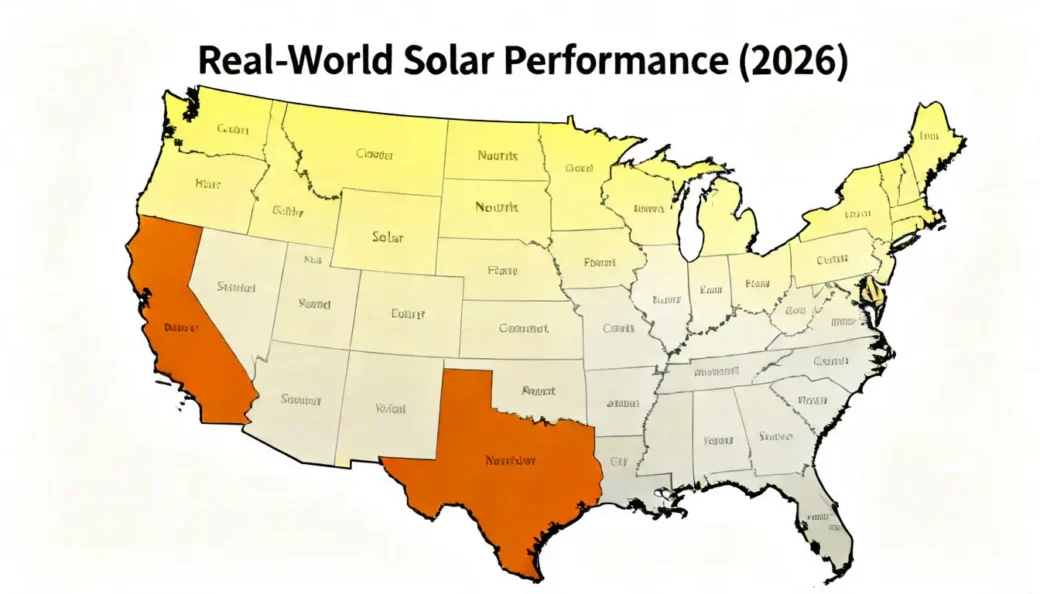
A 100 MW utility-scale solar project takes 3 to 6 years from initial site identification to commercial operation in most U.S. markets, a timeline that surprises many people who assume large construction projects move faster than residential permitting. The bottleneck isn’t construction; it’s the development and interconnection queue process that precedes it.
What experienced developers know that press releases don’t mention: FERC’s interconnection queue reform, finalized in 2023 (Order 2023), requires all new projects to post study deposits and progress through cluster studies before receiving interconnection agreements.
As of early 2026, the combined interconnection queue across all U.S. RTOs exceeds 2,600 GW of proposed projects, roughly three times current total U.S. generating capacity. Most queued projects never reach commercial operation. The ones that do typically wait 3 to 5 years for an interconnection study cycle to complete.
Site Selection and Permitting
Site selection for utility-scale solar involves evaluating solar resource quality, land availability and cost, proximity to transmission infrastructure, soil characteristics, and the regulatory environment at the county level. Projects in counties with established solar ordinances, defined setback requirements, landscaping standards, and decommissioning bond rules move through permitting more predictably than projects in jurisdictions adopting solar zoning rules for the first time.
Environmental review adds another layer. Projects above certain acreage thresholds trigger NEPA review, either a categorical exclusion, environmental assessment, or full environmental impact statement depending on federal land involvement and biological resource concerns.
Projects near raptor habitat, migratory bird flyways, or jurisdictional wetlands face extended review timelines and potential mitigation requirements.
Financing and Construction
Utility-scale solar projects are typically financed through project finance structures, non-recourse debt secured against the project’s PPA revenue stream, combined with tax equity investment from large financial institutions that can monetize the federal Investment Tax Credit (currently 30% under the Inflation Reduction Act, with bonus adders for domestic content, energy communities, and low-income areas). The ITC has been the primary financial driver of the utility-scale solar market since 2006.
Construction of a 100 MW project typically runs 12 to 18 months and involves 300 to 800 workers during peak activity. Supply chain constraints, particularly for transformers, which face 2 to 4-year lead times in 2026, have become a significant risk factor for project timelines. A project that closes financing but can’t source a high-voltage transformer on schedule may face costly delays that erode returns.
Lifespan and End-of-Life Decommissioning
Utility-scale solar projects are designed for 25 to 35-year operational lifespans, though most PPA contracts run 20 to 25 years. At end of life, panels can be recycled; silicon, silver, copper, and aluminum are all recoverable, though the U.S. solar panel recycling infrastructure remains underdeveloped relative to projected decommissioning volumes over the next two decades.
Many state permitting agencies and county zoning approvals now require decommissioning bonds, financial assurance that the developer will remove the installation and restore the land at end of life.
Bond requirements vary from $15,000 to $75,000 per MW depending on jurisdiction. The land itself is typically restored to agricultural or natural use after decommissioning, with no permanent soil contamination from standard solar installations.
What Is the Outlook for Utility-Scale Solar?
The 2026 outlook for utility-scale solar is strong by most market indicators, but the path forward involves real constraints that optimistic growth projections often understate.
What surprised me when I reviewed the 2025 capacity addition data alongside interconnection queue withdrawal rates was how clearly the data shows two simultaneous trends: record-breaking project completions on one side, and record-breaking project cancellations from interconnection queue withdrawal on the other. The pipeline is enormous, but attrition within that pipeline is also enormous.
Market Growth Projections Through 2030
The EIA’s Annual Energy Outlook 2025 projects that utility-scale solar capacity in the U.S. will grow from approximately 150 GW in 2024 to 350 to 450 GW by 2030 under its reference case scenarios.
The Solar Energy Industries Association (SEIA) forecasts the higher end of that range, projecting the U.S. will add 30 to 50 GW of new utility-scale solar annually through the decade.
Those projections are supported by strong fundamentals: continued ITC availability under the Inflation Reduction Act through at least 2032, growing corporate VPPA demand, state RPS mandates requiring renewable capacity additions, and declining LCOE that makes solar competitive without incentives in high-electricity-cost regions.
The U.S. Department of Energy’s solar energy program tracks these development trends in publicly available annual reports.
Decision checkpoint for ratepayers: If utility-scale solar is expanding this rapidly in your region, your utility’s resource mix is changing in ways that affect the value proposition of rooftop solar.
In states where utilities are aggressively procuring utility-scale solar, retail electricity rates may stabilize or decline, which would extend rooftop solar payback periods for homeowners who install later rather than earlier.
Technology Trends (Storage Integration, Tandem Cells, AI/SCADA)
Three technology trends are reshaping utility-scale solar economics in ways that merit attention:
Battery Energy Storage integration is moving from optional add-on to standard project feature. As of 2025, over 60% of new U.S. utility-scale solar projects in FERC interconnection queues include co-located battery storage.
This combination improves capacity value, enables dispatchable generation profiles, and qualifies for additional ITC incentives under the Inflation Reduction Act’s standalone storage credit.
Tandem solar cells, which stack two different photovoltaic materials to capture a broader spectrum of sunlight, are approaching commercial viability for utility-scale deployment. Perovskite-silicon tandem cells have demonstrated laboratory efficiencies above 33%, compared to 22 to 23% for standard monocrystalline silicon.
If manufacturing challenges are resolved, tandem cells could reduce land requirements by 30 to 40% for equivalent output, which is significant for project economics in land-constrained markets.
AI-driven SCADA and predictive maintenance systems are reducing O&M costs and improving capacity factors at operating projects.
Machine learning algorithms that predict inverter failures before they occur, optimize tracker positioning based on localized irradiance data, and automate vegetation management schedules are becoming standard tools at well-managed utility-scale facilities.
Policy and Regulatory Factors Shaping Growth
The policy environment in 2026 includes both strong tailwinds and meaningful headwinds for utility-scale solar.
The Inflation Reduction Act’s clean energy tax credits provide the most powerful financial support the sector has ever received, and have driven a significant share of the recent construction surge.
Domestic content bonus adders (an additional 10% ITC for projects using qualifying U.S.-manufactured components) are reshaping supply chains and creating new manufacturing investments in solar panel and tracker production.
FERC Order 2023, which reformed the interconnection queue process, is beginning to reduce the backlog of stalled projects, but the reform’s full impact will take several years to materialize in completed project counts. Transmission expansion remains the binding constraint on utility-scale solar growth in congested regions.
For homeowners considering rooftop solar, the policy picture for property-level solar rights and protections operates in a parallel regulatory universe from utility-scale procurement, but both are affected by state-level clean energy policies that evolve regularly.
Understanding Utility-Scale Solar’s Place in the Grid: A Practical Summary
Utility-scale solar has moved from a niche clean energy option to the largest single source of new U.S. electricity generation capacity in consecutive years. That shift is driven by economics, not policy alone, and it’s accelerating as storage integration solves the intermittency challenge that limited its role in grid planning a decade ago.
For ratepayers, the practical takeaway is that the grid you’re connected to is changing rapidly. Coal is retiring. Gas peakers are facing competition from battery storage. Utility-scale solar and wind are filling the gap at declining cost.
Those changes will affect electricity rates, rate structures, and the regulatory treatment of rooftop solar over the next decade in ways that are difficult to predict precisely, but directionally clear.
For anyone evaluating their own solar investment, understanding how utility-scale projects work and where the market is heading provides context that most installer sales presentations don’t offer.
The economics of your rooftop system don’t exist in isolation; they interact with wholesale market prices, net metering policies that utilities increasingly want to revise as solar penetration rises, and a grid that is itself becoming cleaner over time.
The most current federal data on utility-scale solar development, capacity additions, and generation statistics is maintained by the U.S. Energy Information Administration’s electricity data portal, which publishes monthly updates on capacity additions and generation by source.
Frequently Asked Questions About Utility-Scale Solar
What is a utility-scale solar project, exactly?
A utility-scale solar project is a large solar electricity generation facility, typically 1 MW or larger, that sells power wholesale to grid operators, utilities, or large corporations through long-term power purchase agreements. It connects to the high-voltage transmission grid rather than distributing power locally.
What is the outlook for utility-scale solar through 2030?
Strong. The EIA projects U.S. utility-scale solar capacity will grow from roughly 150 GW in 2024 to 350 to 450 GW by 2030, driven by declining costs, the Inflation Reduction Act’s tax credits, and corporate clean energy purchasing commitments. The primary constraint is interconnection queue backlogs and transmission infrastructure limits, not technology or economics.
What is utility-scale solar for someone with no energy background?
It’s a large solar power plant, the same basic technology as a rooftop panel, but at a scale of hundreds of thousands of panels covering hundreds or thousands of acres, that feeds electricity directly into the power grid serving your region. You may already be receiving some utility-scale solar power in your electricity supply without knowing it.
How does utility-scale solar affect my home’s electricity bill?
Indirectly. As utilities procure more utility-scale solar at declining LCOE, the fuel cost component of your electricity rate may stabilize or decrease over time. However, transmission and distribution infrastructure costs, which utility-scale solar doesn’t reduce, represent a growing share of retail electricity rates. The net effect on your bill depends on your utility’s rate structure and your state’s regulatory framework.
Does utility-scale solar work without sunlight?
Standard solar PV produces power only during daylight hours, with output varying by cloud cover and sun angle. Projects paired with battery storage can dispatch stored solar energy during evening hours.
CSP with molten salt thermal storage can generate power for 4 to 12 hours after sunset. Most utility-scale solar projects without storage operate as “energy only” resources that produce power when available and rely on other grid resources, gas peakers, hydro, and demand response to balance supply during periods of low solar output.
How much land does a utility-scale solar farm need?
Between 7 and 15 acres per MW of DC capacity, depending on panel technology, row spacing, tracker configuration, and local setback requirements. A 100 MW project typically occupies 700 to 1,500 acres of land. Agrivoltaic designs and floating solar can reduce effective land use per MWh of production.
This article by SolarInfoPath (2026 research framework) is part of a comprehensive solar knowledge architecture covering all major high-value sectors including legal disputes (installation negligence, contracts, liability, fraud, lawsuits, liens, HOA and permitting disputes), financial structures (loans, PPA/lease agreements, DSCR financing, tax equity, investment and project finance), tax law (ITC, Section 48/25D, MACRS depreciation, bonus credits, IRS audits, recapture rules, domestic content and IRA/OBBBA compliance), insurance and risk (property damage, hail/wind/fire claims, bad faith insurance disputes, warranty coverage), policy and regulation (net metering, FERC interconnection, state utility rules, incentive programs and regulatory changes), commercial and utility-scale development (EPC contracts, construction delays, performance bonds, receivership, bankruptcy, asset sale and restructuring), real estate impacts (home value, solar leases, liens, title issues, HOA restrictions, easements), and emerging market structures such as battery storage, community solar, agrivoltaics, SRECs, yieldcos, and institutional investment funds. All content is based on publicly available regulatory, financial, and legal sources and is intended strictly for educational and informational purposes, not legal, tax, or financial advice. Readers should always verify current laws, utility policies, tax regulations, and contract terms with qualified licensed professionals before making decisions, as solar regulations, incentives, and financial structures frequently change across jurisdictions and time.

Solar Legal Analyst· Policy Researcher· Investigative Finance Writer Lead Analyst & Founder of SolarInfoPath
Morgan Lee is a solar legal analyst, policy researcher, and investigative finance writer with 12+ years of experience in U.S. renewable energy law, IRS tax credit compliance, and solar litigation. He is the founder of SolarInfoPath, a research-driven platform focused on primary-source analysis of solar contracts, tax law, regulatory policy, and industry disputes affecting homeowners and commercial developers.
His work is grounded in original legal and regulatory sources, including IRS notices, FERC and CPUC rulings, state court filings, PACER records, and UCC lien databases. He specializes in solar contract disputes, injury and workers’ compensation claims, PACE financing issues, tax equity structures, ITC recapture rules, MACRS depreciation, and federal and state solar policy frameworks.
Morgan’s analysis spans solar litigation, finance structures, and regulatory developments such as the IRA and OBBBA, interconnection reform, domestic content rules, and battery storage incentives. He also covers EPC contracts, PPAs, project financing, and utility-scale solar investment structures.