Can Solar Panels Cause Fire in American Homes? The Data-Backed Answer
Solar panels sitting on a roof connected to your home’s electrical system raises a reasonable question: can solar panels cause fire in American homes, and how serious is that risk for American homeowners? The honest, data-backed answer is that fire incidents involving solar panels are extremely rare. According to the National Fire Protection Association, solar photovoltaic systems are involved in fewer than 1 fire incident per 10,000 installations annually in the United States. To put that in context, conventional household electrical panels and wiring cause approximately 46,700 home fires per year in the U.S. Solar panels are not a significant fire risk when installed correctly and maintained appropriately.
What drives concern is not data but proximity. Panels sit on your roof, connected to your home’s electrical system, and the combination of electricity and heat sounds alarming before you look at the actual numbers. The fire risk that does exist is real but narrow, concentrated almost entirely in systems with faulty wiring, damaged components, or installations that did not follow National Electrical Code requirements. A properly installed, code-compliant system on a home in Phoenix, Austin, or Boston carries a fire risk that is statistically lower than multiple other household electrical systems you already live with every day.
What the NFPA Data Actually Shows About Solar Fire Risk
The National Fire Protection Association has tracked solar panel fire incidents as residential solar adoption expanded rapidly across the United States. Their research consistently shows that solar PV systems have one of the lowest fire incidence rates of any home electrical system. For context:
- Conventional electrical distribution and lighting equipment causes roughly 46,700 U.S. home fires per year.
- Heating equipment causes approximately 44,200 home fires per year.
- Solar PV systems, across more than 3 million U.S. installations, are involved in an estimated 200 to 300 incidents annually that involve any fire or heat-related event — and many of those involve smoke or minor heat without structural fire damage.
The rate works out to fewer than 1 incident per 10,000 installations per year. That figure includes incidents from old systems, poorly maintained systems, and systems installed before modern code requirements were in place. For systems installed after 2015 under current NEC standards, the incident rate is lower still.
What the NFPA data identifies as the primary causes when incidents do occur: arc faults in wiring connections, damaged or degraded insulation on DC wiring, improperly installed rapid shutdown equipment, and inverters that were not adequately protected from moisture. None of these causes are inherent to solar technology itself. They are installation and maintenance failures that apply to any home electrical system.
How solar panels work and what keeps them safe on American roofs explains the core electrical components involved and why modern system design addresses each of the primary failure points identified in fire incident data.
Where Solar Fire Risk Actually Comes From
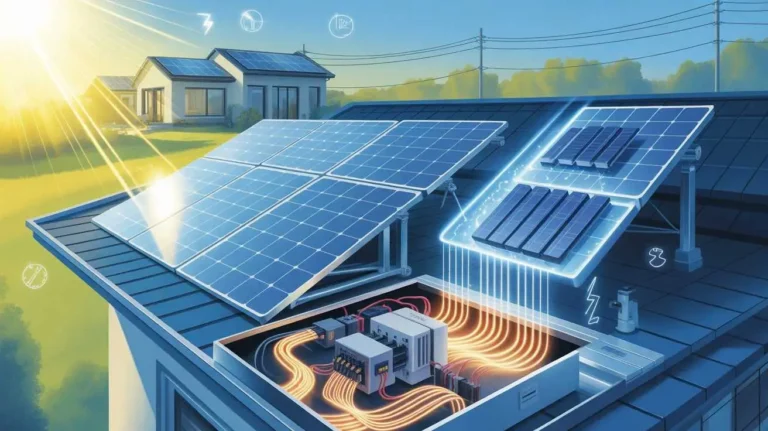
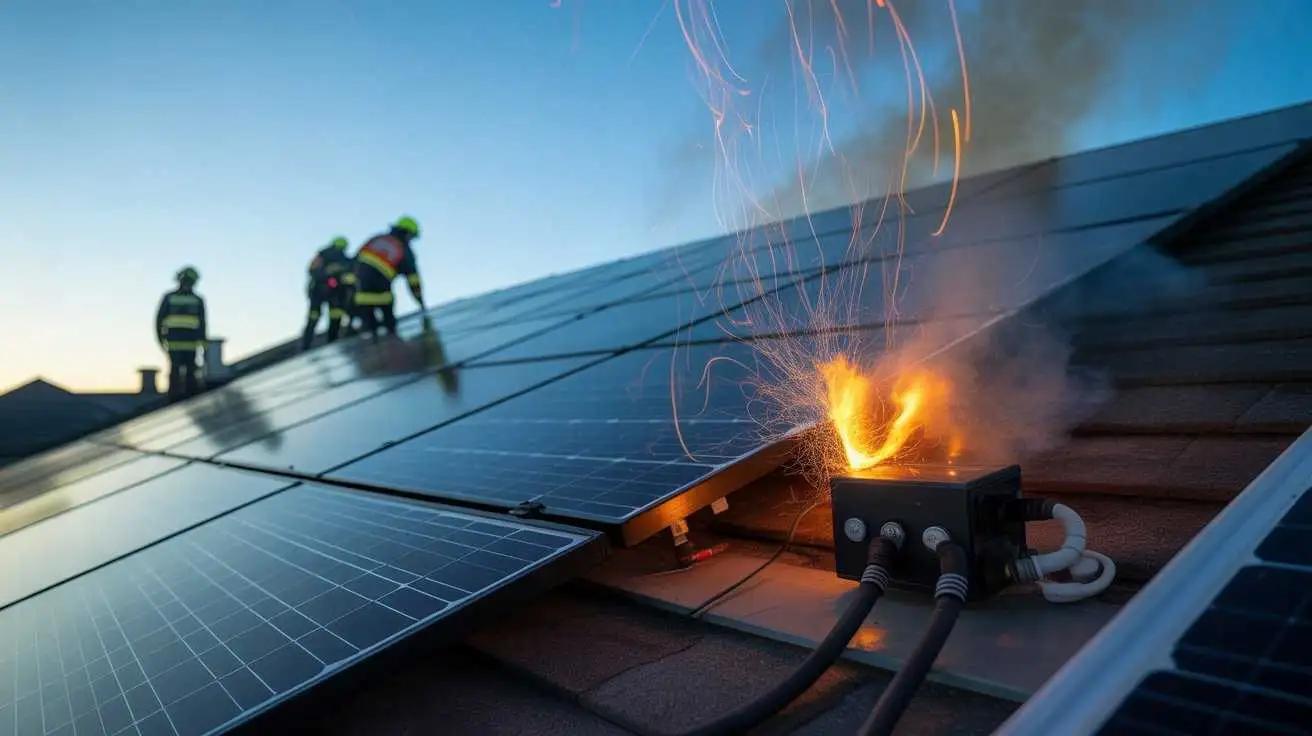
The DC wiring between solar panels and the inverter carries the highest fire risk of any component in a residential solar system. Unlike AC wiring, which can be interrupted by standard circuit breakers, DC current from solar panels continues flowing as long as sunlight hits the panels. If DC wiring develops an arc fault, caused by damaged insulation, loose connections, or rodent damage, the arc sustains itself in ways that AC faults do not.
This is precisely why the 2017 and 2020 updates to the National Electrical Code introduced rapid shutdown requirements for residential solar systems. Rapid shutdown equipment, now required on all new installations in most U.S. jurisdictions, cuts the DC voltage in panel-level wiring within 30 seconds of a shutdown signal. This protects both the home and firefighters responding to any emergency, whether or not it involves the solar system itself.
Inverters are the second area where incidents occur. Inverters generate heat during operation and are typically installed in garages, utility rooms, or on exterior walls. Inverters installed in areas with poor ventilation, moisture exposure, or that were not correctly sized for the system can develop overheating issues. Modern inverters include internal thermal protection that shuts the unit down before dangerous temperatures are reached, but this protection only works if the inverter is the right equipment for the installation.
What hidden costs in a solar installation reveal about component quality covers why the quality of wiring, inverters, and connection hardware matters as much as the panels themselves for long-term system safety and performance.
How American Building Codes Address Solar Fire Safety
Every residential solar installation in the United States is subject to the National Electrical Code, the International Fire Code, and local jurisdiction requirements that are often more stringent than the national baseline. These codes have evolved significantly as solar adoption expanded, and they address fire risk in several specific ways.
Setback requirements mandate that panels cannot cover the entire roof surface. Current IFC requirements typically require a 3-foot clear pathway along ridge lines and access pathways on roofs to allow firefighter access. These setbacks are not optional — they are required for permit approval in virtually every U.S. jurisdiction.
Rapid shutdown systems are required for all new residential installations in most states. California, New York, Massachusetts, Florida, and Arizona all enforce rapid shutdown requirements. Texas requirements vary by municipality, but most major markets including Houston, Dallas, and Austin require rapid shutdown compliance.
Permit and inspection requirements mean that every compliant installation is reviewed by a local inspector before the utility will approve grid connection. The inspection confirms that wiring, inverters, rapid shutdown equipment, and roof penetrations meet code. Systems that pass inspection have been reviewed by a licensed professional specifically for electrical and fire safety compliance.
According to the U.S. Fire Administration, residential solar fire safety requirements and installation standards for American homeowners are documented in federal guidance that covers rapid shutdown, setback requirements, and what firefighters need to know about solar-equipped homes.
City by City: Solar Adoption and Safety Context Across the U.S.
| City | Solar Installations (est.) | Avg Sun Hours Per Day | Climate Fire Risk Factors | Code Enforcement Notes |
| Los Angeles, CA | 200,000+ | 5.7 hrs | High heat summers; wildfire adjacent areas | CAL FIRE requires additional safety labeling |
| Phoenix, AZ | 120,000+ | 6.5 hrs | Extreme summer heat; dust accumulation | APS requires rapid shutdown on all new installs |
| Tampa, FL | 90,000+ | 5.5 hrs | Humidity affects wiring insulation over time | Duke Energy requires annual inspection records |
| Austin, TX | 75,000+ | 5.2 hrs | Hail risk; storm damage inspections important | Austin Energy requires rapid shutdown compliance |
| Boston, MA | 60,000+ | 4.2 hrs | Snow load; ice can damage panel edges | Mass DOE requires certified installer documentation |
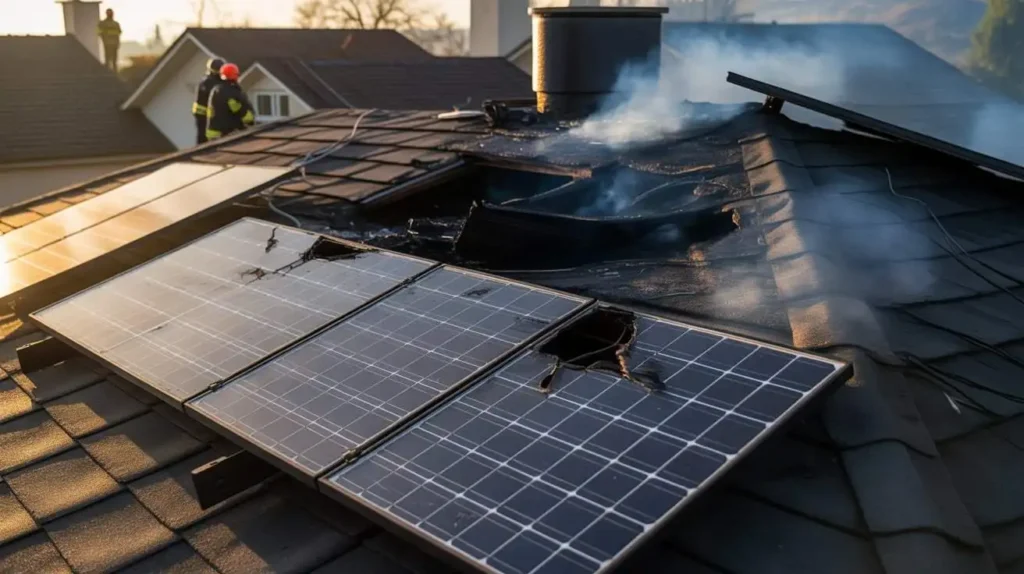
What this table shows is that climate conditions in different cities create different maintenance priorities, not different baseline safety levels. In Phoenix, dust accumulation on panels and in junction boxes is more of a concern than it is in Boston. In Tampa, humidity effects on wiring insulation over a 25-year system life deserve attention. In Austin, hail events that visibly crack panel surfaces require prompt inspection because damaged panels can develop arc faults. These are maintenance awareness points, not reasons to consider solar panels categorically dangerous.
What Reduces Fire Risk to Its Practical Minimum
The difference between a solar system with a very low fire risk and one with a slightly elevated risk comes down to four factors, all of which are within a homeowner’s control.
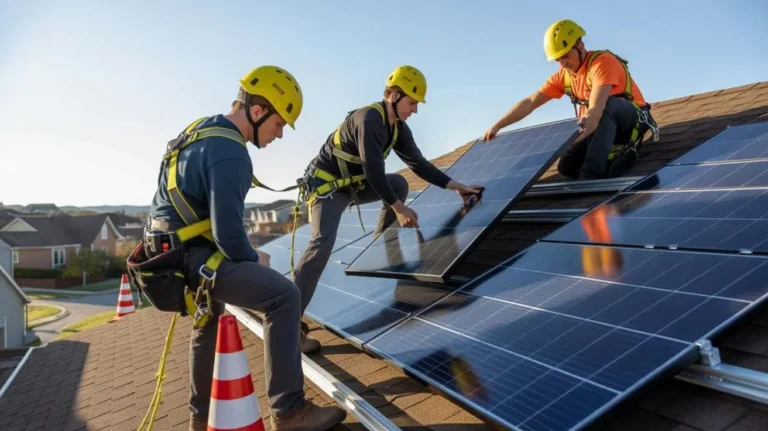
Installation quality is the most significant factor. Systems installed by licensed electricians following current NEC requirements with properly rated components have the lowest incident rates in the NFPA data. Systems installed by unlicensed contractors, with undersized wiring, or with components not rated for outdoor DC use account for a disproportionate share of the incidents in the data.
Rapid shutdown compliance eliminates the most serious fire safety concern that applies specifically to solar — the sustained DC arc fault. A system with compliant rapid shutdown equipment installed at the panel level addresses the primary mechanism that differentiates solar fire risk from standard home electrical fire risk.
Roof penetration quality determines whether water intrusion becomes a long-term wiring degradation issue. Every roof penetration for solar mounting hardware should be flashed and sealed to the same standard as any other roof penetration. Failed roof seals allow moisture to reach wiring connections over years, degrading insulation and creating arc fault conditions that were not present at installation.
Periodic inspections catch degradation before it becomes a problem. A visual inspection of the inverter, accessible wiring, and panel surfaces every two to three years is sufficient for most systems. After any significant weather event, hail, high winds, or flooding, a targeted inspection of visible components is worth scheduling promptly.
Whether solar panels are a safe and worthwhile investment for U.S. homes addresses the broader safety and financial picture for homeowners who want to evaluate both dimensions before installing.
Final Thoughts
Can solar panels cause fire in American homes? The data says yes, in the same way that any home electrical system can cause fire, rarely, under specific failure conditions, and at rates that compare favorably to conventional electrical equipment rather than unfavorably. Fewer than 1 in 10,000 solar installations per year is involved in any heat or fire incident, and the vast majority of those involve installation errors or maintenance failures rather than any fundamental property of solar technology.
The practical risk for a homeowner with a code-compliant, properly installed system that includes rapid shutdown equipment is genuinely low. The reasonable precautions — confirming your installer pulled permits, scheduling a visual inspection every few years, and checking your system after significant weather events, are the same level of maintenance awareness any responsible homeowner applies to their electrical panel, their HVAC system, and their roof. Solar panels do not require a different category of concern than other systems in a well-maintained home.
Frequently Asked Questions
Can solar panels cause fire in a properly installed American home?
Properly installed systems that meet current NEC and local code requirements have a fire incidence rate below 1 per 10,000 installations per year according to NFPA data. Fire risk exists but is statistically lower than most conventional home electrical systems.
What is the most common cause of solar panel fires in the USA?
Arc faults in DC wiring are the primary cause identified in NFPA incident data. These typically result from damaged insulation, loose connections, or improper installation rather than anything inherent to solar technology.
Do all U.S. solar installations require rapid shutdown equipment?
Most states including California, New York, Massachusetts, Florida, and Arizona require rapid shutdown compliance on all new residential installations. Requirements vary by municipality in Texas. Rapid shutdown is the primary safety feature that addresses DC arc fault risk.
How does solar panel fire risk compare to conventional home electrical systems in America?
Conventional electrical distribution equipment causes approximately 46,700 U.S. home fires per year. Solar PV systems across more than 3 million installations account for an estimated 200 to 300 heat or fire incidents annually, a dramatically lower rate.
What should American homeowners inspect to minimize solar fire risk?
Visible DC wiring condition, inverter ventilation and moisture exposure, panel surfaces for cracking or physical damage, and roof penetration seals around mounting hardware are the four areas that cover the primary causes identified in fire incident data.
Does extreme heat in states like Arizona or Florida increase solar fire risk?
Extreme ambient temperatures affect panel operating temperature but do not significantly increase fire risk in properly installed systems. Modern panels are rated for operating temperatures well above typical summer highs in Phoenix or Tampa. Dust accumulation in Arizona and humidity effects in Florida are maintenance considerations, not inherent safety hazards.

Morgan Lee is a homeowner and solar energy researcher based in the United States. After installing a rooftop solar system in 2022 and spending months comparing quotes, incentives, and installer reviews, Morgan realized how confusing and overwhelming the process felt for most American families. That experience led to the creation of SolarInfoPath, a no-pressure, educational platform designed to help U.S. homeowners understand solar energy clearly and confidently. Morgan focuses on practical, research-backed information covering solar costs, installation timelines, federal tax credits, and long-term savings. All content on this site is written from a homeowner’s perspective with the goal of making solar energy simple and accessible for everyday Americans.