Solar Panel Myths and Facts Every American Homeowner Should Actually Know
Somewhere between the neighbor who swears solar saved his family thousands and the coworker who says it was the worst financial decision he ever made, most Americans are left genuinely confused about what is true. Common Myths About Solar Panels are a big part of why that confusion never fully clears up, and I have been studying solar energy long enough to know that these myths stick around not because they are clever but because they outlive the facts that should have replaced them.
This article works through the most damaging solar myths one by one. Not to sell you anything. Not to scare you away from anything. Just to give you an honest picture that most sources, for various financial reasons, tend not to provide.
“Panels Stop Working When It Clouds Over” — Let Us Settle This One
Walk outside on an overcast day and look at your surroundings. You can see everything clearly. Objects cast soft shadows. That is because light is still reaching the Earth even when the sky is gray. Your solar panels respond to that same light.
Clouds reduce the intensity of sunlight. They do not block it entirely. A panel producing 300 watts on a clear Arizona afternoon might produce 180 watts on a cloudy New Jersey morning. That is reduced output, not zero output, and it is still meaningful electricity your home is using rather than buying from the grid.
What actually surprises people who look at real production data is how consistent solar output is across the full year, even in notoriously cloudy U.S. regions. Homeowners in the Pacific Northwest, upstate New York, and northern Nevada have working systems producing real savings. The cloudy day myth survives because it sounds logical without actually being tested against evidence.
The Assumption That Solar Only Makes Sense in Sunny Southern States
This misconception follows naturally from the cloudy day myth, and it does real damage to homeowners in high-rate northeastern and midwestern states who write solar off before ever running the actual numbers.
Here is what the solar myths and facts conversation usually leaves out. Panel efficiency is actually suppressed by extreme heat. A photovoltaic cell performs the conversion from light to electricity more efficiently at moderate temperatures than at scorching ones. A clear February day in Boston with cool air and strong winter sun can produce better panel efficiency than a 110-degree August afternoon in Phoenix, where heat is actively working against the technology.
More importantly, the financial case for solar depends on your electricity rate far more than your sun hours. A homeowner in Massachusetts paying $0.23 per kilowatt hour gets more financial value from each kilowatt hour their panels produce than a homeowner in a lower-rate state with more sunshine. States with high electricity rates often produce the strongest solar savings precisely because expensive grid electricity makes every kilowatt hour of self-generated power worth more.
For a clear breakdown of how solar performs financially across different U.S. states with honest numbers, whether solar panels are worth it for homes in the USA is worked out through a real calculation without overpromising.
What Solar Panel Ownership Actually Looks Like Day to Day
One of the more persistent solar myths is that owning a system means becoming part technician, regularly checking equipment, worrying about performance, and calling for service visits. The reality of day-to-day solar ownership is dramatically less eventful than that picture suggests.
Modern residential solar panels have no moving parts. Nothing rotates, oscillates, or wears through friction. The photovoltaic cells are sealed units that simply respond to light through a well-understood physical process. There is no engine to service, no filter to change, no fluid to check.
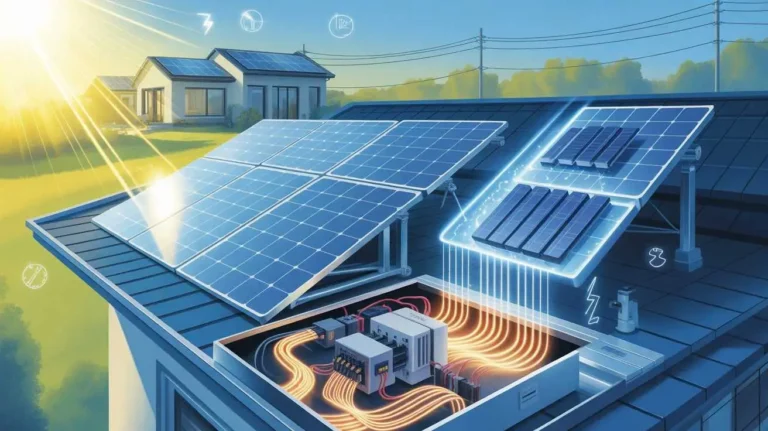
The inverter, which converts the DC electricity your panels produce into the AC electricity your home uses, is the component with the most active role and the one most likely to need attention over a long system life. Even so, quality inverters routinely operate for ten or more years without requiring any intervention.
Practical maintenance for most American households comes down to this. Occasional cleaning when dust, pollen, or debris accumulates on panel surfaces. Periodic review of your production monitoring app to confirm output looks consistent with historical patterns. That is genuinely the full picture for the majority of residential systems operating normally.
Solar Myths About Cost — Where Outdated Numbers Do Real Harm
The cost conversation is where inaccurate beliefs have the most direct financial consequences for real households. Decisions made on wrong numbers produce wrong outcomes, and those outcomes are measured in dollars over decades.
The myth that solar is only accessible to wealthy homeowners traces back to early adoption pricing from fifteen or more years ago, when systems genuinely were expensive, less efficient, and served by a much smaller installation industry. The combination of manufacturing scale, improved technology, and competitive installation markets has changed that picture substantially. The federal Investment Tax Credit further changes the effective first-year cost for qualifying households.
The myth that the payback period makes solar financially impractical typically uses outdated estimates built on old pricing and ignores incentive programs that have changed the math considerably. Current payback periods in many U.S. states with moderate to high electricity rates run seven to eleven years for systems designed to operate for 25 to 30 years. That math looks quite different from the twenty-year payback figure that circulated in older discussions.
The myth that hidden costs erase the savings has some truth buried in it that deserves honest acknowledgment. There are real costs beyond the panel price that do not always appear in headline quotes. Permitting fees, utility interconnection charges, potential roof preparation costs, and monitoring equipment all factor into the real project cost. For a complete picture of what actually goes into a solar project budget, hidden solar panel costs U.S. homeowners often overlook covers every line item that catches people off guard.
The Truth About Solar Panels and Your Roof
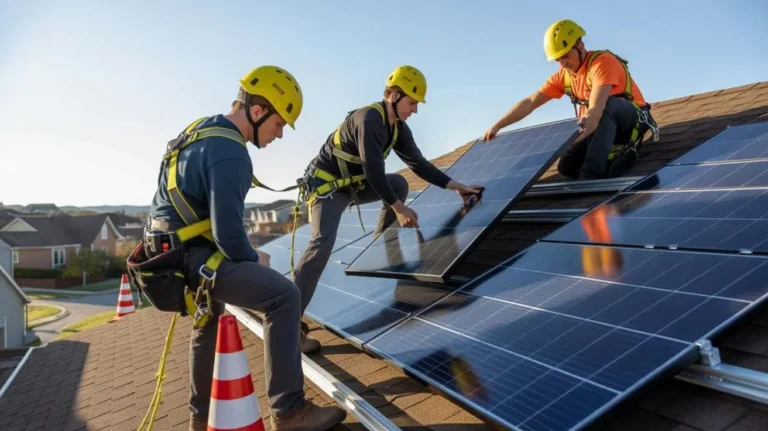
Few solar myths cause more unnecessary anxiety than the belief that mounting panels means accepting roof damage. It sounds reasonable because installation does involve penetrating roofing material to secure mounting hardware. But the complete picture is more reassuring than that partial fact suggests.
Professional installation uses flashing and sealant systems specifically engineered to create watertight seals around mounting points. When done correctly, these penetrations are more weather-resistant than unprotected roof areas. The panels themselves shield the roofing material beneath them from ultraviolet degradation, rain impact, and temperature extremes, meaning the protected surface often ages more slowly than the exposed sections around it.
Roof problems that do occur in connection with solar installations almost universally trace back to improper installation technique rather than anything inherent to the technology. A correctly mounted system on a structurally sound roof does not cause damage. This is why understanding installation quality matters and why the truth about solar panels and roof compatibility starts with installation standards rather than the technology itself.
Solar Myths Versus Facts — Laid Out Simply
Here is a direct comparison of the most common solar myths against what documented real-world performance actually shows:
| What People Often Believe | What Actually Happens |
| Panels stop working in cloudy weather | Output reduces but does not stop as light passes through cloud cover |
| Solar only works in hot, sunny states | Cooler temperatures improve efficiency, and high-rate states often see the strongest returns |
| Maintenance is constant and expensive | Most systems need only occasional cleaning across a 25 to 30-year lifespan |
| Solar takes decades to pay off | Current payback periods in many U.S. states run seven to eleven years |
| Panels damage roofs during installation | Properly installed systems protect the roof surfaces beneath panels from the weather |
| Selling a home with solar is complicated | Research consistently shows solar increases resale value in most U.S. markets |
| Solar savings are unpredictable | Production follows consistent seasonal patterns that are well understood and trackable |
One More Thing People Get Wrong — Solar and Home Resale Value
The truth about solar panels and property value is one of the more positive stories in this space and one of the least told. Most homeowners either do not know or significantly underestimate what a functioning solar system does to their home’s market value.
Research tracking home sales across multiple U.S. markets consistently finds that homes with solar installations sell at premiums compared to similar homes without them. The premium varies by market, system size, and local electricity rates, but the directional finding across studies is consistent. Buyers value lower operating costs. A solar system that meaningfully reduces or eliminates an electricity bill is a tangible financial asset that informed buyers recognize and pay for.
As confirmed by the National Renewable Energy Laboratory, solar homes command measurable price premiums in documented real estate markets across the United States, with the premium generally corresponding to the system’s expected future electricity value.
For a deeper look at how solar affects home resale values across different U.S. states and market conditions, do solar panels increase home value covers the research without overstating what the data actually shows.
Why These Solar Myths Keep Surviving
Understanding why false beliefs persist helps more than just knowing what the facts are.
Solar myths survive primarily through social transmission. Most people who believe panels stop working in clouds have never owned panels. The belief was passed to them through conversation by someone who received it the same way. That chain of transmission happened years ago when some of these beliefs were closer to accurate, and the chain has not broken even as the underlying facts changed.
Early solar adoption in the United States happened when systems were genuinely more expensive, less reliable, and installed by a smaller and less experienced industry. The negative experiences from that era spread widely and lodged firmly in cultural memory. The improvements since then, in efficiency, reliability, cost, and installer quality, happened more quietly and reached fewer people through casual conversation.
The result is a persistent gap between how solar actually performs today and how it is remembered and described by people whose mental picture was formed a decade or more ago. Closing that gap requires current, accurate information delivered in plain language, which is what this article is genuinely attempting to do.
To understand how solar panels perform across real U.S. households in specific states right now, how much solar panels save per year for U.S. homeowners covers documented savings across different states and household types with honest numbers.
What Genuinely Matters Before Making Any Solar Decision
I want to be clear about something before wrapping up. Correcting solar myths does not mean solar is right for every home or every household. The truth about solar panels includes its real limitations alongside its genuine strengths.
Production stops at night and drops meaningfully in low light conditions. Upfront cost before incentives remains significant for many households. Not every roof is oriented, pitched, or conditioned well enough to support an effective installation. These are real constraints that deserve honest weight in any decision, not dismissal.
What correcting the myths does is give you accurate starting information. Solar works in cloudy climates. It works in cool temperatures. It does not require constant maintenance. It does not damage properly prepared roofs. It does add value to most homes. Those facts deserve to be part of the conversation alongside the real limitations. Together, they give you an honest picture that neither solar enthusiasts nor solar skeptics tend to provide completely.
For context on what average solar installations cost across the country before you get into any specific estimates, average solar panel cost per kilowatt USA gives a realistic national baseline worth understanding early in your research.
Final Thoughts
Common Myths About Solar Panels survive because information travels faster than correction and because early experiences leave lasting impressions that outlive the conditions that created them. The gap between how solar is remembered in casual conversation and how it actually performs today is genuinely wide.
The most useful thing I can tell you is this. Test everything you hear about solar against documented performance from real systems in real states under real conditions. Not anecdotes. Not marketing. Not fear. Actual production data from actual households.
The picture that emerges from that evidence is more ordinary than either side of the solar debate tends to describe. Panels work consistently across most U.S. climates. Maintenance is minimal. Financial returns are real under the right conditions. Limitations are genuine and worth understanding clearly.
FAQS
Are solar panels ineffective in cloudy or cold weather?
Solar panels can still produce energy on cloudy days because sunlight reaches the Earth even through clouds. Cold weather does not stop panels from working. Output generally depends on light availability, not temperature alone.
Do solar panels stop working at night?
Solar panels do not generate energy at night because there is no sunlight. This is a natural limitation of how they work. Electricity use at night depends on stored or supplied power, not active sunlight.
Are solar panels too complex for everyday homes?
Solar panels are often misunderstood as highly complex systems. In reality, their basic function is simple and automatic. Most of the complexity happens in the background and is not visible in daily use.
Is it true that solar panels require constant maintenance?
This is one of the common misconceptions about solar panels. Generally, solar panels are designed to operate with minimal attention. Normal weather exposure does not usually stop them from functioning.
Do solar panels only work well in very sunny regions?
Solar panels can work in many climates, not just extremely sunny areas. They respond to daylight rather than heat alone. Performance can vary depending on location and weather patterns.
Why do so many myths about solar panels still exist?
Many solar energy myths come from outdated information or an incomplete understanding. Technology changes over time, but old assumptions often remain. Learning basic facts helps separate myths from reality.

Morgan Lee is a homeowner and solar energy researcher based in the United States. After installing a rooftop solar system in 2022 and spending months comparing quotes, incentives, and installer reviews, Morgan realized how confusing and overwhelming the process felt for most American families. That experience led to the creation of SolarInfoPath, a no-pressure, educational platform designed to help U.S. homeowners understand solar energy clearly and confidently. Morgan focuses on practical, research-backed information covering solar costs, installation timelines, federal tax credits, and long-term savings. All content on this site is written from a homeowner’s perspective with the goal of making solar energy simple and accessible for everyday Americans.