
Environmental Impact of Solar Panels for U.S. Homes: The Complete, Honest Picture
The environmental impact of solar panels is a topic that deserves more than reassurance. Most articles either oversell solar as a perfect solution or ignore the legitimate concerns around manufacturing and end-of-life disposal. The reality sits between those two positions. A standard residential solar system in the United States genuinely offsets substantial carbon emissions over its operating life, but it also carries an environmental cost in production and a growing disposal challenge that honest energy writing needs to address directly. Understanding both sides of this picture helps U.S. homeowners make decisions grounded in facts rather than marketing.
The carbon math is where the conversation should start. A standard 7kW residential system generates approximately 9,800 kilowatt hours per year across most American markets. At the U.S. grid average of 0.386 kilograms of CO2 per kilowatt hour, that system offsets roughly 3.8 metric tons of carbon dioxide annually. Over a 25 year operating life, that is approximately 95 metric tons of CO2 kept out of the atmosphere from a single home installation. To put that number in context, the EPA estimates the average American passenger vehicle produces about 4.6 metric tons of CO2 per year. Installing a 7kW solar system is the rough equivalent of removing one car from the road permanently.
How Solar Panels Actually Compare to Fossil Fuels on Carbon
The carbon footprint of a solar panel includes everything that goes into manufacturing it: silicon purification, cell production, panel assembly, aluminum framing, glass, and shipping. Researchers measure this as lifecycle CO2 emissions per kilowatt hour of electricity generated over the panel’s operating life. For monocrystalline silicon panels, the most common residential type in the United States, that figure runs approximately 20 to 50 grams of CO2 per kilowatt hour over a 25 to 30 year lifespan.
Compare that to coal-fired electricity at 820 to 1,000 grams of CO2 per kilowatt hour, natural gas at 490 grams, and even the U.S. grid average at 386 grams. Solar at 20 to 50 grams sits at roughly one-tenth to one-twentieth of coal’s carbon intensity. The gap is not marginal. It is the defining reason solar panels are considered a meaningful climate tool rather than a token gesture.
The concept that ties these numbers together is energy payback time, the period a solar panel must operate before it has generated enough clean energy to offset the energy consumed in producing it. For modern monocrystalline panels installed in average U.S. sun conditions, energy payback time runs between 1 and 4 years depending on manufacturing location and local grid carbon intensity. A panel installed in Texas or Arizona with 5 to 6.5 peak sun hours per day reaches energy payback faster than a panel in Massachusetts or Illinois with 4 to 4.5 peak sun hours. Either way, on a 25 year system, the clean energy generation period represents 21 to 24 years of genuinely low-carbon electricity production.
What solar panels generate in annual savings across U.S. states shows how the clean energy production numbers translate into real dollar savings on your electricity bill alongside the environmental offset.
City by City: Annual Carbon Offset From a Standard 7kW System
| City | Avg Sun Hours Per Day | Est. Annual kWh Production | Annual CO2 Offset | Equivalent Cars Removed |
| Phoenix, AZ | 6.5 hrs | 12,100 kWh | 4.7 metric tons | 1.0 car |
| Los Angeles, CA | 5.7 hrs | 10,600 kWh | 4.1 metric tons | 0.9 car |
| Tampa, FL | 5.5 hrs | 10,200 kWh | 3.9 metric tons | 0.85 car |
| Austin, TX | 5.2 hrs | 9,700 kWh | 3.7 metric tons | 0.8 car |
| Boston, MA | 4.2 hrs | 7,800 kWh | 3.0 metric tons | 0.65 car |
Phoenix produces the highest annual offset of any major U.S. city on this list, but Boston’s 3.0 metric ton annual offset is still a meaningful climate contribution over a 25 year system life. The carbon math works in every American market, though the magnitude varies by sun hours.
The Manufacturing Footprint: What Actually Goes Into a Panel

Solar panel manufacturing is the most energy-intensive phase of a panel’s entire life. The purification of silicon from raw quartz into semiconductor-grade material requires high temperatures and substantial energy input. Cell production, panel lamination, and framing add further energy and material costs. Most major panel manufacturing facilities currently operate in regions where the electricity grid is heavier on coal than the U.S. average, which raises the manufacturing carbon footprint somewhat compared to panels that could be produced using renewable energy.
This is not a reason to dismiss solar. It is a reason to understand that the carbon debt incurred in manufacturing is real and takes between 1 and 4 years of clean operation to repay. After that repayment period, every kilowatt hour the panel generates represents a genuine carbon reduction compared to drawing from the U.S. grid. The 25 year system lifecycle includes 21 to 24 years of that genuine reduction after the manufacturing debt is settled.
According to the U.S. Department of Energy, the full lifecycle environmental analysis of residential solar energy systems is available through Energy.gov and covers manufacturing impacts, operational emissions, and end-of-life considerations in detail.
How solar energy benefits and drawbacks compare across different U.S. states covers how local grid carbon intensity affects the net environmental benefit of solar in your specific market.
The Panel Recycling Problem: An Honest Assessment
The solar industry has a legitimate end-of-life challenge that promotional content rarely addresses directly. Most solar panels installed today will reach the end of their operating life between 2035 and 2050. The International Renewable Energy Agency estimates that global solar panel waste could reach 78 million metric tons by 2050. In the United States, a clear and consistent national recycling infrastructure for residential solar panels does not yet exist at scale.
Most solar panels are made from glass (about 75 percent by weight), aluminum framing, copper wiring, and silicon cells. These materials are technically recyclable. The challenge is economics. Standard glass recycling does not capture the value of the specialized tempered glass in solar panels efficiently. The silver content in silicon cells has value but requires processing to recover. Thin-film panels using cadmium telluride require careful handling because cadmium is a heavy metal that should not enter landfill.
The Solar Energy Industries Association operates a take-back and recycling program for residential panels through its PV Cycle initiative. Several states including California and Washington have introduced or are developing extended producer responsibility regulations that would require manufacturers to fund end-of-life recycling. These programs are early-stage, and the practical infrastructure for widespread residential panel recycling across the U.S. is still developing.
One thing people often miss in the environmental conversation about solar is that the recycling challenge is a solvable engineering and policy problem, not a fundamental flaw in solar technology. The materials in a solar panel are valuable. The incentive to recover them grows as panel volumes increase. But as of 2026, a homeowner installing solar should understand that the end-of-life path for their panels is not as clearly defined as the operating-phase carbon benefits.
What the full solar panel cost includes beyond the installation price covers the financial side of responsible ownership including what to expect when panels eventually need replacement or removal.
Air, Water, and Land Impact During Operation
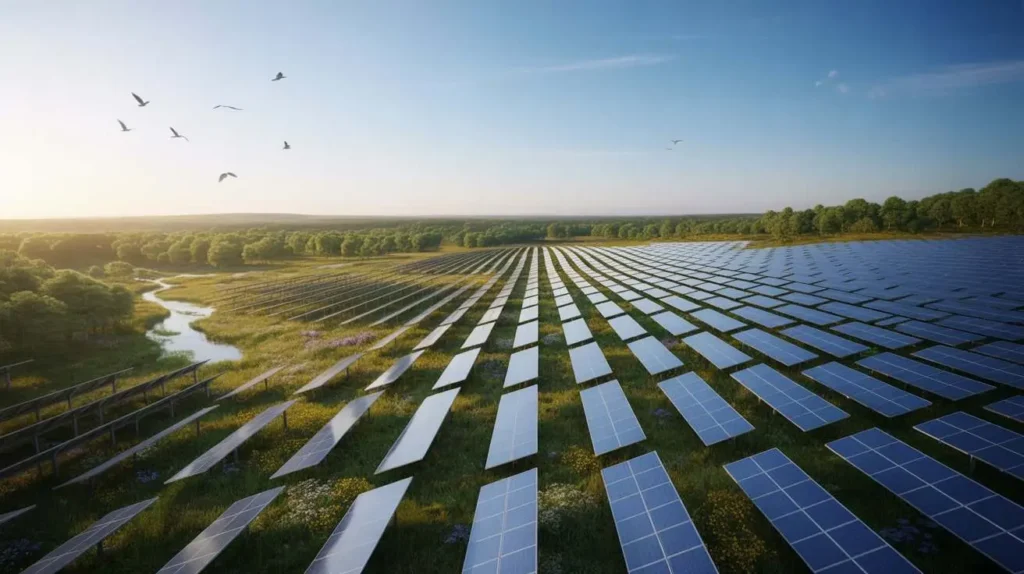
Once installed and producing electricity, residential solar panels have a genuinely low environmental footprint. They produce no direct emissions, consume no water during operation, and generate no waste products from electricity generation. This is a meaningful contrast to every thermal generation source, coal, natural gas, and nuclear all require water for cooling at utility scale.
Land use is the environmental consideration most relevant to large commercial and utility solar installations rather than residential rooftop systems. A rooftop system uses existing structure rather than dedicated land, which eliminates the land-use impact entirely. Utility-scale ground-mounted systems require land that could otherwise support other uses, and responsible siting away from ecologically sensitive areas is an ongoing policy conversation in states like California, Nevada, and Texas where utility solar development is expanding rapidly.
For the typical American homeowner in Phoenix, Austin, Boston, or Tampa, a rooftop system sits on existing structure, produces no emissions, uses no water, and generates clean electricity for 25 years before the recycling question arises. The operating-phase environmental profile is genuinely favorable.
Whether solar panels are a financially and environmentally sound choice for your home addresses both dimensions together so you can evaluate the full picture before making a decision.
Final Thoughts
The environmental impact of solar panels is substantially positive over a 25-year operating life, with a meaningful but finite manufacturing footprint and a legitimate end-of-life recycling challenge that the industry is working to address. A standard 7kW system offsets approximately 3.8 metric tons of CO2 annually, the equivalent of removing a car from the road, after repaying its manufacturing energy debt within 1 to 4 years of operation. Those numbers hold across every major U.S. market, with higher offsets in sun-rich cities like Phoenix and Tampa and solid contributions even in lower-sun markets like Boston.
The recycling challenge is real and deserves acknowledgment rather than dismissal. Panels installed today will need responsible end-of-life handling in 2040 and beyond, and the U.S. infrastructure for that is still developing. That honest limitation does not change the clear math on carbon offset during the operating years, but it is part of the complete environmental picture that any credible assessment of solar energy needs to include.
Frequently Asked Questions
What is the actual carbon offset from a residential solar system in the USA?
A standard 7kW system offsets approximately 3.8 metric tons of CO2 annually at the U.S. grid average emission rate. Over 25 years, that is roughly 95 metric tons of avoided emissions from a single home.
How long does it take for a solar panel to offset its manufacturing carbon footprint?
Energy payback time for modern monocrystalline panels runs between 1 and 4 years depending on local sun hours and regional grid carbon intensity. In high-sun U.S. markets like Arizona and Florida, payback runs closer to 1 to 2 years.
Do solar panels create pollution during daily operation in U.S. homes?
No. During normal operation, residential solar panels produce no direct emissions, consume no water, and generate no waste products. All environmental impact is concentrated in the manufacturing and end-of-life phases.
What happens to solar panels when they reach the end of their life in the USA?
Most materials in solar panels including glass, aluminum, and copper are recyclable. A consistent national recycling infrastructure for residential panels is still developing in the U.S. The Solar Energy Industries Association operates a voluntary take-back program through its PV Cycle initiative.
Are cadmium telluride thin-film panels an environmental concern?
Cadmium is a heavy metal that requires careful handling at end-of-life. Manufacturers of cadmium telluride panels generally operate take-back programs. For residential installations, standard monocrystalline or PERC panels do not involve cadmium.
How does the environmental impact of solar panels compare to coal or natural gas in the USA?
Coal generates 820 to 1,000 grams of CO2 per kilowatt hour over its lifecycle. Natural gas produces around 490 grams. Modern monocrystalline solar panels produce approximately 20 to 50 grams per kilowatt hour over their full lifecycle, roughly one-tenth to one-twentieth of coal’s carbon intensity.

Morgan Lee is a homeowner and solar energy researcher based in the United States. After installing a rooftop solar system in 2022 and spending months comparing quotes, incentives, and installer reviews, Morgan realized how confusing and overwhelming the process felt for most American families. That experience led to the creation of SolarInfoPath, a no-pressure, educational platform designed to help U.S. homeowners understand solar energy clearly and confidently. Morgan focuses on practical, research-backed information covering solar costs, installation timelines, federal tax credits, and long-term savings. All content on this site is written from a homeowner’s perspective with the goal of making solar energy simple and accessible for everyday Americans.