How Solar Power Works Step by Step — A Real Explanation for U.S. Homeowners
Here is something worth saying upfront. Most explanations of how solar power works fall into one of two traps. They either oversimplify to the point of being useless or they drown you in technical language that requires an electrical engineering degree to follow. Neither approach actually helps a homeowner in Phoenix, Denver, or Newark who just wants to understand what is happening on their roof before making a significant financial decision.
This article takes a different approach. I am going to walk through exactly how solar power works step by step, using plain language, real household context, and honest explanations of what each stage actually does and why it matters for your home specifically.
Before the First Step — What Solar Power Actually Means
Most people use the phrase solar power without stopping to define it precisely, and that creates confusion early on.
Why the Definition Matters More Than People Realize
Solar power is electricity generated from sunlight. It is not sunlight itself. It is not heat from the sun. It is electricity, the same kind that flows through your wiring when you flip a light switch, produced by converting the energy in sunlight through a specific physical process.
The Bridge Between Sunlight and Your Home
Your home does not run on sunlight. It runs on electricity. Solar panels are the technology that bridges those two things. Understanding that the bridge is the entire point of what follows.
Step One — Sunlight Arrives at Your Roof
The solar power generation process starts before any technology gets involved.
What Is Actually Happening at This Stage
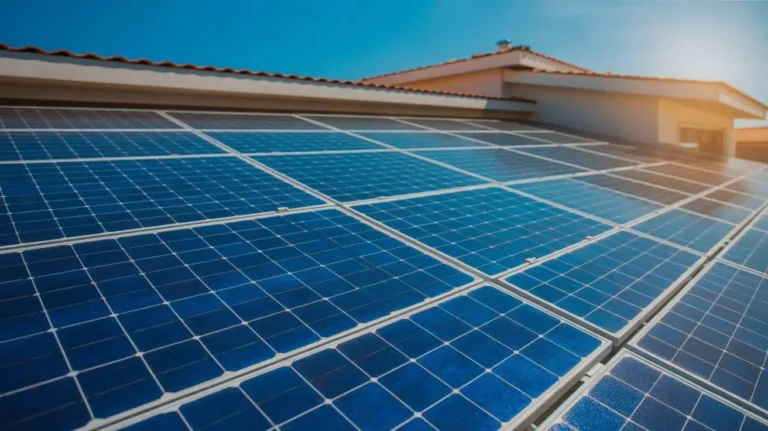
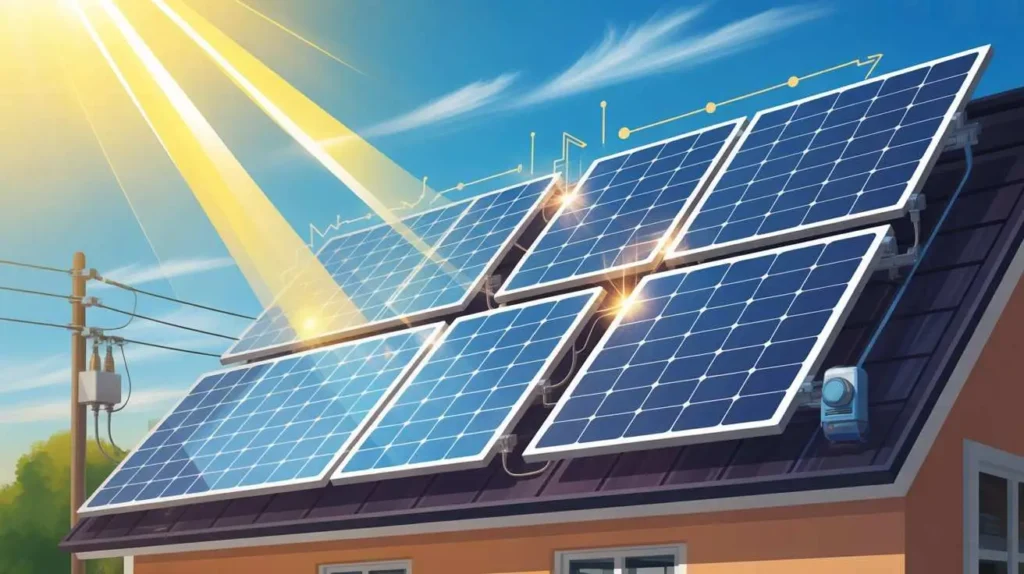
Sunlight travels approximately 93 million miles from the sun to the Earth, carrying energy in the form of photons. Photons are essentially packets of light energy. They arrive at your roof panels, whether you have solar installed or not. The panels simply give those photons somewhere useful to go.
Why Location and Orientation Affect This Step Significantly
The amount of solar energy arriving at your specific roof depends on several factors that vary significantly across the United States.
Your geographic latitude determines the angle at which sunlight reaches your roof. Your roof orientation, ideally south-facing in the northern hemisphere, determines how directly sunlight hits your panels. Your local climate determines how many hours of usable sunlight you receive annually.
A homeowner in Las Vegas, Nevada, receives an average of 5.5 to 6.3 peak sun hours dail,y making this first step extremely productive. A homeowner in Portland, Oregon, works with fewer peak sun hours but still receives enough light to make solar financially meaningful, particularly given that state’s electricity rates.
This geographic variation is why solar performance cannot be evaluated using a single national number. To understand how solar production and savings vary across U.S. states based on local sun conditions, how much solar panels save per year for U.S. homeowners breaks down the real numbers state by state.
Step Two — Photovoltaic Cells Convert Light Into Electricity
This is the step most explanations either skip or overcomplicate.
The Physical Process Inside Your Panels
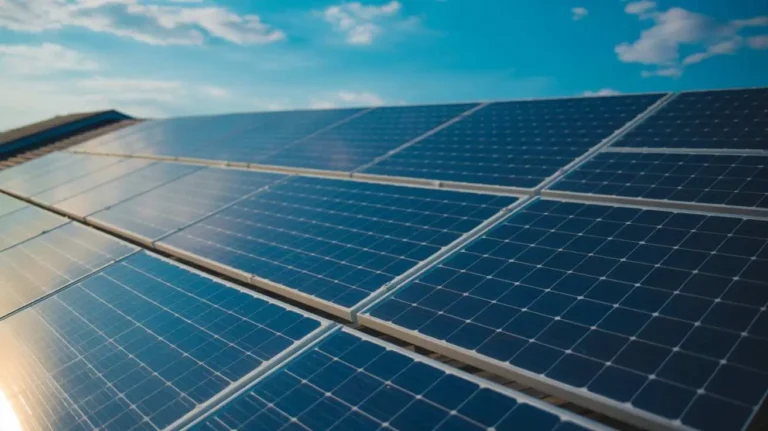
Each solar panel contains dozens of photovoltaic cells made primarily from silicon. Silicon has a specific and extremely useful property. When photons from sunlight strike silicon atoms, they transfer energy to electrons within those atoms. That transferred energy knocks electrons loose from their normal positions and sets them moving.
Why Moving Electrons Are Electricity
Moving electrons are by definition an electrical current. The organized movement of electrons through a material is exactly what electricity is at its most fundamental level.
Each photovoltaic cell produces a small amount of electrical current when struck by sunlight. Dozens of cells connected together in a panel produce more. Multiple panels connected together in a system produce enough to meaningfully power a home during daylight hours.
The electricity produced at this stage is direct current, universally abbreviated as DC. This detail sets up the next step in the process.
Step Three — The Inverter Converts DC to AC Power
Why This Step Cannot Be Skipped
Your home does not run on DC electricity. It runs on alternating current, universally abbreviated as AC. Every outlet in your walls, every appliance in your kitchen, every light fixture in your home is designed for AC power. This is the standard established by the electrical grid across the entire United States.
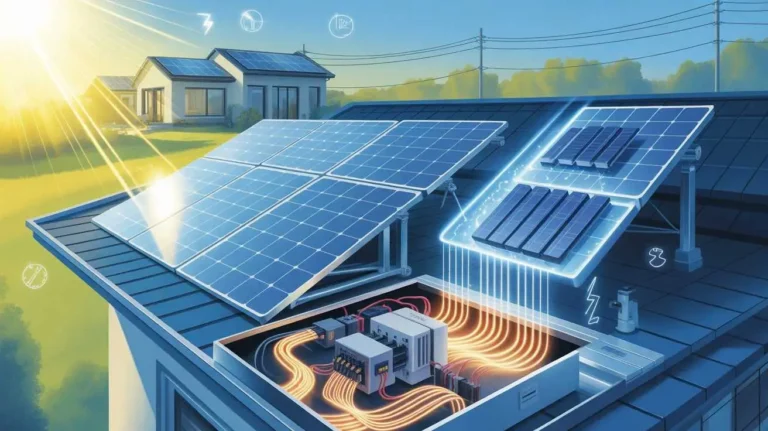
The inverter is the device that solves this incompatibility. It takes the DC electricity produced by your panels and converts it into AC electricity that your home can actually use. Without the inverter, your panels could produce electricity all day, and none of it would be compatible with your home’s wiring.
String Inverters Versus Microinverters
Traditional solar installations use a single string inverter that handles DC to AC conversion for the entire system in one place. Microinverter systems attach a small inverter to each individual panel and handle conversion at the panel level.
The practical difference for homeowners is that microinverter systems handle shading better because one shaded panel does not reduce output for the whole system, the way it can in a string inverter setup. For most U.S. homeowners, this technical detail matters most during the installation planning stage when evaluating quotes and comparing system designs from different installers.
Step Four — AC Electricity Powers Your Home in Real Time
What Happens the Moment Your System Produces Power
Once the inverter produces AC electricity, it enters your home’s electrical panel and distributes exactly the way grid electricity does. Your lights, appliances, HVAC system, and devices draw from this solar-produced power during daylight hours without any manual switching or adjustment required on your part.
The Priority Order Your System Follows Automatically
Your solar system follows a simple automatic priority every second of every day. Solar production covers your home’s current consumption first. If your panels are producing more electricity than your home is using at that moment, the surplus goes somewhere else. If your panels are producing less than your home needs, the grid makes up the difference instantly and seamlessly.
You do not manage this manually. The system handles it automatically through your electrical panel and utility meter without any input from you.
Step Five — Surplus Electricity Goes to the Grid or Into Storage
This step is where solar power becomes genuinely compelling financially, and it is the step most basic explanations leave out entirely.
How Net Metering Turns Surplus Into Real Bill Credits
When your panels produce more electricity than your home consumes at a given moment, that surplus flows back through your meter to the utility grid. Under net metering programs active in states like New Jersey, Nevada, Massachusetts, New York, and California, your utility credits your account for that surplus electricity at a rate defined by your state’s net metering policy.
Those credits accumulate during high production periods, typically sunny summer months, and offset the grid electricity you draw during low production periods like evenings, cloudy days, and winter months. For homeowners in net metering states, this mechanism significantly improves the financial case for solar beyond just daytime consumption offset.
To understand how net metering works specifically and whether your state has an active program worth factoring into your savings calculations, Is Net Metering Worth It in the USA for homeowners today covers the current state-by-state picture honestly.
Battery Storage as an Alternative to Grid Export
Homeowners who add battery storage to their systems have a second option for surplus electricity. Instead of sending excess production to the grid, a battery captures it for use at night or during grid outages. Battery adoption is growing, particularly in states with time-of-use electricity rates, where evening grid power costs more than daytime rates.
As confirmed by the National Renewable Energy Laboratory, residential battery storage paired with solar significantly increases the percentage of household electricity consumption covered by solar generation across all hours of the day.
Step Six — Your Utility Meter Tracks the Full Picture
What Your Meter Is Actually Measuring
Your utility meter tracks electricity flowing in both directions. It records how much grid electricity your home draws when solar production falls short and how much surplus solar electricity your home sends back to the grid when production exceeds consumption.
How This Translates to Your Monthly Bill
At the end of your billing period, your utility calculates the net difference between what you drew from the grid and what you sent to it. In net metering, states that net figure determines what you owe or what credits carry forward to your next bill.
During high production summer month,s many solar homeowners in states with strong net metering programs owe nothing on their variable electricity charges and carry credits forward into the lower production months ahead.
For a realistic picture of what this bill reduction looks like in dollar terms across different U.S. states and household sizes, how much can you save with solar panels per month in the USA works through documented examples without overstating what most households actually experience.
What Affects How Well Each Step Performs
Understanding the solar power working principle is most useful when paired with an honest understanding of what affects performance in real conditions.
The Factors That Determine Real Output
Sunlight availability is the foundation of everything. Peak sun hours vary from around 3.5 in cloudy northern states to over 6.3 in the desert Southwest. Annual production estimates are built on these averages, and they are the single biggest variable between a system that meets expectations and one that underperforms them.
Panel efficiency determines how much of the arriving sunlight gets converted to electricity at step two. Higher efficiency panels produce more electricity from the same roof area, which matters particularly for homes with limited south-facing roof space in dense neighborhoods.
System shading is one of the most underestimated factors in residential installations. A single tree branch shading two panels during peak afternoon hours can reduce system output meaningfully. This is why proper site assessment before installation matters more than most homeowners realize until after the fact.
Inverter performance affects how much of the DC electricity produced at step two successfully becomes usable AC electricity at step three. Quality inverters operate at 96 to 98 percent efficiency, meaning very little energy is lost in conversion under normal operating conditions.
Seasonal variation is normal and expected across all U.S. climates. Summer months produce more than winter months. Understanding this seasonal rhythm prevents the kind of disappointment that comes from comparing a December production reading to an August one and concluding incorrectly that the system is failing.
How This Process Plays Out in a Real U.S. Home
A Practical Example From Nevada
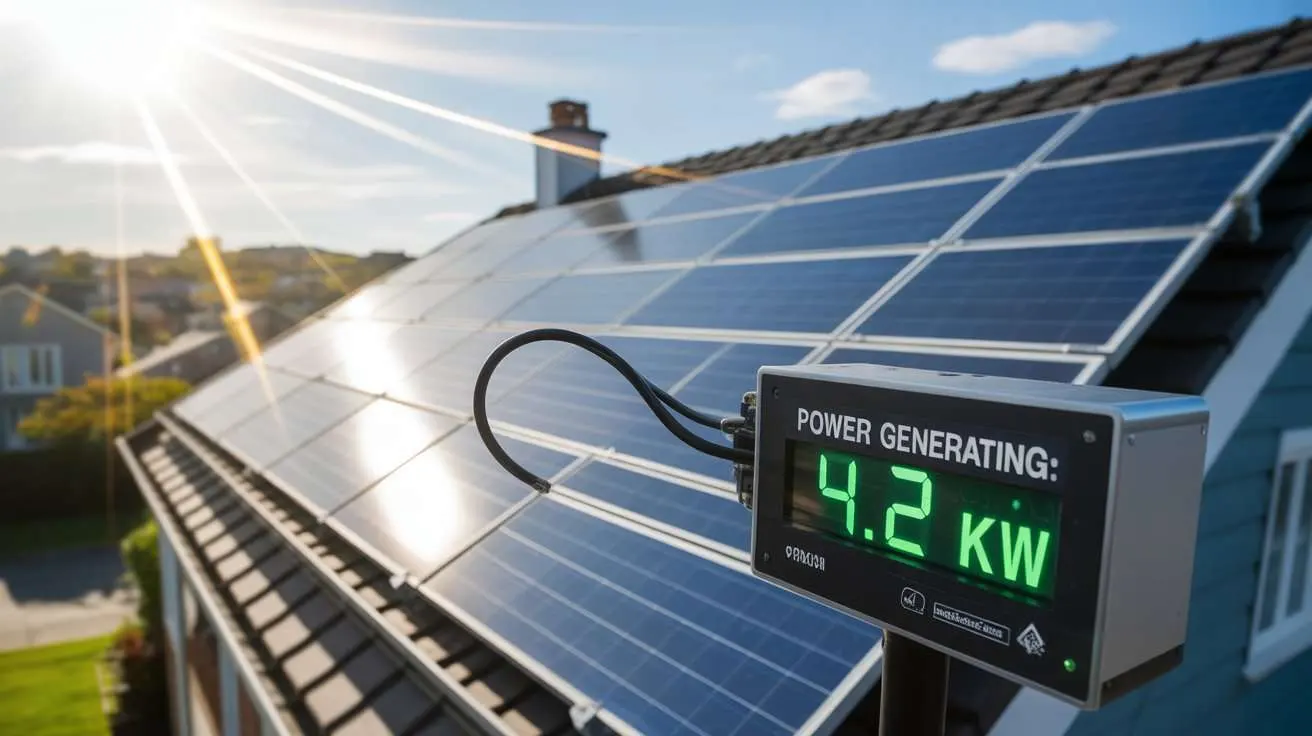
Consider a homeowner in Henderson, Nevada. Their 8-kilowatt system sits on a south-facing roof with minimal shading. Peak sun hours average 6.1 daily. On a clear July afternoon, their panels are producing enough electricity to run air conditioning, kitchen appliances, lighting, and electronics simultaneously while still generating surplus that flows back to NV Energy through net metering.
At 9 pm that same evening, the panels produced nothing. The home draws entirely from the grid. The net metering credits accumulated during the day offset a portion of that nighttime grid usage on their monthly bill.
What Winter Looks Like for the Same System
In January, the same system produces noticeably less because winter sun angles are lower and days are shorter. The homeowner draws more grid electricity in the summer. But because NV Energy rates apply to a smaller net consumption figure after credits, the annual financial picture still looks strongly positive across the full twelve months.
This seasonal rhythm is how solar power works in real conditions across real U.S. households. Understanding it before installation leads to realistic expectations and genuine satisfaction with the system over its 25 to 30-year lifespan.
For a complete picture of what solar systems cost before those savings begin accumulating and what the full financial timeline looks like, what is the solar payback period in the USA covers the honest math across different states and system sizes.
Final Thoughts
How solar power works step by step is genuinely not complicated once each stage is explained in terms of what it actually does rather than how it is engineered. Sunlight arrives at your roof. Photovoltaic cells convert it to DC electricity. An inverter converts DC to AC. Your home uses that AC electricity in real time. Surplus goes to the grid or battery storage. Your meter tracks the net flow, and your monthly bill reflects the difference.
What makes solar power meaningful for U.S. homeowners is not the elegance of that process but the financial implications of it running quietly on their roof for 25 to 30 years. Every step working correctly means less grid electricity purchased, lower monthly bills, and real long-term savings that compound across decades of ownership.
In my experience, homeowners who understand these steps clearly before making any decisions approach the whole solar research process more confidently. They know what questions to ask. They know what the numbers should reflect. They know what good performance looks like versus what an actual problem looks like. That knowledge is worth having regardless of what you ultimately decide about solar for your home.
Frequently Asked Questions
What is the basic idea behind how solar power works?
Solar power works by capturing sunlight and converting it into electricity. This process uses physical reactions instead of burning fuels.
What is the solar power working principle?
The solar power working principle is based on the light creating energy movement. That movement is guided to produce electrical power.
What is the solar power generation process?
The solar power generation process includes capturing sunlight and converting it into electricity.
Each step builds on the previous one.
What are the main steps of solar energy production?
The steps of solar energy production include light absorption and energy conversion. These steps work together to produce usable electricity.
Does solar power work without sunlight?
Solar power depends on sunlight to generate energy. Without sunlight, energy production is reduced or stops.
Is solar power always available?
Solar power availability depends on daylight and weather. Energy production can vary throughout the day and year.

Morgan Lee is a homeowner and solar energy researcher based in the United States. After installing a rooftop solar system in 2022 and spending months comparing quotes, incentives, and installer reviews, Morgan realized how confusing and overwhelming the process felt for most American families. That experience led to the creation of SolarInfoPath, a no-pressure, educational platform designed to help U.S. homeowners understand solar energy clearly and confidently. Morgan focuses on practical, research-backed information covering solar costs, installation timelines, federal tax credits, and long-term savings. All content on this site is written from a homeowner’s perspective with the goal of making solar energy simple and accessible for everyday Americans.