
A solar scam consumer protection attorney identifies contract violations, statutory misrepresentations, and undisclosed financing fees that most homeowners never catch on their own. Under the Texas Deceptive Trade Practices Act, Business and Commerce Code Sections 17.46 and 17.50, successful plaintiffs can recover treble damages and mandatory attorney fees. Federal statutes including TILA and the FTC Cooling Off Rule add additional consumer protections at the national level.
Solar fraud is not always obvious. It does not always involve a forged signature or a stolen identity. Most of the time it looks like an enthusiastic salesperson, a projected savings chart on a tablet, and a contract signed at your kitchen table after a 45-minute presentation. The fraud is in what was left out, not just what was said.
If your actual electricity savings are a fraction of what was projected, or if your loan principal is thousands of dollars higher than the system price you were told, a solar protection attorney can examine what the contract says versus what you were promised. That gap is where most legal leverage lives.
What Does a Solar Scam Protection Attorney Actually Do?
A solar consumer protection attorney reviews your signed contract, financing agreement, sales projection, and utility data. They identify which statutes the company violated, what remedies those statutes provide, and whether your documentation supports a demand letter, a regulatory complaint, or a full lawsuit.
The attorney does not just evaluate whether you feel wronged. They evaluate whether the company’s conduct meets the legal definition of misrepresentation, breach of contract, or an unfair business practice. Those are different standards, and understanding which one applies to your situation determines the size of your potential recovery.
How Consumer Protection Law Applies to Solar Fraud Cases
Consumer protection statutes at both the state and federal level were written with exactly this type of transaction in mind. A door-to-door salesperson selling a 25-year financial agreement to a homeowner in one visit is the textbook scenario these laws were designed to address.
Texas homeowners have access to one of the strongest state consumer protection frameworks in the country. The Texas Deceptive Trade Practices Act covers false, misleading, and deceptive acts in consumer transactions. It does not require proof of intent. It requires proof that a misleading representation was made and that you relied on it.
For homeowners outside Texas, the FTC Cooling Off Rule provides a baseline 3-business-day right to cancel any door-to-door sale over $25. Many states add additional protections on top of that federal floor. Regardless of your state, a solar scam protection attorney can identify which statutes apply and which ones give you the strongest position.
What Evidence Does an Attorney Need to Build Your Case?
The strength of your case depends almost entirely on documentation. Gather these before any consultation:
- Your original signed contract, including all pages and addenda
- The savings projection shown during the sales visit
- Every financing document, including the full loan principal amount
- Any texts, emails, or voicemails from the sales process
- 12 months of utility bills before installation
- 12 months of utility bills after installation
- System monitoring data from the app or portal
- Permission to Operate notice from your utility, if applicable
An attorney reviewing a complete document package can assess your case in a single meeting. That same attorney reviewing a partial record will need more time and may miss statutory violations that your documents would have revealed.
How to Report a Rooftop Solar Scam to FTC Lawyer Resources and Regulatory Agencies
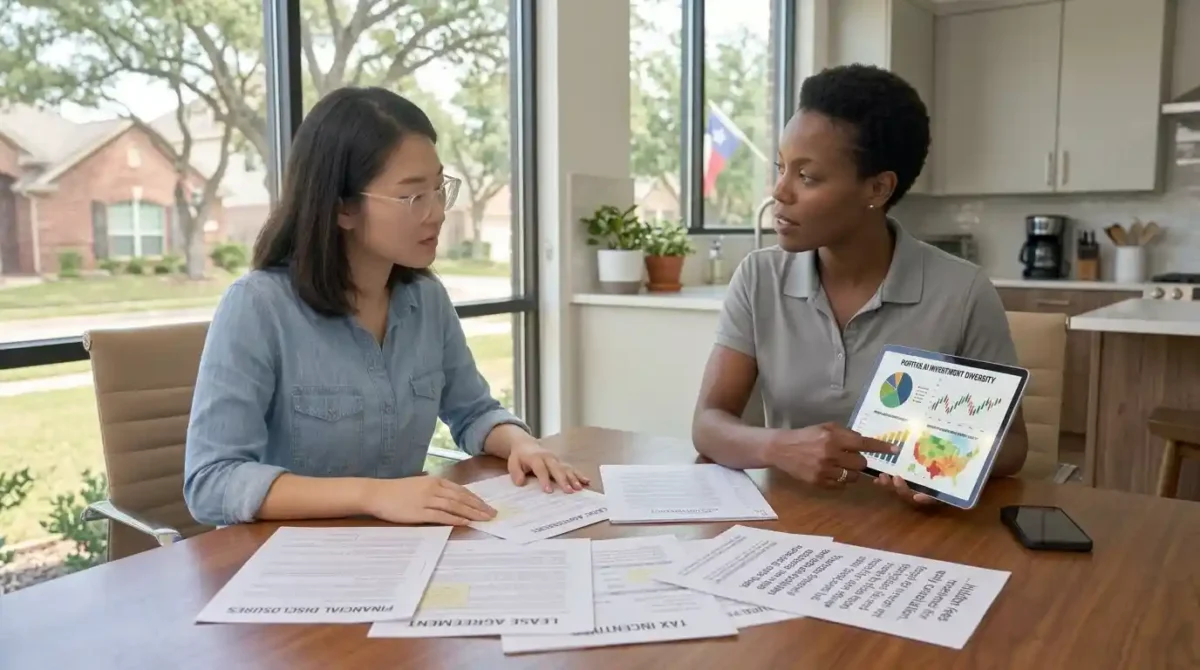
Reporting a rooftop solar scam to FTC lawyer referral programs and regulatory agencies is a free first step that creates a formal record. Those records feed directly into databases that class action attorneys and state enforcement offices monitor actively.
The FTC accepts complaints at ReportFraud.ftc.gov. The Consumer Financial Protection Bureau handles complaints involving solar lenders and financing companies. Your state Attorney General’s consumer protection division handles complaints about installer conduct. In Texas, the Texas Department of Licensing and Regulation handles complaints against TDLR-registered solar retailers.
The most important thing to understand is this. Filing a regulatory complaint does not prevent you from also pursuing a private legal claim. The two paths are independent. A regulatory complaint creates a public record. A private lawsuit or arbitration recovers your money.
Filing With the FTC, CFPB, and Your State Attorney General
Each agency handles a different piece of the solar fraud picture. The FTC focuses on deceptive trade practices at a national level. The CFPB focuses on the lender’s conduct. The state AG focuses on the installer’s conduct under state consumer protection law.
Filing with all three is not duplicative. Each complaint creates a separate record in a separate database. When enough complaints accumulate against the same company, enforcement actions follow. The Attyx Solar enforcement in New York began with homeowner complaints, not a proactive investigation.
For Texas homeowners, the Texas AG’s consumer protection division and the TDLR are the most directly relevant. A TDLR complaint against a solar retailer operating without proper registration under Occupations Code Chapter 1806 can result in license suspension, which is a meaningful remedy for ongoing fraud.
How to Report Rooftop Solar Scam to FTC Lawyer vs. Hiring Private Counsel
Knowing when to report a rooftop solar scam to an FTC lawyer and regulatory resources versus when to hire private counsel depends on your goals. Regulatory complaints are free and create public records. They do not recover your money directly. Private claims can recover money but require documentation, time, and, in most cases, an attorney.
The two approaches work best in combination. File the regulatory complaint to create the record. Simultaneously consult a solar protection attorney to evaluate whether your private claim is strong enough to pursue. A consumer protection attorney who is aware of active regulatory proceedings against your company may be able to use that record as supporting evidence in your private case.
Consumer Lawyer for Door-to-Door Solar Fraud: Identifying What Legally Qualifies
A consumer lawyer for door-to-door solar fraud evaluates your situation using a specific legal standard, not a general sense of fairness. The question is not whether you felt pressured. The question is whether the sales conduct violated a specific statute or contract term that gives you a legal remedy.
The Home Solicitation Transactions Act in Texas, Business and Commerce Code Chapter 601, applies to contracts signed at your home after an unsolicited door-to-door visit. It provides a 3-business-day right to cancel. The Texas Residential Solar Retailer Regulatory Act under Occupations Code Chapter 1806 adds a separate 5-business-day right to cancel specifically for solar contracts. The cancellation notice and the mailing address for that notice must both appear in the contract.
If your door-to-door solar contract is missing either of those elements, your cancellation window may still be open regardless of how long ago you signed.
Common Door-to-Door Solar Tactics That Violate Consumer Protection Law
These are the patterns a consumer lawyer for door-to-door solar fraud looks for in the initial document review:
- Savings projections presented as guaranteed outcomes without disclosing the rate assumptions behind them
- Tax credit described as a cash refund rather than a credit against actual tax liability
- Loan principal in the signed agreement exceeds the verbally quoted system price by 20% or more
- Cancellation rights were described verbally as having already expired or were not mentioned at all
- Salesperson claimed an affiliation with Oncor, CenterPoint Energy, or a government energy program
- Contract signed the same day as the sales visit with no opportunity to review before signing
Two or more of these patterns in the same transaction typically warrant a formal legal review.
What a Consumer Lawyer for Door-to-Door Solar Fraud Looks For in Your Contract
Beyond the sales conduct, the contract itself tells the full story. A consumer lawyer for door-to-door solar fraud examines four specific elements in every contract review.
First, is the cancellation notice present and complete? Second, does the loan disclosure show the full APR and total finance charges as required by the Truth in Lending Act? Third, is there a dealer fee line item, and was it disclosed before signing? Fourth, does the arbitration clause limit your right to a jury trial, and if so, is that clause enforceable under current Texas or federal law?
Each of those elements creates a different legal pathway. Missing disclosures may support a TILA rescission argument. An undisclosed dealer fee may support a DTPA misrepresentation claim. A defective arbitration clause may allow your case to go to court rather than private arbitration.
What Texas and Federal Laws Protect You From Solar Scams?
Texas and federal law together provide a layered consumer protection framework for solar fraud victims. No single statute covers every situation. An experienced attorney typically evaluates which combination of statutes provides the strongest remedy for your specific facts.
What the Texas DTPA Provides
The Texas Deceptive Trade Practices Act, Business and Commerce Code Sections 17.46(b), 17.50, and 17.505, prohibits false, misleading, or deceptive acts in consumer transactions. A successful DTPA claim allows recovery of actual damages. If the conduct was knowing or intentional, the court can award up to three times actual damages. Attorney fees are also available to the winning plaintiff.
The DTPA requires one important procedural step before filing suit. You must send a written 60-day pre-suit notice to the defendant describing the specific deceptive acts and the amount of damages claimed. An attorney handles that notice as part of the standard legal process.
What the Home Solicitation Transactions Act Covers
Chapter 601 of the Texas Business and Commerce Code applies to contracts signed at your home after a door-to-door visit. It creates a 3-business-day right to cancel. The seller must give you written notice of that right at the time of signing. A missing or defective notice may mean your cancellation window is still technically open.
How TILA Protects Solar Financing Borrowers
The Truth in Lending Act requires that your lender clearly disclose the annual percentage rate, total finance charges, payment schedule, and total amount of all payments before you sign. Inaccurate or missing TILA disclosures may create a rescission right that can cancel the entire loan in some circumstances. TILA rescission is technically demanding and requires attorney guidance to exercise correctly.
What a UCC-1 Lien Does to Your Home
A UCC-1 financing statement is a public filing that gives a lender a security interest in the solar equipment and sometimes in the property itself. Many Texas homeowners do not know a UCC-1 has been filed until they try to sell or refinance. Clearing it requires a formal release from the lender, which can take weeks. If the original installer is out of business, tracking down the current lien holder becomes a separate legal task. Read more about solar project debt and lien resolution for a breakdown of how that process works.
One property tax fact worth knowing: the Texas property tax exemption for solar under Tax Code Section 11.27 applies only to systems the homeowner owns outright. If you signed a lease rather than a loan, the leasing company owns the system. Your home does not qualify for the exemption. Most solar salespeople do not disclose this during the presentation.
Predatory Solar Lease Lawsuit Lawyer: When Your Lease Becomes a Legal Problem
A predatory solar lease lawsuit lawyer evaluates whether the lease terms you signed were accurately represented before signing. Solar leases create long-term financial obligations that are fundamentally different from a loan, and the distinctions are rarely explained during a door-to-door sales visit.
Under a solar lease, the company owns the system. You pay a monthly fee. Most leases include an annual escalator clause that increases your payment by 2% to 3% per year. On a 25-year lease, that escalator can increase your monthly payment by 60% to 80% over the contract term. That fact is buried in the lease agreement. It is rarely mentioned during the sales presentation.
What Makes a Solar Lease Predatory Under Texas and Federal Law
A predatory solar lease lawsuit lawyer identifies the specific elements that cross the line from an unfavorable contract into a legally actionable one. Not every bad deal is a predatory deal. The legal distinction matters.
A lease becomes legally actionable when the salesperson made specific representations that contradicted the written lease terms. For example, a salesperson who told you the payment would stay the same for 25 years, while the written lease contains a 2.5% annual escalator clause, made a materially false statement. That is a misrepresentation claim under the DTPA.
A lease also becomes actionable when the buyout clause was never explained. Most Texas solar lease buyout amounts exceed $20,000 after year 10 of the contract. That obligation transfers with the property when you sell your home unless the buyer agrees to assume the lease. A buyer who refuses to assume it leaves you paying a buyout out of your home sale proceeds. That financial consequence affects your ability to sell and must be disclosed.
Predatory Solar Lease Lawsuit Lawyer and the Property Tax Exemption Issue
The property tax exemption issue is the one that surprises Texas homeowners most often. A predatory solar lease lawsuit lawyer regularly encounters clients who were told their solar system would be exempt from property tax under Texas Tax Code Section 11.27. That statement is only true for owned systems.
Because the leasing company owns the system in a solar lease, the exemption does not apply to the homeowner. In Texas counties with high property tax rates, such as the Dallas-Fort Worth metro area where effective rates regularly exceed 2%, the missed exemption on a $25,000 system represents real money. A 2% annual tax on $25,000 of added assessed value equals $500 per year in property taxes the homeowner believed they would not owe.
What I noticed when reviewing lease complaint patterns across Texas is that this specific misrepresentation appears consistently across multiple installer companies and sales teams, suggesting it is a trained sales talking point rather than an isolated mistake.
If you are dealing with a lease dispute that also involves property damage from improper installation, that adds a separate legal track. Review how solar panel property damage claims work before deciding how to combine them.
Solar Company Went Bankrupt Lawsuit Help: What Homeowners Can Do
Solar company went bankrupt lawsuit help is one of the most searched questions in the solar consumer protection space right now, and for good reason. Several Texas area installers that operated aggressively between 2020 and 2023 have since closed or filed for bankruptcy protection.
Your loan does not disappear when the installer goes bankrupt. The lender or loan servicer still holds your debt. That relationship continues regardless of what happens to the company that sold you the system.
Here is the part most homeowners miss entirely. When a solar company files for bankruptcy, servicing of the loan transfers to a third-party servicer. That servicer was not part of the original sales transaction. However, in some cases the lender that funded the loan may carry independent liability, particularly if they funded the transaction before required rescission periods expired or without verifying that required disclosures were made.
Who Is Liable When Your Solar Installer Files for Bankruptcy?
Liability does not automatically end when an installer closes. Three parties may still hold legal exposure after a bankruptcy filing.
The installer’s bankruptcy estate holds any assets not protected by the bankruptcy proceeding. Filing a creditor claim in the active bankruptcy preserves your right to any distribution from those assets. An attorney can file that claim for you at a defined flat fee.
The lender who funded the loan may hold independent liability under TILA or state consumer protection law if they violated disclosure requirements. Pursuing the lender directly is a separate legal pathway from the installer claim.
If the installer operated without proper TDLR registration in Texas, the Texas Department of Licensing and Regulation may have a recovery fund or enforcement mechanism that applies to your situation. That avenue is worth exploring with a consumer protection attorney before assuming the bankruptcy ends your options.
Solar Company Went Bankrupt Lawsuit Help Through Creditor Claims and Lender Liability
Solar company went bankrupt lawsuit help most often begins with two parallel tracks. The creditor claim preserves your position in the bankruptcy proceeding. The lender liability evaluation determines whether a separate claim against the financing company is viable.
Read more about how to get out of a solar contract when the original installer is no longer operating. Bankruptcy complicates the process but does not eliminate your legal options. It changes which parties you pursue and in what order.
A real scenario from the Lubbock area illustrates how this plays out. A homeowner on AEP Texas paying $180 per month signed a $32,000 solar loan based on a projected savings of $1,800 per year. The system produced roughly $700 in annual savings. The installer closed 14 months after installation, leaving a warranty claim unresolved and a UCC-1 lien on the property. The lender continued collecting monthly payments.
The loan principal was $38,500, which was $6,500 more than the quoted system price. That undisclosed amount was a dealer fee never shown to the homeowner before signing. The lender liability claim on the undisclosed dealer fee is the active legal pathway in cases like this, even after the installer is gone.
How a Solar Scam Consumer Protection Attorney Builds Your Case Step by Step
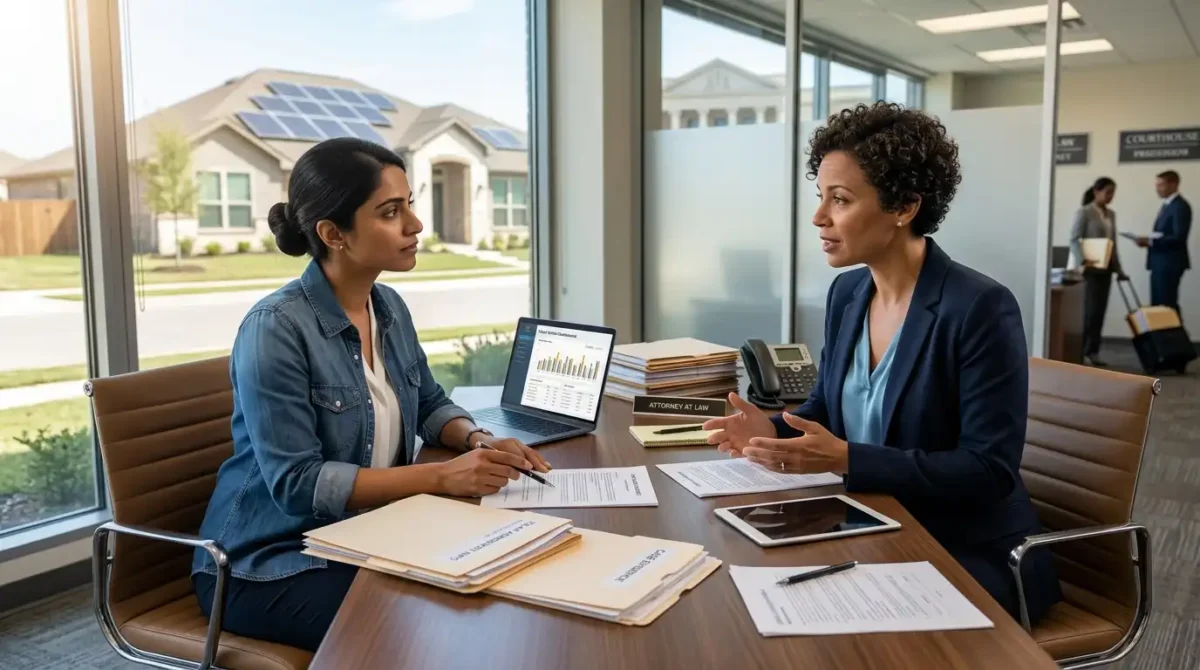
A solar consumer protection attorney follows a defined process from initial review to resolution. Understanding each stage removes the uncertainty that keeps many homeowners from taking the first step.
Step 1: Document Review and Legal Assessment
The attorney reviews your signed contract, financing agreement, and all communications with the installer and lender. They assess the cancellation window status, identify which statutes apply, evaluate the strength of the documentation, and determine whether arbitration or litigation is the likely path.
This stage typically takes one to two weeks. Many attorneys offer a free initial review for fraud claims, particularly when the DTPA or Elder Abuse Act applies, because those statutes include mandatory attorney fee provisions that make contingency representation viable.
Step 2: Demand Letter and Pre-Suit Notice
A demand letter from an attorney carries more weight than a homeowner’s own complaint. It names the specific statutes, quantifies the damages, and establishes a response deadline. For DTPA claims in Texas, the demand letter also serves as the required 60-day pre-suit notice.
Many Texas solar disputes resolve at this stage. The company receives a statute-based letter from a licensed attorney and determines that settling costs less than litigating. Resolution at the demand letter stage typically produces a partial or full refund, a contract modification, or an agreed cancellation.
Step 3: Negotiation, Arbitration, or Litigation
If the demand letter does not resolve the case, the next step depends on your contract. Most solar contracts include a mandatory arbitration clause, which routes the dispute to a private arbitrator rather than a court. Arbitration typically runs 3 to 9 months. Outcomes are binding with very limited appeal rights.
If the arbitration clause is absent or unenforceable, the attorney may recommend mediation first. Mediation resolves many disputes in 2 to 6 months at lower cost than full litigation. Litigation in Texas courts is the final option when other paths have failed, with timelines running 12 to 24 months on average.
Review how solar fraud attorney legal help works in practice for a more detailed breakdown of each stage, including what to expect from a first attorney consultation.
Individual Claim vs. Class Action: Which Path Fits Your Solar Scam Case?
A class action makes sense when the same deceptive practice was applied to a defined group of homeowners by the same company using the same methods. Your per-person damages may be lower in a class action recovery, but the attorney carries all costs, and you participate with minimal time investment.
| Path | Timeline | Your Involvement | Recovery Potential |
| Individual claim | 6 to 18 months | Active | Full damages possible |
| Class action | 2 to 5 years | Minimal after joining | Shared settlement |
| Regulatory complaint | Ongoing | File once | No direct money recovery |
| Small claims court | 30 to 90 days | Self represented | Up to $12,500 in most states |
Review the 2026 solar panel class action lawsuit landscape to determine whether an active class action already covers your company. Joining an existing class action requires no separate filing and no upfront cost.
The honest assessment of individual versus class action comes down to your documented losses. If your out-of-pocket damages exceed $30,000 and your documentation is strong, an individual claim often recovers more than a shared class settlement would. If your losses are lower but the fraud was clearly systematic, joining a class action is the practical path.
How Much Does a Solar Consumer Protection Attorney Cost?
Most homeowners assume legal help is unaffordable. In solar fraud cases, the fee structure often works in your favor. The Texas DTPA requires the company to pay your attorney fees if you win. That provision makes contingency representation viable for many cases that would otherwise be out of reach.
Contingency, Flat Fee, and Hourly Arrangements
| Fee Type | How It Works | Best For |
| Contingency | No upfront cost. Attorney takes 33 to 40% of recovery | DTPA, fraud, and elder abuse claims |
| Flat fee | Fixed amount for defined scope such as demand letter or contract review | Smaller disputes, bounded tasks |
| Hourly | Billed per hour at $250 to $450 in most Texas markets | Complex litigation with uncertain scope |
A flat fee contract review typically costs $300 to $600 in Houston, Dallas, and San Antonio markets. That review tells you whether your contract contains violations worth pursuing before you commit to any further action.
Many consumer protection attorney consultations are offered at no charge for cases involving significant documented fraud. Ask about the fee structure at the first contact. Any attorney worth hiring will disclose their arrangement plainly before asking you to sign a representation agreement.
What to Do Right Now If You Think You Were Scammed
Do not call the solar company first. That conversation may be recorded and used against you. Start by gathering your documents.
Then take these steps in order:
- Pull your loan disclosure and check the financed principal against the system price you were told verbally
- Check your contract for the cancellation notice and the mailing address designated to receive it
- Pull 12 months of utility bills before and after installation and note the actual savings versus the projected savings
- Screenshot every text and email from the sales process before they disappear
- File a complaint with TDLR in Texas, or with your state AG and the FTC if you are outside Texas
The U.S. Department of Energy’s solar consumer protection resources provide independent guidance on federal programs and consumer rights that support your documentation process.
After gathering your documents, consult a solar protection attorney. Most offer a free or low-cost initial review. That review gives you a specific assessment of your legal position, not a general overview of what solar fraud is. The assessment is what you need to make a decision.
If your installation caused physical damage to your roof or other parts of your home, that opens a separate legal track that should not be combined carelessly with a contract dispute. Read how solar installation injury and damage claims work before combining those claims in the same action.
The National Renewable Energy Laboratory’s independent solar production benchmarks provide the baseline data needed to determine whether your system’s projected output was realistically achievable for your location, which directly supports a misrepresentation claim.
For homeowners dealing with a lease they want to exit, review how solar lease buyout arrangements are structured before signing any settlement offer from the leasing company. Settlement agreements typically include a broad release of all claims, and signing before understanding your full legal position forfeits remedies you may not recover.
Frequently Asked Questions
What does a solar scam protection attorney do differently from a general attorney?
A solar scam protection attorney understands the specific statutes that apply to solar contracts, including the DTPA, TILA, and state home solicitation laws. A general attorney may miss statutory remedies, including treble damages and mandatory attorney fee provisions, that significantly affect the value of your claim.
Can I report a rooftop solar scam to the FTC and still sue the company?
Yes. Filing a report with the FTC or your state AG does not prevent you from pursuing a private lawsuit or arbitration. The regulatory complaint creates a public record. The private claim recovers your money. Both can proceed simultaneously.
What if I signed a solar lease instead of a loan?
A predatory solar lease lawsuit lawyer evaluates whether the lease terms were accurately represented before signing. Key issues include the annual escalator clause, the buyout amount, the property tax exemption ineligibility for leased systems, and what happens to the lease obligation when you sell your home.
My solar company went bankrupt. Do I still have legal options?
Yes. Your loan continues regardless of the installer’s bankruptcy. File a creditor claim in the bankruptcy proceeding to preserve your rights. Evaluate whether the lender carries independent liability for TILA violations or undisclosed dealer fees. Consult an attorney before assuming the bankruptcy ends your case.
Should I stop making solar loan payments while my case is reviewed?
Not without legal guidance first. Stopping payments creates credit and collections consequences that can complicate your legal position. The exception applies if your attorney determines you qualify for a TILA rescission or statutory cancellation that legally relieves the payment obligation. That determination requires a licensed attorney to review your specific loan agreement.
How long do I have to file a solar fraud claim in Texas?
The Texas DTPA statute of limitations is generally 2 years from the date you knew or should have known about the deceptive act. TILA rescission rights have shorter windows. Do not wait to consult an attorney. Time-sensitive legal rights do not wait for a convenient moment.
This article by SolarInfoPath (2026 research framework) is part of a comprehensive solar knowledge architecture covering all major high-value sectors including legal disputes (installation negligence, contracts, liability, fraud, lawsuits, liens, HOA and permitting disputes), financial structures (loans, PPA/lease agreements, DSCR financing, tax equity, investment and project finance), tax law (ITC, Section 48/25D, MACRS depreciation, bonus credits, IRS audits, recapture rules, domestic content and IRA/OBBBA compliance), insurance and risk (property damage, hail/wind/fire claims, bad faith insurance disputes, warranty coverage), policy and regulation (net metering, FERC interconnection, state utility rules, incentive programs and regulatory changes), commercial and utility-scale development (EPC contracts, construction delays, performance bonds, receivership, bankruptcy, asset sale and restructuring), real estate impacts (home value, solar leases, liens, title issues, HOA restrictions, easements), and emerging market structures such as battery storage, community solar, agrivoltaics, SRECs, yieldcos, and institutional investment funds. All content is based on publicly available regulatory, financial, and legal sources and is intended strictly for educational and informational purposes, not legal, tax, or financial advice. Readers should always verify current laws, utility policies, tax regulations, and contract terms with qualified licensed professionals before making decisions, as solar regulations, incentives, and financial structures frequently change across jurisdictions and time.

Solar Legal Analyst· Policy Researcher· Investigative Finance Writer Lead Analyst & Founder of SolarInfoPath
Morgan Lee is a solar legal analyst, policy researcher, and investigative finance writer with 12+ years of experience in U.S. renewable energy law, IRS tax credit compliance, and solar litigation. He is the founder of SolarInfoPath, a research-driven platform focused on primary-source analysis of solar contracts, tax law, regulatory policy, and industry disputes affecting homeowners and commercial developers.
His work is grounded in original legal and regulatory sources, including IRS notices, FERC and CPUC rulings, state court filings, PACER records, and UCC lien databases. He specializes in solar contract disputes, injury and workers’ compensation claims, PACE financing issues, tax equity structures, ITC recapture rules, MACRS depreciation, and federal and state solar policy frameworks.
Morgan’s analysis spans solar litigation, finance structures, and regulatory developments such as the IRA and OBBBA, interconnection reform, domestic content rules, and battery storage incentives. He also covers EPC contracts, PPAs, project financing, and utility-scale solar investment structures.