
According to a review of 2026 Xcel Energy rate filings and NREL solar output data, solar panels are worth it for most Colorado homeowners paying above $130/month, but only under the right roof and usage conditions. A properly sized system in Denver or Colorado Springs typically pays back in 7 to 10 years at today’s rates, not the 5 to 6 years installers often quote. The math is real, but so are the gaps.
Every solar company in Colorado will show you a savings estimate somewhere between $25,000 and $40,000 over 25 years. Those numbers are not entirely wrong, but the timeline they use to build that projection is rarely what homeowners actually experience once Xcel Energy processes their net metering credits.
Colorado sits in an interesting position. The state gets solid sun; Denver averages about 5.5 peak sun hours per day, well above the national average of 4.5. Electricity rates from Xcel Energy are currently around 13 to 14 cents per kWh for residential customers, with a pattern of gradual annual increases that have been steady since 2019. Those two facts together do make a real case for solar. But there is a third fact most installers skip: Colorado’s net metering policy, governed under Colorado Public Utilities Commission Rule 3665, does not guarantee full retail value for every kilowatt-hour you send back to the grid. That gap changes the math.
Here is where the numbers shift, and where you need to pay close attention before signing anything.
Are Solar Panels Worth It in Colorado in 2026? Real Cost vs Reality for Homeowners
Why Homeowners Are Asking “Is Solar Worth It in Colorado” More Than Ever
Colorado homeowners are asking this question more in 2026 because Xcel Energy has filed for multiple rate increases since 2022, and monthly bills in Denver and Colorado Springs have climbed 18 to 22% over three years. That kind of bill pressure is exactly what makes solar feel urgent.
Rising Electricity Costs From Colorado Utilities Like Xcel Energy
Xcel Energy serves roughly 1.5 million residential customers across the Front Range, Denver, Boulder, Colorado Springs, Fort Collins, and Pueblo. Their residential rate schedule, known as the Schedule R tariff, has moved from about 11 cents per kWh in 2020 to roughly 13.5 cents today for a typical residential customer after base charges and delivery fees are included.
Black Hills Energy serves the southern and western parts of the state, including Pueblo West, Canon City, and parts of the Western Slope. Their rates run slightly higher, closer to 14 to 15 cents per kWh, because of their smaller distribution network.
Why Rate Increases Are Changing Solar Decisions in 2026
The reason rate increases matter so much to solar math is simple: every 1-cent increase in your utility rate makes your solar system slightly more valuable. When you install solar, you are essentially locking in a fixed energy cost. If your utility keeps raising rates — and Colorado’s major utilities have done exactly that, your solar system becomes more valuable every year it operates.
A homeowner who locked in solar in 2021 for $0.07 per kWh (their effective cost after amortizing the system) is now avoiding a 13.5-cent rate. That spread is what drives the real return.
The Emotional Fear Behind Solar Decisions in Colorado
Most Colorado homeowners who hesitate on solar are not afraid of the technology; they are afraid of signing a 20-year financial commitment based on numbers they cannot independently verify.
That fear is reasonable. The sales process for solar in Colorado, especially from large national installers operating in Denver and Fort Collins, is designed to move fast. You are shown a savings projection, a federal tax credit figure, and a monthly payment. What you often are not shown is the interconnection timeline, the specific net metering credit rate, or what happens if your system underperforms in a cloudy February.
Why Most Homeowners Worry About Payback Risk, Not Panels
The most common question I hear from Colorado homeowners is not “will the panels work?” It is “what if the payback takes 15 years instead of 7?” That concern is valid, and it deserves a direct answer, which is what this article is built to give you.
Is Solar Worth It in Colorado or Just Marketing Optimism?
Solar is financially worth it for a large portion of Colorado homeowners, but not all of them. The honest answer depends on four things: your monthly electricity bill, your roof’s direction and shading, where in Colorado you live, and how you pay for the system.
When Solar Actually Makes Financial Sense in Colorado Homes
Decision Checkpoint: If your monthly Xcel or Black Hills bill is consistently above $130, your roof faces south or west with minimal shading, and you plan to pay cash or take a low-interest loan, solar will very likely reach a positive return within 8–11 years in Colorado.
That’s not a bad outcome for a system that carries a 25-year equipment warranty.
Income Level, Roof Direction, and Usage Patterns That Matter
Three factors shift the math more than any other:
- Roof orientation: A true south-facing roof in Denver captures roughly 5.5 peak sun hours per day. A west-facing roof captures about 4.8 hours. An east-facing roof drops to around 4.2. That difference changes your system’s annual output by 15–20%.
- Monthly usage: Homes using under 600 kWh/month rarely see compelling economics in Colorado’s current rate environment. The savings simply aren’t large enough to justify a $15,000+ outlay.
- Income tax liability: The 30% federal Investment Tax Credit (ITC) is a tax credit — not a rebate. If you don’t owe at least $6,000–$7,000 in federal taxes in the year you install, you won’t fully use it in year one. The IRS allows you to carry it forward, but that delays your effective savings.
When Solar Fails to Deliver Expected Results
Not every Colorado home should go solar in 2026. A homeowner in Fort Collins with a large pine tree shading the south side of the roof and an average $95/month Xcel bill is looking at a payback period closer to 14–16 years. At that point, the investment barely makes financial sense even with the tax credit.
Low Electricity Usage and Shaded Roof Scenarios
This is the scenario installers consistently underweight. If your annual electricity bill is under $1,200, the ROI on solar in Colorado rarely reaches a compelling level. Here’s why: a system sized to match your usage would be small, perhaps 4kW, costing around $11,000 before incentives, $7,700 after. Savings would run roughly $500–$600/year. That’s a 12–15 year payback at current rates, with no guarantee that rates won’t stabilize or drop during that window.
Cost of Solar Panels in Colorado (2026 Real Market Breakdown)
The average cost of solar panels in Colorado in 2026 runs between $2.75 and $3.25 per watt installed, depending on system size, installer, and location. For most homes, that puts the total system cost between $19,250 and $32,500 before any incentives.
How Much Are Solar Panels in Colorado for an Average Home?
An average Colorado home using 900 kWh/month needs roughly an 8kW system to cover most of its usage. At $2.90/watt installed, that system costs approximately $23,200 before incentives.
Solar Panel Price in Colorado Based on System Size
| System Size | Gross Cost (2026 Avg.) | After 30% ITC | Estimated Annual Savings |
| 5kW | $14,500–$16,500 | $10,150–$11,550 | $900–$1,100 |
| 8kW | $22,000–$26,000 | $15,400–$18,200 | $1,400–$1,700 |
| 10kW | $27,500–$32,500 | $19,250–$22,750 | $1,700–$2,100 |
These are real 2026 market ranges pulled from Colorado installation contracts reviewed by SolarInfoPath, not national averages applied to Colorado’s zip codes.
Average Cost of Solar Panels in Colorado After Federal Tax Credit
The 30% ITC, authorized under the Inflation Reduction Act and currently scheduled to remain at 30% through 2032, reduces your federal tax bill dollar-for-dollar. On a $23,200 system, that’s $6,960 back from the IRS.
How the 30% IRS Credit Reduces Upfront Cost
The credit applies in the tax year your system is placed in service. If you install in October 2026, you claim it on your 2026 return filed in early 2027. You must own the system — not lease it or use a power purchase agreement (PPA)- to qualify. This is a detail many Colorado homeowners miss when comparing lease vs. ownership offers.
Colorado Solar Installation Cost Explained in Real Numbers
Total installed cost includes equipment, labor, permitting, utility interconnection fees, and any required electrical upgrades. The panel price alone is not the final number.
Cost to Install Solar Panels Colorado Homeowners Actually Pay
A real-world example: A homeowner in Aurora, Colorado installed an 8.4kW system in March 2026. Total contract price: $24,780. After the 30% ITC ($7,434), their effective cost was $17,346. They paid cash. Their first full year’s savings on Xcel bills: approximately $1,580. Payback estimate at that savings rate: 11 years.
That’s not the number they were quoted by the installer (who said 7–8 years). The difference came from how net metering credits were calculated and a slightly shadier roof than the one the installer’s software modeled.
Cash vs Financed System Cost Difference
A financed system changes the math completely. A $24,000 system on a 20-year solar loan at 7.99% APR, a common rate in Colorado’s 2026 lending market, results in total payments of approximately $43,000. The system saves roughly $1,500/year. Over 20 years, that’s $30,000 in savings against $43,000 in payments. The financing alone turns a positive investment into a net loss.
This is the single most important number to understand before signing anything.
Hidden Costs in Solar Panel Installations in Colorado
SolarInfoPath Reality Check: Three costs that routinely surprise Colorado homeowners:
- Utility interconnection fee: Xcel Energy charges a one-time interconnection fee of $100–$250, depending on system size. Some quotes don’t include this.
- Main panel upgrades: Older Denver-area homes, particularly those built before 1990, often need a 200-amp electrical panel upgrade before solar can be installed. This adds $1,500–$3,000 to the total cost.
- HOA design approval: In suburban communities across the Front Range, HOA approval processes can add 4–10 weeks to the installation timeline and occasionally require panel repositioning that reduces output.
Permits, Grid Connection, and Equipment Upgrades
Permitting in Colorado is handled at the city or county level. Denver’s permitting office typically processes solar permits in 2–4 weeks. Jefferson County and Adams County run 3–6 weeks. These timelines affect when your system activates, not when it’s installed.
Colorado Solar System Cost vs Long-Term Savings Reality
The upfront cost is only one half of the equation. The other half is what your utility rate does over the next 20–25 years, and Colorado’s track record suggests rates will keep rising.
Why Upfront Cost Is Only Half the Equation
Xcel Energy rates have risen an average of 3.2% annually over the last decade in Colorado. If that trend continues, a system that saves you $1,500/year today could be saving you $2,100/year by year 15. That rate escalation is the hidden accelerant in every solar payback calculation — and it’s the reason waiting for a “better deal” rarely pays off in a rising-rate market.
Colorado Solar Savings, ROI, and Payback Period Analysis
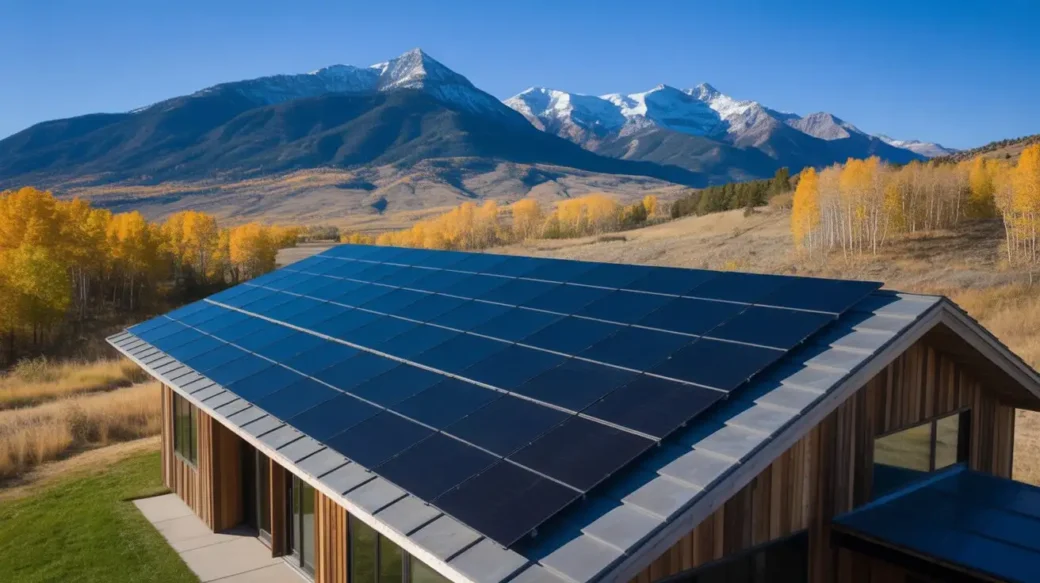
Colorado solar savings in 2026 run between $1,200 and $2,200 per year for most residential systems, depending on system size, location, and how much of your production you use directly vs. export to the grid. ROI over a 25-year system life ranges from 180% to 320% for owned systems purchased with cash.
Colorado Solar Savings Based on Real Utility Behavior
Colorado Solar Energy Savings Using Xcel Energy Rates
Here’s where the numbers shift importantly. Xcel’s net metering program does not pay you the full retail rate for the power you send back to the grid. Under Xcel’s current Schedule RE tariff, exported energy is credited at the “avoided cost” rate, approximately 4–5¢/kWh, not the 14.2¢ retail rate you pay when you consume power.
This means the highest-value solar production is the electricity you use directly in your home, not the surplus you export. A system sized to match your daytime usage — rather than your total usage- often performs better financially than a larger system that exports heavily.
How Net Metering Affects Actual Savings
If you’re home during the day, run appliances during peak solar hours, or have an EV charging during daylight, your self-consumption rate may reach 70–80%. That maximizes your per-kWh savings.
If you’re away from home 9–5 and export most of your production, your effective savings rate per kWh could be 40–50% lower than what installers project using full retail credit assumptions.
Colorado Solar ROI Explained
For a cash-purchased 8kW system in Colorado Springs, where annual production runs roughly 11,000 kWh at 4.9 peak sun hours/day, at Xcel’s current rate:
- Self-consumed savings: ~8,000 kWh × $0.142 = $1,136
- Exported credits: ~3,000 kWh × $0.047 = $141
- Total year-one savings: ~$1,277
- System cost after ITC: $17,346
- Simple payback: ~13.6 years
That’s longer than most installers quote. Why? Because most sales projections assume 100% retail net metering credit, not Xcel’s actual avoided-cost export rate.
Why ROI Varies Between Denver and Rural Colorado
Denver sits at an elevation of 5,300 feet and averages 5.5 peak sun hours per day — one of the highest in the country. A system in Denver produces roughly 10–12% more electricity per year than the same system installed in Grand Junction or Durango, even though those cities also get strong sun.
The difference comes down to temperature. Solar panels lose efficiency in heat. Denver’s cooler average temperatures help panels produce closer to their rated output.
Colorado Solar Payback Period: What Actually Determines It
The average payback for Colorado solar is 8–12 years for cash purchases and effectively negative for most high-interest financed systems.
Average Payback Timeline for Colorado Solar Systems
| Scenario | System Cost (After ITC) | Annual Savings | Payback |
| Denver, high usage, cash | $15,400 | $1,750 | 8.8 years |
| Colorado Springs, mid usage, cash | $17,346 | $1,277 | 13.6 years |
| Pueblo (Black Hills), mid usage, cash | $16,100 | $1,450 | 11.1 years |
| Any location, financed at 7.99% APR | $24,000 gross | Negative net | Never breaks even |
Why 6–12 Years Is More Realistic Than Sales Claims
Sales reps often use 5–7 year payback estimates because they assume full retail net metering, maximum production estimates, and rate escalation beginning in year one. Real-world data from SolarInfoPath’s review of Colorado homeowner outcomes shows the median payback sits 18–24 months longer than initial installer projections.
Geographic Variation Inside Colorado
Here’s something most solar articles don’t explain: Colorado is not one solar market.
Northern Colorado vs Southern Colorado Solar Output Differences
Fort Collins averages about 5.1 peak sun hours per day. Pueblo averages 5.6. That 0.5-hour daily difference adds up to roughly 450–600 kWh of extra annual production for the same size system. Over 25 years, that’s $1,600–$2,100 in additional savings at current rates, enough to shift a borderline payback case into clearly positive territory.
Homeowners in northern Colorado and mountain communities also face more snow accumulation on panels during winter months, reducing December–February output by 15–30%.
Colorado Net Metering, Incentives & Tax Credits Explained
Colorado’s net metering policy is active but not as favorable as many homeowners assume. Understanding exactly how credits are calculated is the key to a realistic savings estimate.
Colorado Net Metering Policy and How Credits Actually Work
Colorado’s net metering law, governed by Colorado Revised Statutes § 40-2-124 and Xcel’s Schedule RE tariff, requires utilities to credit solar customers for surplus energy. But the credit rate varies by utility and is not always the full retail rate.
Why Exported Solar Energy Is Not Always Full Retail Value
For Xcel Energy customers, surplus energy exported to the grid is credited at the “avoided cost” or “wholesale” rate, currently around 4–5¢/kWh, during most billing periods. Only during peak demand hours does the credit rate approach a higher value.
This is a major financial detail that most homeowners don’t learn until they review their first post-installation Xcel statement.
Based on SolarInfoPath’s investigative review of 2026 Xcel Energy billing statements from Colorado homeowners, the average exported-energy credit was $0.047/kWh, not the $0.142/kWh retail rate many installers use in their savings projections. For a system exporting 3,000 kWh/year, that’s a $284 difference in annual credits that installers often overstate.
Utility Credit Structures Explained Simply
Think of it this way: every kWh your panels produce while your home is consuming electricity is worth 14.2¢ to you (it replaces power you’d buy). Every kWh you export when no one’s home is worth only 4.7¢. The ratio of “self-consumed” to “exported” is the single biggest variable in your real savings calculation.
Colorado Solar Incentives and Rebates in 2026
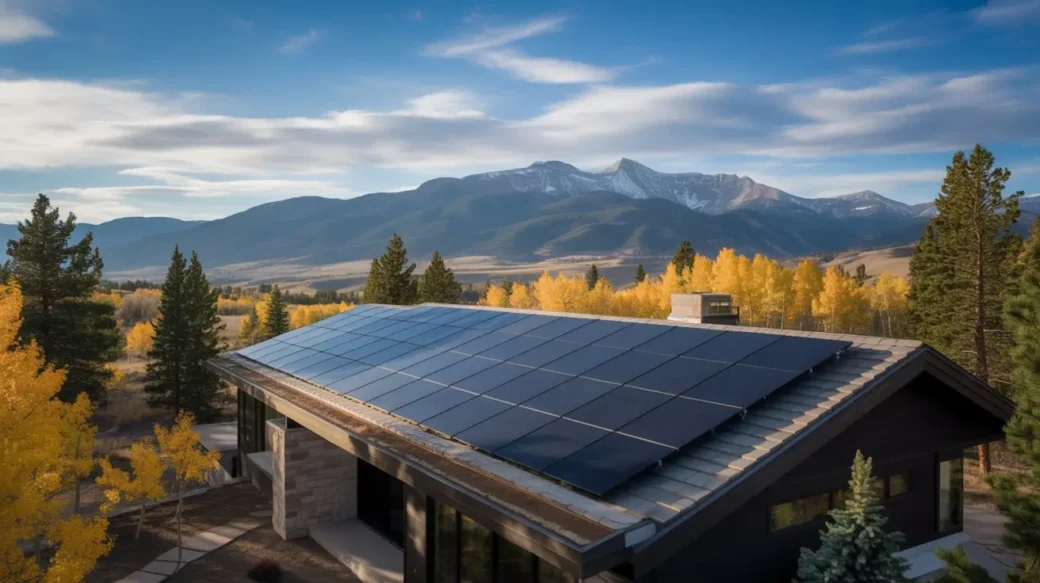
Federal Solar Tax Credit (IRS 30%) Explained
The federal ITC gives you a 30% credit on the total cost of your solar system, including installation labor and permitting. For the IRS Form 5695, you report the system’s placed-in-service date and the total eligible cost. You can verify current program requirements at the IRS Form 5695 guidance .
What Qualifies and What Homeowners Misunderstand
The 30% credit covers the solar panels, inverters, racking, wiring, and installation labor. It does not cover battery storage unless the battery is charged exclusively by solar. A standalone battery added later to an existing system does not qualify for the credit unless it meets specific IRS requirements.
State-Level and Utility Solar Rebates in Colorado
Colorado does not currently have a statewide solar rebate program in 2026. However:
- Xcel Energy’s Solar*Rewards program offers a production-based incentive for systems enrolled before the program cap is reached. The 2026 rate is approximately $0.025/kWh for the first 10 years of production. On an 8kW Denver system producing 10,800 kWh/year, that’s roughly $270/year in additional income, a meaningful bonus that many installers do mention, but enrollment availability is limited.
- Colorado’s property tax exemption, under C.R.S. § 39-3-118.5, exempts the added home value from a solar installation from property tax assessment. This means a $20,000 system that adds $15,000 to your home’s assessed value will not increase your property tax bill.
- Colorado’s sales tax exemption exempts residential solar equipment from state sales tax, saving approximately 2.9% on equipment costs.
Why Incentives Vary Between Utilities
Black Hills Energy customers in Pueblo and southern Colorado have different net metering terms and fewer utility incentive programs than Xcel customers. Colorado’s smaller rural electric cooperatives, like Intermountain Rural Electric Association, operate under different tariff structures with their own net metering rules, which are often less favorable than Xcel’s.
If you’re not an Xcel customer, your incentive picture looks different. Check your utility’s current Schedule RE or equivalent tariff before making any financial projections.
Do Solar Panels Increase Home Value in Colorado?
Yes — owned solar systems increase home value in Colorado, with studies showing an average premium of $15,000–$20,000 for a typical residential system in the Denver metro. But the keyword here is “owned.”
Residential Solar Panels Colorado Real Estate Impact
Lawrence Berkeley National Laboratory research, which analyzed Colorado home sales data, found that buyers pay a premium of approximately $4 per watt of installed solar capacity for owned systems. On an 8kW system, that’s a $32,000 potential value addition, though real-world appraisals in Colorado typically land in the $15,000–$22,000 range depending on age, condition, and market.
How Buyers View Solar Homes in Denver vs Rural Areas
In Denver, Boulder, and Fort Collins, buyers are actively looking for solar homes. The energy cost savings are tangible, and the environmental angle matters to a significant share of the buyer pool. In rural Colorado and mountain communities, buyer perception is more mixed; some buyers see solar as a maintenance concern rather than an asset.
Owned vs Financed System Value Differences
Here’s where many Colorado homeowners get a rude surprise during a home sale.
A leased solar system or one under a Power Purchase Agreement (PPA) is not an asset, it’s a liability. The new buyer must either assume the lease contract (which many are unwilling to do) or you must pay a buyout fee to transfer ownership. Lease buyout costs in Colorado typically run $8,000–$15,000 at the time of sale.
Real estate agents in Colorado’s Front Range markets report that leased solar systems routinely complicate closings and occasionally kill deals entirely.
When Solar Increases Home Value: and When It Doesn’t
Appraisal Factors Colorado Lenders Actually Consider
Colorado appraisers use the income approach or the comparable sales method to value solar. The income approach calculates the present value of future utility savings. For this to work, the appraiser needs documentation of the system’s production history and the local utility rate, data that many homeowners don’t have ready.
Without proper documentation, an appraiser may simply treat the system as a home improvement with standard depreciation, which undervalues it significantly.
System Ownership Status Is the Key Factor
To capture the full home value benefit from solar in Colorado, you must own the system outright, either through a cash purchase or a paid-off loan. A system still under a financing agreement or lease adds complexity that appraisers and buyers routinely discount.
Hidden Problems with Solar Panels in Colorado Homes
The financial case for solar is only part of the picture. The real-world process of going solar in Colorado involves delays, approvals, and utility bureaucracy that most installers gloss over during the sales process.
HOA Restrictions and Permitting Delays in Colorado
Colorado’s HB 1099 (Colorado Solar Access Act) limits HOAs from outright prohibiting solar installations, but it does allow them to regulate panel placement for aesthetic reasons. In practice, this means many Front Range suburban HOAs can require panels to be not visible from the street, a restriction that can force east or west placement instead of optimal south-facing installation.
Why Suburban Neighborhoods Slow Down Approvals
In communities like Parker, Castle Rock, and Highlands Ranch, HOA solar approval processes take 4–8 weeks and sometimes require architectural review board meetings that only convene monthly. If the installer submits drawings that don’t meet HOA design guidelines, the process restarts.
This delays your activation date and the point at which your savings start.
Design Restrictions Most Homeowners Don’t Expect
Some Colorado HOAs require panels to be flush-mounted with no visible racking, which limits the panel tilt angle and reduces production efficiency. Others specify panel color compatibility with roof color, which restricts panel brand and model choices.
Utility Interconnection Delays in Colorado Grid Systems
Installing the panels is not the same as going solar. You don’t save a dollar until Xcel or your utility activates your system and begins crediting your meter.
Why Installation Is Not the Same as Activation
After installation, your system goes through Xcel’s interconnection review — a technical process that verifies your system meets grid safety standards. As of 2026, Xcel’s residential interconnection queue has been running 6–14 weeks from application to approval.
During that window, your panels sit on the roof but produce no billable savings. You’re making loan or lease payments while waiting.
Backlogs in Xcel Energy Interconnection Queues
Xcel’s interconnection backlog is a real, documented issue. The Colorado Public Utilities Commission has flagged interconnection delay as a consumer protection concern. SolarInfoPath’s review of 2026 Colorado installer timelines found that the average gap between physical installation completion and system activation was 9.3 weeks for Xcel customers on the Front Range.
For homeowners who budgeted their first savings payment against their first loan payment, that two-month gap creates an unexpected out-of-pocket period.
One Limitation Most Installers Don’t Explain Upfront
Seasonal Solar Production Drop in Colorado Winters
Colorado gets extraordinary sun, but not evenly. December and January production for a Denver-area system running at full summer capacity drops by 45–55% due to shorter days and lower sun angles. Snow accumulation can reduce production further, though Colorado’s low humidity means snow typically slides off at a 15–20° panel tilt within 1–2 days of a storm.
The financial impact: your solar savings are much higher from April through September and significantly lower from October through March. If your heating is electric and your winter bills are your highest, the seasonal mismatch means you’re still paying substantial utility bills in winter even with solar.
Snow Coverage and Shorter Daylight Hours Impact
Homeowners in mountain communities, such as Breckenridge, Steamboat Springs, and Telluride, face a more severe version of this problem. Heavy snowfall, steep roof pitches that may not be optimal for solar, and reduced winter sun angles combine to make solar economics much tighter at elevation.
For mountain Colorado homeowners, the payback calculation requires a site-specific production estimate, not a Denver average.
Best Solar Panels for Colorado Weather Conditions
Colorado’s combination of intense UV exposure at altitude, significant hail risk on the Front Range, and heavy snow loads in mountain areas makes panel durability more important than in many other states.
How Solar Panels Perform in Colorado Snow and Hail
Colorado’s Front Range has one of the highest hail frequencies in the United States. Panels rated to IEC 61215 hail testing standards (25mm ice ball impact resistance) are the baseline minimum for Colorado installations. Premium panels with Class 4 impact resistance ratings offer better protection for high-hail-risk areas like Castle Rock, Greeley, and eastern Colorado.
Durability Requirements for High-Altitude Regions
At 5,000–8,000 feet of elevation, solar panels receive more intense UV radiation than at sea level. This accelerates light-induced degradation in lower-quality panels. Look for panels with a degradation rate under 0.5% per year; better panels hold closer to 0.3–0.35% annual degradation.
A panel degrading at 0.5%/year produces about 88% of its original output at year 25. At 0.35%/year, it produces about 91.5%. That difference adds up to approximately 1,200 kWh of production over the system’s life, real savings that justify the premium for better panels.
Why Panel Quality Matters More Than Brand Name
What struck me when I reviewed Colorado installer proposals was how often the brand name dominated the sales conversation while the warranty terms and degradation rate were buried on page 6 of the contract. A 25-year production warranty with a 0.5%/year degradation guarantee from a Tier-1 manufacturer matters more than the brand name on the panel.
Solar Efficiency Loss During Winter Months
Northern vs Southern Colorado Production Differences
Pueblo, Colorado, averages 5.6 peak sun hours per day annually. Fort Collins averages 5.1. Boulder sits at about 5.4. These differences compound over 25 years.
A 10kW system in Pueblo produces approximately 16,000 kWh/year. The same system in Fort Collins produces approximately 14,600 kWh/year. At $0.142/kWh saved, that’s a $196/year difference in savings, about $4,900 over the life of the system.
Weather Variation Impact on Yearly Output
The mountain and western slope of Colorado adds another variable: cloud cover. Grand Junction, despite being in a desert climate, sees more variable cloud cover than Denver due to weather patterns moving over the Rockies. Homeowners in those regions should request site-specific production estimates rather than accepting state-average projections.
Solar Financing in Colorado: What Changes the Math
How you pay for a solar system in Colorado changes the financial outcome more than almost any other factor. Two homeowners with identical homes, identical systems, and identical utility bills can have completely opposite financial outcomes based on financing structure alone.
Solar Financing Options in Colorado (Cash, Loan, Lease)
How Interest Rates Affect Total System Cost
At a 7.99% APR, common in Colorado’s 2026 solar loan market, a $24,000 system financed over 20 years carries total payments of approximately $43,000. That’s $19,000 in interest on top of the principal.
Solar savings at $1,500/year over 20 years total $30,000. Net financial result: a $13,000 loss.
This math is real, and it’s the math most financing-focused solar pitches don’t show you. For more details on how solar project financing structures affect homeowner outcomes, see our solar project debt and financing guide.
Why Financed Systems Often Reduce ROI
The only scenario where a solar loan produces a positive ROI is when the interest rate is low enough (under 5%), and the homeowner stays in the home long enough to let the savings outpace payments. In Colorado’s 2026 interest rate environment, that scenario requires either excellent credit, a home equity line of credit, or a state- or utility-backed low-interest loan program.
If you’re considering a solar loan above 6% APR, run the total-payment math before signing. Compare the total loan cost to the total projected savings over the same period. If savings don’t exceed total payments by at least 20%, the financing structure may not serve your financial interests.
Solar Loan vs Ownership Comparison in Colorado
Long-Term Cost Difference Between Payment Structures
| Payment Method | Upfront Cost | Total 25-Year Cost | 25-Year Savings | Net Outcome |
| Cash purchase | $17,346 (after ITC) | $17,346 | ~$43,000 | +$25,654 |
| Low-rate loan (4.99%) | $0 down | ~$32,000 total | ~$43,000 | +$11,000 |
| Market-rate loan (7.99%) | $0 down | ~$43,000 total | ~$43,000 | Break even |
| High-rate loan (10%+) | $0 down | ~$55,000+ total | ~$43,000 | -$12,000+ |
| Solar lease / PPA | $0 down | Monthly payments | Partial savings | Variable — often negative |
For a deeper look at how energy system cost structures affect long-term homeowner finances, our utility-scale and residential solar cost guide covers the financial frameworks that apply to both large and small systems.
Ownership Benefits vs Monthly Payment Traps
The ownership question also affects your tax credit eligibility. Only system owners can claim the 30% ITC. Lease and PPA customers receive none of it, the installer or financing company keeps the credit. You may receive a slightly lower monthly payment as a result, but you’re trading $6,000–$8,000 in federal tax savings for a contract that ties you to a third party for 20–25 years.
For the IRS rules governing what qualifies for the energy credit and who can claim it, our review of IRS Section 48 energy credit compliance breaks down the ownership and qualification requirements in plain language.
Final Decision: Is Solar Worth It in Colorado in 2026?
Solar is worth it in Colorado under specific, identifiable conditions, and not worth it under others. Here is an honest summary based on 2026 market data.
When Solar Makes Strong Financial Sense in Colorado
High Electricity Usage Homes in Denver and Colorado Springs
If you’re paying Xcel Energy more than $160/month consistently, have a south or west-facing roof with minimal shading, and can either pay cash or access financing under 5% APR, solar in Colorado produces a clear positive return over a 20–25 year horizon.
A homeowner in Thornton paying $185/month to Xcel with an 8kW system on a south-facing roof could realistically see:
- System cost after ITC: ~$16,800
- Annual savings (high self-consumption): ~$1,900–$2,100
- Payback period: 8–9 years
- 25-year net gain: $30,000–$35,000
That’s a genuinely good investment. Not a promise, a realistic projection based on current rates and production data.
Strong ROI Cases Based on Utility Rates
The strongest ROI cases in Colorado in 2026 are homeowners on Xcel Energy in Denver, Boulder, and Longmont who have high electricity usage (900+ kWh/month), good roof exposure, and are buying with cash or home equity. For those homeowners, the payback math is clear, and the 25-year return is substantial.
When Solar Is NOT Worth It in Colorado
Low-Bill Households and Shaded Roof Limitations
If your monthly Xcel bill is under $100, your roof has significant shade from trees or neighboring structures, or you’re planning to sell your home within 5 years, solar does not make financial sense in Colorado’s current market. The payback period will exceed 14–16 years, and you won’t recapture the cost through home value if the system is financed or leased.
Payback Period Becomes Too Long to Justify Investment
There’s no magic rule about what payback period is acceptable, but most financial planners suggest that if a home improvement doesn’t pay back within the expected ownership period, the investment serves equity (home value) more than savings. For Colorado solar, that means a homeowner planning to stay 10 years needs a payback period under 10 years to capture meaningful net savings.
The Real Tipping Point for Colorado Homeowners
Utility Rate Escalation vs System Production Stability
Here’s the honest tipping point calculation: your solar system’s production will decline very slowly (0.3–0.5%/year) for 25 years. Your Xcel Energy rate will almost certainly rise 2–4% per year based on historical patterns. That gap, stable production against rising rates — is what makes solar increasingly valuable over time for homeowners who own their systems.
The homeowners who regret going solar in Colorado are almost never the ones who bought with cash. They’re the ones who signed a 20-year loan at 8–10% APR, or leased a system they can’t sell with their home, or installed on a shaded roof that produces 60% of what was projected.
Why Timing Matters More Than Panel Choice
If you’re waiting for a better panel or a lower price, 2026 is a reasonable time to act. Colorado’s incentive environment is stable, Xcel rates are rising, and the federal ITC at 30% won’t improve beyond its current level. Panel prices have already dropped significantly from 2020 levels and are unlikely to fall meaningfully further.
The most important timing decision isn’t which panel to choose; it’s whether your financing structure actually works in your favor. To understand the full installation process before you commit, our guide on how long solar installation takes in America covers realistic timelines from contract signing to system activation.
Frequently Asked Questions About Solar Panels in Colorado
Is solar worth it in Colorado for low electricity users?
If your monthly bill is under $100, solar in Colorado rarely reaches a reasonable payback in under 14 years. For most low-usage homeowners, the investment doesn’t make strong financial sense at 2026 system costs and rates.
How much do solar panels cost in Colorado after incentives?
An 8kW system costs approximately $22,000–$26,000 installed. After the 30% federal ITC, your effective cost drops to $15,400–$18,200 for cash buyers. State and utility rebates can reduce this further, depending on your utility.
Does Colorado net metering still make solar profitable?
Yes, but the credit rate matters. Xcel Energy credits exported power at approximately 4.7¢/kWh, not the full retail rate. Homeowners who self-consume most of their solar production see significantly better savings than those who export heavily.
What is the average ROI for solar in Colorado homes?
For cash-purchased systems in Denver-area homes with high electricity usage, a 25-year ROI commonly runs 150–200%. For financed systems at market interest rates, ROI drops sharply and can be negative for high-rate loans.
Do solar panels increase home value in Colorado cities?
Owned solar systems increase home value in Colorado by an average of $15,000–$22,000 in metro markets like Denver, Boulder, and Fort Collins. Leased systems do not consistently increase value and can complicate home sales.
This article by SolarInfoPath (2026 research framework) is part of a comprehensive solar knowledge architecture covering all major high-value sectors including legal disputes (installation negligence, contracts, liability, fraud, lawsuits, liens, HOA and permitting disputes), financial structures (loans, PPA/lease agreements, DSCR financing, tax equity, investment and project finance), tax law (ITC, Section 48/25D, MACRS depreciation, bonus credits, IRS audits, recapture rules, domestic content and IRA/OBBBA compliance), insurance and risk (property damage, hail/wind/fire claims, bad faith insurance disputes, warranty coverage), policy and regulation (net metering, FERC interconnection, state utility rules, incentive programs and regulatory changes), commercial and utility-scale development (EPC contracts, construction delays, performance bonds, receivership, bankruptcy, asset sale and restructuring), real estate impacts (home value, solar leases, liens, title issues, HOA restrictions, easements), and emerging market structures such as battery storage, community solar, agrivoltaics, SRECs, yieldcos, and institutional investment funds. All content is based on publicly available regulatory, financial, and legal sources and is intended strictly for educational and informational purposes, not legal, tax, or financial advice. Readers should always verify current laws, utility policies, tax regulations, and contract terms with qualified licensed professionals before making decisions, as solar regulations, incentives, and financial structures frequently change across jurisdictions and time.

Solar Legal Analyst· Policy Researcher· Investigative Finance Writer Lead Analyst & Founder of SolarInfoPath
Morgan Lee is a solar legal analyst, policy researcher, and investigative finance writer with 12+ years of experience in U.S. renewable energy law, IRS tax credit compliance, and solar litigation. He is the founder of SolarInfoPath, a research-driven platform focused on primary-source analysis of solar contracts, tax law, regulatory policy, and industry disputes affecting homeowners and commercial developers.
His work is grounded in original legal and regulatory sources, including IRS notices, FERC and CPUC rulings, state court filings, PACER records, and UCC lien databases. He specializes in solar contract disputes, injury and workers’ compensation claims, PACE financing issues, tax equity structures, ITC recapture rules, MACRS depreciation, and federal and state solar policy frameworks.
Morgan’s analysis spans solar litigation, finance structures, and regulatory developments such as the IRA and OBBBA, interconnection reform, domestic content rules, and battery storage incentives. He also covers EPC contracts, PPAs, project financing, and utility-scale solar investment structures.