
Why Solar Panels Are Worth It in Ohio: Full Guide
Ohio homeowners tend to approach the solar conversation with honest skepticism, and that reaction is completely fair. The state is not exactly famous for sunshine. Lake Erie clouds roll across the northern half of the state for months at a time, winters are genuine, and the Midwest does not carry the same solar reputation as Arizona or California. But once you actually sit down with the numbers, why solar panels are worth it in Ohio becomes a lot clearer than most people expect going in. The state averages between $0.13 and $0.15 per kilowatt hour through utilities like AEP Ohio, Duke Energy Ohio, and FirstEnergy, and most of the state receives 4.0 to 4.5 peak sun hours daily.
That combination of moderate electricity rates and workable production hours, layered with the federal Investment Tax Credit, Ohio’s sales tax exemption, the property tax exemption on added home value, and an active net metering requirement across the state’s major utilities, creates a financial picture worth examining seriously. A good solar investment has never needed perfect weather, it needs decent production, a reasonable rate environment, and a policy structure that rewards homeowners for generating their own power. Ohio meets all three of those conditions more comfortably than most residents realize, and this guide walks through the full picture honestly so you can draw your own conclusions.
Ohio’s Electricity Rates and Sun Hours: What the Numbers Actually Show
Understanding your starting point matters before anything else in the Ohio solar conversation.
Why Ohio’s Rate and Production Combination Works
Ohio averages $0.13 to $0.15 per kWh, depending on your utility and location within the state. That rate is moderate compared to states like Massachusetts or New Jersey, but it is high enough to make solar production financially meaningful when paired with a properly sized system and Ohio’s net metering policy.
Peak sun hours across Ohio vary more than most homeowners realize. Southern Ohio cities like Cincinnati and Columbus receive around 4.3 to 4.5 peak sun hours daily. Northern Ohio cities, including Cleveland and Toledo, which sit closer to Lake Erie and experience more cloud cover from lake effect weather patterns, average around 3.9 to 4.2 peak sun hours. That geographic difference within the state is real and affects production estimates meaningfully enough to matter in your payback period calculation.
What This Means for a Typical Ohio Home
A typical Ohio home consuming around 900 to 1,000 kilowatt hours monthly represents a genuine target for solar offset. That consumption level at $0.14 per kWh produces a monthly electricity bill of roughly $126 to $140 before fixed charges. A properly sized solar system covering 75 to 80 percent of that consumption during daylight hours creates a real monthly bill reduction that compounds across 25 to 30 years of system life.
For a documented breakdown of how electricity rates and sun hours across different U.S. states translate into real annual savings, how much do solar panels save per year for U.S. residents covers the honest numbers worth understanding before forming any expectations.
Ohio Net Metering, How AEP, Duke, and FirstEnergy Handle Solar Credits
This is where things get tricky for Ohio solar research because the net metering picture here involves multiple utilities with somewhat different structures.
Ohio’s Net Metering Policy in Plain Terms
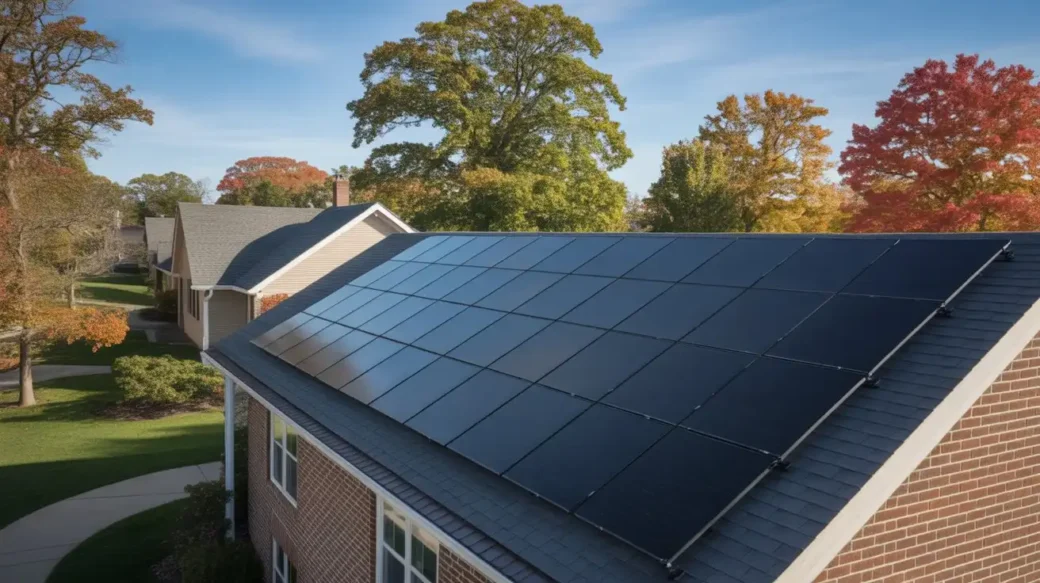
Ohio requires investor-owned utilities, including AEP Ohio, Duke Energy Ohio, and FirstEnergy subsidiaries like Ohio Edison and The Illuminating Company, to offer net metering to residential solar customers. Under this policy, any surplus electricity your panels produce flows to the grid and credits your account against future consumption.
The credit rate Ohio homeowners receive for surplus electricity is an area worth understanding clearly before sizing your system. Ohio’s net metering credit rates have been a subject of ongoing regulatory discussion in the state. Generally speaking, credits are applied against your bill for surplus production, but the specific rate and structure can vary by utility. This makes right-sizing your system to your actual consumption particularly important in Ohio rather than oversizing to maximize grid exports.
How Utility Territory Affects Your Ohio Solar Picture
If your home is in Columbus, you are likely an AEP Ohio customer. Cincinnati area homeowners generally fall under Duke Energy Ohio. Cleveland, Akron, and Toledo area homeowners typically deal with FirstEnergy subsidiaries. Each utility has its own interconnection process, net metering structure within state guidelines, and timeline for approvals. Understanding which utility serves your specific address is one of the first practical steps in any honest Ohio solar evaluation.
To understand how Ohio’s net metering policy compares to the structure in other U.S. states and what different credit rate approaches mean for your annual savings, is net metering worth it in the USA for Homeowners Today covers the full state-by-state comparison without oversimplifying.
Reasons to Get Solar in Ohio — Federal and State Incentives Available Now
Ohio does not have a state income tax credit specifically for solar installation, the way Massachusetts does, and that is worth knowing upfront rather than discovering after building expectations around a program that does not exist here.
What Ohio homeowners do have access to is a meaningful set of programs that collectively create a solid financial foundation for the right installation.
Here is what Ohio homeowners can currently access:
- Federal Investment Tax Credit covering the total installed system cost, including panels, inverter, racking, wiring, and labor performed by licensed contractors
- Ohio’s sales tax exemption on solar energy equipment reduces your upfront purchase cost at the point of sale
- Ohio’s property tax exemption means your home’s increased assessed value from solar does not trigger higher annual property tax payments
- Ohio net metering credits through your specific investor-owned utility under state requirements
- Federal Modified Accelerated Cost Recovery System depreciation for any business use portion, if applicable
How the Sales Tax and Property Tax Exemptions Work Quietly in Your Favor
One thing people often miss when evaluating why install solar panels in Ohio is how much the sales tax and property tax exemptions contribute to the financial picture without requiring any ongoing action. Ohio’s sales tax rate is 5.75 percent at the state level plus applicable county rates. On a $15,000 system, that exemption represents real upfront savings at purchase. The property tax exemption protects you from a higher annual tax assessment every year for the full life of your system. These two programs work quietly in the background, compounding value year after year without appearing in any headline savings figure.
For a complete explanation of how the federal ITC works and what documentation you need to claim it correctly on your return, how the federal solar tax credit works in the USA walks through the process clearly without jargon.
To understand whether you meet the specific eligibility requirements for federal and applicable Ohio incentive programs, who is eligible for solar incentives in the USA covers the qualification criteria that homeowners need to verify before planning around any program.
Ohio City Level Solar Comparison
Solar performance varies meaningfully across Ohio’s geography. Here is a realistic city-level picture for the state’s main population centers:
| City | Avg Sun Hours Per Day | Avg System Cost | Est. Annual Savings | Utility |
| Columbus | 4.4 | $12,500 to $16,500 | $850 to $1,200 | AEP Ohio |
| Cincinnati | 4.5 | $12,500 to $16,500 | $900 to $1,250 | Duke Energy Ohio |
| Cleveland | 4.0 | $12,000 to $16,000 | $750 to $1,100 | FirstEnergy / Illuminating Co. |
| Akron | 4.1 | $12,000 to $16,000 | $780 to $1,120 | FirstEnergy / Ohio Edison |
| Toledo | 4.0 | $12,000 to $15,500 | $750 to $1,050 | FirstEnergy / Toledo Edison |
| Dayton | 4.3 | $12,500 to $16,000 | $830 to $1,180 | AEP Ohio / Duke Energy Ohio |
If you pay attention to where your city falls in this table, the north versus south difference within Ohio becomes clear. Cincinnati and Columbus homeowners benefit from meaningfully more peak sun hours annually than Cleveland and Toledo homeowners. Over a 25 to 30 year system life, that difference accumulates into a significant total production gap between identical systems in different parts of the state.
The Financial Case for Ohio Solar, Real Numbers From a Real City
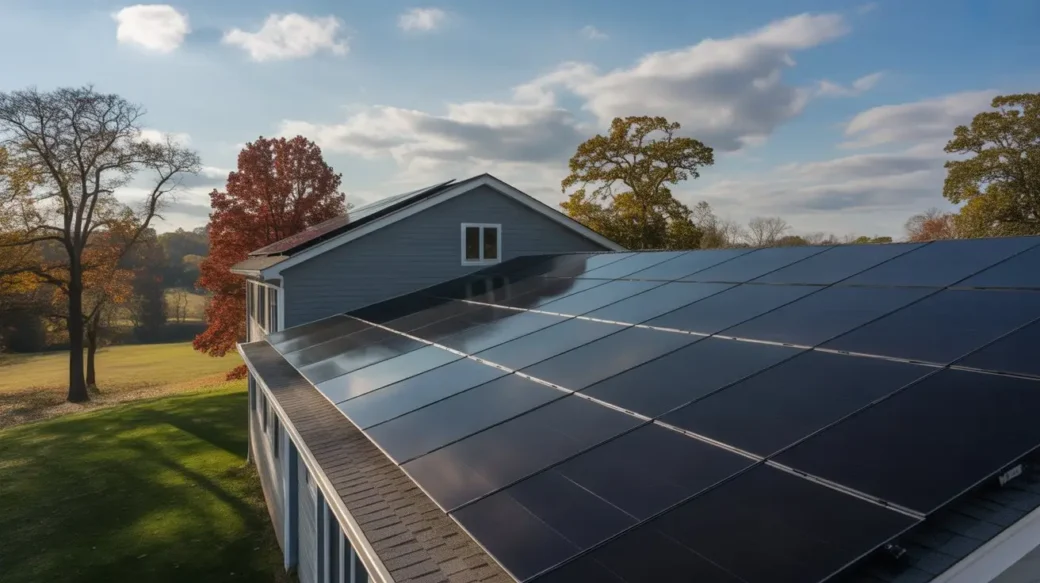
What surprised me when I looked carefully at Ohio solar economics is how the payback period compares favorably to states people assume are better solar markets simply because of their sun hours.
A Columbus Homeowner Example Worth Walking Through
A homeowner in Columbus consuming around 950 kilowatt hours monthly pays approximately $133 to $143 per month through AEP Ohio at current rates. A properly sized 7.5-kilowatt system on a south-facing roof in Columbus costs between $13,000 and $16,500 before incentives. After the federal ITC, the effective cost drops to roughly $9,600 to $12,200, depending on the final project cost. Annual electricity bill savings in the range of $900 to $1,200 produces a payback period that, for many Columbus homeowners,s falls between eight and twelve years.
That payback range is for a system designed to operate 25 to 30 years. After payback, the remaining system life represents electricity produced at zero marginal fuel cost, offsetting whatever AEP Ohio charges in years thirteen through thirty. Given that utility rates have historically trended upward over time, locking in a portion of your electricity production today has compounding value that straightforward payback period math does not fully capture.
Why Ohio Winters Affect Production But Not the Annual Case
Ohio winters are genuine. Heavy cloud cover from November through February, lake effect snow in northern Ohio, and short winter days all reduce production during those months noticeably. This is worth knowing, honestly, rather than discovering after installation with unrealistic expectations.
What matters financially is the annual production total, not any single month’s output. Ohio’s net metering structure carries credits from high production summer months into low production winter months, which is exactly how a four-season climate should be handled by a solar financial model. The seasonal imbalance in production does not break the financial case. It is simply part of how Ohio solar performs in real conditions.
For a complete picture of what solar systems cost across the country and how Ohio pricing fits into the national range, how much do solar panels cost in the USA gives realistic current pricing worth having before evaluating any specific installer quotes.
To understand what the full financial timeline looks like from installation through payback and into the post-payback period for systems in Midwest states like Ohio, what is the solar payback period in the USA, covers the honest math without optimistic assumptions.
Solar Panels Good for Ohio Environment, What Actually Changes
Ohio’s electricity grid relies heavily on natural gas and coal generation for a significant share of its power. When homeowners across Columbus, Cincinnati, Akron, and Dayton generate clean electricity from rooftop solar, they directly reduce demand on that combustion-based generation during the peak daytime hours when solar production and electricity demand overlap.
Why Ohio’s Grid Mix Makes Residential Solar Environmentally Meaningful
As reported by the U.S. Energy Information Administration, Ohio’s electricity generation mix includes a substantial fossil fuel component, meaning each kilowatt hour produced by residential solar displaces a kilowatt hour that would otherwise come from combustion sources. That displacement is real and measurable at a household level and cumulative at a regional level as adoption grows across the state.
From my point of view, the environmental case for solar in Ohio is actually stronger than it would be in states with cleaner grid mixes, precisely because Ohio’s grid still relies so heavily on fossil fuel generation. Each solar kilowatt hour here has a higher displacement value than the same kilowatt hour would in a state where grid power already comes largely from nuclear or renewable sources.
For a broader context on how solar panels affect the environment across different U.S. states and grid mixes, environmental impact of solar panels for U.S. homes covers the full picture honestly.
To understand how solar installation affects your Ohio home’s market value alongside the environmental and financial benefits, do solar panels increase home value in the USA covers what the research shows across different U.S. markets including Midwest states.
Final Thoughts
For a lot of Ohio homeowners, the solar conversation starts with doubt and ends somewhere much more interesting once the actual numbers come into view. The state does not have the sun hours of Nevada or the electricity rate premium of Massachusetts, and nobody credible is pretending otherwise. But the honest answer to whether solar panels are worth it in Ohio is a genuine yes, for homeowners in the right situation, with realistic expectations and a plan to stay in their home long enough to reach and move past the payback period.
Payback timelines in the eight to twelve year range on systems designed to operate for 25 to 30 years represent a solid financial outcome by any reasonable measure. The federal ITC reduces your effective cost meaningfully in year one. The sales tax exemption cuts into your upfront purchase price at the point of sale. The property tax exemption quietly protects your annual tax bill for the full life of the system. Ohio’s net metering policy across AEP, Duke Energy, and FirstEnergy territories carries summer surplus credits forward into winter months, which is exactly the right structure for a four-season climate with seasonal production swings.
The northern cities deal with more cloud cover than Columbus or Cincinnati, and that difference is real over a 25-year production life. But it does not break the case, it simply means system sizing and city-specific production estimates matter more here than in states with more uniform sun exposure. Ohio solar is not the loudest pitch in the country, but for homeowners who look at it carefully, it holds up to scrutiny, and that is ultimately what matters most.
Frequently Asked Questions
Why are solar panels worth it, specifically for Ohio homeowners?
Ohio’s combination of moderate electricity rates, federal ITC, sales and property tax exemptions, and active net metering through AEP Ohio, Duke Energy Ohio, and FirstEnergy creates a payback period of eight to twelve years for well-sized systems on good roof conditions.
What are the main benefits of solar panels for Ohio homeowners?
Lower electricity bills, federal tax credit savings in year one, sales tax exemption on equipment, property tax exemption on added home value, and long-term protection against AEP Ohio and Duke Energy Ohio rate increases are the primary financial benefits.
How does net metering work for Ohio solar homeowners?
Ohio requires investor-owned utilities to offer net metering to residential solar customers. Surplus electricity earns bill credits that offset future grid consumption, making right-sized systems that match your annual consumption the most financially efficient approach.
Are solar panels good for the Ohio environment?
Yes. Ohio’s grid still relies heavily on natural gas and coal generation, meaning residential solar directly displaces combustion-based electricity during peak daytime production hours across the AEP, Duke, and FirstEnergy service territories.
What is the typical payback period for solar in Ohio?
Most Ohio homeowners see payback in eight to twelve years, depending on system size, city location within the state, and actual household consumption, for systems designed to operate 25 to 30 years total.
Does Ohio have state solar incentives beyond the federal tax credit?
Ohio does not have a state income tax credit for solar, but it does offer a sales tax exemption on solar equipment purchases and a property tax exemption on the assessed value increase that solar installation creates on your home.

Morgan Lee is a homeowner and solar energy researcher based in the United States. After installing a rooftop solar system in 2022 and spending months comparing quotes, incentives, and installer reviews, Morgan realized how confusing and overwhelming the process felt for most American families. That experience led to the creation of SolarInfoPath, a no-pressure, educational platform designed to help U.S. homeowners understand solar energy clearly and confidently. Morgan focuses on practical, research-backed information covering solar costs, installation timelines, federal tax credits, and long-term savings. All content on this site is written from a homeowner’s perspective with the goal of making solar energy simple and accessible for everyday Americans.