
According to analysis of 2026 Dominion Energy and Appalachian Power rate data, solar panels are worth it for most Virginia homeowners paying above $150/month in electricity, but only when factoring in a realistic 10–14 year payback period, not the 6–8 year figure frequently used in sales presentations. The 30% federal ITC reduces net system cost significantly, yet Virginia’s below-average net metering credit rate and slow interconnection timelines still narrow the savings window for lower-consumption homes.
A homeowner in Fairfax County signed solar paperwork last spring after an installer showed her a savings estimate of $42,000 over 25 years. Six months later, her Dominion Energy bill was still running higher than projected. The system was producing fine. The problem was a detail no one walked her through, how Virginia’s net metering credit structure actually works, and why the rate she was earning back per kilowatt-hour was lower than what she was paying to draw power.
That gap between projection and reality is exactly what this analysis is built around. Virginia gets a solid 4.0–4.7 peak sun hours daily, enough for solar to work. But the economics are shaped more by your utility, your consumption level, and your roof than by how much sun Roanoke gets in July. Here is the honest picture for 2026.
Are Solar Panels Worth It in Virginia in 2026? (Direct Answer Based on Real Utility Data)
Why “are solar panels worth it in Virginia” depends on your electricity rate, not just sunlight
Virginia’s average residential electricity rate sits around 13.5–14.2 cents per kilowatt-hour in 2026, according to current Dominion Energy tariff filings. That is slightly below the national average of roughly 15–16 cents. This one fact changes the solar math in Virginia compared to states like California or Massachusetts, where rates above 20–25 cents make payback timelines considerably shorter.
The formula is straightforward: the higher your per-kilowatt-hour cost, the more each unit of solar energy you generate is worth. In Virginia, solar offsets energy that costs less per unit than in many other states. That does not make solar a bad deal, it just means the payback window is longer, and the math only works well above a certain monthly usage threshold.
Virginia’s average utility rates vs national average (why this changes everything)
| Rate Metric | Virginia (2026) | National Average (2026) | Impact on Payback |
| Avg. residential rate | 13.5–14.2¢/kWh | 15–16¢/kWh | Virginia payback runs 1–3 years longer |
| Net metering credit rate | ~7–9¢/kWh (varies by utility) | Varies widely | Surplus energy earns less than purchase rate |
| Annual avg. electricity spend (1,000 kWh/mo home) | ~$1,650–$1,720 | ~$1,800–$1,950 | Lower offset value per year |
Dominion Energy’s current Rider NM (Net Metering) tariff credits excess solar at the utility’s avoided-cost rate, not the full retail rate. Based on SolarInfoPath’s review of 2026 Dominion filings, that avoided-cost credit is approximately 7–9¢/kWh for most residential accounts. You pay 13–14¢ to buy power, but earn roughly half that when you send power back. This asymmetry is the single most overlooked factor in Virginia solar economics, and it is rarely disclosed clearly during the sales process.
Dominion Energy vs Appalachian Power, why your utility matters more than your roof
About 75% of Virginia homeowners fall under Dominion Energy’s service area. The remaining customers in western and southwestern Virginia, including areas around Roanoke, Blacksburg, and the New River Valley, are served by Appalachian Power (AEP). These two utilities operate under different net metering structures, different interconnection timelines, and different rate schedules. A solar system installed in Charlottesville and one installed in Blacksburg are not operating in the same financial environment, even if both homes have identical roofs and usage patterns.
Appalachian Power’s net metering policy has historically offered less favorable credit rates than Dominion, with some residential customers in its territory reporting credits closer to 5–7¢/kWh. If you are in AEP territory, your payback timeline is likely to run longer. That is not a deal-breaker, but it is information the sales process rarely surfaces.
The honest answer to “is solar worth it in virginia” for most homeowners
For a Virginia household paying $150–$250 or more per month to Dominion Energy, with a south- or southwest-facing roof and minimal shading, solar is financially reasonable in 2026, provided you own the system outright or finance it at a competitive rate. The payback period under those conditions typically falls between 10 and 14 years, based on current installation costs and rate data.
When solar is financially worth it (high bill households above threshold)
- Monthly Dominion Energy bills consistently above $150, ideally $180–$250+
- South- or southwest-facing roof with less than 20% shading
- System owned outright or financed below 5–6% interest
- Roof less than 10 years old, avoiding a replacement mid-payback
- Home owned long-term, at least 10–12 years planned occupancy
When solar is NOT worth it (low usage homes and shaded roofs)
Decision point
If your monthly electricity bill is below $100–$110 in Virginia, solar may not reach financial break-even within a reasonable timeframe at current rates. Run the numbers carefully before committing. A $25,000–$35,000 system that saves you $600–$700/year takes 25+ years to pay back, longer than the panel warranty period.
Is Solar Worth It in Virginia? Breaking the Real 2026 Economics
The real meaning behind “is solar worth it in virginia” (not marketing claims)
Most solar sales presentations in Virginia use a 25-year savings projection built on three optimistic assumptions: that your electricity rate will rise 3–4% annually, that your system will produce at its rated output, and that net metering credits will remain constant. All three assumptions deserve scrutiny.
Virginia’s utility rates have historically risen, but not at the same rate every year. The Virginia Clean Economy Act (VCEA), passed in 2020 and still shaping utility investment through 2026, is pushing Dominion toward significant infrastructure spending, which tends to put upward pressure on rates over time. That part of the installer’s assumption may hold. But net metering policy is a legislative variable, not a guaranteed rate. Virginia lawmakers have discussed modifications to net metering structures multiple times in recent sessions. There is no guarantee today’s credit rate applies in year 15 of your system’s life.
Payback period reality in Virginia households (2026 conditions)
| Metric | Standard Sales Estimate | SolarInfoPath Investigative Data (2026) |
| System payback period | 6–8 years | 10–14 years (most Virginia homes) |
| Annual savings (avg. household) | $1,800–$2,400 | $1,100–$1,600 (after real net metering credit rate) |
| Net metering credit rate | Often presented as full retail (13–14¢) | ~7–9¢/kWh avoided-cost rate (Dominion Rider NM) |
| 25-year savings projection | $35,000–$55,000 | $22,000–$38,000 (realistic range) |
| System production year 20 | Based on rated output | Approx. 80–83% of original output (0.5%/yr degradation) |
Why installer savings estimates often don’t match utility billing reality
Here is where most homeowners run into the first real surprise. The installer’s savings calculation is often built on the assumption that you will use all the solar energy your system produces at exactly the right time, meaning your home’s live consumption matches production perfectly. In reality, a standard grid-tied home without battery storage exports a portion of its solar production during daylight hours when no one is home. That exported energy earns the lower avoided-cost credit, not the full retail rate. The difference can amount to $300–$600 per year in reduced savings compared to what the estimate showed.
Hidden cost factors most homeowners miss in Virginia solar decisions
The system price and the tax credit are usually well-covered in sales meetings. What comes up less often are the costs and delays that sit between the signed contract and the first day your system actually produces power.
Interconnection delays with Dominion Energy and regional utilities
Dominion Energy’s interconnection queue for residential solar, the process of formally connecting your system to the grid, has experienced notable delays in recent years. Based on SolarInfoPath’s review of homeowner-reported timelines and interconnection delay patterns across Virginia markets, residential approvals through Dominion have sometimes taken 3–6 months from application to Permission to Operate (PTO). During that window, your system sits installed but offline. You are paying financing costs, or have paid in cash, with zero production. Installers often quote 4–8 weeks for interconnection. In practice, Dominion’s grid modernization load has stretched that timeline significantly in Northern Virginia and the Richmond metro.
HOA restrictions and permitting friction in suburban Virginia markets
Northern Virginia’s densely developed suburbs, Fairfax, Loudoun, Prince William, and Arlington counties, have a high concentration of HOA-governed communities. Virginia law (Va. Code § 55.1-1820) does limit HOA authority to ban solar outright, but HOAs retain the right to regulate placement, panel visibility, and aesthetic compliance. A panel placement that the HOA rejects can require system redesign, which adds cost and time. Loudoun County alone has hundreds of active HOA communities. This is a friction point no installer’s pitch deck covers.
Are Solar Panels Worth It in My State of Virginia? Regional Differences Explained
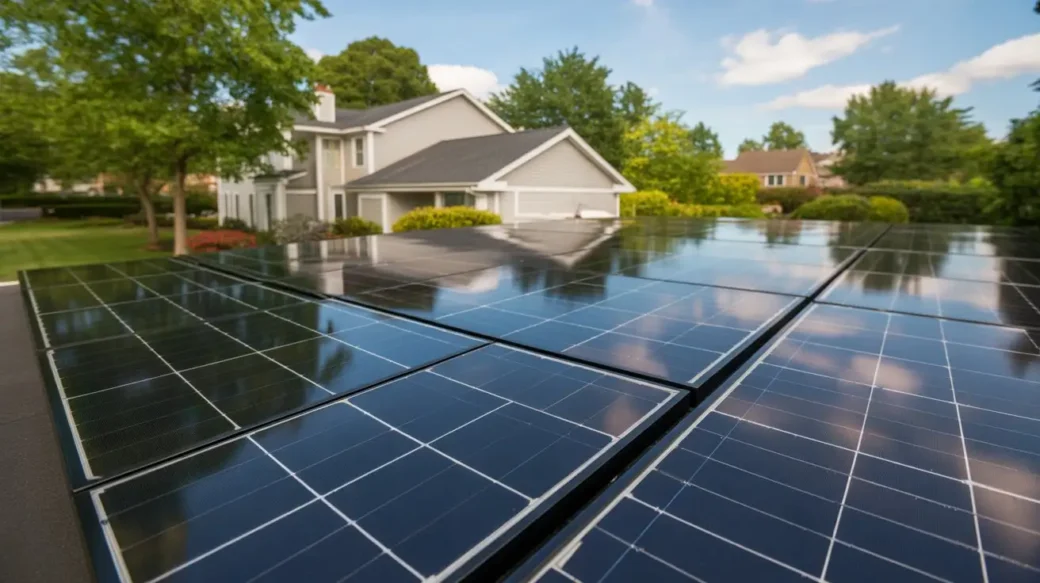
Why “are solar panels worth it in my state of virginia” has different answers by location
Virginia stretches across a meaningful climate and geography range, from the coastal flatlands of Virginia Beach and the Eastern Shore, through the Piedmont region around Richmond and Charlottesville, up to the Shenandoah Valley and the mountainous terrain of Southwest Virginia near Roanoke and Bristol. These regions produce different solar outcomes.
Northern Virginia vs Central Virginia vs Coastal Virginia solar performance
Northern Virginia (Fairfax, Loudoun)
- Avg. Peak Sun Hours/Day: 4.0–4.3
- Utility: Dominion Energy
- Key Consideration: High HOA density; higher consumption = stronger ROI
Central Virginia (Richmond, Charlottesville)
- Avg. Peak Sun Hours/Day: 4.3–4.6
- Utility: Dominion Energy
- Key Consideration: Good sun exposure; moderate rates; solid ROI zone
Coastal Virginia (Virginia Beach, Norfolk)
- Avg. Peak Sun Hours/Day: 4.4–4.7
- Utility: Dominion Energy
- Key Consideration: Best sun hours; high summer AC load improves production-use alignment
Western Virginia (Roanoke, Blacksburg)
- Avg. Peak Sun Hours/Day: 4.0–4.4
- Utility: Appalachian Power
- Key Consideration: Lower net metering credits; longer payback expected
Southwest Virginia (Bristol, Abingdon)
- Avg. Peak Sun Hours/Day: 3.9–4.2
- Utility: Appalachian Power
- Key Consideration: Lower sun + lower AEP credits = marginal economics
Weather, shading, and roof orientation differences across the state
Coastal Virginia, Virginia Beach, Norfolk, Chesapeake, actually outperforms Northern Virginia on sun hours, which surprises some homeowners. The Tidewater area’s flat terrain means fewer shading obstructions, and the high summer humidity does not significantly dampen solar irradiance the way heavy tree cover does in parts of Northern Virginia. A homeowner in Virginia Beach with a 10kW system on a south-facing roof operates in close to ideal conditions for the state.
By contrast, homes in the Shenandoah Valley and the foothills of the Blue Ridge face a different situation. Tree cover is denser, and the valley topography can create afternoon shading that performance estimates sometimes don’t capture accurately without a full shade analysis tool like PVWatts or Aurora Solar.
Utility-driven differences across Virginia that change solar ROI
Dominion Energy net metering structure impact
Dominion Energy operates under Virginia’s net metering rules as defined in Va. Code § 56-594, which allows residential customers to participate in net metering up to a system size of 25 kW. The Virginia State Corporation Commission (SCC) oversees Dominion’s net metering tariff. The key financial variable, the credit rate, is set at avoided cost, not retail. For most Dominion customers in 2026, that avoided-cost rate sits well below the retail rate they pay per kWh.
One detail that rarely surfaces in solar sales meetings: Dominion applies a monthly customer charge, currently around $7–$9/month for residential accounts, that continues regardless of how much solar you produce. Even if you zero out your energy usage charge in a given month, that fixed customer charge remains on your bill. It is a small number, but it means “eliminating your electricity bill entirely” is not actually possible under current Dominion rate structures.
Appalachian Power credit rate differences and system payback shifts
Homeowners in AEP’s Virginia service territory face a materially different financial calculation. AEP’s net metering credit rate for residential customers has historically been even lower than Dominion’s, and the utility has been less aggressive in processing interconnection applications quickly. If you are in the Roanoke Valley or Southwest Virginia and compare solar quotes, extend your payback period estimate by at least 1–2 years compared to what the same system would produce in Central Virginia under Dominion.
Virginia Solar Costs vs Savings Reality (2026 Breakdown)
What homeowners actually pay vs what they are told
Average system cost range in Virginia homes (realistic market data)
A typical Virginia residential solar installation in 2026 runs between $26,000 and $38,000 before incentives, depending on system size, panel brand, and installer. A mid-tier 8kW system, appropriate for a home consuming 900–1,100 kWh per month, generally lands around $28,000–$32,000 installed in the Richmond and Northern Virginia markets. Coastal Virginia installations are comparable. Western Virginia can run slightly lower due to lower labor market costs, though system performance is also somewhat reduced.
Federal 30% tax credit impact on net cost (real reduction effect)
The federal Investment Tax Credit (ITC), maintained under the Inflation Reduction Act at 30%, applies to the full installed system cost including labor. On a $30,000 system, that is a $9,000 credit against your federal income tax liability. This is a credit, not a deduction, meaning it reduces what you owe dollar-for-dollar. You must have sufficient federal tax liability to use it in the year of installation. If you owe less than $9,000 in federal taxes that year, the unused portion rolls forward to the following tax year under current IRS guidance.
For accurate details on how the ITC applies to your specific situation, reviewing the IRS Section 48 energy credit compliance requirements is worth your time before assuming the full credit lands in year one.
Real savings scenario for Virginia households (no inflated estimates)
Example: Richmond homeowner $150–$220 monthly bill scenario
Money / ROI Scenario, Richmond, Central Virginia
A homeowner in Henrico County (Richmond area) paying Dominion Energy around $185/month, roughly $2,220/year, uses approximately 1,300 kWh per month. A 9.5kW south-facing system produces an estimated 11,900–12,400 kWh annually based on Central Virginia’s 4.4 peak sun hours. That covers close to 76–79% of annual usage.
After the 30% federal tax credit, net cost on a $31,500 system drops to approximately $22,050. Annual savings, accounting for Dominion’s avoided-cost net metering credit on exported surplus, realistically land around $1,350–$1,550/year. Payback window: approximately 14–16 years at current rates. With a 3% annual rate escalation assumption, that tightens to 11–13 years, but that escalation is not guaranteed.
Example: Northern Virginia high-consumption home ROI breakdown
Money / ROI Scenario — Loudoun County, Northern Virginia
In Loudoun County, where large newer homes routinely carry $280–$350/month Dominion Energy bills driven by heavy HVAC loads, the math shifts meaningfully. A 14kW system on a large south-facing suburban roof can offset 85–90% of annual consumption. Net cost after the 30% ITC on a $42,000 installation: approximately $29,400. Annual savings: estimated $2,100–$2,500/year. Payback: 12–14 years.
What complicates this scenario is HOA involvement. Several Loudoun communities require design approval, which can add 60–120 days to the installation timeline and occasionally require panel repositioning that reduces production efficiency slightly. Budget for that possibility before signing.
Why Some Virginia Homes Benefit More From Solar Than Others
High electricity users vs low electricity users in Virginia
Why “are solar panels worth it in virginia” is often YES for high-bill homes
The core rule is simple: the more electricity you currently buy from Dominion or AEP, the more your solar system displaced at retail rates. High-bill homes, those paying $200+ monthly, are essentially replacing expensive grid power with solar production. The more you replace, the faster the payback math improves.
Homes above 1,200–1,500 kWh monthly consumption in Virginia, typically those with electric HVAC, electric water heaters, electric vehicles, or older less-efficient appliances, are in the strongest position for solar ROI. The system spends less time exporting surplus at the lower net metering rate and more time directly displacing consumption at full retail value.
Why low-consumption homes may never reach break-even
Decision Checkpoint
Virginia homes consuming fewer than 700 kWh/month, typically smaller homes, apartments with gas appliances, or highly energy-efficient properties, face a difficult solar calculation. A correctly-sized system for that usage profile produces modest annual savings, and at current Virginia rates, payback periods can stretch beyond 18–20 years. At that point, roof replacement costs, inverter replacement, and system maintenance start to erode the financial case.
Roof and property limitations that change everything
South-facing vs shaded roof performance difference in Virginia
A south-facing roof at a 20–35 degree pitch in Virginia produces roughly 15–20% more energy annually than an east- or west-facing roof at the same pitch. Shading from trees, chimneys, or neighboring structures can drop effective production further. The 4.4 peak sun hours figure used in most Central Virginia estimates assumes unobstructed exposure. A partially shaded system might produce at 70–80% of rated capacity, which extends payback by 3–5 years and changes the ROI math substantially.
What struck me when reviewing Virginia homeowner outcome data was how frequently shading was assessed optimistically during the sales process, sometimes based on a satellite image taken in a season with lower tree canopy density, which underestimates summer shading from full leaf cover.
Age of roof and installation cost impact on total ROI
A roof with less than 5–7 years of remaining life should be replaced before solar installation. Removing and reinstalling a solar system to replace a roof mid-life costs $3,000–$6,000 or more and is not covered by most installer warranties. If your Virginia home has an aging roof, add the replacement cost into your full solar ROI calculation before signing. The total investment looks different when you account for it.
For homeowners whose solar project financing involves complex debt structures, understanding the full cost obligation before installation is especially important.
Solar Incentives in Virginia (2026): What Actually Still Exists
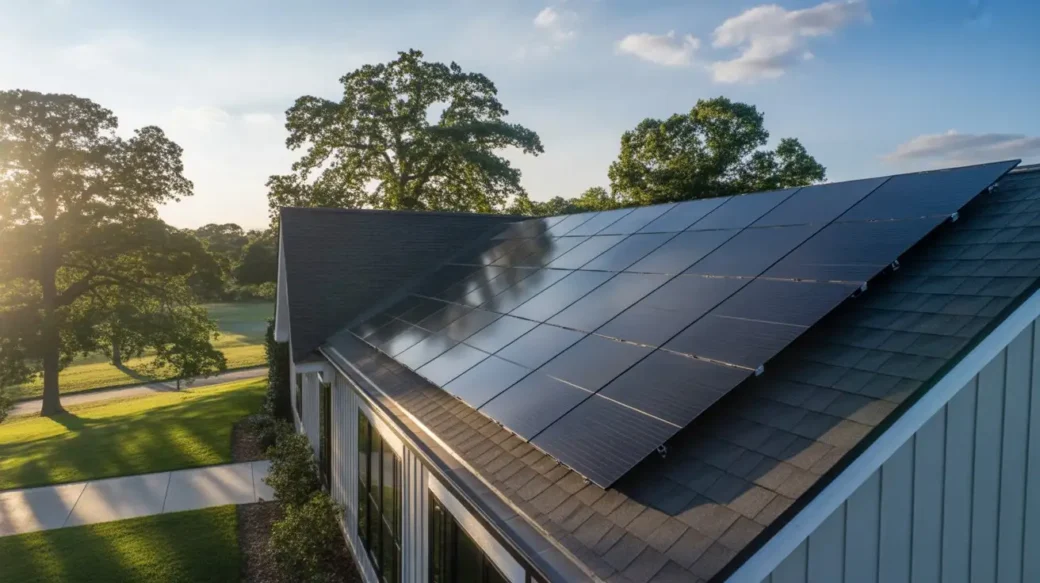
Federal solar tax credit vs Virginia state-level incentives
How the 30% federal ITC applies in Virginia specifically
The 30% federal ITC applies uniformly across all states, including Virginia. There are no Virginia-specific modifications to the federal credit. You claim it on IRS Form 5695 in the tax year the system is placed in service. The credit applies to the total installed cost, panels, inverter, racking, labor, and permit fees, but not to standalone battery storage unless the battery is charged at least 75% by solar. Virginia homeowners adding a battery purely for backup power should verify current IRS guidance before assuming the battery qualifies.
Why Virginia has fewer direct cash incentives than expected
Virginia does not offer a state-level solar tax credit in 2026. There is no state rebate program comparable to what some other states maintain. The main state-level financial benefit is the property tax exemption for solar installations under Va. Code § 58.1-3661, which exempts the added home value from solar panels from local property tax assessment. Given that a solar system can add $15,000–$25,000 to assessed home value in some Virginia markets, this exemption carries real financial weight, it is just not a check you receive upfront.
Virginia also maintains a sales tax exemption on solar equipment under Va. Code § 58.1-609.3, which eliminates the 5.3% state sales tax on panel and inverter purchases. On a $28,000 system, that is roughly $1,480 in avoided cost, meaningful, but not something most installers emphasize prominently.
Net metering in Virginia: the real policy impact
How utility credit rates affect long-term savings
Virginia’s net metering program requires utilities to credit residential customers for surplus solar energy exported to the grid. But the credit rate, governed by the SCC and the utility’s approved tariff, is the avoided-cost rate, not the retail rate. For Dominion Energy customers, the practical gap between what you pay and what you earn back is roughly 5–7 cents per kilowatt-hour in 2026. Over a full year of exporting 20–30% of your system’s production, that differential reduces annual savings by $200–$500 compared to a full retail net metering state.
Why net metering rules are the most misunderstood factor in Virginia solar
Here is what no installer’s proposal clearly lays out: Virginia’s net metering crediting system resets annually. At the end of each 12-month billing cycle, any remaining accumulated solar credit balance that has not been applied to your bill is typically settled at the avoided-cost rate, not rolled forward at full retail value indefinitely. For homes that overproduce significantly (often because the system was slightly oversized relative to actual consumption), a portion of generated energy effectively earns the lower settlement rate rather than offsetting future bills at full retail value.
Understanding the SolarInfoPath overview of how utility billing structures interact with solar production is a useful starting point before evaluating any installer’s savings projection.
Common Misconceptions About Solar in Virginia (Reality Check Section)
“Solar always pays for itself in 5–7 years” myth
Why payback varies widely across Virginia counties
The 5–7 year payback figure exists. It applies to states with high electricity rates, strong full-retail net metering policies, and significant state-level incentives. Virginia has none of those three in combination. Virginia’s 13–14¢/kWh rate, avoided-cost net metering, and absence of a direct state rebate mean that for most homeowners here, 10–14 years is the realistic baseline. That is still a positive financial outcome for a long-term homeowner, but it is a different decision than a 6-year payback suggests.
“Virginia has enough sun everywhere for solar to work” myth
Regional sunlight variation between Northern and Southern Virginia
Coastal and Southside Virginia, Virginia Beach, Chesapeake, Suffolk, and the Northern Neck area, genuinely receive favorable solar irradiance comparable to parts of the mid-Atlantic’s best solar zones. Northern Virginia’s urban and suburban areas receive less due to higher latitude, more tree canopy, and more complex roof orientations in dense neighborhoods. A system in Virginia Beach will outperform an identical system in Reston by roughly 8–12% annually just based on geographic solar resource, which translates to a real difference in payback timeline over 25 years.
“Solar eliminates your electricity bill completely” myth
Why grid connection fees still exist in Virginia utility systems
Dominion Energy’s Rate Schedule RS (Residential Service) includes a fixed monthly customer charge that applies regardless of your net energy balance. Even if your solar system produces more energy than you consume in a given month, this fixed charge, currently around $7–$9/month, remains on your bill. Additionally, Virginia homeowners remain grid-connected, meaning there are baseline distribution charges tied to maintaining the interconnection. The realistic goal of solar in Virginia is to dramatically reduce your variable energy charges, not to produce a zero bill.
Real Decision Scenarios: When Solar Makes Sense in Virginia
High-Consumption Scenario: Fairfax County (Northern Virginia)
A family in Burke (Fairfax County) pays about $240/month to Dominion Energy, with summer spikes reaching $310–$340 due to heavy AC use and two EVs charging at home. Peak consumption can reach 1,800 kWh/month, making this a high-usage household.
- System size: 13 kW (≈85% offset)
- System cost: $38,000
- Net cost after 30% ITC: ~$26,600
- Annual savings: ~$2,400–$2,800
- Estimated payback: ~10–11 years
Because much of the solar production is used directly (especially daytime EV charging), this scenario avoids low net metering credit rates. That’s what makes it one of the strongest ROI cases in Virginia—not incentives, but high self-consumption.
Mid-Income Suburban Scenario: Richmond Metro (Chesterfield County)
A homeowner in Midlothian (Chesterfield County) pays around $155/month, or roughly $1,860/year. This represents a moderate electricity usage profile.
- System size: 8 kW (~70% offset)
- System cost: $27,500
- Net cost after ITC: ~$19,250
- Annual savings: ~$1,100–$1,250
- Estimated payback: ~15–17 years
This is a financially viable but slower-return scenario. It works best for homeowners planning to stay long-term.
While solar can add resale value, and Virginia law (Va. Code § 55.1-2821.1) limits HOA restrictions,it’s important to note:
- Selling within 7–8 years may not fully recover the investment through energy savings alone.
This is where expectations often diverge from sales presentations.
Low-Usage Scenario: Western Virginia (Shenandoah Valley)
A retired homeowner in Staunton (Augusta County) uses very little electricity, gas heat, gas water heating, and minimal AC. Their bill averages $78/month, or under $940/year.
- System size: 4 kW
- System cost: ~$15,000
- Net cost after ITC: ~$10,500
- Annual savings: ~$500–$600
- Estimated payback: ~17–21 years
At this level, the economics become difficult to justify.
Additional realities:
- Inverter replacement (year 10–12): $1,500–$2,500
- Possible roof work mid-system life adds further cost
In this case, solar is not a strong financial decision under current Virginia rates. The low energy usage simply doesn’t generate enough savings to offset the upfront investment.
Bottom Line
- High usage + daytime consumption → Strong ROI (Fairfax case)
- Moderate usage → Viable but slow returns (Richmond case)
- Low usage → Weak financial case (Shenandoah case)
Solar in Virginia isn’t one-size-fits-all, the outcome depends heavily on how much energy you use and when you use it.
What Happens If Solar Policies Change in Virginia After 2026?
Federal tax credit stability vs legislative risk
Why the IRA structure matters for long-term planning
The 30% ITC is currently authorized under the Inflation Reduction Act through 2032 at its current rate, after which it is scheduled to step down. The IRA’s structure makes abrupt elimination politically difficult, though not impossible under future congressional action. For homeowners making solar decisions in 2026, the credit is well-positioned to remain available through at least the near-to-mid term. That said, significant changes to federal energy policy are always possible, and the IRA has faced legislative pressure since its passage.
For a deeper look at how federal energy credit compliance works in practice, the IRS Section 48 energy credit compliance framework is worth reviewing in detail.
Utility policy risk in Dominion and Appalachian Power areas
Net metering changes and potential credit reductions
Virginia’s net metering policy is regulated by the State Corporation Commission, not locked into legislation permanently. Dominion Energy has an incentive to seek modifications to net metering as solar adoption grows, because more rooftop solar means more homes exporting surplus at retail value, which Dominion argues shifts grid maintenance costs to non-solar customers. This argument, whether or not you find it persuasive, is exactly the argument utilities in California, Nevada, and Hawaii used before implementing net metering reductions.
Virginia could follow a similar path after 2026 or 2027. If the credit rate drops further, toward 4–5¢/kWh rather than 7–9¢, payback periods would extend again and the economics for lower-usage homes would weaken further. This is not a prediction, but it is a real policy risk that belongs in any honest long-term solar calculation. Understanding how utility-scale solar rules interact with residential policy decisions in Virginia provides useful context on how the regulatory landscape may evolve.
Final Answer: Are Solar Panels Worth It in Virginia for Most Homeowners?
The honest financial conclusion for Virginia households
Solar panels are worth it in Virginia for a specific and well-defined group of homeowners, not for everyone. The state has adequate sunlight, a usable federal tax credit, and property and sales tax exemptions that add real value. But Virginia’s below-national-average electricity rate, avoided-cost net metering credit structure, and slow interconnection timelines mean the financial math is tighter than many other states.
The 10–14 year payback range is the honest baseline for most Virginia households installing in 2026. For high-consumption homes, those paying $180 or more monthly, that window is financially reasonable and the 25-year outlook is positive. For homes with lower usage, shaded roofs, or homeowners planning to move within 5–7 years, the case is much weaker and deserves careful scrutiny before committing.
Who benefits most from solar in Virginia (clear threshold logic)
- Dominion Energy customers with monthly bills consistently above $170–$200
- Coastal Virginia and Central Virginia homeowners with south-facing, unshaded roofs
- High-consumption households with EVs, electric heat pumps, or electric water heaters
- Long-term homeowners planning to stay 12+ years
- Homeowners with sufficient federal tax liability to fully use the 30% ITC in year one
Who should carefully reconsider before installing solar
- Appalachian Power customers in western and southwestern Virginia with below-average usage
- Homeowners with monthly bills below $100–$110
- Homes with significant shading, east-facing roofs, or roofs requiring near-term replacement
- Homeowners who may sell within 7 years and are hoping energy savings alone recover the investment
- Anyone being offered installer projections showing payback under 8 years, verify the net metering credit rate assumption before signing
If you are evaluating financing options and want to understand the full contractual structure of a solar loan or lease before committing, reviewing realistic solar installation timelines across Virginia and national markets is a useful step in understanding what the process actually looks like from contract to first production day.
FAQ: Are Solar Panels Worth It in Virginia?
Is solar worth it in Virginia with Dominion Energy?
Yes, if your electric bill is above $150–$170/month. Most Dominion customers see a realistic 10–14 year payback. Because Dominion uses an avoided-cost net metering rate (~7–9¢/kWh), savings are lower than in full-retail states. High-consumption homes with strong self-use benefit the most.
Are solar panels worth it in Virginia if I rent?
No. Renters cannot install solar on a property they do not own and cannot claim the federal ITC. They also do not benefit from Virginia’s property tax exemption. Community solar is usually the better option.
How long does solar take to pay off in Virginia?
For most households, it takes about 10–14 years under 2026 conditions. High-bill homes above $200/month may see payback in 10–12 years, while low-usage homes can stretch to 17–20+ years.
Does Virginia net metering make solar more profitable?
It helps, but not as much as in full-retail states. Virginia’s avoided-cost credit rate means exported energy is worth less, so homes that use most of their solar power directly get the best returns.
Are solar panels worth it in Virginia in 2026 or later?
Yes, for the right household profile. Future value depends on net metering policy, electricity rate increases, and what happens to the federal ITC after 2032.
This article by SolarInfoPath (2026 research framework) is part of a comprehensive solar knowledge architecture covering all major high-value sectors including legal disputes (installation negligence, contracts, liability, fraud, lawsuits, liens, HOA and permitting disputes), financial structures (loans, PPA/lease agreements, DSCR financing, tax equity, investment and project finance), tax law (ITC, Section 48/25D, MACRS depreciation, bonus credits, IRS audits, recapture rules, domestic content and IRA/OBBBA compliance), insurance and risk (property damage, hail/wind/fire claims, bad faith insurance disputes, warranty coverage), policy and regulation (net metering, FERC interconnection, state utility rules, incentive programs and regulatory changes), commercial and utility-scale development (EPC contracts, construction delays, performance bonds, receivership, bankruptcy, asset sale and restructuring), real estate impacts (home value, solar leases, liens, title issues, HOA restrictions, easements), and emerging market structures such as battery storage, community solar, agrivoltaics, SRECs, yieldcos, and institutional investment funds. All content is based on publicly available regulatory, financial, and legal sources and is intended strictly for educational and informational purposes, not legal, tax, or financial advice. Readers should always verify current laws, utility policies, tax regulations, and contract terms with qualified licensed professionals before making decisions, as solar regulations, incentives, and financial structures frequently change across jurisdictions and time.

Solar Legal Analyst· Policy Researcher· Investigative Finance Writer Lead Analyst & Founder of SolarInfoPath
Morgan Lee is a solar legal analyst, policy researcher, and investigative finance writer with 12+ years of experience in U.S. renewable energy law, IRS tax credit compliance, and solar litigation. He is the founder of SolarInfoPath, a research-driven platform focused on primary-source analysis of solar contracts, tax law, regulatory policy, and industry disputes affecting homeowners and commercial developers.
His work is grounded in original legal and regulatory sources, including IRS notices, FERC and CPUC rulings, state court filings, PACER records, and UCC lien databases. He specializes in solar contract disputes, injury and workers’ compensation claims, PACE financing issues, tax equity structures, ITC recapture rules, MACRS depreciation, and federal and state solar policy frameworks.
Morgan’s analysis spans solar litigation, finance structures, and regulatory developments such as the IRA and OBBBA, interconnection reform, domestic content rules, and battery storage incentives. He also covers EPC contracts, PPAs, project financing, and utility-scale solar investment structures.