
People searching for a Solar farm runoff attorney Georgia may be dealing with sediment deposits, drainage changes, or muddy runoff near a solar construction project. This guide explains Georgia’s construction-stormwater rules, how to document possible property damage, and where to find official permit records. Runoff doesn’t automatically prove a legal violation or a right to compensation.
Solar farms can involve large-scale clearing and grading, and heavy Georgia rain can quickly move exposed soil. If your pond turned brown, a creek filled with silt, or water started running across your land after nearby construction began, you probably want to know who is responsible and what you can do.
The answer depends on the facts: the applicable permit, the source and path of the runoff, causation, and Georgia and federal law. This guide covers:
- How solar-construction runoff happens and what visible evidence can and can’t show
- Georgia’s construction-stormwater permits and how to find project records
- What the Clean Water Act framework covers
- How to document sediment damage and why causation matters
- Possible civil legal theories and their limits
- What reported Georgia cases show
- How to find and prepare for an environmental attorney
What Solar-Farm Runoff Is and Why It Matters
Construction can expose large areas of soil, and rainfall can carry loose sediment off a site and onto neighboring land or into water. The U.S. Environmental Protection Agency describes construction runoff as a potential carrier of sediment and other pollutants. How much impact it has depends on site conditions and the controls in place.
Utility-scale solar projects often require vegetation clearing, grading, and new access roads across hundreds of acres. For background on how these projects are planned, see how utility-scale solar projects use land before looking at the site near you.
How Erosion and Sedimentation Differ
Erosion is the removal or movement of soil, often by rain or flowing water. Sedimentation is what happens when those transported particles settle somewhere else, such as a pond, a stream channel or a low part of a field.
Erosion happens at the source, and sedimentation happens downstream. A dispute often turns on connecting the two.
How Runoff Can Reach Neighboring Land or Water
Several factors shape where runoff goes. Slope and the relative elevation of properties decide which way water flows. Existing drainage patterns, and any changes to them after construction, determine the paths it takes. Rainfall intensity and duration affect how much water moves and how much soil it carries.
Soil type matters too, because some Georgia soils erode more easily than others. Receiving waters such as streams, ponds, lakes, and wetlands can collect sediment. Remember, though, that a visible pathway doesn’t by itself prove legal causation.
What Visible Muddy Water Can, and Can’t, Establish
Photographs and observations can document what you saw, when you saw it, and where. That’s valuable evidence. But muddy water alone doesn’t establish a specific legal violation, the source of the sediment, or who is responsible.
Turbidity, the cloudiness of water from suspended particles, can be measured. Water sampling can help describe water quality, but sampling alone may not identify where pollution came from. Expert interpretation and comparison with other possible sources are often needed.
Georgia Construction Stormwater Permits and Environmental Rules
Large construction projects in Georgia generally need stormwater permit coverage, but applicability depends on project details. Checking the actual permit and project records is essential.
When Construction Stormwater Permit Coverage May Be Required
EPA explains that construction stormwater permits generally apply to sites disturbing one acre or more. They can also apply to smaller areas that are part of a larger common plan that will disturb at least one acre. You can read the federal framework on EPA’s construction stormwater page.
Acreage alone doesn’t settle every permitting question. The actual disturbed area, any common-plan details and the permitting authority all need checking for the particular site.
Georgia’s Construction-Stormwater Permit Categories
Georgia administers construction-stormwater permits through the Georgia Environmental Protection Division (EPD). The state’s general permits are identified as GAR100001, GAR100002, and GAR100003. These generally cover different project types, such as stand-alone, infrastructure, and common-development projects. Confirm which category applies in the permit documents.
According to Georgia EPD, these permits were reissued in August 2023. They became effective on August 23, 2024, after a legal challenge was resolved, and the listed authorization period runs through July 31, 2028. Recheck these dates on Georgia EPD’s website before relying on them.
Two forms often appear in permit records. A Notice of Intent (NOI) may be part of obtaining permit coverage. A Notice of Termination (NOT) relates to ending coverage once a site is stabilized. Confirm current EPD procedures for both.
Erosion and Sediment-Control Plans
Permitted projects typically operate under an Erosion and Sedimentation Control Plan and a Stormwater Pollution Prevention Plan (SWPPP). These describe the measures a project intends to use, known as best management practices (BMPs).
Common BMPs include silt fences, which slow runoff and trap sediment, and sediment basins, which capture sediment-laden water. Vegetative buffers and stabilization reduce erosion from exposed soil. The Georgia Soil and Water Conservation Commission publishes technical guidance on these practices.
Controls usually require maintenance. Inspection records, corrective-action logs, and the condition of silt fences can all be relevant if a dispute arises. Projects of this size also go through local review, so understanding how solar permits and inspections work helps landowners know which records may exist.
How to Find the Official Permit and Project Records
To find records for a specific project:
- Identify the project name, owner, and county.
- Search Georgia EPD resources for the project’s construction-stormwater coverage.
- Contact the local issuing authority for erosion and sediment-control permits.
- Request the approved control plan and any inspection or corrective-action records.
- Note the permit category, effective dates, and any termination notice.
Georgia EPD’s official website is the starting point for permits, forms, and guidance. Don’t rely on a permit number you can’t verify through official records.
Clean Water Act Solar Violation Lawyer: What the Legal Phrase Means
The search phrase describes a type of legal help, not a legal conclusion. When someone looks for a Clean Water Act solar violation lawyer, they’re usually trying to find out whether runoff broke federal law. Runoff from a solar project doesn’t, by itself, prove a violation.
What the Clean Water Act and NPDES Framework Cover
The Clean Water Act is a federal law addressing covered pollutant discharges to waters of the United States. The National Pollutant Discharge Elimination System (NPDES) permit program governs covered discharges, and Georgia EPD administers it for many activities within the state.
Whether the law applies depends on the discharge source, its pathway, the receiving water, the applicable permit, and federal jurisdiction. Jurisdictional questions about which waters are covered can be complex, so avoid assuming every stream or pond falls within the same framework.
What Evidence May Help Establish a Potential Compliance Concern
| What Must Be Verified | Why It Matters |
| Permit coverage | Shows whether and how the site was authorized |
| Permit conditions | Defines the required controls and inspections |
| Discharge observations | Documents what left the site, and when |
| Drainage pathway | Connects the site to the affected area |
| Inspection records | Shows how controls were maintained |
| Technical evidence | Supports source and impact conclusions |
What the Phrase Doesn’t Establish
The phrase doesn’t prove that a violation occurred, that a particular person or company is liable, or that a private lawsuit is available. A permit violation, if one exists, also doesn’t automatically establish private liability for property damage. Those are separate questions.
Sediment Damage Litigation: Evidence, Causation, and Property Loss
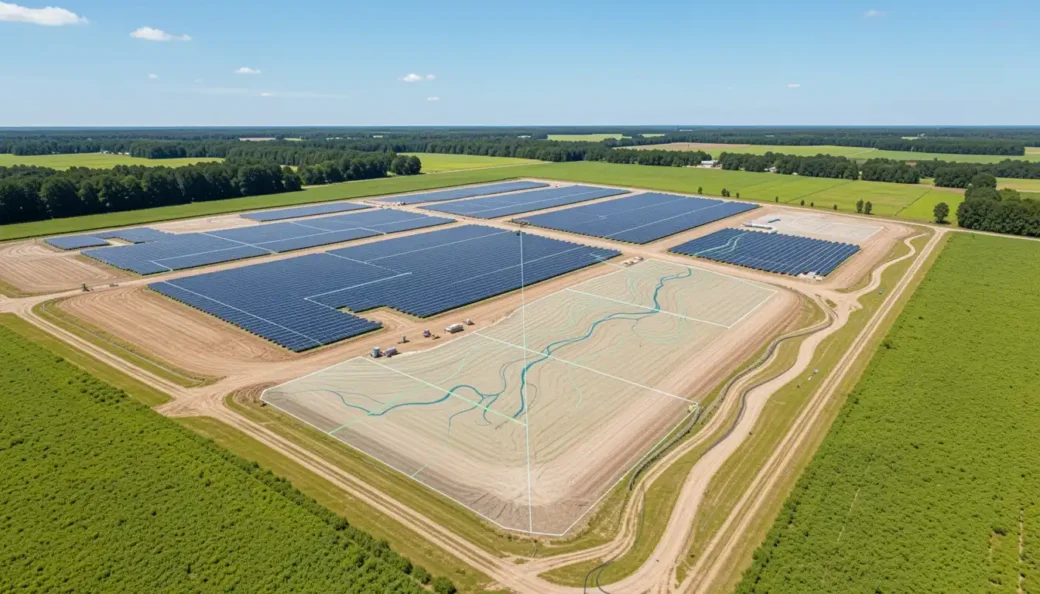
Strong documentation is the foundation of any property-damage dispute. Sediment damage litigation can involve detailed evidence, proof of causation, documented losses, and strict procedural requirements, so organized records matter from the start.
Documenting the Date, Location and Conditions
Start a dated record as soon as you notice a problem:
- A photo log showing dates, times, and locations
- Rainfall records from a reliable weather source
- Written descriptions of what you observed
- A map or sketch of the affected area and drainage paths
- Any pre-construction photographs showing earlier conditions
Pre-construction photos can help establish a baseline, though their value as evidence isn’t guaranteed. Record each observation without drawing unsupported conclusions.
Determining Where the Sediment Came From
Sediment may have more than one source. Upstream properties, other land-disturbing projects, roads, or natural erosion could contribute. An independent technical assessment can help separate these possibilities.
Hydrologists, civil engineers, and environmental consultants can analyze drainage patterns, soil conditions, and sediment characteristics. Their reports often carry significant weight, so their qualifications and methods should be disclosed.
Estimating Physical Damage and Restoration Costs
Damage might include sediment in a pond or lake, an unstable streambank, blocked drainage channels, or loss of use. Restoration estimates, contractor invoices, site assessments, and expert reports help document these losses. There’s no reliable universal dollar amount for solar-runoff claims, so every figure should come from actual quotes and evidence.
Property owners dealing with other kinds of solar-related damage can see how solar property damage claims are evaluated for a broader view of documentation and responsibility.
Why Causation Matters
Causation is often central to these disputes. The evidence must connect the conduct in question to the harm, under the applicable legal standards. Heavy rainfall, multiple sources, or pre-existing conditions can complicate that connection, which is why technical analysis is so important.
Environmental Tort Solar Claims: Potential Civil Legal Theories
Private legal claims follow different rules from regulatory enforcement. Environmental tort solar claims describe a possible area for legal analysis, not a guarantee that a particular cause of action exists for any landowner.
Nuisance, Trespass and Negligence Aren’t Interchangeable
| Legal Concept | General Idea | Why Facts Matter |
| Nuisance | Unreasonable interference with the use or enjoyment of property | Depends on the nature, duration and severity of the interference |
| Trespass | Physical intrusion onto another’s property, which may include sediment | Depends on how and where material entered the property |
| Negligence | Failure to use reasonable care, causing harm | Depends on the duty, breach, causation, and damages |
These are general descriptions, not definitive statements of Georgia law. Each theory has its own elements, defenses, and requirements under current Georgia statutes and case law. A qualified attorney must assess which, if any, apply.
Regulatory Complaints vs. Private Civil Claims
An agency complaint and a private lawsuit are separate processes with different purposes. A complaint to Georgia EPD may lead to an investigation and, where warranted, corrective action under the agency’s authority. It doesn’t automatically result in compensation for a landowner.
A private civil claim seeks remedies for the property owner, such as damages. Agency enforcement and private civil remedies aren’t identical, and the two can proceed separately. A private claim may also exist without a regulatory finding, depending on the facts and law.
Potential Remedies and Limitations
In general terms, civil remedies may include compensation for documented losses or, in some cases, court orders to stop or correct a harmful condition. Whether any remedy is available depends on the facts, the legal theory, and the court.
Filing deadlines vary by claim type and applicable law. Don’t rely on a single published deadline. Get case-specific legal advice promptly, because missing a deadline can end your options.
A Reported Georgia Solar-Runoff Case: What the Records Show
A real case shows how these disputes develop, and why every stage needs careful verification.
What Was Alleged
Public reporting and court records describe a dispute between H&L Farms and the parties behind a solar project in Stewart County, Georgia. The landowners alleged that erosion and sediment from the project’s construction damaged their lake. Those were allegations made by the plaintiffs.
What the Court Record Shows
The case proceeded in federal court, and a jury returned a verdict in 2023. A settlement was later announced in January 2025. The initial verdict amount shouldn’t be described as the final amount recovered, since a settlement replaced the outcome of further proceedings.
Why Later Developments Matter
Verdicts, appeals, and settlements are different stages. A settlement resolves a particular dispute, often without establishing liability in other cases. The result doesn’t determine another landowner’s rights, because every case depends on its own facts.
A second reported matter, Cheek et al. v. Abney and Fountain Properties, LLC et al., was described in September 2026 as a dispute over alleged pollution of streams and a lake during preparation for a solar farm, with mediation reported. Check the court docket for its latest status before treating any description as current. Learning how to read lawsuit stages and court records helps you separate allegations from findings in any case you research.
What to Check When Searching for a Solar Farm Runoff Attorney Georgia

Choose legal help based on relevant experience and the ability to evaluate your specific facts. No attorney can guarantee an outcome.
What Experience May Be Relevant
Look for experience in several overlapping areas: environmental regulation and stormwater permits, Georgia property-damage disputes, technical and expert evidence, and litigation in state and federal courts. An attorney who regularly works with hydrologists and engineers may be better prepared to assess causation.
Check any attorney’s license and standing through the State Bar of Georgia. Public court records can also show the types of cases an attorney has handled.
Documents to Organize Before a Legal Review
Bring these to your consultation:
- Your dated photo log and written chronology
- Rainfall records for key dates
- Any permit documents or plan records you’ve obtained
- Correspondence with the developer, contractors or agencies
- Restoration estimates, invoices and expert reports
- Property records showing ownership and boundaries
Questions to Ask About Fees and Procedure
Ask how fees are structured, whether hourly, contingency, or another arrangement, and what the representation covers. Ask about likely expert costs, possible procedural steps, and any deadlines that may apply. Fee arrangements vary, so don’t assume one model is universal.
Larger solar projects also raise broader questions about land use and economics. Some landowners find it useful to understand how solar farm economics work when discussing settlement or restoration expectations. Others compare how solar disputes are handled in other states, keeping in mind that Georgia law governs Georgia claims.
Practical Checklist for Documenting Suspected Runoff Damage
A structured record preserves your observations, though it doesn’t by itself establish liability.
- ☐ Record the date and approximate time of each event.
- ☐ Photograph the affected area from safe, lawful locations.
- ☐ Record rainfall timing using a reliable weather source.
- ☐ Describe visible conditions without drawing unsupported conclusions.
- ☐ Identify possible drainage paths.
- ☐ Preserve relevant correspondence.
- ☐ Locate permit documents where available.
- ☐ Keep restoration estimates and invoices.
- ☐ Note any uncertainty or other possible sources.
- ☐ Ask a qualified professional whether further assessment is appropriate.
Never trespass onto a construction site, take unsafe samples, confront workers, or interfere with operations. Stay on your own property or public land, and let professionals handle any testing that requires site access.
If you’re tracking whether a case like yours is already being pursued, knowing how to check whether a solar lawsuit is active helps you read court dockets correctly.
Final Section: What to Verify Next
The right next step depends on the location, permit, evidence, damage, and applicable law. Start by verifying the project’s permit and records through Georgia EPD and the local authority. Then organize your observations, photographs, and costs into a clear chronology.
If your situation may involve legal rights or filing deadlines, speak with a qualified professional promptly. Consulting a Solar farm runoff attorney Georgia landowners can rely on, one with relevant environmental and property-damage experience, can help you understand whether your evidence supports a regulatory complaint, a civil claim, or neither.
Frequently Asked Questions
Does muddy runoff automatically prove a federal violation?
No. Muddy runoff shows a visible condition, but a violation depends on the permit, discharge pathway, jurisdiction, and applicable requirements.
How can I find a solar project’s Georgia stormwater permit?
Start with Georgia EPD’s resources and the local issuing authority. Identify the project name, owner, and county to narrow your search.
Who investigates construction sediment runoff in Georgia?
Georgia EPD oversees construction-stormwater permits, and local issuing authorities often handle erosion and sediment-control matters.
Can a property owner bring a civil claim over runoff damage?
Possibly, depending on the facts, evidence, and Georgia law. An attorney can assess whether a claim exists and which deadlines apply.
What evidence may help document sediment damage?
Dated photographs, rainfall records, drainage maps, restoration estimates, and expert reports all help, especially when kept in an organized log.
What’s the difference between a regulatory complaint and a lawsuit?
A complaint asks an agency to investigate and enforce rules. A lawsuit is a private claim seeking remedies for the property owner.
How do I verify the status of a reported case?
Check the court docket directly, since news reports may not reflect later rulings, appeals, or settlements.
What should I ask an environmental attorney?
Ask about their experience with stormwater and property-damage cases, fee arrangements, expert costs, likely steps, and applicable deadlines.
This article by SolarInfoPath (2026 research framework) is part of a comprehensive solar knowledge architecture covering all major high-value sectors including legal disputes (installation negligence, contracts, liability, fraud, lawsuits, liens, HOA and permitting disputes), financial structures (loans, PPA/lease agreements, DSCR financing, tax equity, investment and project finance), tax law (ITC, Section 48/25D, MACRS depreciation, bonus credits, IRS audits, recapture rules, domestic content and IRA/OBBBA compliance), insurance and risk (property damage, hail/wind/fire claims, bad faith insurance disputes, warranty coverage), policy and regulation (net metering, FERC interconnection, state utility rules, incentive programs and regulatory changes), commercial and utility-scale development (EPC contracts, construction delays, performance bonds, receivership, bankruptcy, asset sale and restructuring), real estate impacts (home value, solar leases, liens, title issues, HOA restrictions, easements), and emerging market structures such as battery storage, community solar, agrivoltaics, SRECs, yieldcos, and institutional investment funds. All content is based on publicly available regulatory, financial, and legal sources and is intended strictly for educational and informational purposes, not legal, tax, or financial advice. Readers should always verify current laws, utility policies, tax regulations, and contract terms with qualified licensed professionals before making decisions, as solar regulations, incentives, and financial structures frequently change across jurisdictions and time.

Solar Legal Analyst· Policy Researcher· Investigative Finance Writer Lead Analyst & Founder of SolarInfoPath
Morgan Lee is a solar legal analyst, policy researcher, and investigative finance writer with 12+ years of experience in U.S. renewable energy law, IRS tax credit compliance, and solar litigation. He is the founder of SolarInfoPath, a research-driven platform focused on primary-source analysis of solar contracts, tax law, regulatory policy, and industry disputes affecting homeowners and commercial developers.
His work is grounded in original legal and regulatory sources, including IRS notices, FERC and CPUC rulings, state court filings, PACER records, and UCC lien databases. He specializes in solar contract disputes, injury and workers’ compensation claims, PACE financing issues, tax equity structures, ITC recapture rules, MACRS depreciation, and federal and state solar policy frameworks.
Morgan’s analysis spans solar litigation, finance structures, and regulatory developments such as the IRA and OBBBA, interconnection reform, domestic content rules, and battery storage incentives. He also covers EPC contracts, PPAs, project financing, and utility-scale solar investment structures.