Are solar farms worth it for landowners? In most U.S. states, yes, leases pay $500 to $1,200 per acre annually, with premium sites near substations in states like Maryland, New York, and Texas reaching $2,000 to $6,500 per acre.
But “worth it” depends on your land’s grid proximity, your county’s agricultural tax rules, and what your contract says about year 25.
If you’ve been approached by a solar developer, or you’re trying to figure out whether a project planned near your property will help or hurt your land’s value, the short answer is: it depends on three things: where your land sits relative to the grid, how your state and county tax converted farmland, and how carefully the lease handles decommissioning.
None of those three things is the same from state to state, which is exactly why so many landowners end up signing contracts they don’t fully understand.
What Is a Solar Farm and How Does It Work?
A solar farm is a ground-mounted array of photovoltaic panels, typically 5 to 200+ acres, though utility-scale projects can exceed 1,000 acres, that converts sunlight into electricity and feeds it into the regional grid through a substation connection. Across the U.S., these projects have become one of the fastest-growing uses of rural land, particularly in states with strong solar resources or aggressive renewable energy mandates.
The mechanics are straightforward, even when the contracts aren’t. Panels convert sunlight into direct current (DC) electricity. Inverters, industrial-scale units, not the small box used on a residential roof, convert that DC power into the alternating current (AC) that the grid actually runs on.
From there, electricity moves through a substation onto transmission lines managed by the regional grid operator, whether that’s PJM in the Mid-Atlantic, MISO in the Midwest, or ERCOT in Texas.
Here’s where the numbers shift. Unlike a home solar system, a utility-scale farm doesn’t lower your electric bill. The power is sold wholesale or under a long-term power purchase agreement (PPA), often to a corporate buyer offsetting its own energy use for sustainability targets.
As a landowner, your financial relationship typically ends at the lease, which is exactly why understanding that lease matters more than understanding the panels.
One detail that surprises a lot of landowners, regardless of state: the developer, not you, is almost always responsible for grid interconnection, and that process has gotten significantly slower nationwide. Interconnection queues across most U.S. grid operators have stretched well past two years in many regions due to transmission capacity constraints.
If a developer promises construction “next year,” ask where the project currently sits in the interconnection queue. For more on how these delays play out, see our breakdown of interconnection delays, causes, and timelines.
Types of Solar Farms: Utility-Scale vs Community Solar
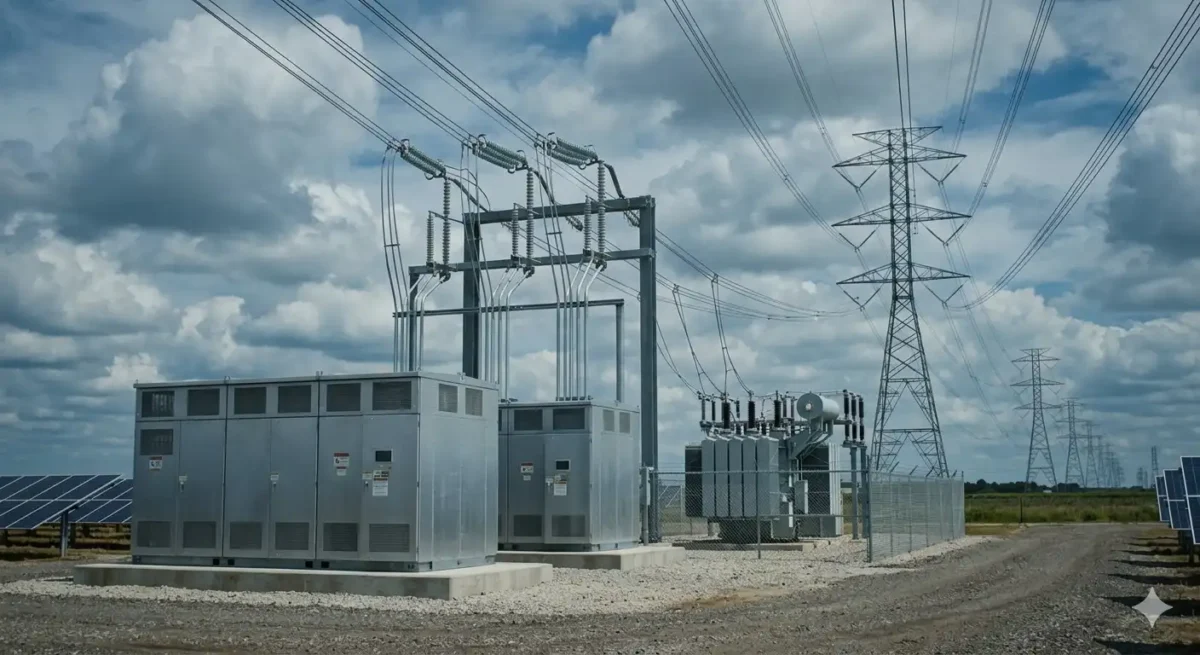
Utility-scale solar farms range from 1 MW to over 2,000 MW and sell power directly to the grid through wholesale markets or PPAs, while community solar projects are smaller (generally under 5 MW) and let subscribers, often renters or low-income households who can’t install rooftop systems, receive bill credits through a subscription model.
Geography drives a lot of this split. States like Texas, Nevada, and Arizona have leaned heavily into utility-scale development, thanks to cheap land, strong solar irradiance, and grid operators willing to interconnect large projects in rural areas far from population centers.
States like New York, Massachusetts, Illinois, and Maryland have built out more community solar specifically because state law requires utilities to offer virtual net metering credits to subscribers, something that isn’t universal nationwide.
This is the part that gets missed in generic coverage: whether community solar is even an option where you live depends entirely on whether your state has passed enabling legislation. In states without a community solar program, the “are solar farms worth it” question for a typical homeowner mostly doesn’t apply; there’s no subscription to join, and the nearest solar farm has no direct relationship to your bill at all.
If your monthly bill is under $100 and you were hoping a nearby solar farm might lower it without installation costs, check whether your state has a community solar program before assuming that’s even possible.
How Much Does a Solar Farm Cost to Build?
Building a utility-scale solar farm costs roughly $0.90 to $1.20 per watt installed nationwide, meaning a 1 MW project runs approximately $980,000 to $1.2 million, and larger projects benefit from economies of scale that push the per-watt cost down further.
For a landowner, none of this construction cost is yours. The developer finances, builds, owns, and maintains the array; your financial relationship is the lease, not the construction. But the cost structure still shapes whether a developer finds your land attractive in the first place, and this is where location starts to matter enormously.
Here’s where the numbers shift again. Developers aren’t just chasing sun exposure. They’re chasing proximity to existing transmission infrastructure, because running new high-voltage lines to a remote parcel can add millions to a project’s cost, sometimes enough to kill a deal entirely.
A 100-acre parcel two miles from a substation can be worth far more to a developer than a 500-acre parcel twenty miles away, even in a sunnier location. This single factor explains most of the variation in lease offers landowners see, even within the same state.
| Factor | Standard Sales Estimate | SolarInfoPath Investigative Data |
| National average lease rate | “$500–$1,000/acre/year” | $500–$1,200/acre/year typical; premium sites near substations in high-demand states (Maryland, New York, parts of Texas) have reached $2,000–$6,500/acre/year |
| Utility-scale cost per watt | “~$1.00/watt” | $0.90–$1.20/watt, with sites near substations running 15–20% cheaper due to reduced interconnection costs |
| Time to construction after signing | “1–2 years” | Often, 2–4 years, once interconnection queue delays are factored in, varies significantly by grid operator |
| Land needed per megawatt | “5 acres/MW” | 5–10 acres/MW depending on panel technology and terrain; a 100 MW project needs roughly 500–1,000 acres |
The Benefits of Solar Farms: Financial, Environmental, and Social
The core benefit of hosting a solar farm is reliable, weather-independent income, typically $500 to $1,200 per acre annually nationwide, with built-in escalators, combined with zero-emission generation that helps diversify regional grids increasingly under strain from rising demand.
Reliable Passive Income for Landowners
A 25-year solar lease on 150 acres at $700 per acre generates $105,000 annually before escalators, and a 2% annual increase turns that into roughly $170,000 by year 25, income that doesn’t depend on rainfall, crop prices, or livestock markets. For landowners in drought-prone regions, especially, that predictability is often the single biggest draw.
A real dollar calculation: Take a 100-acre parcel under a lease starting at $650/acre/year with a 2% annual escalator. Year one income is $65,000. By year 25, the annual payment has grown to roughly $104,500, and total lease income over 25 years comes to approximately $2.05 million, without farming a single acre of it.
Compare that to corn, which nets $50–$200 per acre per year, depending on commodity prices, and the gap becomes obvious why solar leasing has become attractive even to landowners with no interest in renewable energy as a cause.
Low Maintenance Costs Over a Long Lifespan
Solar panels require minimal upkeep, typically cleaning 3 to 4 times per year, and under a standard lease, the developer handles all maintenance, insurance, and decommissioning costs, not the landowner.
Panel efficiency runs around 20–22%, with individual panel output of 250–500 watts, and systems are engineered to operate for 25–30 years with only gradual efficiency decline.
Zero Operational Emissions and Renewable Energy at Scale
Once operational, a solar farm produces electricity with zero direct emissions, a meaningful contribution as several regional grids face summer demand peaks that increasingly coincide with periods of high solar output.
According to the U.S. Department of Energy, solar has become one of the fastest-growing sources of new generation capacity added to the grid in recent years.
Diversifying the Energy Supply and Supporting Net-Zero Goals
Solar farms add geographic and technological diversity to grids that have historically leaned on a small number of fuel sources, which can reduce, though not eliminate, the kind of single-source risk that has contributed to grid emergencies during extreme weather in several states.
Solar output drops to zero overnight, which is often exactly when winter demand peaks in colder regions, so diversification helps during daylight hours without solving every reliability problem.
The Disadvantages of Solar Farms: What No One Tells You
The most commonly overlooked disadvantages of solar farms are the loss of agricultural property tax valuation upon land conversion in most states, multi-year interconnection delays that can stall projects after landowners have already signed, and inconsistent decommissioning guarantees across leases.
Do Solar Farms Devalue Property? What the Evidence Shows
The evidence on whether solar farms reduce nearby property values is mixed and highly location-dependent. Some studies show measurable declines of 1–7% for homes within a half-mile of large installations, while others show no statistically significant effect once a project is operational and visually screened with landscaping or setbacks.
What’s rarely discussed is that the construction phase tends to be more disruptive than the long-term presence of the finished array. Heavy equipment traffic, dust, and noise during a 6–18 month construction window are often the actual source of neighbor complaints, not the panels themselves, once installed and generating quietly.
If you’re a neighboring landowner rather than the host, this construction window is the period most worth planning around, whether that means timing a sale, raising dust-mitigation concerns with the developer during permitting, or simply expecting temporary disruption to rural roads.
If you’re considering selling a home near a proposed solar site, the construction timeline matters more than the long-term presence of the array. Our guide on how solar affects how fast houses sell covers this for residential rooftop systems, though the dynamics for land near utility-scale projects differ somewhat.
What Are the Negatives of Living Next to a Solar Farm?
The most commonly reported negatives of living near a solar farm are visual impact during the loss of open sightlines, construction-phase noise and dust, and stormwater runoff concerns during and after grading, though glare from modern anti-reflective panel coatings is far less significant than with older installations.
One policy detail many homeowners overlook nationwide: stormwater management plans for large solar installations are typically governed at the county or local level, not the state level, in most jurisdictions. That means the rules, and how strictly they’re enforced, vary significantly depending on which county a project sits in, even within the same state.
Researchers have identified at least 800 local zoning restrictions related to solar development nationwide, with at least 22 counties across nine states setting outright limits on how much agricultural acreage can be converted to solar.
Are There Health Risks Living Near a Solar Farm?
There is no credible scientific evidence that living near a solar farm poses direct health risks from the panels themselves; photovoltaic panels do not emit radiation, and electromagnetic field levels from inverters and transmission equipment fall well within normal background levels comparable to household appliances.
The more legitimate concerns are indirect: construction dust affecting air quality for residents with respiratory conditions, and the stress that can come with property value uncertainty during the planning and permitting phase.
Neither of these is unique to solar; they apply to most large construction projects, but they’re worth naming rather than dismissing outright when a project is proposed nearby.
Do Solar Farms Destroy Farmland?
Solar farms don’t permanently destroy farmland in a chemical or structural sense; the soil itself generally isn’t contaminated, but converting active farmland to a solar lease typically means losing favorable agricultural property tax valuation for the duration of the lease, which can significantly increase the property tax burden on the leased acreage in most states.
This is the differentiation point most general coverage skips entirely. Agricultural (“ag”) tax exemptions across most states require land to be used primarily for agricultural purposes, often with a multi-year qualifying history.
Once converted to a solar lease, that land generally no longer qualifies, and the local appraisal authority will reassess it at market value, sometimes resulting in a tax bill several times higher on that portion of the property.
Some states have started addressing this directly: Colorado and Maryland, for example, have created personal property tax exemptions specifically for agrivoltaics equipment, and some state codes now allow land to retain agricultural status when paired with a qualifying agrivoltaics array.
Most states, however, still have no such provision as of 2026. Before signing anything, a landowner should ask their local assessor directly what the reassessed value would be; this single number can change the real economics of a lease by tens of thousands of dollars over its term.
According to the American Farmland Trust’s modeling, roughly 83% of new utility-scale solar built through 2040 is projected to be sited on agricultural land, though in absolute terms, this represents a small fraction of total U.S. farmland, and overall agricultural output has continued rising even as total farmland acreage has modestly declined.
Why Are People Saying No to Solar Farms?
Community opposition to solar farms most commonly centers on fears about property values, loss of agricultural land character, and uncertainty about what happens to the land after the lease ends, not generally opposition to solar energy as a concept.
In several states, opposition has been amplified by a mismatch in expectations: the landowner hosting the project sees direct income, while neighboring landowners experience construction disruption and visual change with no compensation. This is the part most people overlook: the intensity of this opposition correlates strongly with population density.
In states like New York, where farmland is interspersed with small towns, a 500-acre project footprint is highly visible to many neighbors. In states like Texas or Nevada, where contiguous land far from any town is more common, the same-sized project may affect almost no one directly, which is part of why the “solar farm backlash” story plays out so differently depending on where you are.
What Happens to Solar Farms After 25–30 Years?
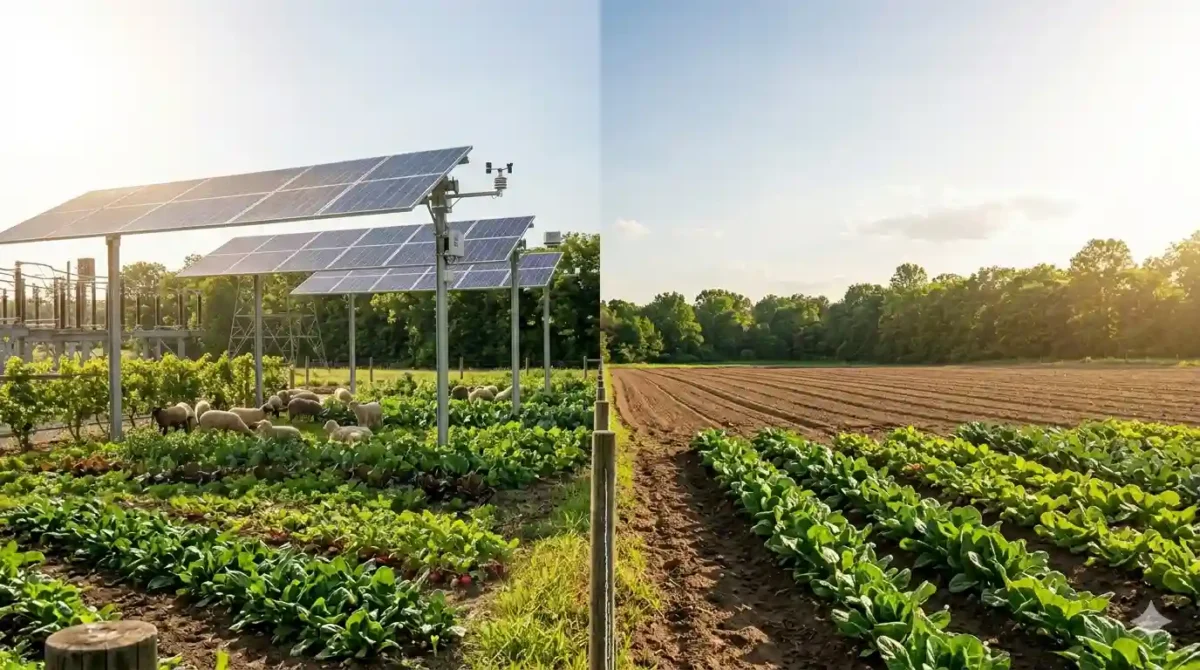
When evaluating are solar farms worth it, it’s important to understand what happens at the end of a project’s lifespan. After 25 to 30 years, a solar farm is typically either decommissioned or repowered. Decommissioning involves removing the panels and restoring the land to its previous use, while repowering replaces older equipment with newer, more efficient solar technology under a renewed or extended lease. The original lease agreement should clearly define which path will be taken and who is responsible for related costs.
One often-overlooked factor in deciding are solar farms worth it is long-term restoration planning. Not every lease guarantees that full restoration costs will be covered. Some agreements include a decommissioning bond or escrow account funded by the developer throughout the lease term and reviewed by an independent third party to help ensure removal and land restoration expenses are properly managed.
Others rely simply on the developer’s creditworthiness at the time decommissioning is due, a meaningfully weaker guarantee if the original developer has sold the project, which happens often, or gone out of business by year 25.
For any landowner evaluating a lease, asking specifically whether decommissioning funds are escrowed and independently verified, versus simply promised in contract language, is one of the most consequential questions you can ask, and one that standard lease summaries rarely highlight.
Solar Farms vs Other Renewable Options (Wind, Biomass)
Solar and wind are the two dominant utility-scale renewable options nationwide, and in many regions, they’re complementary rather than competing. Wind generation often peaks overnight and in shoulder seasons, while solar peaks midday and in summer, which is part of why many grid operators have seen rapid growth in both simultaneously.
For a landowner, the practical comparison often comes down to land use intensity and disruption type. Wind turbines occupy a small footprint per turbine but require wide setbacks and create ongoing noise and shadow-flicker considerations for nearby residences.
Solar farms use more total acreage per megawatt but are largely silent once operational, with a more contained visual footprint. Biomass facilities remain far less common and typically require a feedstock supply chain that most rural landowners aren’t positioned to provide.
What surprised me when comparing these across different regions was how much the choice depends on what infrastructure already exists. Areas that already have wind development tend to have transmission capacity that makes adding solar comparatively easier, which is part of why solar and wind projects often cluster in the same corridors rather than spreading evenly.
Is Building or Hosting a Solar Farm Worth It for You?
For most landowners nationwide, hosting a solar farm is financially worthwhile if your land sits within a few miles of existing transmission infrastructure, has at least 50–100 contiguous acres, and you’re comfortable with a 25-to-40-year commitment that will likely outlast your own ownership of the property.
For most landowners, this means the question of whether are solar farms worth it isn’t really about whether solar “works” as an investment; the scale of nationwide development already underway answers that.
The real question is whether your specific parcel has the characteristics developers actually want, and whether you’re prepared for what a multi-decade lease means for inheritance, future sales, and land use flexibility, questions that don’t change much based on which state you’re in.
If your land doesn’t meet those basic criteria, too small, too remote from transmission, or in a county where local zoning restricts solar conversion entirely, the realistic answer for 2026 is that solar leasing simply isn’t available to you yet, regardless of how favorable your state’s overall solar economics might look on paper. That’s not a failure of the land; it’s simply where current development is concentrated.
For landowners actively negotiating a lease, the legal language around easements, decommissioning, and tax liability shifts is where most disputes originate, those dealing with damage or contract disputes related to solar installations may want to review our overview of solar panel property damage and legal considerations, and anyone evaluating a project from the ground up should see our utility-scale solar guide covering cost, land, and rules for more depth.
Frequently Asked Questions About Solar Farms
How much land does a solar farm need?
A utility-scale solar farm typically requires 5 to 10 acres per megawatt of capacity, so a 100 MW project, common across many states, needs roughly 500 to 1,000 acres.
How profitable is a solar farm?
Developer ROI generally falls in the 8–20% range with payback periods of 5–10 years, while landowner lease income runs $500–$1,200 per acre annually nationwide, with premium sites in high-demand states reaching $2,000 or more.
How long do solar farms last?
Most solar farms are designed to operate for 25 to 30 years before facing decommissioning or repowering with newer panel technology.
Do you need planning permission for a solar farm?
Yes, all large-scale solar installations require planning and permitting approval, though the process and timeline vary significantly by state and county, since there’s no uniform nationwide framework as of 2026.
Can solar farms harm local wildlife?
Poorly sited solar farms can disrupt wildlife migration routes and increase erosion risk during construction, but proper siting, fencing design, and construction practices can substantially minimize these effects, according to environmental impact assessments.
This article by SolarInfoPath (2026 research framework) is part of a comprehensive solar knowledge architecture covering all major high-value sectors including legal disputes (installation negligence, contracts, liability, fraud, lawsuits, liens, HOA and permitting disputes), financial structures (loans, PPA/lease agreements, DSCR financing, tax equity, investment and project finance), tax law (ITC, Section 48/25D, MACRS depreciation, bonus credits, IRS audits, recapture rules, domestic content and IRA/OBBBA compliance), insurance and risk (property damage, hail/wind/fire claims, bad faith insurance disputes, warranty coverage), policy and regulation (net metering, FERC interconnection, state utility rules, incentive programs and regulatory changes), commercial and utility-scale development (EPC contracts, construction delays, performance bonds, receivership, bankruptcy, asset sale and restructuring), real estate impacts (home value, solar leases, liens, title issues, HOA restrictions, easements), and emerging market structures such as battery storage, community solar, agrivoltaics, SRECs, yieldcos, and institutional investment funds. All content is based on publicly available regulatory, financial, and legal sources and is intended strictly for educational and informational purposes, not legal, tax, or financial advice. Readers should always verify current laws, utility policies, tax regulations, and contract terms with qualified licensed professionals before making decisions, as solar regulations, incentives, and financial structures frequently change across jurisdictions and time.

Solar Legal Analyst· Policy Researcher· Investigative Finance Writer Lead Analyst & Founder of SolarInfoPath
Morgan Lee is a solar legal analyst, policy researcher, and investigative finance writer with 12+ years of experience in U.S. renewable energy law, IRS tax credit compliance, and solar litigation. He is the founder of SolarInfoPath, a research-driven platform focused on primary-source analysis of solar contracts, tax law, regulatory policy, and industry disputes affecting homeowners and commercial developers.
His work is grounded in original legal and regulatory sources, including IRS notices, FERC and CPUC rulings, state court filings, PACER records, and UCC lien databases. He specializes in solar contract disputes, injury and workers’ compensation claims, PACE financing issues, tax equity structures, ITC recapture rules, MACRS depreciation, and federal and state solar policy frameworks.
Morgan’s analysis spans solar litigation, finance structures, and regulatory developments such as the IRA and OBBBA, interconnection reform, domestic content rules, and battery storage incentives. He also covers EPC contracts, PPAs, project financing, and utility-scale solar investment structures.