
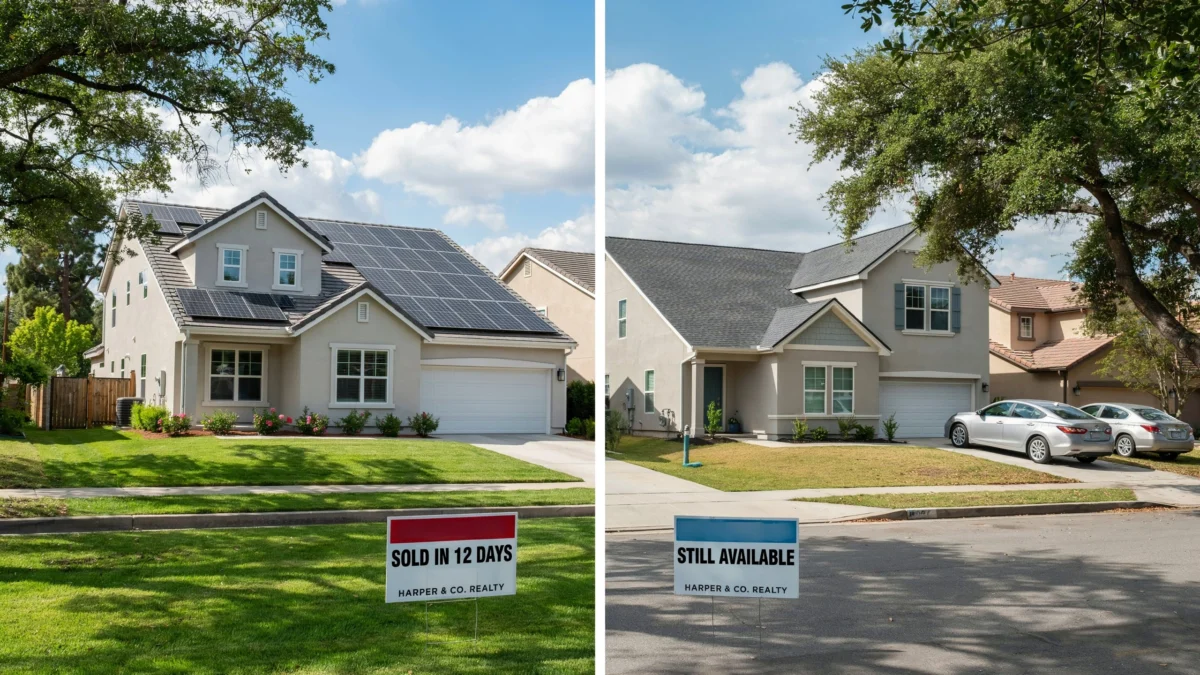
Do homes with solar panels sell faster? The research doesn’t show a universal faster sale. A large Zillow analysis of 2020–2021 sales found listings mentioning solar sold for about 1.4% more but took roughly 2.6 days longer. Ownership, system condition, contracts, and local market conditions shape both price and speed.
Many solar companies say panels make a home “sell faster.” That’s a big claim, and the evidence is more mixed than the marketing suggests. It also mixes up two separate questions: how quickly a home sells, and how much a buyer is willing to pay.
A home can sell for more without selling sooner. A solar system can also help one sale and complicate another, depending on who owns it and what contracts come with it. This guide separates those questions and explains what the research measured. It also covers how appraisers treat solar, how financing affects a sale, and what sellers and buyers should check.
Do Homes With Solar Panels Sell Faster? What the Research Shows
The two best-known U.S. studies measured different things, and neither proves that every solar home sells faster.
| Question | Zillow Analysis | Berkeley Lab Study |
| Who conducted it? | Zillow Research | Lawrence Berkeley National Laboratory |
| When were homes sold? | 2020–2021 | 2002–2013 |
| Sample | More than 3.1 million home sales | 22,822 sales, including 3,951 with solar |
| What was measured? | Listing mentions of solar, compared with expected sale price and time on Zillow | Sale-price premium for homes with PV systems in eight states |
| Main finding | About a 1.4% price premium, about 2.6 more days on Zillow | Roughly $15,000 average premium for an average 3.6 kW system |
| Key limitation | Measured listing text, not confirmed system details | Historical data, not current pricing guidance |
The Zillow Findings
Zillow analyzed more than 3.1 million home sales from 2020 and 2021. Homes whose listing descriptions mentioned solar panels were associated with a 1.4% sale-price premium. The same analysis associated those mentions with about 2.6 additional days on Zillow, which means slightly slower sales, not faster ones.
Two cautions matter here. Zillow measured mentions in listing descriptions, using regression against Zestimate-based expected prices. A mention doesn’t confirm a system’s size, age, ownership, or production. These are also statistical associations, so they don’t prove that installing solar caused either result.
The Berkeley Lab Findings
Berkeley Lab’s 2015 study examined 22,822 home sales across eight states from 2002 to 2013, including 3,951 homes with solar. It estimated an average premium of about $15,000, or roughly $4 per watt, for an average 3.6 kW system. You can review the methodology in Berkeley Lab’s Selling into the Sun study.
That’s historical evidence from more than a decade ago. Equipment prices, incentives, and housing markets have changed a great deal since then. The study measured price, not selling speed, so it can’t answer the “faster” question either way.
Why the Studies Seem to Disagree
They’re not really contradicting each other, because they measured different outcomes in different periods. One looked mainly at price premiums in older sales. The other looked at both price and time on market using listing text during an unusually hot housing market.
Earlier Berkeley Lab research in California also found evidence of a premium for existing homes with solar, while results for new homes were lower. A separate Berkeley Lab analysis of California sales found no clear price advantage or disadvantage for third-party-owned systems. Studies vary in geography, dates, home types, ownership, and methods, so it’s wrong to average them into one number.
How Much Do Solar Panels Add to Home Value
Any added value depends on how buyers in your market respond, not on what the system originally cost. When people ask how much do solar panels add to home value, the honest answer is that it varies with ownership, age, condition, and local comparable sales.
The U.S. Department of Energy says a solar system will likely increase a home’s value. It also stresses that ownership matters and that the evidence has limits. That’s a reasonable summary: solar can add value, but it doesn’t add a fixed amount to every home.
Why Installation Cost Isn’t the Same as Resale Value
What you paid to install a system and what a buyer will pay for it are different measures. Fannie Mae’s appraisal guidance says appraisers can’t simply add the installation cost or projected energy savings to a home’s value. They must analyze how the market actually reacts.
Here’s a hypothetical example. A homeowner paid $20,000 for a system eight years ago. Using Berkeley Lab’s historical $4-per-watt figure, a 3.6 kW system would have implied about $14,400 in its dataset. Applying Zillow’s 1.4% association to a $400,000 home would suggest about $5,600.
Those numbers don’t match, and neither predicts this home’s sale. The real figure depends on what comparable local buyers have paid. A buyer’s willingness to pay can be less than, equal to, or more than the system’s remaining cost or expected savings.
It also helps to separate appraised value from sale price. An appraisal is a professional opinion developed under appraisal standards. The final sale price is the result of a negotiation. They often differ.
What Can Influence a Solar System’s Contribution to Value?
Several factors shape how buyers and appraisers see a system:
- Ownership: owned systems are treated very differently from leased ones.
- Age and condition: a newer, well-maintained system usually carries more weight.
- Production history: documented output shows the system works as expected.
- Utility rates and export rules: higher electricity prices can make savings more meaningful.
- Warranties: remaining coverage reduces a buyer’s risk.
- Local comparable sales: nearby solar home sales are the strongest evidence.
Buyers also compare against the cost of installing solar themselves. Comparing your system with average U.S. residential solar prices helps both sides judge whether an existing system looks like good value.
How Solar Ownership and Financing Affect a Home Sale
Who owns the system is often the single biggest factor in whether solar helps or complicates a sale. Fannie Mae’s guidance distinguishes homeowner-owned systems from leased or third-party-owned ones.
| System Arrangement | What the Seller Should Verify |
| Owned outright | Ownership records and warranties |
| Loan-financed | Outstanding balance, collateral and payoff terms |
| Leased | Transfer provisions, payment obligations and approval process |
| Power purchase agreement (PPA) | Contract transfer requirements and electricity purchase terms |
Owned and Financed Systems
A homeowner-owned system may be considered under standard appraisal requirements, subject to financing and collateral conditions. Owning outright is usually the simplest situation at sale.
Financed systems need closer review. Whether financed panels count toward appraised value depends on the documented arrangement and whether the lender could repossess the equipment. Some solar loans have a UCC filing, a public notice of the lender’s interest in the equipment. Check your loan documents and payoff terms early. To understand how these arrangements differ, review how solar loans, leases, and PPAs compare before listing your home.
Leased and PPA Systems
Fannie Mae’s guidance generally excludes leased and PPA equipment from appraised real-property value, because the homeowner doesn’t own it. These systems can still matter to a sale, since the buyer usually has to qualify and agree to take over the contract.
DOE notes that third-party-owned systems may require extra steps to transfer. Some buyers hesitate to assume a long contract, which can slow a sale. Sellers facing this situation can review how solar lease buyouts and transfers work to understand their options before closing. Freddie Mac’s guidance also addresses identifying energy features and market-supported value, so check the current version with your lender.
Documents to Gather Before Listing
Collect these early:
- Solar purchase or financing agreement
- Loan payoff information, if applicable
- Lease or PPA transfer provisions
- Installation and permit records
- Utility interconnection documentation
- System production history
- Product and workmanship warranties
- Battery documentation, if applicable
Which System and Property Factors Can Affect Buyer Interest?
Buyers want evidence that the system works and won’t cause expensive surprises. DOE recommends that buyers review system production, roof orientation, sunlight exposure, warranties and battery details. Its guide to buying a house with solar panels walks through these checks.
System Age, Production and Warranty
Production history is one of the most useful records a seller can share. DOE notes that a year-over-year production drop of more than 10% could signal a maintenance issue. That’s a warning sign worth investigating, not proof of a defect, since weather and shading also affect output.
Warranties matter just as much. Buyers should check which product, performance, and workmanship warranties remain, and whether they transfer to a new owner. Understanding what solar warranties actually cover helps buyers judge how much protection really comes with the home.
Roof Condition and Future Maintenance
Roof age can quickly change a buyer’s view. If the roof will need replacing soon, the panels will have to be removed and reinstalled, which adds cost. Sellers should be ready to share the roof’s age and condition. Buyers should ask for an inspection that covers both the roof and the solar equipment.
Solar Batteries and Backup Power
If the home includes a battery, buyers should ask about its age, installer, and warranty status, as DOE recommends. Don’t assume every solar system powers the home during an outage. Most grid-tied systems shut down during blackouts unless they include storage designed for backup. For background on storage, see how home batteries are sized and compared before relying on backup claims.
How to Compare a Solar Home With Similar Homes
Local evidence beats national averages, but only when the comparison is fair. A small sample of solar home sales can easily mislead.
To compare more reliably, follow these steps:
- Identify recent sales in the same neighborhood or a closely similar area.
- Match home size, age, condition, and major features as closely as possible.
- Identify which properties have solar, where reliable records allow it.
- Check whether each system is owned, financed, or leased.
- Compare sale price and time on market separately.
- Note the limitations of your comparison.
Local conditions also shape selling speed far more than solar does. Housing inventory, the median days on market, and the sale-to-list ratio in your area all affect how fast any home sells. A slow market won’t speed up because a home has panels.
Buyers often weigh a system’s value against the time it takes to pay for itself. Knowing how solar payback periods work helps both sides frame the system’s financial benefit in realistic terms.
Practical Steps for Sellers and Buyers
Clear documentation helps buyers, appraisers, and lenders evaluate the system with confidence. Requirements vary by contract, lender, and jurisdiction.
Seller Checklist
- Confirm system ownership and any outstanding obligations.
- Gather production, warranty, permit, and interconnection records.
- Review roof and equipment condition.
- Get current loan or contract information.
- Describe the system accurately in the listing.
Buyer Checklist
- Verify ownership and payment obligations.
- Review production history and warranty documents.
- Inspect the roof and equipment.
- Confirm the utility arrangement, such as net metering terms.
- Ask your lender about financing or appraisal requirements.
A Note on Tax Credits
Tax credits are a separate issue from resale value. As of October 2026, the IRS says the residential clean energy credit isn’t available for qualifying expenditures after December 31, 2025, so a buyer can’t expect that credit for a new 2026 installation. Anyone comparing an existing system with a new one should understand why the residential solar credit ended before running the numbers.
Sellers should keep purchase and installation records. The IRS recommends retaining them because they may be needed to establish tax basis when the home is sold. A prior owner’s tax treatment doesn’t by itself determine the home’s market value, and property-tax treatment varies by state and locality.
Final Takeaway: What Homeowners Should Know
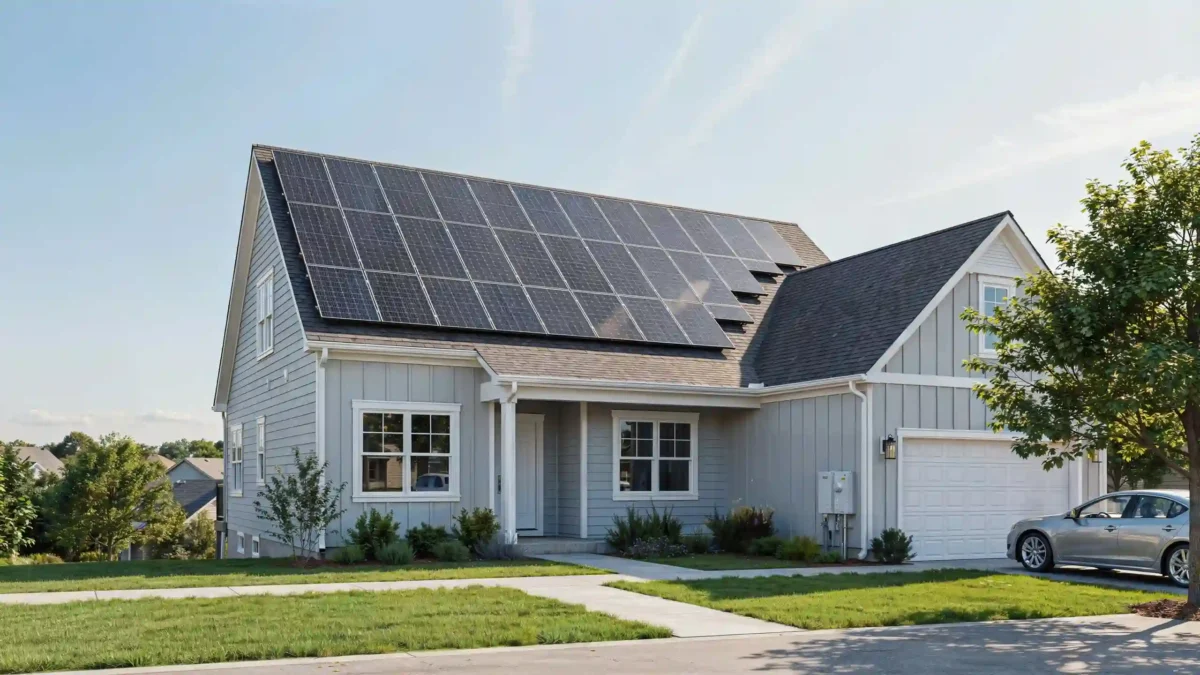
So, do homes with solar panels sell faster? The evidence doesn’t show that every solar home sells faster or gains a fixed amount of value. A well-documented, owned system in good condition can appeal to buyers, while leases, loans, or an aging roof can complicate the process.
Before listing or buying, take three steps:
- Verify ownership and any contract obligations.
- Gather production and warranty records.
- Compare relevant local sales rather than relying on a national average.
Frequently Asked Questions
Do solar panels always increase home value?
No. Owned, well-maintained systems in markets with comparable solar sales are more likely to add value. Leased systems and older equipment may add less, or complicate the sale.
Can leased solar panels complicate a home sale?
They can. The buyer usually has to qualify for and agree to take over the lease, and some buyers prefer not to.
How do appraisers evaluate solar panels?
They analyze market reaction using comparable sales, rather than adding installation cost or projected savings. Leased and PPA equipment is generally excluded from appraised value.
Does a solar battery add resale value?
It may, if buyers in your area value backup power. Battery age, warranty, and configuration all matter.
Can a buyer assume an existing solar loan?
Sometimes, depending on the loan terms and lender. Many solar loans are paid off at closing instead, so check your loan documents.
Does roof age affect solar resale value?
Yes. A roof that needs replacing soon adds the cost of removing and reinstalling the panels, which buyers will factor in.
Why do resale studies reach different conclusions?
They cover different time periods, regions, home types, and ownership arrangements, and they measure different outcomes.
This article by SolarInfoPath (2026 research framework) is part of a comprehensive solar knowledge architecture covering all major high-value sectors including legal disputes (installation negligence, contracts, liability, fraud, lawsuits, liens, HOA and permitting disputes), financial structures (loans, PPA/lease agreements, DSCR financing, tax equity, investment and project finance), tax law (ITC, Section 48/25D, MACRS depreciation, bonus credits, IRS audits, recapture rules, domestic content and IRA/OBBBA compliance), insurance and risk (property damage, hail/wind/fire claims, bad faith insurance disputes, warranty coverage), policy and regulation (net metering, FERC interconnection, state utility rules, incentive programs and regulatory changes), commercial and utility-scale development (EPC contracts, construction delays, performance bonds, receivership, bankruptcy, asset sale and restructuring), real estate impacts (home value, solar leases, liens, title issues, HOA restrictions, easements), and emerging market structures such as battery storage, community solar, agrivoltaics, SRECs, yieldcos, and institutional investment funds. All content is based on publicly available regulatory, financial, and legal sources and is intended strictly for educational and informational purposes, not legal, tax, or financial advice. Readers should always verify current laws, utility policies, tax regulations, and contract terms with qualified licensed professionals before making decisions, as solar regulations, incentives, and financial structures frequently change across jurisdictions and time.

Solar Legal Analyst· Policy Researcher· Investigative Finance Writer Lead Analyst & Founder of SolarInfoPath
Morgan Lee is a solar legal analyst, policy researcher, and investigative finance writer with 12+ years of experience in U.S. renewable energy law, IRS tax credit compliance, and solar litigation. He is the founder of SolarInfoPath, a research-driven platform focused on primary-source analysis of solar contracts, tax law, regulatory policy, and industry disputes affecting homeowners and commercial developers.
His work is grounded in original legal and regulatory sources, including IRS notices, FERC and CPUC rulings, state court filings, PACER records, and UCC lien databases. He specializes in solar contract disputes, injury and workers’ compensation claims, PACE financing issues, tax equity structures, ITC recapture rules, MACRS depreciation, and federal and state solar policy frameworks.
Morgan’s analysis spans solar litigation, finance structures, and regulatory developments such as the IRA and OBBBA, interconnection reform, domestic content rules, and battery storage incentives. He also covers EPC contracts, PPAs, project financing, and utility-scale solar investment structures.