
Arizona averages 5.5 to 7.5 peak sun hours per day, depending on location, making it the top solar state in the U.S. Phoenix gets 6.5 to 7.2 peak sun hours daily, while Yuma leads the nation at 7.0 to 7.7. According to the analysis of 2026 NREL irradiance data, these numbers translate into real production advantages. However, your utility rate plan and roof direction still decide whether those sun hours actually save you money.
Arizona gets more sun than almost anywhere else in the country. Most homeowners know that. What most don’t know is that their utility’s rate structure can quietly erase the financial advantage those sun hours should create, and that gap is exactly what this guide is built to close.
Before you look at a single solar quote, you need to understand what Arizona’s sun data actually means for your specific bill, your specific utility, and your specific location within the state.
Average Peak Sun Hours Arizona: What the Real Data Shows in 2026
Arizona Average Peak Sun Hours Per Day and Statewide Variation
Arizona averages between 5.5 and 7.5 peak sun hours per day, depending on where you live. That range matters more than any single statewide number because a homeowner in Flagstaff and a homeowner in Yuma are working with fundamentally different solar math.
Here’s how the numbers break down by region in 2026:
- Yuma: 7.5 peak sun hours/day, the highest in the continental U.S.
- Phoenix: 6.5 peak sun hours/day
- Tucson: 6.2 peak sun hours/day
- Prescott: 5.8 peak sun hours/day
- Flagstaff: 5.2 peak sun hours/day
A peak sun hour is not just any hour of sunlight. It represents one hour of sunlight at 1,000 watts per square meter, the intensity level at which solar panels are tested and rated. A partly cloudy morning in Phoenix doesn’t count as a full peak sun hour, even if the sun technically rises at 6 a.m.
Most installers show homeowners average annual sun data. What they rarely show is the monthly breakdown. A Phoenix home that looks great on paper in July may underperform projections in December, when peak sun hours drop to around 5.3 — roughly 19% below the summer average. Your system sizing should account for that dip, not just the yearly mean.
Average Peak Sun Hours Arizona Summer vs Winter Performance Gap
In summer, Phoenix reaches 7.2 to 7.5 peak sun hours per day. In December and January, that drops to 5.2 to 5.5. The gap is about 30%, which directly affects how much electricity your panels produce during the winter months.
This is more important than it sounds for one specific reason: Arizona utility rates also shift seasonally. APS charges higher per-kWh rates during summer (June–September) and lower rates in winter. So your panels produce more electricity when rates are highest, and less when rates are lowest.
That alignment actually works in your favor, but only if your system was sized correctly for your summer peak load, not just your annual average.
Why Arizona Solar Insolation Peak Sun Hours Are Among the Highest in the U.S.
Arizona’s position in the Sonoran Desert puts it in one of the world’s highest solar irradiance zones. According to the National Renewable Energy Laboratory (NREL), Arizona’s horizontal irradiance (the technical measure behind peak sun hours) consistently ranks #1 or #2 nationally, ahead of California, Nevada, and New Mexico.
The state’s low humidity, minimal cloud cover, and high elevation in many southern zones all contribute. Less atmospheric water vapor means less solar energy is absorbed before it reaches your roof.
But here’s the part most solar guides skip entirely: high irradiance also means high heat. And heat is one of the biggest enemies of solar panel efficiency.
Average Peak Sun Hours Phoenix Arizona, and Urban Solar Performance
Average Peak Sun Hours Per Day Phoenix, Arizona Breakdown (Seasonal Data)
Phoenix averages 6.5 peak sun hours per day on an annual basis. But that number shifts significantly by month:
| Month | Peak Sun Hours/Day (Phoenix) |
| January | 5.3 |
| March | 6.8 |
| June | 7.4 |
| August | 7.1 |
| October | 6.5 |
| December | 5.2 |
A homeowner relying on a June-based estimate will be surprised by January production. That’s not a flaw in the technology; it’s a planning gap that honest system sizing should address upfront.
Phoenix AZ Solar Peak Sun Hours vs Rooftop Shading and Heat Loss Factors
Here’s where the numbers shift in a way most Phoenix homeowners don’t expect.
Standard panel efficiency ratings are tested at 25°C (77°F). Phoenix rooftops in July regularly reach 65°C to 75°C (149°F to 167°F). At those temperatures, most silicon solar panels lose 10% to 25% of their rated output, a factor called the temperature coefficient.
A system that looks like it produces 10 kWh on a lab specification sheet may realistically produce 8 to 8.5 kWh on a Phoenix summer afternoon, even with perfect sun exposure. That’s not a defect. It’s physics. But it rarely appears in a sales presentation.
Decision checkpoint: If you’re in Phoenix and your installer’s production estimate doesn’t mention temperature derating, ask them directly: “Does your estimate account for summer heat loss on the roof?” If they don’t have a clear answer, that estimate is likely optimistic.
How Phoenix Urban Density Slightly Impacts Solar Output Efficiency
Phoenix’s urban heat island effect adds 2°F to 8°F to local temperatures compared to surrounding desert areas. That increase compounds the panel heat loss problem described above. It’s not a deal-breaker, but it’s a real variable that an honest system estimate should include.
Rooftop shading from nearby construction, taller buildings, or even mature trees in older Phoenix neighborhoods like Arcadia or Ahwatukee can reduce output by 5% to 15%, depending on placement. A shading analysis, using tools like Aurora or Solargraf, should be part of any proposal you receive.
Average Daily Solar Insolation Yuma Arizona kWh/m²/day: The State’s Solar Peak Zone
Why Yuma Leads Arizona in Solar Insolation Peak Sun Hours
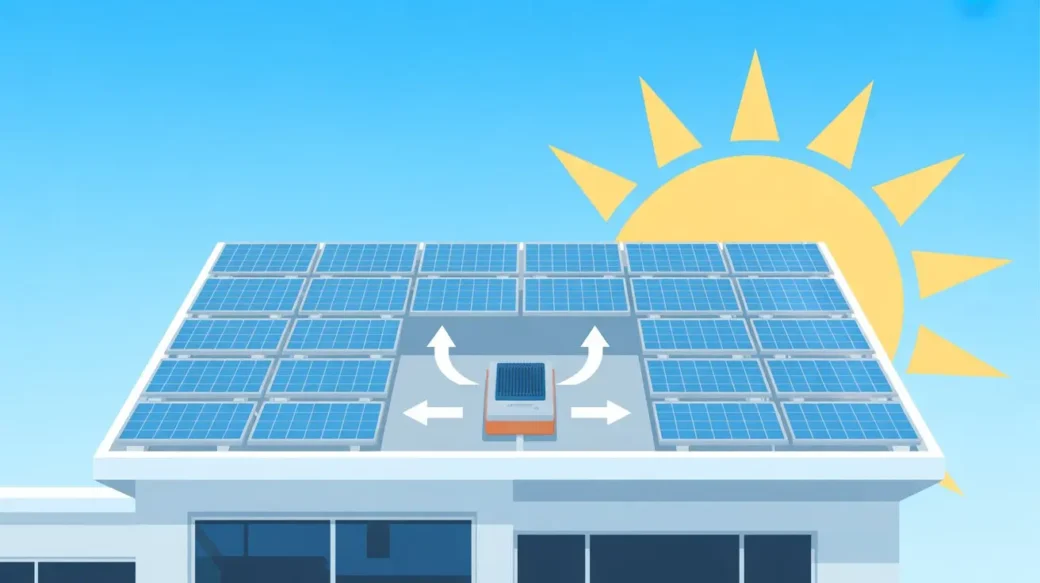
Yuma, Arizona, receives approximately 6.94 to 7.5 kWh/m²/day of solar insolation, placing it consistently among the top three solar locations in the entire United States. The NREL’s 2023 solar resource data confirms that Yuma’s horizontal irradiance outperforms both Phoenix and Las Vegas on an annual average basis.
The geography explains it: Yuma sits in the Lower Colorado River Valley, with an exceptionally dry climate, minimal cloud days (Yuma averages 242 sunny days per year), and low elevation that reduces atmospheric light scattering.
For a Yuma homeowner with a 7 kW system on a south-facing roof, that irradiance translates to an estimated 10,200 to 11,400 kWh of annual production, enough to cover the average Yuma household’s consumption of around 9,800 kWh per year.
Desert Climate Advantage vs Grid Heat Efficiency Trade-Offs
The same desert conditions that give Yuma exceptional sun hours also push summer air conditioning loads above 1,500 kWh per month for many households. That’s a high baseline to offset, and it means system sizing needs to account for peak summer demand, not just average annual usage.
A 7 kW system may cover 100% of Yuma’s needs in spring and fall, while falling 15% to 20% short in July and August, the exact months when both temperature and consumption spike simultaneously.
What Yuma Homeowners Typically Underestimate About Solar Yield
The interconnection queue. Arizona Public Service (APS) and some rural cooperatives serving Yuma-area customers have experienced approval delays of 6 to 14 weeks for new residential solar installations in 2025 and into 2026. A system that looks ready to generate in March may not be live until June, costing two to three months of projected production before the first kilowatt-hour flows.
This is real-world friction that no sun hour chart will warn you about. Learn more about how long solar installation actually takes across different states before you set a timeline expectation.
Flagstaff AZ Solar Insolation Peak Sun Hours and Northern Arizona Limitations
Elevation, Snow, and Cloud Cover Impact on Solar Production
Flagstaff averages 5.2 peak sun hours per day, meaningfully lower than Phoenix or Yuma. But the bigger variable isn’t the sun data. It’s the snow.
Flagstaff sits at an elevation of 6,900 feet and receives an average of 100 inches of snow per year. Snow accumulation on panels stops production entirely until it melts or is cleared. A February snow event that lasts three days can wipe out the entire month’s production projection if it happens during a cloudy, cold stretch.
Most solar calculators for Flagstaff still use the annual average sun hours, which are pulled from clear-sky days. They do not model snowfall frequency, and they typically do not model the slower tilt-melt behavior of low-slope roofs common in Flagstaff’s older residential neighborhoods. This creates a consistent gap between projected and actual winter production that I’ve seen repeatedly in northern Arizona contracts.
Northern vs Southern Arizona Solar Output Gap Explained
The production difference between Flagstaff and Yuma is roughly 30% on an annual basis. A 6 kW system in Yuma produces approximately 9,600 kWh/year. The same 6 kW system in Flagstaff produces approximately 6,700 kWh/year.
That gap changes the payback math significantly:
- Yuma payback estimate: 7 to 9 years (based on APS/rural co-op rates and 2026 federal credit)
- Flagstaff payback estimate: 10 to 13 years (based on APS rates and reduced production)
Neither outcome is a bad investment on its own. But a Flagstaff homeowner using a Phoenix-based estimate to evaluate their project is working with misleading data.
How Seasonal Variability Changes System Payback Timelines
In Flagstaff, the spread between best-month and worst-month production can exceed 40%. This forces a sizing decision that doesn’t exist in Yuma: do you size the system for summer production (and accept winter shortfalls), or size larger to cover winter (and export significant excess in summer under net metering)?
Under Arizona’s current net metering framework, that excess summer power is credited at a rate significantly below retail, meaning oversizing to cover winter doesn’t generate a proportional financial return. This is one of the key tradeoffs northern Arizona homeowners rarely discuss with their installers.
Solar Panels for Home Arizona: What System Performance Looks Like in Real Conditions
Home Solar Arizona System Sizing Based on Peak Sun Hours
To size a residential solar system in Arizona, the basic formula works like this:
Monthly kWh usage ÷ (Peak sun hours/day × 30 days) = Required system size in kW
For a Phoenix homeowner using 1,500 kWh/month with 6.5 peak sun hours/day:
1,500 ÷ (6.5 × 30) = 7.7 kW system
After applying a real-world efficiency factor of 80% (accounting for heat loss, inverter efficiency, and wiring losses), the practical sizing recommendation becomes closer to 9.5 to 10 kW for that same household.
Most installer proposals use the 7.7 kW figure. Few volunteer the 9.5 kW adjusted figure. That 20% gap in sizing translates directly to a 20% gap in actual bill coverage, which can mean your electricity bill doesn’t drop to zero the way the proposal implied.
Decision checkpoint: Ask your installer: “Does your production estimate include a system efficiency derate factor, and if so, what percentage did you use?” A derating factor below 75% is optimistic for Phoenix summer conditions.
Grid-Connected Solar Panels in Arizona and How Net Export Works
When your Arizona solar system produces more electricity than your home uses at that moment, the excess flows back to the grid. Your utility meter tracks this export, and you receive a credit, but not necessarily at the same rate you pay for electricity.
Arizona utilities currently use a non-bypassable charge structure where the export credit is set by the utility’s avoided-cost calculation, not retail rate. For APS customers in 2026, that credit is approximately 9 to 11 cents per kWh, compared to a retail rate of 12 to 15 cents per kWh, depending on your rate plan.
That 3 to 6 cent gap matters. Understanding how utility-scale solar and grid rules work helps you see why utilities structure credits this way, and why it directly affects your savings calculation.
How Roof Angle and Orientation Affect Real Output in Arizona Homes
A south-facing roof at a 20° to 30° tilt captures the most solar energy in Arizona. That’s well-documented. What’s less commonly discussed is the penalty for roofs that don’t meet that standard.
- West-facing roof at 20° tilt: approximately 85% of south-facing output, still viable
- East-facing roof at 20° tilt: approximately 80% of south-facing output, acceptable
- Flat roof with ballast racking: approximately 90% of optimal, good with proper tilt adjustment
- North-facing roof: approximately 55% to 65%, not recommended as primary array placement
Many Arizona homes have a mix of roof planes. An installer who proposes placing all panels on a secondary east-facing plane to avoid a more complex south-facing installation is making a convenience choice, not an optimal one for your production.
Unexpected Efficiency Losses in Extreme Summer Heat
Beyond the temperature coefficient already discussed, two other heat-related losses affect Arizona systems that rarely appear in proposals:
- Inverter thermal throttling: String inverters installed in uncooled garage spaces or attics can reach temperatures above their operational limit and automatically reduce output on peak summer afternoons, exactly when you need maximum production.
- DC wiring resistance: Heat increases electrical resistance in DC wiring runs. On a 120°F day, a long DC cable run from roof to inverter loses more energy than on a 70°F day. This is a small effect per panel, but compounds across a 10-panel string.
APS Solar Rate Plans and Arizona Utility Structures That Change the Math
APS Solar Rate Plans Explained in Simple Terms
Arizona Public Service (APS) is the primary utility for most Phoenix-area homeowners, and it offers several rate plans for solar customers. In 2026, the most relevant plans for residential solar are:
Saver Choice Plus (SCP+): A time-of-use plan with higher rates from 4 p.m. to 7 p.m. on weekdays. Solar production peaks around noon, which means your panels are generating most heavily before the high-rate window. Without a battery, you buy expensive peak power in the evening.
Saver Choice Max (SCM): A more aggressive demand-charge plan that bills based on your peak 15-minute grid draw in a month. Solar reduces your average consumption but does not necessarily reduce your peak demand, so this plan can produce surprising bills even for solar customers.
Residential Time-of-Use (TOU-E): The most straightforward option for most homeowners, with predictable on-peak and off-peak windows that align more cleanly with midday solar production.
SolarInfoPath Reality Check: APS changed its net metering compensation structure in 2017 under its Residential Adjustor for Solar (RAS) program, moving away from one-to-one retail credit for exported power. In 2026, the export compensation rate continues to be set through an annual APS filing process. Homeowners on older grandfathered plans may have different credit rates than those who installed after 2017. If you installed solar before 2017, check your current plan; you may be on a more favorable legacy rate.
How Arizona Utilities Structure Export Credits and Peak Pricing
Here’s what the APS billing structure looks like in practice for a Phoenix solar homeowner in summer 2026:
- On-peak rate (4–7 p.m. weekdays): approximately $0.25–$0.28/kWh
- Off-peak rate (all other hours): approximately $0.09–$0.12/kWh
- Solar export credit: approximately $0.09–$0.11/kWh (all hours)
Your panels generate most of their power between 9 a.m. and 3 p.m., during off-peak hours. That power is consumed by your home first, then exported at the $0.09–$0.11 credit rate. In the evening, you pull from the grid at the $0.25–$0.28 on-peak rate.
Without a battery, you are effectively selling low and buying high, a situation that the right rate plan choice can partly mitigate, but not eliminate.
Why Rate Plan Selection Matters More Than Panel Size in Arizona
A 10 kW system on the wrong APS rate plan can underperform a 7 kW system on the right plan by hundreds of dollars per year. The panel size gets the sales attention. The rate plan gets almost none.
Understanding IRS Section 48 energy credit compliance is one piece of the financial picture, but your utility rate structure is the piece that determines what your bill actually looks like every single month.
Before signing any solar contract, ask your installer to show you the production estimate mapped against your specific APS rate plan schedule, not a generic savings figure.
Solar Panels Arizona Pros and Cons: What Installers Rarely Explain
Is Solar Worth It in Arizona Under Current 2026 Conditions?
For most Arizona homeowners in the southern half of the state, solar is financially viable, but the timeline and savings depend heavily on four variables that often go undiscussed:
- Your current rate plan and monthly bill amount
- The export credit rate your utility applies to excess production
- Whether your system is sized with heat-adjusted efficiency figures
- How long do you plan to stay in the home
SolarInfoPath Projections vs. Reality Table
| Factor | Standard Sales Estimate | SolarInfoPath Investigative Data |
| System efficiency | 85–90% | 75–82% (heat-adjusted, Phoenix summer) |
| Annual production (8 kW) | 13,000–14,000 kWh | 10,800–12,200 kWh |
| Export credit rate | Often shown at retail | $0.09–$0.11/kWh (APS RAS rate) |
| Payback period (Phoenix) | 6–8 years | 8–11 years (realistic range) |
| Bill reduction | “Near zero” | 60–85% for most households |
| Heat loss in summer | Rarely disclosed | 10–25% of rated output |
Financial Advantages vs Long-Term Grid Dependency Risks
The financial case for Arizona solar in 2026 is real. Electricity rates from APS have increased an average of 3% to 5% annually over the past decade. A solar system locks in most of your production cost at the installation price, giving you protection against future rate increases.
The 30% federal Investment Tax Credit (ITC) under the Inflation Reduction Act remains available in 2026 for homeowners who own (not lease) their system. On a $28,000 installation, that’s an $8,400 reduction in net cost, bringing the real out-of-pocket investment to approximately $19,600.
Arizona also exempts solar equipment from sales tax and excludes the added home value from property tax assessment, both meaningful financial advantages. Explore the full federal solar incentive landscape at Energy.gov for current ITC eligibility requirements.
The risk side is less often discussed. As utilities modify their rate structures over time, and Arizona utilities have done this repeatedly since 2015, the financial assumptions baked into your original system proposal may shift. Your panels produce the same kilowatt-hours. What changes is what those kilowatt-hours are worth under the utility’s evolving compensation structure.
Should I Get Solar in Arizona: Key Decision Triggers
Solar makes clear financial sense in Arizona when all of the following are true:
- Your monthly APS or SRP bill consistently exceeds $150/month
- Your home has a south or west-facing roof with less than 15% shade
- You plan to stay in the home for at least 8 years
- You can own (not lease) the system to capture the full tax credit
- You are not on an APS demand-charge rate plan without a battery
Solar becomes harder to justify when your bill is below $100/month, your roof faces north, or your home is in northern Arizona with significant snow exposure.
Hidden Limitations in Arizona Net Metering Assumptions
Most solar proposals show you a “net metering savings” line. What that line usually assumes is that every kWh your panels produce offsets a kWh you would have purchased at retail rates. That assumption is only true for the power your home uses directly in real time.
Power exported to the grid is credited at the APS avoided-cost rate, not retail. And the annual “true-up” calculation that APS performs at year-end may reduce excess credits in ways that the initial proposal’s monthly estimates didn’t make obvious.
The SolarInfoPath offers additional tools and guides to help you read and compare the actual numbers in your specific utility agreement before you sign.
Solar Benefits Sun City AZ: Retirement Household Economics
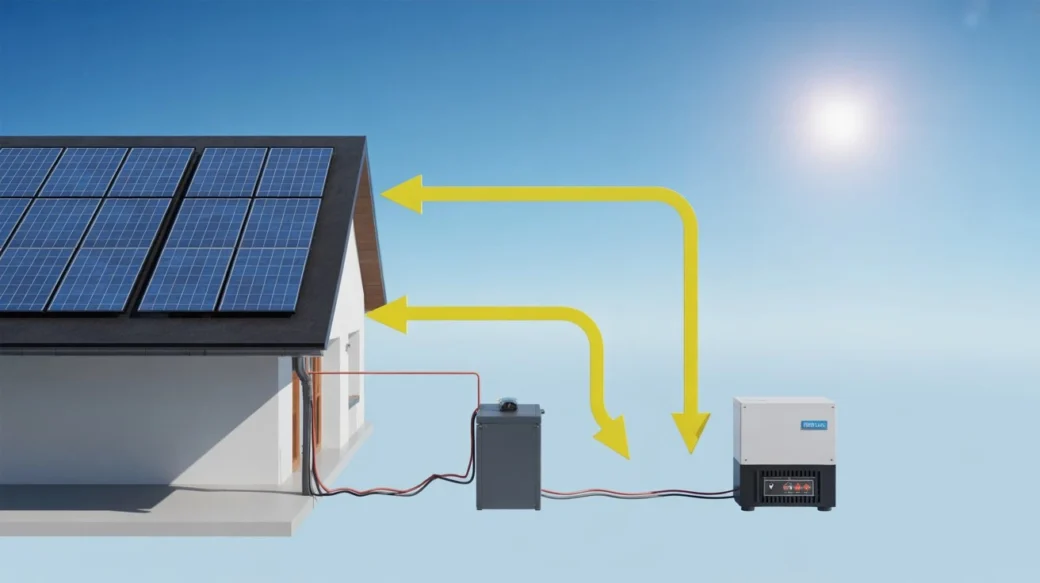
Fixed Income Stability vs Rising Utility Bills in Retirement Communities
Sun City, Arizona, sits in the West Valley of Greater Phoenix and is served primarily by APS. Average summer bills for Sun City homeowners run $180 to $260/month, driven by air conditioning loads in homes that are typically 1,500 to 2,500 square feet.
For a retired household on a fixed income, a rising utility bill is one of the few significant variable expenses that can be meaningfully reduced without changing lifestyle. That’s a real advantage, and it’s why solar adoption in Sun City has been consistently higher than the Phoenix metro average.
System Sizing Considerations for Sun City AZ Homeowners
Sun City homes tend to have lower overall consumption than younger family households, but they run A/C for more hours per day during summer. A typical 1,800 sq ft Sun City home using 900 to 1,100 kWh/month in summer is well-suited for a 6 to 7 kW system at Phoenix-area peak sun hours.
After the 30% federal tax credit, a $24,000 system drops to approximately $16,800. At an APS bill of $220/month ($2,640/year), and assuming 75% bill offset (heat-adjusted), annual savings of approximately $1,980 produce a payback window of 8.5 to 9 years.
For a homeowner who plans to stay in Sun City for 15 to 20 years, that payback math supports the investment. For someone who may sell within 5 to 7 years, the calculation is less clear, especially if the sale happens before break-even.
Payback Sensitivity for Low-Consumption Households
Here’s the scenario where solar gets harder for Sun City. A retired couple who manages their usage carefully, keeping the thermostat at 80°F in summer, running the washer at night, may have a bill of only $110 to $130/month. At that usage level, a solar system sized for their summer peak will routinely over-produce in spring and fall, exporting power at the low APS credit rate.
That exported power earns $0.09 to $0.11/kWh instead of offsetting power at $0.12 to $0.15/kWh. The savings gap per exported kWh is small but compounds across hundreds of hours of spring production, stretching the payback period to 11 to 14 years. That is still a viable outcome, but it requires honest math, not the standard sales scenario.
Arizona Solar Regional Comparison: Why Location Changes Everything
Phoenix vs Tucson vs Flagstaff vs Yuma Solar Production Differences
The table below reflects 2026 NREL data and real-world system performance estimates, not manufacturer spec sheets.
| City | Peak Sun Hours/Day | Annual Output (8 kW System) | Heat Derating | Realistic Payback |
| Yuma | 7.5 | 12,800–14,200 kWh | High (-18%) | 7–9 years |
| Phoenix | 6.5 | 10,800–12,200 kWh | Very High (-22%) | 8–11 years |
| Tucson | 6.2 | 10,400–11,600 kWh | High (-18%) | 8–11 years |
| Prescott | 5.8 | 9,600–10,800 kWh | Moderate (-12%) | 9–12 years |
| Flagstaff | 5.2 | 6,700–8,100 kWh | Low (-8%) | 10–13 years |
How Average Peak Sun Hours Arizona Shifts Across Geography
The 2.3 peak sun hour difference between Flagstaff (5.2) and Yuma (7.5) represents a 44% production gap for identical systems. That’s the difference between a system that covers your full bill and one that covers roughly two-thirds of it.
What’s significant about this range is how quickly it shifts over short distances. Drive from Phoenix to Prescott, roughly 90 miles, and the average annual sun hours drop by about 0.7 hours/day. That sounds minor, but over a year, it amounts to approximately 255 fewer peak sun hours, or roughly 1,200 fewer kWh from an 8 kW system.
Microclimate Effects That Installers Rarely Highlight
Tucson’s Santa Catalina Mountains create localized afternoon cloud patterns on the east side of the city that reduce summer production by 4% to 7% compared to west Tucson. This difference doesn’t show up in city-level averages, but it’s real and consistent.
Similarly, Phoenix neighborhoods near the Salt River corridor, including Tempe and Scottsdale, experience slightly different humidity levels in monsoon season (July–September) that can reduce peak sun hours by 0.2 to 0.4 hours/day for 8 to 10 weeks. Again, that’s not a reason to avoid solar. It’s information that should appear in an honest production estimate.
Final Decision Framework: Is Solar Worth It in Arizona?
Break-Even Calculation Based on Arizona Peak Sun Hours
Here is a real calculation for a representative Phoenix homeowner:
- Monthly APS bill: $195 (approximately $2,340/year)
- System size recommended: 9 kW (heat-adjusted for Phoenix)
- Estimated installation cost: $29,500
- Federal tax credit (30%): -$8,850
- Net cost: $20,650
- Estimated annual production: 11,500 kWh
- Bill offset (direct use + export): approximately $1,720/year
- Payback period: approximately 12 years at current APS rates
If APS rates increase 3.5% annually, consistent with their historical pattern, the same system reaches break-even in closer to 10 years. Over a 25-year system life, the homeowner saves approximately $23,000 to $31,000, depending on the rate trajectory.
That is a solid outcome. But it’s not the “6-year payback” some proposals still quote.
When Solar Makes Financial Sense vs When It Does Not
Solar makes sense in Arizona when:
- The monthly bill consistently exceeds $150
- South or west-facing roof with low shade
- Planning to own the home for 10+ years
- Purchasing (not leasing) to access the full ITC
- Budget allows for cash purchase or financing at a rate below 6% interest rate
Solar is a harder decision when:
- Bill is under $100/month
- Financing rate exceeds 7%
- The roof is less than 10 years from replacement
- HOA requires approval and limits panel placement
- Home is in northern Arizona with significant snow exposure
Understanding how solar debt and financing structures work before you commit to a loan product is as important as understanding your sun hours, and it’s a step most homeowners skip.
Simple Homeowner Checklist Before Committing to Solar
Before signing any Arizona solar contract, confirm:
- [ ] You have 12 months of utility bills to share with your installer
- [ ] Your proposal includes a heat-derating adjustment for summer production
- [ ] Your installer has run the estimate against your specific APS rate plan
- [ ] You understand whether the net metering credit is retail or avoided-cost
- [ ] You have confirmed the interconnection timeline with your utility
- [ ] A licensed electrician has assessed your roof’s panel placement options
- [ ] You have compared at least two installer proposals with identical system specs
Key Decision Insight for Arizona Homeowners
Why Average Peak Sun Hours in Arizona Alone Do Not Determine Savings
Arizona’s sun data is exceptional. But sun hours are an input, not an outcome. Two homeowners in Phoenix with the same 8 kW system, the same roof angle, and the same monthly consumption can end up with very different financial results based entirely on which APS rate plan they’re on.
What struck me most when I reviewed Arizona solar contracts across different utility territories was how consistently the rate plan conversation was missing. Homeowners would have detailed proposals showing panel count, inverter specs, and 25-year savings, but no mention of which specific rate plan those savings were calculated against. That gap is where the disappointment happens.
How Utility Rate Plans Can Override Solar Production Advantages
Under APS’s Saver Choice Plus plan, a homeowner who produces significant midday solar power but draws heavily from the grid at 5 p.m. and 6 p.m. can face a higher effective bill than a non-solar customer on a flat rate plan with the same usage. The solar panels are working. The rate structure is working against them.
This is not hypothetical. It’s a documented pattern with APS time-of-use customers who installed without battery storage and without understanding the on-peak pricing window.
The solution is straightforward: choose a rate plan that aligns your highest-production hours with your highest-rate hours. But that requires your installer to have that conversation with you, and it requires you to ask for it explicitly.
The Single Most Overlooked Factor in Arizona Solar ROI Decisions
It is not panel efficiency. It’s not an inverter brand. It’s not even the federal tax credit.
It’s how long you stay in the home.
Arizona solar systems are warranted for 25 years. Their financial case is built on 20 to 25 years of avoided electricity costs. A homeowner who sells in year 8 recovers the system cost partially through increased home value. Arizona does exempt solar from property tax assessment, and studies suggest solar adds 3% to 4% to home value in Phoenix-area markets, but not necessarily through the direct savings that make the full ROI case work.
If there is any meaningful chance you sell within 7 years, the full financial benefit requires careful recalculation before you commit.
What Arizona Homeowners Should Know Before Their Next Step
Arizona is, genuinely, one of the strongest solar markets in the United States. The sun hours are real. The federal tax credit is real. The long-term savings potential is real.
The question is not whether Arizona solar works. The question is whether it works for your specific home, your specific bill, your specific utility plan, and your specific timeline.
A homeowner in Yuma with a $220/month APS bill, a south-facing roof, and a 15-year horizon has a strong financial case. A homeowner in Flagstaff with a $95/month bill, a partially shaded east-facing roof, and a plan to sell in 6 years has a weak one, regardless of how much sun Arizona gets on average.
The average peak sun hours Arizona data is your starting point, not your answer. The full answer lives in those variables specific to your situation that no statewide average can tell you.
Verify your APS or SRP rate plan in writing. Ask your installer for a heat-adjusted production estimate. And understand exactly what credit rate applies to the power your system exports to the grid before you sign anything.
FAQs: Average Peak Sun Hours Arizona
How many peak sun hours does Arizona get per day?
Arizona averages 5.5 to 7.5 peak sun hours per day, depending on location. Phoenix averages 6.5, Yuma reaches 7.5, and Flagstaff averages 5.2.
What is a peak sun hour in Arizona?
A peak sun hour is one hour of sunlight at 1,000 watts per square meter, the intensity standard used to rate solar panels. It is not the same as a daylight hour.
Does summer heat reduce solar output in Arizona?
Yes. High rooftop temperatures in Phoenix (65°C to 75°C in summer) reduce panel output by 10% to 25% compared to rated specifications. This is called the temperature coefficient effect.
Is solar worth it in Phoenix in 2026?
For homeowners with bills above $150/month on a south or west-facing roof, Phoenix solar typically reaches financial break-even in 8 to 11 years using heat-adjusted estimates. Lower bills or unfavorable rate plans extend that timeline significantly.
How does APS net metering work for solar homeowners?
APS credits solar exports at an avoided-cost rate of approximately $0.09 to $0.11/kWh, not at the retail rate you pay for power you consume. This difference affects your annual savings calculation meaningfully.
Does Flagstaff get enough sun for solar?
Flagstaff averages 5.2 peak sun hours per day, which is sufficient for solar. But snow accumulation, slower melting on low-slope roofs, and longer payback timelines (10 to 13 years) make the financial case less straightforward than in Phoenix or Yuma.
What is the payback period for solar in Arizona?
Realistic payback ranges vary: Yuma (7–9 years), Phoenix (8–11 years), Tucson (8–11 years), Prescott (9–12 years), Flagstaff (10–13 years). These estimates use heat-adjusted production figures and current APS export credit rates.
This article by SolarInfoPath (2026 research framework) is part of a comprehensive solar knowledge architecture covering all major high-value sectors including legal disputes (installation negligence, contracts, liability, fraud, lawsuits, liens, HOA and permitting disputes), financial structures (loans, PPA/lease agreements, DSCR financing, tax equity, investment and project finance), tax law (ITC, Section 48/25D, MACRS depreciation, bonus credits, IRS audits, recapture rules, domestic content and IRA/OBBBA compliance), insurance and risk (property damage, hail/wind/fire claims, bad faith insurance disputes, warranty coverage), policy and regulation (net metering, FERC interconnection, state utility rules, incentive programs and regulatory changes), commercial and utility-scale development (EPC contracts, construction delays, performance bonds, receivership, bankruptcy, asset sale and restructuring), real estate impacts (home value, solar leases, liens, title issues, HOA restrictions, easements), and emerging market structures such as battery storage, community solar, agrivoltaics, SRECs, yieldcos, and institutional investment funds. All content is based on publicly available regulatory, financial, and legal sources and is intended strictly for educational and informational purposes, not legal, tax, or financial advice. Readers should always verify current laws, utility policies, tax regulations, and contract terms with qualified licensed professionals before making decisions, as solar regulations, incentives, and financial structures frequently change across jurisdictions and time.

Solar Legal Analyst· Policy Researcher· Investigative Finance Writer Lead Analyst & Founder of SolarInfoPath
Morgan Lee is a solar legal analyst, policy researcher, and investigative finance writer with 12+ years of experience in U.S. renewable energy law, IRS tax credit compliance, and solar litigation. He is the founder of SolarInfoPath, a research-driven platform focused on primary-source analysis of solar contracts, tax law, regulatory policy, and industry disputes affecting homeowners and commercial developers.
His work is grounded in original legal and regulatory sources, including IRS notices, FERC and CPUC rulings, state court filings, PACER records, and UCC lien databases. He specializes in solar contract disputes, injury and workers’ compensation claims, PACE financing issues, tax equity structures, ITC recapture rules, MACRS depreciation, and federal and state solar policy frameworks.
Morgan’s analysis spans solar litigation, finance structures, and regulatory developments such as the IRA and OBBBA, interconnection reform, domestic content rules, and battery storage incentives. He also covers EPC contracts, PPAs, project financing, and utility-scale solar investment structures.