
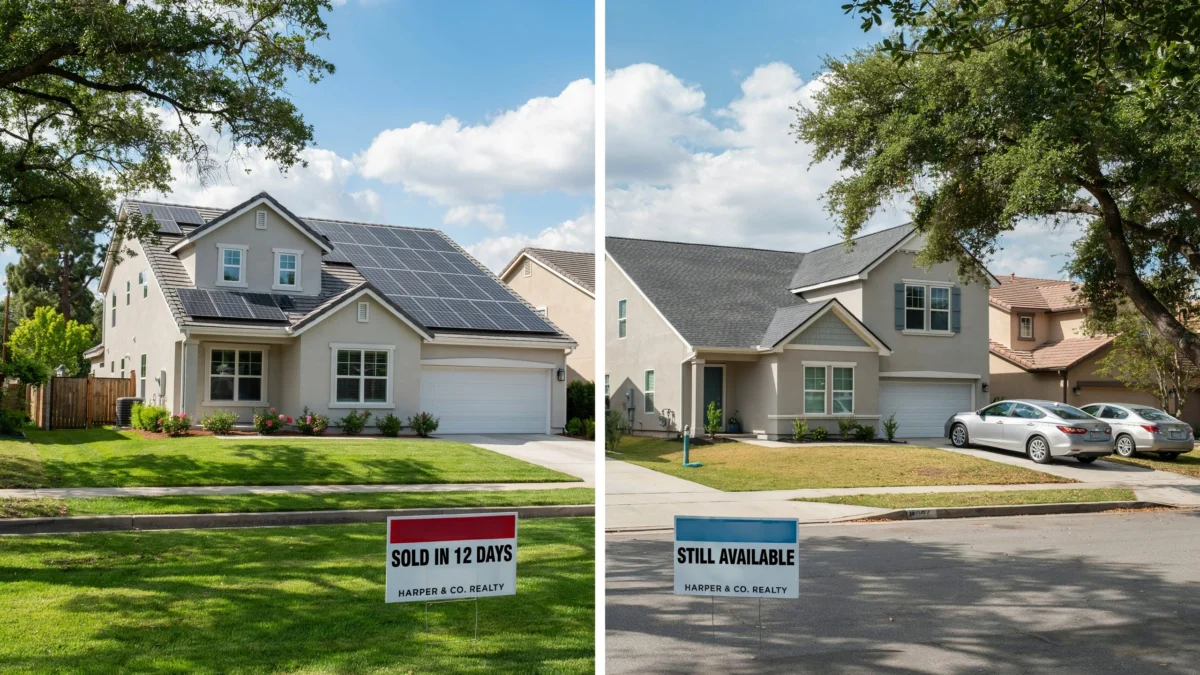
How much faster do houses sell with solar? Studies show that homes with owned solar panels typically sell 13–20% faster than comparable non-solar properties, often spending 10 to 18 fewer days on the market. However, the advantage depends on factors such as system ownership, local electricity costs, and available documentation, making some solar homes easier to sell than others.
Solar sales reps answer this question quickly: “Yes, solar helps your home sell faster and for more.”
That answer is incomplete. The more useful question is: under what conditions does solar speed up a sale, by how much, and when does it actually slow things down?
The research is consistent, solar does help most owned-system homes sell faster. The Lawrence Berkeley National Laboratory tracked solar home transactions across 23 states and found both a consistent price premium and faster average sale timelines. But “average” carries hidden weight.
Homes in high-rate utility markets outperform that average significantly. Homes with leased systems, degraded equipment, or missing permits often underperform it entirely.
What follows is a breakdown of what the 2026 data actually shows, not the version designed to close a sale.
How Much Faster Do Houses Sell With Solar Panels?
The Core Sale Speed Numbers
That translates to roughly 10–18 fewer days on market, depending on the state, the utility rate environment, and how the system is documented.
In California, Arizona, and Texas, where electricity rates are high and solar adoption is well-understood by buyers, the speed advantage sits near the top of that range. In states where utility rates average below 11 cents per kWh or where net metering has been significantly weakened, the advantage narrows.
The underlying reason is straightforward. A home with solar already installed eliminates several buyer barriers at once:
- No contractor search or permitting delay
- No upfront installation cost to budget for
- No uncertainty about system performance
- Immediate bill savings from day one of ownership
For a buyer who was already thinking about solar, that’s a material difference between two otherwise similar listings.
What Determines Whether That Speed Advantage Actually Applies to Your Home
The 13–20% faster timeline isn’t automatic. Three factors determine whether your home benefits from it.
System ownership. Owned systems produce the strongest speed advantage. Leased systems and PPAs introduce contract transfer hurdles that frequently erase the timeline benefit entirely, more on this below.
Documentation completeness. When a buyer’s agent can’t find the original permits, production records, or warranty paperwork within 24 hours of an offer, hesitation follows.
That hesitation often costs 1–2 weeks of back-and-forth before the transaction regains momentum.
System age and condition. The speed advantage concentrates most heavily in systems under 10 years old with a recognizable tier-one panel brand. Systems beyond that age range generate more buyer questions than buyer confidence.
Here’s what most articles don’t mention: the 13–20% faster figure assumes the buyer can immediately qualify for the home at full asking price.
When solar is financed through a PACE loan, a debt attached to the property tax bill, some buyers hit unexpected underwriting complications. That can quietly add 2–3 weeks to closing before the inspection phase even begins.
Do Solar Panels Increase Home Value? The Price Premium, Explained Honestly
What the Research Actually Shows
Owned solar panels increase home sale price by an average of 3.5% — 6.9%, with the upper range applying specifically to high-electricity-cost states.
The most widely cited figure comes from Zillow’s national dataset, which puts the average premium at approximately 4.1%. LBNL’s more granular analysis finds the range between 3.5% and 6.9% depending on state-level electricity rates, local solar market maturity, and documentation quality.
For a $380,000 home, a 4.1% premium equals roughly $15,580 in additional sale price. That’s a real financial advantage — but it requires the right appraiser, the right buyer pool, and the right documentation to materialize.
Why the Premium Isn’t Guaranteed in Every Market
Most residential appraisers use the sales comparison approach, finding nearby solar homes that sold recently to establish a value baseline.
In markets where solar adoption is still below 12–15%, comparable solar sales may simply not exist in sufficient numbers to support a full premium. The appraiser may assign no additional value at all, regardless of what the system cost to install.
This doesn’t mean solar was a bad investment. It means the 6.9% figure doesn’t apply automatically in every ZIP code.
The Income Approach: How the Premium Is Properly Calculated
The Appraisal Institute recognizes the income approach as the appropriate method for valuing solar systems, capitalizing the annual energy savings the system produces.
The calculation works like this: take the system’s annual energy production in kWh, multiply by the local utility rate per kWh, and apply a capitalization multiplier, typically around 20x for residential solar. That gives you a defensible premium figure based on documented savings rather than assumptions.
| Factor | Sales Pitch Version | What Data Actually Shows |
| Average price premium | 6–9% | 3.5%–6.9% (owned, documented, under 10 years) |
| Sale speed improvement | “Significantly faster” | 10–18 fewer days on market (conditions apply) |
| Leased system impact | Neutral to positive | Often neutral to slightly negative; complicates financing |
| Highest premium states | “Most states” | CA, NJ, MA, AZ, TX — rates above 14¢/kWh |
| Lowest premium states | Rarely mentioned | States with rates below 10¢/kWh, limited net metering |
| Documentation impact | Rarely discussed | Critical — missing records reduce appraised value |
| PACE loan buyer impact | Almost never mentioned | Can add 2–4 weeks or disqualify FHA/VA buyers |
Before listing, pull your system’s production reports, original permits, and warranty documents.
If you’re in a market where solar comps are thin, speak with an appraiser who specifically uses the income approach before assuming any premium applies to your home.
Selling a House With Solar Panels: Owned vs. Leased: The Sale Outcome Splits Here
Why Ownership Status Changes Everything
Owned solar systems and leased solar systems are not the same asset in a real estate transaction.
An owned system transfers cleanly with the deed. It adds value and simplifies the sale. A leased system or PPA transfers a contractual obligation, one that requires approval from the solar company, a credit check on the buyer, and paperwork that can stall escrow by 2–4 weeks.
From a contract standpoint, this is where most sellers with leased panels run into problems. The lease remains legally tied to the property, not the homeowner. When the home sells, the buyer assumes the remaining lease term, sometimes 15–20 years of remaining obligations.
Many buyers, especially first-time buyers near the limit of their purchasing budget, are unwilling to assume that obligation even when the monthly payment is lower than the projected utility savings.
The FHA and VA Financing Problem With Solar Leases
This is the most underreported friction point in solar home sales, and it affects a significant portion of buyers.
FHA underwriting guidelines require that solar lease payments be included in the buyer’s monthly debt calculation when computing the debt-to-income (DTI) ratio.
For a buyer already near the 43% DTI ceiling, which is common for first-time buyers in competitive markets, a $150/month solar lease payment can push them over the threshold. The result isn’t a delay. It’s a disqualification.
That buyer walks. The seller relists. Days on market climbs.
This is not a rare edge case. It reflects current FHA handbook guidance as of 2026 and has quietly derailed a meaningful number of transactions that were otherwise solid.
What to Do If Your Home Has a Leased System
Contact the solar company at least 90 days before your target listing date.
Request the current buyout figure, the full transfer requirements, and the typical timeline for new lessee credit approval. That information needs to shape your pricing and your buyer screening approach before you list.
If the buyout figure is unexpectedly high or the transfer process seems complicated, reviewing your solar contract exit options gives you a clearer picture of what alternatives exist before you commit to a listing strategy.
How much faster do houses sell with solar: Understanding Buyer Psychology in 2026
Energy Cost Savings: The Primary Driver
The financial motivation behind solar home buyer preference is direct.
A buyer looking at two otherwise identical homes, one with solar, one without, is doing a simple calculation: the solar home eliminates a recurring bill that has risen an average of 3.5 — 4% annually for the past decade.
That’s not an environmental preference. That’s personal finance.
A 2024 National Association of Realtors survey found that 63% of real estate agents reported energy efficiency as a valuable listing feature. That number climbs in Sun Belt markets and high-rate coastal states where buyers have personal experience with $200–$350 monthly electricity bills.
How Different Buyer Generations Respond to Solar
Buyer response to solar is not uniform across age groups, and understanding that split helps with how you position the listing.
Millennial and Gen Z buyers: now the dominant share of first-time purchase activity, cite sustainability and energy independence as meaningful factors in home decisions. The move-in-ready framing resonates: solar already installed means no disruption, no research, no contractor coordination.
Gen X move-up buyers respond more strongly to documented financial savings than environmental framing.
Showing a Gen X buyer three years of utility bills alongside the solar production data is more persuasive than any sustainability narrative. The message that actually lands with that buyer segment is specific: “This 9.2 kW system produced 14,100 kWh in 2025, covering 97% of household electricity use at APS’s current rate of 15.8 cents per kWh.”
That’s verifiable. It requires no trust in anyone’s claims. The data makes the case on its own.
Energy Independence and Grid Reliability, A Growing Factor
Grid reliability concerns have become a measurable purchase factor since 2022, particularly in Texas, California, and Florida, states with documented outage events and volatile grid conditions.
Homes with solar plus battery storage score noticeably higher with buyers in those markets.
A battery-equipped home signals something beyond bill savings: it means the lights stay on. For buyers who experienced extended outages, that’s not a feature, it’s a requirement. The market premium for solar-plus-storage systems in Texas and California outpaces solar-only systems by 1.5–2.5 percentage points in 2026 transaction data.
Solar Home Resale Value by State: Where the Premium Is Real and Where It Isn’t
States With the Strongest Solar Price Premiums
Five states consistently show solar home price premiums at or above the national average.
California leads with premiums ranging from 5.4% to 9.9% in high-rate utility territories. PG&E and SCE residential rates have exceeded 30 cents per kWh in peak tiers in 2026, making solar bill savings immediately legible to buyers.
New Jersey ranks among the highest nationally, sustained by PSEG rates above 18 cents per kWh and one of the strongest remaining net metering frameworks in the Northeast.
Massachusetts and Connecticut sustain strong premiums for similar reasons: National Grid and Eversource rates regularly exceed 22–25 cents per kWh, making documented solar savings a clear financial advantage.
Arizona shows consistent premiums of 4–7% in APS and SRP service territories, where summer cooling bills push residential electricity costs among the highest in the Southwest.
Texas premiums are concentrated in Oncor and Austin Energy territories. Rural co-op markets with lower rates show significantly weaker premium support.
States Where Solar’s Resale Advantage Is More Limited
States with average residential electricity rates below 10–11 cents per kWh show measurably weaker solar premiums.
Louisiana, Oklahoma, Arkansas, and parts of the Midwest fall into this category. The sun hours may be adequate for system production. But when a buyer’s current electricity bill is $80–$95 per month, the financial case for paying a premium for solar is simply less compelling.
Net metering policy matters here too. States that have moved to avoided-cost compensation — paying solar owners 3–5 cents per kWh instead of retail rates for exported power — significantly reduce the long-term savings value that buyers are paying a premium to acquire.
A Solar Home Sale Scenario in Arizona
Gilbert, Arizona: Spring 2026
Two nearly identical homes. Both 2,200 square feet, both built in 2017, both listed at $485,000.
One has a 9.2 kW owned solar system installed in 2020, full documentation, tier-one panels, monitoring active. The other does not.
The solar home’s owner currently pays roughly $38/month in APS grid connection fees. Before solar, their average APS bill ran $210/month. That’s a documented annual savings of approximately $2,064 at current APS rates of 15.8 cents per kWh.
Using LBNL’s income approach multiplier of approximately 20x annual savings, that system can support a theoretical valuation premium of $41,280. In practice, appraised premiums in comparable Arizona transactions typically come in between $25,000–$35,000 — still real money.
The solar home attracts more showing requests. It receives its first offer approximately 12–14 days sooner than the non-solar comp. The buyer’s agent doesn’t have to explain the system because the documentation packet is ready at listing.
The non-solar home sells too, but it sits longer, and the buyer negotiates more aggressively on price because there’s no documented savings story to anchor the ask.
Does This Math Apply to Your Home?
If your monthly electricity bill is below $100, the annual savings figure shrinks considerably, and so does the premium you can reasonably expect buyers to pay.
The math changes significantly based on your utility rate, your system’s actual production data, and your local appraisal environment. The average solar panel cost breakdown for U.S. homeowners helps frame what the original installation investment looked like, which directly affects how buyers and appraisers evaluate the value being transferred.
Factors That Affect Solar Home Sale Speed Beyond the System Itself
Roof Condition and Its Impact on Sale Timeline
A buyer’s inspector who identifies roofing concerns beneath or around solar panels creates a negotiation problem that is significantly harder to resolve than on a non-solar home.
Re-roofing with panels installed costs substantially more than standard re-roofing. If your roof is within 5–7 years of its expected replacement, a buyer’s lender may require the issue to be resolved before funding. Some buyers walk rather than negotiate on it.
This is a real-world friction point that most solar content never addresses. Sellers whose roofs are nearing end-of-life should get a roofing assessment before listing, not after an inspector finds the problem in escrow.
HOA Restrictions and Solar Disclosure Requirements
In states with solar access laws, California, Arizona, Colorado, and several others, HOA restrictions on solar are largely prohibited.
In states without those protections, some HOAs have created complications around solar disclosures during the sale process. This varies significantly by community governing documents and state statute.
Check your HOA’s covenants and your state’s solar access law status before listing. If your HOA has been involved in disputes with homeowners over solar equipment, that history may surface during buyer due diligence.
System Age, Inverter Life, and Warranty Transfer Status
A 14-year-old system with an approaching inverter replacement, panels from a manufacturer that no longer exists, and no transferable warranty is not an asset to most buyers.
It’s a question mark.
The price premium is built on relatively recent, well-documented, fully warrantied systems. Older systems in uncertain condition often produce no measurable premium and sometimes generate active buyer resistance.
If your system is in this category, some sellers in 2026 have encountered disputes related to equipment warranty claims, understanding the landscape around solar panel class action lawsuits in 2026 gives you a clearer picture of what buyers may research before making an offer on a home with aging equipment.
Solar Home Sales Documentation: What You Must Have Ready Before Listing
The Documentation Gap, Why It Matters More Than the Hardware
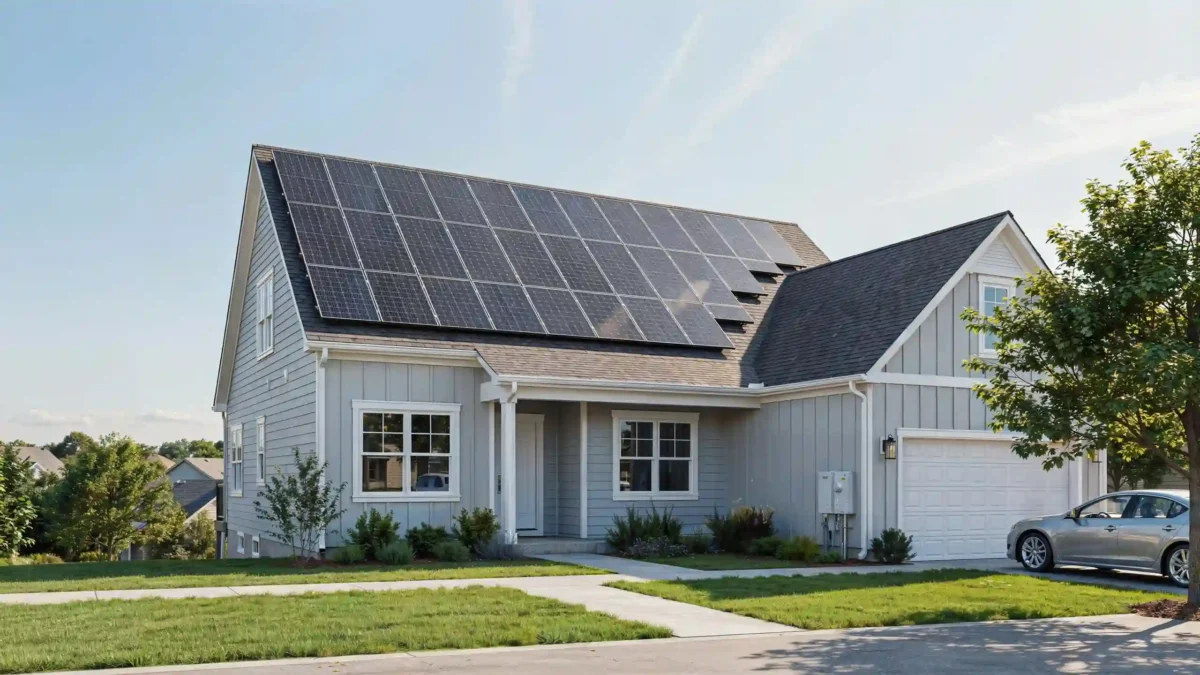
What struck me when reviewing solar home transaction timelines in Phoenix and San Diego was how consistently documentation gaps, not equipment quality, were the actual source of buyer hesitation.
A system producing at 97% of original output with clean monitoring data should inspire confidence. But when a buyer’s agent requests the warranty document or the utility interconnection approval and the seller can’t produce it within 24 hours, that confidence evaporates.
The hardware is fine. The paper trail is missing. And buyers in 2026 are savvier about what to ask for.
The Complete Documentation Checklist
Sellers who present all of the following in a clean disclosure package at listing typically receive faster offers and fewer solar-related concession requests during negotiation:
- Original installation permit and interconnection agreement, proves legal installation and utility approval
- Production records for the last 24 months, downloadable from Enphase Enlighten, SolarEdge, or your monitoring platform
- Utility bills 12 months before and 12 months after installation, the side-by-side savings proof buyers respond to most
- Panel warranty documentation, typically 25 years from the manufacturer
- Inverter warranty, typically 10–12 years; note remaining coverage
- Workmanship warranty, from the installer; note if installer is still operating
- Homeowner’s insurance endorsement, confirms the system is covered under your policy
- System specification sheet, brand, model, system size (kW), installation date
- Any property-attached financing, PACE loan balance, lease agreement, or PPA contract
Sellers who cannot produce this documentation commonly receive buyer concession requests of $5,000–$15,000 to offset “solar uncertainty.” That’s not a negotiation around the system’s value, it’s a penalty for inadequate disclosure.
Geographic Variation Within States: Solar’s Value Is Not Uniform
Why Your Region Within a State Changes the Outcome
Solar’s resale advantage is not consistent across a single state’s geography, and this is one of the most commonly overlooked factors in solar home sale analysis.
In California, a San Diego County home with a recently installed system and documented NEM history has a different buyer conversation than a home in Eureka or Redding.
Southern California buyers live with high SCE and SDG&E bills monthly, the financial value of solar is immediately understood. Northern California buyers in lower-rate territories may perceive the same system as a neutral feature.
In Texas, an Austin or Dallas home in Oncor territory commands a meaningfully different solar premium than a rural West Texas home on a co-op rate structure. The sun hours are comparable. The electricity rate exposure is not.
In New York, Long Island homeowners served by PSEG Long Island, where residential rates often exceed 21 cents per kWh, present solar very differently to buyers than upstate New York homeowners on NYSEG service at substantially lower rates.
The Rate Threshold That Determines Premium Strength
The practical threshold: if your utility’s current residential rate is below 11–12 cents per kWh, the financial case to buyers is meaningfully weaker than your state’s average premium might suggest.
At 11 cents per kWh, a typical 8 kW system producing 10,000 kWh annually saves approximately $1,100 per year. That supports a premium of roughly $22,000 using the income approach multiplier.
At 20 cents per kWh, the same system saves $2,000 annually, supporting a premium closer to $40,000.
Same sun. Same panels. Very different buyer calculus.
When to List a Solar Home: Timing That Maximizes Buyer Impact
Why Spring and Early Summer Work Best
March through June represents the optimal listing window for solar-equipped homes in most U.S. markets.
The reasoning is practical. Buyers touring homes in late spring are thinking about summer electricity bills. Solar production is at or approaching its peak. The monitoring app on your phone can show a buyer exactly what the system produced that morning during the showing.
That’s a powerful demonstration. It requires no explanation and no sales effort.
How to Use Off-Season Production Data Effectively
Listing in October or January doesn’t mean you lose the solar advantage entirely.
Pull your monitoring data for the prior peak production month, typically June or July, and include it in your disclosure packet. Showing a buyer that the system produced 1,450 kWh in July 2025, equivalent to roughly $229 in offset electricity at your utility’s current rate, is more concrete than any annual average estimate.
Buyers understand a monthly bill. Give them a monthly savings number they can verify.
The Honest Case for When Solar May Not Help Your Sale
Three Situations Where Solar Complicates Rather Than Accelerates
Most solar home sale content skips this section. That’s a disservice to sellers who need accurate expectations.
Situation one: Leased system with a large buyout. If your solar lease has 14 years remaining and the buyout figure is $28,000, you face a direct pricing decision. You can reduce your asking price by enough to absorb the buyout, pay it yourself before closing, or attempt a lease transfer, each of which carries different risks.
Some sellers in this position have found that the lease creates more negotiating friction than the system adds in value.
Situation two: High-rate market with low sun hours. A home in upstate New York or the Pacific Northwest may have both a high electricity rate and below-average solar production. The system produces less per year, the savings are smaller, and the premium support weakens accordingly. Solar can still make financial sense here, but the resale premium is thinner than the state average implies.
Situation three: Short ownership timeline. If you installed solar two years ago and are now selling, your own payback period is incomplete.
The buyer benefits from the system, you bear the full installation cost. Whether you recover that through the sale premium depends entirely on market conditions and documentation quality.
The solar payback period analysis for U.S. homeowners breaks down break-even timelines by electricity rate and state, which directly informs how buyers evaluate the remaining value in a system when they’re purchasing a solar-equipped home.
Best Practices for Selling a Solar Home Faster in 2026
Preparing Your Home 90 Days Before Listing
Pull your full production history. Download annual reports for the last 2–3 years from your monitoring platform. If the data shows consistent output at or above the original projection, that’s your strongest selling tool.
Contact your utility. If you’ve lost the original interconnection paperwork, your utility can typically reissue it. This takes 2–6 weeks in some service territories, start early.
Request a solar inspection if your system is older than 7 years. A professional assessment documents current output, inverter health, and any maintenance items. Addressing them before listing is cheaper than offering buyer concessions later.
Preparing Your Listing and Marketing Strategy
Work with your real estate agent to build the system’s financial performance into the listing description using specific numbers.
“Solar system offset approximately 94% of household electricity use in 2025, generating an estimated $2,100 in utility savings at current APS rates” is a verifiable, concrete claim.
“Home features solar panels” is background noise.
Buyers who understand solar will immediately respond to the first framing. Buyers who don’t understand solar will be educated by it rather than confused by it.
For sellers working through the broader financial picture, including whether solar investment held its value relative to original cost, the full analysis of whether solar panels are worth it for U.S. homeowners provides a structured framework for evaluating that question honestly.
Working With the Right Real Estate Agent
Not every agent understands how to market a solar home.
An agent who is unfamiliar with the income approach to solar valuation, who doesn’t know how to handle a lease transfer, or who positions solar as a generic “green feature” rather than a documented financial asset is leaving money on the table.
Ask prospective agents directly: “How many solar homes have you listed in the past 18 months, and how did the sale price compare to the initial list price?”
The answer tells you more than any credential.
Forward Signal: How 2026 Grid and Policy Changes Affect Solar Home Value
Net Metering Reform and Its Effect on Resale Premium
Net metering policy is the single biggest external factor affecting solar home resale value going into 2026 and beyond.
States that have shifted from full retail net metering to avoided-cost compensation, paying solar owners 3–5 cents per kWh instead of 15–25 cents for exported power, have reduced the annual savings value of existing systems. That directly affects the income approach premium.
California’s NEM 3.0 framework, which reduced export compensation significantly in 2023, has already dampened the premium for systems installed after that date in some Bay Area markets.
New installations under NEM 3.0 require larger battery storage to capture value, and homes with storage paired systems are outperforming export-dependent systems in current resale data.
Rising Electricity Rates and the Strengthening Case for Solar Homes
Residential electricity rates have increased an average of 3.5 — 4% annually for the past decade nationally, with some utility territories, particularly in California, New England, and the Southwest, showing steeper recent increases.
Each rate increase strengthens the financial case buyers make for solar-equipped homes. A 9.2 kW system that saved $2,064 per year in 2023 saves approximately $2,300 at 2026 APS rates. That 11% increase in annual savings supports a proportionally higher income-approach premium.
Sellers who installed systems 4–6 years ago are in a position to show buyers that annual savings have grown since installation, not declined. That’s a compelling narrative when it’s backed by utility bill history.
Understanding how large-scale grid infrastructure decisions affect residential solar economics over time adds useful context, the utility-scale solar guide covering cost, land, and grid rules explains the grid-level factors that shape how residential solar is credited and compensated in the years ahead.
What This Means for Your Specific Situation
Homes with solar panels sell faster. The research is consistent, and the buyer psychology is logical.
But “faster” and “for more money” are earned outcomes, not automatic ones.
They depend on whether you own the system outright, whether your documentation is complete, what your utility charges per kWh, and how well your real estate agent understands what they’re marketing.
If your system is owned, well-documented, under 12 years old, and you’re in a utility market with rates above 13 cents per kWh, the evidence supports expecting a real sale speed advantage and a measurable price premium.
If one or more of those conditions doesn’t apply, the right approach is to recalibrate expectations before listing, not after the first offer comes in lower than expected.
The homeowners who tend to be surprised in this process are those who assumed the premium was automatic. It isn’t. It’s built through preparation, honest disclosure, and a clear understanding of what buyers in your specific market actually value.
Frequently Asked Questions
How much faster do houses sell with solar panels in 2026?
Owned solar homes sell 13–20% faster than comparable non-solar homes, roughly 10–18 fewer days on market. The speed advantage is strongest in high-rate utility states like California, Arizona, New Jersey, and Massachusetts. In states with rates below 11 cents per kWh, the advantage narrows considerably.
Do solar panels help sell a house faster if the system is leased?
Not reliably. Leased systems require contract transfer and buyer credit approval, which adds 2–4 weeks to closing. FHA and VA buyers may be disqualified if the lease payment pushes their debt-to-income ratio over the 43% ceiling. Owned systems produce the strongest sales speed advantage.
Does solar increase property value in every state?
No. The price premium is most reliable in states with electricity rates above 13–14 cents per kWh, California, New Jersey, Massachusetts, Arizona, and Texas consistently show the strongest premiums. States with rates below 10–11 cents per kWh and limited net metering show minimal or no measurable premium.
What documents do I need to sell a home with solar panels faster?
The most important items are: original installation permit and interconnection agreement, 24 months of production data from your monitoring system, utility bills before and after solar installation, panel and inverter warranty documents, and any financing attached to the property. Sellers who have all of this ready at listing avoid the most common causes of buyer concession requests and delays.
When is the best time of year to list a solar home?
March through June. Spring buyers are approaching summer electricity bills, solar production is near peak, and live monitoring dashboards can show buyers real-time system output during showings. If you’re listing off-season, include prior-year peak month production data in your disclosure packet.
Frequently Asked Questions
How much faster do houses sell with solar panels in 2026?
Owned solar homes sell 13–20% faster than comparable non-solar homes, roughly 10–18 fewer days on market. The speed advantage is strongest in high-rate utility states like California, Arizona, New Jersey, and Massachusetts. In states with rates below 11 cents per kWh, the advantage narrows considerably.
Do solar panels help sell a house faster if the system is leased?
Not reliably. Leased systems require contract transfer and buyer credit approval, which adds 2–4 weeks to closing. FHA and VA buyers may be disqualified if the lease payment pushes their debt-to-income ratio over the 43% ceiling. Owned systems produce the strongest sales speed advantage.
Does solar increase property value in every state?
No. The price premium is most reliable in states with electricity rates above 13–14 cents per kWh. California, New Jersey, Massachusetts, Arizona, and Texas consistently show the strongest premiums. States with rates below 10–11 cents per kWh and limited net metering show minimal or no measurable premium.
What documents do I need to sell a home with solar panels faster?
The most important items are: original installation permit and interconnection agreement, 24 months of production data from your monitoring system, utility bills before and after solar installation, panel and inverter warranty documents, and any financing attached to the property. Sellers who have all of this ready at listing avoid the most common causes of buyer concession requests and delays.
When is the best time of year to list a solar home?
March through June. Spring buyers are approaching summer electricity bills, solar production is near peak, and live monitoring dashboards can show buyers real-time system output during showings. If you’re listing off-season, include prior-year peak month production data in your disclosure packet.
This article by SolarInfoPath (2026 research framework) is part of a comprehensive solar knowledge architecture covering all major high-value sectors including legal disputes (installation negligence, contracts, liability, fraud, lawsuits, liens, HOA and permitting disputes), financial structures (loans, PPA/lease agreements, DSCR financing, tax equity, investment and project finance), tax law (ITC, Section 48/25D, MACRS depreciation, bonus credits, IRS audits, recapture rules, domestic content and IRA/OBBBA compliance), insurance and risk (property damage, hail/wind/fire claims, bad faith insurance disputes, warranty coverage), policy and regulation (net metering, FERC interconnection, state utility rules, incentive programs and regulatory changes), commercial and utility-scale development (EPC contracts, construction delays, performance bonds, receivership, bankruptcy, asset sale and restructuring), real estate impacts (home value, solar leases, liens, title issues, HOA restrictions, easements), and emerging market structures such as battery storage, community solar, agrivoltaics, SRECs, yieldcos, and institutional investment funds. All content is based on publicly available regulatory, financial, and legal sources and is intended strictly for educational and informational purposes, not legal, tax, or financial advice. Readers should always verify current laws, utility policies, tax regulations, and contract terms with qualified licensed professionals before making decisions, as solar regulations, incentives, and financial structures frequently change across jurisdictions and time.

Solar Legal Analyst· Policy Researcher· Investigative Finance Writer Lead Analyst & Founder of SolarInfoPath
Morgan Lee is a solar legal analyst, policy researcher, and investigative finance writer with 12+ years of experience in U.S. renewable energy law, IRS tax credit compliance, and solar litigation. He is the founder of SolarInfoPath, a research-driven platform focused on primary-source analysis of solar contracts, tax law, regulatory policy, and industry disputes affecting homeowners and commercial developers.
His work is grounded in original legal and regulatory sources, including IRS notices, FERC and CPUC rulings, state court filings, PACER records, and UCC lien databases. He specializes in solar contract disputes, injury and workers’ compensation claims, PACE financing issues, tax equity structures, ITC recapture rules, MACRS depreciation, and federal and state solar policy frameworks.
Morgan’s analysis spans solar litigation, finance structures, and regulatory developments such as the IRA and OBBBA, interconnection reform, domestic content rules, and battery storage incentives. He also covers EPC contracts, PPAs, project financing, and utility-scale solar investment structures.