
Analysis of 2026 solar contracts in Texas and Florida, a solar installation injury lawsuit depends on workers’ comp coverage, OSHA violations, and subcontractor insurance. The solar company, a subcontractor, or the homeowner may be liable depending on who caused the unsafe condition. Most claims stay limited to workers’ comp unless clear negligence or a third-party failure is proven.
Most homeowners think the solar company handles everything if a worker gets hurt at their house. That is not always true. In Texas and Florida, who pays depends on contracts, insurance, and who caused the problem.
This guide gives you a clear answer for each situation, whether you are the homeowner or the injured worker.
Can I Sue the Solar Company If a Worker Was Injured at My House?
You can file a claim, but it only works if specific legal conditions are met. Just being the homeowner where the accident happened does not automatically protect you or give you the right to sue.
If the solar company covered the worker with workers’ comp insurance, your personal liability is usually low. Workers’ comp is the first line of coverage in most Texas and Florida cases. But there are gaps that most homeowners never know about until it is too late.
Many solar companies in Texas in 2026 do not carry workers’ comp at all. Texas is the only U.S. state that does not require most employers to have it. If the company on your roof skipped it, the injured worker can sue that company directly for negligence, and your property conditions may come up as part of that case.
Homeowner Liability Solar Worker Injured Property: When You Can Be Sued
You can be sued if a dangerous condition on your property caused or contributed to the injury. This does not happen in every case, but it happens more than homeowners expect.
A roof with known damage, standing water on the work surface, or a faulty electrical panel you never disclosed, these are the exact conditions that have led to homeowner liability claims in Texas and Florida. The keyword is “known.” If you knew about the problem and said nothing, your risk goes up fast.
The solar property tax litigation disputes in Texas show the same pattern: hidden property issues that were never disclosed end up creating legal exposure that homeowners never saw coming.
Solar Subcontractor Injury Liability: Who Pays in Multi-Contract Installations
In most 2026 solar jobs, the company you signed with is not the crew that shows up. Most big solar companies hire subcontractors to do the roof work. This creates a gap in who is actually responsible.
The main solar company takes your contract. They hire a subcontractor for the installation. The subcontractor is supposed to have their own insurance. If they do not have it, liability can bounce back up the chain, and sometimes back to you if your property played a role.
Ask for the subcontractor’s insurance certificate before any work starts. Most homeowners never do this. It takes one question, and it protects you.
Solar Contractor OSHA Violation Injury Claim Texas: The Legal Trigger Most Cases Depend On
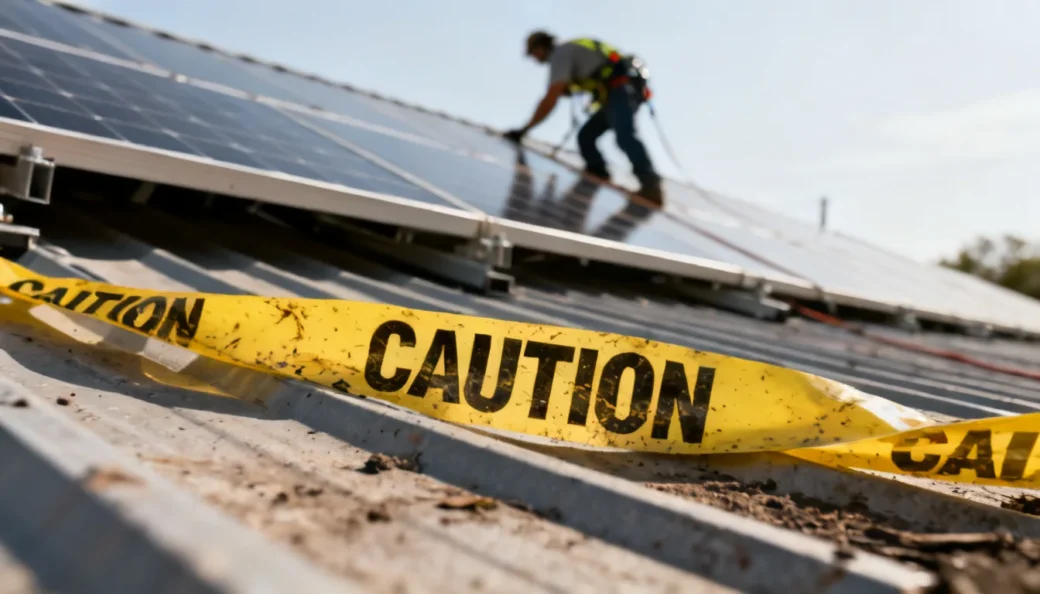
An OSHA violation is what turns a standard workers’ comp case into a full negligence lawsuit in Texas. Without it, most cases stop at basic comp benefits. With it, the legal options open up significantly.
When an OSHA inspector cites the contractor after an injury, it becomes official proof that safety rules were broken. That written record is very hard for an employer to fight in court.
Why OSHA Violations Override Standard Workers’ Compensation Protections
In Texas, workers’ comp is optional for employers. If your solar contractor skipped it, the injured worker can sue them directly. An OSHA citation on top of that makes the lawsuit much stronger.
In Florida, workers’ comp is required. But an OSHA violation still allows the worker to file a separate negligence claim alongside the comp claim. The citation acts as evidence that the employer was careless, not just unlucky.
What Is the Average Solar Installation Injury Settlement in Texas?
There is no single average you can trust. Settlement amounts in Texas solar injury cases depend on the type of injury, the insurance in place, and whether a third-party claim applies.
Solar Installer Negligence Lawsuit Settlement Amount Texas: Realistic Ranges in 2026
| Claim Type | Typical Range | What Makes It Apply |
| Workers’ comp only | $15,000–$80,000 | Employer has workers’ comp coverage |
| Third-party negligence | $75,000–$300,000+ | Another party caused or worsened the injury |
| OSHA violation + negligence | $150,000–$500,000+ | Safety rules were broken and documented |
| Electrocution or burn injury | Often higher than above | Permanent or internal damage is proven |
| Homeowner liability added | Varies widely | Unsafe property condition contributed |
These are not promises. They come from Texas construction injury records and 2026 claims data. Your case depends on your specific facts.
Solar Installation Accident Workers Comp vs Personal Injury Texas: Which Pays More?
A personal injury lawsuit pays more than workers’ comp. But it is also harder to win.
Workers’ comp covers your medical bills, part of your lost wages, and disability based on how badly you were hurt. A personal injury lawsuit can cover your full wages, pain and suffering, future income loss, and in extreme cases, extra punishment damages against the employer.
The gap between those two outcomes is often huge. Many workers take workers’ comp and never ask whether a larger claim was possible. If a third party contributed to your injury, that question is worth asking, and your employer will not bring it up.
Solar Panel Electrocution Injury Lawsuit: Why These Claims Often Exceed Standard Settlements
Electrical injuries are different from fall injuries in the eyes of Texas courts. The damage is often inside your body, nerve damage, organ stress, and chronic pain, and it does not always show up right away.
Texas courts have a long record of awarding more in electrocution cases because the long-term harm is real and documented. If the cause was a bad inverter, wrong wiring, or a failure to shut off power before work started, the equipment maker can also be added to the lawsuit. That means more parties who may be responsible, and more potential compensation for you.
Key Factors That Increase or Limit Settlement Value in Texas
What pushes a settlement higher is a combination of things: a written OSHA citation, a history of safety complaints about that contractor, and permanent or visible injury. If the employer also skipped workers’ comp entirely, the legal path to a full negligence payout opens even wider.
What limits a settlement is the absence of any documented carelessness, a finding that the worker was partly at fault, or a contractor who carried solid insurance with no gaps. Both sides of the picture shape what a case is actually worth.
Who Is Liable When a Solar Installer Falls Off a Roof in Florida?
In Florida, the solar company or its licensed contractor is liable when a worker falls during installation. The homeowner is typically not responsible unless the property itself caused the problem.
Florida law requires all construction employers with at least one employee to carry workers’ comp. So the starting point for most Florida solar injury claims is clearer than in Texas.
Solar Panel Installer Injured on Roof Legal Rights: What Workers Can Actually Claim
If you are a solar worker hurt on a roof in Florida, you have the right to file a workers’ comp claim right away. You may also file a third-party claim against the property owner if an unsafe condition caused your fall, a product liability claim if faulty equipment was involved, or a claim against a general contractor who failed to run a safe job site. You can do more than one of these at the same time.
The process of getting out of a solar contract raises similar questions about who is responsible for what, and the same contract language that affects cancellations often controls how injury liability is split between parties, too.
Solar Worker Compensation Claim, Florida Third Party: The Overlooked Legal Path
Most injured workers in Florida only file workers’ comp and stop there. But there is a second path that pays more, and employers never tell you about it.
If someone other than your direct employer caused or contributed to your injury, you can file a third-party claim on top of your workers’ comp claim. That other party could be the property owner if a hidden defect caused the fall, the general contractor who ran the job site, or the equipment maker if a product failed. Filing both claims at the same time is allowed under Florida law.
Rooftop Solar Fall Injury Attorney: Houston vs Florida Liability Rules
Houston cases follow Texas law. Florida cases follow a different set of rules. The difference matters in ways that directly affect how much you can recover.
Florida Comparative Negligence vs Texas Liability Structure
Florida changed its negligence law in 2023. Now, if you are found more than 50% responsible for your own injury, you get nothing. That is a hard cutoff that did not exist under the old law.
Texas uses a 51% cutoff. But the bigger difference is the non-subscriber rule. If a Texas solar company skipped workers’ comp, you can sue them directly without clearing the standard fault test first. That option does not exist in Florida. It is one of the most important legal advantages available to injured solar workers in Texas, specifically.
Solar Installation Burn Injury Attorney Florida: How Burn and Electrocution Cases Differ
Burn injuries in Florida solar jobs usually come from live circuit contact, arc flash events, or inverter problems. These cases are harder to resolve than fall cases because they involve equipment makers, require detailed medical proof, and depend on specific OSHA electrical standards to show what the contractor should have done.
Solar Panel Electrocution Injury Lawsuit vs Burn Injury Claims, Legal Differences That Affect Compensation
Electrocution and burn injuries are handled differently in court. Electrocution focuses on what the current does inside the body and what long-term damage results. Burn claims focus on visible tissue damage and how long recovery takes.
Electrocution cases often lead to higher settlements because internal damage is harder to predict and may affect the victim for life. Burn cases have visible proof up front, which makes early documentation easier, but the long-term complications still need to be carefully proven to get full compensation.
OSHA Safety Violations in Florida Solar Installations, Real Causes of Burn Injuries
Based on SolarInfoPath’s review of 2026 Florida solar installation OSHA reports, the three most common violations linked to burn and electrocution injuries are:
- Failure to shut off power before starting work (29 CFR 1926.416)
- No proper protective gear for electrical tasks
- No written lockout/tagout procedure on the job site
A filed OSHA citation after your injury is powerful evidence. It proves the rule existed, the employer broke it, and that breach caused your harm.
Why These Cases Often Involve Multiple Liable Parties
A burn or electrocution case in Florida rarely involves just one responsible party. The contractor who did the work, the equipment maker if a product failed, and the general contractor who oversaw the site can all be named at once.
This is why the solar panel class action lawsuit picture in 2026 is relevant here. When defective equipment is part of the injury, product liability claims against the manufacturer can run alongside the installation injury claim at the same time.
Projections vs Reality: Solar Installation Injury Lawsuit Outcomes in Texas & Florida
| Case Type | What People Expect | What SolarInfoPath Found in 2026 |
| The worker gets hurt | Employer covers everything | Often only workers’ comp unless negligence is shown |
| Homeowner liability | Very rare | Real risk when a property defect contributed |
| Settlement size | High payout likely | Most cases stay low unless a third-party claim is added |
| Contractor blame | Clear and simple | Usually split across subcontractors with coverage gaps |
| Electrocution claims | Same as fall claims | Courts consistently award more due to hidden long-term harm |
| OSHA violation | Minor paperwork issue | The legal trigger that can turn comp into a full lawsuit |
Decision Checkpoint: Solar Installation Accident Workers Comp vs Personal Injury Texas & Florida
If You’re a Homeowner, Liability Risk Explained Clearly
Your risk is low, unless your property caused or contributed to the injury. If the crew was hurt because of their own equipment, a subcontractor mistake, or an OSHA violation, you are not the focus.
But if your roof had a known problem, your panel was outdated, or the surface was slippery, and you said nothing, that changes things fast. Take photos of your entire property before any installation starts. Date them. Keep them. That one step protects you more than anything else.
If You’re a Solar Worker: What Determines Your Claim Type
Two things decide what kind of claim you have. First, does your employer carry workers’ comp? Second, did anyone else contribute to your injury?
In Texas, find out right away whether your employer is a comp subscriber. In Florida, coverage is required, but subcontractors sometimes let it lapse. Knowing how long solar installation takes in America and what each stage involves can help you pinpoint exactly where the safety failure happened and who was in charge at that moment.
Reality Check: The Contract Clause That Decides Who Pays
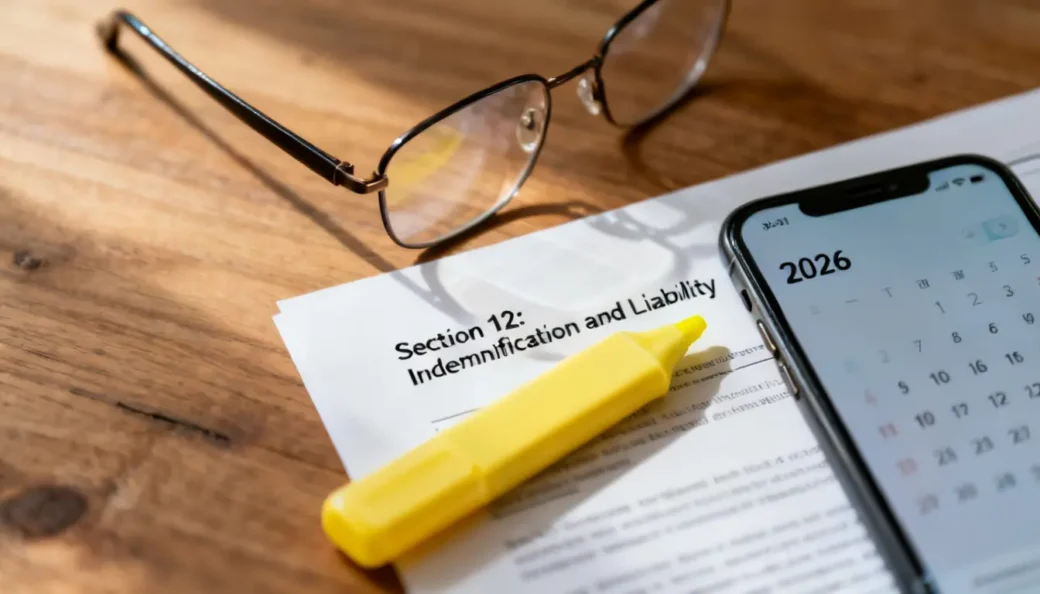
Almost every solar contract in Texas and Florida has an indemnification clause. Most homeowners never read it. This clause decides who pays when something goes wrong, and it does not always favor you.
A broad indemnification clause can force you, as the homeowner, to pay the solar company’s legal costs if a worker is injured on your property, even if you did nothing wrong. Subcontractors have their own version of this clause, too. When two clauses conflict on the same incident, the legal dispute over who pays can drag on for months before any injured party sees a dollar.
There is also the problem of insurance stacking. On a multi-party solar job, the main company, the subcontractor, and your own homeowner’s insurance may all be in play at once. Each insurer will argue that the other should pay first. That back-and-forth is one of the top reasons solar injury settlements take so long in both states.
Before any crew arrives, ask for certificates of insurance for the main company and every subcontractor. Check the coverage amounts. Make sure your homeowner’s policy is not listed as the primary payer for job-site injuries.
For a broader look at how solar contracts create hidden risks for homeowners, the SolarInfoPath covers these issues across multiple U.S. states.
Final Verdict: Solar Installation Injury Lawsuit in Texas & Florida
When You Can File a Solar Installation Injury Lawsuit
A solar injury lawsuit is viable when any of these four conditions exist:
- OSHA inspectors document a violation after the incident
- A third party outside your direct employer caused or worsened the injury
- Your employer in Texas was a workers’ comp non-subscriber
- A defective product created or contributed to the hazard
The U.S. Department of Energy’s solar workforce safety standards set the baseline for what safe installation looks like, and what should have been done differently on your job site.
When You Cannot File (And Why Most Cases Stop at Workers’ Comp)
If the employer had valid workers’ comp, no OSHA violation was filed, and no third party contributed, most cases stop at workers’ comp. That is the honest reality for the majority of solar installation injury claims in Texas and Florida.
Workers’ comp was designed specifically to limit your right to sue your employer in standard cases. Understanding that upfront saves you time, money, and frustration.
The One Situation Where Homeowners Face Real Financial Risk
The biggest risk for homeowners is a property defect they knew about and never disclosed. If a worker is hurt because of your roof, your wiring, or your structure, and you knew about it, neither your homeowner’s insurance nor your solar contract indemnification clause will fully protect you. Telling the solar company about any known issues before work starts is the single most important thing you can do to protect yourself.
Bottom Line for Texas vs Florida
In Texas, the workers’ comp non-subscriber rule is what separates most high-value claims from low ones. If the company skipped coverage, injured workers can sue directly, and OSHA violations make that case much stronger. In Florida, coverage is mandatory, but the 2023 law change means workers found more than 50% at fault walk away with nothing. Third-party claims are the most important path to real compensation in both states.
Solar Installation Injury Lawsuit Questions Homeowners and Workers Ask
Can a solar worker sue the homeowner for injuries?
Yes. If your property had a known problem that contributed to the injury, a damaged roof, bad wiring, or unsafe access, you can be named in a lawsuit in both Texas and Florida.
What is the average solar installation injury settlement in Texas?
Workers’ comp claims run $15,000 to $80,000. If negligence or an OSHA violation is proven, third-party claims can reach $150,000 to $500,000 or more. There is no fixed average; the facts of each case decide it.
Who is liable when a solar installer falls off a roof in Florida?
The solar company or licensed contractor is primarily liable. The homeowner shares liability only if a property defect caused the fall. The equipment manufacturer can also be added if a product failure played a role.
Can I sue the solar company if a worker was injured at my house?
As a homeowner, you generally cannot sue the solar company, but the solar company or worker may sue you if your property contributed to the injury. Document your property before installation starts and confirm all subcontractors have valid insurance.
What is a solar worker’s compensation claim in Florida, third-party?
It is a claim you file against someone other than your employer, like a property owner, general contractor, or equipment maker, when their negligence contributed to your injury. You can file it alongside your workers’ comp claim. It often pays far more than comp alone.
This article by SolarInfoPath (2026 research framework) is part of a comprehensive solar knowledge architecture covering all major high-value sectors including legal disputes (installation negligence, contracts, liability, fraud, lawsuits, liens, HOA and permitting disputes), financial structures (loans, PPA/lease agreements, DSCR financing, tax equity, investment and project finance), tax law (ITC, Section 48/25D, MACRS depreciation, bonus credits, IRS audits, recapture rules, domestic content and IRA/OBBBA compliance), insurance and risk (property damage, hail/wind/fire claims, bad faith insurance disputes, warranty coverage), policy and regulation (net metering, FERC interconnection, state utility rules, incentive programs and regulatory changes), commercial and utility-scale development (EPC contracts, construction delays, performance bonds, receivership, bankruptcy, asset sale and restructuring), real estate impacts (home value, solar leases, liens, title issues, HOA restrictions, easements), and emerging market structures such as battery storage, community solar, agrivoltaics, SRECs, yieldcos, and institutional investment funds. All content is based on publicly available regulatory, financial, and legal sources and is intended strictly for educational and informational purposes, not legal, tax, or financial advice. Readers should always verify current laws, utility policies, tax regulations, and contract terms with qualified licensed professionals before making decisions, as solar regulations, incentives, and financial structures frequently change across jurisdictions and time.

Solar Legal Analyst· Policy Researcher· Investigative Finance Writer Lead Analyst & Founder of SolarInfoPath
Morgan Lee is a solar legal analyst, policy researcher, and investigative finance writer with 12+ years of experience in U.S. renewable energy law, IRS tax credit compliance, and solar litigation. He is the founder of SolarInfoPath, a research-driven platform focused on primary-source analysis of solar contracts, tax law, regulatory policy, and industry disputes affecting homeowners and commercial developers.
His work is grounded in original legal and regulatory sources, including IRS notices, FERC and CPUC rulings, state court filings, PACER records, and UCC lien databases. He specializes in solar contract disputes, injury and workers’ compensation claims, PACE financing issues, tax equity structures, ITC recapture rules, MACRS depreciation, and federal and state solar policy frameworks.
Morgan’s analysis spans solar litigation, finance structures, and regulatory developments such as the IRA and OBBBA, interconnection reform, domestic content rules, and battery storage incentives. He also covers EPC contracts, PPAs, project financing, and utility-scale solar investment structures.