Why Solar Panels Are Worth It in Massachusetts: A Complete Guide
Most people outside New England would not put Massachusetts near the top of their list of strong solar states, and that assumption is understandable on the surface. The state is not particularly sunny by national standards, winters are cold and short on daylight, and the Northeast does not carry the same solar reputation as the Southwest. But when you actually look at the financial structure that Massachusetts homeowners are working with, why solar panels are worth it in Massachusetts becomes one of the most compelling cases in the entire country. The foundation of that case is not sunshine, it is the electricity rate, which runs between $0.23 and $0.27 per kilowatt hour through Eversource and National Grid.
That rate is among the highest for residential customers anywhere in the United States, and it changes the math on solar production dramatically. Every kilowatt hour your rooftop panels generate during daylight hours is directly displacing one of those expensive grid kilowatt hours, and the savings accumulate faster here than in lower-rate states regardless of sun hour differences. Layer on top of that the state’s full retail net metering policy, the SMART program’s per-kilowatt-hour payments over ten years, the federal Investment Tax Credit, a state income tax credit, and both sales and property tax exemptions, and Massachusetts starts looking less like a surprising solar market and more like one of the most well-structured ones in the country.
What Massachusetts Electricity Rates Mean for Your Solar Savings
High electricity rates are the foundation of Massachusetts’s strong solar case, and they deserve honest discussion before anything else.
Why $0.25 Per kWh Changes Everything
When your utility charges $0.25 per kWh, every kilowatt hour your panels produce during daylight hours saves you a quarter. That sounds simple, but the math compounds quickly at scale. A Boston area home consuming 700 kilowatt hours monthly pays around $175 per month on electricity before any fixed charges. A well-sized solar system offsetting 80 percent of that consumption represents genuine monthly savings that accumulate meaningfully across a 25 to 30-year system life.
Compare that to a state like Georgia, where rates run $0.13 per kWh. The same solar production in Massachusetts saves nearly twice as much per kilowatt hour simply because of the rate difference. This is why high electricity rates are actually good news for solar economics and why Massachusetts consistently ranks among the strongest financial cases for residential solar in the country.
Eversource serves a large portion of eastern Massachusetts, including the Boston metro, Worcester, and surrounding communities. National Grid serves western Massachusetts, including Springfield and Pittsfield. Both utilities operate under Massachusetts’s full retail net metering policy, which is one of the most favorable net metering structures in the country.
For a clear breakdown of how electricity rates across U.S. states translate into real dollar savings for solar homeowners, how much do solar panels save per year for U.S. homeowners covers the documented numbers honestly.
Massachusetts Net Metering: One of the Best Structures in the Country
This is where things get genuinely interesting for Massachusetts homeowners, and it is an area where the state stands apart from many others.
Full Retail Net Metering and What It Means for Your Bill
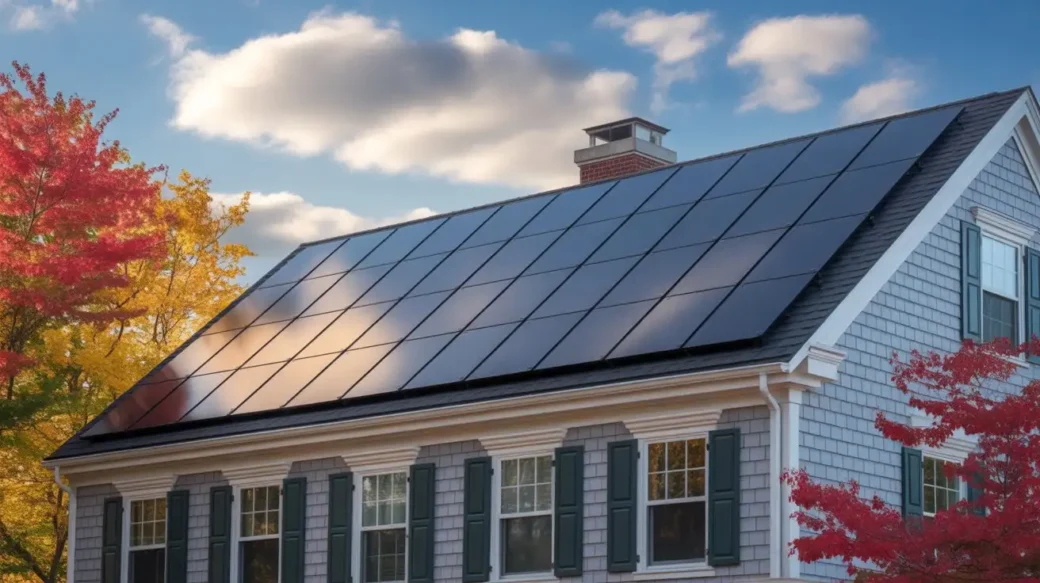
Massachusetts operates full retail net metering for residential solar customers. When your panels produce more electricity than your home consumes at any given moment, that surplus flows to the grid and your utility credits your account at the full retail rate. Not an avoided cost rate. Not a reduced rate. Full retail.
At $0.25 per kWh, that credit is worth the same as any kilowatt hour you would otherwise purchase. Credits accumulate during high production months and carry forward to offset the grid electricity you draw during evenings, cloudy days, and winter months. For many Massachusetts homeowners, this mechanism means their annual electricity bill drops to essentially fixed charges and minimal variable consumption, even with normal year-round living patterns.
Why System Sizing Works Differently Here Than in Other States
Full retail net metering changes the sizing calculation in Massachusetts’s favor. In states with avoided cost net metering, oversizing your system to produce surplus for export reduces your financial return because credits earn less than retail. In Massachusetts, you can size your system more generously relative to your annual consumption without the penalty that applies in lower credit-rate states.
One thing people often miss about Massachusetts solar is that the full retail credit structure makes annual production matching to annual consumption, rather than moment-by-moment matching, the relevant calculation. Summer surplus credits offset winter deficit at the same rate, which meaningfully improves the financial picture for a four-season climate.
To understand how Massachusetts net metering compares to the structure in other U.S. states and what the credit differences mean for your annual bill, is net metering worth it in the USA for homeowners today covers the full state-by-state comparison clearly.
Massachusetts Solar Incentives: The SMART Program and What Else Is Available
Massachusetts has one of the more layered solar incentive structures in the United States, and understanding each piece separately matters for accurate budgeting.
The SMART Program — What It Is and Who Qualifies
The Solar Massachusetts Renewable Target program, universally known as SMART, provides a fixed per-kilowatt-hour payment to qualifying residential solar customers for electricity produced by their systems over ten years. The payment rate varies by utility territory and system size but represents a meaningful additional income stream on top of net metering credits and electricity bill savings.
What surprised me when I first looked closely at SMART is how much it can shift the payback period math for Massachusetts homeowners. The combination of high retail electricity rates, full retail net metering credits, and SMART incentive payments creates a stacked financial benefit that few other states can match across all three dimensions simultaneously.
SMART enrollment is administered through your utility, Eversource or National Grid, depending on your location, and the capacity in each utility territory has limits. This is worth understanding early in your research because program availability can change as capacity fills.
Here is what Massachusetts homeowners can currently access:
- Federal Investment Tax Credit coveringthe total installed system cost, including panels, inverter, racking, wiring, and labor
- SMART program payments for qualifying systems over ten years
- Massachusetts state income tax credit of 15 percent of the system cost up to $1,000
- Massachusetts sales tax exemption on solar energy equipment purchases
- Massachusetts property tax exemption on the assessed value increase from solar creates
How These Programs Layer for a Real Massachusetts Home
I tend to look at it this way. The federal ITC reduces your effective first-year cost significantly. The state income tax credit adds a smaller but real additional reduction. The sales tax exemption saves you money at purchase. The property tax exemption protects you from higher annual tax bills. And the SMART program generates ongoing payments for ten years after installation. No single piece is overwhelming, but together they create a financial picture that rewards careful planning.
For a complete explanation of how the federal tax credit works and what installation costs qualify for the credit, how the federal solar tax credit works in the USA walks through the full process without oversimplifying.
To understand whether you meet the eligibility requirements for federal and state solar incentive programs, who is eligible for solar incentives in the USA covers the qualification criteria clearly.
Massachusetts City-Level Solar Comparison
Solar performance varies across Massachusetts based on location, utility territory, and SMART program availability. Here is a realistic city-level picture:
| City | Avg Sun Hours Per Day | Avg System Cost | Est. Annual Savings | Key Program Notes |
| Boston | 4.4 | $14,000 to $18,000 | $1,400 to $1,900 | Eversource, SMART eligible |
| Worcester | 4.3 | $13,500 to $17,500 | $1,350 to $1,850 | Eversource, SMART eligible |
| Springfield | 4.5 | $13,000 to $17,000 | $1,450 to $1,950 | National Grid, SMART eligible |
| Cambridge | 4.4 | $14,000 to $18,000 | $1,400 to $1,900 | Eversource, SMART eligible |
| Lowell | 4.3 | $13,500 to $17,500 | $1,350 to $1,800 | Eversource, SMART eligible |
If you pay attention to where your city falls on this table, you notice that Springfield homeowners on National Grid actually benefit from slightly higher average sun hours than Boston homeowners on Eversource, partly because western Massachusetts receives more consistent summer sun with less coastal cloud influence. The difference is modest but real over a 25 to 30-year system life.
Why Install Solar Panels in Massachusetts, The Financial Case in Real Terms
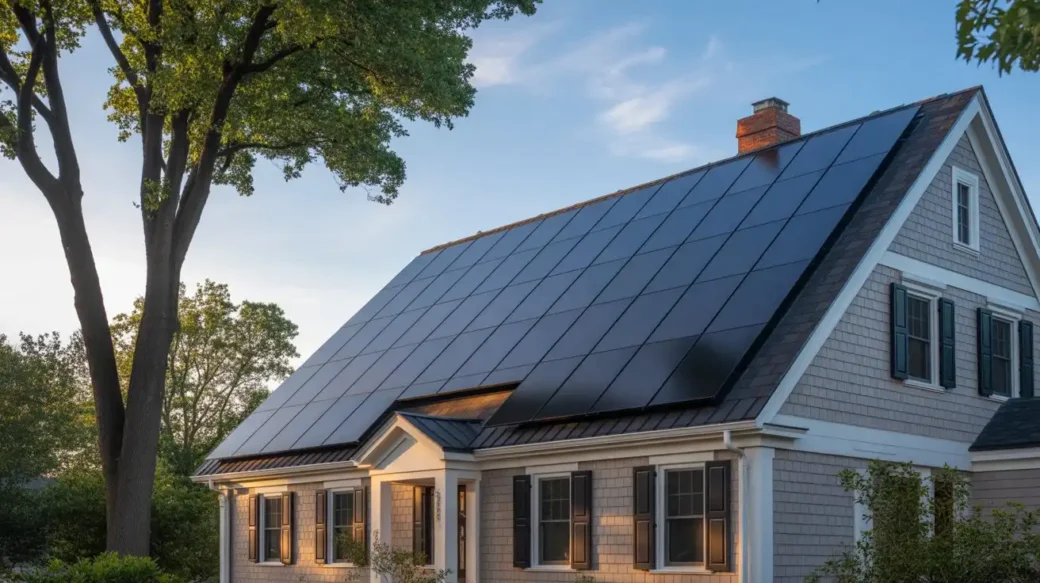
A lot of Massachusetts homeowners ask whether the numbers actually work before committing to anything, and that is exactly the right question to start with. Why solar panels are worth it in Massachusetts becomes most concrete when you walk through a real city example, rather than national averages that have nothing to do with your specific utility rate and roof.
A homeowner in Worcester consuming around 800 kilowatt hours monthly pays approximately $200 per month through Eversource at current rates. A properly sized 7-kilowatt system on a south-facing roof in Worcester costs between $14,000 and $17,000 before incentives. After the federal ITC and Massachusetts state income tax credit, the effective cost drops meaningfully. Annual savings from bill reduction combined with SMART program payments produce a payback period that, for many Worcester homeowners, falls in the range of six to nine years.
That is a shorter payback period than most lower-rate states achieve, even with stronger sun resources. This is the direct financial consequence of Massachusetts’s electricity rate being among the highest in the country. Every kilowatt hour your Worcester panels produce is worth more on your bill than the same kilowatt hour produced in a lower-rate state. From my point of view, with this rate advantage, the single most important reason why solar panels are worth it in Massachusetts is that it holds up to honest scrutiny rather than requiring best-case assumptions to make the math work.
What Massachusetts Winters Actually Mean for Production
Massachusetts winters are real. Snow accumulation on panels temporarily reduces production, and short winter days mean lower output from November through February. This is worth knowing,g honestly, rather than glossing over.
What the seasonal picture actually shows is that Massachusetts’s full retail net metering structure is specifically well-suited to a four-season climate. Strong summer production from May through September generates credits that carry forward into the winter months at full retail value. The seasonal imbalance in production does not create the financial problem it might in a state with reduced credit rates, because Massachusetts credits all surplus at the same rate regardless of when it is produced.
For a state-by-state breakdown of what solar systems cost across the country and how Massachusetts pricing compares, how much do solar panels cost in the USA gives honest current pricing context worth having before evaluating any quotes.
As confirmed by the U.S. Energy Information Administration, Massachusetts consistently ranks among the highest average retail electricity rate states in the country, a fact that underpins the financial case for residential solar more powerfully than sun hours alone.
Solar Panels Good for Massachusetts Environment, What the Data Shows
Massachusetts has made public commitments to significant reductions in carbon emissions over the coming decades as part of the state’s climate legislation. Residential solar adoption directly supports those goals by reducing demand on the grid’s fossil fuel generation during peak daytime hours.
Why Reasons to Get Solar in Massachusetts Include Environmental Benefits
The state’s electricity grid still relies on natural gas for a meaningful share of its generation. When homeowners across Boston, Worcester, Springfield, and Lowell generate clean electricity from rooftop solar, they directly reduce demand on gas-fired generation during the daylight hours when solar production and electricity demand overlap most significantly.
This is not an abstract environmental benefit. It is a measurable reduction in emissions from the utility generation sector that compounds as solar adoption grows across the state’s residential sector.
For a broader context on how solar panels affect the environment across different U.S. states and grid mixes, the environmental impact of solar panels for U.S. homes covers the full picture honestly, including manufacturing considerations.
To understand how solar installation affects your Massachusetts home’s market value alongside the environmental and financial benefits, do solar panels increase home value in the USA covers what the research shows across different U.S. markets, including the Northeast.
Final Thoughts
Massachusetts rarely gets the solar spotlight it deserves, and that gap between reputation and reality is worth closing before homeowners here make decisions based on the wrong comparison. When people think about great solar states, they typically picture desert climates with wall-to-wall sunshine. But the financial return on a solar investment is not determined by sunshine alone, and the evidence for why solar panels are worth it in Massachusetts does not require any optimistic assumptions to hold together; it is built on documented rates, verified incentive structures, and real utility policies that work in the homeowner’s favour.
The electricity rate is the engine driving everything else. At $0.25 per kilowatt hour on average, every hour of rooftop production is worth nearly twice what the same production would save a homeowner in a lower-rate state. Full retail net metering through both Eversource and National Grid means surplus summer production carries forward at full value to offset winter grid consumption, which is exactly the right mechanism for a climate with genuine seasonal swings. The SMART program adds a separate income stream on top of bill savings for ten years. The federal ITC, state income tax credit, sales tax exemption, and property tax exemption all work quietly in the background, reducing costs and protecting savings across the full system life.
The honest cautions still apply. Installation costs in Massachusetts run above the national average. SMART program capacity has limits and is not guaranteed to remain open indefinitely. Winter production genuinely drops, and homeowners should plan around annual output totals rather than monthly consistency. None of those realities undercut the case for homeowners who plan carefully and intend to stay in their homes through the payback period. For those homeowners across Boston, Worcester, Springfield, and Cambridge, Massachusetts, solar is one of the most financially sound long-term decisions available, and one of the more environmentally meaningful ones in a state actively working to reduce its reliance on natural gas generation.
Frequently Asked Questions
Why are solar panels worth it, specifically for Massachusetts homeowners?
Massachusetts combines some of the highest electricity rates in the country with full retail net metering, the SMART program, and multiple state incentives, creating a financial case that produces shorter payback periods than most lower-rate states despite moderate sun hours.
What are the main benefits of solar panels for Massachusetts homeowners?
Lower electricity bills at $0.23 to $0.27 per kWh rates, SMART program payments for ten years, federal ITC savings in year one, state income tax credit, and property tax exemption on added home value are the primary financial benefits.
How does the SMART program work for Massachusetts solar homeowners?
The SMART program provides a fixed per-kilowatt-hour payment for the electricity your system produces over ten years. Rates vary by utility territory between Eversource and National Grid, and available capacity limits enrollment, so timing matters.
What is the typical payback period for solar in Massachusetts?
Many Massachusetts homeowners see payback in 6 to 9 years, depending on system size, city location, and whether SMART program enrollment is secured, for systems designed to operate for 25 to 30 years total.
Are solar panels good for the Massachusetts environment?
Yes. Massachusetts’s grid still relies significantly on natural gas generation, so residential solar directly reduces demand on combustion-based power during peak daytime hours across the Eversource and National Grid service territories.
Does Massachusetts have state solar incentives beyond the federal tax credit?
Yes. Massachusetts offers SMART program payments, a 15 percent state income tax credit up to $1,000, a sales tax exemption on solar equipment, and a property tax exemption on the assessed value increase caused by solar.

Morgan Lee is a homeowner and solar energy researcher based in the United States. After installing a rooftop solar system in 2022 and spending months comparing quotes, incentives, and installer reviews, Morgan realized how confusing and overwhelming the process felt for most American families. That experience led to the creation of SolarInfoPath, a no-pressure, educational platform designed to help U.S. homeowners understand solar energy clearly and confidently. Morgan focuses on practical, research-backed information covering solar costs, installation timelines, federal tax credits, and long-term savings. All content on this site is written from a homeowner’s perspective with the goal of making solar energy simple and accessible for everyday Americans.