Why Solar Panels Are Worth It in Tennessee: A Real Homeowner’s Perspective
Tennessee has some of the cheapest electricity in the entire country. TVA supplies power through local utilities like Nashville Electric Service, Memphis Light Gas and Water, and Knoxville Utilities Board at around $0.10 to $0.11 per kWh, a rate that sits well below what homeowners in New Jersey or California pay. That low rate is the central financial challenge when evaluating why solar panels are worth it in Tennessee, and there is no honest way to discuss this state without acknowledging it directly.
When electricity is cheap, solar saves less per kilowatt-hour, payback periods are longer, and the financial case requires more careful reading. Tennessee also has no state solar tax credit and no state-wide net metering mandate. The interconnection terms and compensation rates you get depend on which local utility you pay, NES, MLGW, KUB, or EPB, not a statewide rule.
Despite all of that, Tennessee’s production environment is stronger than most people expect. The state averages 4.5 to 5.0 peak sun hours daily. Memphis gets more annual sunshine than Miami, Florida. That surprises most people the first time they see it.
Tennessee’s Sun Hours Are Better Than You Might Think
Tennessee averages around 4.5 to 5 peak sun hours per day, depending on where you live, and understanding why solar panels are worth it in Tennessee starts with recognizing that while this isn’t Arizona-level sun, it’s genuinely solid for the Southeast. Nashville and Memphis in the western part of the state tend to see slightly higher sun exposure than Knoxville and Johnson City in the east. A typical 6-kilowatt system in Nashville or Chattanooga can realistically generate 7,000 to 8,500 kilowatt-hours per year, enough to cover a meaningful portion of what most Tennessee households consume annually.
From my point of view, what makes Tennessee interesting for solar is that people underestimate the state’s solar potential because they focus too much on winter cloudiness and not enough on strong summer production. You may notice that June, July, and August deliver excellent solar output in this state, and those are exactly the months when your electricity usage peaks because of air conditioning running constantly.
How Different Parts of Tennessee Compare for Solar
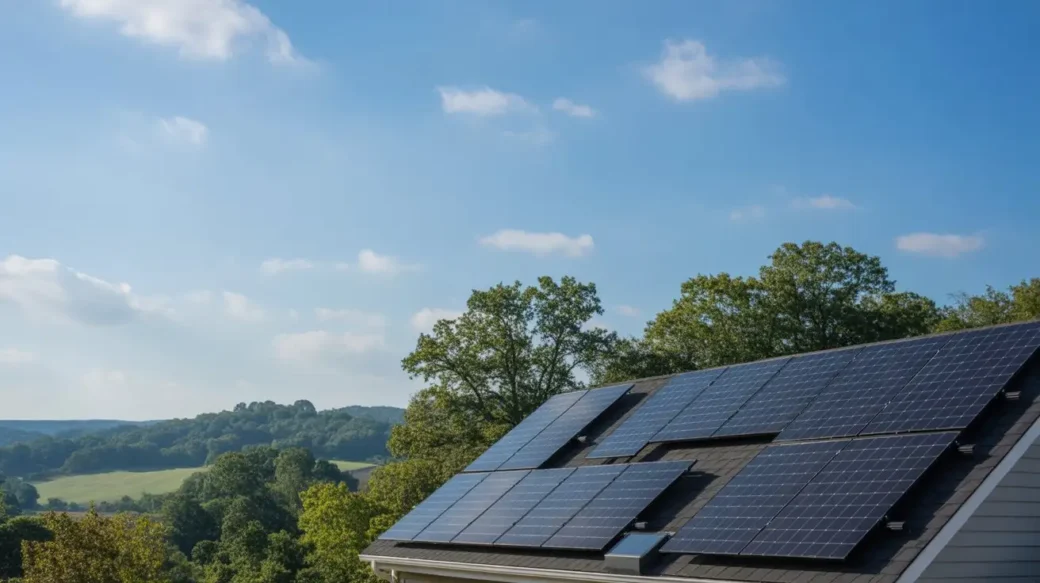
Western Tennessee, Memphis, Jackson, and Clarksville generally see slightly more sun hours and less terrain shading than the eastern part of the state. Eastern Tennessee, Knoxville, Johnson City, and Kingsport sit in the foothills of the Appalachian Mountains, which means more topographic shading and slightly lower average sun hours depending on your specific location and roof orientation.
That doesn’t mean solar doesn’t work in East Tennessee; it absolutely does, and this is part of why solar panels are worth it in Tennessee across different regions. But if you pay attention to your home’s specific shading situation and roof angle, those details matter more in Knoxville than they might in Memphis, where the terrain is flatter and clearer. I’ve seen homeowners in Murfreesboro and Franklin get excellent production numbers simply because their homes sit on south-facing lots with minimal tree coverage.
How Tennessee’s Net Metering Policy Works for Homeowners
Tennessee’s net metering situation is complicated because the state doesn’t have a single statewide policy. Most of Tennessee falls under the Tennessee Valley Authority (TVA) service territory, but your actual billing and net metering rules depend on your local power company or cooperative. If you’re served by Nashville Electric Service (NES), Memphis Light, Gas and Water (MLGW), or Knoxville Utilities Board (KUB), your net metering options vary significantly.
Because Tennessee’s net metering landscape is inconsistent across the state, maximizing self-consumption using your solar energy directly rather than exporting it becomes more important here than in states with strong state wide net metering policies. I tend to look at it this way: if you’re home during the day in Franklin or Murfreesboro, running air conditioning when your panels are producing, you’re getting full retail value from that electricity. Understanding why solar panels are worth it in Nevada helps you see where Tennessee’s policy landscape stands compared to states with more consistent solar programs.
City-by-City Solar Snapshot: Tennessee Homeowner Data
Solar potential and savings vary across Tennessee. Here’s a look at how things differ across major cities in the state.
| City | Avg Peak Sun Hours/Day | Avg System Cost (6 kW) | Est. Annual Savings | Payback Period (Est.) |
| Nashville | 4.8 hrs | $14,000 – $17,000 | $700 – $1,100 | 12 – 16 years |
| Memphis | 5.0 hrs | $13,500 – $16,500 | $750 – $1,150 | 11 – 15 years |
| Knoxville | 4.6 hrs | $14,000 – $17,000 | $650 – $1,050 | 13 – 17 years |
| Chattanooga | 4.7 hrs | $13,500 – $16,500 | $700 – $1,100 | 12 – 16 years |
| Clarksville | 4.9 hrs | $13,500 – $16,500 | $700 – $1,100 | 12 – 15 years |
| Franklin | 4.8 hrs | $14,500 – $17,500 | $700 – $1,100 | 13 – 17 years |
Estimates based on average Tennessee utility rates and solar production data. Actual results vary by roof orientation, shading, local utility net metering policy, and system size.
Benefits Solar Panels Tennessee Homeowners Actually See
The financial case is what most people think about first, but the reasons to get solar in Tennessee go well beyond just monthly savings on your electricity bill. Home value is a real consideration in Tennessee’s major metro areas — Nashville, Memphis, and Chattanooga — which have all seen significant real estate appreciation in recent years. What surprised me about Tennessee’s solar market is how much it’s grown over the past five years despite the state not having aggressive solar incentives or mandates, which shows homeowners are recognizing multiple reasons to get solar in Tennessee even without heavy state-level support.
According to the U.S. Department of Energy, residential solar adoption helps reduce household carbon footprints and decreases reliance on fossil fuel generation. In Tennessee, where the TVA grid mix includes natural gas, coal, and nuclear power, every kilowatt-hour your panels produce is one less pulled from the broader grid. My opinion is that understanding solar panels good for Tennessees environment matters more as the state continues to grow, particularly in cities like Nashville, Franklin, and Brentwood, where residential expansion has been enormous.
Why Install Solar Panels in Tennessee: Federal Incentives Still Apply
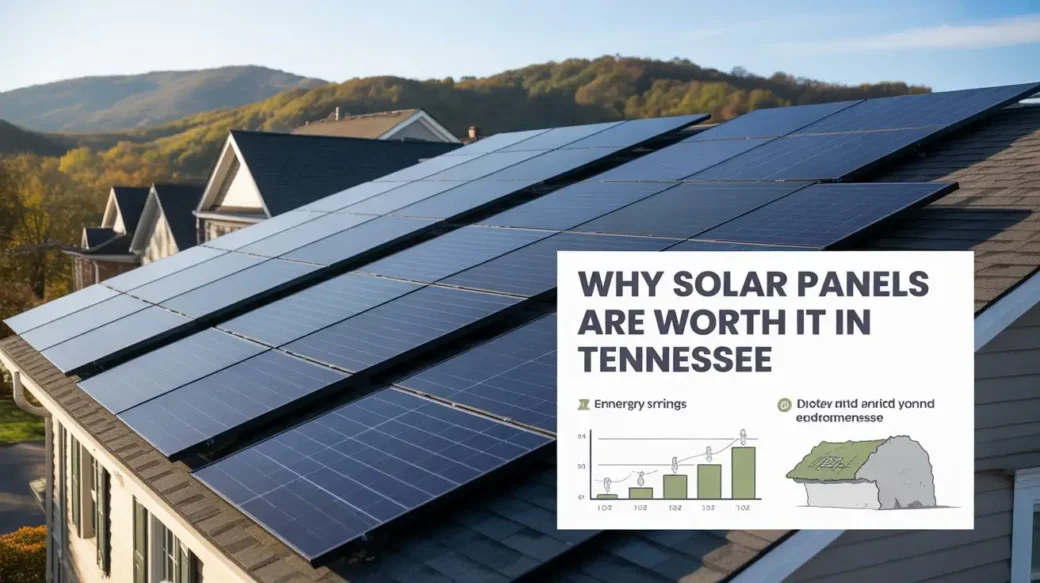
The federal Investment Tax Credit (ITC) remains the most powerful financial tool available to Tennessee homeowners going solar. At 30%, it directly reduces your federal tax liability based on your total installed system cost, on a $15,000 system, that’s $4,500 back when you file your federal taxes. I wouldn’t say it’s a perfect system because the credit only helps if you have enough federal tax liability to use it, but for most Tennessee homeowners with steady income, the ITC is a major reason why solar panels are worth it in Tennessee.
Tennessee doesn’t currently offer a large state-level solar rebate or tax credit program. The state does exempt solar equipment from sales tax, which reduces your upfront cost slightly, but the financial case here leans heavily on the federal tax credit and your long-term electricity bill savings. For Tennessee homeowners, using a solar panel cost calculator by zip code helps you estimate what a system would actually cost in your specific city after the federal tax credit.
How Tennessee’s Climate Affects Your Solar Production
Tennessee’s climate is humid subtropical, which means hot, humid summers with strong sun and cooler winters with more cloud cover and occasional precipitation. Your panels will produce their highest output from May through September when the sun is strongest and days are longest. You may notice a meaningful drop in production from November through February when cloud cover increases and days shorten significantly.
Tennessee’s humidity and occasional severe weather, thunderstorms, hail, and high winds don’t typically damage quality solar panels, but they can temporarily reduce production during storm events. From my point of view, the bigger weather consideration in Tennessee is tree shading from the state’s heavy forest cover rather than storm damage to the panels themselves. If you’re curious about realistic timelines for getting solar installed, understanding how long solar installation takes in America gives you a practical sense of what to expect.
Final Thoughts
Tennessee solar is a long-term investment that makes more sense the further out you project it. TVA rates have been rising through consecutive regulatory proceedings, and the direction of electricity costs across NES, MLGW, and KUB service territories is consistently upward. Every rate increase that happens after your system is installed improves your effective payback period without any change to your panels. Why solar panels are worth it in Tennessee right now is largely about locking in against that rising cost environment while the 30% federal ITC is available to reduce the upfront cost.
The most important practical step before making a Tennessee solar decision is understanding your specific local utility’s net metering policy. Memphis Light Gas and Water, Nashville Electric Service, EPB, and Knoxville Utilities Board each have different solar interconnection terms and different compensation rates for surplus electricity. What applies in Memphis does not necessarily apply in Knoxville. Confirm that local policy before sizing any system, because it directly affects how you should structure your installation for maximum financial return. Size to your real usage, apply the federal credit accurately, and Tennessee solar delivers a legitimate long-term return even at today’s low rates.
Frequently Asked Questions
Do Tennessee homeowners qualify for the federal solar tax credit?
Yes, Tennessee homeowners who purchase and own their solar system qualify for the 30% federal Investment Tax Credit. The credit applies to your federal tax liability and is available statewide regardless of which utility serves your home.
What is the average payback period for solar in Tennessee?
Most Tennessee homeowners see an estimated payback period between 11 and 17 years, depending on their location, utility provider, and net metering policy. Memphis and Clarksville homes generally reach payback faster than Knoxville homes due to slightly higher sun hours.
Does Tennessee offer any state solar incentive programs?
Tennessee doesn’t currently have a large state rebate or tax credit program. The state does exempt solar equipment from sales tax, and some individual utilities offer small programs, but availability varies significantly across the state.
How does net metering work for Tennessee homeowners?
Net metering in Tennessee varies by utility provider because there’s no statewide mandate. Some utilities offer full retail net metering while others offer reduced export rates or no net metering at all, so checking your specific utility’s policy is essential.
Is solar worth it in East Tennessee cities like Knoxville?
Solar works in Knoxville and East Tennessee, though sun hours are slightly lower than in Memphis due to terrain and elevation. Payback periods tend to be longer, but the federal tax credit and long-term savings still support reasonable economics for many homes.
How does Tennessee’s humidity affect solar panel performance?
Humidity doesn’t significantly damage or reduce solar panel efficiency. Tennessee’s main climate consideration is increased winter cloud cover that reduces production during colder months, but strong summer output typically balances annual production effectively.

Morgan Lee is a homeowner and solar energy researcher based in the United States. After installing a rooftop solar system in 2022 and spending months comparing quotes, incentives, and installer reviews, Morgan realized how confusing and overwhelming the process felt for most American families. That experience led to the creation of SolarInfoPath, a no-pressure, educational platform designed to help U.S. homeowners understand solar energy clearly and confidently. Morgan focuses on practical, research-backed information covering solar costs, installation timelines, federal tax credits, and long-term savings. All content on this site is written from a homeowner’s perspective with the goal of making solar energy simple and accessible for everyday Americans.