
Are solar panels worth it ohio? For many homeowners, the answer depends on a few numbers. Installation cost matters. Your electricity rate matters. So do your roof and your utility’s billing rules. Solar can lower a power bill. It does not erase it. This guide walks through real Ohio pricing, incentive rules, and payback math so you can judge the numbers for your own home.
Several factors decide whether solar pencils out for you. The first is the installation cost of the system itself. The second is how much electricity your panels will actually produce each year. The third is your utility’s electricity rate and its billing policy for solar customers. The fourth is which incentives, if any, apply to your project. The fifth is the resulting payback period, or how long it takes savings to cover the upfront cost.
Savings are never one-size-fits-all. They shift based on your home’s electricity use, your utility provider, your roof’s condition and angle, and the size of the system you install. This article walks through Ohio installation costs, savings math, incentive rules, city-by-city cost factors, and the questions Ohio homeowners ask most before deciding.
Are Solar Panels Worth It Ohio? Understanding the Financial Benefits
Is Solar Worth It in Ohio for an Average Homeowner?
Are solar panels worth it in Ohio for a typical household? Your electricity use is the starting point. A home that uses more electricity has more room to save, because a bigger share of its usage can be offset. A home that already uses very little electricity has a smaller potential upside.
The relationship between system price, your utility rate, and your realistic savings sets the outer limits of what solar can do for you. A higher electricity rate makes each kilowatt-hour of solar production worth more.
A lower system price shortens how long it takes to break even. Roof orientation, shading, and system output all affect how much electricity your panels generate. A south-facing roof with no shade typically produces more than a shaded, north-facing one.
Is solar worth it in Ohio? For a household with average usage, a reasonably unshaded roof, and a competitively priced system, the math often works in the homeowner’s favor over the system’s lifespan. For a home with heavy shading or unusually low electricity use, the numbers are less favorable.
How Much Can Ohio Homeowners Save With Solar Panels?
Solar panels reduce the amount of electricity you buy from your utility. Electricity your system produces and you use immediately offsets your bill at the full retail rate. Electricity you do not use right away and instead send to the grid is compensated differently, and often at a lower rate, depending on your utility’s rules.
Fixed utility charges, such as a monthly customer or grid-connection fee, typically remain on your bill after installation. This means your bill rarely drops to zero, even with a system sized to your annual usage.
| Factor | How it affects savings |
| Annual electricity use | Determines how much electricity a household needs |
| Solar production | Determines how much electricity the system generates |
| Utility rate | Affects the value of electricity offset |
| Export compensation | Affects the value of excess generation |
| System cost | Influences payback period |
What Factors Determine Whether Solar Panels Are Worth the Investment?
A few variables carry the most weight in this decision. Upfront installation price and any financing costs come first, since they set the size of the investment. Your utility’s current electricity rate and whether it is likely to rise come next.
Roof condition, shading, and usable roof space determine how much of your consumption solar can realistically cover. Incentive eligibility and your utility’s specific billing rules for solar customers shape your real return. Ongoing maintenance costs and the expected lifespan of your equipment round out the picture.
Solar Panels Ohio: How Residential Solar Works in the State
How Do Solar Panels Generate Electricity in Ohio?
Photovoltaic panels convert sunlight into direct current electricity. An inverter then converts that direct current into the alternating current your home’s outlets and appliances use. Your home’s electrical panel routes that power to your circuits, alongside a monitoring system that tracks how much electricity the array is producing.
In a grid-connected system, any electricity you do not use immediately flows out to the utility grid. When your panels are not producing enough, such as at night, your home draws electricity from the grid as usual. This is a different setup from a utility-scale project, and this look at whether solar farms are worth it breaks down that larger-scale economics separately from a rooftop system like the one this guide covers.
How Much Sunlight Do Ohio Solar Panels Receive for Energy Production?
Ohio sees noticeably more daylight in summer than in winter, and solar production follows that pattern closely. Cloud cover is common in the state for parts of the year, which also affects daily output. Roof direction and any shading from trees or nearby structures further shift how much sunlight your specific panels receive.
Because of these swings, annual production estimates are far more useful than counting sunny days. A single cloudy week says little about how a system performs across a full year.
Can Solar Panels Produce Enough Electricity During Ohio Winters?
Shorter winter days mean less total daylight for production. Snow sitting on panels can also block output temporarily, until it melts or slides off. It is worth separating two different effects here: reduced sunlight hours matter more than cold temperatures themselves, since panels are not less efficient in the cold and can even perform slightly better in cooler weather once sunlight is available.
Annual solar production estimates already build in these seasonal swings, combining stronger summer output with weaker winter output into one average figure.
Cost of Solar Panels Ohio: Average Installation Prices
What Is the Average Cost of Solar Panels in Ohio?
Total installation price depends on system size, equipment quality, labor rates, and how complex your specific roof and electrical setup are. Ohio homeowners are currently seeing average pricing in the range of roughly $2.50 to $2.60 per watt before any incentives, based on recent market data from solar comparison platforms such as EnergySage.
It helps to separate gross installation cost, the full price before any incentives, from net cost, what you pay after any credits or rebates you qualify for are applied. Comparing quotes using both total price and price per watt gives a clearer picture than looking at either figure alone.
This is exactly why the cost of solar panels Ohio homeowners see on paper is not always the number that ends up on the final invoice, and it is also why checking a broader average solar panel cost reference for the country can help you tell whether a local quote is in line with the market.
How Much Do Solar Panels Cost in Ohio for Different System Sizes?
The cost of solar panels in Ohio varies with system size, so the table below uses illustrative price ranges based on current per-watt pricing trends. Your actual quote will depend on your installer, equipment choice, and home specifics.
| System size | Illustrative price per watt | Illustrative gross cost |
| 5 kW | $2.50 to $2.90 | $12,500 to $14,500 |
| 8 kW | $2.50 to $2.90 | $20,000 to $23,200 |
| 10 kW | $2.50 to $2.90 | $25,000 to $29,000 |
These figures are hypothetical examples for planning purposes. Get written quotes from licensed installers for pricing specific to your home.
What Factors Affect Solar Panel Installation Costs?
Panel type, efficiency rating, and overall equipment quality all move the price up or down. Your inverter choice and any electrical system upgrades needed add to the total. Roof material, slope, and general accessibility affect labor time and complexity.
Permits, inspections, and any required electrical service upgrades are additional line items. Battery storage or other optional add-ons increase the project cost beyond the base solar installation.
Any one of these can shift the cost of solar panels ohio installers quote you above or below the statewide average. Homeowners weighing a much larger system, or simply curious how residential pricing compares to bigger projects, can see how land, scale, and permitting play out differently in this utility-scale solar cost and land guide.
Solar Panel Cost Ohio: Comparing Installation Prices and Financing
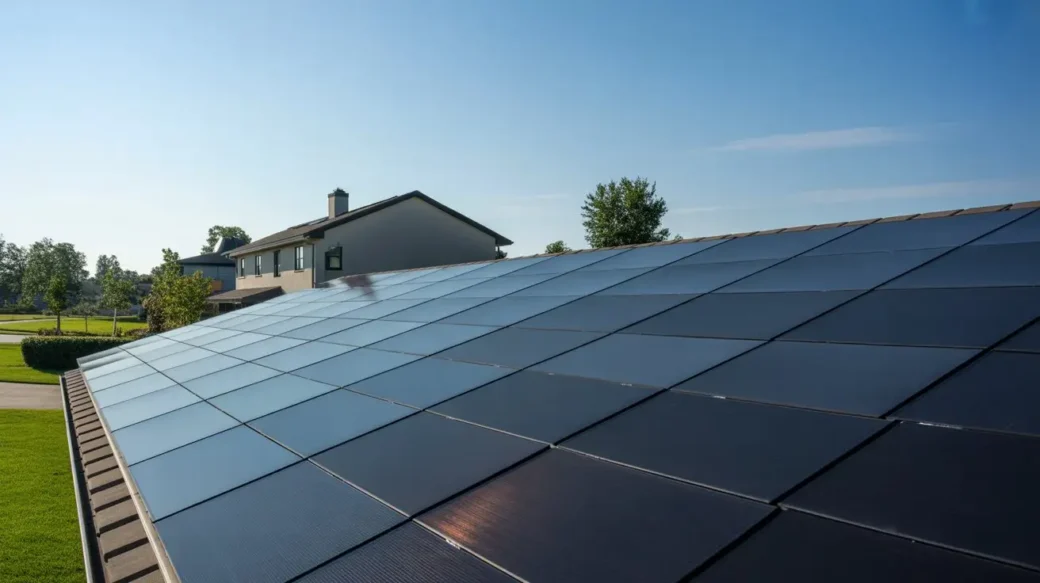
Solar Panel Cost in Ohio for Cash Purchases
Paying cash means covering the full installed cost upfront, with no interest or financing fees added on top. You own the equipment outright from day one, along with responsibility for its maintenance over time. Solar panel cost for Ohio buyers paying in cash is the cleanest number to compare, since it strips out interest and fees entirely.
When comparing cash prices across multiple quotes, look at total installed cost for equivalent system specifications, not just the advertised price per watt, since equipment quality varies between installers.
How Does Solar Financing Affect the Total Cost?
Solar loans come with their own interest rates, fees, and repayment terms, all of which add to what you ultimately pay compared to a cash purchase. It helps to compare your projected monthly loan payment against your estimated monthly utility savings to see whether the arrangement is cash-flow positive from the start.
A lower monthly payment does not automatically mean a lower total cost. Longer loan terms often reduce the monthly payment while increasing the total interest paid over the life of the loan. Financing is also why solar panel cost ohio homeowners finance can look cheaper month to month while costing more over the full term.
How Do Solar Leases and Power Purchase Agreements Compare With Ownership?
Under a lease or power purchase agreement, a third party typically owns the equipment, and you pay either a fixed monthly fee or a rate for the electricity produced. Maintenance responsibilities usually stay with the equipment owner, not the homeowner, under these arrangements.
Contract length matters here, since these agreements often run 20 years or more. It is worth comparing total projected payments under a lease or PPA against the total cost of an outright cash purchase before deciding, since the solar panel cost Ohio homeowners lock into a long lease can end up higher than ownership.
Business owners weighing the same decision for a storefront or office building may find it useful to compare against typical commercial solar installation costs, since pricing and financing structures differ from residential projects.
Ohio Solar Panels: Incentives, Tax Benefits, and Utility Policies
What Solar Incentives May Be Available to Ohio Homeowners?
Incentive availability changes, so current federal, state, and local programs should be verified before you rely on them in your financial planning. The federal residential solar tax credit, formerly worth 30% of system cost, is no longer available for systems installed after December 31, 2025, following changes under the One Big Beautiful Bill Act.
Confirm current federal rules directly with the IRS or a tax professional before assuming any credit applies to your project. Incentive programs also look very different state to state, and this breakdown of New Jersey solar rebates and credits is a useful point of comparison for anyone weighing Ohio against a state with a more active incentive market.
At the state level, Ohio does not currently offer a dedicated statewide sales tax exemption for residential solar equipment, a point EnergySage has confirmed directly with the Ohio Department of Taxation despite some other sources suggesting otherwise.
There is also no blanket statewide property tax exemption for the added home value from a solar installation, though some individual cities have offered local property tax abatement programs. Check with your county auditor and city government for anything currently available where you live.
Some Ohio utilities and third-party programs also support Solar Renewable Energy Credits, or SRECs, which homeowners can sell for additional income, though Ohio’s SREC market has traded at relatively modest prices in recent years. Incentive rules like these are a big reason two neighbors with identical Ohio solar panels can end up with different long-term costs.
How Does Net Metering Work for Ohio Solar Customers?
Ohio law requires investor-owned utilities to offer net metering to solar customers, but the compensation structure is not always full retail net metering. Depending on your utility, excess electricity you export to the grid may be credited at an avoided-cost or generation rate rather than the full retail rate you pay for electricity you buy. This functions closer to net billing than a straight one-for-one credit in some cases.
Self-consumed electricity, the power you use as your panels produce it, is typically valued at the full retail rate. Exported electricity is where compensation rules diverge by utility. Major Ohio utilities including AEP Ohio, FirstEnergy, and Duke Energy Ohio have each had their own approach and, in some cases, proposed changes to solar compensation, according to reporting from Canary Media.
Confirm current rules with your specific utility before finalizing your savings estimate, since this is one of the biggest variables behind whether Ohio solar panels pay off quickly or slowly.
How Do Ohio Utility Rates Affect Solar Savings?
A higher electricity rate makes every kilowatt-hour your system produces more valuable, since it offsets more expensive grid power. Ohio residential electricity rates have been in a range of roughly 16 to 18 cents per kilowatt-hour in recent data, though your specific utility and rate plan will determine your number.
Fixed charges, such as a monthly customer charge, generally do not go away after installing solar, since they cover grid connection rather than energy consumption. Because billing structures differ by utility, it is worth reviewing your own utility’s specific solar policies rather than assuming statewide averages apply to your account.
Average Cost of Solar Panels Ohio: Estimating the Payback Period
How to Calculate the Solar Panel Payback Period in Ohio
The basic formula for a simple payback estimate is:
Simple payback period = Net system cost ÷ Annual electricity savings
Net system cost is your installation price after any incentives you actually qualify for, not the gross price before adjustments. Financing costs, ongoing maintenance, and your utility’s compensation rate for exported electricity can all shift the real-world number away from this simplified estimate.
Simple payback also does not capture factors like a loan’s total interest cost or the time value of money, so treat it as a starting point rather than a complete financial analysis. Because solar panel cost in Ohio varies by installer and equipment, plug in your own written quote rather than a statewide average, and see this broader look at solar payback periods across the United States for how Ohio’s numbers stack up nationally.
Example of Solar Panel Costs and Savings for an Ohio Home
| Item | Illustrative example |
| System size | 8 kW |
| Gross installation cost | $21,000 |
| Annual electricity savings | $1,700 |
| Simple payback before other adjustments | About 12 years |
This is a hypothetical scenario built for illustration only. Your actual savings will depend on your system’s real production, your specific utility rate, any incentives you qualify for, and your household’s electricity use.
What Can Make Solar Payback Faster or Slower in Ohio?
Higher household electricity consumption generally shortens payback, since there is more usage for solar to offset. Rising utility rates over time can also improve the payback picture retroactively. Heavy roof shading or a poorly oriented roof slows production and lengthens payback.
Installation price and any financing costs directly affect how large the investment is to begin with. Export-credit policies and whatever incentives you qualify for both shift the annual savings side of the equation. In practice, a lower solar panel cost in Ohio quote almost always shortens payback faster than any single incentive.
Solar Panel Cost in Ohio: Comparing Columbus, Cleveland, and Other Cities
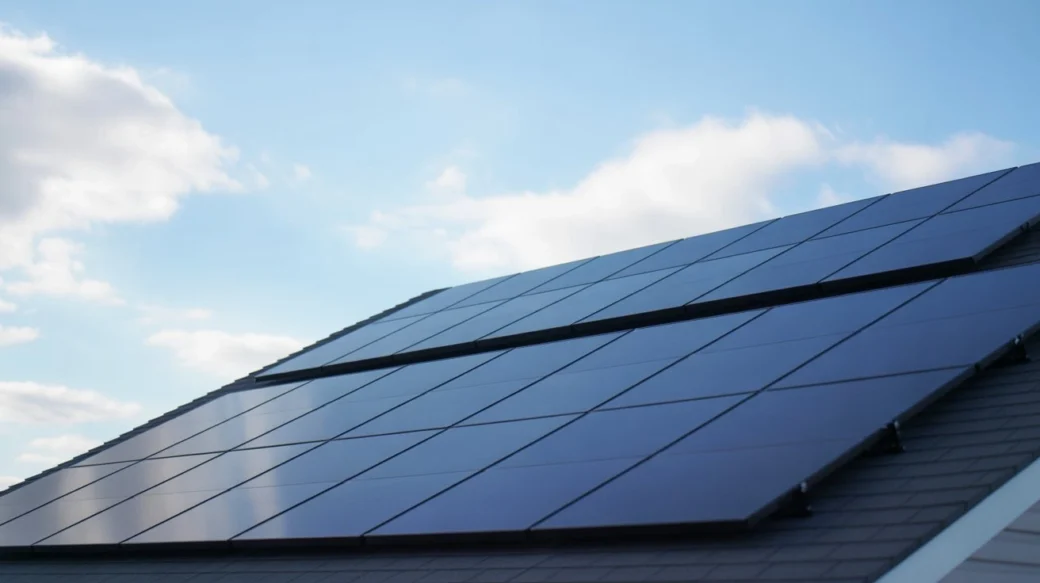
Solar Panel Cost Columbus OH: What Affects Local Installation Prices?
System size, roof condition, labor availability, and local permitting requirements all influence installation prices in Columbus specifically. Your utility’s rate and billing policy affect how much you can expect to save, independent of what you pay upfront. When comparing quotes from Columbus-area installers, make sure each proposal specifies the same system size and equipment tier so you are comparing like for like.
How Do Solar Costs Vary Across Ohio Cities?
Prices can differ between cities based on roof designs common to the area, local labor rates, equipment availability, and how complex a typical project is in that market. Utility policies can also affect your realistic savings independently of what the installation itself costs, since compensation rules vary by provider rather than by city.
Because of this, statewide averages are a useful starting point, but they may not reflect what a specific property will actually see. This is exactly why solar panel cost Ohio-wide can differ from a single city-specific number you find online.
Solar Roof Cost Westlake OH: What Homeowners Should Consider
Roof shape, the age and material of your existing roof, and its structural condition all factor into installation planning and cost. There is an important distinction between mounting conventional solar panels on an existing roof and installing an integrated solar roofing product, which functions as both the roofing material and the solar generation system.
If your roof is nearing the end of its life, it is generally worth having a roofer assess replacement needs separately from your solar quote, since combining both projects at once can affect the sequencing and total cost. Getting a roof assessment first also protects you from an inflated solar panel cost in an Ohio quote that bundles unnecessary work.
Solar Panels in Ohio Worth It: Evaluating Roof Suitability and Electricity Use
Which Roof Types Are Suitable for Solar Panels in Ohio?
Roof orientation, tilt angle, shading, and the amount of usable roof area all affect how well a specific roof supports solar panels that Ohio installers can work with. An installer will also look at your roof’s condition and remaining lifespan before recommending an installation, since panels are typically expected to stay in place for 20 to 25 years or more.
Trees and neighboring buildings that cast shadows thrown on your roof at different times of day can meaningfully reduce production, even if the roof itself is otherwise well suited to solar.
How Does Household Electricity Consumption Affect Solar Savings?
Your annual electricity use, measured in kilowatt-hours, is one of the main inputs installers use to recommend a system size. Homes that use more electricity during daylight hours can self-consume a larger share of their solar production directly, rather than exporting it to the grid at a lower compensation rate.
An oversized system, one that produces significantly more than your household uses, does not always deliver proportional financial benefits, particularly if excess exported electricity is compensated at a reduced rate.
Are Solar Panels Worth It for a 1,200-Square-Foot House in Ohio?
Square footage alone does not determine the right system size for a home. Your actual electricity bills, the efficiency of your heating and cooling systems, how many people live in the home, and your typical appliance use all matter more than the size of the house itself. A smaller home with electric heat and a pool pump can use more electricity annually than a larger home with gas heat and minimal air conditioning.
Starting with your annual electricity consumption in kilowatt-hours, found on your utility bills, gives a far more accurate basis for sizing a system than square footage does.
Are Solar Panels Worth It in Ohio With Battery Storage?
How Much Does Solar Battery Storage Add to the Cost?
Battery capacity, power output rating, the equipment itself, and installation labor all add to your total project cost when you include storage. Adding backup capability, so your home can run on stored power during a grid outage, generally increases the price further, depending on how much of your home’s load you want the battery to support.
It is worth evaluating battery costs as a separate line item from your solar panel costs, since the two serve different purposes, and pairing a battery with Ohio solar panels changes the payback math from the examples above.
Can a Solar Battery Increase Electricity Bill Savings?
Batteries store excess solar electricity so you can use it later, such as in the evening after the sun goes down, instead of exporting it to the grid. Whether this improves your savings depends heavily on your utility’s export-credit policy.
If your utility already compensates exported electricity well, a battery may add less financial value than it would under a utility with lower export compensation. Backup power during outages and improved bill savings are two distinct benefits, and a battery does not necessarily deliver both equally.
Is a Solar Battery Necessary for an Ohio Home?
Whether you need a battery largely comes down to your household’s tolerance for outages and how reliable your local grid has been. There is a real trade-off between the added cost of a battery and the actual benefit it provides for your situation.
A grid-connected solar system can operate perfectly well without a battery, depending on how it is designed, simply drawing from the grid whenever your panels are not producing enough. Many Ohio solar panel installations skip the battery entirely for this reason.
Solar Panels Ohio: Common Financial Risks and Disadvantages
What Are the Main Disadvantages of Installing Solar Panels in Ohio?
The high upfront cost is the most obvious barrier for many households. Some homes will also need roof repair or replacement before or alongside installation, adding to the total project cost. If an installer’s mounting work leads to leaks or structural issues later, homeowners have looked into resources like a solar panel property damage attorney to understand their options. Seasonal variation in electricity production means your savings will not be evenly distributed across the year.
Financing arrangements can come with restrictions or obligations that outlast your interest in the system, particularly with longer-term loans or leases. Changes in utility billing policies, including how exported electricity is compensated, can also affect your savings after installation in ways that are outside your control.
Can Solar Panels Increase the Value of an Ohio Home?
Resale effects can vary significantly by local market conditions and by how the system is owned. An owned system that is paid off free and clear is generally viewed differently by appraisers and buyers than a system still under a loan, lease, or power purchase agreement, where the new owner may need to take over payments or the contract may complicate the sale.
Homeowners should not assume a fixed dollar increase in property value from installing solar, since the actual effect depends on local buyer demand and market comparables.
What Should Homeowners Check Before Signing a Solar Contract?
Review the total installed price and all financing terms carefully before signing anything, and get the solar panel cost in writing before you sign. Confirm what equipment warranties and workmanship coverage are included, and for how long. Ask the installer to show you their production and savings assumptions, and understand what they are based on.
Clarify ownership and maintenance responsibilities in writing. Finally, review the contract’s provisions for transfer, cancellation, and termination, particularly if you might sell your home before the contract term ends.
If a sales pitch pressures you or the numbers do not match what was promised, general information on a solar scam consumer protection attorney can help you understand what recourse may exist.
Should I Get Solar Panels for My House in Ohio?
Ultimately, are solar panels worth it in Ohio comes down to your own roof, your own electricity bill, and your own utility’s rules, not a statewide average.
When Might Solar Panels Make Financial Sense for an Ohio Home?
Solar tends to make more financial sense when your roof has good sun exposure, your household uses a meaningful amount of electricity, and you can secure competitive installation pricing.
Comparing your expected solar production against your actual household energy use, rather than a generic estimate, gives a more accurate read on potential savings. Your utility’s specific policies for exported electricity also directly influence how much of that production translates into real savings.
When Might Solar Panels Be Less Suitable?
Homes with substantial roof shading from trees or nearby buildings often see disappointing production relative to system size. A roof that will need replacement soon is usually better addressed before adding solar, not alongside it.
Households with low electricity consumption have less room to generate meaningful savings. Properties facing unfavorable installation costs or unfavorable contract terms should weigh those costs carefully against the projected benefit, since this is often where are solar panels worth it ohio answers turn negative.
How to Decide Whether Solar Panels Are Worth It for Your Ohio Home
A practical checklist can help organize the decision:
- Review your annual electricity use and recent utility bills.
- Estimate your likely system size and expected annual production.
- Compare total installation costs and financing options across multiple installers.
- Review current incentives and your specific utility’s compensation rules.
- Calculate your estimated savings and payback period using assumptions specific to your household, not generic averages.
Frequently Asked Questions About Solar Panels in Ohio
Are Solar Panels Worth It in Ohio?
It depends on your installation cost, your electricity rate, your roof’s suitability, and your utility’s billing policies for solar customers. Homes with strong sun exposure, above-average electricity use, and competitive installation pricing tend to see the most favorable outcomes.
How Much Do Solar Panels Cost in Ohio?
System size, equipment quality, labor, and installation complexity all affect the total price. The cost of solar panels Ohio installers charge currently runs roughly $2.50 to $2.60 per watt before incentives, though your specific quote will vary.
Is Solar Worth It in Ohio Without Incentives?
Without incentives, compare your total installation cost directly against your expected electricity savings over the system’s lifespan, rather than assuming a credit or rebate will improve the math. This is especially relevant now that the federal residential credit no longer applies to systems installed after 2025.
How Long Does It Take for Solar Panels to Pay for Themselves in Ohio?
Using the simple payback formula, net system cost divided by annual electricity savings, many Ohio homeowners see estimates in a range that varies widely by household. Financing costs, utility compensation rules, actual production, and the underlying solar panel cost in Ohio you paid all shift this figure in either direction.
Do Solar Panels Work in Ohio During Winter?
Yes. Shorter winter days and occasional snow cover reduce output temporarily, but annual production estimates already account for these seasonal swings by averaging stronger summer months against weaker winter ones.
Should I Get Solar Panels for My House in Ohio?
That depends on your roof’s sun exposure, your household’s electricity use, your financing options, and your specific utility’s rules for solar customers. Reviewing your own bills and getting multiple quotes is the most reliable way to answer this for your home.
This article by SolarInfoPath (2026 research framework) is part of a comprehensive solar knowledge architecture covering all major high-value sectors including legal disputes (installation negligence, contracts, liability, fraud, lawsuits, liens, HOA and permitting disputes), financial structures (loans, PPA/lease agreements, DSCR financing, tax equity, investment and project finance), tax law (ITC, Section 48/25D, MACRS depreciation, bonus credits, IRS audits, recapture rules, domestic content and IRA/OBBBA compliance), insurance and risk (property damage, hail/wind/fire claims, bad faith insurance disputes, warranty coverage), policy and regulation (net metering, FERC interconnection, state utility rules, incentive programs and regulatory changes), commercial and utility-scale development (EPC contracts, construction delays, performance bonds, receivership, bankruptcy, asset sale and restructuring), real estate impacts (home value, solar leases, liens, title issues, HOA restrictions, easements), and emerging market structures such as battery storage, community solar, agrivoltaics, SRECs, yieldcos, and institutional investment funds. All content is based on publicly available regulatory, financial, and legal sources and is intended strictly for educational and informational purposes, not legal, tax, or financial advice. Readers should always verify current laws, utility policies, tax regulations, and contract terms with qualified licensed professionals before making decisions, as solar regulations, incentives, and financial structures frequently change across jurisdictions and time.

Solar Legal Analyst· Policy Researcher· Investigative Finance Writer Lead Analyst & Founder of SolarInfoPath
Morgan Lee is a solar legal analyst, policy researcher, and investigative finance writer with 12+ years of experience in U.S. renewable energy law, IRS tax credit compliance, and solar litigation. He is the founder of SolarInfoPath, a research-driven platform focused on primary-source analysis of solar contracts, tax law, regulatory policy, and industry disputes affecting homeowners and commercial developers.
His work is grounded in original legal and regulatory sources, including IRS notices, FERC and CPUC rulings, state court filings, PACER records, and UCC lien databases. He specializes in solar contract disputes, injury and workers’ compensation claims, PACE financing issues, tax equity structures, ITC recapture rules, MACRS depreciation, and federal and state solar policy frameworks.
Morgan’s analysis spans solar litigation, finance structures, and regulatory developments such as the IRA and OBBBA, interconnection reform, domestic content rules, and battery storage incentives. He also covers EPC contracts, PPAs, project financing, and utility-scale solar investment structures.