Solar panel fire litigation covers lawsuits filed when a solar system, battery, or installation is blamed for a fire. Common causes include arc faults, loose connectors, inverter failures, and battery overheating. Blame depends on technical proof of where the fire started, state law, and proven losses. A fire near solar equipment does not automatically mean the equipment was defective.
This guide explains how solar fires start, which parts can fail, and who may be legally at fault. It separates faulty equipment from bad installation and poor upkeep. It also covers recalls, insurance, and injury claims.
Later sections explain proof, damages, and state deadlines. A closing checklist shows what homeowners should keep after a fire. Nothing here promises a result, because each case has its own facts.
What Is Solar Panel Fire Litigation?
It is a civil lawsuit over property damage, injury, or death from a fire that involved solar equipment. Most claims fall into three groups: product liability, negligence, and insurance disputes. A fire alone never proves who is at fault.
Product liability asks if a faulty product caused harm. Negligence asks if an installer or contractor was careless. Insurance disputes ask if a policy covers the loss. They also ask if the insurer can recover its money from someone else.
Many homeowners type “sue a solar company lawyer” after a fire. That search shows a legal question. It does not show who was at fault. The first answer usually comes from a fire investigator, not a court.
The U.S. Department of Energy says rooftop solar fires are rare. It also notes that the U.S. Fire Administration does not track how many fires rooftop systems cause. So no reliable national rate exists. This article does not offer one.
What Causes Solar Panel House Fires?
Solar fires can start from electrical arcing, failed connectors, hot inverters, bad wiring, or battery failure. Some fires start inside the house and spread to the roof. Investigators must find where the fire began before anyone assigns blame.
Panels make direct current, or DC. An inverter turns it into the alternating current your home uses. Heat can build anywhere along that path if a connection is loose or a part fails.
| Possible cause | Technical issue | Evidence to check |
| DC connector failure | Loose or mismatched connection | Connector remains, photos, electrical exam |
| Inverter failure | Parts overheating inside | Inverter remains, model and serial number |
| Junction box failure | Internal connection fault | Box condition, lab tests |
| Battery failure | Cell overheating or thermal runaway | Battery logs, cell remains, recall records |
| Installation error | Wrong wiring or poor workmanship | Install records, permits, inspections |
DC Arc Faults and Electrical Arcing
An arc fault is a spark that jumps across a gap in a wire. A series arc happens along a broken or loose wire. A parallel arc jumps between two wires, or between a wire and ground.
Arcs can reach very high heat in a small spot. A ground fault can give current a second path. Both can set nearby materials on fire if protection does not step in.
Solar Connector and Junction Box Failures
Connectors join the wires between panels. Bad crimps, mismatched parts, or loose contacts add resistance and heat. A connector can overheat with no visible warning.
Junction boxes sit on the back of each panel. They hold internal connections. A bad connection inside one can also become a heat source. Testing usually needs a lab.
Solar Inverter Overheating
Inverters hold capacitors, circuit boards, and cooling parts. A failed capacitor or blocked airflow can cause overheating inside. Safety features should spot faults. But they can fail too.
Solar Wiring and Installation Problems
Wiring errors include damaged insulation, wrong wire size, and poor grounding. Cables pinched under panels can wear through over time. Community rules can add a layer, because HOA solar panel restrictions sometimes affect where equipment and conduit go.
Solar DC Arc Fault Fire Attorney: Understanding Electrical Failure and Potential Liability
An arc fault claim turns on two questions. Did an arc start the fire, and why did it happen? A solar DC arc fault fire attorney would usually begin with the electrical evidence. Legal theories come second.
Arc faults can come from faulty equipment, bad installation, or later damage from animals, weather, or repairs. Each cause points to a different party. That is why physical evidence matters so much.
How Solar DC Arc Fault Protection Works
Many modern systems have arc-fault detection. It shuts down a circuit when it senses arcing. Electrical codes set rules for this protection. The code edition in force depends on your state and city.
Older systems may not have it. Even newer systems can miss some faults. A missing or disabled device can become part of an investigation.
What Evidence Can Identify an Arc Fault?
Investigators look for melted copper, beaded wire ends, and burn marks near connections. They also review monitoring data, fault codes, and photos. An electrical engineer may study the remains in a lab.
Solar Arc Fault Fire Litigation and Potential Responsible Parties
Solar arc fault fire litigation can involve the maker, the installer, a later repair contractor, or several of them. Each side often points at the others. Blame is decided on proof of what failed and why.
Solar Connector Fire Litigation: Defects, Installation Errors and Evidence
A connector dispute asks one thing. Was the connector faulty, or was it installed wrongly? Solar connector fire litigation often turns on small physical details. Crimp quality and part fit are common focus points.
Manufacturing defects mean a part differs from its intended design. An installation error means a worker put parts together wrongly. The same burned connector can support either idea until experts study it.
How Defective Solar Connectors Can Overheat
Loose contacts raise electrical resistance. Resistance turns current into heat at that spot. Over months, the heat can wear down plastic and ignite nearby material.
Can Connector Incompatibility Contribute to Fire?
Yes. Connectors from different makers may snap together but not seal or grip well. Makers often warn against mixing brands for this reason.
What Evidence Helps Establish Connector Failure?
Keep the connector remains. Photograph them where they were found. Write down the brands, model numbers, and install date. Do not clean or reassemble the parts.
Solar Inverter Fire Damage Attorney: Equipment Failure and Property Damage Claims
An inverter claim asks if the unit failed from a defect and what damage followed. A solar inverter fire damage attorney would typically review the unit’s remains, its model, and any recall history. Property records come next.
Inverters hang on walls in garages, basements, or outdoors. A fire there can reach living space fast. Damage may include the unit, the wall, the main panel, and smoke through the home.
Can a Defective Inverter Cause a Residential Fire?
It can. In 2019, a CPSC recall covered about 2,600 Eltek solar inverters. Capacitors could fail and let heat build up. The recall shows a defect can create a fire hazard. It does not decide any one homeowner’s case.
Solar Inverter Electrical Fire Lawsuit: Potential Defects and Liability
A solar inverter electrical fire lawsuit needs proof of a defect or other fault in the unit. It also needs proof that the fault caused the fire and the damage. The plaintiff must link each step with evidence.
What Property Damage May Need Documentation?
Document the inverter, the wall behind it, the electric panel, and any smoke or soot damage. Roof and structure losses can be large. Our guide to a solar panel property damage attorney explains how those losses are documented and valued.
Solar Battery Explosion Lawsuit: Lithium-Ion Battery Fire Risks
A battery fire claim depends on why the battery overheated and who was at fault. A solar battery explosion lawsuit would usually claim a defect, poor installation, or weak warnings. Explosions are rare. Overheating and fire can happen.
Home batteries store solar power for backup. Most use lithium-ion cells. A battery management system watches heat and voltage to keep things safe.
How Lithium-Ion Battery Thermal Runaway Develops
Thermal runaway starts when one cell overheats and heats the next one. The chain reaction can create heat, smoke, and fire. Causes include cell defects, damage, and charging faults.
Overheating, smoke, fire, and explosion are different events. Each leaves different evidence. An investigator will try to tell them apart.
Lithium-Ion Solar Battery Fire Lawsuit: Potential Product Defects
A lithium-ion solar battery fire lawsuit often focuses on cell quality or design. It may also focus on warnings and software controls. Recall notices can be evidence. But they do not prove liability.
One recent recall shows the pattern. In November 2025, the CPSC announced a recall of about 10,500 Tesla Powerwall 2 systems. It followed 22 overheating reports, including five fires. The reports listed minor property damage and no injuries. The recall describes a hazard, not a court finding.
Can a Battery Management System Failure Cause a Fire?
It can play a role if the system fails to limit heat or current. A software fault or sensor error might allow unsafe use. Monitoring logs can show what the system recorded before the fire.
Solar Panel House Fire Product Liability Lawyer: Understanding Potential Legal Claims
A product liability claim says a faulty product caused harm. A solar panel house fire product liability lawyer would typically look at the defect, the cause, and the damages. A failed part is not automatically a defective product.
Product liability can involve manufacturing defects, design defects, and failure to warn. Some states also allow warranty claims. The exact elements depend on state law.
Makers, installers, and sellers may each face different claims. Which one applies depends on the evidence.
People who search “solar fraud attorney legal help” usually describe false sales claims. That is a different claim from a faulty product. One case can involve both.
Manufacturing Defects in Solar Panels and Equipment
A manufacturing defect means a unit differs from its intended design. One bad batch of capacitors is an example. Serial numbers and production records help find affected units.
Design Defects and Product Safety
Design defects make a whole product line unsafe by design. Plaintiffs usually must show a safer design was possible. Courts use different tests in different states.
Failure to Warn About Equipment Hazards
Failure-to-warn claims say the instructions or labels did not explain a known danger. Manuals and safety labels become evidence. Warnings must be adequate, not perfect.
What Evidence May Support a Product Liability Claim?
Strong evidence includes the failed part, its ID numbers, and expert tests. It also includes upkeep records and recall notices. Without the physical part, proving a defect is much harder.
Solar Panel Installation Negligence and Potential Contractor Liability
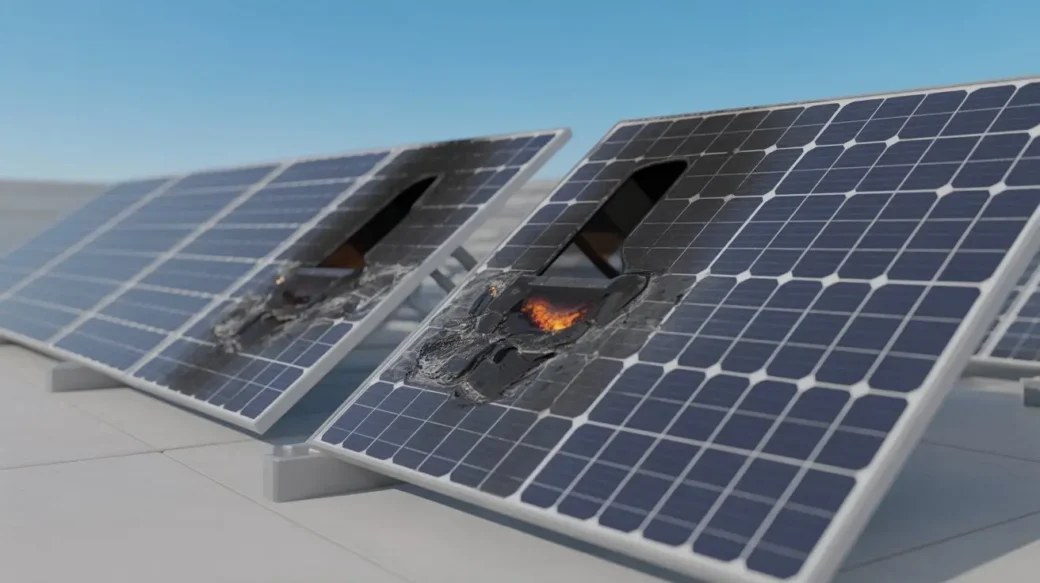
Installation negligence means a contractor was careless and that carelessness caused the fire. Examples include wrong wiring, loose connections, and missed code rules. The homeowner must still prove cause.
The DOE says design flaws, faulty parts, and bad installation can cause rooftop fires. Read the DOE consumer fire safety guide for the full explanation. It also notes that a fire inside the home can spread to the roof.
Permits and inspections leave a paper trail. Learning the solar panel permit requirements helps you know which records to ask for. A passed inspection does not rule out later defects.
Businesses have a different contract setup. The rules in commercial solar PPA laws can shift upkeep and liability between owner and operator. Home contracts usually look different.
Improper Solar Wiring and Electrical Connections
Look for wires that are too small, loose terminals, and damaged insulation. Poor grounding can also raise fire risk. An electrician or engineer should document these problems.
Installation Errors Versus Manufacturing Defects
An installation error comes from the work. A manufacturing defect comes from the product. The two can overlap when an installer uses a part wrongly or ignores a known issue.
Can Multiple Parties Share Legal Responsibility?
Yes. A maker, an installer, and a later repair contractor may each share the blame. Many states split fault by percentage. False sales claims can also sit on top of a workmanship problem. A “solar fraud attorney legal help” search often reflects that overlap.
Solar Panel Electrocution Personal Injury Lawyer: Electrical Injuries and Potential Claims
Injury claims need proof of harm, cause, and fault. A solar panel electrocution personal injury lawyer would typically start with medical records and the facts of the incident. Proven cause matters most.
Solar panels make power whenever light hits them. That is true even when the house is disconnected. Shutdown steps cut some hazards but may not remove every one. That is why firefighters treat live arrays with care.
Can Solar Equipment Create Electrical Shock Hazards?
It can, especially with damaged wires or exposed parts. Shock, electrocution, and electrical burns are different injuries. Medical records should say which one occurred.
Potential Burn and Smoke Inhalation Injuries
Fires can cause burns and smoke injuries. Smoke problems may show up later. Keep treatment records and follow-up notes.
Solar Panel Fire Injury and Wrongful Death Claims
Family members may bring a wrongful death claim after a fatal fire where state law allows it. First responders hurt at the scene may face separate rules. These claims vary widely by state.
Solar Panel Fire Hazard Recall Lawsuit: Product Recalls and Consumer Rights
A recall says a hazard was found in certain products. It does not prove your equipment caused your fire. A solar panel fire hazard recall lawsuit would still need proof from your own case.
Recalls help in two ways. They show the maker knew of a problem. They also name the affected models. Courts treat them as evidence, not as automatic liability.
Federal and state rules protect buyers from unsafe products. A summary of consumer protection laws in the USA shows how these rules differ by state and claim type.
How to Check Solar Inverter and Battery Recalls
Find the model and serial number on the label. Search the CPSC recall database and the maker’s safety page. SaferProducts.gov also lets consumers report incidents.
What Information Appears in an Official Recall Notice?
A notice lists the product, the hazard, the number of units, and the fix. It also lists dates and where the product was sold. Save a copy with your records.
Does a Product Recall Establish Legal Liability?
No. A recall names a safety concern. A lawsuit must still prove the defect, the cause, and the damages for the plaintiff’s own equipment.
Solar Fire Insurance Claims and Residential Property Damage
Homeowners insurance may cover fire damage, but it depends on your policy. The insurer will look into the cause. It may later seek payment from the party at fault. This is called subrogation.
An insurance claim and a liability claim are different. Insurance pays under your policy. A liability claim asks the party at fault to pay. Homeowners can often pursue both. But they should not be paid twice for the same loss.
Loans can complicate recovery. Property-tax loans are repaid with your tax bill, so payments may continue after a fire. Homeowners with one often search “pace loan solar attorney california” to learn how these loans work.
Does Homeowners Insurance Cover Solar Panel Fire Damage?
Often yes for sudden fire damage. But read your policy for limits and exclusions. Ask if the solar system counts as part of the house. Get answers in writing.
Roof Replacement and Structural Restoration
Fire can damage roof boards, framing, and the panel mounts. Repairs may need the remaining panels removed. Get itemized quotes from licensed contractors.
Insurance Denials and Coverage Disputes
Insurers may deny a claim for exclusions, late notice, or unclear cause. Ask for the denial in writing. Compare it with your policy. Your state insurance department can answer process questions.
Insurance Subrogation and Third-Party Liability
After paying, an insurer may sue the maker or contractor. That suit uses the same evidence as your claim. Keeping the physical evidence helps both.
Evidence Needed in a Solar Fire Claim
The key evidence is the fire investigator’s report and the physical equipment. Records should show where the fire began, why, and what was lost. Evidence lost early is hard to get back.
Courts give expert testimony heavy weight in these cases. Investigators follow set fire-investigation methods. Opposing experts can challenge their findings.
Fire Department and Fire Marshal Reports
Request the incident report and any origin-and-cause findings. Note the investigator’s name and agency. Sometimes the cause is listed as undetermined.
Solar Equipment Inspection and Forensic Testing
Qualified labs can study melted metal, circuit boards, and cell remains. Testing may need agreement from all sides to avoid harming the evidence. Do not run tests on your own.
Installation, Maintenance and Monitoring Records
Gather the contract, permits, inspection sign-offs, and service records. Check them against the solar panel permit requirements in your area. Monitoring data may show faults before the fire.
Preserving Damaged Components and Photographs
Photograph everything before cleanup, including equipment labels. Store removed parts in labeled containers. Throwing out equipment can weaken or end a claim.
What Damages May Be Involved in a Solar Fire Claim?
Possible damages include repair costs, lost belongings, medical bills, lost pay, and temporary housing. Each must be proven with records. Recovery depends on blame, insurance, and state law.
Structural repair can cost a lot because fire harms the roof and framing. Smoke can ruin furniture and clothing across the home. Roof-focused disputes are covered separately in our solar panel property damage attorney guide.
Property and Structural Damage
Itemized contractor quotes show the repair scope. Include removing and reinstalling undamaged panels. Keep invoices and proof of payment.
Personal Property and Smoke Damage
Make a list of damaged belongings. Photos and receipts support their value. Policies may pay actual cash value or replacement cost.
Medical Expenses and Lost Income
Injured people may claim treatment costs and lost wages. Keep records from every provider. Future care may need a doctor’s opinion.
Temporary Accommodation and Other Documented Losses
If the home is unsafe to live in, keep hotel and rental receipts. Loan payments can continue during repairs. A “PACE loan solar attorney California” search covers this kind of loan. It can keep charging after a system is destroyed.
State Laws, Filing Deadlines and Legal Considerations
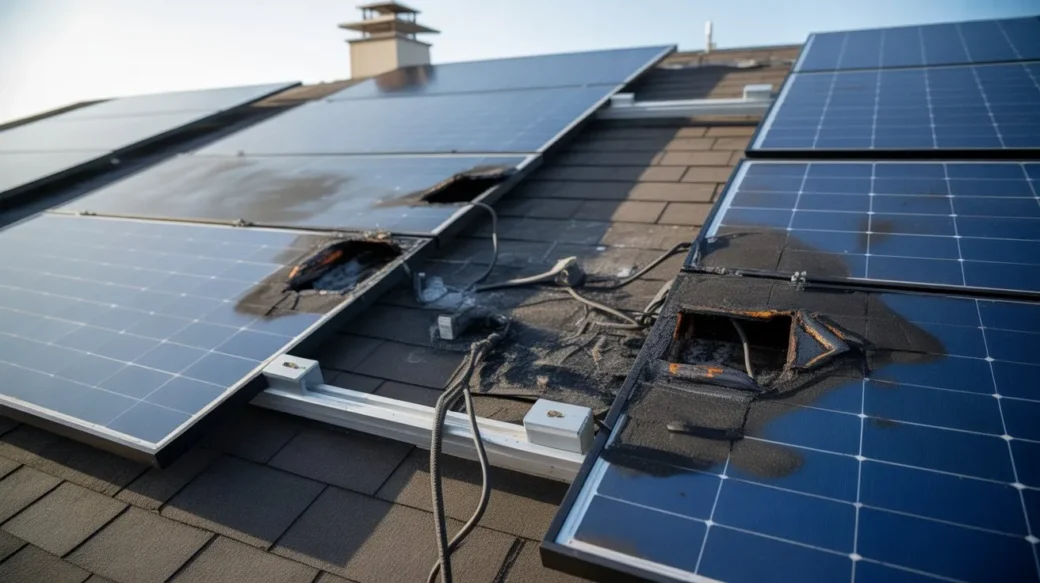
State law controls most parts of a solar fire claim. Deadlines, product liability rules, and damage limits differ. No single nationwide deadline applies.
A statute of limitations sets the time to file after harm. A statute of repose sets an outer limit tied to the product’s age or sale. Some states treat negligence and product claims differently.
State-Specific Product Liability Laws
Some states follow strict liability. Others rely more on negligence. A few cap some damages. Check the current rule in your own state.
The consumer protection laws in the USA also vary. Check state statutes before assuming a remedy exists. False sales claims can lead to a separate claim under state law.
Statutes of Limitations and Repose
Deadlines can be short. In some states, injury claims may have limits of two years or less. Check the exact rule for your state and claim. A licensed attorney can confirm the deadline.
Texas homeowners may search “cancel solar panel contract lawyer texas” to understand cancellation terms. Those terms can affect where a claim is heard.
Purchased Versus Leased Solar Systems
Ownership changes who can sue and who pays for repairs. With a lease, the owner often handles repairs and has its own insurance. Homeowners with leased systems may read about a “solar lease buyout attorney california” topic to see how transfers work.
A contract may also limit remedies or require arbitration. Review it early. Guidance on how to get out of solar contract duties explains exit paths. But a fire claim is separate.
Multiple Defendants and Shared Responsibility
Several parties may be named. A court may split fault under comparative fault rules. The details depend on the state.
Business-owned systems follow different agreements. Review the commercial solar PPA laws and the actual contract when the building is commercial.
What Homeowners Should Do After a Solar-Related Fire
Put safety first. Do not enter an unsafe property. Call emergency services, then your insurer. Keep evidence once the site is safe to reach.
Do not touch or disconnect damaged equipment unless a qualified professional says it is safe. Panels can stay live in daylight. Wait for fire officials to clear the area.
Immediate Safety and Emergency Documentation
Get the fire department’s incident number and the investigator’s contact details. Take photos from a safe distance. Write down the timeline while you remember it well.
Recording Equipment and Recall Information
Record brands, models, and serial numbers if you can do so safely. Check CPSC recall notices for each. Save the install contract and any approvals tied to HOA solar panel restrictions.
Insurance Communication and Property Records
Report the loss promptly and keep every email. Ask for the claim number and the adjuster’s name. Share documents, but do not guess about the cause.
Preparing for a Legal Consultation
Gather the incident report, contract, photos, and insurance papers. Attorneys usually want these first. Good preparation also saves time.
Keep contract exit papers too. If ownership is unclear, review how to get out of solar contract terms. Leaving a contract does not end a damage claim.
Final Thoughts on Solar Fire Claims
Solar panel fire litigation depends on technical proof before legal argument. Fires can come from arc faults, connectors, inverters, batteries, or ordinary house wiring. Product liability and installation negligence are different theories with different evidence.
Recalls, warranties, and insurance records can help explain a fire, but none proves blame alone. State law decides which claims exist and how long you have to file. Rely on qualified fire investigators and licensed attorneys for your own case.
Frequently Asked Questions
Can solar panels cause a residential house fire?
Yes, but it is rare. Design flaws, faulty parts, and bad installation can cause one, according to the DOE. Many house fires start elsewhere and spread to the roof.
What is the most common electrical failure associated with solar panel fires?
No reliable national ranking exists. Arc faults at loose or damaged connections are often discussed. Each fire needs its own investigation.
Can a faulty solar inverter cause a fire?
It can, if parts overheat or fail. A 2019 CPSC recall of Eltek inverters involved capacitor failure and heat buildup. A recall alone does not prove the cause of a specific fire.
Can defective solar connectors create an arc fault?
They can, if contacts are loose or mismatched. Poor crimping is another cause. The actual parts need to be examined.
What is a DC arc fault in a solar system?
It is a spark across a gap in a direct-current circuit. It makes intense heat in one spot. Arc-fault protection aims to shut the circuit down.
Can a lithium-ion solar battery explode or catch fire?
Failed cells can overheat and catch fire. Explosions are less common than overheating or smoke. Recalls like the 2025 Powerwall 2 notice show real incidents.
Can homeowners sue after a solar panel-related house fire?
Possibly, if they can prove a defect or carelessness caused the fire and loss. Contracts may require arbitration first. Some people read about suing a solar company lawyer search before they contact an attorney.
What is solar panel product liability?
It is the legal idea that a maker or seller can be held liable for harm from a faulty product. It covers manufacturing defects, design defects, and failure to warn. State law sets the details.
Can a solar installer be responsible for a solar fire?
Yes, if careless work caused the fire. The homeowner must show the installer failed to use reasonable care. False sales claims are a different issue.
Does a solar equipment recall automatically prove liability?
No. A recall shows a hazard in certain products. Liability still needs proof for the specific equipment and loss.
What evidence is important in a solar fire investigation?
The fire report, the failed equipment, photos, and installation records matter most. Monitoring data and recall notices can help. Keep everything before cleanup.
Can homeowners insurance cover solar panel fire damage?
Often, for sudden fire loss, based on policy terms and exclusions. Ask your insurer in writing how it treats the solar system. The insurer may later seek money from the party at fault.
Can a homeowner claim compensation for smoke damage?
Possibly, through insurance or a liability claim. Document damaged belongings and cleaning costs. Payment depends on the policy and proof.
Can a leased solar system create a product liability claim?
It can. But ownership and contract terms affect who sues and who pays. Someone with a lease may read about a solar lease buyout attorney in California situation to see how ownership works. The lease terms control repair duties.
How long do homeowners have to file a solar fire lawsuit?
Deadlines depend on the state and the type of claim. Limitation and repose periods differ. Someone who searched “cancel solar panel contract lawyer texas” still needs a lawyer to confirm filing deadlines.
What happens if investigators cannot identify the fire’s cause?
An undetermined cause makes blame harder to prove. Independent experts may still study the remains. Insurers and courts decide with the evidence they have.
This article by SolarInfoPath (2026 research framework) is part of a comprehensive solar knowledge architecture covering all major high-value sectors including legal disputes (installation negligence, contracts, liability, fraud, lawsuits, liens, HOA and permitting disputes), financial structures (loans, PPA/lease agreements, DSCR financing, tax equity, investment and project finance), tax law (ITC, Section 48/25D, MACRS depreciation, bonus credits, IRS audits, recapture rules, domestic content and IRA/OBBBA compliance), insurance and risk (property damage, hail/wind/fire claims, bad faith insurance disputes, warranty coverage), policy and regulation (net metering, FERC interconnection, state utility rules, incentive programs and regulatory changes), commercial and utility-scale development (EPC contracts, construction delays, performance bonds, receivership, bankruptcy, asset sale and restructuring), real estate impacts (home value, solar leases, liens, title issues, HOA restrictions, easements), and emerging market structures such as battery storage, community solar, agrivoltaics, SRECs, yieldcos, and institutional investment funds. All content is based on publicly available regulatory, financial, and legal sources and is intended strictly for educational and informational purposes, not legal, tax, or financial advice. Readers should always verify current laws, utility policies, tax regulations, and contract terms with qualified licensed professionals before making decisions, as solar regulations, incentives, and financial structures frequently change across jurisdictions and time.

Solar Legal Analyst· Policy Researcher· Investigative Finance Writer Lead Analyst & Founder of SolarInfoPath
Morgan Lee is a solar legal analyst, policy researcher, and investigative finance writer with 12+ years of experience in U.S. renewable energy law, IRS tax credit compliance, and solar litigation. He is the founder of SolarInfoPath, a research-driven platform focused on primary-source analysis of solar contracts, tax law, regulatory policy, and industry disputes affecting homeowners and commercial developers.
His work is grounded in original legal and regulatory sources, including IRS notices, FERC and CPUC rulings, state court filings, PACER records, and UCC lien databases. He specializes in solar contract disputes, injury and workers’ compensation claims, PACE financing issues, tax equity structures, ITC recapture rules, MACRS depreciation, and federal and state solar policy frameworks.
Morgan’s analysis spans solar litigation, finance structures, and regulatory developments such as the IRA and OBBBA, interconnection reform, domestic content rules, and battery storage incentives. He also covers EPC contracts, PPAs, project financing, and utility-scale solar investment structures.