Solar Panels Maryland: Save $8,000+ with 2026 Grants & Credits
This article is published by SolarInfoPath, an independent research and education platform. SolarInfoPath has no financial relationship with any solar installer, manufacturer, lender, lead generation service, or utility company. We do not sell solar products, earn referral fees, or accept sponsored content. All articles are based on publicly available data from sources including the U.S. Department of Energy, IRS.gov, U.S. Treasury, the National Renewable Energy Laboratory (NREL), the Solar Energy Industries Association (SEIA), and public court and regulatory records.
Information Currency: Solar policy, tax law, utility programs, and financing products change frequently. While SolarInfoPath updates content regularly, some details may not reflect the most recent developments in your state. Always confirm current rules with the appropriate government agency, utility company, or licensed professional before taking any action.
BGE raised its rates three times between 2021 and 2025. Maryland now pays about 14¢ per kWh on average. That puts your bill above what most U.S. homes pay. Solar panels Maryland start with that one fact. This page shows you how solar works here, what it costs, and whether it makes real sense for your home.
Maryland gets about 4.5 to 4.7 peak sun hours per day. That is solid for the Mid-Atlantic. The state also has the SREC program, which pays you extra income on top of your bill savings. Are solar panels worth it in Maryland? For most BGE and Pepco customers paying above $130 a month, the honest answer is yes.
Key Takeaways
- BGE and Pepco charge about 14¢/kWh in Maryland, above the U.S. average of about 12¢/kWh.
- A typical 8–9 kW Maryland system costs $22,000–$26,000 before the federal 30% tax credit.
- Maryland’s SREC program pays $600–$880 per year on top of your bill savings for a 9 kW system.
- Maryland offers a $1,000 CleanEnergy Grant and a full property tax exemption for solar homes.
How Solar Panels Work in Maryland: Plain and Simple
Solar panels sit on your roof and catch daylight. They turn that light into power your home uses right away. A small box called an inverter changes the power into the type your outlets need. Your home uses your panels first. It only pulls from the grid when your panels are not making enough.
On cloudy days, your panels slow down. They do not stop. Maryland gets a lot of cloud cover from November to February. But your panels still make real power on those days, just less. Spring and fall are actually the best months for Maryland solar output. The air is clear and cool, which helps your panels work well.
When your panels make more power than your home needs, the extra goes to the grid. BGE and Pepco both credit you at the full 14¢/kWh retail rate for that power. That is one of Maryland’s real strengths. Every extra kilowatt earns you the same rate you pay, not a reduced rate like in Indiana or Tennessee. For a plain look at how that billing credit works each month, how solar power works step by step breaks it down clearly.
Cost of Solar Panels in Maryland: Real 2026 Numbers
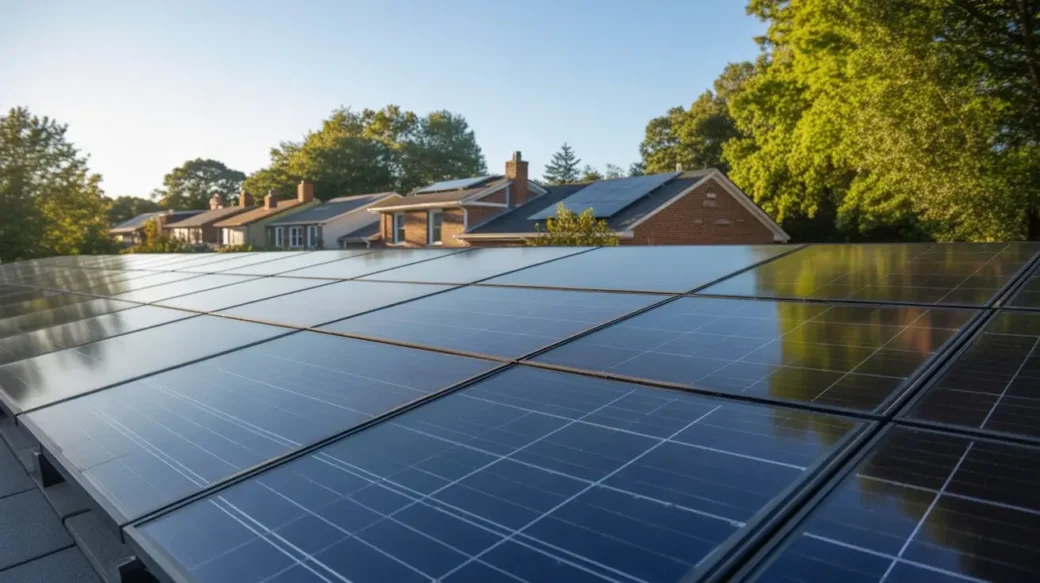
Most Maryland homes need a system between 8 and 9.5 kW. That covers most of a typical home’s monthly power use. The cost of solar panels in Maryland runs from $22,000 to $26,000 before credits. That price covers panels, inverter, labor, permits, and the utility check before your system turns on.
Your price depends on your roof type, your home size, and your utility. A home in Baltimore on BGE costs slightly less to permit than one in Rockville on Pepco. Your installer looks at your roof angle, shade from trees, and your last 12 months of bills before picking a system size. A south-facing roof with no shade always gives the best results.
Maryland does not waive sales tax on home solar systems. That adds about $1,100 to $1,300 to your purchase cost. It is a real gap compared to states like Nevada or Washington that waive it. The state does offer a $1,000 Clean Energy Grant to help offset that. But you must apply, and funding runs out each year. For a clear look at what solar costs before and after all credits, how much do solar panels cost in 2026 covers every line item honestly.
What Does a Real Maryland Homeowner Pay?
Here is a simple real example. A homeowner in Baltimore uses 1,000 kWh per month. They pay BGE about 14¢ per kWh. That is $1,680 per year on power. A 9 kW system costs $24,000 before credits. The federal 30% credit removes $7,200. The $1,000 CleanEnergy Grant removes another $1,000. The real cost drops to about $15,800. Over 25 years, that system could save $42,000 or more as BGE rates keep rising.
Payback in Maryland runs about 9 to 12 years. Panels last 25 to 30 years. So you still get 13 to 16 years of cheap power after break-even. I think Maryland is one of the better states on the East Coast for solar, mainly because of the SREC income that most other states simply do not have.
To see how Maryland payback stacks up against nearby states, the solar payback period in the USA has clear numbers for every state.
Maryland Solar Incentives You Can Actually Use in 2026
Maryland has more solar tools than most nearby states. Here is what you can use right now.
Federal 30% Tax Credit. This gives you 30% of your system cost back on your federal taxes. On a $24,000 system, that is $7,200 back. You must own your system and owe federal taxes to claim it. Its status past 2026 is not locked in, so check before you plan around it. The federal solar tax credit guide explains who qualifies and how to file it correctly.
Maryland SREC Program. This is the most unique part of Maryland solar. SREC stands for Solar Renewable Energy Certificate. Your panels earn one SREC for every 1,000 kWh they produce. You sell those to power companies that need them by law. At current market rates of $60 to $80 per SREC, a 9 kW system earns about $600 to $880 a year. That is real extra income, on top of what you save on your BGE bill.
CleanEnergy Grant. The Maryland Energy Administration gives $1,000 to homes that install solar. You must apply, and funding is capped each year. Do not count on it until you confirm it is open.
Property Tax Exemption. Solar adds $10,000 to $15,000 to your home value. Maryland law stops that from raising your property tax bill. You keep the equity with no extra tax each year.
Check every active Maryland solar program on the DSIRE Maryland database atdsire.org. It lists every live state program and updates when things change.
How Solar Performs in Five Maryland Cities
Maryland is a small state, but it has real sun differences across its regions. The Eastern Shore near Salisbury gets the most sun. The western hills near Cumberland get the least. Here is how five major cities compare.
| City | Avg Sun Hrs/Day | Est. Annual Savings | Key Solar Notes |
| Baltimore | 4.6 hrs | ~$1,200–$1,500/yr | BGE territory; good south-facing roof access across the city |
| Rockville | 4.5 hrs | ~$1,170–$1,450/yr | Pepco area, DC suburb; strong solar market; typical suburban roofs |
| Salisbury | 4.8 hrs | ~$1,250–$1,550/yr | Delmarva Power; Eastern Shore Sun Edge; best output in the state |
| Annapolis | 4.7 hrs | ~$1,220–$1,520/yr | BGE area; close to the Bay; solid sun hours year-round |
| Cumberland | 4.3 hrs | ~$1,100–$1,380/yr | Western Maryland hills; lowest sun in the state; longer payback |
Savings use 1,000 kWh per month, a 14¢/kWh rate, and a 9 kW system. Your real results depend on your roof, shade, and exact rate. Salisbury leads the state. Cumberland gets about 10% less sun per day than Salisbury, which adds up to real money over 25 years. For a full look at monthly and yearly savings by city, how much do solar panels save per year gives you solid numbers to work from.
Is Solar Worth It in Maryland? The Straight Answer
Most Maryland homeowners with a south-facing roof and a bill above $130 a month will find solar worth it. BGE and Pepco rates are above the U.S. average. Full retail net metering applies. The federal credit cuts your cost by nearly a third. And the SREC income adds $600 to $880 a year, which most other states simply do not offer.
One thing people often miss is how the SREC income changes the full picture. Most homeowners only count their bill savings. But adding SREC income cuts 1 to 2 years off your payback in Maryland. That is a real difference. Any savings number that leaves out SRECs is giving you a low estimate.
The One Honest Limit Maryland Homeowners Should Know
Maryland solar panel costs are on the high end compared to most states. A $22,000 to $26,000 system with no sales tax break is a big upfront number. And SREC prices move up and down with the market. Some years pay $80 per SREC. Some years pay $40. You cannot lock in a fixed SREC income. Build a low number, say $40 to $50 per SREC, into your plan. Treat anything above that as extra. For a full, honest look at solar returns across all U.S. states, are solar panels worth it in the USA gives you a clear state-by-state view.
BGE Rates Are Not That High: Why Should I Switch?
This is the top doubt I hear from Maryland homeowners. At 14¢/kWh, BGE is above average but not as high as Massachusetts or New Jersey. So the savings per kilowatt feel smaller. That is fair. But here is what most people miss.
BGE rates have gone up every year since 2019. They are not fixed. As your bill climbs, your solar system saves you more each year. A system saving $1,680 a year today saves more in year 10 if rates hit 18¢/kWh. That protection from rising rates is the real long-term value of going solar in Maryland.
Solar also raises what your home sells for. The Solar Energy Industries Association tracks this data. Maryland homes in the Baltimore and DC markets sell for more with solar. The property tax break means that the gain does not cost you while you own the home. To see how home value and solar connect in real state markets, do solar panels increase home value cover the honest data by state.
How Maryland Compares to Nearby States
Maryland sits above most of its neighbors for solar. Virginia has similar sun but no SREC program. Delaware has similar rates but fewer state tools. Pennsylvania has lower rates and a weaker SREC market. New Jersey has higher rates and a strong SREC program, but also higher system costs.
Within Maryland, the Eastern Shore beats the rest of the state. Salisbury gets 4.8 peak sun hours per day. Cumberland in the west gets only 4.3. That 11% gap adds up to thousands of dollars over 25 years. If your home sits in Baltimore, Annapolis, or the Eastern Shore, your solar numbers are above the state average.
Final Thoughts
Solar panels Maryland means this. Rising BGE rates, full retail net metering, SREC income, and a solid federal credit make Maryland one of the better financial cases on the East Coast. The payback is not as fast as Nevada. But Maryland’s SREC program is something most other states simply cannot match, and it makes a real difference to your total return.
Your first step is simple. Pull your last 12 months of BGE or Pepco bills and add them up. Then check your roof direction and note any shade from trees. Those two facts tell you more about your Maryland solar case than any estimate or pitch ever will.
Frequently Asked Questions
What does solar panels explained simply mean for an average Maryland homeowner?
It means your roof generates electricity during daylight, your home uses it first, and any surplus earns you a retail rate credit from your Maryland utility such as BGE, Pepco, Delmarva, or SMECO depending on where you live.
What is Maryland’s average electricity rate and how does it affect solar savings?
Maryland’s average residential electricity rate runs around 14.2 cents per kWh. Higher rates mean each kilowatt hour your panels produce is worth more in avoided electricity costs, which shortens your overall payback period compared to lower rate states.
Does Maryland have a state solar rebate or tax credit homeowners can use?
Maryland offers a $1,000 residential solar rebate through the Maryland Energy Administration, a 6% sales tax exemption on solar equipment, and a property tax exemption on the home value solar adds, all on top of the federal 30% Investment Tax Credit.
How does net metering work in Maryland in simple terms for solar energy?
When your panels produce more electricity than your home uses, that surplus goes to the grid and your Maryland utility credits your account at the same rate you would pay to buy that electricity, which is currently around 14.2 cents per kWh.
What are SRECs and do Maryland solar homeowners actually earn money from them?
Yes. Each 1,000 kWh your system generates creates one SREC you can sell on Maryland’s SREC market. At current market prices of roughly $50 to $80 per SREC, a typical 6 kilowatt system generates $450 to $720 per year in additional income beyond your electricity savings.
Is solar a simple and straightforward choice for Maryland homeowners with HOA restrictions?
Not always. Maryland law limits HOA solar bans but allows aesthetic conditions on panel placement. In Montgomery County suburbs and parts of Anne Arundel County, HOA requirements can shift panels to less productive roof sections, which reduces annual output and extends your payback period.

Morgan Lee | Lead Solar Policy & Consumer Research Analyst
Morgan Lee is the founder of SolarInfoPath and an independent solar research analyst with over 10 years of experience studying the U.S. residential and commercial solar market. Morgan’s research focuses on how real homeowner outcomes compare to the savings projections presented during solar sales, a gap that has led to thousands of consumer complaints and active class action lawsuits across New York, California, Texas, and Florida.
All research published on SolarInfoPath is drawn from primary sources, including the National Renewable Energy Laboratory (NREL), the U.S. Department of Energy (DOE), the U.S. Energy Information Administration (EIA), IRS and Treasury guidance under the Inflation Reduction Act, state public utility commission documents, and publicly filed court records related to solar consumer protection cases.
With a background in legal studies, Morgan interprets complex topics, federal tax credits under Section 25D and Section 48, Power Purchase Agreement contract terms, net metering policy changes, and solar litigation, in plain language that homeowners can actually use, without providing legal or financial advice.
SolarInfoPath was built after observing that most homeowners commit $25,000 to $40,000 to a solar system based on incomplete or misleading information, while almost every available source of solar education online has a financial relationship with the industry it covers. SolarInfoPath has no installer affiliations, no lead generation, and no affiliate income. Every article is independent, research-based, and written for informational purposes only.