
Solar panels North Carolina homeowners install vary widely in price and payoff. What it costs to install. How state and utility policies affect your savings. How to tell whether a system is actually worth the money. This guide covers it all with real numbers.
Costs and savings depend on system size, electricity usage, roof condition, utility rates, and available incentives. No two homes land on the same answer, even in the same neighborhood.
Are Solar Panels Worth It in North Carolina?
Sunlight, electricity prices, and seasonal weather all shape how much a system produces and how much it saves. Household electricity use matters just as much. A home using more power has more room to benefit, since a bigger share of that usage can be offset.
Upfront cost, financing, and utility compensation for excess electricity all factor into the math. Are solar panels worth it in North Carolina depends heavily on which utility serves your address, since compensation rules differ sharply between them.
A simple example: a household using 13,000 kWh a year with a system producing 11,000 kWh could offset a large share of its bill, though the actual savings depend on how the utility credits any electricity it does not use immediately.
Are Solar Panels Worth It in NC for a Typical Household?
Most homes with above-average electricity use and a reasonably unshaded roof see a favorable outcome over the system’s lifespan. Homes with low usage or a heavily shaded roof see a less clear-cut case, and are solar panels worth it in NC for that kind of home deserves its own calculation rather than a generic estimate.
What Factors Determine Whether Solar Is Worth It?
Electricity consumption and utility rates come first. Roof orientation, shading, and available space come next. System price and financing terms matter, along with utility compensation for excess electricity. How long you expect to stay in the home rounds it out.
When Might Solar Be Less Economical?
Roofs with substantial shading cut into production. Low household electricity consumption limits potential savings. High installation costs relative to expected savings stretch the payoff. Financing costs can also eat into net savings if not compared carefully against a cash purchase.
North Carolina Solar Incentives: What Homeowners Should Know
Tax credits, rebates, and utility bill credits all work differently. A tax credit reduces what you owe when you file. A rebate lowers your upfront cost. A utility bill credit shows up later, on your electric bill, tied to how much electricity your system exports.
Eligibility and program availability both affect your total cost, so current rules should always be verified before you count on a specific number. North Carolina solar incentives change over time, and a program active last year may look different today.
State and Federal Solar Incentives
The federal residential solar tax credit, formerly worth 30% of system cost, no longer applies to systems installed after December 31, 2025, under the One Big Beautiful Bill Act. North Carolina offers a property tax exemption on the added value from a solar installation, so the increase in home value from solar generally does not raise your property tax bill.
There is no state sales tax exemption for residential solar equipment. Tax deductions, tax credits, and direct rebates are three different mechanisms, and confirming which one applies to a specific program avoids confusion when estimating your net cost.
Utility Solar Programs and Compensation
Utility-specific policies shape how much excess electricity is worth. Duke Energy customers who applied for interconnection before October 2023 remain grandfathered into net metering through 2027, according to reporting summarized by EnergySage. New Duke Energy applicants instead choose between a time-of-use export rate or a separate billing arrangement, both different from traditional net metering.
Other utilities in the state, including Dominion Energy and Blue Ridge EMC, still offer net metering with monthly credit rollover. Utility territory matters enormously here, since two neighboring homes on different utilities can see very different compensation for the same exported electricity.
Cost of Solar Panels in NC: Average Installation Prices
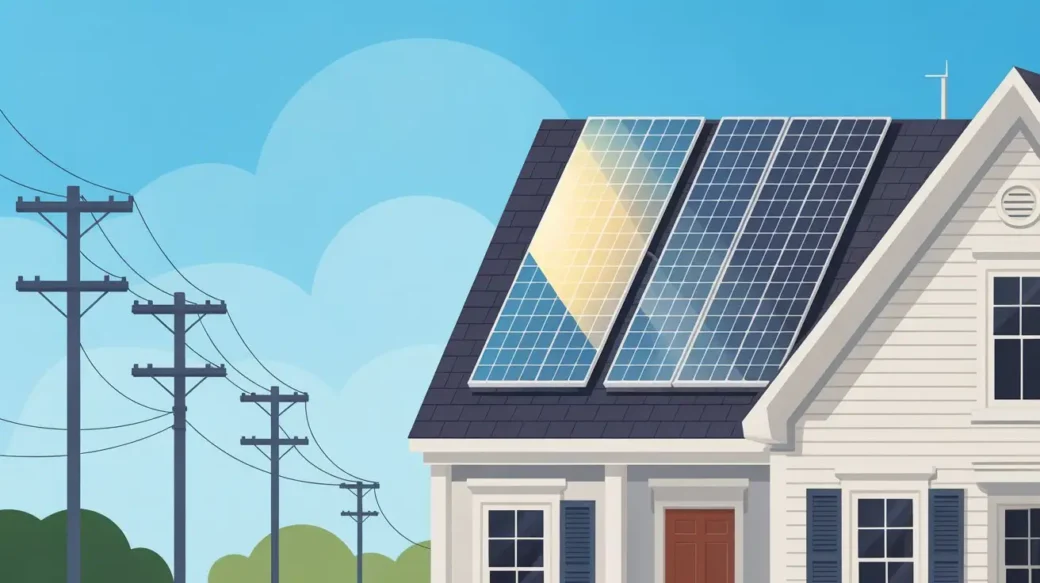
System capacity, equipment, labor, permitting, and roof complexity all shape a residential installation’s price. Gross installation cost, the full price before incentives, differs from net cost, what you pay after eligible credits actually apply. Cost of solar panels in nc quotes should always be compared using gross cost first, then adjusted individually for whatever incentives you actually qualify for.
Solar Panel Costs by System Size
The table below uses illustrative ranges based on current North Carolina market pricing.
| System size | Estimated gross cost | Typical household context |
| 4 kW | $9,600–$13,600 | Smaller electricity use |
| 6 kW | $14,400–$20,400 | Moderate electricity use |
| 8 kW | $19,200–$27,200 | Higher electricity use |
| 10 kW | $24,000–$34,000 | Large electricity use |
These figures use a $2.40 to $3.40 per watt range, reflecting current cost of solar panels in NC pricing data. Homeowners weighing something far larger than a rooftop system can see how pricing and permitting differ at scale in this utility-scale solar cost and land guide.
What Affects the Cost of Solar Panels in NC?
Solar panels and inverters make up the core equipment cost, and this is where solar panel pricing in North Carolina starts to diverge between installers. Mounting hardware and electrical components add to that. Installation labor and permitting fees come next. Roof repairs or electrical upgrades, when needed, increase the total further, and battery storage is its own separate expense rather than a bundled add-on.
Some homeowners narrow down equipment choices by researching specific brands first. A resource like this Tesla solar panels review guide can be a useful starting point before requesting quotes.
Solar Panel Cost North Carolina: How to Estimate Your Budget
A rough estimate multiplies system size in watts by a price-per-watt figure. An 8 kW system at $2.80 per watt comes to $22,400 before incentives. Equipment, roof conditions, and financing choices can all shift that number in either direction, which is why solar panel cost North Carolina figures should be treated as a starting range rather than a fixed quote.
Solar Panels North Carolina by System Capacity
A 4 kW, 6 kW, 8 kW, and 10 kW system will not scale in price in a perfectly straight line, since some costs, like permitting and certain equipment, do not grow proportionally with size. Cost per watt can actually decrease slightly as systems get larger, since fixed costs are spread across more capacity. Quotes should always be compared using the same system capacity and equipment tier, not just the same dollar total.
Solar Panel Cost North Carolina After Incentives
Net cost is what remains after eligible incentives are actually applied, not the advertised gross price. Financing charges are a separate factor layered on top of net cost, not a substitute for it. No incentive should be treated as guaranteed or universally available, since eligibility depends on your specific utility, system, and timing.
Solar Panels NC: How Residential Solar Systems Work
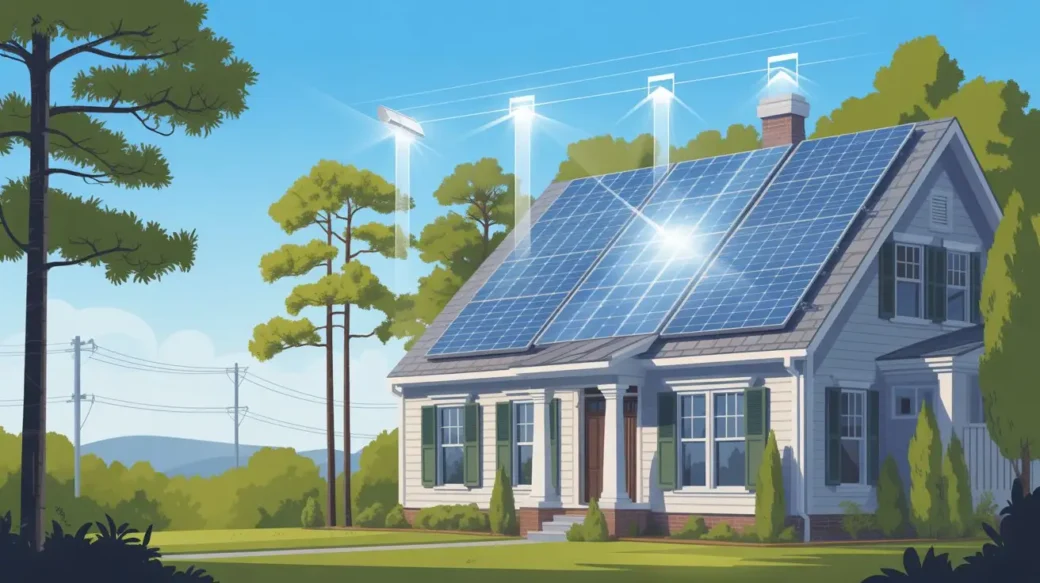
Photovoltaic panels convert sunlight into direct current electricity. An inverter converts that into the alternating current your home actually runs on. Electrical panels route that power to your circuits, with the whole system tied into the utility grid. Most solar panels nc installers use today follow this same basic design regardless of brand.
Grid-connected systems behave differently by time of day. Daytime production covers your immediate use first, with any surplus flowing to the grid. At night, your home draws electricity from the grid as usual. Batteries, when included, store daytime surplus for later use instead of exporting it right away.
| Time of day | Where the electricity goes |
| Daytime, low household use | Grid, or battery if installed |
| Daytime, high household use | Directly to household circuits |
| Nighttime | Grid supplies the home |
Grid-Tied Solar vs. Solar With Battery Storage
A grid-tied system without a battery still needs the grid at night and during periods of low production. A battery-equipped system can provide backup power during an outage, but only if it is configured for that specific purpose, since not every battery installation includes backup capability. Batteries add real cost and have their own capacity limits, so they are worth evaluating as a distinct decision from the solar panels themselves.
Solar Panels in North Carolina: Choosing the Right System Size
Annual electricity consumption is the starting point for sizing any system. Roof area, shading, orientation, and panel efficiency all shape how much a given roof can actually support. Utility compensation rules matter here too, since a system sized purely around usage may not be the most cost-effective choice under every billing arrangement.
| Annual electricity use | Illustrative system size |
| 6,500 kWh | 4–5 kW |
| 10,000 kWh | 6–7 kW |
| 13,000 kWh | 8–9 kW |
| 16,000 kWh | 10–11 kW |
How Much Electricity Can Solar Panels Produce?
Sunlight availability, roof orientation, and shading all affect how much a specific installation generates. Production varies by season, with summer months typically outproducing winter ones. Because of this, production estimates should always be location-specific rather than pulled from a generic statewide number, and a solar panel cost North Carolina quote should always come with a matching production estimate for your specific roof.
Solar Panels NC by City: Cary, Durham, and Raleigh
Local labor, roof design, permitting, and utility arrangements can all shift installation costs from one city to the next. None of these are fixed citywide prices, just reasonable starting points. Solar panels NC-wide follow the same statewide pricing range, with city-level variation layered on top.
Solar Panel Cost Cary NC
A Cary household can estimate cost by starting with annual electricity use, then sizing a system around it. A home using 12,000 kWh a year might reasonably consider an 8 kW system, landing in the $19,200 to $27,200 range before incentives.
Solar Panel Cost Durham NC
The same estimation method applies in Durham. Household electricity use and roof suitability drive the size of the system, and comparing multiple installation estimates against the same assumptions is the most reliable way to judge value.
Solar Panel Cost Raleigh NC
System capacity and installation requirements shape cost in Raleigh the same way. A Raleigh household using 14,000 kWh annually might land closer to a 9 or 10 kW system, in the neighborhood of $24,000 to $34,000 before incentives.
Are Solar Panels Worth It in NC? Savings and Payback Period
Electricity rates, solar production, and how much of that production you use directly all shape your savings. Utility compensation for exported electricity can change the value of a system substantially, particularly given how differently Duke Energy and other utilities now handle it. Annual savings and total lifetime savings are two different numbers, and are solar panels worth it in NC really comes down to which of those two figures matters most for your situation.
How to Calculate Solar Payback Period
The basic formula divides net system cost by annual bill savings. An 8 kW system costing $22,400, saving $1,400 a year, works out to roughly 16 years using this simple method. That is a starting estimate, not a guaranteed outcome, since production, rates, and incentive eligibility can all shift the real result.
For a broader view of how that number compares elsewhere, this national breakdown of solar payback periods shows how North Carolina’s mix of incentives and utility rules stacks up against other states.
What Can Reduce Solar Savings?
Financing costs eat into net savings directly. Lower-than-expected solar production, from shading or a suboptimal roof angle, reduces the value side of the equation. Changes in electricity rates or utility compensation can shift savings after installation, in ways outside your control. Maintenance, inverter replacement, or other system expenses also chip away at lifetime savings over time, which is one more reason are solar panels worth it in North Carolina rarely has a single fixed answer.
North Carolina Solar Incentives: Tax Credit and Program Rules
Verifying current federal and state tax provisions directly, rather than relying on outdated summaries, avoids planning around a credit that no longer exists. Tax credits and utility incentives are not interchangeable, since one reduces your tax bill and the other affects your electric bill or upfront cost.
Eligibility, documentation, and program-specific conditions all need individual confirmation. Business owners layering solar into a larger commercial project should separately check IRS Section 48 energy credit compliance, since commercial tax rules differ from the residential credit discussed here.
How to Verify Current Solar Tax Credit Eligibility
Checking current official tax guidance is the only reliable starting point. Confirming whether your specific system and ownership arrangement actually qualifies comes next. No incentive, including an NC solar tax credit search result from a past year, should be assumed still available without direct confirmation. This is exactly the kind of check that separates real North Carolina solar incentives from outdated blog posts.
Solar Power North Carolina: Utility Rules and Electricity Bills
Utility territory affects billing arrangements and compensation for exported electricity more than almost any other factor. Solar electricity offsets household consumption directly when used immediately, and differently when exported to the grid.
Electricity used directly is valued at your full retail rate, while exported electricity is compensated under whatever arrangement your specific utility applies. Fixed charges, such as a monthly customer fee, typically remain on your bill after installation, so solar power North Carolina rarely eliminates a bill entirely.
Solar Panels North Carolina: Installation, Roof Suitability, and Maintenance
The installation process moves through assessment, system design, permitting, installation, inspection, and utility interconnection, in that order. Roof age, orientation, slope, and shading all affect both feasibility and expected output. If installation work ever damages your roof, a general background on a solar panel property damage attorney explains what homeowners typically look into in that situation.
Storms, seasonal weather, and routine maintenance can all affect system performance over time, and permitting and utility requirements vary by location, so timelines are not identical everywhere. If a sales pitch feels aggressive or the numbers do not add up, similar background on a solar scam consumer protection attorney covers what recourse may exist.
Homeowners looking to exit a long-term lease or PPA later can also review this guide on how to get out of a solar contract before signing anything in the first place.
Business owners considering a commercial installation instead of a residential one should compare against typical commercial solar installation costs, since pricing and financing differ meaningfully from a home system.
For context on how North Carolina’s roughly $2.44 per watt average compares nationally, this average solar panel cost reference puts the state’s pricing in perspective.
The U.S. Department of Energy’s National Renewable Energy Laboratory is a credible source for independent production data if you want to double-check an installer’s estimate.
Frequently Asked Questions About Solar Panels in North Carolina
Are Solar Panels Worth It in North Carolina?
It depends on installation cost, electricity consumption, roof conditions, and utility compensation. Homes with strong sun exposure and higher electricity use tend to see the best outcomes, particularly on utilities that still offer full net metering.
How Much Do Solar Panels Cost in North Carolina?
System capacity, equipment, labor, and roof requirements all affect total cost. Current market pricing runs roughly $2.40 to $3.40 per watt before incentives.
What Solar Incentives Are Available in North Carolina?
Verify current incentive programs and eligibility requirements directly, since availability changes. North Carolina’s main state-level benefit is a property tax exemption on the added value from a solar installation.
Does North Carolina Have a Solar Tax Credit?
Verify current state and federal tax provisions directly before assuming a specific credit applies. The federal residential credit no longer covers systems installed after 2025.
How Much Does Solar Panel Installation Cost in Cary, Durham, or Raleigh?
Estimate cost using system capacity and local installation requirements rather than a single citywide number. All three cities generally fall within the same statewide pricing range, adjusted for the specific home and installer.
How Long Does It Take for Solar Panels to Pay for Themselves?
Using the basic payback formula, net system cost divided by annual bill savings, many North Carolina homeowners see estimates that shift substantially based on their specific utility’s compensation policy.
This article by SolarInfoPath (2026 research framework) is part of a comprehensive solar knowledge architecture covering all major high-value sectors including legal disputes (installation negligence, contracts, liability, fraud, lawsuits, liens, HOA and permitting disputes), financial structures (loans, PPA/lease agreements, DSCR financing, tax equity, investment and project finance), tax law (ITC, Section 48/25D, MACRS depreciation, bonus credits, IRS audits, recapture rules, domestic content and IRA/OBBBA compliance), insurance and risk (property damage, hail/wind/fire claims, bad faith insurance disputes, warranty coverage), policy and regulation (net metering, FERC interconnection, state utility rules, incentive programs and regulatory changes), commercial and utility-scale development (EPC contracts, construction delays, performance bonds, receivership, bankruptcy, asset sale and restructuring), real estate impacts (home value, solar leases, liens, title issues, HOA restrictions, easements), and emerging market structures such as battery storage, community solar, agrivoltaics, SRECs, yieldcos, and institutional investment funds. All content is based on publicly available regulatory, financial, and legal sources and is intended strictly for educational and informational purposes, not legal, tax, or financial advice. Readers should always verify current laws, utility policies, tax regulations, and contract terms with qualified licensed professionals before making decisions, as solar regulations, incentives, and financial structures frequently change across jurisdictions and time.

Solar Legal Analyst· Policy Researcher· Investigative Finance Writer Lead Analyst & Founder of SolarInfoPath
Morgan Lee is a solar legal analyst, policy researcher, and investigative finance writer with 12+ years of experience in U.S. renewable energy law, IRS tax credit compliance, and solar litigation. He is the founder of SolarInfoPath, a research-driven platform focused on primary-source analysis of solar contracts, tax law, regulatory policy, and industry disputes affecting homeowners and commercial developers.
His work is grounded in original legal and regulatory sources, including IRS notices, FERC and CPUC rulings, state court filings, PACER records, and UCC lien databases. He specializes in solar contract disputes, injury and workers’ compensation claims, PACE financing issues, tax equity structures, ITC recapture rules, MACRS depreciation, and federal and state solar policy frameworks.
Morgan’s analysis spans solar litigation, finance structures, and regulatory developments such as the IRA and OBBBA, interconnection reform, domestic content rules, and battery storage incentives. He also covers EPC contracts, PPAs, project financing, and utility-scale solar investment structures.