
Massachusetts solar panels can help homeowners generate electricity from sunlight, but the financial value depends on system cost, electricity consumption, roof conditions, solar production, incentives, and utility compensation. Comparing the complete installed cost against realistic long-term electricity savings, rather than a single upfront number, is what actually determines whether a system makes sense.
No two homes reach the same conclusion here. Are solar panels worth it in Massachusetts for your specific address? The variables below explain why that answer varies so much from one roof to the next.
Solar Panels in Massachusetts: How Residential Solar Systems Work
The residential process is straightforward at a high level: sunlight reaches the photovoltaic panels, the panels generate direct-current electricity, an inverter converts that into usable alternating current, the home consumes what it needs, any excess electricity may be exported to the grid, and a utility meter records the flows according to whatever billing arrangement applies.
Solar Considerations for Different Types of Homes
Single-family homes, older homes, newer homes, homes with limited roof space, homes with multiple roof sections, and homes with high electricity consumption all approach system sizing a little differently. None of them follow a single universal template.
How Solar Panels Connect to the Utility Grid
The relationship between solar generation, household electricity use, grid imports, exports, and utility billing determines how a system actually performs financially, not just technically. A system generating plenty of electricity on paper can still underperform financially if the export compensation is weak. Are solar panels worth it in Massachusetts when export rates are unfavorable? Often less than the sales pitch suggests.
Are Solar Panels Worth It in Massachusetts? Key Financial Factors
Electricity rates, installed system cost, electricity consumption, solar production, export compensation, incentives, financing costs, roof condition, and equipment lifespan all factor into whether a system makes financial sense for a given household.
What Makes a Massachusetts Solar System Financially Worthwhile?
The basic framework: annual electricity savings, plus applicable export credits, plus applicable incentives, minus total system costs. Incentives and export credits must be evaluated under the rules that actually apply to the specific homeowner, not a generic nationwide assumption.
What Can Reduce the Financial Value of Solar?
Heavy roof shading, high upfront costs, poor roof orientation, an approaching roof replacement, lower electricity consumption, financing expenses, and lower-than-expected production can all pull the numbers in the wrong direction. Are solar panels worth it in Massachusetts when several of these overlap on the same property? Sometimes not, which is exactly why a real site assessment matters more than a generic estimate.
Solar Panel Cost Massachusetts: What Determines the Installed Price?
A residential installation’s price is built from several components: the solar panels themselves, inverters, mounting equipment, electrical wiring, labor, permits, engineering, any needed roof work, and optional battery storage.
Installed Price by System Size
| System size | Main consideration |
| 4 kW | Smaller electricity offset |
| 6 kW | Moderate residential capacity |
| 8 kW | Higher potential production |
| 10 kW | Larger system and higher cost |
| 12 kW or more | Depends on household demand and roof suitability |
Checking a quote against a broader baseline before accepting it is worth the five minutes it takes, and this solar panel cost calculator by zip code is built for exactly that.
For a sense of how Massachusetts pricing compares nationally, this average solar panel cost reference puts the state’s numbers in a broader context.
How Roof Complexity Changes Installation Costs
Roof pitch, multiple roof sections, roofing material, needed electrical upgrades, and access requirements all shift the number away from whatever a simple per-watt estimate suggests. Solar panel cost quotes in Massachusetts that skip this step tend to change substantially once an installer actually inspects the roof.
How Much Electricity Can a Massachusetts Solar System Produce?
Annual production depends on system size, roof orientation, roof pitch, shading, weather, seasonal daylight, snow cover, and general system losses. None of these can be assumed away.
Seasonal Production Patterns
Winter, spring, summer, and fall each contribute differently to the annual total. Annual production is what actually matters for financial calculations, not any single month’s output, however impressive a sunny July reading looks in isolation.
How Roof Orientation and Shading Affect Solar Production
South-, east-, west-, and north-facing roof sections all produce differently, and nearby trees or buildings can cut into that further regardless of which direction the roof faces.
Cost of Solar Panels in Massachusetts: Equipment, Labor, and Other Expenses
| Cost component | What it includes |
| Panels | Photovoltaic modules |
| Inverter | Electricity conversion |
| Racking | Mounting equipment |
| Electrical work | Wiring and related equipment |
| Labor | Installation work |
| Permits | Required approvals |
| Engineering | System design |
| Roof work | Necessary repairs |
| Battery storage | Optional equipment |
Cost of solar panels in Massachusetts figures built from this full table look very different from a number quoted for panels alone.
With and Without Battery Storage
Adding a battery changes both the total system cost and the financial calculation behind it. The cost of solar panels in Massachusetts with storage attached runs noticeably higher than an equivalent system without it. Homeowners weighing that decision often benefit from reading a dedicated resource first, and this best solar battery storage guide covers what that added cost actually buys.
Why Installed Cost Is Different From Panel-Only Price
The price of individual modules never represents the cost of a complete residential solar system. Cost of solar panels Massachusetts estimates that quote only equipment, without labor, and the rest of the table above are quoting a different, smaller number entirely.
Solar Panel Cost in Massachusetts: Cash Purchase, Loans, and Leases
Cash Purchase
Upfront payment, full system ownership, total project cost paid at once, and the cleanest long-term savings calculation of the three options. Solar panel cost in Massachusetts paid this way avoids interest charges entirely, which is the main trade-off against the two financed paths below.
Solar Loans
Principal, interest, loan term, monthly payment, and total repayment amount all factor into whether financing actually costs less than it first appears.
Solar Leases and Power Purchase Agreements
Third-party ownership arrangements differ meaningfully from owning the system outright, without any one structure being automatically better for every homeowner.
How Financing Changes Solar Payback
A lower monthly payment does not necessarily mean a lower total cost. Solar panel cost in Massachusetts, once financing charges are added on top, can end up higher over the life of the loan than the same system purchased outright.
Estimating Your Home’s Solar System Cost
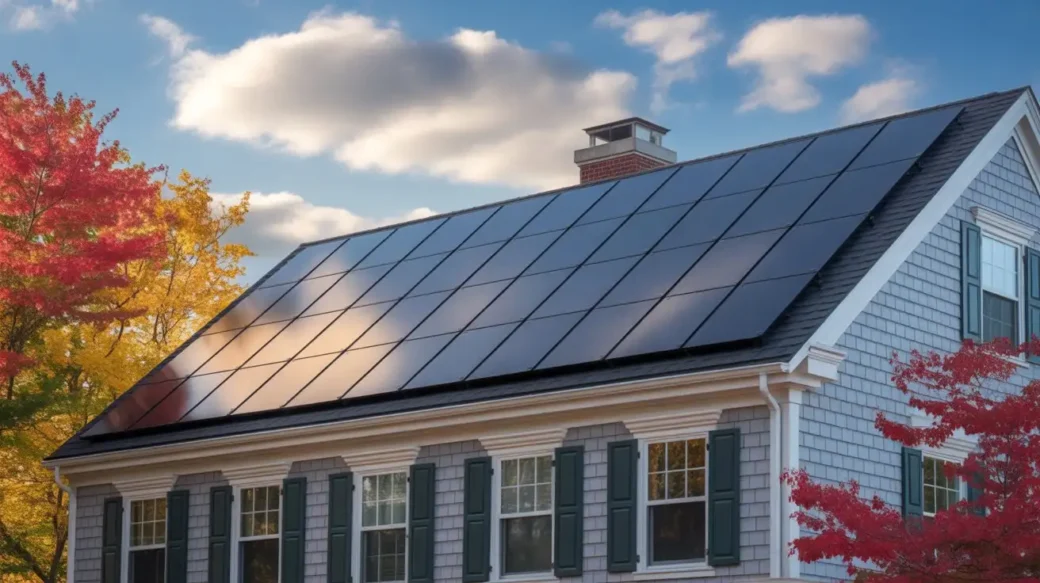
A practical framework: find annual electricity consumption, estimate required solar production, determine approximate system size, estimate the installed price, account for applicable incentives, estimate annual electricity savings, include exported-electricity value where applicable, calculate simple payback, consider financing costs, and account for long-term maintenance.
Working Through a Sample Household
Using a hypothetical household with clearly stated assumptions keeps the installed cost, annual production, electricity offset, and estimated payback separate and easy to check against your own numbers rather than someone else’s average.
Solar Incentives Available to Massachusetts Homeowners
Massachusetts Solar Incentives and Eligibility
State programs, tax-related incentives, rebates where available, renewable-energy programs, and utility-related incentives all fall under this umbrella, though eligibility rules differ by program.
Federal Solar Incentives and Current Eligibility
Eligibility depends on the applicable law and the homeowner’s own circumstances at the time of installation. Current 2026 rules should always be verified through official sources rather than assumed from a prior year’s terms. Whether solar panels are worth it in Massachusetts changes meaningfully once a federal incentive expires is exactly the kind of thing worth checking before signing anything.
How Incentives Affect the Net Cost of Solar
The difference between gross system cost and net cost after incentives that genuinely apply can be substantial, but only for incentives a homeowner actually qualifies for, not ones simply advertised in general marketing.
Net Metering for Massachusetts Homeowners
How Net Metering Works
Electricity generated, electricity used immediately, electricity exported, grid electricity imports, credit and billing treatment, and utility-specific requirements all combine to determine what a kilowatt-hour of exported solar is actually worth.
How Net Metering Affects Solar Payback
The value assigned to exported electricity matters directly when estimating annual savings, since a credit paid at a lower rate than retail changes the payback math meaningfully.
Why Utility Territory Matters
Utility rates, interconnection processes, and compensation arrangements can differ by location, so a neighbor’s experience with a different utility isn’t a reliable stand-in for your own numbers.
The ‘Free Roof Replacement With Solar’ Offer: What It Really Means
The phrase gets used loosely, and it’s worth unpacking what it can actually mean: roof replacement bundled with solar, financing structures that spread the roof cost into the solar payment, promotional use of the word “free,” total contract cost, roofing labor and materials, solar removal and reinstallation, and roof warranty considerations.
Does Solar Include a Free Roof Replacement?
A genuinely free service is rare. More often, roof costs are folded into another part of a contract or financing arrangement, and distinguishing the two before signing matters more than the word “free” on a flyer.
Should You Replace an Old Roof Before Installing Solar?
Roof age, remaining useful life, current roof condition, and future removal or reinstallation costs all argue for handling roof work first when a roof is genuinely close to the end of its life. Homeowners who sign a contract believing a roof issue is covered, only to discover otherwise later, sometimes need to understand what recourse exists, and this guide on how to get out of a solar contract covers what that process typically involves.
Solar Panels in Massachusetts: Roof Condition and Installation Suitability
Roof age, existing leaks, shingles and roofing material, roof structure, roof orientation, shade, and remaining roof life all determine installation suitability before a single panel goes up.
How Roof Age Affects Solar Installation Planning
A roof nearing the end of its useful life may need attention before a solar system goes on it, since removing and reinstalling equipment mid-system-life is an avoidable extra cost.
Roof Types and Solar Installation
Asphalt shingles, metal roofing, tile, and flat roofs all call for different mounting methods, and assuming one approach works everywhere is a common early mistake.
Is Solar Worth It in Massachusetts? Compare Costs and Savings
The relationship between upfront cost and potential electricity savings drives this question more than any single incentive or rate figure on its own.
Is Solar Worth It for High-Electricity-Use Homes?
Annual electricity consumption directly affects how much solar generation can actually be put to use rather than exported at a lower rate.
Is Solar Worth It for Low-Electricity-Use Homes?
System sizing should reflect actual household demand rather than maximum roof capacity, since oversizing beyond consumption rarely improves the payback.
How to Calculate Solar Payback
Simple payback equals net system cost divided by estimated annual savings. That single number is not a complete measure of lifetime financial performance, just a useful starting point.
What to Check Before Installing Solar at Home
A homeowner checklist worth working through: annual electricity consumption, roof age and condition, roof orientation, roof pitch, shade, system size, estimated annual production, total installed cost, incentive eligibility, utility compensation, financing terms, and equipment warranties.
Questions to Ask When Reviewing a Solar Estimate
System capacity, production assumptions, total cost, equipment specifics, warranties, and assumptions baked into utility credit estimates all deserve a direct question rather than an assumption.
Are Solar Panels Worth It in Boston?
Boston-specific considerations include roof orientation, shade from surrounding buildings, trees, snow and seasonal production, electricity consumption, electricity rates, roof condition, and system cost. Two homes in the same Boston neighborhood can land on meaningfully different solar economics for exactly these reasons.
Massachusetts Solar Panel Cost by City: Springfield, Taunton, and Billerica
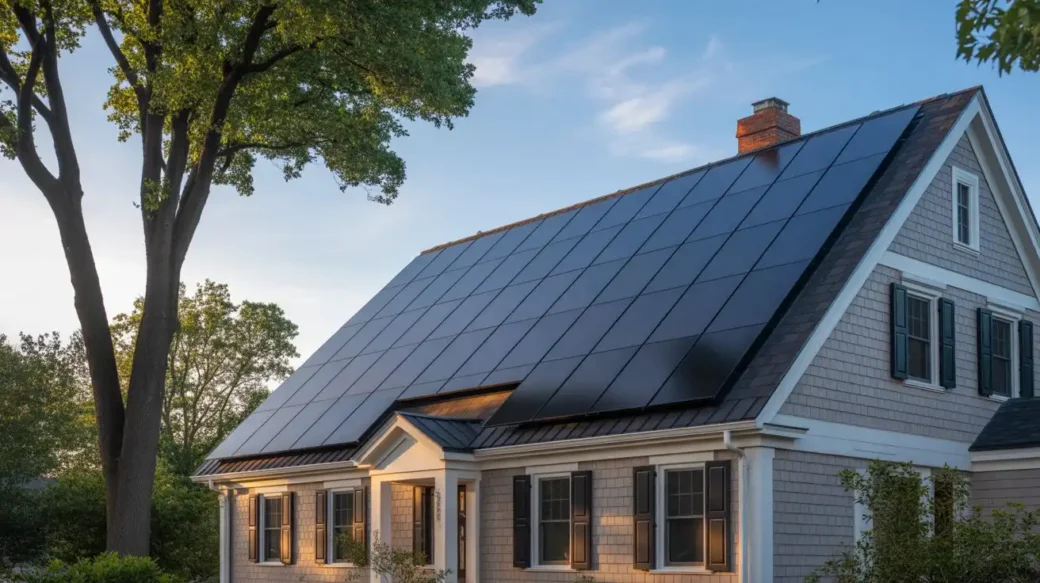
In Springfield, MA, Is It Worth Going Solar in 2026?
Electricity consumption, utility territory, roof condition, expected solar production, installed cost, and applicable incentives all determine the answer for a specific Springfield property, not a citywide average.
In Taunton, MA, Is It Worth Going Solar in 2026?
The same financial framework applies here, adjusted for the homeowner’s specific utility and property characteristics rather than assumed from a Springfield or Boston example.
In Billerica, MA, Is It Worth Going Solar in 2026?
Roof suitability, electricity usage, installation cost, and applicable utility arrangements determine the outcome for a Billerica home just as they do anywhere else in the state.
Massachusetts Solar Panel Price vs. Total Installed Cost
The price of solar panels alone never represents the total project cost, whether that panel-only figure is called Massachusetts solar panel price, Massachusetts solar panel cost, or cost of solar panels in Massachusetts on a given quote.
What Is Included in a Massachusetts Solar Panel Price?
Panels, inverter, racking, electrical work, labor, permitting, engineering, and any required roof work all belong in a complete quote, not just the module price.
Why Two Solar Estimates Can Have Different Prices
System size, equipment selection, roof complexity, labor rates, battery storage, and financing choices all move two otherwise-similar quotes apart.
Solar System Sizing by Home Size and Electricity Consumption
Home size alone does not determine the correct solar system capacity.
| Home scenario | Main sizing consideration |
| Small home | Lower electricity demand |
| Moderate-use home | Match production to annual consumption |
| Large home | Potentially higher electricity demand |
| High-load home | Heating, cooling, and electric appliances |
How to Match System Size to Annual Electricity Usage
Annual kWh consumption, pulled from real utility bills, helps determine a reasonable production target far more reliably than square footage does.
Long-Term System Lifespan for Massachusetts Homeowners
Panel degradation, inverter lifespan, ongoing maintenance, roof lifespan, eventual equipment replacement, and long-term production all factor into what a system is actually worth over its full life, not just its first year.
How Panel Degradation Affects Lifetime Savings
Annual production should never be assumed to stay exactly the same throughout the system’s life, since gradual degradation reduces output slightly each year.
What Equipment May Need Replacement Before Solar Panels?
Inverters, monitoring equipment, and batteries, where applicable, typically need replacement well before the panels themselves reach end of life.
Why Two Massachusetts Solar Estimates Can Differ
System capacity, roof design, shading, electrical upgrades, equipment selection, labor, permitting, battery storage, financing, and incentive eligibility can each independently move an estimate away from another one built for a similar-looking home.
Brand comparisons come up often in this part of the process, and homeowners looking at a specific name directly sometimes start with this Tesla solar panels review guide before comparing it against other quotes.
Common Financial Risks for Massachusetts Solar Buyers
Higher-than-expected installation costs, lower-than-expected production, roof replacement expenses, financing costs, changes to utility rules, incentive eligibility gaps, equipment degradation, and maintenance costs are the main categories worth planning around.
Why a Solar Savings Estimate Is Not a Guarantee
Modeled production, estimated savings, and actual results are three different numbers, and treating the first as a promise of the third is where a lot of buyer disappointment originates.
A pushy sales process that skips past this distinction is itself a warning sign, and a solar scam consumer protection attorney is exactly the kind of resource that exists for situations where the pitch outran the actual numbers.
Solar Panel Cost Massachusetts vs. Long-Term Electricity Savings
Connecting the initial investment with long-term financial performance means tracking gross installed cost, net cost after applicable incentives, annual electricity savings, export credits, financing expenses, maintenance, equipment replacement, and electricity-rate changes together rather than any one of them in isolation.
How to Compare Solar Costs With Lifetime Savings
An illustrative calculation, built on clearly stated assumptions, is useful precisely because its limitations are visible. Solar panel cost Massachusetts figures that ignore financing charges or maintenance tend to overstate how favorable the math really looks. Solar panel cost Massachusetts homeowners actually pay, after every real expense is counted, is usually higher than the headline number quoted upfront.
Roof Orientation, Shading, and System Performance in Massachusetts
South-facing, east-facing, west-facing, and north-facing roofs all produce differently, and partial shading, tree growth, nearby buildings, and roof obstructions all reduce output from whatever the roof’s orientation alone would otherwise support.
How Shading Changes Solar Production and Financial Value
Shading reduces output and, by extension, the amount of electricity a system can actually offset, which is why a shading assessment belongs early in the process rather than as an afterthought.
Cost of Solar Panels Massachusetts: Roof Replacement and Reinstallation Costs
Roof inspection, remaining roof life, solar removal, roof replacement, solar reinstallation, additional labor, mounting hardware, and roofing repairs all belong in a full accounting of what a mid-ownership roof replacement actually costs on top of the original solar investment.
How Roof Replacement Can Affect Total Solar Ownership Costs
The timing of a roof replacement can matter substantially when evaluating the full cost of owning a solar system, since removing and reinstalling equipment mid-life adds a cost that a simple payback calculation rarely accounts for upfront. Cost of solar panels in Massachusetts estimates almost never include this contingency unless a homeowner specifically asks for it.
Solar Panel Cost in Massachusetts: What Can Change the Estimate?
System capacity, roof complexity, electrical work, equipment selection, labor, permitting, storage, financing, and roof repairs can each move an estimate meaningfully, sometimes more than the base per-watt price itself suggests.
How to Compare Two Massachusetts Solar Cost Estimates
Comparing system size, included equipment, production estimates, warranties, and total contract cost side by side is the only reliable way to tell whether a lower number is actually a better deal or just a smaller scope. Solar panel cost Massachusetts comparisons that skip this step end up comparing two different projects rather than two prices for the same thing.
Business owners evaluating a commercial roof, rather than a home, face a meaningfully different sizing and cost process entirely, and this commercial solar installation cost breakdown covers that separate category.
Estimating Solar Panel Cost the Way a Professional Would
Step 1: Find Annual Electricity Consumption
Twelve months of actual utility bills, not an estimate from memory. This single step does more to pin down solar panel cost in Massachusetts for your home than any online calculator can.
Step 2: Estimate Annual Solar Production
Account for location, system capacity, roof orientation, and shading together, not any single factor alone.
Step 3: Determine System Size
Compare expected generation against household consumption to land on an appropriately sized system.
Step 4: Estimate Installed Cost
Include equipment, labor, and other project expenses, not just panel pricing.
Step 5: Account for Applicable Incentives
Use current official eligibility requirements rather than a figure carried over from a previous year.
Step 6: Estimate Annual Savings
Account for both self-consumed solar electricity and exported electricity under whatever net-metering arrangement applies.
Step 7: Calculate Simple Payback
Net system cost divided by estimated annual savings.
Step 8: Evaluate Long-Term Ownership
Degradation, maintenance, financing, and equipment replacement all belong in a full ownership picture, not just the first year’s numbers. Solar panel cost in Massachusetts only tells part of the story until it’s weighed against this full multi-decade view.
Homeowners financing part of a project through a lease or third-party arrangement should understand how that changes federal tax treatment, and this explainer on IRS Section 48 energy credit compliance covers how that framework applies outside a standard owned-system purchase.
Massachusetts Solar Panels: Final Homeowner Evaluation Checklist
A practical closing checklist: determine annual electricity consumption, check roof age and condition, evaluate roof orientation and shading, estimate annual solar production, review the complete installed cost, verify applicable incentives, understand utility compensation, compare financing structures, calculate estimated payback, and consider maintenance and replacement costs.
Manufacturing defects affecting an entire equipment line are uncommon but not unheard of, and the solar panel class action lawsuit roundup tracks how a recent example played out for affected homeowners.
If installation work ever damages a roof and the installer won’t make it right, general background on a solar panel property damage attorney covers what homeowners typically look into in that situation.
When a signed contract turns out to rest on inflated savings or production claims, a solar fraud attorney is typically where homeowners start looking for recourse.
Nearly every production and cost figure referenced throughout this guide traces back to independent sources, and the Department of Energy’s National Renewable Energy Laboratory remains one of the most credible places to double-check an installer’s estimate directly.
Frequently Asked Questions
Are Solar Panels Worth It in Massachusetts?
It depends on electricity usage, installed cost, roof conditions, and which incentives and utility rules actually apply to your address. Massachusetts solar panels tend to make the most sense for homes with strong electricity consumption and a good south-facing roof.
How Much Do Solar Panels Cost in Massachusetts?
Total installed cost varies by system size, equipment, and roof complexity, but commonly falls in the range covered by the system-size table earlier in this guide.
What Is the Cost of Solar Panels in Massachusetts?
The cost depends more on complete system size and installation complexity than on any single statewide average figure.
Are Solar Panels Worth It in Boston?
The same statewide factors apply, adjusted for Boston-specific shading from buildings and trees, along with the homeowner’s own electricity usage and roof condition.
Can You Get Free Roof Replacement With Solar Panels in Massachusetts?
Rarely in the literal sense. Roof costs are usually built into a contract or financing structure rather than provided at no cost whatsoever.
What Affects Massachusetts Solar Panel Cost?
System size, equipment choice, roof complexity, labor, permitting, battery storage, and financing terms all move the number in one direction or another.
How Much Does a Massachusetts Solar Panel System Cost?
Costs scale with system size and project complexity rather than following one fixed statewide price.
Is Solar Worth It in Massachusetts in 2026?
Current costs, incentives, and utility rules should always be checked directly before relying on any figure from a prior year, since program terms do change.
This article by SolarInfoPath (2026 research framework) is part of a comprehensive solar knowledge architecture covering all major high-value sectors including legal disputes (installation negligence, contracts, liability, fraud, lawsuits, liens, HOA and permitting disputes), financial structures (loans, PPA/lease agreements, DSCR financing, tax equity, investment and project finance), tax law (ITC, Section 48/25D, MACRS depreciation, bonus credits, IRS audits, recapture rules, domestic content and IRA/OBBBA compliance), insurance and risk (property damage, hail/wind/fire claims, bad faith insurance disputes, warranty coverage), policy and regulation (net metering, FERC interconnection, state utility rules, incentive programs and regulatory changes), commercial and utility-scale development (EPC contracts, construction delays, performance bonds, receivership, bankruptcy, asset sale and restructuring), real estate impacts (home value, solar leases, liens, title issues, HOA restrictions, easements), and emerging market structures such as battery storage, community solar, agrivoltaics, SRECs, yieldcos, and institutional investment funds. All content is based on publicly available regulatory, financial, and legal sources and is intended strictly for educational and informational purposes, not legal, tax, or financial advice. Readers should always verify current laws, utility policies, tax regulations, and contract terms with qualified licensed professionals before making decisions, as solar regulations, incentives, and financial structures frequently change across jurisdictions and time.

Solar Legal Analyst· Policy Researcher· Investigative Finance Writer Lead Analyst & Founder of SolarInfoPath
Morgan Lee is a solar legal analyst, policy researcher, and investigative finance writer with 12+ years of experience in U.S. renewable energy law, IRS tax credit compliance, and solar litigation. He is the founder of SolarInfoPath, a research-driven platform focused on primary-source analysis of solar contracts, tax law, regulatory policy, and industry disputes affecting homeowners and commercial developers.
His work is grounded in original legal and regulatory sources, including IRS notices, FERC and CPUC rulings, state court filings, PACER records, and UCC lien databases. He specializes in solar contract disputes, injury and workers’ compensation claims, PACE financing issues, tax equity structures, ITC recapture rules, MACRS depreciation, and federal and state solar policy frameworks.
Morgan’s analysis spans solar litigation, finance structures, and regulatory developments such as the IRA and OBBBA, interconnection reform, domestic content rules, and battery storage incentives. He also covers EPC contracts, PPAs, project financing, and utility-scale solar investment structures.